Category Archives: Government

Stand With JNU – SUNY College, Colgate and Syracuse Universities for Academic Freedom in India

Guest Post by Students and Teachers of Syracuse University, Colgate University and SUNY College of Environmental Science and Forestry

We, the undersigned at Syracuse University, Colgate University, and SUNY College of Environmental Science and Forestry, are in solidarity with our comrades at Jawaharlal Nehru University (JNU), India against the ongoing anti-democratic actions by the Indian state. We demand an immediate end to the police action against students on campus, and withdrawal of all charges against Kanhaiya Kumar, President of the JNU Students’ Union. We further demand that the Central Government put an immediate end to its prejudiced persecution of student activists on campuses across the country.

We strongly believe that the charge of sedition against Kanhaiya Kumar follows spurious claims. This arrest is an excuse for the state to root out dissenting voices on JNU campus, a move towards converting educational institutions like JNU into an arm of the authoritarian state. Attempts of a similar nature have been witnessed recently at other Indian educational institutions such as Film and Television Institute of India (FTII) and Hyderabad University. The growing threat to academic freedom posed by the current political climate is transnational, and extends beyond India to other parts of the world–it is a threat we face here in the United States, too.

For any word or action to qualify as being “seditious” under Indian law, it has to directly issue a call to violence. This was not the nature of the protest held by a group of JNU students against the judiciary’s decision regarding Afzal Guru, who was convicted of an attack on the Indian parliament. The peaceful protest held on February 9 on campus was not unlike other protests convened at the university over the last several decades. Dissent is an essential part of a healthy democracy. We therefore strongly condemn the Indian government’s response to the students’ protests and demand that the state refrain from authoritarian behaviour. In this spirit, we urge the Vice Chancellor of JNU to protect members of the university community and safeguard their democratic rights. Continue reading Stand With JNU – SUNY College, Colgate and Syracuse Universities for Academic Freedom in India

A letter to Umar Khalid: Pallavi Paul

Guest Post by Pallavi Paul

Dear Umar,

My name is Pallavi Paul and like you I am a PhD student at JNU.

I write this letter to apologize to you. What thoughts must be crossing your mind and that of your family, friends and comrades- as bloodthirsty, jingoist goons are on a shameless head hunt for you and your friends. I apologize to you for the poverty of imagination of a state that brands you as anti-national, while continues to trample on the rights and bodies of those living within its borders from Pulwama to New Delhi to Hyderabad. I apologize to you that you find yourself in a society where to echo the feelings of thousands of Kashmiris, to think of yourself as first devoted to the idea of justice before any arbitrary construct of the nation, to be moved by suffering, to critique capital punishment – is considered an act of terrorism. In a beautiful post on Facebook your sister lovingly called you a “communist paagal”. I apologize to you that this current oppressive climate is too cramped for your magical madness. The imagination of a beautiful world which has place not only for sangh certified, brahminically privileged, self- affirming ‘Indian-ness’, but for everyone who has found themselves left outside of this fold- the landless, the stateless, those without the protections of caste, class, religion, gender or nation.

What a wonderful name you chose for the event on the 9th of February – Country Without A Post Office. After, one of Agha Shahid Ali’s most haunting works, which references a time in the 1990s when no letters were delivered to Kashmir. There was no way for people to talk to or hear one another. You chose to think about the punishment accorded to Afsal Guru, along with this history. Your efforts to create a conversation, a debate on what it means to take a human life, is today being branded as evidence of your anti-nationalism. I apologize to you for the amnesia and the fragile ego of this country, which is unable to revisit its history without a shred of doubt or criticality. Where the only way to serve the cause of the country is by mouthing its praises and letting it rot in its own status quo and not by bringing to it newer questions, possibilities and challenges.

Many television channels like Times Now, News X, Zee have been ruthless and vicious in trying to establish links between you and terrorist organizations like the Jaish- e- Mohammad. I am sorry that you are living in a country where your name makes it so easy for this connection to be made. While comrade Kanhaiya is still in Police Custody fighting the preposterous charge of sedition, even as I write this to you- he has at the very minimum the assurance that he will not be linked to an Islamist Terrorist Organization. You, dear Umar do not even have that. Even that you are a self proclaimed atheist is not guarantee against prejudiced links being made between the religion you were born into and your political beliefs. That you made a choice outside of religion and the various forms of violence that its fundamentalist interpretations throw up, has been drowned in the noise being whipped up by vigilante, self proclaimed ‘nationalists’.

Like every storm this too will pass. The arrogance of this regime will be its undoing. Today there is a report in the Hindu, where the Central Government has denied receiving any report linking you to terrorist outfits. It is being widely shared on social media with the hashtag #weareumarkhalid. We know that your social media account has been hacked , but be assured that many voices are also rising in your support. I do not know when or whether you will be able to read this letter, but I hope that whenever we meet we will be able to celebrate freedom, justice and the spirit of critique. The seasons will change and the breeze will blow more merrily.

Take care of yourself dear comrade, the struggle is on.

Lal Salaam!

Pallavi Paul is a filmmaker and a PhD candidate at the School of Arts and Aesthetics, Jawaharlal Nehru University.

Statements of Solidarity For JNU From Various Quarters

We at Kafila have been receiving amazing statements of solidarity with JNU and its elected students’ President Kanhaiya Kumar over the past three days. We are posting them below, along with affiliations: South Asia University (teachers and students); Grinnell College, USA, Ambedkar University Delhi Faculty Association, Democratic Teachers Network, Hyderabad, and over a hundred students from Department of English, Delhi University.


STUDENTS OF SOUTH ASIA UNIVERSITY

We, the students of South Asian University, New Delhi (comprising of students from eight SAARC nations – Afghanistan, Bangladesh, Bhutan, India, Maldives, Nepal, Pakistan and Sri Lanka) strongly oppose the idea that one’s nationalism be defined in terms of hatred towards another nation (for example, Indian nationalism be defined as hatred towards Pakistan, or vice versa). We cherish the common cultural and social heritage of the South Asian region, and shall not let any kind of jingoist nationalism being endorsed by any religious group, political party or state hinder our shared solidarity. However, in recent times, such groups and establishments have unleashed an attack on democratic and critical voices in our universities across the South Asian region, masked under religious conformity, state intervention or sometimes in the form of an act of terrorism.

Thus, we stand in complete solidarity with the student and faculty community of Jawaharlal Nehru University (JNU) in their collective struggle against the ongoing police intervention by slapping the baseless charges of sedition on many students, including the arrest of JNUSU President – Kanhaiya Kumar, and against the massive propaganda terming the JNU as ‘a den of anti-nationals’. We would like to reiterate that our collective nationalism stands responsible only to the interests of our people and our land, and not to the divisive forces which have had and are still trying to create boundaries between us.

STATEMENT OF SOLIDARITY WITH STUDENT PROTESTS IN INDIA, FROM STUDENTS, FACULTY, AND STAFF OF GRINNELL COLLEGE

Grinnell-JNU Solidarity

Continue reading Statements of Solidarity For JNU From Various Quarters

On framing JNU for an imaginary crime: Aditya Sarkar

This is a guest post by ADITYA SARKAR

JNU has entered an indefinite state of siege. Police have been swarming all over campus, raiding hostels, picking up students and interrogating them. The ABVP, predictably, have been directing them to the lairs of ‘anti-national elements’. When immense demonstrations of public solidarity with the accused students were organized, ABVP activists have attacked these, in one case mounting a violent physical assault on a visiting speaker. The JNU administration has gone to the extent of cutting off the power supply to the microphones used at a protest meeting. At Patiala House on Monday the 15th of February, the BJP’s MLAs and what appear to be a group of lawyers have assaulted JNU students, faculty and supporters in full view of the police, with what can only be regarded as smug impunity. More than one observer has remarked that this is the Emergency all over again.

It is clear that the arrayed forces of the central government are pitted against a campus which has long been an object of hatred for the Right. There’s no telling how matters will develop in the days and weeks to come. So it might be necessary to step back a bit and consider the sequence of events that led to the current situation.

In the past month, JNU students organized a protest meeting which raised the issue of Kashmiri rights, and drew attention – just as Rohith Vemula’s protest in Hyderabad had done – to the execution of Afzal Guru in 2013. Since the mainstream news outlets systematically censor any attempt to reopen that extremely murky case, it’s worth reminding ourselves of precisely why the execution was so controversial. The terrorist attack on Parliament in December 2001 produced a police investigation on which serious doubt was cast from the beginning. Afzal Guru’s laptop and mobile phone, key pieces of evidence, had not been sealed prior to investigation. One of the other accused in the case, a Delhi University lecturer (who was later emphatically acquitted) was viciously framed by Zee News, which used the police charge-sheet to make a documentary ‘establishing’ his guilt. The court proceedings were even more revealing. The Supreme Court admitted that there was no hard evidence to conclusively establish Afzal Guru’s involvement in criminal conspiracy. But these admissions were merely qualifications to what was perhaps the most extraordinary decision in the history of the judiciary in independent India. Afzal Guru was eventually hanged in 2013 on the basis that only this would appease ‘the collective conscience of the nation society’.

Continue reading On framing JNU for an imaginary crime: Aditya Sarkar

JNU Bashing is an old pastime, but things just got much, much worse

In light of the glorious vigilantism being witnessed today, in which the lumpen lawyers at Patiala House are joining hands with Guardian of the Nation Horn-nob Go-Swamy on primetime TV A few years ago, finding myself in a heated but very enjoyable argument on why women change their surnames after marriage, somebody yelled from across the room, “What has JNU done to you?!”

I wasn’t surprised, only annoyed. Reducing my entire biography and political beliefs to an institution I attended once upon a time is a favourite pastime in India, when that institution happens to be JNU. I could have explained to the genius who shouted this that if I do have political opinions, neither were they surgically implanted in me at JNU nor will they wither away like the bourgeois state in Marxism if JNU ceases to exist. I should have been grateful that the JNU-phobia was posed through the formal courtesy of a query. Usually, it takes the form of a statement, “You JNU folk are all lunatics!”

In family settings, JNU-bashing is the preferred insult to shut down an argument, “It’s the JNU in you speaking!” At seminars, a question or a paper can be made illegitimate with the simple investigative exercise of determining if you’re from ‘a particular institution with a particular ideology’. Of course, the person asking the question has miraculously escaped institutions and ideology, remaining gloriously neutral in this fractured world.

Continue reading JNU Bashing is an old pastime, but things just got much, much worse

Fearless Minds and Heads Held High: To the CDS Student Community


Dear Friends

Ever since the Hindutva right-wing attacks on the country’s youthful citizens intensified – from the Kiss of Love protests to the attacks on politicized dalit youth on the campuses of IIT Madras and HCU, and now, against JNU – we have come together several times as a group to defend our right to critical thinking, action, and speech and protest against atrocities in the name of national interest and culture. We have come out not to defend our petty interests but in defense of the Indian Nation as we imagine it – differently from the right-wing – as belonging to  the communities of peasants, workers, students, artisans, dancers, singers, small traders, and thousands of other groups that contribute to the economy of this country, as the homeland of vast sections of underprivileged people denied humanity in the name of caste, class, culture, ethnicity and gender. Continue reading Fearless Minds and Heads Held High: To the CDS Student Community

The Tendency of the Price of Young Life to Fall and the Hope that it May Rise

The war on young people continues. In this post we will only consider it’s arithmetic. Not even its algebra, simply its arithmetic.

I am prompted to do this by a strange acoustic co-incidence. While standing as part of a cordon of faculty and friends protecting the students of JNU on the public meeting on the 13th of April from a handful of ABVP activists who liked invoking blood and bullets in their slogans, I head one that stayed with me, and made me revisit a question that often bothers me.

lance-naik-hanumanthappa

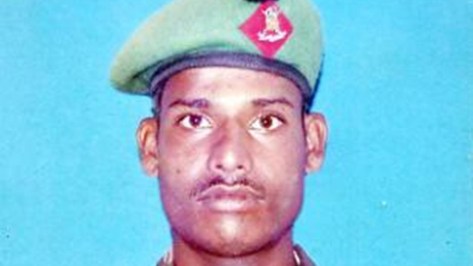
This was the slogan ‘Hanumanthappa hum sharminda hain, tere qatil zinda hain’. (‘Hanumanthappa we are ashamed, your murders are still alive’ ). Lance Naik Hanumanthappa, as we all know now, was a thirty two year old soldier of the Indian army who survived six days under an avalanche on the Siachen Glacier in Kashmir and then died of multiple organ failure in a Delhi military hospital. His young body must have had a tremendous and a passionate yearning for life. Sometimes I think of what a fine father or husband or lover or friend a man who loved life so must have been, could have continued to have been.

Continue reading The Tendency of the Price of Young Life to Fall and the Hope that it May Rise

Spring Comes to JNU : Love, Laughter and Rage

A Small Fragment of the Human Chain in JNU, 14th February, 2016

February is a beautiful time of the year in Delhi. It inaugurates Basant, spring, the season for love. And it is made more beautiful by an incandescent, insurgent spirit, that spreads in the air like a loving contagion, especially around what the Hindu Right rehearses for months on end to spoil – the new found festival of Valentine’s Day.

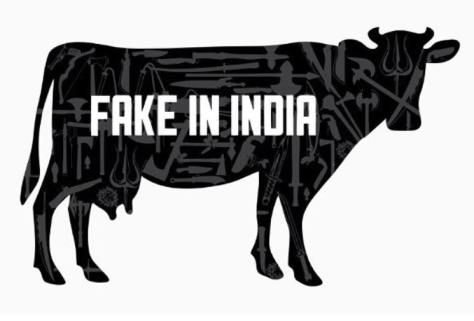
Traditionally (or at least since as long ago as the late twentieth century CE), on Valentine’s Day, the loony Hindu right goes looking for lovers in the parks of Delhi and tries to ply its own line in the extortion trade. This time, they have been joined by some big guns. The Delhi police descended on some young people belonging to a theatre group who had stepped out to have tea during a poetry reading at the IGNCA on the grounds that they ‘looked like they were JNU students’. Meanwhile, their boss, the Honorable Union Home Minister Rajnath Singh (who deserves a Bharat Ratna all by himself for skills as a performance artist) regaled a press conference with a poker faced comic act –  his revelation of the Lashkar e Taiba’s links to the JNU protests on the basis of the discovery of a fake twitter handle. The fact that Rajnath Singh still has his job is because his boss Narendra Modi, our ‘dear leader’, is the chief architect of  the ‘Fake in India’ campaign.

Holy Cow
Holy Cow (courtesy, ‘Guess Who’)

One needs love, and laughter, plenty of laughter, to survive these times, and the antics of these men. Over the last two days, it is love, laughter, sorrow and rage, in equal proportion that have been most evident in the JNU campus in Delhi. Their signs were evident again, appropriately,  yesterday, on Valentine’s Day. A student population of thousands has been able to transform its rage at the capitulation of the recently appointed vice-chancellor and his cronies to the diktats of an incompetent home minister and his minions in the Delhi Police apparatus into a deep and abiding sense of good humoured solidarity. This is demonstrated by the support that they have readily offered Kanhaiya Kumar, the president of their students union, who is currently detained, facing ridiculous charges of sedition, and several other students, including some JNUSU office bearers, who the police are still reportedly hunting for. The hashtag #StandwithJNU has gone viral, spreading, connecting, bringing people together like the sudden awakening of spring after a cruel winter. What better way can there be of celebrating Valentine’s Day than to declare, en masse, a love for liberty, and for learning?

Continue reading Spring Comes to JNU : Love, Laughter and Rage

Who’s Afraid of JNU? Or, The Sedition That Wasn’t: Sania Hashmi

This is a guest post by SANIA HASHMI

JNU Sedition

Over the past couple of days, Zee News has been declaring to the world that Lance Naik Hanumanthappa died because he’d rather not breathe the same air as we at JNU do. That this statement is the worst possible trivialisation of a martyr’s death which is being exploited for petty sensationalism by our own version of the fourth estate is a separate issue, too nerve-wracking to be given precedence over the tragedy that unfolded in our campus yesterday with the arrest of our democratically-elected President Kanhaiya Kumar. A Zee News screen grab showed the word ‘Deshdrohi’ in 72-pt screeching yellow font pasted across Kanhaiya’s unsuspecting face. What was his fault? As an eyewitness from ground zero who was present at Sabarmati at the time of the protest, let me begin by answering the obvious questions that despite the numerous clarifications on part of the students and the JNUSU on social media and elsewhere are meeting deaf ears. It is interesting how despite being told that the Students Union and the student body in general had nothing to do with it and have in no uncertain terms condemned any alleged slogan against our country, the trolls are still putting decibels to shame with the very same questions. And no, I am not just talking about Nupur Sharma. So yes, let me begin by putting a few things on record in respect of Kanhaiya’s arrest. Did Kanhaiya organise the event? NO. Did he raise anti-India slogans? NO. Did he hail Pakistan? NO. Did he intervene to prevent ABVP-instigated violence in his capacity as the President? YES. Has he been vocal against the brahmanical tyranny of the RSS? YES. Has he been tirelessly fighting for the Rohith Vemulas of this world? YES. Has he been a torchbearer for students’ rights across the country? YES. Is this why you have arrested him? Is this your justice? If this struggle for a just society is anti-national in your eyes, we all plead guilty! If this is your witch-hunt for people who cannot conform to your ideological blinkers, we all plead guilty! If we must be party to the violent hooliganism of the ABVP in order to be called patriotic, rest assured, we all plead guilty!

WATCH KANHAIYA KUMAR’S SPEECH HOURS BEFORE HIS ARREST TO SEE WHAT THE GOVERNMENT OF INDIA CONSIDERS ANTI-NATIONAL. Clearly, Kumar’s fault was that he said in this speech that he doesn’t need the RSS’s certificate to be called a nationalist.

Continue reading Who’s Afraid of JNU? Or, The Sedition That Wasn’t: Sania Hashmi

Massive Turnout at JNU Protest Meeting

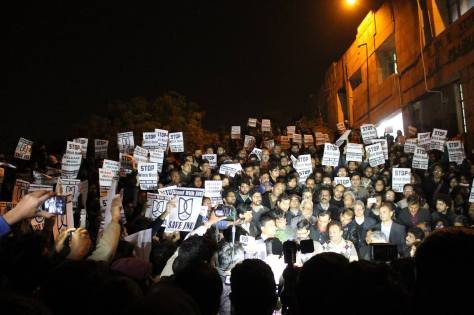
Even as the  government and the new JNU administration under the hand-picked  new Vice Chancellor step up their witch-hunt, the waves of protest grow stronger with a massive turnout at the admin block this evening. Despite the administration withdrawing at the last minute, permission to use mikes,…more and more students and teachers stand up to be counted. The will to fight grows stronger!

Protest meeting JNU
Protest Meeting in JNU outside the administration block. Image courtesy India Resists


Statement by Educators, Intellectuals, Artists and Writers on Police Action in JNU

We, the undersigned, (educators, professors, intellectuals, writers and artists), are shocked by the appalling conduct of Delhi Police at Jawaharlal Nehru University in New Delhi yesterday. We also condemn the irresponsible sloganeering by some people at the fringes of a gathering on the JNU campus to mark the third anniversary of the execution of Afzal Guru. We believe that such calls to ‘war, until the destruction of India’ erode the gravity of any serious discussion on any political question, be it capital punishment, human rights or even the question of self-determination. Such conduct is shameful, regardless of who does it, and deserving of the sharpest criticism.

That said, the only way to counter such incidents, when they occur, is through a deepening of dialogue, not through police action. The police has no business to enter places of learning and harass students (including students who were clearly trying to defuse the situation and to take a stand against the irresponsible elements who gave the objectionable slogans) when there had been no breach of peace.

We condemn the arrest of Kanhaiyya Kumar, president of the Jawaharlal Nehru University Students Union on trumped up charges of sedition and demand that he be released immediately. Kanhaiyya’s public statements, which are widely available, clearly show that sedition is the last thing that you can charge him with. The University Authorities must take steps to ensure that the witch hunt that is ensuing against other students must also cease immediately. We demand that there be no more arrests of students. We are saddened by the new JNU Vice Chancellor’s readiness to submit to the diktats of the police, and we condemn the totally outrageous statements by the Union Home Minister Rajnath Singh, and the Minister for Human Resources Development Smriti Irani which virtually declare war on universities as spaces for dissent and debate.

We demand an unconditional withdrawal of police personnel from campuses, and reiterate our support and solidarity with the students, faculty and staff of JNU, and with students everywhere in India who are pursuing a courageous resistance against the ongoing assault on higher education unleashed by the BJP government.

Aditya Nigam, Professor, Centre for the Study of Developing Societies, Delhi

Ashis Nandy, Distinguished Fellow, Centre for the Study of Developing Societies, Delhi

Bharti Kher, Artist, Delhi

Debjani Sengupta, Associate Professor, Department of English, Indraprastha College, Delhi University

Gauri Gill, Artist, Delhi

Gayatri Sinha, Curator, Delhi

Geeta Kapur, Curator, Delhi

Iram Ghufran, Filmmaker, Delhi

Jeet Thayil, Poet, Delhi

K. Satchidanandan, Poet, Delhi

Karen Gabriel, Department of English, St. Stephen’s College, Delhi University

Lawrence Liang, Alternative Law Forum, Bangaluru

Moinak Biswas, Professor, Department of Film Studies, Jadavpur University, Kolkata

Nancy Adajania, Curator, Mumbai

Nandini Datta, Associate Professor, Miranda House, Delhi University

Neha Choksi, Artist, Mumbai

Nivedita Menon, Professor, Centre for Comparative Politics & Political Theory, School of International Studies, Jawaharlal Nehru University, Delhi

P.K.Vijayan, Department of English, St. Stephen’s College, Delhi University

Pallavi Paul, Artist/Filmmaker, Delhi

Parnal Chirmuley, Associate Professor, Centre of German Studies, School of Language, Literature and Culture Studies, Jawaharlal Nehru University, Delhi

Pratiksha Baxi, Associate Professor, Centre for the Study of Law and Governance, Jawaharlal Nehru University, Delhi

Rajarshi Dasgupta, Assistant Professor, Centre for Political Studies, Jawaharlal Nehru University, Delhi

Rajeev Bhargava, Professor, Centre for the Study of Developing Societies, Delhi

Ravi Sundaram, Professor, Centre for the Study of Developing Societies, Delhi

Ravi Vasudevan, Professor, Centre for the Study of Developing Societies, Delhi

Romila Thapar, Historian, Emeritus Professor, Jawharalal Nehru University

S. Kalidas, Critic, Delhi / Goa

Sahej Rehal, Artist, Mumbai

Sabina Kidwai, Associate Professor, AJ Kidwai Mass Communication Research Centre, Jamia Millia Islamia, Delhi

Sabeena Gadihoke, Associate Professor, AJ Kidwai Mass Communication Research Centre, Jamia Millia Islamia, Delhi

Sanjay Kak, Filmmaker, Delhi

Sarnath Banerjee, Artist, Delhi / Berlin

Saumyajit Bhattacharya, Associate Professor, Department of Economics, Kirori Mal College, University of Delhi

Sibaji Bandyopadhyay, Fellow, Centre for the Studies of Social Sciences, Kolkata

Shohini Ghosh, Professor, AJ Kidwai Mass Communication Research Centre, Jamia Millia Islamia, Delhi

Shuddhabrata Sengupta, Artist, Raqs Media Collective, Delhi

Subodh Gupta, Artist, Delhi

Sumit Sarkar, Historian, Formerly Professor, Department of History, Delhi University

Tanika Sarkar, Historian, Formerly Professor, Centre for Historical Studies, Jawaharlal Nehru University, Delhi

Vivan Sundaram, Artist, Delhi


PLEASE SIGN AND SHARE WIDELY BY VISITING THIS PETITION PAGE ON CHANGE.ORG

ചിത്രലേഖയുടെ സമരം – ഒരു ഓർമ്മപ്പെടുത്തൽ കൂടി


“ആ ചിത്രലേഖയ്ക്ക് ഇനിയും സമരം ചെയ്ത് കൊതി തീർന്നില്ലേ,” കഴിഞ്ഞ ദിവസം ഒരു പരിചയക്കാരൻ എന്നോട് ചോദിച്ചു. “അവർക്ക് പൊതുജനശ്രദ്ധയോട് അഡിക്ഷനാണ്, അയാൾ തുടർന്നു. ആവശ്യം ചില്ലറയല്ല – സ്ഥലവും വീടും. ഇങ്ങനെ നാട്ടിലെല്ലാവരും തുടങ്ങിയാൽ സ്ഥിതി കഷ്ടമാകുമല്ലോ.” Continue reading ചിത്രലേഖയുടെ സമരം – ഒരു ഓർമ്മപ്പെടുത്തൽ കൂടി

JNUSU Statement on the Police Action and ABVP slander in JNU: JNUSU

Guest Post by Kanhaiya Kumar, Shehla Rashid Shora and Rama Naga, office bearers, JNUSU

We, the office-bearers of JNUSU, are appalled at the way an uproar has been created over the 9th February incident that happened in JNU and the way the entire incident is being used to malign JNU students and the democratic traditions of JNU.

At the outset, we condemn the divisive slogans (‘bharat ke tukde honge hazar’) that were raised by some people on that day. It is important to note that the slogans were not raised by members of Left organizations or JNU students. In fact, when such sloganeering took place, it was the Left-progressive organizations and students, including JNUSU office-bearers who asked the organizers of the programme to ask the people who were raising the slogans to stop slogans that are regressive. The divisive slogans and the ideology behind it has never been a part of the progressive tradition that JNU and the JNUSU uphold. On the contrary, the unity of the people of different parts of the country in challenging divisive, authoritarian, anti-people and anti-student forces is what we stand with and look up to. Even in the recent times, the JNU student community and the JNUSU have joined nation-wide students’ voice to defend the country against casteist and authoritarian power lobbies. The Left-progressive organizations were present at the programme only to ensure that no violence takes place, as ABVP had called in hooligans from DU to disrupt the program and the general atmosphere in the campus. And so, to interpret our presence as endorsement of some divisive slogans which were raised by some (and was protested and stopped) is extremely mischievous and manipulative. Continue reading JNUSU Statement on the Police Action and ABVP slander in JNU: JNUSU

Restore Normalcy in JNU, Release All Detained Students, Delhi Police Quit JNU

12716438_10153221773131150_2421721007167708352_o
Students, Professors and Staff of JNU Stand Together in Protest on February 12, 2016 against the Police Action on Campus and the Assault on JNU by ABVP-BJP

In an unprecedented and draconian move, Delhi Police personnel entered the precincts of Jawaharlal Nehru University in Delhi yesterday afternoon, and began a search operation based on malicious complaints against ‘unnamed persons’ filed by a Delhi BJP leader in response to an event titled – ‘Country Without a Post Office’ – organized by some students to commemorate and protest against the execution of Afzal Guru on February 9th.

Continue reading Restore Normalcy in JNU, Release All Detained Students, Delhi Police Quit JNU

Dissent in dark times : Ajita Banerjie

This is a guest post by AJITA BANERJIE

In the dark times, will there also be singing?

Yes there will also be singing.

About the dark times

– Bertolt Brecht.

In the dark times we live in right now, resistance to fascist forces could lead to arrest or death. Dissent comes with a rather heavy price to pay.Issues of democratic-national relevance  have ranged from consuming beef, resisting death penalty, resisting political control over academic institutions, protesting against privatisation of education and the most recent tragedy of Rohit Vemula’s suicide. Continue reading Dissent in dark times : Ajita Banerjie

Tibetan Artists Silenced at Dhaka Art Summit: Ahmad Ibrahim

This is a guest post by AHMAD IBRAHIM

20160207_200806
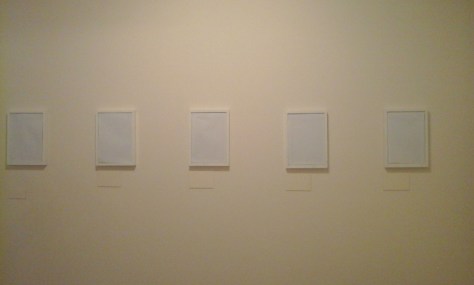
These pictures, which depict blank walls, are symbolic of the attack. Pictures of the original art cannot be shared due to copyright issues.

On the 7th of February, Tibetan artist Nortse and Indian artists Ritu Sarin and Tenzing Sonam had their photographs and art installations removed at the behest of the Chinese ambassador to Dhaka from the Dhaka Art Summit taking place in Shilpakala Academy in the capital of Bangladesh. The art project by Nortse was titled Prayer Wheel, Big Brother and Automan (2007) which showed the artist don traditional Tibetan clothes along with modern objects to show the surveillance that marks their lives. .Ritu Sarin and Tenzing Sonam produced a piece called “Last Words”, which consists of five facsmilies of five last messages written by the self-immolators in Tibet, along with their English translations. Ritu Sarin and Tenzing Sonam depicted Tibetan monks in the act of self-immolation as a way of political and religious protest against the occupation of Tibet by the Chinese government. At the end of the 6th of February, both artists were still depicted on the walls of the Art Summit. On the 7th, what greeted the visitors and patrons were blank stretches of white wall with white frames. It was as if the works had never existed. This is not the first time the Chinese government has tried to shut down political art work that aims to show the real face of Chinese occupation of Tibet. What is even more reprehensible is that it happened inside the walls of an institution that was proclaiming itself to be a haven of bold art and artistic expression. That the Chinese government could go to such lengths to silence an exhibition happening thousands of miles away shows the depth of their oppression over an entire country. Since February 2009, 142 Tibetans have self-immolated in their homeland, 120 dying from their actions.

A link to Tenzing Sonam’s twitter:

A Facebook link to a picture when the exhibit was still standing. 

Ahmad Ibrahim is a Dhaka based journalist.

Disability, Language, and Empowerment: Dorodi Sharma

This is a guest post by DORODI SHARMA

In 2009, as a writer for a disability news portal I got a note back with one of my stories from the director of the organisation. “Suffering from disability”, I had written about someone. The note said “I have been a wheelchair user since the age of 15, and trust me I am not suffering.” Over the years, the first document I shared with new employees of the disability rights organisation I worked for in Delhi was a document on ‘disability etiquette’ that outlined not just terminologies but also the acceptable ways of interacting with people with disabilities. Yes, even in the 21st century we need to coach people on ‘interacting’ with a section of humanity. The discourse on importance of language has taken a new meaning when recently Prime Minister Narendra Modi called people with disabilities ‘divyang’ or people with divine abilities. The reaction to this has been outrage, to shaking of heads, to complete indifference. But it is important to talk about language when it comes to disability because it reeks of charity and reflects the patronizing attitude that prevents people with disabilities in India from getting their due.

Let us be very clear, disability is part of human diversity. Disability is as normal or abnormal as being a man, woman, gay, lesbian, person of colour, or any other variation of being human for that matter. Why then do we look at disability as something that needs to be ‘overcome’? With the proliferation of social media, we are now faced with innumerable ‘inspiration porn’ posts. Yes, inspiration porn. As described by Stella Young, Australian journalist, comedian, and activist – inspiration porn is objectifying people with disabilities for the benefit of non-disabled people. Young said the purpose of these images is to inspire people, to motivate them, so that they can look at them and think “Well, however bad my life is, it could be worse. I could be that person.” Precisely for that reason, people living with a disability are tired (and angry) of all the euphemistic terminologies used about them. No, they are not specially-abled, or differently abled, or ‘divyang’ for that matter. They are persons with disabilities and disability is a crucial part of their identity, just like one’s gender, race, or nationality.

Continue reading Disability, Language, and Empowerment: Dorodi Sharma

Missing the Forest for Trees – Caste System’s Shadow on Rohith’s Suicide : Sanjay Kumar

Guest Post by Sanjay Kumar

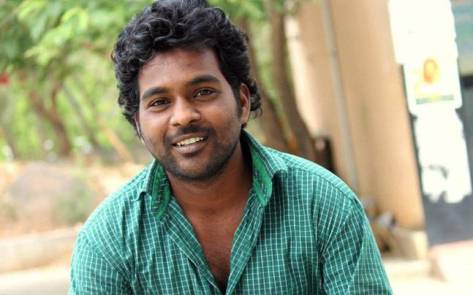
(Photo Courtesy : Prokerala.com)

Mainstream politics over Rohith Vemula’s suicide is becoming hot and ugly. Although whisper campaigns against Rothith’s dalit identity were on since his suicide, the BJP’s central leadership had been relatively quiet after HRD minister’s rather shrieky ‘appeal’ to not play caste politics over his suicide. However, now it seems daggers are out. The party in power, whose two ministers are accused of creating conditions leading to Rohith’s suicide, has decided that Rohith’s non-dalit status is the dog it is going to beat to counter its anti-dalit image. Rohith’s mother is a Mala, a Scheduled Caste, who lives seperately from his father, a backward caste Vaddera. He got an SC certificate on the basis of showing that he grew up in his mother’s Mala household. BJP’s strategy may look petty, but it is based on the age-old great Hindu tradition which can not contenance any violation of the privileges of the patrilineal system. After all, marital rape does enjoy legal sanction in India to this day. Continue reading Missing the Forest for Trees – Caste System’s Shadow on Rohith’s Suicide : Sanjay Kumar

A test of dignity and democracy

Today, as the Supreme Court hears the curative petition on Section 377, it has an opportunity to remember its promise to be the last resort of the oppressed, to let dignity be the domain of all.

In 2015, a student at the Indian Institute of Science (IISc) in Bengaluru was blackmailed and threatened with being publicly outed for being gay. When he refused to pay extortion money, the private letters turned into notices pinned on noticeboards on campus. The words were sharp, relentless and inhumane: “I think it’s completely shameful, bad, immoral and disgusting. You should go kill yourself. Why do you think it’s illegal to be gay in India?”

Evading prejudice

For many queer people, this moment is familiar. It is one that many of us have faced or live in a constant fear of facing. In some ways, it is the latter that is worse. We live our lives anticipating prejudice. Even before it comes, we are constantly censoring, moving, and shaping our lives to evade it or, if we can’t, to survive it. Those of us who have the privilege of privacy scan rooms to find allies, weigh what to tell our doctors, measure out information in our offices, and seek safe spaces. Those without this privilege face a much more direct battle to be who they are: an unrelenting and legitimised public violence that falls on working class bodies in our streets, police stations and public spaces. The law is not the only force behind this violence, but it is an important one. “Why do you think,” the blackmailer asks, “it’s illegal to be gay in India?” When petitioners in the Naz Foundation case argued that Section 377 of the Indian Penal Code played an important part in shrouding our lives in criminality and of legitimising violence, this letter was one of many that we wrote against in our heads. Continue reading A test of dignity and democracy

Paranoia and Procedure – Everyday Life within a University Labyrinth, Circa 2016: Prasanta Chakravarty

This is a guest post by PRASANTA CHAKRAVARTY

“The nature of peoples is first crude, then severe, then benign, then delicate, finally dissolute.”

–Giambattista Vico
The past congeals in savoir faire or habit, conserved as an ethos, in the corridors of the Arts Faculty at Delhi University. We all remember what is happening, while it is happening; watching ourselves as live spectators of our own actions. Wherefore such a sense of centripetal actuality? How this despotic pathology of inevitability in a place which was supposed to be the harbinger of a future? But the future arrives as a gyre, a loop. Continue reading Paranoia and Procedure – Everyday Life within a University Labyrinth, Circa 2016: Prasanta Chakravarty

Operation Ekalavya : Jhandewala, New Delhi, Rohith Vemula’s Birthday, 30th January 2016

Dear young friends who went to Jhandewala on Rohith Vemula’s birthday,

a1078-rohit-facebook-and-storysize_647_011816123527

And all those who were there in spirit, in Delhi, Hyderabad and elsewhere. I am writing to you because I think you might have all taken things much further than anyone can quite imagine or understand at present.

I am writing to you, for today and for tomorrow, so that every time in the future that young people gather to celebrate their friend Rohith’s birthday, we might all begin to have a different kind of conversation. So that the boundaries between mourning and celebration, between anger and joy may always remain blurred enough for us to know what to do next, each time.

Since you had a close encounter with the police and their colleagues in the RSS on Rohith’s birthday, I want to spend a little time thinking about them with you. Bear with me. I sincerely hope we will not have to bear with them for much longer.

Continue reading Operation Ekalavya : Jhandewala, New Delhi, Rohith Vemula’s Birthday, 30th January 2016