Category Archives: Identities

Some thoughts on love in times of hate – from a JNU student : Pallavi Paul

Guest Post by Pallavi Paul

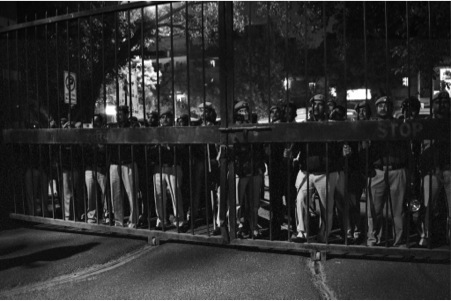
As I comb through the deluge of responses and opinions  that have been circulating on television, social media, newspapers and conversations  over the arrest of JNUSU president Kanhaiya Kumar, there is one particular fear that sticks out repeatedly. The fear  of JNU being a ‘transformative’ space. Where young and innocent minds are changed. The question that follows then is- changed into what? Even as we see ABVP students vociferously defending police action on all media platforms, the Sanskrit department continuing with classes in spite of the call for strike in support of Kanhaiya and faculty members like Hari Ram Mishra (CSS) issuing media statements against the student agitation currently underway- the simple formula that JNU transforms its students into ‘anti-national’ elements (going by the current interpretation of the term) begins to appear erroneous. In addition to having a culture of critical thinking, debate, questioning and radical left politics – JNU has also had an equally dynamic history of Hindutva and Brahaminical politics. For every protest on Afsal Guru there is a Guru Dakhshina Karyakram, for every Sitaram Yechury addressing students there is an Ashok Singhal (who visited the campus in 2002 even amidst intense protests). This fear then, if seen clearly begins to appear more and more abstract. It bases itself on a ‘sense’ of the campus- rather than its actual political fiber. Infact if one hears carefully it is the larger fear of things changing, things changing irreversibly.

Continue reading Some thoughts on love in times of hate – from a JNU student : Pallavi Paul

JNU Bashing is an old pastime, but things just got much, much worse

In light of the glorious vigilantism being witnessed today, in which the lumpen lawyers at Patiala House are joining hands with Guardian of the Nation Horn-nob Go-Swamy on primetime TV A few years ago, finding myself in a heated but very enjoyable argument on why women change their surnames after marriage, somebody yelled from across the room, “What has JNU done to you?!”

I wasn’t surprised, only annoyed. Reducing my entire biography and political beliefs to an institution I attended once upon a time is a favourite pastime in India, when that institution happens to be JNU. I could have explained to the genius who shouted this that if I do have political opinions, neither were they surgically implanted in me at JNU nor will they wither away like the bourgeois state in Marxism if JNU ceases to exist. I should have been grateful that the JNU-phobia was posed through the formal courtesy of a query. Usually, it takes the form of a statement, “You JNU folk are all lunatics!”

In family settings, JNU-bashing is the preferred insult to shut down an argument, “It’s the JNU in you speaking!” At seminars, a question or a paper can be made illegitimate with the simple investigative exercise of determining if you’re from ‘a particular institution with a particular ideology’. Of course, the person asking the question has miraculously escaped institutions and ideology, remaining gloriously neutral in this fractured world.

Continue reading JNU Bashing is an old pastime, but things just got much, much worse

Fearless Minds and Heads Held High: To the CDS Student Community


Dear Friends

Ever since the Hindutva right-wing attacks on the country’s youthful citizens intensified – from the Kiss of Love protests to the attacks on politicized dalit youth on the campuses of IIT Madras and HCU, and now, against JNU – we have come together several times as a group to defend our right to critical thinking, action, and speech and protest against atrocities in the name of national interest and culture. We have come out not to defend our petty interests but in defense of the Indian Nation as we imagine it – differently from the right-wing – as belonging to  the communities of peasants, workers, students, artisans, dancers, singers, small traders, and thousands of other groups that contribute to the economy of this country, as the homeland of vast sections of underprivileged people denied humanity in the name of caste, class, culture, ethnicity and gender. Continue reading Fearless Minds and Heads Held High: To the CDS Student Community

Who’s Afraid of JNU? Or, The Sedition That Wasn’t: Sania Hashmi

This is a guest post by SANIA HASHMI

JNU Sedition

Over the past couple of days, Zee News has been declaring to the world that Lance Naik Hanumanthappa died because he’d rather not breathe the same air as we at JNU do. That this statement is the worst possible trivialisation of a martyr’s death which is being exploited for petty sensationalism by our own version of the fourth estate is a separate issue, too nerve-wracking to be given precedence over the tragedy that unfolded in our campus yesterday with the arrest of our democratically-elected President Kanhaiya Kumar. A Zee News screen grab showed the word ‘Deshdrohi’ in 72-pt screeching yellow font pasted across Kanhaiya’s unsuspecting face. What was his fault? As an eyewitness from ground zero who was present at Sabarmati at the time of the protest, let me begin by answering the obvious questions that despite the numerous clarifications on part of the students and the JNUSU on social media and elsewhere are meeting deaf ears. It is interesting how despite being told that the Students Union and the student body in general had nothing to do with it and have in no uncertain terms condemned any alleged slogan against our country, the trolls are still putting decibels to shame with the very same questions. And no, I am not just talking about Nupur Sharma. So yes, let me begin by putting a few things on record in respect of Kanhaiya’s arrest. Did Kanhaiya organise the event? NO. Did he raise anti-India slogans? NO. Did he hail Pakistan? NO. Did he intervene to prevent ABVP-instigated violence in his capacity as the President? YES. Has he been vocal against the brahmanical tyranny of the RSS? YES. Has he been tirelessly fighting for the Rohith Vemulas of this world? YES. Has he been a torchbearer for students’ rights across the country? YES. Is this why you have arrested him? Is this your justice? If this struggle for a just society is anti-national in your eyes, we all plead guilty! If this is your witch-hunt for people who cannot conform to your ideological blinkers, we all plead guilty! If we must be party to the violent hooliganism of the ABVP in order to be called patriotic, rest assured, we all plead guilty!

WATCH KANHAIYA KUMAR’S SPEECH HOURS BEFORE HIS ARREST TO SEE WHAT THE GOVERNMENT OF INDIA CONSIDERS ANTI-NATIONAL. Clearly, Kumar’s fault was that he said in this speech that he doesn’t need the RSS’s certificate to be called a nationalist.

Continue reading Who’s Afraid of JNU? Or, The Sedition That Wasn’t: Sania Hashmi

ചിത്രലേഖയുടെ സമരം – ഒരു ഓർമ്മപ്പെടുത്തൽ കൂടി


“ആ ചിത്രലേഖയ്ക്ക് ഇനിയും സമരം ചെയ്ത് കൊതി തീർന്നില്ലേ,” കഴിഞ്ഞ ദിവസം ഒരു പരിചയക്കാരൻ എന്നോട് ചോദിച്ചു. “അവർക്ക് പൊതുജനശ്രദ്ധയോട് അഡിക്ഷനാണ്, അയാൾ തുടർന്നു. ആവശ്യം ചില്ലറയല്ല – സ്ഥലവും വീടും. ഇങ്ങനെ നാട്ടിലെല്ലാവരും തുടങ്ങിയാൽ സ്ഥിതി കഷ്ടമാകുമല്ലോ.” Continue reading ചിത്രലേഖയുടെ സമരം – ഒരു ഓർമ്മപ്പെടുത്തൽ കൂടി

Dissent in dark times : Ajita Banerjie

This is a guest post by AJITA BANERJIE

In the dark times, will there also be singing?

Yes there will also be singing.

About the dark times

– Bertolt Brecht.

In the dark times we live in right now, resistance to fascist forces could lead to arrest or death. Dissent comes with a rather heavy price to pay.Issues of democratic-national relevance  have ranged from consuming beef, resisting death penalty, resisting political control over academic institutions, protesting against privatisation of education and the most recent tragedy of Rohit Vemula’s suicide. Continue reading Dissent in dark times : Ajita Banerjie

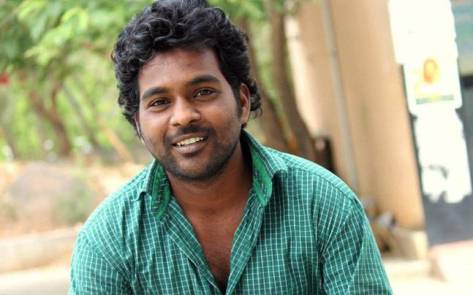
Stop the attack on Rohith’s mother! Solidarity Committee for Rohith’s mother Radhika

STATEMENT BY SOLIDARITY COMMITTEE FOR ROHITH’S MOTHER RADHIKA

We believe there  is a concerted effort on the part of the powers-that-be to diffuse the nation-wide mass protests against Dalit research scholar Rohith Vemula’s death and caste discrimination in higher educational institutions. They are keen to demonstrate that Rohith did not face caste discrimination by claiming that his mother Radhika is not a Dalit. Rather than addressing the critical issues that his death and the protests have raised, these misdirected attempts seek to dissolve the issue in narrow legalese. And thereby somehow save the people named in the students’ complaint from the stringent penal provisions of the SC/ST Atrocities Act. This malicious campaign is unethical, illegal and undemocratic. Continue reading Stop the attack on Rohith’s mother! Solidarity Committee for Rohith’s mother Radhika

Disability, Language, and Empowerment: Dorodi Sharma

This is a guest post by DORODI SHARMA

In 2009, as a writer for a disability news portal I got a note back with one of my stories from the director of the organisation. “Suffering from disability”, I had written about someone. The note said “I have been a wheelchair user since the age of 15, and trust me I am not suffering.” Over the years, the first document I shared with new employees of the disability rights organisation I worked for in Delhi was a document on ‘disability etiquette’ that outlined not just terminologies but also the acceptable ways of interacting with people with disabilities. Yes, even in the 21st century we need to coach people on ‘interacting’ with a section of humanity. The discourse on importance of language has taken a new meaning when recently Prime Minister Narendra Modi called people with disabilities ‘divyang’ or people with divine abilities. The reaction to this has been outrage, to shaking of heads, to complete indifference. But it is important to talk about language when it comes to disability because it reeks of charity and reflects the patronizing attitude that prevents people with disabilities in India from getting their due.

Let us be very clear, disability is part of human diversity. Disability is as normal or abnormal as being a man, woman, gay, lesbian, person of colour, or any other variation of being human for that matter. Why then do we look at disability as something that needs to be ‘overcome’? With the proliferation of social media, we are now faced with innumerable ‘inspiration porn’ posts. Yes, inspiration porn. As described by Stella Young, Australian journalist, comedian, and activist – inspiration porn is objectifying people with disabilities for the benefit of non-disabled people. Young said the purpose of these images is to inspire people, to motivate them, so that they can look at them and think “Well, however bad my life is, it could be worse. I could be that person.” Precisely for that reason, people living with a disability are tired (and angry) of all the euphemistic terminologies used about them. No, they are not specially-abled, or differently abled, or ‘divyang’ for that matter. They are persons with disabilities and disability is a crucial part of their identity, just like one’s gender, race, or nationality.

Continue reading Disability, Language, and Empowerment: Dorodi Sharma

Why is the World Ignoring Palestine’s ‘Third Intifada’? Shubhda Chaudhary

Guest post by SHUBHDA CHAUDHARY

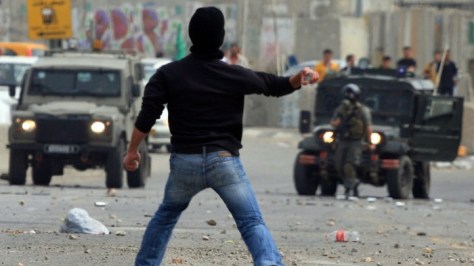
Already ravaged by two political Intifadas in the past, Palestine is now undergoing a third ‘leaderless Intifada’ in West Bank and Gaza. In fact, there is disagreement over whether a leader is even needed. In a striking paradox, several names are being considered for the leadership that does not exist: Jerusalem Intifada, Mass Intifada, Revolutionary Wave and Third Intifada.

Third Palestinian Intifada - On its way or Already Arrived? image courtesy Alwaght
Third Palestinian Intifada – On its way or Already Arrived? image courtesy Alwaght
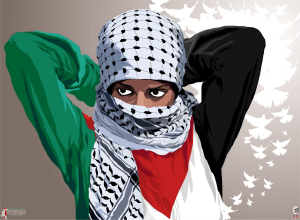
revolutionary woman intifada streetby Quadraro, image courtesy Deviant Art.
‘revolutionary woman intifada street’ by Quadraro, image courtesy Deviant Art.

As West Asia is too gripped in sectarian conflict and the rise of ISIS, this emerging trend is going unnoticed. But the violence is already cementing the layers of distrust that Palestinians harbor against Jews, with calcifying hatred.

After the desecration of Al-Aqsa Mosque and other sacred Islamic sites in various parts of the occupied Palestine by Israelis, Palestinians have been pouring out on the streets. The retaliatory attacks by Palestinians have claimed the lives of seven Israelis while leaving a number of them injured. It should be noted that the average age of demonstrators and people responsible for stabbing and running over people is less than 20 years old. They were born after the Oslo Accord between the Palestinian Liberation Organization and Israel in 1993 and 1995. They are just coming of age, and it’s hard for them to see any future but a bleak one. Continue reading Why is the World Ignoring Palestine’s ‘Third Intifada’? Shubhda Chaudhary

A test of dignity and democracy

Today, as the Supreme Court hears the curative petition on Section 377, it has an opportunity to remember its promise to be the last resort of the oppressed, to let dignity be the domain of all.

In 2015, a student at the Indian Institute of Science (IISc) in Bengaluru was blackmailed and threatened with being publicly outed for being gay. When he refused to pay extortion money, the private letters turned into notices pinned on noticeboards on campus. The words were sharp, relentless and inhumane: “I think it’s completely shameful, bad, immoral and disgusting. You should go kill yourself. Why do you think it’s illegal to be gay in India?”

Evading prejudice

For many queer people, this moment is familiar. It is one that many of us have faced or live in a constant fear of facing. In some ways, it is the latter that is worse. We live our lives anticipating prejudice. Even before it comes, we are constantly censoring, moving, and shaping our lives to evade it or, if we can’t, to survive it. Those of us who have the privilege of privacy scan rooms to find allies, weigh what to tell our doctors, measure out information in our offices, and seek safe spaces. Those without this privilege face a much more direct battle to be who they are: an unrelenting and legitimised public violence that falls on working class bodies in our streets, police stations and public spaces. The law is not the only force behind this violence, but it is an important one. “Why do you think,” the blackmailer asks, “it’s illegal to be gay in India?” When petitioners in the Naz Foundation case argued that Section 377 of the Indian Penal Code played an important part in shrouding our lives in criminality and of legitimising violence, this letter was one of many that we wrote against in our heads. Continue reading A test of dignity and democracy

Operation Ekalavya : Jhandewala, New Delhi, Rohith Vemula’s Birthday, 30th January 2016

Dear young friends who went to Jhandewala on Rohith Vemula’s birthday,

a1078-rohit-facebook-and-storysize_647_011816123527

And all those who were there in spirit, in Delhi, Hyderabad and elsewhere. I am writing to you because I think you might have all taken things much further than anyone can quite imagine or understand at present.

I am writing to you, for today and for tomorrow, so that every time in the future that young people gather to celebrate their friend Rohith’s birthday, we might all begin to have a different kind of conversation. So that the boundaries between mourning and celebration, between anger and joy may always remain blurred enough for us to know what to do next, each time.

Since you had a close encounter with the police and their colleagues in the RSS on Rohith’s birthday, I want to spend a little time thinking about them with you. Bear with me. I sincerely hope we will not have to bear with them for much longer.

Continue reading Operation Ekalavya : Jhandewala, New Delhi, Rohith Vemula’s Birthday, 30th January 2016

Reclaiming academia: understanding the student movement of our time: Tony Kurian and Suraj Gogoi

This is a guest post by TONY KURIAN and SURAJ GOGOI

Students from different parts of the country started protesting since a Dalit student from one of the premier universities of the country (University of Hyderabad) committed suicide on account of caste discrimination by the administration. This new wave of protests can be traced back to Occupy UGC which erupted when University Grants Commission (UGC) decided to stop the monthly research stipend known as non-net fellowship of Rs 5000 and 8000 for MPhil and PHD respectively. The ministry concerned has since constituted a panel to review the decision on account of student’s protests. On the other hand, we are seeing India becoming part of World Trade Organization (WTO) agreement on higher education. These instances should not be regarded as isolated moments but should be viewed as an integral part of a story unfolding. It is in this context that one should locate the student movement of our time. The movement itself is receiving much media attention, and, it was mostly couched as a student’s movement against the government. For sure, the immediate demands of the students is to ensure justice to Rohith Vemula. The present wave of student movement is aimed at reclaiming academia both from an exclusivist culture which permeates much of our academic institutions, and increasing influence of free market logic in our higher education.

 Why are we seeing a new wave of student protests?

To understand why a movement like that we are witnessing now is extremely important for a vibrant and democratic academic space, we should explore some of the unwritten rules of academia itself and our academic institutions. Research is a long-term investment for the person who undertakes it. Every day he or she spends as a full time researcher is a day forgone from the job market. For a research scholar to earn a permanent job, it can take anywhere between five to ten years after the master’s programme.

Continue reading Reclaiming academia: understanding the student movement of our time: Tony Kurian and Suraj Gogoi

Manipur Tribals Protest on Republic Day: Ajita Banerjie

Guest Post by AJITA BANERJIE

Untitled 2

As the country prepares itself in all the glory to celebrate Republic Day, nine bodies remain unburied in Churachandpur. With what started as a local strife between the protesting tribals and the police, the struggle is now for a graver concern – land, rights and identity.

On 31st August 2015, several young people from the tribal communities in Churachandpur took to the streets protesting against the three controversial bills. The Protection of Manipur People Bill, 2015, the Manipur Land Revenue and Land Reforms (Seventh Amendment) Bill, 2015, and the Manipur Shops and Establishments (Second Amendment) Bill, 2015, were passed unanimously by the Manipur Assembly and were a response to the earlier demand of introducing the Inner Line Permit. The protest turned violent and in the clash, nine young civilians were killed by brutal police force. Out of the nine, the youngest to have lost his life was an eleven year old boy who was shot dead by the police. What seemed like collateral damage in a political strife, became a symbol of revolution for the hill tribes. To stage their protest, the families of the 9 martyrs have refused to bury the bodies until the government takes cognizance of their demands to withdraw the three bills that threaten the very basic rights of the tribals and makes them refugees in their own land.

Continue reading Manipur Tribals Protest on Republic Day: Ajita Banerjie

Translators’ Dilemmas and Entering ‘South Asian Literature’

61SpmvI6dUL._SX325_BO1,204,203,200_

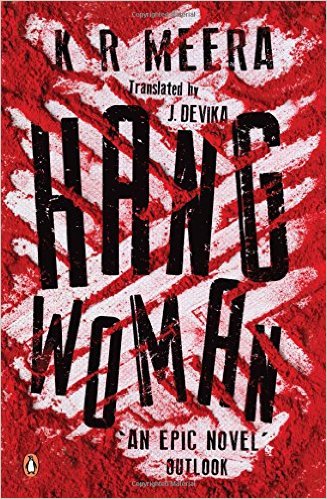
Ever since Hangwoman, my translation of K R Meera’s modern epic in Malayalam, Aarachaar was published, I have been repeatedly asked whether I edited it to ‘shape’. The question sometimes irritated me, because it was posed as if I had carried out the intellectual equivalent of cosmetic surgery on that fine work.

I struggled to communicate the subtlety of the editing that translation demands. One is always conscious of the fact that the readership of an English translation is qualitatively different from that of the original Malayalam text, but editing in the process of translation is not primarily aimed at making the text palatable to the former. Much more significant is the fact that what may need a whole sentence in the source language can perhaps be conveyed in a word in the target language or vice-versa. And, more importantly perhaps, any translation is hugely dependent on the translator’s reading of the text. The translator is constantly faced with the problem of how to interpret – is a certain word or phrase or sentence a simple description, or a complex one, or perhaps a metaphor or a simile? Editing rests quite decisively on such micro-decisions.

Continue reading Translators’ Dilemmas and Entering ‘South Asian Literature’

Women in Sabarimala – The Untold Story: Elsa T Oommen

This is a guest post by ELSA T OOMMEN

‘For the last 20 years woman irrespective of their age were allowed to visit the temple when it opens for monthly poojas. They were not permitted to enter the temple during Mandalam, Makaravilakku and Vishu seasons’
– (S. Mahendran vs The Secretary, Travancore Devaswom Board and Ors. (1991) (8) [AIR 1993 Ker 42])

The Supreme Court of India will soon be hearing the final arguments on the question of the restriction imposed on women in the reproductive age from entering the Sabarimala temple in Kerala. The court had earlier questioned the constitutional basis of the restriction at the behest of a the public interest litigation (PIL) placed before the apex court of India by the Indian Young Lawyers Association (IYLA) where it called for allowing women of all ages to be allowed entry to the temple. Continue reading Women in Sabarimala – The Untold Story: Elsa T Oommen

“Nobody killed Rohith Vemula”: Kishalaya Mukhopadhyay

This is a guest post by KISHALAYA MUKHOPADHYAY

“Nobody killed Rohith Vemula”. Perhaps someday there will be a film like this. Perhaps someday people will start talking about the exploitation of dalits, the need for annihilation of caste, the systematic discrimination in all spheres of society including the government, corporate, bureaucratic and educational sectors. Perhaps caste as an analytical category will become as politically charged as gender has become post-Nirbhaya. Today there is a discourse around marital rape, victim blaming, domestic violence and other aspects of patriarchy that has transcended even if slightly only the small coterie of feminist scholars within whom this discourse used to be limited to. Continue reading “Nobody killed Rohith Vemula”: Kishalaya Mukhopadhyay

The Need for Black-South Asian Solidarity: Lavanya Nott

This is a guest post by LAVANYA NOTT

In February 2013, George Zimmerman, a 28-year old neighbourhood watch coordinator in Sanford, Florida, stalked and fatally shot 17-year old unarmed Trayvon Martin, an African-American high school student. In July of that year, Zimmerman was acquitted of his crime.

On August 9, 2014, unarmed Black teenager Michael Brown was shot several times by police officer Darren Wilson in Ferguson, Missouri after Brown stole several packs of cigarillos from a neighbourhood store. In late November of that same year, a grand jury did not indict Wilson of his crime.

The Black Lives Matter movement began after Zimmerman’s acquital, and the Ferguson non-indictment saw the movement surge forward, with thousands of citizens taking to the streets all over the United States in protest. In the months that followed, the movement gained rapid momentum, spurred on by yet another non-indictment—that of a White police officer in Staten Island who put 43-year-old Eric Garner in a fatal chokehold in broad daylight, without provocation. His death was ruled by a medical examiner as a homicide, but his killer Daniel Pantaleo escaped indictment.

In mid-September 2015, Mohammad Akhlaq’s house in Dadri was broken into, his family attacked, and his life taken by a rampaging mob of RSS workers who were responding to a rumor that Akhlaq killed a cow and subsequently consumed its meat on Eid.

Less than a month later, a gang of upper-caste Rajputs set fire to the house of a sleeping Dalit family, killing two-year-old Vaibhav and his nine-month-old sister Divya. This attack, in BJP-ruled Faridabad, was set against the backdrop of a long-standing caste-related dispute between the Dalit and Rajput communities in the city.

Continue reading The Need for Black-South Asian Solidarity: Lavanya Nott

तूफानों की जिद देखने का वक्त़

(‘नवउदारवाद के दौर में हिन्दुत्व’ विषय पर अहमदाबाद में प्रस्तुत व्याख्यान का संशोधित एवं विस्तारित रूप)

‘आम लोग धर्म को सच मानते हैं, समझदार लोग झूठ मानते हैं और शासक लोग उपयोगी समझते हैं।’

– सेनेका / ईसापूर्व 4 वर्ष से ईसवी 65 तक/

..अपनों के बीच होने की एक सुविधा यह होती है कि आप इस बात से निश्चिंत रहते हैं कि किसी प्रतिकूल वातावरण का सामना नहीं करना पड़ेगा, जो सवाल भी पूछे जाएंगे या जो बातें भी कहीं जाएंगी वह भी अपने ही दायरे की होंगी। मगर फिलवक्त़ मैं अपने आप को एक अलग तरह की मुश्किल से घिरा पा रहा हूं।

मुश्किल यह है कि जिस मसले पर – ‘नवउदारवाद के दौर में हिन्दुत्व’ -बात करनी है उस मसले को सदन में बैठे हर व्यक्ति ने ‘सुना है, धुना है और गुना है’। और खासकर जो नौजवान बैठे हैं, – जिनकी पैदाइश सम्भवतः बाबरी मस्जिद विध्वंस और उसके पहले लागू किए जा रहे ‘नए आर्थिक सुधारों’ के दौर में हुई थी – उनको फोकस करें तो कह सकते हैं कि उनकी सियासी जिन्दगी की शुरूआत से ही यह दोनों लब्ज और उससे जुड़ी तमाम बातें महाभारत के अभिमन्यु की तरह उनके साथ रही हैं।

निश्चित ही ऐसे वक्त़ उलझनसी हो जाती है कि कहां से शुरू किया जाए।  Continue reading तूफानों की जिद देखने का वक्त़

Reading Phule – Now No More Silences!

“Lack of education lead to lack of wisdom,

Which leads to lack of morals,

Which leads to lack  of progress,

Which leads to lack of money,

Which leads to the oppression of the lower classes,

See what state of the society one lack of education can cause!”

  • Jyotiba Phule

..Most people do not realize that society can practise tyranny and oppression against an individual in a far greater degree than a Government can. The means and scope that are open to society for oppression are more extensive than those that are open to Government; also they are far more effective. What punishment in the penal code is comparable in its magnitude and its severity to excommunication? Who has greater courage—the Social Reformer who challenges society and invites upon himself excommunication or the political prisoner who challenges Government and incurs sentence of a few months or a few years imprisonment?..

(Ranade, Gandhi and Jinnah, Address delivered by Dr Ambedkar on the 101 st birthday celebration of M G Ranade, 18 th January, 1943)

 Introduction

Understanding or rereading a historical figure – whose life and times have impacted generations of scholars and activists – who has been subjected to praise as well scrutiny by best brains of our times becomes a challenging task.  One gets a feeling that whatever has to be said has already been said and perhaps there is not much novelty left. An added challenge becomes when you are face to face with scholars/activists who could be considered experts on the issue having done more detailed and through work on the subject. Continue reading Reading Phule – Now No More Silences!

31st August in Manipur – The day and after: Roluahpuia

Guest Post by ROLUAHPUIA

In Manipur, most days are not merely a day as they appear in the calendar. Many days in fact are commemorated and remembered and therefore political. For instance, the 18th of June is commemorated as the Great June Uprising by the Meitei mostly led by the United Committee Manipur (UCM) as a mark of remembrance to the loss of 18 lives as a result of the protest over the extension of ceasefire beyond territorial limits between the Government of India (GoI) and the National Socialist Council of Nagalim- Isak Muivah (NSCN-IM). On the contrary, 27th August is commemorated by the Mao Naga as ‘Martyrs Day’ to commemorate the loss of seven lives in 27th August of 1948 for the cause of Naga integration movement. For the last, 13th September of every year is commemorated by the Kuki as Kuki Black Day against the mass killing of Kuki by the Naga militants. What this three different commemoration displays is the noticeable cleavages and ethnic divides among the three ethnic groups of the state. Continue reading 31st August in Manipur – The day and after: Roluahpuia

Beyond Trumpism and Rumpism- Thoughts on People Against Fascism in Kerala

The so-called People Against Fascism (PAF), a meeting at Kochi last weekend, will be remembered perhaps as the first open enunciation of neocon anti-Muslim rhetoric in Kerala. This is important considering the fact that even the Hindutva rightwing here is yet to draw on this virulent discourse. The terrible – and sadly laughable- irony is that it is the self-styled social and political radicals who claim that it is a move against Hindutva politics. Continue reading Beyond Trumpism and Rumpism- Thoughts on People Against Fascism in Kerala