Category Archives: Identities

Dr Khalil Chishty is back home – three cheers for candle-light peaceniks

The 80 year old Pakistani virologist Dr Khalil Chishty just reached Pakistan. His son Tariq called me from Islamabad. “Sorry we couldn’t meet, it was all so rushed.” Tariq Chishty was worrying about getting a PIA ticket – President Zardari sent his special PAF plane to get them! Contrast this with the rank indifference with which the Indian government treats the issue of Indian prisoners in Pakistan.

Just a few days ago, Tariq Chishty was convinced his father is not going to be freed in the hearing on Thursday and was ready to return to Pakistan alone. But the Supreme Court of India, in an unprecedented judgement, allowed him to go home, on the condition that he must return by 1 November for the next hearing. Some months ago when his grandson had met him in jail, Dr Chishty had bid him goodbye as though it was the last time. This is not the end yet – the Supreme Court may uphold his conviction and god knows if he’ll again have to spend time in jail. 20 years in India have been jail-like for him even when he’s not been in jail. For details of his case, whether and why he should be granted mercy and so on, please see this article by me. Continue reading Dr Khalil Chishty is back home – three cheers for candle-light peaceniks

Cartoons All! Politicians and Self-Seekers

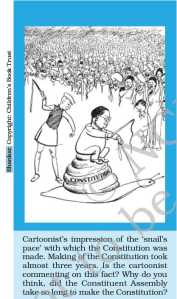
The uproar over what is being referred to as the ‘Ambedkar cartoon’ in the class XI textbook prepared by NCERT first began over a month ago, that is to say, almost six years after the books have been in circulation, been taught and received high praise for their lively style and a critical pedagogical approach (more on this below).  It was a political party – one of the factions of the Republican Party of India – that decided to kick up a ruckus over ‘the issue’ – that is, the ‘affront’ to Dr Ambedkar that the cartoon in question supposedly constitutes, and the resultant ‘hurt sentiments’ that it has caused. Very soon everyone began to fall in line, and practically every member of our august Parliament was vying with one other to prove that  they were indeed more hurt than their colleagues. One of them, Shri Ram Vilas Paswan has even demanded that the NCERT itself should be dissolved!

Good old Jurgen Habermas – and good old Habermasians  – have always invested a lot in forums like the parliament, that are to them the hallowed institutions of ‘rational-critical discourse’ where through reasoned argument people convince each other. That is how the voice of Reason ultimately prevails in democracies. I have always been suspicious of this claim and have thought that Habermas’ empirical work on the decline (‘structural transformation’) of the public sphere was more insightful than his normative fantasies. Long long ago, his empirical work on the transformation of the public sphere showed that it was the rise of political parties that had actually destroyed all possibilities of ‘rational-critical discourse’, where organized passion in the service of immediate political interests carried the day.

Continue reading Cartoons All! Politicians and Self-Seekers

Who wants a non-Brahmin sperm?

Not that we needed any evidence of the prevalence of caste in India – even amongst the elites who like to pretend caste doesn’t exists when it comes to the reservation debate. The Times of India reports from Mumbai:

In India, it’s well known that couples shopping for sperm demand both looks and brains. What isn’t so well known, despite being fairly commonplace, is a more outrageous request: caste-based sperm. Three years ago, Dr Saurav Kumar, a Patna gynaecologist, created a furore when he told a newspaper that childless couples insisted on knowing the caste of sperm donors. But while one may be tempted to assume that caste biases are entrenched only in states likeBihar, the city’s infertility experts insist otherwise.

Dilip Patil, founding president of Trivector, an infertility solutions firm, says there is a definite preference for Brahim donors in Mumbai. “Even among Muslims, couples want to know whether the donor is Sunni or Shiite,” he says. “However, going by Indian Council of Medical Researchguidelines, we reveal only the religion of the donor, not the caste.” [Link]

Family chronicles

Jamal Kidwai tells the (continuing) story of the Partition through family memories:

As children we would invariably be divided into Pakistani and Hindustani groups. We would have long arguments about who would win the next war, whether Imran Khan was a better all-round cricketer than Kapil Dev; we would even divide ourselves into Indian and Pakistani teams when it came to playing cards, scrabble, cricket or antakshari. These competitions and arguments brought small but interesting victories. Like once when in the course of an argument, a Pakistani cousin pulled out a tube of Colgate toothpaste, a far slicker plastic tube than our usual Indian toothpaste which came in tin tubes and was easily rusted. He was taunting us about the quality of the toothpaste tube which, of course, proved how backward India was compared to Pakistan. At this point one of us from the Indian team noticed that ‘their’ tube had a mark ‘Made in India’. Nothing gave us more joy than that and the Pakistani team was not only defeated but was left embarrassed for the rest of the holidays. (Material wealth and consumer goods was one area where Pakistan, with its imported goods from the US, was far more ‘developed’ than India and it gave us great pleasure to puncture that aspiration.) [Read the full article.]

Delhi 1803-2012: A Brief Biography

Delhi, Or Dilli has been a city and a capital for a long time and even when it was not the capital, during the Lodi and early Mughal period, and later between 1858 and 1911, it continued to be an important city. We are of course talking of what is historically established and not of myths and legends. During this period there have been 7 major and several minor cities within the territories now identified as the National Capital Territory of Delhi (NCR-Delhi). New Delhi is the eight city. This piece marking the hundred years of the shifting of the colonial capital to Delhi from Calcutta in 1912, will talk about both Shahjahanabad and New Delhi. We will see how  Shahjahanabad the once most powerful and rich city of its time and the last capital of the Mughals was gradually  ruined, plundered and virtually reduced to a slum  while next door arose, a new enclave of Imperial grandeur known now as New Delhi. Continue reading Delhi 1803-2012: A Brief Biography

The Semiotics of Happiness

Guest post by ABHIJIT DUTTA

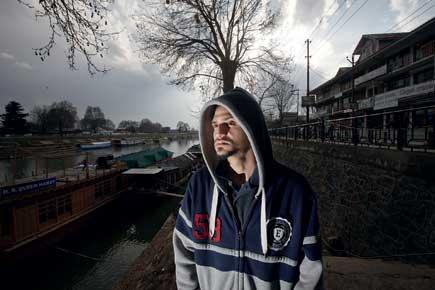
MC Kash - Photo by Ashish Sharma / Openthemagazine.com

It is not every day that you wake up to find your Twitter timeline flooding with the assertion that Kashmir – of all places – is happy. Dangerous? Of course. Beautiful? well, yes, the postcards are pretty enough. Angry? Sure, they look it. Radical? Oh god, yes. Happy?

If you ask Manu Joseph, author of Serious Men and editor of Open, the answer is yes. In this article, he talks about his interactions with “regular” people in the valley – the non elite, the non journalist, the non artist, the non writer – and is convinced that Kashmir is ready to move on. That it has already moved on. That Kashmir is happy. As proof, he offers these exhibits: (a) record high tourism numbers, (b) 2010 IAS topper Shah Faesal (who tells him “commonsense is finally winning”), (c) a meeting of a District Magistrate with elected leaders of a village (“not a word about politics”, says the DM to Mr. Joseph, “They want to talk about things that matter to them and their families”) and (d) the desire for city life (“we want KFC”).

Continue reading The Semiotics of Happiness

A Brief Summary of the Interlocutors’ Report on Kashmir: Shoaib Rafiq

This guest post by SHOAIB RAFIQ is an analysis of the Home Ministry-appointed group of interlocutors’ report on Kashmir 

We swear by the fundamentals of absurdism
of that all we have learned
our solutions will mimic the ludicrousness
that we employ in our education, research, and other related shit. Continue reading A Brief Summary of the Interlocutors’ Report on Kashmir: Shoaib Rafiq

NWMI Condemns The Violent Abuse Of Meena Kandasamy

[We at Kafila are absolutely horrified at the abuse directed at poet and activist Meena Kandasamy for expressing her views on twitter regarding the beef-eating festival at Osmania University. That supposedly ‘neutral’ educational institutions replicate upper-caste Hindu dietary taboos, is no surprise, nor that the ABVP reacted with its customary violence to that questions upper caste privilege. What is shocking is the attitude of the Vice Chancellor and the sexist, misogynist, violent speech directed at her on the web. It is telling that those who take such umbrage at the eating of cows, think nothing of advocating the public rape of women. Below is a statement issued by the The Network of Women in Media condemning the hate speech directed at her. We stand in solidarity with Meena Kandasamy.]

The Network of Women in Media, India (NWMI), strongly condemns the violent and sexist abuse unleashed on poet, writer, activist and translator Meena Kandasamy, presumably in response to her posts on Twitter about the beef-eating festival at Osmania University, Hyderabad, on 15 April 2012 and the ensuing clashes between groups of students. Continue reading NWMI Condemns The Violent Abuse Of Meena Kandasamy

Forget Hair-Oil-Powered Indulekha, Remember the Muditheyyam

Well, the truth is that I care two hoots for Indulekha Hair Oil, their stupid ads, and the wide-eyed chubby-cheeked teenage girls who they usually cast as epitomes of Malayalee feminine grace. All of Mallu FB world is agog with discussion about a brainless ad for the Indulekha Hair Oil, in which a fiery-looking woman whose dress-style follows the dress conventions of our Malayalee AIDWA Stars, bursts with indignation over the terrible harassment that women with long hair face on buses, how we are all forced to cut off “the hair that we have” (‘Ulla mudi’) and go about with short hair “like men” because of this horrible injustice, and finally, how we all ought to grow our hair long (and let it down, possibly) and hit back at such harassers. This stupid ad is actually only one among other stupid ads for this hair-oil which uses currently-common ideas like ‘women’s collectives’ (stree koottaimakal). All of them are jarring since the concepts they use, and what they aim at, simply don’t mix.Part of the outrage has been fueled by the fact that the ad uses as a model Sajitha Madathil, who is well-known as a feminist theatre activist in Kerala. Continue reading Forget Hair-Oil-Powered Indulekha, Remember the Muditheyyam
Of Shared Spaces and Experiences in Gujarat: Ayesha Khan

This is a guest post by Ayesha Khan

The other day, my brother dug out an old DD animation film on unity in diversity – Ek Titli, Anek Titli… We replayed it umpteen times in a fit of summer nostalgia, until we got all the lines correct. We  ignored the political subtext.  But only until it rebounded starkly on us, with the wails of  a baby that had newly come in to the family. The little one foisted on us the first ponderous responsibility – finding him a name.

The family brief for me, aunt to a six day old nephew, and equally to childhood pal Vandana, who is soon-to-be aunt to a niece in US,  was to think up  names resonating a core Indian-ness, the Muslimness, the TamBram-ness (in Vandana’s case), with a universal appeal and encapsulating  everything that is pious, lucky and great.

Continue reading Of Shared Spaces and Experiences in Gujarat: Ayesha Khan

A meeting with Deepak Perwani

At the Lifestyle Pakistan trade exhibition that concluded in Delhi on Sunday, one stall stands out from a distance for just its name – Deepak Perwani, one of Pakistan’s most famous fashion designers. This was the first of its kind exposure for Perwani outside the Indian fashion circuit, of which he has long been a friend and fellow traveller. The humble Perwani, though, has long been used to facing Indian surprise. “People keep asking me, ‘Oh you guys didn’t migrate?’, ‘How are you treated there?’ and so on. The questions show a lack of awareness.” Pakistani Hindus do not exist in the Indian imagination, but Perwani is part of Karachi’s flourishing Hindu community, which is small but visible and influential even today. One lakh of Karachi’s 1.3 crore population is Hindu.

Continue reading A meeting with Deepak Perwani

An Unrecorded Festival – Pictures from Parliament Street: Siddhi Bhandari

April 14 was Ambedkar’s birth anniversary. There is no single pan-India political icon, certainly not Gandhi, whose birth and death anniversaries are celebrated as public festivals, by the public, in the way the Ambedkar’s is. Some newspapers on 15 April typically had photos of the top leaders of the country paying homage to Ambedkar but that’s about all. When historians turn these pages they will not find, in the first drafts of history, any reports about how people celebrated Ambedkar’s birthday like a festival. They will not find a record of the singing and dancing, of drums and plays, of Dalit housing socities and employees’ unions holding celebrations bang under the nose of the Indian Parliament at Parliament Street as much as in Dalit bastis is villages across India. Such is the public ignorance of this celebration at Parliament Street in Delhi that most Delhites enjoying a free holiday don’t even know about it. Parliament street is where SIDDHI BHANDARI took these photos in 2010.

This slideshow requires JavaScript.

After extracting US apology over Shahrukh Khan, the Indian Government owes several apologies too: JTSA

This release comes from the JAMIA TEACHERS’ SOLIDARITY ASSOCIATION

15th April 2012

After extracting US apology over Shahrukh Khan, the Indian Government owes several apologies too

The Indian government has rejected the ‘mechanical apology’ being offered by the US for detaining the super star Shahrukh Khan at the airport for 90 minutes too long. The US Deputy Chief of Mission has been summoned, and institutional mechanisms to ensure that there is no repeat of such an incident.

Now, may we ask the hyper active and sensitive Indian government to tender apologies—and genuine apology please, not a mechanical one—for detaining (illegally), incarcerating, torturing—in short, destroying and tearing apart the lives of hundreds of its own citizens in supposedly fighting terror.

  1. The government could do well by starting with apologizing to Md. Amir Khan, who has spent half his life in prisons before 17 of the 19 blasts cases in which he was accused, fell apart because there was simply no evidence against him. Could someone please say sorry to him: for a lost childhood, for his grief-crazed mother’s paralysis, for his heartbroken father’s early death, for his broken, crumbling home. Continue reading After extracting US apology over Shahrukh Khan, the Indian Government owes several apologies too: JTSA

Between Aid Conditionality and Identity Politics – The MSM-Transgender Divide and Normative Cartographies of Gender vs. Sexuality: Aniruddha Dutta

This guest post by ANIRUDDHA DUTTA continues a theme raised on Kafila by Rahul Rao

Late last year, the UK and US governments made announcements supporting the global propagation of LGBT (lesbian-gay-bisexual-transgender) rights as human rights, suggesting that the future disbursal of aid might be made conditional on how LGBT-friendly recipient countries are perceived to be. The potential imposition of ‘gay conditionality’ on aid has been rightly critiqued for imposing a US/European model of sexual progress on ‘developing’ countries, which may justify covert geopolitical agendas and fail to actually benefit marginalized groups. But whatever form such conditionalities may take in the future, a more implicit and routine form of aid conditionality has been already at work, relatively unnoticed, for several years now – the presumption of distinct and enumerable minorities corresponding to categories like homosexual or transgender as target groups for aid in socio-cultural contexts where gender/sexual variance may not be reducible to such clear-cut categories or identities. Increasingly, community-based organizations (CBOs) working to gain gender/sexual rights or freedoms need to define themselves in accordance with dominant frameworks of gender-sexual identity to get funding both from foreign donors and the Indian state, creating identity-based divisions among CBOs and presenting existential challenges to communities that do not exactly fit these categories.

Continue reading Between Aid Conditionality and Identity Politics – The MSM-Transgender Divide and Normative Cartographies of Gender vs. Sexuality: Aniruddha Dutta

The Many Uses of a U.P Election

I live in Noida, which is the child of an extra-legal union between Delhi and Uttar Pradesh. Noida is not-quite Delhi, not-quite U.P, not quite itself on most days. Living in a cusp has several advantages, however, the main one being that one can look either way, up at Delhi and right down over U.P’s scruffy head. I found myself doing both in the recently-concluded U.P election. Curiously it seemed, for Delhi people, U.P’s 2012 elections were flush with new meaning. For decades the favourite whipping boy of Delhi, U.P had overnight become its favourite gap-toothed angel. For Pratap Bhanu Mehta of the Delhi-based Centre for Policy Research, the U.P election was a historic battle between empowerment and patronage, the future and the past, performance and rhetoric, sincerity and cynicism, and (this is my favourite) ‘rootedness over disembodied charm’. Mehta believes that while voters ‘carefully assessed’ candidates through the ‘prism of local circumstances’, they were no longer prisoners of their identity. Most confounding is Mehta’s view of democracy, “In a democracy, where you are going should be more important than where you are coming from”. These U.P elections “redeemed that promise” according to Mehta, since they were “without a trace of community polarisation: no one felt on the edge or under siege, all could exercise options without being unduly burdened by the past.”

Continue reading The Many Uses of a U.P Election

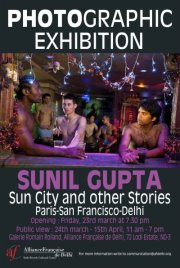
Nigah statement condemning the shutting down of Sunil Gupta’s exhibition ‘Sun City & Other Stories’

This statement has been put out by NIGAH
On Friday, March 23 2012, Sunil Gupta’s photographic exhibition ‘Sun City & Other Stories’ opened at the Alliance Francaise in Delhi. That evening itself, plainclothes men of the Delhi Police from the Tughlaq Road Police Station arrived at the show and ordered the removal of numerous photographs. In the chaos that followed, the photographs were removed by the Alliance Francaise under the ‘supervision’ of the Delhi Police and the exhibition was closed for the evening. The next day, the Alliance Francaise informed Sunil -via a third party – that the entire show would be shut down.

Why did this happen? On that day itself the Delhi Police said that someone had called the emergency police hotline, and complained to the Delhi Police about this exhibition which, according to the complainant, was ‘against Hindu culture’. Another version of events, also produced by the Delhi Police, claims that they received a complaint at the Tughlaq Road Police Station from someone who had made a video of the exhibition, complaining about the nudity in the photographs. Continue reading Nigah statement condemning the shutting down of Sunil Gupta’s exhibition ‘Sun City & Other Stories’

Will Sri Lanka now get on with the job?: Kusal Perera

Guest post by KUSAL PERERA

Its now post-Geneva in Sri Lanka. Prime Minister of neighbouring Bharat Ganarajya, the Republic of India, Dr. Manmohan Singh thus wrote to His Excellency the President of Sri Lanka on 24 March, to say, “Your Excellency would be aware that we spared no effort and were successful in introducing an element of balance in the language of the resolution”  and the Indian delegation to the UNHRC had been advised to keep close contact with its Sri Lanka counterparts “in an attempt to find a positive way forward”. The implied message is that New Delhi played its role to hook Sri Lanka to a US sponsored resolution in Geneva, over post war reconciliation and rehabilitation and on accountability during war.

The resolution in short, requires the SL government to, Continue reading Will Sri Lanka now get on with the job?: Kusal Perera

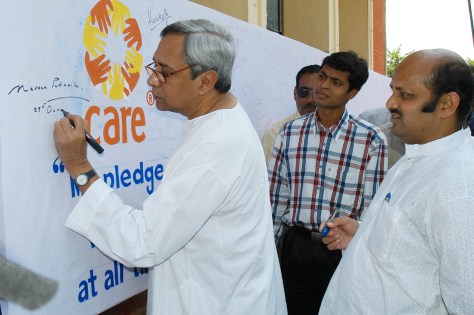
Will Naveen Patnaik please wake up to atrocities against Dalits in Odisha?

This memorandum was submitted on 22 March 2012; see full list of signatories at the end

A Memorandum of Demands Seeking Chief Minister’s Immediate Intervention to stop the Ongoing Brutal Atrocities/ Crimes against Dalit Communities in Odisha

Date: 22/03/12

Dear Sir,

We, the undersigned victims of human rights violation, representatives of various mass organisations, Non-Governmental Agencies, Community Based Organisations, Human Rights Activists, journalists and citizens belonging to the marginalised communities would like to draw your attention to the ongoing atrocities against Dalit Communities in Odisha. Continue reading Will Naveen Patnaik please wake up to atrocities against Dalits in Odisha?

On Sri Sri Ravi Shankar’s views about government-run schools

This press statement comes via Kavita Srivastava; see full list if signatories at the end.

PRESS RELEASE

Jaipur, 21st March, 2012: We are shocked and strongly condemn the statement made by the Global Corporate Brand “Art of Living” businessman, Ravi Shankar in Jaipur on 20th March, 2012, wherein he states that “Government schools are breeding grounds of violence and Naxalism ….that is why Government run schools and colleges must be handed over to private bodies….and that ‘Adarsh schools’ must reach all areas”. We would like to demand evidence from Ravi Shankar that Government schools, in which 16 crore children of the age group 6 to 14 years are studying are breeding grounds for violence and Naxalism. An army of Indian engineers, doctors, nurses, computer professionals, government servants army and police personnel and factory workers come from government schools. It would appear that this human resource that is the backbone of this country is wholly ‘Naxalite’ in the eyes of this completely irrational guru.

Continue reading On Sri Sri Ravi Shankar’s views about government-run schools

Reflections of a Refugee from Modi’s Gujarat: Reza Noorani

Guest post by REZA NOORANI

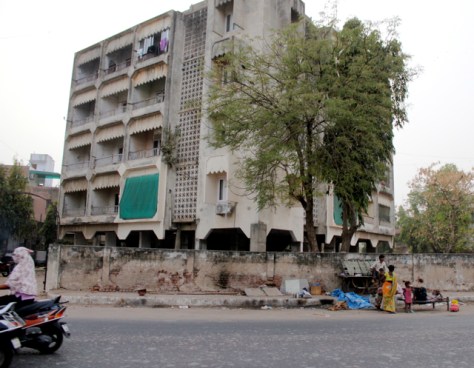
Kashana Flats, Paldi, Ahmedabad, as they stand today. Photo credit: Prateek Gupta

When the riots broke out in 2002 in Ahmedabad, after the burning of the Godhra coach, I was in the tenth standard. I remember listening to the news in the morning, just after which my best friend Ketan had called me and asked “Why did you guys do this?” I didn’t know how to respond to that. I think I just laughed it out and we began discussing what was happening in the city. My father took the phone away from me. I was preparing for my board exams and was just about to leave for one of the last days of school, after which we would go on a study leave. My father, who had experience with riots, told my two elder sisters and me to not go to school and stay at home that day. Continue reading Reflections of a Refugee from Modi’s Gujarat: Reza Noorani

Jai Bhim, Comrade Patwardhan

How many murdered Dalits does it take to wake up a nation? Ten? A thousand? A hundred thousand? We’re still counting, as Anand Patwardhan shows in his path-breaking film Jai Bhim Comrade (2011). Not only are we counting, but we’re counting cynically, calculating, dissembling, worried that we may accidentally dole out more than ‘they’ deserve. So we calibrate our sympathy, our policies and our justice mechanisms just so. So that the upper caste killers of Bhaiyyalal Bhotmange’s family get life imprisonment for parading Priyanka Bhotmange naked before killing her, her brother and other members of the family in Khairlanji village in Maharashtra, but the court finds no evidence that this may be a crime of hatred – a ‘caste atrocity’ as it is termed in India. Patwardhan’s film documents the twisted tale of Khairlanji briefly before moving to a Maratha rally in Mumbai, where pumped-up youths, high on testosterone and the bloody miracle of their upper caste birth are dancing on the streets, brandishing cardboard swords and demanding job reservations (the film effectively demolishes the myth that caste consciousness and caste mobilisation are only practised by the so-called ‘lower castes’). Asked on camera about the Khairlanji murders, one Maratha manoos suspends his cheering to offer an explanation. That girl’s character was so loose, he says, that the entire village decided to teach her a lesson.

Continue reading Jai Bhim, Comrade Patwardhan