The Delhi media celebrated on 11 December the above event, which took place on 11 December 1911. The Delhi media will celebrate anything that is worth celebrating, and everything that is not worth celebrating. Someone just has to set the alarm bells and hours of programming, reams of newsprint will be dedicated to an orgy of unthinking celebration. The only thing other than Celebration that sells is Outrage.
Sohail Hashmi has written on Kafila about why 11 December could not be the centennial of “New Delhi” but only the Delhi Durbar. That was only one problem with the Celebrations; here are some more.
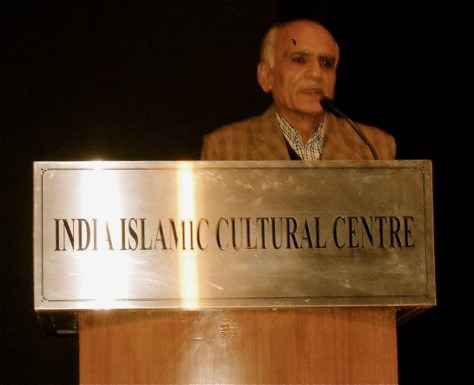
M. Saleem addressing the Maulana Jauhar Award ceremony at IICC in Delhi on 10 December 2011
Update on 11 December:
Twocircles.net reports:
“Zafar Agha was replaced by ex-MP and senior Journalist Santosh Bharatiya. However, M Saleem claimed that Sanjeev Bhatt could not attend the programme due to time constraint and the award may be given to him some other time. While referring to Santosh Bhartiya, being awarded in place of Zafar Agha, M. Saleem said that he has been nominated for the award and nobody has been replaced for the same. The organizer kept totally mum about both Zafar Agha and Jagdish Tytler. ” [Link]
*
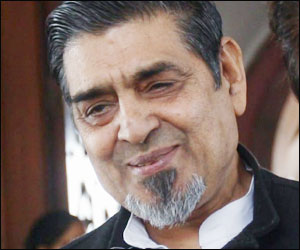
On 3 December, an open letter signed by some of us, and posted here on Kafila, had appealed to seven distinguished individuals to not accept the Maulana Mohd. Ali Johar Award, to be given on 10 December at the India Islamic Cultural Centre. We had reasoned that since the eighth awardee was Jagdish Tytler, they should not share an award and a platform with someone accused of organising mass murder of Sikhs in Delhi in 1984.
Yesterday evening, the general secretary of the Maulana Jauhar Academy, M. Saleem, emailed one of the signatories, Mahtab Alam. The email contained a scanned copy of a letter sent by Jagdish Tytler to M Saleem, which said that Tytler would not attend the award ceremony so as to not embarrass the the other awardees and the organisers, because of this boycott campaign. He, however, stressed on his innocence in the 1984 anti-Sikh pogrom, and, notably, did not say that he would not accept the award. He would only not attend the ceremony. M. Saleem has also not announced whether he is withdrawing his decision to give the award to Mr Tytler. For more details on what has transpired in the last few days, please see Mahtab Alam’s article, Beware of the Sarkari Musalmaan.
Faculty members chose to remove two summer economics courses at the Summer School taught by Subramanian Swamy, a controversial Indian political figure. Over the summer, Swamy published an op-ed that advocated for the destruction of hundreds of Indian mosques and the disenfranchisement of non-Hindus in India.
Chief Information Officer for the University Anne H. Margulies concluded the meeting by updating faculty on the newly-created Harvard University Information Technology system and its future vision, which included greater collaboration with the library and further digital pedagogy. [Link]
In the current issue of the English fortnightly, Milli Gazette (1-15 December), it is reported that on 10 December 2011, former union minister Jagdish Tytler will be awarded with seven others in a function at India Islamic Culture Centre, Delhi, by Maulana Mohammad Jauhar Ali Academy. The other names were those of Dr. S Y Quraishi, Chief Election Commissioner of India; Sanjeev Bhat, Indian Police Service officer (Gujarat); senior journalist Zafar Agha; Mohd. Najeeb Ashraf Chaudhri, chief income tax commissioner; Maulana Mohd. Haseeb Siddiqui, chairman of the Deoband Nagar Palika Parishad; Nusrat Gwalliori, a Delhi-based Urdu poet, and Begum Rehana AR Andre, a social activist and educationist based in Mumbai.
The award has been named after Maulana Mohammad Ali Jauhar, a key figure of the Indian freedom movement, a leader of the Khilafat movement and one of the founders of Jamia Millia Islamia, a prestigious central university in Delhi. The award is given on his birth anniversary every year. Though the reasons for honouring these people were not mentioned in the Milli Gazette report, the Academy’s general secretary explained that every year, the academy honours individuals in recognition of their extra-ordinary contribution in the field of journalism, politics, social service and so on. This year they chose Jagdish Tytler for his contribution to politics! Continue reading Beware of the Sarkari Musalmaan: Mahtab Alam→
This isMUHAMMAD UMAR MEMON‘s translation of an article bySA’ADAT HASAN MANTO. The translation first appeared in The Annual of Urdu Studies.
The Hindi-Urdu dispute has been raging for some time now. Maulvi Abdul Haq Sahib, Dr Tara Singh and Mahatma Gandhi know what there is to know about this dispute. For me, though, it has so far remained incomprehensible. Try as hard as I might, I just haven’t been able to understand. Why are Hindus wasting their time supporting Hindi, and why are Muslims so beside themselves over their preservation of Urdu? A language is not made, it makes itself. And no amount of human effort can ever kill a language. When I tried to write something about this current hot issue, I ended up with the following long conversation:
Munshi Narain Parshad: Iqbal Sahib, are you going to drink this soda water?
Mirza Muhammad Iqbal: Yes, I am.
Munshi: Why dont you drink lemon?
Iqbal: No particular reason. I just like soda water. At our house, everyone likes to drink it.
Shahid Amin has earlier written about the role of the Oxford University Press (India) in the censorship of AK Ramanjuan’s essay on the Ramayana. This press release, signed by a group of Indian scholars at Oxford University, comes to us via Agrima Bhasin.
Press Statement
Oxford, England
Date: 30 November 2011
A petition by members of Oxford University has condemned Oxford University Press (OUP) India’s unflattering role and its deafening silence on the controversy surrounding Delhi University’s recent decision to drop A.K. Ramanujan’s essay (Three Hundred Ramayanas: Five Examples and Three Thoughts on Translation). This petition has gained the abounding support of Oxford intelligentsia across 15 departments and 20 constituent colleges. Signatories include distinguished faculty members, senior academics and students.
In 2008 OUP India unceremoniously decided to stop publication of the only two books (Paula Richman’s Many Ramayanas and Vinay Dharwadker’s The Collected Essays of A.K. Ramanujan) containing Ramanujan’s essay. This happened to coincide with legal proceedings instituted inter alia against OUP India by fringe religious and cultural groups. OUP India’s prolonged subsequent silence on this matter lent widespread credence to the contention that OUP India caved in to external pressure thereby compromising its stated goals of “…[furthering] excellence in research, scholarship… by publishing worldwide.”
You can add your name to this appeal in the comments section.
Delhi, 3 December 2011
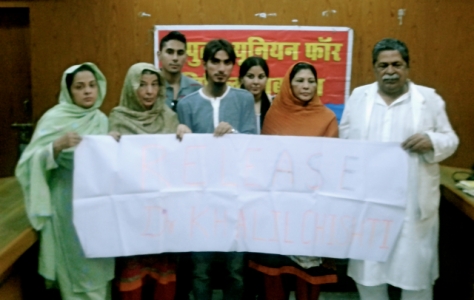
According to a news report in the Milli Gazette of 1 December 2011, Jagdish Tytler, an accused in the anti-Sikh pogrom of 1984, will be awarded the Maulana Mohd Ali Jauhar Award on 10 December 2011 at the India Islamic Cultural Centre, New Delhi. Seven others will share this award. The undersigned appeal to the other seven awardees to not accept the award as a mark of protest against honouring Mr Tytler, whose contribution in the 1984 anti-Sikh pogrom has been recorded by several fact-finding reports, including those by PUCL and PUDR.
This is M. ASADUDDIN‘s translation of a letter written by SA’ADAT HASAN MANTO to Jawaharlal Nehru in 1954. This translation first appeared in The Annual of Urdu Studies (volume 11, 1996).
Pundit-ji, assalamu alaikum!
This is the first letter I’m sending you. By the grace of God you’re considered very handsome by the Americans. Well, my features are not exactly bad either. If I go to America, perhaps I’ll be accorded the same status. But you’re the Prime Minister of India, and I’m the famed story writer of Pakistan. Quite a deep gulf separating us! However, what is common between us is that we are both Kashmiris. You’re a Nehru, I’m a Manto. To be a Kashmiri is to be handsome, and to be handsome … I don’t know. Continue reading Pundit Manto’s First Letter to Pundit Nehru→
Pardon and or Remission of Punishment for Pakistani prisoner Dr. Khaleel Chishty under Article 161 of the Constitution of India by the Governor of Rajasthan
Recent events in Kerala convince me that we need to think more closely about the ways in which our political public life is being slowly overwhelmed by something that is profoundly anti-public but somehow manages to resemble it — I’m tempted to call it the Mobpublic. I’m of course not referring to formal politics, where political parties and powerful communities continue to squabble without any serious difference in their programmes. Very little of either the political or the public survives in them; all one hears for most of the time are the tales of internal squabbling which is neither political (yes, despite all of V S Achuthanandan’s efforts to coopt oppositional civil social struggles) nor public. Perhaps the decline of the political is a condition for the rise of the mobpublic.
This press release comes from KAVITA SRIVASTAVA of the People’s Union for Civil Liberties. It was released after a press conference in Ajmer on Friday, 18 November 2011
Family appeals to Governor Shivraj Patil to sign the mercy petition of Dr. Khalil Chishty pardoning him at the earliest
Government of Rajasthan grants perrmission to the family to meet Dr. Chishty in Jail
You may have seen this documentary film before. If you have, you will, I’m sure, want to see it again. It is not about Ram or Kabir. It is about you and me.
Had Anhad is a documentary film, part of the Kabir Project, released in 2008.
A film by Shabnam Virmani
Language: Hindi & Urdu with English Subtitles
Duration: 103 min
Kabir was a 15th century mystic poet of north India who defied the boundaries between Hindu and Muslim. He had a Muslim name and upbringing, but his poetry repeatedly invokes the widely revered Hindu name for God – Ram. Who is Kabir’s Ram? This film journeys through song and poem into the politics of religion, and finds a myriad answers on both sides of the hostile border between India and Pakistan.
This press release was put out by the HUMAN RIGHTS COMMISSION OF PAKISTAN, Lahore, on 9 November 2011
The brazen murder of three brothers from the Hindu community in Shikarpur district on Eid day demonstrates that the perpetrators believe they can get away with murder simply because the victims are non-Muslim, the Human Rights Commission of Pakistan (HRCP) has said.
In a statement issued on Wednesday the Commission said: “HRCP is shocked at the brazen murder of the three Hindu citizens in Shikarpur and shares the sense of outrage of the Hindu community, not least because of the utter failure of the police to prevent the killings or arrest the killers even though threats of violence had been brought to their notice. Continue reading Govt must do more to protect minorities: Human Rights Commission of Pakistan→
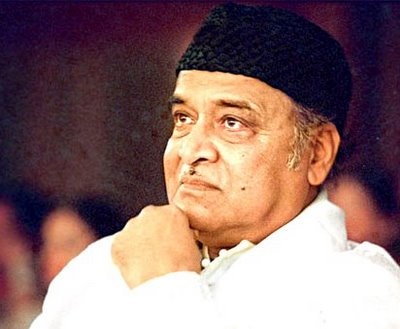
The unprecedented number of mourners crowding the otherwise sleepy streets of Guwahati at night following the demise of the maestro, proves testimony to his genius. In his life, there was no dearth of followers, some logical, some blind; while in his death, grief engulfs both the sections. What could be the reasons for Hazarika’s powerful grip over people’s emotions? It can’t be just his musical dexterity; it’s more the aura surrounding him, emanating from his multi-dimensional persona and life-span.
Many of us who have been studying the political process in Assam were surprised when we received the news in December 2009 that Chairman Arabindo Rajkhowa and some of his colleagues of United Liberation Front of Asom (ULFA) had been arrested in Bangladesh. This moment had to come some day, but we were not prepared to face it. We were familiar with the brave and somewhat legendary image they had created for themselves and needed time to believe that they could be defeated. Continue reading My Days with Nationalism in Assam: Ankur Tamuli Phukan→
During Sikh rule in Peshawar, the Gor Khatri area of Peshawar was declared Governor House, so the Gorakh Nath temple here was abondened and Hindu families shifted to a close by residential compound called Christian Colony. Then during the British Raj, the government provided residential quarters to a Hindu family to look after the temple. Continue reading A temple in Peshawar reopens for the first time since 1947: Shabbir Imam→
Breaking from usual practice, I am cross-posting a piece from Akshay Khanna writing as part of the Participation, Power and Social Change blog over at the Institute of Development Studies at the University of Sussex. Akshay is writing in response to this statement by UK Prime Minister David Cameron where, in a nutshell, he threatens cutting off aid to countries that still ban or make homosexuality illegal. Continue reading Invitation to a Debate: Queer Politics and Aid Conditionalities→
On a hot Sunday morning, tourists wait 30 minutes in a queue to get inside the House of Worship of the Bahá’í in Kalkaji, better known by its unofficial name, the Lotus temple. Once inside, they spend less than 30 seconds. The tourists, who include burqa-clad women and sadhus in saffron, don’t seem to be in need of a multi-faith prayer hall. The multi-faith prayer service, held thrice a day, is also sparsely attended. People are apparently disappointed there’s only a large hall inside that beautiful white Lotus building, and they can’t even take photos of this hall. Continue reading 25 Years of Delhi’s Lotus Temple→
Over the corner shop at the busy crossing near home hangs a white board on which the words ‘Muzaffar Pan-House’ are painted in bright red. On the right side of the words, an artistic rendition of the side-view of Muzaffar’s face can be seen. His left hand is also painted in, holding a cigarette. The grey smoke emanating from the cigarette does not vanish before it touches the top of the board. Continue reading A prologue to memory: Arif Ayaz Parrey→
The press is full of the India Human Development Report 2011 released by the Centre recently, and Gujarat figures prominently in newspaper headlines for reasons Mr. Modi is unlikely to quote in self-congratulatory ads. As The Telegraph put in tortured prose, Gujarat has a ‘Gnawing record fasting Modi won’t flaunt‘.
Kerala once again topped the Human Development Index. One of the more charming images that accompanied the story is from Rediff, which showed a fairly archetypal Kerala landscape with paddy fields, coconut trees and a cow. No humans, though, developed or otherwise. It struck me, then, that part of Kerala’s high ranking in the health and nutrition stakes may come from its willingness to consume all three: rice, coconuts and the cow. And thereby hangs a tale. Continue reading Human Development and other Holy Cows: Sajan Venniyoor→

 This is MUHAMMAD UMAR MEMON‘s translation of an article by SA’ADAT HASAN MANTO. The translation first appeared in The Annual of Urdu Studies.
 You can add your name to this appeal in the comments section.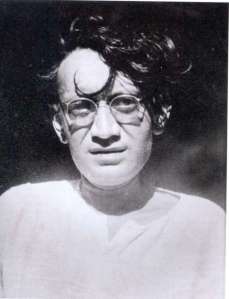


 KAFILA - COLLECTIVE EXPLORATIONS SINCE 2006