Category Archives: Language

JNU Bashing is an old pastime, but things just got much, much worse

In light of the glorious vigilantism being witnessed today, in which the lumpen lawyers at Patiala House are joining hands with Guardian of the Nation Horn-nob Go-Swamy on primetime TV A few years ago, finding myself in a heated but very enjoyable argument on why women change their surnames after marriage, somebody yelled from across the room, “What has JNU done to you?!”

I wasn’t surprised, only annoyed. Reducing my entire biography and political beliefs to an institution I attended once upon a time is a favourite pastime in India, when that institution happens to be JNU. I could have explained to the genius who shouted this that if I do have political opinions, neither were they surgically implanted in me at JNU nor will they wither away like the bourgeois state in Marxism if JNU ceases to exist. I should have been grateful that the JNU-phobia was posed through the formal courtesy of a query. Usually, it takes the form of a statement, “You JNU folk are all lunatics!”

In family settings, JNU-bashing is the preferred insult to shut down an argument, “It’s the JNU in you speaking!” At seminars, a question or a paper can be made illegitimate with the simple investigative exercise of determining if you’re from ‘a particular institution with a particular ideology’. Of course, the person asking the question has miraculously escaped institutions and ideology, remaining gloriously neutral in this fractured world.

Continue reading JNU Bashing is an old pastime, but things just got much, much worse

SOLIDARITY STATEMENT BY JNU ALUMNI AND INTERNATIONAL ACADEMIC COMMUNITY

The statement below represents the concerns of JNU’s international alumni, and a wider global academic community of friends and comrades. The support demonstrated by the names below testifies that JNU is far more than a besieged university campus in India. JNU stands for a vital imagination of the space of the university – an imagination that embraces critical thinking, democratic dissent, student activism, and the plurality of political beliefs. It is this critical imagination that the current establishment seeks to destroy. And we know that this is not a problem for India alone. Similar attacks on critical dissent and university spaces are being attempted and resisted across the world.

If you would like to stand in solidarity with the students and faculty of JNU, and the ethos of university spaces everywhere, please mention your name and current institutional affiliation in the ‘Comments’ section. Also, in case you are a JNU alumnus, please mention the year you graduated. This list will be regularly updated.

****SOLIDARITY STATEMENT****

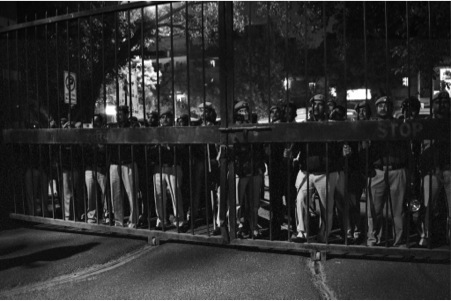
We, the undersigned, stand in solidarity with the students, faculty and staff of Jawaharlal Nehru University, New Delhi against the illegal ongoing police action since February 9, 2016. With them, we affirm the autonomy of the university as a non-militarized space for freedom of thought and expression. Accordingly, we condemn police presence on campus and the harassment of students on the basis of their political beliefs.

The charge of sedition, under the guise of which the police have been given a carte blanche to enter the JNU campus, to raid student hostels, arrest and detain students, including Kanhaiya Kumar, the current president of the JNU Students Union, is an alibi for the incursion of an authoritarian regime onto the university campus. Under Indian law sedition applies only to words and actions that directly issue a call to violence. The peaceful demonstration and gathering of citizens does not constitute criminal conduct. The police action on JNU campus is illegal under the constitution of India.

An open, tolerant, and democratic society is inextricably linked to critical thought and expression cultivated by universities in India and abroad. As teachers, students, and scholars across the world, we are watching with extreme concern the situation unfolding at JNU and refuse to remain silent as our colleagues (students, staff, and faculty) resist the illegal detention and autocratic suspension of students. We urge the Vice Chancellor of Jawaharlal Nehru University to protect members of the university community and safeguard their rights.


Dated/- 15 February 2016


  1. Asma Abbas, Bard College at Simon’s Rock
  2. Syed Shahid Abbas, Institute of Development Studies, Brighton, U.K.
  3. Gilbert Achcar, SOAS, University of London
  4. Katie Addleman, University of Toronto
  5. Barun Adhikary, JNU
  6. Aniket Aga, Yale University Continue reading SOLIDARITY STATEMENT BY JNU ALUMNI AND INTERNATIONAL ACADEMIC COMMUNITY

The Tendency of the Price of Young Life to Fall and the Hope that it May Rise

The war on young people continues. In this post we will only consider it’s arithmetic. Not even its algebra, simply its arithmetic.

I am prompted to do this by a strange acoustic co-incidence. While standing as part of a cordon of faculty and friends protecting the students of JNU on the public meeting on the 13th of April from a handful of ABVP activists who liked invoking blood and bullets in their slogans, I head one that stayed with me, and made me revisit a question that often bothers me.

lance-naik-hanumanthappa

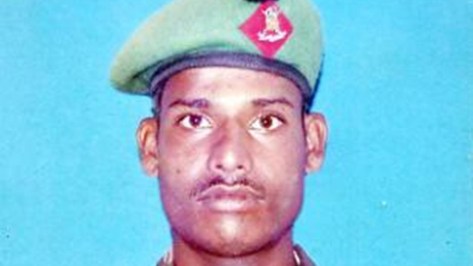
This was the slogan ‘Hanumanthappa hum sharminda hain, tere qatil zinda hain’. (‘Hanumanthappa we are ashamed, your murders are still alive’ ). Lance Naik Hanumanthappa, as we all know now, was a thirty two year old soldier of the Indian army who survived six days under an avalanche on the Siachen Glacier in Kashmir and then died of multiple organ failure in a Delhi military hospital. His young body must have had a tremendous and a passionate yearning for life. Sometimes I think of what a fine father or husband or lover or friend a man who loved life so must have been, could have continued to have been.

Continue reading The Tendency of the Price of Young Life to Fall and the Hope that it May Rise

Who’s Afraid of JNU? Or, The Sedition That Wasn’t: Sania Hashmi

This is a guest post by SANIA HASHMI

JNU Sedition

Over the past couple of days, Zee News has been declaring to the world that Lance Naik Hanumanthappa died because he’d rather not breathe the same air as we at JNU do. That this statement is the worst possible trivialisation of a martyr’s death which is being exploited for petty sensationalism by our own version of the fourth estate is a separate issue, too nerve-wracking to be given precedence over the tragedy that unfolded in our campus yesterday with the arrest of our democratically-elected President Kanhaiya Kumar. A Zee News screen grab showed the word ‘Deshdrohi’ in 72-pt screeching yellow font pasted across Kanhaiya’s unsuspecting face. What was his fault? As an eyewitness from ground zero who was present at Sabarmati at the time of the protest, let me begin by answering the obvious questions that despite the numerous clarifications on part of the students and the JNUSU on social media and elsewhere are meeting deaf ears. It is interesting how despite being told that the Students Union and the student body in general had nothing to do with it and have in no uncertain terms condemned any alleged slogan against our country, the trolls are still putting decibels to shame with the very same questions. And no, I am not just talking about Nupur Sharma. So yes, let me begin by putting a few things on record in respect of Kanhaiya’s arrest. Did Kanhaiya organise the event? NO. Did he raise anti-India slogans? NO. Did he hail Pakistan? NO. Did he intervene to prevent ABVP-instigated violence in his capacity as the President? YES. Has he been vocal against the brahmanical tyranny of the RSS? YES. Has he been tirelessly fighting for the Rohith Vemulas of this world? YES. Has he been a torchbearer for students’ rights across the country? YES. Is this why you have arrested him? Is this your justice? If this struggle for a just society is anti-national in your eyes, we all plead guilty! If this is your witch-hunt for people who cannot conform to your ideological blinkers, we all plead guilty! If we must be party to the violent hooliganism of the ABVP in order to be called patriotic, rest assured, we all plead guilty!

WATCH KANHAIYA KUMAR’S SPEECH HOURS BEFORE HIS ARREST TO SEE WHAT THE GOVERNMENT OF INDIA CONSIDERS ANTI-NATIONAL. Clearly, Kumar’s fault was that he said in this speech that he doesn’t need the RSS’s certificate to be called a nationalist.

Continue reading Who’s Afraid of JNU? Or, The Sedition That Wasn’t: Sania Hashmi

Disability, Language, and Empowerment: Dorodi Sharma

This is a guest post by DORODI SHARMA

In 2009, as a writer for a disability news portal I got a note back with one of my stories from the director of the organisation. “Suffering from disability”, I had written about someone. The note said “I have been a wheelchair user since the age of 15, and trust me I am not suffering.” Over the years, the first document I shared with new employees of the disability rights organisation I worked for in Delhi was a document on ‘disability etiquette’ that outlined not just terminologies but also the acceptable ways of interacting with people with disabilities. Yes, even in the 21st century we need to coach people on ‘interacting’ with a section of humanity. The discourse on importance of language has taken a new meaning when recently Prime Minister Narendra Modi called people with disabilities ‘divyang’ or people with divine abilities. The reaction to this has been outrage, to shaking of heads, to complete indifference. But it is important to talk about language when it comes to disability because it reeks of charity and reflects the patronizing attitude that prevents people with disabilities in India from getting their due.

Let us be very clear, disability is part of human diversity. Disability is as normal or abnormal as being a man, woman, gay, lesbian, person of colour, or any other variation of being human for that matter. Why then do we look at disability as something that needs to be ‘overcome’? With the proliferation of social media, we are now faced with innumerable ‘inspiration porn’ posts. Yes, inspiration porn. As described by Stella Young, Australian journalist, comedian, and activist – inspiration porn is objectifying people with disabilities for the benefit of non-disabled people. Young said the purpose of these images is to inspire people, to motivate them, so that they can look at them and think “Well, however bad my life is, it could be worse. I could be that person.” Precisely for that reason, people living with a disability are tired (and angry) of all the euphemistic terminologies used about them. No, they are not specially-abled, or differently abled, or ‘divyang’ for that matter. They are persons with disabilities and disability is a crucial part of their identity, just like one’s gender, race, or nationality.

Continue reading Disability, Language, and Empowerment: Dorodi Sharma

We, Naked Women : P Padmarajan

[P Padmarajan passed away on 24 January, 1991. In his extraordinary and brief life, he attained the status of a living legend in Kerala. Celebrated much more as a cine director and a script-writer of some of Malayalam’s most memorable films, he was however, one of Malayalam’s finest fiction-writers. In many ways, as a writer, Padmarajan was ahead of his times; no wonder then,  he never received the recognition that he richly deserved as a writer. Continue reading We, Naked Women : P Padmarajan

Translators’ Dilemmas and Entering ‘South Asian Literature’

61SpmvI6dUL._SX325_BO1,204,203,200_

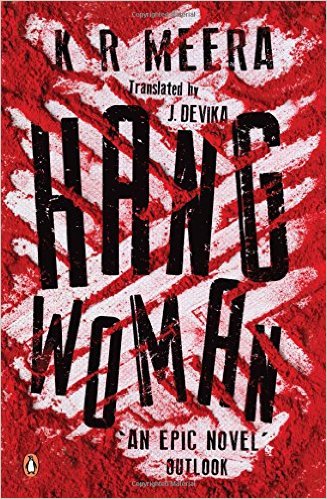
Ever since Hangwoman, my translation of K R Meera’s modern epic in Malayalam, Aarachaar was published, I have been repeatedly asked whether I edited it to ‘shape’. The question sometimes irritated me, because it was posed as if I had carried out the intellectual equivalent of cosmetic surgery on that fine work.

I struggled to communicate the subtlety of the editing that translation demands. One is always conscious of the fact that the readership of an English translation is qualitatively different from that of the original Malayalam text, but editing in the process of translation is not primarily aimed at making the text palatable to the former. Much more significant is the fact that what may need a whole sentence in the source language can perhaps be conveyed in a word in the target language or vice-versa. And, more importantly perhaps, any translation is hugely dependent on the translator’s reading of the text. The translator is constantly faced with the problem of how to interpret – is a certain word or phrase or sentence a simple description, or a complex one, or perhaps a metaphor or a simile? Editing rests quite decisively on such micro-decisions.

Continue reading Translators’ Dilemmas and Entering ‘South Asian Literature’

Honour in the Court Room: Arya Raje

This is a guest post by ARYA RAJE

The Indian Judiciary is often perceived as a progressive institution, perhaps one of the few in which Indians still retain some measure of faith. A recent case in the Supreme Court[1] was lauded for asserting that there cannot be any compromise in a rape case, after the Madras High Court had suggested mediation between the victim and the accused. The decision may be sound, but what passed under the radar was that the judgement was couched in deeply problematic language:

 “These are crimes against the body of a woman which is her own temple. These are offences which suffocate the breath of life and sully the reputation. And reputation, needless to emphasise, is the richest jewel one can conceive of in life. No one would allow it to be extinguished. When a human frame is defiled, the “purest treasure”, is lost. Dignity of a woman is a part of her non-perishable and immortal self and no one should ever think of painting it in clay.”

This is not particularly unusual. Continue reading Honour in the Court Room: Arya Raje

Farewell to Vidrohi: Pallavi Paul

Guest Post by Pallavi Paul

[ Rama Shankar Yadav ‘Vidrohi’, was a familiar figure for students, especially in Jawaharlal Nehru University in Delhi. He was a friend, a companion, a comrade, a mentor. Though rusticated many years ago from JNU, where he had been a student, for his participation in a  protest, he had never left the campus of JNU, and had become, over the years, a beloved feature of campus life. His visceral poetry, often heard at protest gatherings, was passed from person to person by word of mouth. A few days ago, he died while marching with his beloved student friends in a protest against cuts in education in Delhi.  Pallavi Paul, a filmmaker and artists, who made short films featuring Vidrohi, remembers him in this tribute..]

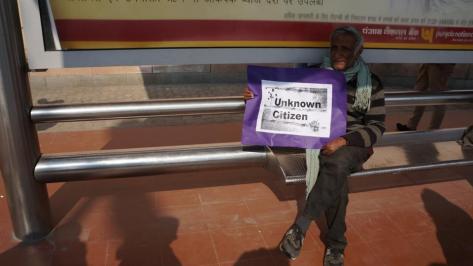
Unknown Citizen Vidrohi
Vidrohi as the ‘Unknown Citizen’ at a Protest to ‘Reclaim the Republic’ on 26 January 2013

Yesterday, as I was looking out a window of an old house in Ballygunge, Kolkata- my phone buzzed. I ignored it.  I was in the middle of telling a friend how happy I was to be away from Delhi for sometime. How the sights and smells of a different city were rejuvenating. The feeling of not having a ‘special connection’ with anyone or anything here felt liberating.

Much later, I opened the message from my friend Uday. ‘Vidrohiji passed away’, he wrote. Just three words.  In our conversations with him, Vidrohiji had often spoken about his death. We had revisited the scenario over and over again. Like a dream or a film – it had a grand setting. He had told us “Now that you are recording me, i know that i will say goodbye in the most glorious way possible. Very few people can say that about their death, while they are still alive.” On another day he had said to us, “As my fame has increased, so have the dangers. Now what i need is guarantee. Your records are guarantee against that largest threat of being killed. I say to my enemies, that if you want to kill me – then shoot me in the eyes. Because i will keep staring back at you till my last breath. Your records will help me stare back at them even after I am gone. “

Continue reading Farewell to Vidrohi: Pallavi Paul

Of Flags and Fetishes – The Paris Attacks and A Misplaced Politics of Solidarity: Debaditya Bhattacharya

This is a guest post by DEBADITYA BHATTACHARYA

Megan Garber’s article ‘#PrayForParis: When Empathy Becomes a Meme’, published in The Atlantic (November 16, 2015) has claimed that Paris hashtags and French flag filters on Facebook make for an “act of mass compassion” – a “compassion that has been converted, via the Internet’s alchemy, into political messaging”.

flag filter2

I have absolutely no problems with flag filters on Facebook. Or for that matter, profile-picture revolutions that happen all too often. I’m not, in the least bit indignant about such a competitive exhibitionism of feeling – indexed through a currency of memes and emoticons. In an age of such mass-production of violence (‘terroristic’ or ‘humanitarian’), it is no surprise that the event of mourning must become a symptom of the incompatibility between ‘act’ and ‘response’.

A funereal Facebook must therefore bleed profile pictures, because that seems the only charter of our most intimate emotions. We naturally do not care if Facebook is using the Paris tragedy as a marketing platform, as long as it helps us reclaim a deeply ‘personal’ angst in the face of more-than-a-hundred ‘spectacular’ deaths.

Continue reading Of Flags and Fetishes – The Paris Attacks and A Misplaced Politics of Solidarity: Debaditya Bhattacharya

We agree passionately: one world, one struggle, education is not for sale!

Dangerous Vandals, Goths and Visigoths: Students Demanding the Impossible at #OccupyUGC

The Occupy UGC movement looks irrelevant or ridiculous to the middle and upper classes in India because it can be made to appear so by the media. Not surprisingly, television channels and leading dailies either ignored the protests altogether, or worse, focused on the apparently far more *critical* issue of the “vandalism” and “disfigurement” of the ITO metro station by the protesting students. Times of India said they were “brazening it out” after their acts of vandalism, and on social media including Kafila, these student vandals have been additionally belittled by some as misguided pawns in the hands of an apparent conglomerate of ambitious lefty professors from JNU! Basically, anything but a legitimate set of demands, some of which this poster from the movement tries to explain…

Dekh Bhai UGC
Translation: Look here UGC, if you don’t give us the scholarship, I will face marriage pressure, but you will have to face the pressure of the entire student population!!

(Incidentally, it was this image that was painted on the walls of the ITO metro station. Personally I found it cheerful).

Anyway, as Camalita Naicker reminded us in her excellent article on South Africa here on Kafila, student protests against rising student fees and shrinking scholarships and fellowships are no flash in the pan but a burgeoning worldwide phenomenon cutting across political affiliations. This is because you don’t need to be a leftist to understand that in contemporary conditions, pursuing a higher education is both the only guarantee to economic security, and the one thing that may be denied to you if you are from the wrong side of the tracks. 

We post below statements from #OccupyUGC and #Occupy SOAS in support of each other. These have been sent to us by Akash Bhattacharya, research scholar in history at JNU.

Continue reading We agree passionately: one world, one struggle, education is not for sale!

Which COURT of Justice for Vinay Sirohi?

Yesterday, in a corner of Delhi-NCR known as Keshopur, a 22-year old sewage worker breathed his last, a final tortured breath inhaled inside a part of the vast network of sewage pipelines that map the city in their own cartography of waste. The pipeline was owned by the Delhi Jal Board, so its function was not simply to transport sewage, but to transform it into potable water through a portion of the pipeline that resembles a septic tank – a portion known as the ‘digester’.

djb_body_759
The portion of the pipeline containing Vinay Sirohi’s body. Courtesy Indian Express online edition.

That Vinay Sirohi, 22-year old contract worker with the Delhi Jal Board, who got married last year and had taken up part-time employment to help him get through college, lost his life in a part of the sewage pipeline called the ‘digester’ imparts something so grotesquely apposite to this tragedy that one almost doesn’t want to think about it. One often doesn’t, of course. One has the option of of flipping the page of the newspaper, of resting one’s eyes on more life-affirming images – English Premier League, Bollywood, Modi-Cameron Cameron-araderie…even Kejriwal’s homely navy-blue sweater and baggy trousers are a pleasant distraction. Anything that tells us that life as it was meant to be – humans wearing a clean sweater and trousers with a sofa to sit on after their stomachs and minds are fed and sated – is better than the thought of a body inside a pipe under the city. When I tried to save the image that you see above, the caption read djb_body_759. I don’t want to think about what that caption means. Does it mean the 759th body found inside the DJB’s sewage network? Does it mean the 759th body to have been recovered by the police this year, 2015? Does it mean the 759th body to have died in sewage pipelines across the country, or ever?

Continue reading Which COURT of Justice for Vinay Sirohi?

Yes, the Biharis chose Mud over the Lotus. Get Over It.

It is not difficult to imagine some of the reactions to the sweeping victory for the Grand Alliance in Bihar. All those who have spent a lifetime thinking of Bihar as the worst kind of social, economic and political cesspool in the country, all those who shudder at the sight of Lalu Prasad Yadav and amuse themselves with jokes about his rustic origins and his apparently appalling antics, all those who are charmed by the hologram charm of our current PM – all those have found the best kind of alibi to explain the result of November 8th. As Prem Panicker has noted on Twitter, the sum total of their reactions is – “Illiterate Biharis deserve this”. A particularly pee-yellow variant of this jaundiced view of the lower castes and classes was given (and mysteriously withdrawn later) by one Sonam who goes by the handle #Asyounotwish on Twitter:

Thank you Bihar for choosing mud over lotus. You deserve to stay rickshaw walas.

It’s perfect – for the thousands of Sonams out there, Lalu and Bihar are made for each other in a kind of self-limiting loop, and we can return to our economically dynamic, socially vibrant and thankfully un-Bihari Indian lives. Another joke that is doing the rounds:

Wife: Ever been to Bihar?

Husband: No

Wife: Moving there?

Husband: No

Wife: Relatives fighting elections?

Husband: No

Wife: Then give me the damn remote…

Continue reading Yes, the Biharis chose Mud over the Lotus. Get Over It.

Statement by Artists, Curators and Critics Against Rising Intolerance in India

Text of a Statement by Artists, Curators and Critics in India against a Climate of Rising Intolerance in India

(Followed by Names of the 300 + Signatories, in Alphabetical Order)

The artist community of India stands in firm solidarity with the actions of our writers who have relinquished awards and positions, and spoken up in protest against the alarming rise of intolerance in the country. We condemn and mourn the murders of MM Kalburgi, Narendra Dabholkar and Govind Pansare, rationalists and free thinkers whose voices have been silenced by rightwing dogmatists but whose ‘presence’ must ignite our resistance to the conditions of hate being generated around us.

We will never forget the battle we fought for our pre-eminent artist M.F. Husain who was hounded out of the country and died in exile. We remember the rightwing invasion and dismantling of freedoms in one of the country’s best known art schools in Baroda. We witness the present government’s appointment of grossly unqualified persons to the FTII Society and its disregard of the ongoing strike by the students of this leading Institute. We see a writer like Perumal Murugan being intimidated into declaring his death as a writer, a matter of dire shame in any society.

While the Prime Minister of the country has been conspicuously reticent in his response to the recent events, the reactions of BJP ministers in his government reveal their ignorance and prejudice. Mahesh Sharma, Minister of State for Culture, has made abhorrent comments about mob lynching and murder. His remarks suggesting that writers should stop writing to prove their point are alarming – empowered as he is to take policy decisions in the domain of culture. Arun Jaitley, Minister of Finance, Information & Broadcasting, has mocked the actions of our respected writers as a manufactured ‘paper rebellion’. He asks for scrutiny of the political and ideological affiliations of those who are protesting.

To these and other such provocations there is a clear answer: while the actual affiliations of the protesting writers and artists, scholars and journalists may be many and varied, their individual and collective voices are gaining cumulative strength. It is this that the ruling party will have to reckon with: the protestors’ declared disaffiliation from a government that encourages marauding outfits to enforce a series of regressive commands in this culturally diverse country.

The scale of social violence and fatal assaults on ordinary citizens (as in Dadri, Uttar Pradesh; Udhampur, Jammu and Kashmir; Faridabad, Harayana) is escalating. The contemptuous comments about the religious minorities and Dalits made by those within the government confirm that there is little difference between the RSS-BJP mainstream and supposed ‘fringe’ elements. The perfunctory warnings and regrets issued by ruling party ideologues – to defend the agendas of ‘development’ and ‘governance’ advanced by Mr Narendra Modi – are merely expedient. The Sangh Parivar and its Hindutva forces operating through their goon brigades form the support base of this government; they are all complicit in the attempts to impose conformity of thought, belief and practice. Continue reading Statement by Artists, Curators and Critics Against Rising Intolerance in India

Muzaffarnagar Baaqi Hai – Critical Readings Online and Offline: Akash Bhattacharya and Arif Hayat Nairang

These are guest posts by Akash Bhattacharya and Arif Hayat Nairang

The film Muzaffarnagar Baaqi Hai has been in the news recently, and not always for the right reasons, having attracted disruptive and abusive protest at some screenings. Following a day of counter-protest in which the film was screened all over the country, a friend teaching in a Delhi University college suggested screening it in her college, only to be told by the student representative that it would “cause trouble” (“bawwal mach jayega ma’am!!”). She asked what that meant and if he had seen the film, and he simply said, “nahin, bhaiyya logon ne kaha hai ki woh film bahut buri hai” (No, but our elder brothers have said it’s a bad film). 

In an atmosphere where political self-censoring comes as easily to the current generation of students as scouring the net for “blocked content” we present below two readings of the reception of the film, the first ruminating on whether the film addresses the complexities of communal mobilisation adequately; and the second inquiring in the context of social media and particularly Facebook, what constitutes the ‘liking’ of an image or idea. The idea of posting these comments is as much to give space to these arguments as it is to make a larger point that the ‘sickular left’ voices that are presumably behind the film love discussion, critique and disagreement. That to my mind is the way forward, not pre-empting the always-already hurt sentiments of the bhaiyya log whosoever they may be.

Continue reading Muzaffarnagar Baaqi Hai – Critical Readings Online and Offline: Akash Bhattacharya and Arif Hayat Nairang

On keeping Open the Door that was Opened by Dr. Malleshappa Kalburgi

On Sunday morning, seventy seven year old scholar Dr. Malleshappa Kalburgi opened his door in Dharwad town in Karnataka to some people who asked for ‘sir’. They pumped bullets into ‘sir’ when he appeared in front of them. Throughout his life, Dr. Kalburgi had the habit of opening doors. His scholarship into Kannada literature opened many doors. Those who killed Kalburgi abused not just his hospitality, and his willingness to open his doors to strangers (he had asked that his security be ‘lifted’ despite threats to his life), they abused all the traditions in the world that promise kindness to strangers, and keep doors open.

Continue reading On keeping Open the Door that was Opened by Dr. Malleshappa Kalburgi

Who gets caught – From death row convicts to ‘criminals by birth’: Anuja Agrawal

Guest Post by Anuja Agrawal

The recent reports regarding the findings of the Death Penalty Project of the National Law University, Delhi, confirm some of the worst fears we have about our criminal justice system: the system is exceedingly tilted against the interests of the poor, disadvantaged and the marginal while the rich and the advantaged often get away, literally, with murder. The results are very important as such systematic studies help in confirming what are often vague impressions and unconfirmed suspicions.

While this study focuses only on the convicts on death row, what we urgently need is data which give us a caste and community wise breakup of the incarcerated population as a whole. While some may think that this would be useful in establishing the ‘criminality’ of some social groups, in fact this data, when juxtaposed with degrees of conviction, will help in establishing not only the conditions in which people take to criminal activities but also how our system is systematically biased towards particular groups.

Continue reading Who gets caught – From death row convicts to ‘criminals by birth’: Anuja Agrawal

All That Remains for Us to Consider in the Wake of the Death of Yakub Memon

Yakub Menon was murdered yesterday morning. Apparently it was his birthday. When his brother Suleman and his cousin Usman met him on Wednesday afternoon his words to them, as reported in today’s Indian Express, were – “Agar woh mujhey mere bhai ke gunahon ke liye sazaa de rahe hain, toh mujhe kabool hai. Par agar unko lagta hai ki mein gunehgaar hoon aur sazaa de rahe hain, toh yeh galat hai. Main bekasoor hoon.” (If they are punishing me for the sins of my brother, then I accept this verdict. But if they are punishing me because they think I am guilty, then it is wrong. I am innocent.)

Continue reading All That Remains for Us to Consider in the Wake of the Death of Yakub Memon

प्रचारक का स्त्री चिन्तन

जुबां फिसलती है और शायद बहुत अनर्थ करा देती है।

बांगलादेश की जनाब मोदी की ‘सफल यात्रा’ के बाद उनके हिमायती शायद यही सोचते हैं। यह अकारण नहीं कि ‘स्त्री होने के बावजूद शेख हसीना द्वारा किए गए कामों की तारीफ कर’ बुरी तरह आलोचना का शिकार हुए प्रधानमंत्री मोदी के चीअरलीडर्स का कहना रहा है कि यह जुबां फिसलने का मामला है और उसकी इतनी आलोचना ठीक नहीं है।

अगर सन्देह का लाभ देकर इस मसले पर बात न भी की जाए, मगर आप इस मौन की किस तरह व्याख्या करेंगे कि उन छत्तीस घंटों में उन्होंने एक बार भी सुश्री इंदिरा गांधी का नाम नहीं लिया, जो बांगलादेश की मुक्ति के वक्त भारत की प्रधानमंत्री थीं । अटल बिहारी वाजपेयी के नाम बांगलादेश सरकार द्वारा दिया गया पुरस्कार स्वीकार किया, मगर बांगलादेश की मुक्ति के बाद जिन वाजपेयी ने उन्हीं इंदिरा गांधी को ‘दुर्गा’ के तौर पर सम्बोधित किया था, उनका एक बार नामोल्लेख तक नहीं किया।

यह निश्चित ही भुलने का मामला नहीं था, अगर ऐसा होता तो उनके साथ इतना बड़ा दल गया था, वह उन्हें अवश्य याद दिलाता। दरअसल यह उपरोक्त नाम को लेकर जुबां को सिल देने का मामला था। पूछा जाना चाहिए कि क्या होठों पर कायम चुप्पी क्या राजनीतिक क्षुद्रता का प्रतिबिम्बन था ? या उसके कुछ और मायने थे। Continue reading प्रचारक का स्त्री चिन्तन

Rattling the bag – Language Knowledge and the transformation of the university in South Africa and India: Dilip Menon

[Note: Recent events in South Africa – from raging student movements across university campuses to xenophobic violence in the streets of Durban – seem to echo so many struggles both inside and outside the university “here.” This is the second post from South Africa that seeks to listen and travel across. The first, by Richard Pithouse, is here.]

Guest post by DILIP MENON 

Susa lo-mtunzi gawena. Hayikona shukumisa lo saka
Move your shadow. Don’t rattle the bag

JD Bold, Fanagalo Phrase Book, Grammar and Dictionary, the Lingua Franca of Southern Africa, 10th Edition, 1977

In the bad old days in South Africa, whites spoke English or Afrikaans, the languages of command. When they did engage with those that did not speak English, there was Fanagalo, a pidgin based on Zulu peppered with English and some Afrikaans. Fanagalo was developed in the mines and allowed directives, if not conversation. The struggle against apartheid produced its freedoms, its heroes and heroines and new dreams of equality. As Richard Pithouse in his article shows, twenty years down the line the sheen has worn. Unemployment, xenophobia, violence, crime and a seemingly entrenched inequality dog our dreams. We live with the constant premonition of becoming an ordinary country, a nation like any other. Continue reading Rattling the bag – Language Knowledge and the transformation of the university in South Africa and India: Dilip Menon

Updating of “National Register of Citizens” and Recent Political Developments in Assam: Abdul Kalam Azad

Guest post by ABDUL KALAM AZAD

On 21st July, 2010 one of my close family relatives, Mydul Mullah (25) was one among the thousands of marginalized Muslims of Barpeta district who were demonstrating in front of Deputy Commissioner’s office at district headquarter demanding an error-free fresh NRC (National Register of Citizens). Eventually, police brutally cracked down on the picketers and fired upon them for the ‘crime’ of exercising their democratic right to peacefully protest. After the police firing Mydul Mullah along with his three comrades Khandakar Matleb (20), Siraj Ali (27) and Majam Ali (55) succumbed to the bullet injuries. The Tarun Gogoi led Assam government was forced to suspend the faulty NRC pilot project due to unprecedented public outrage.

The question of ‘illegal migration’ from Bangladesh has been one of the most significant and emotive topics in the political milieu of Assam for almost half a century now. .

The six-year long movement (1979-1985) against illegal immigration, popularly known as the Assam Movement, spear headed by All Assam Students Union claimed itself to be a secular and nonviolent new social movement of ‘indigenous’ people to drive out the illegal immigrants. But analyses of scholars and social scientists like Prof. Hiren Gohain, Prof. Monirul Hussain, Dr. Debabrata Sarma, Diganta Sarma etc. reveal that as soon as the Assam movement accommodated right wing RSS workers into its leadership, the whole movement turned against Muslims of Bengali origin in Assam. Heinous massacres like that of Nellie, Chaolkhuwa, Nagabandha etc. were orchestrated against Muslims of Bengali origin and in broad day light thousands of people were killed. After six years of deadlock, the movement culminated in the signing of the ‘Assam Accord’ with the Government of India in 1985. The accord says that the immigrants, who came to Assam after 25th of March, 1971 will be detected and deported from Assam. One of the mandates of the accord was to update the 1951 National Register of Citizen to facilitate identification of illegal immigrants from Bangladesh in Assam.   Continue reading Updating of “National Register of Citizens” and Recent Political Developments in Assam: Abdul Kalam Azad