
श्रीलंका अभी खबरों में है. लेकिन ज़्यादातर हिंदी अखबारों को पढ़ने से आपको अंदाज़ नहीं मिलेगा कि सुदूर दक्षिण में स्थित इस नन्हें-से मुल्क में क्या कुछ हो रहा है जिससे हमारा भी रिश्ता है.वहाँ अभी‘कॉमनवेल्थ’ देशों का सम्मलेन हो रहा है और हमारे प्रधानमंत्री उसमें शामिल नहीं हो पा रहे हैं.श्रीलंका ने कहा है कि वह उनकी मजबूरी समझता है. तमिल राजनेताओं के हंगामे की वजह से प्रधानमंत्री ने अपनी जगह विदेश मंत्री को इस सम्मलेन में भारत का प्रतिनिधित्व करने को कहा है. इस सम्मलेन में श्रीलंका को अगले दो साल के लिए ‘कॉमनवेल्थ’ का नेतृत्व करने को कहा जाएगा. इस पर भारत को ऐतराज नहीं है और अब तक किसी और मुल्क ने भी अपनी आपत्ति दर्ज नहीं कराई है. Continue reading श्रीलंका और हम
Category Archives: Media politics
From dynasty to plain nasty: Satya Sagar
Guest post by SATYA SAGAR
The shocking spectacle of Siddharth Varadarajan, the Editor of The Hindu, being forced out of his post by a cabal of its owners is a brutal reminder to journalists all over the country that however fine a professional you may be you will always remain at the mercy of media proprietors.
Just around two years ago when N. Ram, the then Editor of The Hindu, passed on the mantle to Varadarajan, a highly respected and independent journalist, he had touted the move as a radical shift away from being a family run outfit to one headed by professionals.
Ram’s motives were neither clear nor very noble, engaged as he was in a bitter struggle with his siblings over control of the newspaper. Still, for the newspaper to move away from its long tradition of tight family control was a welcome, positive departure in a land where dynasties run everything from politics and religion to cricket and cinema.
Unfortunately, this flowering of corporate democracy was not to last too long. Ultimately the family managed to strike back with a vengeance, ganging up in a Board of Director’s meeting to demote Siddharth from the post of Editor to ‘Contributing Editor and Senior Columnist’ prompting his immediate resignation. Continue reading From dynasty to plain nasty: Satya Sagar
Nobody Killed the 58 People Who Died in Laxmanpur Bathe on 1 December 1997: Dipankar Bhattacharya
Guest Post by Dipankar Bhattacharya
Predictably enough, the Patna High Court has acquitted all the 26 persons convicted by the trial court in the Laxmanpur-Bathe massacre case. This is the fourth successive instance of wholesale acquittal of convicts by the Patna High Court in cases of massacre of the oppressed rural poor in Bihar. Once again eye witness accounts have been dismissed as being not fully credible and convicts granted acquittal on ‘benefit of doubt’. The judges could not however disprove the fact that 58 people had been killed and post-mortems done, and hence they asked the trial court to calculate the compensation payable to the nearest kin of the victims as per relevant provisions the Motor Vehicles Act on the basis of the minimum wage prevalent in the area at the time of the massacre. They of course did not forget to add that any ex gratia paid after the massacre should be deducted from the amount of compensation!
The Nation did not want to know about Laxmanpur Bathe and that is why Sachin Tendulkar is ‘God’
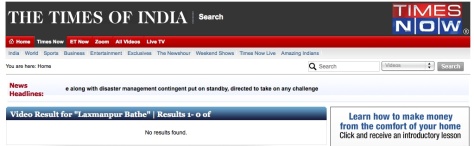
In a country where the bloodthirsty rhetoric of ‘hang them, shoot them’, an ‘eye for an eye’ and ‘their heads for our heads’ is heard so regularly, and so loudly on prime time television, we were greeted by an odd and chilling silence in the course of this week. It wasn’t for a lack of noise, vendetta laced sound-bytes, storms in tea-cups, or of talking heads.
Thejas Daily: A Newspaper’s Encounters with the Ruling Powers : N P Chekkutty
This is a guest post by N P CHEKKUTTY
In normal circumstances, journalists are not people in the limelight– they are supposed to be the first witnesses to history in the making. Their role is as observers of incidents and purveyors of what goes on in the public sphere. And they discharge their duties as representatives of the citizens, generally enjoying the public confidence. That explains the key role of media in a democratic polity, as representatives of the various segments of people and as a forum where a dispassionate debate of public issues can take place. Like the Red Cross personnel on a war front, media-persons are expected to do their job without hindrance of harassment, keeping away from the sound and fury of public life. Continue reading Thejas Daily: A Newspaper’s Encounters with the Ruling Powers : N P Chekkutty
Grappling with media: The Hoot Reader
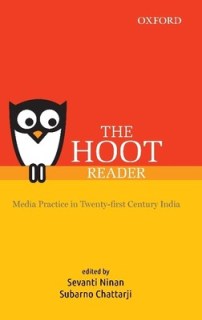 This is an excerpt from the introduction to The Hoot Reader: Media Practice in Twenty-First Century India edited by SUBARNO CHATTARJI and SEVANTI NINAN. The Reader commemorates a decade of TheHoot.org, still the only media-watch platform of its kind in India.
The notion of media power has come to loom large in India over the last decade, and has led to inevitable scrutiny of those who wield it. The men and women chasing stories become stories themselves when their first take is scrutinized to present a second take, to judge if that first draft of history was a job well done, or whether it was lazily or unethically constructed. Media criticism had been dormant in India over decades of journalistic practice, but its advent and subsequent blossoming are celebrated in this volume. Because, to report how the media covers India, is to report on the complexity and promise of India itself.
The decade of 2001–11 was when coalition politics took firm hold, terrorism began to rival militancy in attention commanded, naxalism spread, digital communication expanded, and the media became a noisy beast that grabbed more mind space than before. The North-East became less of a blank spot and Kashmir remained a media Mecca. Through it all, the old challenges remained as the media stories here bear witness—hunger did not disappear, women in flooded areas looked for secluded spaces to defecate in, caste prejudices thwarted aspiration, and so on. As subjects sexy and dreary competed for space, many stories also went untold. Continue reading Grappling with media: The Hoot Reader
Reporting Hunger from the Margins: Agrima Bhasin and Ashwin Parulkar
Guest post by AGRIMA BHASIN and ASHWIN PARULKAR.
The watchdog metaphor obliges the media to step up their role, that of an opinion maker, and stir public opinion on hunger and food security in India
A priest turned beggar, his body starved thin; a family of destitute potters picking up grains soiled in mud; emaciated women forced into sex work; and a man scavenged by dogs and vultures. These were just a few of the scores of starving people journalist Chittaprosad Bhattacharya drew in black and white sketches in his travels through Bengal’s Midnapore district during the Great Bengal Famine of 1943, the last of a spate of famines that plagued colonial India during British rule. Bhattacharya’s portraits of the destitute ’showed’ stories of mass starvation, making visible through withering human flesh a nearly immeasurable tragedy of more than 3 million hunger deaths. Brutal yet compassionate, his graphic chronicles provoked the ire of colonial administrators, prompting officials to burn every copy of his book, Hungry Bengal (1943).
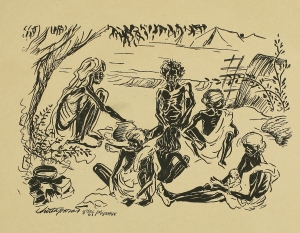
Despite the censorship of his book, Bhattacharya continued to report on the famine for the Communist Party of India’s weekly newspaper, The People’s War. His sustained efforts to bring the realities of mass hunger to bear on the public conscience in colonial, famine-struck Bengal set a precedent for journalists to use the press as a watchdog that can impel the government to act. Today, his reportage is instructive for those in the profession who particularly cover hunger, poverty and inequality.
In today’s India, home to over 200 million chronically hungry and malnourished people, a significant but small number of dedicated editors, publishers, journalists, photographers and broadcasters are taking strides to highlight the complex nature of inequality in this country. A sporadic renewal of interest on the part of the media to report on hunger and starvation often only occurs in moments of crisis: starvation deaths, children’s deaths, or spoilage of grains in warehouses. Continue reading Reporting Hunger from the Margins: Agrima Bhasin and Ashwin Parulkar
Good Muslim, Bad Muslim – A Response to Ashish Khetan on the ‘IM’: Warisha Farasat
Guest Post by Warisha Farasat
The recent opinion piece by Ashish Khetan in the Hindu has yet again reiterated the false and malicious stereotype: that Muslims somehow have something or the other to do with terror, either when they are directly involved or when they are silent about others of the community being involved. It is disappointing that the debate is framed in the stereotypical, “good Muslim”, “bad Muslim” tenor rather than a real engagement with issues of shoddy investigation and communal bias that marks terror investigations in the country. Perhaps the greatest disservice that has been done to idea of justice has been linking an entire community to terrorism.
Continue reading Good Muslim, Bad Muslim – A Response to Ashish Khetan on the ‘IM’: Warisha Farasat
Terror and the Indian Mujahideen – A Response to Ashish Khetan: Sharib Ali
Guest Post by Sharib Ali
There is something disquieting in what Ashish Khetan has written and said recently on terror in India (in The Hindu and on Tehelka.tv), and centrally within it, the Indian Mujahideen. More so, because it comes from one of the most credible journalist’s today, who has done some commendable work over the years. A journalist I personally respect. But there are several reasons which compel this response. And yet, this is not just a response, but also an attempt to elucidate the many complex processes within which ‘terror’ is located today, and the way the discourse has transformed, and has implications for a people’s negotiated relationship with their state.
Continue reading Terror and the Indian Mujahideen – A Response to Ashish Khetan: Sharib Ali
Minority Report – Deaths followed by Executions : Ramray Bhat
This is a guest post by RAMRAY BHAT
The collective conscience of our prominent democracies works in very strange ways. India is yet to come to terms with the killing of a nineteen-year-old Mumbaiite student Ishrat Jahan in an encounter by officers of the Gujarat Police in collaboration with the Intelligence Bureau. Along with three other individuals, Javed Sheikh (for whom Ishrat worked as a secretary), Amjad Ali Rana and Zeeshan Johar, Ishrat was first announced to have died in police firing and the alleged plan hatched by these four individuals to assassinate prominent politicians of India, thereby thwarted. Inquiries at the level of the Ahmedabad metropolitan magistrate court as well as by the Central Bureau of Investigation (CBI) as directed by the Gujarat High Court confirmed what had been suspected all along, that Ishrat had been murdered in cold blood while she was in police custody. Continue reading Minority Report – Deaths followed by Executions : Ramray Bhat
Unrequited love or simply ‘self love’? – Reflections in the wake of a Campus Tragedy at JNU: Shivani Nag
Guest Post by Shivani Nag
In the days following the brutal rape and murder of a young woman in December last year, I remember waking up each day and being out on the streets raising slogans on women’s freedom and liberation. For months after that, there were a series of mobilizations, vigils, parades and protests, and my strongest recollection of those events is the resounding reverberation of ‘mahilaayein maangi azaadi… khaap se bhi azaadi aur baap se bhi azaadi, shaadi karne ki azaadi aur na karne ki azaadi…’. It WAS about justice for that one woman, but it wasn’t ONLY about that… it was also about many other such women – some forgotten, some not, some dead and some still around… it was also about all women, demanding not just justice but their right to life as equal citizens. We did not come out on the streets to be told how to be safe, but to convey it loud and clear that we cannot spend our entire lives trying to be safe without actually getting to live it. We came out to demand and defend our right to choice!! Continue reading Unrequited love or simply ‘self love’? – Reflections in the wake of a Campus Tragedy at JNU: Shivani Nag
The Changed Face of the Newsroom: Monobina Gupta
Guest post by MONOBINA GUPTA. DelhiUniversity teachers are fighting back to hold on to the fast vanishing autonomy of academics and academia. For me, this is a significant moment. Not just because the teachers are setting an example in their refusal to submit to the destructive moves disguised as ‘reform’, slammed through by well-connected and powerful authorities at the top. I must confess to my own selfish reasons for celebrating this moment. As a journalist, I can’t but think of all that we too could have held on to had only we walked this path of resistance, stalled the first assault on the newsroom, resisted the first strike, shrinking what I would describe as our ‘journalistic territory.’
Had we moved in that difficult yet honourable direction, we too might have guarded our space, not allowed non-journalists to take it over, bit by bit. Is it too late to recover and reclaim what was once an autonomous, if not a radical newsroom? Maybe. Maybe not.
For journalists like me who entered the newsroom in the 1980s, it’s the transformation of that space that I find both fascinating as well as frightening, in equal measure. Tune out the deafening noise of 24×7 news – cut the frills – journalism emerges in all its bare bones as the craft it really is or should be: an incisive tool for chronicling and analysing events. Ring side spectators or distant observers, members of the media, under all circumstances, are supposed to have their ear to the ground. In an ideal world, these couriers of news – mostly nasty and brutish these days – shouldn’t be attuned to corporate boardroom culture or its fiat. Continue reading The Changed Face of the Newsroom: Monobina Gupta
The BJP’s very own Stalin
Yashwant Sinha is a worried man these days. He is apprehensive of his leader Narendra Modi being taken for a ride by the Congress party. He says that the Congress party is laying a trap for him, a trap of the binary of Communalism and Secularism and fears that his upward looking Narendra Modi might fall in it. So, well wisher that he is of Narendra Bhai, he wants to alert him: do not get entangled in the conspiracy of the wily Congress. He appeals to Narendra Modi to stick to people’s issues and not let the political discourse shift to the terrain of the Secularism versus Communalism debate. Continue reading The BJP’s very own Stalin
The media monster of the juvenile offender: Enakshi Ganguly and Anant Asthana
This is a guest post by ENAKSHI GANGULY and ANANT ASTHANA
July 17 was an important day. Supreme Court announced its judgment refusing to interfere with the Juvenile Justice Act. This was with respect to the eight petitions that were filed in the wake of the alleged involvement of a juvenile in the rape and murder of a 23 year young girl on December 16, 2012. The boy, who was found to be below 18 years, was described by the media as the most heinous of the rapists, a monster and a beast, and even the main accused—and this even before the police had filed the charge –sheets based on statements of the witnesses and evidence gathered. Should there be a fair judicial process that decides the case based on scrutiny of relevant facts or should we let media undertake a trial? Continue reading The media monster of the juvenile offender: Enakshi Ganguly and Anant Asthana
The buck should not stop with Meena Kumari
Let us recount some facts to understand the circumstances that led to the death of 23 children at a primary school at Gandaman, Chapra . First, some micro-facts :
- The primary school struck by the tragedy is a NAV SRJIT VIDYALAYA, a newly created school. In fact, it is a break away from an earlier existing middle school in the village.
- This school, if you care to call it by this name, is a single room structure with a floor full of potholes.
- There is neither a kitchen nor a facility to store the raw food-items in the school.
- There is no source of clean drinking water in the school. There is a hand pump there but you get hard water from it.
- Meena Kumari was NOT the headmistress of the school . She was only the teacher –in-charge of the school.
- The school has two women teachers including Meena Kumari. The other one was on maternity leave at the time of the incident. Meena Kumari was the only teacher left to look after more than 60 children, from class one to five who study there , a duty which includes teaching, supervising Mid-Day Meal (MDM) and other administrative duties. Continue reading The buck should not stop with Meena Kumari
E-book: Sibaji Bandyopadhyay Reader
In the hope that more writers will make their books available online for free, Kafila is publishing an e-book version of Sibaji Bandyopadhyay Reader: An Anthology of Essays, published last year.
The Reader is an anthology of eight essays. The anthology focuses on a myriad of themes: politics of performance; nationalist appropriation and re-constitution of non-dualist Vedanta s tenets; double-take on remembering and forgetting; elusiveness of sexual identities; differences that engender terror. The essays take as their point of departure: a number of pre-modern Indian texts; a late nineteenth-early twentieth century archive of philosophical-cum journalistic writing in English published from Kolkata; specific art-works of Vivan Sundaram, Satyajit Ray, Ritwik Ghatak; the Pandora s Box that gets opened with the release of the film Fire ; Sigmund Freud s protracted struggles to establish fear, fright and anxiety as distinct conceptual categories; the grammar of terror that may be retrieved from the Mahabharata. Continue reading E-book: Sibaji Bandyopadhyay Reader
पाकिस्तानी गाली नहीं है : अपूर्वानंद
लखनऊ के बारहवीं कक्षा के एक छात्र आदित्य ठाकुर ने हाल में विदेश मंत्रालय के सचिव को हाल में एक पत्र लिखकर तकलीफ जताई है कि भारत का संचार तंत्र , विशेषकर टेलिविज़न पड़ोसी मुल्कों के खिलाफ नफरत का प्रचार करता है. आदित्य ने यह पत्र ‘इंडिया न्यूज़’ नामक टी. वी. चैनल के एक कार्यक्रम से दुखी होकर लिखना तय किया. कार्यक्रम पाकिस्तान में पोलियो की बीमारी की समस्या पर केंद्रित था. ऊपरी तौर पर एक गंभीर मसले पर चर्चा करने के लिए बनाए इस कार्यक्रम का शीर्षक था, ‘लंगड़ा पाकिस्तान’. आदित्य ने लिखा है पूरा कार्यक्रम पाकिस्तान के बारे में प्रचलित ‘स्टीरियोटाइप’, उसके प्रति अपमानजनक और सनसनीखेज प्रसंगों से भरा पड़ा था.रिपोर्ट लगातार पाकिस्तान को ‘दुनिया को तबाह करने के सपने देखने वाला’ कह कर संबोधित कर रही थी. ‘बम का क्या करोगे पाकिस्तान , खाओगे?’ और ‘दो बूँद से मत डरो पाकिस्तान’ जैसे संवादों से कार्यक्रम की पाकिस्तान के प्रति घृणा जाहिर थी. Continue reading पाकिस्तानी गाली नहीं है : अपूर्वानंद
We’re singing Holi songs: Inayat Anaita Sabhikhi
Guest post by INAYAT ANAITA SABHIKHI: CGNet Swara is a voice based portal, where stories reported by citizen journalists are available for playback online on their website or through a regular mobile phone. By dialing the CGNet number, you can either record a message or listen to the previous four messages recorded on the server. This is primarily operating in the Central Gondwana region, a tribal belt in central India known to be economically and socially disadvantaged.
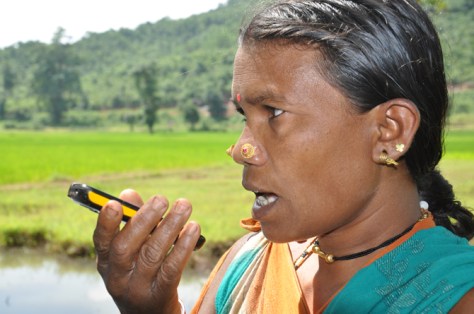
A reporter for CGNet Swara
The idea behind this, as explained by its founder, Shubhranshu Choudhury in this TEDx talk is to democratise the use of media. It is an attempt to combat the neglect and skewed approach of mainstream media towards this entire region and its people. Continue reading We’re singing Holi songs: Inayat Anaita Sabhikhi
‘Ladies Still not Empowered in Kerala?’ Questions Raised by the Solar Scam
How does one respond critically and effectively when non-politics, non-government, and non-sense, all rolled together, assail the political public? I have been thinking about this recently — surely, this is a question that troubles all those who would wish to keep the focus of public life on politics and power. We witness, in present-day Kerala,politics being reduced to the internal bickerings over power indulged in by the powerful elite interest-groups that constitute the ruling UDF. Or, reduced to ‘sex scandals’ or ‘domestic squabbles’ when gender politics surfaces. Simultaneously, we are witnessing the era of non-government and the severing of the link between public politics and government. While the bickerings between the coalition partners of the UDF continues unabated, news of infant deaths and severe malnutrition continue to flow from tribal hamlets in Attappady; the problems of mounting waste in both towns and rural areas continues to be criminally neglected; dengue and other dangerous fevers continue to exact daily, rising tolls all over the state. And even as the consequences of widening social inequalities become more and more visible, this government’s discourse of welfare remains pegged insistently on human mercy and charity. It continues to be dismissive of concerns of social justice and power — even as these harrowing tales continue to appear in the press, there is no dearth of advertisement of the goverment’s kaarunyam. And in the midst of all this, the Chief Minister being projected as the exemplar of human goodness and chairty! Or, the UN, ever-interested in ‘innovation’, conferring an award on his Mass Contact Programme at a time when his government has been least innovative or imaginative in solving problems that now stare us in the face. the This of course is the non-sense — the absurdity of it all. Continue reading ‘Ladies Still not Empowered in Kerala?’ Questions Raised by the Solar Scam
Media Campaign and the Ishrat Jahan Case: Faraz Ahmad
Guest post by FARAZ AHMAD: Even after the Central Bureau of Investigations (CBI) presented of its charge-sheet in CBI special court in Ahmedabad on July 3 in the infamous Ishrat Jahan encounter case of Gujarat of 2004 charging the Gujarat police, together with the IB of faking the encounter with Ishrat and three others, the media campaign, more particularly of the Times of India to damage CBI’s credibility continued unabated, with Bharti Jain’s lament on behalf of the IB.
However it is obvious that Bharti Jain’s is neither the first nor the last spirited defence of the questionable activities of our security and intelligence officers committing all kinds of crimes under the cover of protecting the nation from supposed external and internal threat. Unmindful of this, the media campaign is so visibly influenced by the BJP, attempting to discredit the CBI investigations and label these as biased before these are examined by the rightful authority, the courts, guided by competent lawyers of both the prosecution as well as Defence. Continue reading Media Campaign and the Ishrat Jahan Case: Faraz Ahmad
A letter to Chetan Bhagat from Indian Muslim Youth
Given below is the text of a letter that was initially written by a group of individuals and sent as a rejoinder to the article written by Chetan Bhagat titled, ‘Letter from an Indian Muslim Youth’ published in The Times of India on 30 June 2013. The letter was sent to The Times of India The signatories include non-Muslims, because a large number of the emails read, ‘I am not a Muslim but I am equally disgusted by Chetan Bhagat’s letter’. Given below is the text of letter followed by more than 200 signatures:
A Letter to Mr. Chetan Bhagat from Indian Muslim Youth
3rd July 2013
Dear Mr. Bhagat, Continue reading A letter to Chetan Bhagat from Indian Muslim Youth
 KAFILA - COLLECTIVE EXPLORATIONS SINCE 2006