Category Archives: Mirror Worlds

A Tribute to Moin Akhtar (1950-2011)

For many of us in India he was Amitabh Bachhan and Dilip Kumar combined in one, although he did no action. His action consisted of something else altogether. He could play any character in the world, sometimes animals too. His impersonations of Dilip Kumar were sometimes better than the thespian’s own act. He could speak well, emote well, mimic brilliantly, parody, caricature, satirize and imitate almost anything and anybody. He could do all of this without appearing crude in the slightest way. His understated demeanour, his timing and his ability to retain a straight face through the most ridiculous of situations was more than a gift, through it he brought class to whatever he did. He has often been described as a comedian but if he was a comedian then he redefined the art of comedy and created a genre which could be performed only by himself. He was a one man entertainment industry and unlike film starts from this side of the border he needed nothing other than himself. He was his own writer, performer, director, presenter. Here was a fusion of an artist and his material that is rarely seen in the performance arenas in the subcontinent. Continue reading A Tribute to Moin Akhtar (1950-2011)

Do I look painDoo?

This post is dedicated to Nadeem F. Paracha.

Photo by 'Life Church Burnley' Flickr: "shoorkot road toba tek sing love this palce.but need much improvement"

[Photo by ‘Life Church Burnley’ on Flickr: “shoorkot road toba tek singh love this place but need much improvement”]

So on Facebook I saw a fellow Punjabi who lives in vilayat has listed his hometown as Toba Tek Singh, Pakistan, which I thought was very cool. Why didn’t I get this idea? Never mind, I thought, like all good ideas this must be stolen. My hometown on Facebook now is also Toba Tek Singh, Pakistan. It was only much after going mad over Manto’s story did I discover that Toba Tek Singh was a real place in west Punjab. Always wondered what its people thought about the story. Continue reading Do I look painDoo?

Free Dr Khaleel Chishty: Amna Chishty

Update: A hopeful note from Kavita Srivastava

An appeal by AMNA CHISHTY

16th April 2011

My father is almost 80 years old. He received his PhD from University of Edinburgh, Scotland in 1968 in Public Health Virology. He had an illustrious career as a professor and head of department of virology and microbiology at Karachi University. In the late 80’s he retired from his last job as the Director of Public Health at King Abdul Aziz Airport in Jeddah Saudi Arabia. He is a principled man who is well‐read, well bred and well traveled. He worked hard to raise a family of six children – one son (oldest, with engineering diploma), five daughters (one is a doctor, one is a Pharmacologist, two are graduates and myself an MBA in marketing). He educated us and built a house for us in Karachi and supported his younger brother in India as well. After retirement he wanted to live in that house in Karachi and enjoy his retirement with his family and his grandchildren.

The following events led to his current plight: In 1992 my father went to Ajmer to visit his ailing mother at his brother’s house near Dargah Sharif.  Continue reading Free Dr Khaleel Chishty: Amna Chishty

Cricket, Azadi and Pakistan: Mir Laieeq Ishtiyaq

Guest post by MIR LAIEEQ ISHTIYAQ

As all of India celebrated the well-deserved Indian victory in the cricket world cup finals, the mood in the Kashmir valley was different. Their favourite team was ousted in the semi-final itself. On the eve of the semi-final between India and Pakistan at Mohali, a friend asked on Facebook: “That Kashmiris don’t support the Indian cricket team is well understood, but why is there so much support for Pakistan? Seems INDEPENDENCE IS JUST A MYTH…” There are no simple answers to this question.

This slideshow requires JavaScript.

[Pictures taken in Kashmir during the India-Pakistan Mohali semi-final by ISHAN TANKHA for Open magazine.] Continue reading Cricket, Azadi and Pakistan: Mir Laieeq Ishtiyaq

Still Bangali: Reflections on a New Year: Jyoti Rahman

Guest post by JYOTI RAHMAN

Exactly ten years ago yesterday, upon arriving at a friend’s place, instead of ‘Shubho Nobo Borsho’ (Bangla new year greeting), I was greeted with: ‘Have you heard the news? Call home now. Hope family’s okay!’ Militant jihadis struck the new year’s dawn cultural events in Ramna, the major park at the heart of Dhaka, killing over half a dozen people. Since these events are attended by most of my family in Dhaka, and by most of my friends, we were worried. Frantic phone calls and MSN chats (or did we still do ICQ then, I forget) ensued. Fortunately, the families were safe. But this wouldn’t be the last time such phone calls were made.

Over the following years, militants bombed cinema halls, killed progressive politicians, carried out suicide attacks against judges, and tried to enforce shariah rule in rural northern parts of the country. Things got so bad that when a friend called to tell me about Muhammad Yunus winning the Nobel Peace Prize, upon hearing, ‘Have you heard about Yunus?’, my first reaction was ‘Oh no, another assassination’. Continue reading Still Bangali: Reflections on a New Year: Jyoti Rahman

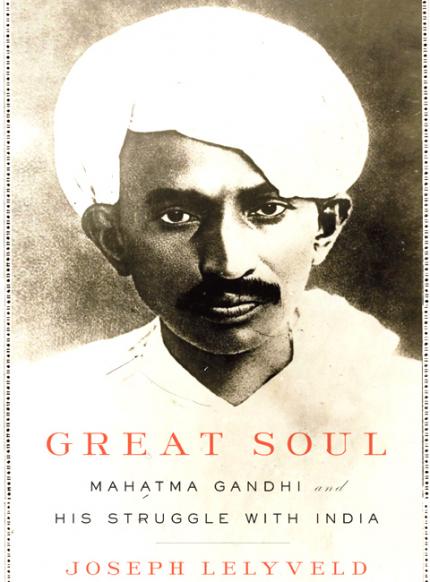
Joseph Lelyveld’s “Great Soul” or How to Damn with Faint Praise: Mridu Rai

Great Soul: Mahatma Gandhi and His Struggle with India by Joseph Lelyveld; Alfred A. Knopf, 425 pp., $28.95

Guest post by MRIDU RAI

Joseph Lelyveld’s book was banned in Mohandas Karamchand Gandhi’s native state of Gujarat a day after its publication in the United States. On 30 March 2011, the Hindu right-wing Bharatiya Janata Party that rules the state, led by its chief minister Narendra Modi, charged Lelyveld with committing “the most reprehensible act by hurting the sentiments of millions of people and demanded that he tender a public apology”. The provocation for this proscription was the mention in some reviews that Lelyveld had suggested Gandhi was bisexual and racist. At the very least, it is surprising that the first public outcry in India against the review — the book has not yet been released in India — should come from the Hindu Right, the political constituency of Nathuram Godse who assassinated Gandhi on 30 January 1948. This must join the many ironies Lelyveld’s book brings out, not least that of latter-day politicians in India (and South Africa) claiming to be his heirs and yet honouring his teaching, if at all, only in their most diluted and least recognizable versions. As Lelyveld writes in his author’s notes, ‘‘[I]t was hard to see what remained of him beyond his nimbus”. Continue reading Joseph Lelyveld’s “Great Soul” or How to Damn with Faint Praise: Mridu Rai

Shiraz Hassan on cricket diplomacy

کرکٹ ڈپلومیسی، تنازعات کے پرامن حل کا عزم

پاکستان اور بھارت کی تریسٹھ سالہ تاریخ تنازعات کی ایک لمبی داستان ہے۔ دونوں ممالک کے تعلقات اس دوران کئی بات انتہائی کشیدگی کا شکار بھی رہے۔ قیام پاکستان اور ہندوستان کی انگریز حکومت سے آزادی کے بعد سے ہی دونوں ممالک کے مابین اعتماد کی فضا قائم نہ ہو سکی۔ اس ضمن میں دونوں ممالک کے مابین پہلا معرکہ 1948ءمیں کشمیر کے محاذ پر ہوا۔ جس کے بعد حالات مزید کشیدگی کی جانب مائل ہوتے گئے۔ 1965ءمیں ایک بار پھر دونوں ممالک کے افواج آمنے سامنے آئیں۔ 65ءکی جنگ کو ابھی چند ہی برس بیتے تھے کہ پاکستان کو 1971ءکے سانحے کا سامنا کرنا پڑا۔ اس جنگ میں پاکستان کو شکست کا خمیازہ دولخت ہونے کی صورت میں بھگتنا پڑا۔ پاک بھارت کے درمیان 1999ء میں کارگل کے محاذ پر بھی فوجیں آمنے سامنے آئیں اور حالات روایتی جنگ کے آغاز کے دہانے تک آپہنچے۔ البتہ موجودہ دور میں ممالک کے سرحدی علاقے اس وقت خاموش ہیں اور امن کی فضاء تیزی سے فروغ پا رہی ہے گویا دونوں ممالک کے سیاسی و دفاعی ماہرین نے تناو ¿ بھرے ماضی سے یہ سبق سیکھ لیا ہے کہ ”جنگ سے نہیں بلکہ امن سے ترقی ممکن ہے۔ “
پاکستان اور بھارت کے سفارتی تعلقات کے استحکام اور امن کے فروغ کے لئے کرکٹ کا کردار بھی نہایت اہم رہا ہے۔ ورلڈ کپ 2011ءمیں دونوں ٹیمیں موہالی کے میدان میں سیمی فائنل میچ میں آمنے سامنے آئیں ۔ پاکستان اور بھارت کی کرکٹ ٹیموں نے 2008ءمیں ہوئے ممبئی حملوں کے بعد ایک دوسرے کے مدمقابل نہیں کھیلا تھا۔ ان دہشت گرد حملوں میں کم و بیش ایک سو پچاس سے زائد افراد ہلاک ہوئے تھے اور بھارت کی جانب سے ان حملوں کے لئے پاکستان کو ذمہ دار ٹھہرایا گیا تھا۔ ممبئی حملوں کے بعد پاکستان اور بھارت کے درمیان تعلقات ایک بار پھر سخت کشیدہ ہوگئے تھے جس میں وقت گزرنے کے ساتھ کمی آئی ہے تاہم بھارتی وزیراعظم من موہن سنگھ کی جانب سے وزیراعظم گیلانی کو موہالی میں میچ دیکھنے کی خصوصی طور پر دعوت دی گئی جسے وزیراعظم نے قبول کیا اور اس عزم کے ساتھ موہالی پہنچے کہ ان کا یہ اقدام نہ صرف پاکستان بھارت کے درمیان پیدا شدہ کشیدگی کو کم کرنے بلکہ خطہ میں مستقل امن و استحکام کے لئے بھی معاون ثابت ہوگا۔ وزیر اعظم گیلانی اور بھارتی وزیراعظم من موہن سنگھ نے ایک ساتھ میچ دیکھا اور مختلف امور پر تبادلہ خیال بھی کیا۔ میچ کے بعد وزیراعظم گیلانی نے خصوصی عشائیے میں بھی شرکت کی جسے پاکستان بھارت کے درمیان بہتر تعلقات کے استحکام اور تنازعات کے حل کی جانب Continue reading Shiraz Hassan on cricket diplomacy

Why Bangladesh?: Jyoti Rahman

Guest post by JYOTI RAHMAN

Singing Amar Shonar Bangla with the whole stadium — the highest point during a cricket match attended by fellow blogger Rumi Ahmed.

For those of us born in Bangladesh, which turns 40 today, along with the red-and-green flag, there is an instinctive, natural identification with Amar Shonar Bangla. Less recognised is the fascinating history of the song, which also tells us the twists and turns in the history of the 20th century Bengal. Continue reading Why Bangladesh?: Jyoti Rahman

Stop gendering children: Urooj Zia

Image by Frank Baron / The Guardian

Guest post by UROOJ ZIA

A couple of months ago, I was given two books which I was asked to review. Published in India, both were compilations of abridged versions of popular children’s fairy tales and fables. One book, however, had a pink cover; the other was bound in blue. The former said clearly, on the cover, that it was meant for ‘little girls’, the latter was for ‘little boys’.

Having grown up surrounded by books, I wondered, when I saw these two copies, as to how one could tell which stories were meant for girls and which were meant for boys. As a child, I never saw the difference. Lo and behold, the tables of content in both books gave me my answer (and destroyed my peace of mind): the volume with the pink cover was full of stories about lost princesses and damsels in distress seeking saviours; the one with the blue cover had stories such as ‘the boy who cried wolf’. Continue reading Stop gendering children: Urooj Zia

Journalism of the People: You Feel Like You Gettin’ Real Noose!

And Director General of the al-Jazeera network explains why al-Jazeera could see the Arab revolution coming when the WEstern media could not: Continue reading Journalism of the People: You Feel Like You Gettin’ Real Noose!

Hypocrisy beneath hammer-and-sickle sign: Sankar Ray

Guest post by SANKAR RAY

Sankar Ray is a veteran journalist based in Kolkata

[This article presents the sordid tale of land acquisitions for the New Rajarhat Township and the involvement of important CPI(M) personnel in this game. One of them, the key protagonist of the story below, was mentioned by Pranab Mukherjee in parliament yesterday, taunting the CPI(M) over its claims to be a crusader against corruption, arousing the ire of its MPs. – AN]

Calling it a ‘shocking experience”, after a visiting a segment of oustees in the Narmada Valley in mid- August 2002,  Sarla Maheswari, then CPI(M) member of Rajya Sabha member told the media – as if her heart bled, and with revolutionary conscience ablaze:  “How can a development project create a disaster in the lives of the most downtrodden tribal people and also thousands of farmers of a huge area? How can it ravage their lives without any protest by mainstream political parties?  Truth indeed is stranger than fiction as the same fire-eating  ‘communist MP’s demagoguery is now in a hot soup as I-T sleuths raided  at  her residence, as a sequel to  detection of an unaccounted sum of Rs 31 crores and 26 benami companies, belonging to the Canopy Group whose chairman is her husband Arun Maheswari. And the CPI (M) brass at the Muzaffar Ahmed Bhavan, Bengal CPI(M)’s state headquarters keep up their recalcitrance, not even demanding a ‘show cause’ of the cash-rich ‘comrade’ . Former MP and CPI(M) CC member Mohd Selim, a spokesman of state party leadership too, ruled out any punitive step until specific indictment by the I-T department, leave alone criticizing the shady land transactions in the controversial New Town project at Rajarhat fully with the knowledge of ‘comrade Sarla Maheswari’  and her family.

Continue reading Hypocrisy beneath hammer-and-sickle sign: Sankar Ray

What do the Maoists want?

The media has by and large focused on the Maoist demand of release of some of their own in exchange of the Malkangiri collector and junior engineer. The list of the total 8 of 14 demands of the Maoists that the Orissa government has agreed to makes for interesting reading:

(1) Orissa government will write to Jharkhand and Chhattisgarh to take action on the extremists demand for release of Maoist central committee members Sheela di (jailed in Jharkhand) and Padma (in Chhattisgarh) owing to their ill-health; (2) ST status for the Konda Reddy and Nukadora communities categorized as OBCs; (3) stopping the multi-purpose Polavaram project of Andhra Pradesh; (4) ‘pattas’ (record of rights) to tribals dispossessed of their land in Malkangiri and Koraput; (5) irrigation in Maribada and Maniamkonda villages in Malkangiri; (6) compensation based on HC order to Tadangi Gangulu and Ratanu Sirika who died of disease allegedly due to torture; (7) relevant laws for mining operations in Mali and Deomali bauxite mines; (8) minimum displacement of tribals and adequate compensation. [ToI]

Remembering Shahid Azmi, the Shaheed: Mahtab Alam

Guest post by MAHTAB ALAM

It must have been around nine pm on 11th February last year. The nightfall and Delhi’s infamous wintry chill ensured that I stayed indoors at the mercy of closed walls and work for company. Sure enough, I was seated warmly in my setting of a cyber cafe of Jamia Nagar in Okhla. Okhla, an area I had migrated to as a 14 year boy from my hometown, to pursue my further education, like many other Muslim students from other parts of this country. As Basharat Peer has rightly observed, ‘India’s Muslims don’t move to Delhi; they move to Okhla’. Continue reading Remembering Shahid Azmi, the Shaheed: Mahtab Alam

Blasphemy, Sedition, Democracy

Have you ever wondered?

Why does our media get so worked up when someone in Pakistan is accused of or convicted for blasphemy but is not overly perturbed when someone is charged with or convicted for Sedition in India?

Is this differentiated response occasioned by the belief that a modern state should overlook things like blasphemy but give no quarter to sedition?

Do anti-Blasphemy laws encroach upon Individual freedom while anti-sedition laws protect national interests? Is convicting someone for blasphemy essentially undemocratic but doing the same for sedition not so?

Let’s for the time being leave these major issues aside and engage ourselves with more mundane issues. Continue reading Blasphemy, Sedition, Democracy

‘How Leaving the Internet Fueled Our Revolution’

For those who worry themselves sick about laptop radicalism, this is essential reading:

The web is in many ways a more modern, much larger version of the kinds of public spaces and forums that have made citizenship possible throughout history. Losing it for a week didn’t stop Egyptians from protesting or airing their frustrations; we still know how to use physical public spaces, after all. But it did remind us that a forum for the open exchange of words and ideas is central to any sustainable democracy; alternatively, we end up in a perilous cycle of control and chaos. Instead of expressing pent-up opinions with fists and bullets, as is happening now in the streets of Cairo, people who can express them freely in conversation, even in a virtual one, have a chance to hear one another and deliberate together about the future. Never mind the vacant symbolism of “Twitter revolutions” and Youtube activism: losing the Internet at the hand of our own government simply offers us a powerful reminder of why we actually want the Internet to begin with, and why we’re doing any of this. [Read the full article by Haisam Abu-Samra]

Excellent as the al-Jazeera coverage is, if you’re tired of it, see videos from Egypt on YouTube, created and uploaded by the people whose revolution it is. It will give you the closest possible feel of what it’s like to be there. Not even al-Jazeera can manage that!

And if you’ve been watching the events in the Arab world and consoling yourself that it’s not that bad in India, consider this: India recently gave Hosni Mubarak an award in Nehru’s name for ‘international understanding’ and Vice President Hamid Ansari addressed him thus:

Your support for regional and international efforts to promote and maintain peace in the West Asian region is eloquent testimony to your commitment to the promotion of international peace and goodwill. I feel deeply privileged to convey my warmest greetings to you. [Press Information Bureau]

My friend in Thailand, may you be free

‘Prachatai’ means “free people” in Thai. Prachatai calls itself an online newspaper, with Thai and English versions. You can see the English version here. Prachatai in the Thai internet universe is a bit like this website, Kafila, only a lot more popular. Prachatai’s webmaster, Chiranuch Premchaiporn, is facing trial for comments posted on the site that allegedly violated Thailand’s lese majeste (insulting the monarch) laws. While the lese majeste charges against the person who wrote that comment have been dropped, Chiranuch is still being charged under lese majeste and other laws, including ‘intermediary liability’ laws. Intermediary liability laws in relation to internet freedom mean that if you post a comment on my site that violates the law, I too will be charged as having abetted the crime. India’s cyber crime laws were amended some time ago to remove the intermediary clause, not because the Government of India was concerned about free speech, but because of Ebay India, whose head was charged and arrested when a user uploaded a pornographic ‘MMS’ on Ebay India that featured minors.
I first met Chiranuch at an social media workshop in Thailand, and then again last September in Budapest, Hungary, at a Google conference on internet freedom across the world. It is curcuial to note that upon her return from Budapest, she was arrested, given bail for a very high bail amount, and fresh new charges – and a lot of them – were added against her – clearly, they don’t like her talking about internet freedom. If convicted, she faces up to 50 years in jail! See here an article in The Economist. The trial began today, 4 February, a few hours ago.

Chiranuch could easily have escaped Thailand and taken asylum elsewhere by now. She hasn’t done that because she is consciously fighting a battle for freedom of expression in Thailand. She didn’t want to run away because it would have discouraged, rather than encouraged, that crucial fight.

One expresses solidarity with her, one hopes she is free, and that her case becomes the turning point in the fight from democracy and democratic rights in Thailand. Above all, one salutes her courage. For those who are interested in the details, given below are notes from the Thai Netizen Network.

Continue reading My friend in Thailand, may you be free

Chitrasutram: Post-modern Cinema?

Months ago, while watching what was in effect a docu-hagiography about a prominent literary icon in Malayalam and wondering about its structure, I was enlightened by a little voice that piped up from a few rows behind. “Nyoosh” (news), it said. On screen, the literary icon appeared and began to talk. A few minutes later, the little voice trilled again, “Parshyam” (commercial). And lo! The icon dissolved, followed by what looked exactly like a commercial, a sequence of visual tricks, visual hallelujah to the wisdom of the revered sage. The little voice thus revealed to me that the structural rhythm of the docu-hagiography was effective precisely through its prayer-like repetitiveness; it also alerted me to the fact that it was extraordinarily similar that to the visual strategy of television (Truth-dream-Truth-dream…), which again is perhaps vital to its sway over viewers. Continue reading Chitrasutram: Post-modern Cinema?

Blasphemy, Bigotry

From Kafila archives:

If blasphemy is an attempt to speak truth to power, bigotry is the reverse: an attempt by power to instrumentalize truth. [Mahmood Mamdani]

See also: Citizens for Democracy

The Media Barons and the Radia Tapes: Monobina Gupta

Guest post by MONOBINA GUPTA

The first formal discussion on the Radia-Media nexus by a section of top media professionals this Friday revealed the media’s general reluctance to put themselves through the same wringer of criticality that they so love to put others through. Barring Manu Joseph, editor of  Open Magazine, which put out in the public domain the tapes which had been lying  for days in the ‘safe’ custody of most media organizations, majority of the speakers argued that the controversy was not about Vir Sanghvi and Barkha Dutt; that there was no proof whether Sanghvi had actually written his ‘most read’ column as he had assured Nira Radia; that we do not know if Barkha Dutt had kept her word to Radia and passed on the message of the DMK’s internal dissensions to the Congress; that pressured by the minute-by-minute  demands of 24/7 TV channels, journalists have to make random promises (which they do not intend to honour!); that they have to play along with their sources to extract news etc. The list of extenuating circumstances offered by the media, now getting a taste of its own treatment, was quite revolting.

Continue reading The Media Barons and the Radia Tapes: Monobina Gupta

Reflections on the Bigots of Embedded Media: Biswajit Roy

Guest post by BISWAJIT ROY

Now that the xenophobic and paranoid big media clamour for slapping sedition charges against Arundhati Roy and others for speaking up their mind on Kashmir, has temporarily subsided, it is time for some reflection.  This clamour has only underlined the increasingly shrill bigotry of a section of Indian journalists who are deeply embedded in the right-wing statist mission, a la Arnab Goswami. Their stakes in the race for Padma awards or Rajya Sabha nominations may be one of their personal motives for behaving the way they do – baying for the blood of the dissenters and whistle-blowers while ignoring the ground reality in Kashmir valley today. But there may also be corporate institutional compulsions. However, they are espousing bigotry at the expense of the media’s role as the protector and disseminator of dissent in public life as well as watchdog against excesses and abuses of power by the government and other wings of the State in the name of national security and national interests. As a media professional, I would like to share some of my encounters with these self-proclaimed guardians of Indian nationalism in media and frontiers of mainstream journalism.

The Kargil War: the self-proclaimed guardians of national interests Continue reading Reflections on the Bigots of Embedded Media: Biswajit Roy

WikiLeaks, Azadi and Arnab Goswami: Monobina Gupta

Guest post by MONOBINA GUPTA

This Friday Dean Baquet, Washington Bureau Chief of the New York Times defended his paper’s publishing of explosive information gathered by WikiLeaks, putting the US intelligence and the military establishment squarely in the dock for the Iraq war. The largest ever classified military leak in history, the WikiLeaks revelations have exposed the complicity of the US military and civil administration in whittling down the number of civilian deaths/casualties as well as ignoring hard information about the torture of US soldiers in the hands of Iraqi forces.

Baquet said that his paper worked on stories culled from nearly 4,00,0000 documents furnished by WikiLeaks as “it would any other journalistic project.” He also pointed out that it is not often that reporters get to scrutinize documents testifying to the largest US intelligence leak ever.

Continue reading WikiLeaks, Azadi and Arnab Goswami: Monobina Gupta