Category Archives: Mirror Worlds

Resolution in support of the student protests in India against the militant suppression of intellectual freedom and dissent by the BJP-government

This is a resolution passed by the Doctoral Students’ Council, City University of New York (CUNY)

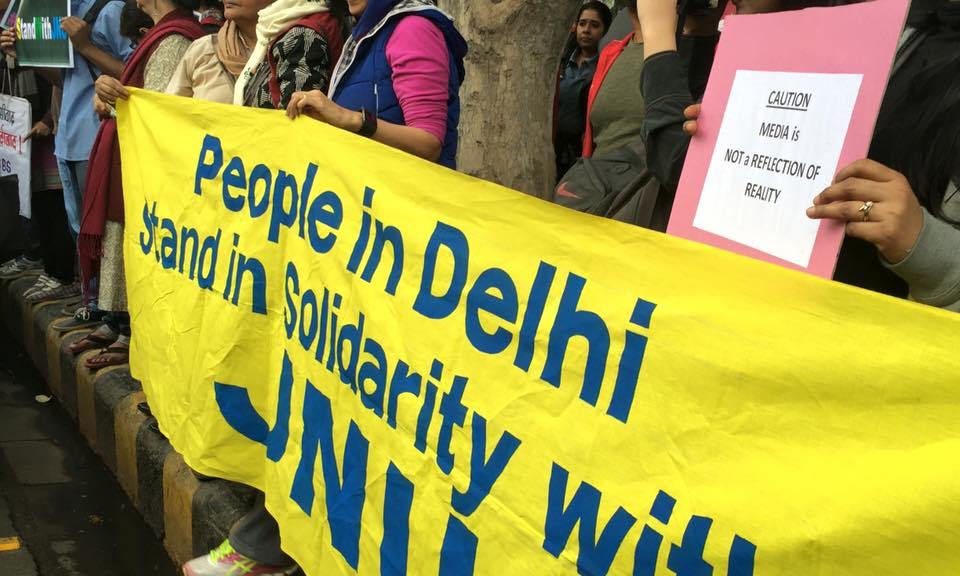
WHEREAS, on 12 February, the Delhi Police raided student hostels at the Jawaharlal Nehru University (JNU) and arrested the JNU Students’ Union President Kanhaiyya Kumar on the arbitrary and anti-democratic charge of sedition; and

WHEREAS, this application of a draconian, colonial law which criminalizes dissent stands in stark contradiction to the very democratic character of the nation that affirms an individual’s right to free speech, however radical and unpopular the opinion; and

WHEREAS, this arrest of an elected student representative and the subsequent militarization of the campus with an overwhelming police presence is sanctioned and sponsored by the Bharatiya Janata Party (BJP) led ruling regime, in conjunction with its affiliate organizations RSS and ABVP, its student wing; and

WHEREAS, this coercive presence of the police on the university premises and elsewhere is compounded by their complicity in the physical assaults by lawyers of the Hindu Right on JNU teachers and students at the courthouse before Kanhaiyya’s hearing; and
Continue reading Resolution in support of the student protests in India against the militant suppression of intellectual freedom and dissent by the BJP-government

Support and stand for Jagdalpur Legal Aid Group: Mohammad Zafar

This is a guest post by MOHAMMAD ZAFAR

We are going into a dangerous situation now. It is that time when we all should come together to work against autocracy, state led atrocities, bullying, dictatorship and authoritarianism and any other form of injustice. We all know about JNU case, role of Lawyers & MLA O. P. Sharma in the shameful acts of abuse and warnings to people who take initiative to speak against atrocities and injustice all-over the country. Now Raman Singh’s model of development has also showed us two shameful cases in Chhattisgarh. One is attack on Tribal activist and AAP’s leader Soni Sori who has faced a lot of humiliation, atrocities and pain but always stood steadfast on her path and is still fighting. And one more case of state-led dictatorship is related to Jagdalpur Legal Aid Group, which is a legal aid group to support tribal people who are facing problems in that region in terms of false cases, fake encounters, etc. for details about its existence see this link of the Hindu’s article (http://www.thehindu.com/news/national/a-group-of-lawyers-trying-bring-law-to-lawless-bastar-region/article7735079.ece) They worked for people facing false charges of Naxalism, against controversial encounters and other issues where there is a need to work hard for giving support to the voice of justice among tribes.

This has become problematic for state and police. They first started annoying them, throwing false allegations against their degrees and eligibility to fight case. When they fought and won against those charges now some organizations (with the support of state officials & police) also warned them to leave that place and said that they are Maoist sympathizers. And now finally they left their landlord’s rented home in Jagdalpur when police pressurized their landlord who (according to one member of Jagdalpur Legal Aid Group (JAGLAG) in an interaction to a reporter) is very good for them and they don’t want to be a problem for him. For further details and mail of a member of JAGLAG see the article in this link.

            We should think again, is it development where state itself making people speechless and generating more mistrust among people for government, where they do violence by their own way and more than that they are even silencing voices of resistance. These officers will get awards by government like Ankit Garg who shamelessly ordered humiliation and sexual abuse of Soni Sori. They want to silence voices like JAGLAG so that they will punish more innocents in the name of Naxalism as they did with Kartam Joga, who because of lot of efforts of Lawyers and activists found a new life after 3 years’ Jail and pain of brutality of Police. They don’t want any voices of resistance because they know their reality will emerge; so they beat people without any reason as they did with Lakhan Lal and broke his legs just for replying “Laal Salaam” in the dead of the night; their shameful act of humiliating Soni Sori in jail in the name of police inquiries is also for the same reasons. In the name of Anti-Naxalism/Maoism they are trying to silence all voices and justifying all their acts as their friends are trying to do in the name of nationalism in other parts of country. We should support now all members of Jagdalpur Legal Aid Group and raise this issue on all platforms.

Sambit Patra Flying the Tricolour on Times Now, in JNU and on Iwo Jima – History Re-Imagined (Once Again) by the BJP

A recent ‘Newshour’ non-debate on Times Now on whether or not an order emanating from the Ministry of Human Resources Development to erect 207 feet high steel flagpoles and giant tricolour flags in Central Universities across India featured a wonderful intervention by Sambit Patra, BJP spokesman and digital magician extraordinaire.

Continue reading Sambit Patra Flying the Tricolour on Times Now, in JNU and on Iwo Jima – History Re-Imagined (Once Again) by the BJP

Undeclared Emergency? State Repression from JNU students to HONDA workers: Nayan Jyoti

Guest Post by Nayan Jyoti

[ Even as the repression on students in universities, continues, the BJP regimes in Rajasthan and Haryana have attacked peaceful assemblies of young workers in the National Capital Region (NCR). This calls for widening and deepening the resistance against the Modi regime, whose fascist character is now nakedly visible. When the state starts hunting down workers and students at the same time, it is time for workers and students (and their friends) to stand united together and resist the repression by all means necessary and possible. We are posting below an account by Nayan Jyoti, a young activist, of the violence unleashed by the BJP governments in Rajasthan and Haryana, in collusion with factory managements, using the brute force of armed police and hired thugs in the last few days, with the hope that it will add crucially to our understanding of what exactly is going on in India.The Modi regime is in a deep crisis, and the only way the BJP (both at the centre and at the provincial levels) knows how to respond is through violence. Modi is the best student of Indira Gandhi in Indian politics, and he is following totally in her footsteps, invoking exactly the same ‘Anti-National’ tag, especially in terms of the way she led up to the declaration of the emergency in 1975. Things are different now, but also very similar. This is the beginning, as the author of this post says, of an undeclared emergency. The difference between a declared and an undeclared emergency appears at the moment to be only a formality. It is time we saw through the veil of this formality.]

We #standwithJNU and raised our united voices against State repression and witch-hunt of students for #righttodissent since 9th February. On 18th February, more than 15,000 people said so clearly in Delhi and pointed out that this has directly followed in a coordinated manner more recently from the institutional murder of Rohith Vemula in HCU by the anti-Dalit administrations under influence of the BJP, and right-wing attack on FTII students to completely control freedom of thought and expression earlier and the murder of progressive intellectuals by right-wing groups in recent times.

As this terrorizing and silencing of progressive voices, students and intellectuals goes on by both the BJP government and its police-administration from the top and the RSS vigilante groups on the streets, another much more brutal crackdown on thousands of workers has just happened and continues in the Haryana-Rajasthan border.

Continue reading Undeclared Emergency? State Repression from JNU students to HONDA workers: Nayan Jyoti

Delhi Stands With JNU Students and Against the Evil Modi Regime

Because things are the way they are, things will not stay the way they are...”-

Bertholt Brecht

This slideshow requires JavaScript.

This afternoon saw an amazing, uplifting show of peaceful, joyful strength by students, young people, teachers, friends in Delhi, in support of JNU, in memory of Rohith Vemula, in solidarity with Kanhaiya, Umar and all the students in JNU who are being so stellar in their principled opposition to this evil, venal Modi regime. Reports of massive protests are coming in from Kolkata, Russia to and elsewhere. Something is changing in the air.
It was a perfect spring afternoon, overcast like our times, but breezy like our morale. There must have been at least 15,000 people on the march today. We met old and long lost friends and made new ones.

The gathering was totally peaceful. Young  women and men, student profits from JNU in the eighties, grey haired, felt young again as their student held aloft flowers, flags, signs and homemade banners. Everyone looked their best, as if they had come to a massive street party.

It was so infectious, the mood this afternoon, such a contrast to the vile bad temper of the men who attacked Kanhaiya and his supporters two days in a row at the Patiala House Courts two days in a row that the difference between two entirely different visions of politics was palpable on your skin. The contrast sent a clear message to all our senses.

The RSS-ABVP-BJP brand of politics is diseased. It’s on its last legs and that is why it is so desperate. It cannot perform, it has no ideas, it is morally and culturally bankrupt.

Universities are in crisis and all that the bad TV actress who makes a joke of her ministry (HRS) every day can think of today while thousands March against her and her boss is about sticking giant flagpoles into the ground and stitching gigantic silk shrouds for her  government and her party.

Modi, Rajnath and Manusmriti Irani should quake in fear. Their time is up.

Very proud of JNU students and the people of Delhi today.

#StandwithJNU #StandwithKanhaiya

#StandwithUmar

#Standwithallstudents

#NowitchHuntofStudents

Solidarity with JNU and Conversations on Kashmir: JKCCS

Guest Post by Jammu Kashmir Coalition of Civil Society

Jammu Kashmir Coalition of Civil Society (JKCCS) expresses its solidarity with the striking students and teachers of Jawaharlal Nehru University, New Delhi. We have watched with a sense of horror and dismay, the violent criminalizing of student democracy and dissent, not just at Jawaharlal Nehru University but across Indian campuses in the recent past. Having long and intimate knowledge of violent repression and legalized impunity that Indian state is capable of, especially against those it considers ‘anti-national’ we are not surprised by these events, but have a special empathy with all who suffer its horrors. We demand the release of all student dissenters and political prisoners in the custody of the Indian state, and an end to acts of policing and surveillance on campuses, and targeting of students on the basis of political beliefs and speech.

The Kashmiri students in different colleges and universities in India, who have always faced discrimination and intimidation time to time, are now feeling the extreme regressive and oppressive means used by right wing groups and the government. After being hounded, Kashmiri students have begun leaving Delhi. There are several places where the landlords, in whose properties Kashmiri students were renting flats, have asked the students to vacate. These experiences of Kashmiri students are part of the larger reality faced by Kashmiri youth in Jammu and Kashmir and in India. The voices of dissent in Jammu and Kashmir have been dealt with administrative detentions under Public Safety Act, illegal detentions, torture, surveillance and killings by armed forces including the most recent one of Asif and Shaista at Pulwama on 14th of February.

We also view with alarm, the reports about the cynical use of Kashmiri students studying in Delhi as hostages in the politically illegitimate process of government formation in Srinagar.

We are dismayed that the public narrative about the recent events has often descended into disputes over Indian ‘patriotism’ and the shrill condemnation of a few ‘fringe’ ‘radical’ ‘traitors’ for ‘irresponsible’ slogans. These sentiments are neither mere slogans nor represent the ‘fringe’ in Kashmir, the very place they were made in reference to. As Kashmiris, we believe that the right to self-determination is inseparable from the right to political association, dissent and free expression, and these rights cannot be selectively asserted or upheld. In the competitive public proclamations of nationalistic credentials, what has been lost is that courageous act of defiant solidarity with the Kashmiri people’s struggle for justice and self-determination, that lies at the heart of these debates. Despite the disavowals and the state repression, the solidarity with the political rights of the Kashmiris is growing and spreading, as events in Jadavpur University demonstrate. We acknowledge the emerging spaces in Indian civil society to converse on the question of Kashmir, beyond nationalist framings. We hold out hope for future alliances with students, groups and individuals willing to engage in honest conversations, in which they alone do not determine the boundaries of what can or cannot be said, thought or felt.

Spokesperson
JKCCS

Letter of Solidarity to the Students of JNU, India: Democratic Students’ Alliance, Pakistan

Guest Post by Democratic Students’ Alliance, Pakistan

12513500_757322154411597_1043243550084509878_o

17th February, 2016

Dear Student friends of JNU, Delhi


The issue of academic freedom is one that is tied to the essence of education itself: to think, to question, to speak and probe, to understand, to challenge and to learn.

The strangulation of political and academic freedoms is a dark hallmark of despotic and authoritarian societies and governments which aim to silence and subjugate. State intrusion in intellectual spaces is an assault on democratic rights and liberties; academic freedom must not be subordinated to state agendas. We believe that political freedoms are central to a democratic state and that their suspension leads to nothing but danger.

Continue reading Letter of Solidarity to the Students of JNU, India: Democratic Students’ Alliance, Pakistan

The Tendency of the Price of Young Life to Fall and the Hope that it May Rise

The war on young people continues. In this post we will only consider it’s arithmetic. Not even its algebra, simply its arithmetic.

I am prompted to do this by a strange acoustic co-incidence. While standing as part of a cordon of faculty and friends protecting the students of JNU on the public meeting on the 13th of April from a handful of ABVP activists who liked invoking blood and bullets in their slogans, I head one that stayed with me, and made me revisit a question that often bothers me.

lance-naik-hanumanthappa

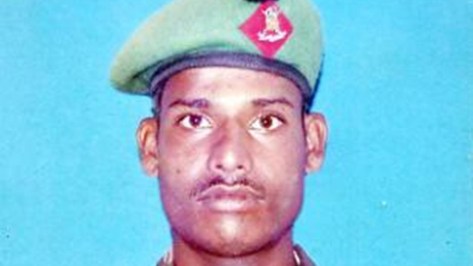
This was the slogan ‘Hanumanthappa hum sharminda hain, tere qatil zinda hain’. (‘Hanumanthappa we are ashamed, your murders are still alive’ ). Lance Naik Hanumanthappa, as we all know now, was a thirty two year old soldier of the Indian army who survived six days under an avalanche on the Siachen Glacier in Kashmir and then died of multiple organ failure in a Delhi military hospital. His young body must have had a tremendous and a passionate yearning for life. Sometimes I think of what a fine father or husband or lover or friend a man who loved life so must have been, could have continued to have been.

Continue reading The Tendency of the Price of Young Life to Fall and the Hope that it May Rise

Of Flags and Fetishes – The Paris Attacks and A Misplaced Politics of Solidarity: Debaditya Bhattacharya

This is a guest post by DEBADITYA BHATTACHARYA

Megan Garber’s article ‘#PrayForParis: When Empathy Becomes a Meme’, published in The Atlantic (November 16, 2015) has claimed that Paris hashtags and French flag filters on Facebook make for an “act of mass compassion” – a “compassion that has been converted, via the Internet’s alchemy, into political messaging”.

flag filter2

I have absolutely no problems with flag filters on Facebook. Or for that matter, profile-picture revolutions that happen all too often. I’m not, in the least bit indignant about such a competitive exhibitionism of feeling – indexed through a currency of memes and emoticons. In an age of such mass-production of violence (‘terroristic’ or ‘humanitarian’), it is no surprise that the event of mourning must become a symptom of the incompatibility between ‘act’ and ‘response’.

A funereal Facebook must therefore bleed profile pictures, because that seems the only charter of our most intimate emotions. We naturally do not care if Facebook is using the Paris tragedy as a marketing platform, as long as it helps us reclaim a deeply ‘personal’ angst in the face of more-than-a-hundred ‘spectacular’ deaths.

Continue reading Of Flags and Fetishes – The Paris Attacks and A Misplaced Politics of Solidarity: Debaditya Bhattacharya

An ‘Anti National’ Response from JNU to the ‘Nationalist’ RSS: Pratim, Gargi and Lenin

Guest Post by Pratim, Gargi and Lenin.

As writers, historians, scientists, film makers, poets, actors and others return their awards in protest against the rising intolerance and anti-rational climate in this country, we in JNU keep stocking up accolades of a different kind. These accolades are ones which are very generously gifted to us from the RSS and its affiliates. These accolades come in more than fifty shades, only highlighting the deep seated trouble that these folks have in seeing this University up to them, despite their attempts to tarnish it. A few days back the ever-so-absurd/islamophobic/irrational Subramaniam Swamy endowed JNU students with the honours of being ‘Jehadis’, ‘Naxal’ and ‘Anti-National’.

Continue reading An ‘Anti National’ Response from JNU to the ‘Nationalist’ RSS: Pratim, Gargi and Lenin

Can accessibility alone create an inclusive society for persons with disability? Tony Kurian

Guest Post by TONY KURIAN

Amidst the noisy campaigns of “Make In India and Digital India”, a campaign called “Accessible India” was launched by the Central Government recently and unsurprisingly this did not catch much media attention. Department of Persons with Disabilities, Ministry of Social Justice & Empowerment has launched the Accessible India Campaign (Sugamya Bharat Abhiyan), as a nation-wide flagship campaign for achieving universal accessibility for Persons with Disabilities.

The campaign is an extremely welcome initiative in a country like India which is home to more than 2.1 million officiallyrecognized disabled and a lot more who are not counted by the decadal exercise of census. While the campaign disserves much appreciation, it offers an appropriate opportunity for us to rethink some of our common sense, or at least that of majority about disability and disabled. Continue reading Can accessibility alone create an inclusive society for persons with disability? Tony Kurian

Lessons in Religious Bigotry from Pakistan and America: Fatima Tassadiq

Guest Post by Fatima Tassadiq

The last few months have been quite intense for Muslims in the US. The Syrian refugee crisis gave us gems like ‘hey, these people have smart phones! They cant possibly be fleeing a deadly war’ from twitter analysts. Then Donald Trump, the rising Republican star, informed us that some serious TV watching had led him to conclude that the presence of more men than women in the televised images of the refugees was ground for suspicion.

It took a heart-breaking picture of a dead Syrian toddler on a beach to compel conservatives to tone down their rabid xenophobia. And then there was the Ahmad Muhammad episode. The reaction to the arrest of the 14 year old for bringing a home made clock to school showed the best and worst of America. While many public figures including the president supported the teen, Atheist and Christian crusaders like Bill Maher and Bobby Jindal thanked the police for keeping them safe from a high school student. Continue reading Lessons in Religious Bigotry from Pakistan and America: Fatima Tassadiq

A Different kind of India-Pakistan Dialogue

As NSA talks between India and Pakistan were suspended, another kind of cross border conversation was taking place.

The vocalist of Indian Ocean band, Rahul Ram along with Varun Grover and stand up comedian Sanjay Rajoura produced a song to the tune of Kishore Kumar’s ‘Mere Samnewali Khidki mein’ (from Padosan). Their song ‘Mere Samnewali Sarhad Pe’ is a delightful and gentle parody of the mirror image pathologies in both our countries.
In response,  Muhammad Hassan Miraj, who identifies himself as a Major in the Pakistan Army, wrote an equally disarming reply,  sung by Mujtaba Ali, with Ali and Kamran on guitar while Gul Durrani directed the video.
Here’s to cross border solidarities!

Of Hanuman, Pakistan and Bhaijaan: Prabhat Kumar

Guest post by PRABHAT KUMAR

Hanuman in the Enemy Land

What did our Ram-bhakt Hanuman do in Lanka, the land of his master’s enemy when he went there in the golden past? Everybody knows. What will Hanuman do, if today he is sent to Pakistan? Lankan voyage of Hanuman then, and cinematic expedition of his modern counterparts now (Sunny Deols of Border, The Hero, Ghadar, etc.), leave no room for imagination. Pakistan – the enemy land of India’s nationalist imagination – must be taught a lesson, as Rashtra-bhakt TV news anchors keep shouting from behind fire and embers on the screen.

We have seen on almost daily basis the bhakts, posing variously as Rashtra-bhakt or Ram-bhakt or lately as NaMo-bhakt. Bhakts, who persistently wish to annihilate the enemy land in TV studios, social media, or movie theatres. However, what a latest Hindi film Bajrangi Bhaijan shows is an unusual, or should I say, an abnormal bhakt. A bhakt, who does not want to destroy Pakistan! Lo and behold, he is a Hanuman-bhakt! He is called Bajrangi-Bhaijaan (Salman Khan). For, the word Bajrangi is a synonym of Hanuman, the ubiquitous monkey-god. He is bhaijaan because he is unable to lose his affection for a cute little girl even after knowing that she is a Muslim and, more than that, a Pakistani! Continue reading Of Hanuman, Pakistan and Bhaijaan: Prabhat Kumar

IMA’s Promotion of Healthcare Privatization Through Insidious Attack on NCERT Textbook

Manali Shah (name changed on request), a 33-year-old software engineer working in the private  sector, lost her savings of eight years in a day when her father, 65, underwent a liver transplant in a private hospital. “Not only did my savings go, I also had to borrow money from the family to foot the bill. The procedure and hospitalisation cost almost Rs 30 lakh, and we have to continue spending Rs 10,000 each month for medicines, follow-up consultations and diagnostics,” she says

Each round of chemotherapy and radiation costs her almost Rs 1 lakh, but she didn’t consider AIIMS because the radiotherapy machine there is booked for the next seven months. [The cost of one round of chemotherapy in AIIMS was just Rs 750/- at that time, hence the overbooking]. From a report in Hindustan Times, 20 October 2013

Doctor, heal thyself, was my initial reaction when I read the front page report in The Hindu that ‘Docs’ were opposing ‘negative’ portrayal by NCERT. The objection raised by them is that the class VII textbook, Social and Political Life II, contained “objectionable description ” of the medical profession. Or so you believe till you realize, by the time you are into the third paragraph of the report, that the issue is not at all about the negative portrayal of the medical profession as such but of its elite practitioners who are making a killing in elite private medical institutions and hospitals at the expense of the ordinary people.

So it is not doctors in general – those who work in trying conditions in government hospitals – who are raising the objection but the Indian Medical Association that professes to be “the only representative, national voluntary organisation of Doctors of Modern Scientific System of Medicine, which looks after the interest of doctors as well as the well being of the community at large”.  The IMA says the news report, has written to the President Pranab Mukherjee and Prime Minister Narendra Modi “demanding immediate remedial action”. Continue reading IMA’s Promotion of Healthcare Privatization Through Insidious Attack on NCERT Textbook

The only New York we see: Juhi Tyagi and Karn Kowshik

Guest Post by JUHI TYAGI AND KARN KOWSHIK

When most tourists visit New York City, what they see is the New York that you see on TV – Times Square, Carnegie Hall, a Broadway Show and maybe a visit to the Legendary Soup Nazi. Our view of the City, though, was vastly different. As one of the authors visited New York for the first time, in the wake of cop killings of young black men in Ferguson, Staten Island and East NY, what we saw was the transformation of neighbourhoods into armed police camps, and a city torn by sharp racial divide.

Maybe our experience of New York was coloured by where we lived and spent most of our time. A tiny apartment on the same street as the 79th Precinct in Brooklyn; not far from where two NYPD officers were shot dead by a mentally unstable man in December 2014. In many of these neighbourhoods, the first piece of advice you got wasn’t about the coolest neighbourhood bar. It was: “On the streets, don’t run, don’t make sudden movements. If a cop stops you, keep your hands out of your pockets and don’t talk back. You don’t want to get shot.”

Continue reading The only New York we see: Juhi Tyagi and Karn Kowshik

That Elusive Thing with Feathers – After the Killing of Avijit Roy: Abdul Bari

Guest Post by ABDUL BARI

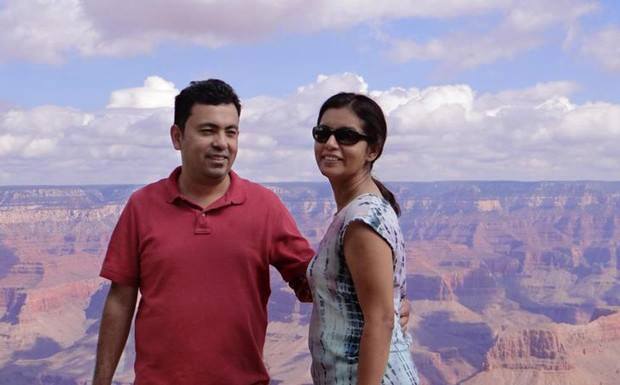
Avijit Roy was brutally murdered in Dhaka a few days ago. His wife, after heroically trying to shield his person with her own body, now lies in an ICU bed, fighting for her life.  I was an infrequent visitor to his website, Muktomona. Visiting it was like running your tongue over that tooth you’re missing, or reflexively checking whether you had your keys with you in the morning. Its presence was a reminder that, no matter how circumscribed, the nation-state of Bangladesh still had men and women who liked to think unconventional thoughts; give expression to unpopular ideas; endeavored to stand, as it is, in the very edge of what the societal limit of what could be expressed, and then take another firm step, not back, but forward. Continue reading That Elusive Thing with Feathers – After the Killing of Avijit Roy: Abdul Bari

Are Jibran Nasir and his friends Game Changers in today’s Pakistan? Fawzia Naqvi

Guest Post by FAWZIA NAQVI

One cold Karachi Night

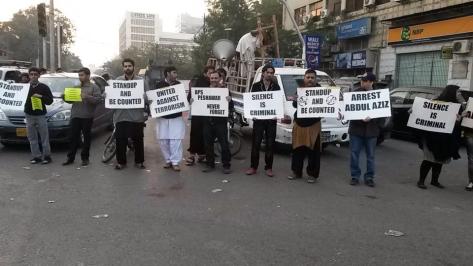
On the night of February 1st, Jibran Nasir Pakistan’s leading activist and a handful of peaceful protesters sat on a road in Karachi near the Sindh Chief Minister’s house for more than 24 hours, demanding the arrest of terrorists responsible for the January 30th Shikarpur attack which killed 65 Shias during Friday prayers, and demanding action against banned sectarian organizations. There were only 20 protesters, their average age 25, outnumbered it seemed by riot police with water cannon and batons at the ready.

Protest in Karachi against Terrorism and Secterian Violence

Continue reading Are Jibran Nasir and his friends Game Changers in today’s Pakistan? Fawzia Naqvi

Climate Change – Keep the Climate, Change the Economy: Sagar Dhara

Guest post by SAGAR DHARA

Contrasting outcomes of recent global warming meetings

Two recent meetings on global warming, one scientific and the other political, are of great public interest as they have a bearing on human society’s future course to become a sustainable global community. The meetings stand in sharp contrast with each other in terms of the clarity of their outcomes.

The first meeting was held by the Intergovernmental Panel on Climate Change (IPCC), a body of over 2,000 scientists. IPCC released its fifth assessment’s synthesis report in Copenhagen end-October 2014. The report states unequivocally that “Human influence on the climate system is clear.” Further, it warns that the emission of another 1,000 Giga tonnes1 (Gt) of carbon dioxide (CO2), referred to as the carbon space, is likely to raise average global surface temperatures by 2oC above pre-industrial times. This is considered dangerous to the environment and human society.

Since the industrial revolution began in the mid-18th Century, humans have used 35% of the known 1,700 Gt of conventional fossil fuel reserves, and cut a third of the then existing 60 million km2 of forests to emit 2,000 Gt CO2. The consequent 0.85oC average global temperature rise over pre-industrial times has triggered significant changes in the physical, biological and human environments. For example, rainfall variation has increased, extreme weather events are more frequent, pole-ward migration of species is noticeable and their extinction rate is higher, human health, food and water security are at greater risk, crop yield variations are higher, a 19 cm mean sea rise and a 40% reduction in Arctic’s summer ice extent have occurred over the last century, glaciers have shrunk by 275 Gt per annum in the last two decades, and social conflicts have increased. Continue reading Climate Change – Keep the Climate, Change the Economy: Sagar Dhara

Love in the Time of Military Courts: Fawzia Naqvi

Guest Post by FAWZIA NAQVI

[ This guest post marks one month of the 16th December massacre of school-children by Islamists in Peshawar, Pakistan ]

Fawzia 1 

Pakistan has become a euphemism for insanity.  Doing the same thing over and over again and hoping for a different outcome. There are though some incredibly brave, thoughtful, humane and patriotic Pakistani men and women who have decided enough is enough and they are determined to chart a different future for the country. Continue reading Love in the Time of Military Courts: Fawzia Naqvi

Human Rights Commission of Pakistan Condemns Killing of Children in Taliban Attack

The HUMAN RIGHTS COMMISSION OF PAKISTAN has issued the following statement on the Taliban attack on school children in Peshawar

December 16, 2014

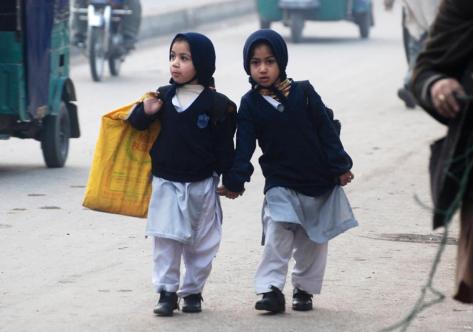
Lahore, December 16: The Human Rights Commission of Pakistan (HRCP) has called the killing of more than 120 children in a Taliban attack on an army-run school in Peshawar a national tragedy which it said must open the eyes of anyone still harbouring any doubts that Taliban and Pakistan could coexist.

In a statement issued on Tuesday, the Commission said: “HRCP is deeply saddened by the large number of children killed in the Taliban attack on ArmyPublic School in Peshawar. This is a national tragedy of immense proportions, and an extremely sad day for Pakistan. Our heart goes out to the families of the children whose lives have been cut short by this abhorrent act of terrorism.

“The target was an army-run school, but it was a school nonetheless. It is not children who fight against the Taliban. And yet the choice of the target and the heavy casualties among the children leave no doubt that the massacre was aimed at killing as many children as possible.

“Nothing, including religion, norms of armed conflict or even common decency, justifies such brutal targeting of children. But it is no secret that the killers and those who dispatched them to attack the school have respect neither for religious commandments nor notions of civilised or decent behaviour. The targeting of children made sense to them because they stand for blood-letting and not much else.

“HRCP reiterates its firm belief that Taliban and Pakistan cannot coexist and anyone still harbouring any notions to the contrary is naive beyond belief.

“It had already been established, much before Tuesday’s massacre of children in Peshawar, where the Taliban stood in terms of education or value of children’s lives. Their actions today have shown once again that Pakistan will not know peace until this madness is taken on in all its manifestations and defeated. Continue reading Human Rights Commission of Pakistan Condemns Killing of Children in Taliban Attack