Category Archives: Movements

Not Pakistan, but Modi has pushed Kashmir on the Brink : Ashok Swain

This is a guest post by ASHOK SWAIN

Since the death of a young and charismatic separatist named Burhan Wani, Kashmir has erupted into violence and chaos. Weeks of violent protests in the Valley have resulted in the deaths of at least 50 people and over 5,000 injuries. Kashmir is not new to violent protests and civilian deaths, but this time the intensity of the protest and the passion of the protesters is unprecedented. Continue reading Not Pakistan, but Modi has pushed Kashmir on the Brink : Ashok Swain

Democratic centralism – ‘freedom of thought (sic.) and unity in action’? Rajinder Chaudhary

This is a guest post by RAJINDER CHAUDHARY; you can view his previous post on democratic centralism, on Kafila here.

The title of this note uses a quotation from ‘On Democratic Centralism’ by Com Prakash Karat carried in The Marxist, XXVI, 1, January-March 2010. This piece by the then General Secretary of the CPI(M) and the constitution of CPI(M) available on its official site (as updated in October 2015) throws interesting insights into operationalisation of the principle of democratic centralism, which recently once again came into public view in the Jagmati Sangwan episode. (All quotations henceforth are from either of these two documents.)

            Prima facie ‘unity in action’ appears quite desirable but is it really so in all situations? Does it require to ‘bind the entire collective into implementing that decision’ in all situations as Karat argues, or ‘the individual shall subordinate himself to the will of the collective’ as article XIII 1(b) of party constitution requires? Do all actions-decisions that a communist party undertakes in a parliamentary democracy like ours are of the war like situation requiring marshalling of all resources without exception? Obviously, all organisational decisions cannot be equally crucial to require binding the whole organization to it. Why can’t there be freedom of action where some members or units decide to focus on health issues and others on educational issues, and some may refrain from either? Why can’t some members/units try particular tactics of organization, follow a calendar of their own and others a different one? If it sounds that one is stretching the centralism aspect a bit too far, it may be noted that Karat points out that the ‘democracy is practiced, before the conference when the political line is being formulated. Centralism comes in when the line is being implemented’, ‘when the party is formulating its policies, at the time of conferences etc., there will be democracy in action, free discussions within the party forums. Once a call for action is given, the aspect of centralism will predominate’. As if defining the political line once in three years, clinches everything and thereafter, on no other issues independent and dencentralised decisions can be taken. In fact article XXXIII of the party constitution, makes it explicit that democratic centralism means “the centralised leadership based on inner-Party democracy under the guidance of the centralised leadership”. There is a whole article on “Inner-Party Discussions” (article XXI) which states thatState Committee can initiate inner-Party discussion on an important question of Party policy concerning that particular State… with the approval of the Central Committee” (emphasis added). So, even discussion at state level on state issues can only be initiated with the approval of the Central Committee (and off course format has to be approved too). This amply clarifies the meaning of ‘freedom of thought (sic.) and unity in action’ and where emphasis lies in ‘democratic centralism’. No wonder many times one has come across situation where Party members are just curious to know what the party line on particular issue was and not the detailed arguments and would not speak on a current issue until unless party line was clear.

Continue reading Democratic centralism – ‘freedom of thought (sic.) and unity in action’? Rajinder Chaudhary

A response to “Kashmir is Feminist Issue” by Sonam Mittal: Tupur Chatterjee

Guest Post by Tupur Chatterjee

Sonam Mittal’s recent piece in Kafila, “Kashmir is Feminist Issue” draws upon an oft-cited gendered analogy to describe the Kashmir’s relationship with India and Pakistan. Though it makes a few pertinent points about the nexus of power and patriarchy and the urgent need for Indian feminist solidarity with the Kashmiri resistance, I found the analogy deeply problematic and strongly feel that it needs further unpacking to underline its worrying implications.

Continue reading A response to “Kashmir is Feminist Issue” by Sonam Mittal: Tupur Chatterjee

The Gaze of the Developmental State and the Narmada Action Plans: Ashwin V.S

Guest Post by ASHWIN V.S

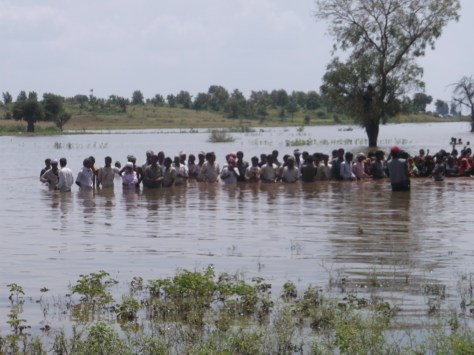
Malud-Jal-satyagrah

Jal Satyagraha in Narmada valley 2013

The years following the Second World War were characterized by a renewed focus on the ‘Modernization’ of nation-states. While the constant feature of the post-war years was the high-stakes rivalry and arms race between the USA and the USSR; both tread a common ground as regards high-modernization and ‘development’. ‘Development’ fuelled growth was considered a panacea to all ills and soon became dominant across the post-colonial world. WW Rostow’s The Stages of Economic Growth was a significant work which argued for five stages of growth in which “traditional societies” could transform themselves into the “age of high mass-consumption”. It was no wonder therefore as to which nation-states were characterized as ‘traditional’ under this rubric and pushed towards ‘development’.

A standard feature of ‘development’ in India has been the showcasing of large scale industrial and apparently ‘public purpose’ projects; an instance of this is seen in the construction of large dams. As much as ‘modernization’ or ‘development’ can be witnessed through the industrial or ‘public’ projects themselves; the ambition of the ‘developmental state’ and its vision can certainly be understood through the one-constant feature of the bureaucratic machinery – paperwork.

Therefore, for the purposes of this essay, I attempt to evaluate the ambition of the post-colonial ‘developmental state’ in India by analyzing the language of a few planning documents. In this case, I consider the Narmada Valley Development Authority’s (NVDAs) Action Plans prepared in the years 1991, 1993, 1995 and 2000 for the Resettlement and Rehabilitation (R&R) of Sardar Sarovar Project ‘oustees’ in Madhya Pradesh. These Documents are revealing in aspects of the modern state’s enterprise and it’s most significant undertaking, planning.

The State’s gaze and legibility:

James Scott’s magnificent work Seeing Like a State characterizes a crucial difference between the pre-modern state and the modern state: while the former “was in many crucial respects, partially blind” and “knew precious little about its subjects”, the modern state is consumed by a desire to know. Armed with statistics and other tools of ‘accuracy’, the modern state stakes its claim to the accurate depiction of the social world, which it then tries to alter in accordance to its designs of ‘development’. Continue reading The Gaze of the Developmental State and the Narmada Action Plans: Ashwin V.S

Kashmir, Summer 2016: Angana Chatterji

Guest Post by Angana Chatterji 

In 2011, I had written an essay on Kashmir entitled: “The Militarized Zone,”which was published in an anthology on Kashmir (Verso Books).

What was apparent then is all too real now. I reproduce an edited fragment here today, in solidarity with Kashmiris who are being asphyxiated in their land and subjected to life under conditions akin to collective internment, and their allies across India who are being intimidated to conserve the silence. Speaking up on Kashmir is inevitably accompanied by fear for many even as silence is a betrayal of humanity. Continue reading Kashmir, Summer 2016: Angana Chatterji

Statement Against State Violence in Kashmir: Ashoka University Students and Alumni

Guest Post by Ashoka University Students and Alumni

Letter condemning the State Violence in Kashmir

To

The Govt of India. and the Govt. of Jammu and Kashmir.

We, the undersigned—current students, alumni of the Young India Fellowship, and faculty of Ashoka University—write to voice our deepest anguish and grave concern at the violent turn of events in Kashmir in the past few days. The violence perpetrated by the Indian State after the extra-judicial execution(1) of 22-year old Hizbul Mujahideen Commander Burhan Wani (2) is highly condemnable. The Indian Army, Kashmir Police and other task forces have reacted violently with bullets, pellets and lathis in the clashes that erupted after Burhan’s funeral. This was immediately followed by many more protests and demonstrations as part of Kashmiri resistance to the military occupation of Kashmir by the Indian State. In the violent repression of the protests which had a huge ground support (evident from the large attendance to Burhan’s funeral) , 55 civilians (3) have been killed and around 3100 people (4) were severely injured by the pellets(5), lathis and bullets, some of whom have lost their eyesight. We, unequivocally, condemn this brutal use of force by the Indian State in dealing with the protests after the killing of Burhan Wani. Continue reading Statement Against State Violence in Kashmir: Ashoka University Students and Alumni

Cow Vigilantism as Terror : New Socialist Initiative

Guest Post by  New Socialist Initiative

Can the Saffron Establishment ever wash its hands of the growing menace?

(For Hindi version, click the link http://nsi-delhi.blogspot.in/2016/07/blog-post_26.html)

( Courtesy : Cartoonist Satish Acharya, https://www.facebook.com/cartoonistsatishacharya/)

Cow vigilantism which has received tremendous boost since the ascendance of BJP at the centre got its first fitting reply in Gujarat recently. The way in which a self-proclaimed Gau Rakshak Dal – owing allegiance to Shiv Sena – attacked a group of Dalits in Una (11 th July 2016) who were skinning a dead cow, publicly flogged them, led them to the police station charging them with cow slaughter and even circulated a video of the whole incident on social media to spread further terror, has caused tremendous uproar. Continue reading Cow Vigilantism as Terror : New Socialist Initiative

Students Protest in JNU Over Rising Civilian Casualties in Kashmir

The number of unarmed civilians killed in instances of firing by the armed forces, police and paramilitaries enforcing the occupation of Kashmir by the Indian state in the latest wave of violence has crossed fifty. Many more have been blinded by pellet guns. Hundreds have been injured and hospitalized. Reports of protests are coming not only from the Kashmir valley, Kargil, Drass and Jammu, but also from many cities in India. From Delhi (where there has been a public protest at Jantar Mantar, a press conference at Gandhi Peace Foundation and a student protest at Jawaharlal Nehru University), from Kolkata, which saw a massive turn out in a public march, from Chennai, from Patna, and from Kochi and Tricky in Kerala.

On Friday 22nd July, I went to a night protest march and public gathering by students at Jawaharlal Nehru University, Delhi. The march was called by Shehla Rashid, Vice President, JNUSU and Rama Naga, General Secretary, JNUSU (Both AISA activists) There were perhaps two hundred students gathered peacefully. The march began around 10:00 pm, made its way around the university campus and the protest continued well past midnight. Several student organizations, AISA, BASO, Hundred Flowers, Collective, DSU and individual students participated in the march. Shehla Rashid, Vice President, JNUSU and an AISA student activist, addressed the gathering before the march began, stating clearly, that this was going to be a peaceful expression of the democratic right to protest against the atrocities being enacted by the Indian state on the people of the part of Kashmir that is under Indian occupation. She asked the students to be vigilant in case any disruptive slogans were raised by planted agent-provocateurs. The entire march, and the protest meeting was documented by the students, so as to ensure that no ‘doctored videos’ would raise their ugly digital heads in the days to come. The students raised the demand for freedom for the people of Kashmir, and for people in all parts of South Asia. The slogans connected the realties of the people of Kashmir, the North East, Bastar, Jharkhand, with the experiences of Dalits, Workers, Peasants, Women, Students and Minorities. Slogans were raised against the killings and blindings by pellet guns in Kashmir. against torture, again rape, against draconian acts like AFSPA and PSA. The march made its way through the entire campus and culminated outside Chandrabhaga Hostel, where a meeting was held on the steps. The meeting lasted over two hours, was completely peaceful,and more than two hundred students listened to the speakers with close attention.

Police officers and campus security guards were present, and recorded everything. The students also recorded everything. And the indefatigable Shamim Asghor Ali made video recordings of several speeches, and uploaded them on to youtube, which we are lucky to be able to share here. We are also grateful for the still images uploaded by V. Arun, several others also took pictures and videos, which are now being shared on Facebook. Continue reading Students Protest in JNU Over Rising Civilian Casualties in Kashmir

Kashmir is a Feminist Issue: Sonam Mittal

Guest Post by SONAM MITTAL

To understand why Kashmir is a feminist issue, let’s take up a hypothetical, or not-really-so-hypothetical-after-all, situation of an abusive relationship.
A woman, gorgeous, graceful and delicate is in need of rescue. A man, mighty, strong and resourceful, offers to help. His only condition is that she should be his and only his for now and forever. She agrees.
It could have been the beginning of a beautiful love story if not for the underlying patriarchy and misogyny threatening to burst out. All it needed was an excuse. See, this woman had an acquaintance, a friend, with whom she had shared a part of her life. Her culture, her values and various elements that added to her charm were influenced by this friend. One fine day, this friend returned to lay claim on her. The man got angry, quite obviously. Fists and punches were thrown around and all three parties were badly hurt. Several grudges were adopted and nursed. Days went by but the memory of this brutality never faded away.
The man started placing restrictions on the woman. For her safety, obviously. Silly girl, he said, what if ‘your friend’ comes back again?
Then came in the taunts and verbal attacks. Are you really mine? Is this how you repay the help I gave you? Is this how you behave for sharing my life? Am sure you must have done something to provoke him and make him feel like he owns you.
The neighbors started talking and debating on who had a rightful claim on her. Nobody asked her what she wanted.
Day by day, the atrocities committed by the man, under the garb of protecting her, became unbearable. It was cruel enough that she had suffered many wounds on her body, some which were still hurting. The man would keep poking her, pinching and questioning her. Every action taken only for her ‘protection.’ It was almost as if he gained some perverse pleasure from her torture, knowing that no one can question him.

Continue reading Kashmir is a Feminist Issue: Sonam Mittal

Police in Kashmir Raid Newspaper Bureaus, Detain Employees, Seize Copies: Prabodh Jamwal

Guest Post by Prabodh Jamwal

Two of Kashmir’s leading newspapers, Kashmir Times and Rising Kashmir said that Jammu and Kashmir police raided their office on Saturday night, seized their printed copies and arrested their employees – a clear act of choking and gagging media in crisis-hit Kashmir valley. Copies of other newspapers, including Kashmir Reader and Kashmir Observer were also seized and their circulation prevented.

Continue reading Police in Kashmir Raid Newspaper Bureaus, Detain Employees, Seize Copies: Prabodh Jamwal

Bangalore Police Revoke Permission for Protest on Kashmir: Greeshma Aruna Rai

Guest Post by Greeshma Aruna Rai, with Women against Sexual Violence and State Repression (WSS), Peoples’ Union for Civil Liberties (PUCL) & Karnataka for Kashmir Forum.
Police has revoked the permission which they had given yesterday to hold a democratic protest in solidarity with Kashmiris in Bangalore by concerned citizens and activists. This is another way in which the State shows its true colours to all Indian citizens who are against State repression and State colonialism in Kashmir.
Permission for today’s protest condemning atrocities on the people of Kashmir has been revoked by the Karnataka State Police. They have threatened us with legal action if we proceed.

As organisers we have been bombarded by the police, demanding that we withdraw this demonstration.

As we publish this message, the 11th day of curfew continues and valley remains awash with the blood of Kashmiris.
Today’s protest is postponed. We, however, refuse to be stifled by the very same state that is ravaging Kashmir. We have resolved to move against the actions of the Police. We’ll be releasing a Press Note shortly while discussing other options to challenge this.

[ Shortly after this post was uploaded, the organizers of the protest held a press conference where they released the following statement.]

Continue reading Bangalore Police Revoke Permission for Protest on Kashmir: Greeshma Aruna Rai

Statement On the Unfolding Situation in Kashmir : NSI Delhi Chapter

Guest Post by New Socialist Initiative, Delhi Chapter

The valley of Kashmir is on the boil again. Forsaking the so-called normal routines of their lives, people are on the streets. Not just young men, but even children and women are out, challenging the military might of the Indian state. Any fear of the police and army appears to have been discarded. Police stations and even CRPF camps have been attacked. A popular upsurge, it is energised by mass fury. Forty people have lost their lives in one week at the hands of the Indian security establishment. Hundreds of others have suffered serious eye and other injuries from presumedly ‘non-lethal’ pellets used by the police. While people are out confronting the police, para-military and army, the other organs of the Indian state in Kashmir, the elected government and its bureaucracy, elected members of the legislature, panchayats, etc. are in a rathole, fearing public appearance. It is just the people of Kashmir valley versus the institutions of organised violence of the Indian state.

While the immediate cause of popular anger is the killing of Hizbul Mujahideen militant Burhan Wani, reasons for this anger go much deeper and have a longer history. The stifling and repression of the Kashmiri people’s right to self-determination stands at the root of this conflict. This repression has taken on extreme violent forms. For twenty five years now, the Kashmir valley has been among the most militarised places in the world. More than half a million troops of Indian army and para-military forces have been stationed in the state and its border with Pakistan. Rashtriya Rifles and CRPF camps dot the land scape. Highway checkpoints and random searches are part of everyday life. Thousands of men have disappeared, been picked up by security forces, thrown in the black hole of interrogation camps, often ending up in unmarked graves. The hated AFSPA gives Indian security forces legal cover to assault basic rights of Kashmiris to live a life of elementary dignity. If an average valley resident is alienated from the normal practices of the Indian state such as elections and its administrative initiatives, s/he harbours deep resentment against the presence of Indian security forces in their homeland. This resentment has erupted in mass protests again and again.

Continue reading Statement On the Unfolding Situation in Kashmir : NSI Delhi Chapter

Kolkata Rally against Killings & Mayhem in Kashmir: Dwaipayan Banerjee

Guest Post by Dwaipayan Banerjee

Close to five hundred people came out in a rally yesterday, 15th July, to protest the ongoing killings and mayhem in Kashmir by the Indian State. The overwhelming majority of participants were students, but they were joined in good numbers by feminists, queer-activists, trade union activists, writers, journalists, academics, human rights activists, dalit rights activists, cultural activists, with many among them not affiliated with any organisation. Student and youth activists carrying flags and placards of PDSF (Progressive Democratic Student Federation), USDF ( United Students Democratic Front), AISA (All India Students’ Association), Progressive Youth League (PYL) and many from other student-youth organisations were present in good numbers, so were human rights activists from APDR (Association for Protection of Democratic Rights) and those from Bastar Solidarity Network (BSN). Many carried with them their own banners and posters. Like the rally in Delhi, protesters carried with them hand-written, hand-painted and printed placards with the names of civilians recently killed in Kashmir inscribed on it, and through those posters a connection of shared pain and solidarity flowed from the streets of Kolkata to the turbulent and stormy blood-stained streets in Kashmir. Those posters were reaching out to the people of Kashmir with messages that they were not alone in their hour of sorrow, anguish and mourning. Some of the protesters had written verses by the Kashmiri poet Agha Shahid Ali on their posters. One of those many posters summed up the mood of the rally, ‘Kashmir belongs to Kashmiris’.


[ Video by Peoples’ Camera]

Continue reading Kolkata Rally against Killings & Mayhem in Kashmir: Dwaipayan Banerjee

Kashmir – A lost battle: Amya

Guest Post by AMYA

What’s happening in Kashmir? Why are the people living in the valley so angry? Why are they mourning at the death of a militant? What is giving them so much courage to shout slogans against the Indian state, even at the cost of their lives? Why do they assemble in large numbers at the funeral processions of the men killed in conflict?

As an Indian have you ever thought about these questions? Have you ever wondered that there must be something seriously turbulent in their reality that they are so resentful? Or, like the majority, you find yourself defending the unity of the country and calling the people living in Kashmir “traitors” or “anti-India.” If each and every person assembled in the funeral processions is a traitor then the best solution for the state is to kill all of them, stay happy with that piece of land and preserve the Indian unity. Has Indian nationalism become so narrow? We are the supposed carriers of the legacy of nationalism that Tagore had envisioned. But it’s now getting distorted into a revengeful and inhuman nationalism. We have lived the ‘unity in diversity’ phenomenon by being accommodative towards different communities. Why are we then so intolerant towards the people of Kashmir? Just because it is a matter of honour and pride for us to possess the land of Kashmir and further to prove our might, we keep eliminating any dissenting voice?

Continue reading Kashmir – A lost battle: Amya

Statement on Kashmir from concerned individuals

STATEMENT FROM CONCERNED INDIVIDUALS

We the undersigned, express our grave concern regarding the current state of affairs in Kashmir. The disproportionate use of state violence on unarmed protesters in Kashmir reflects severe human rights violations. Setting aside the paramount concerns in terms of continuous interventions in the normal lives of the people, the alarming loss of civilian lives and reports of serious injuries, including blinding from pellet wounds are deeply disturbing.

Attacking hospitals, ambulances, stopping funeral processions and even burning down residential buildings cannot be the response of a democratic nation. The attack on civilians and the ethical implications this has on our armed forces are not justifiable. Images of police, army and task force brutalities against women, children and youth are spreading across the social media. At the same time, partial and prejudiced reports on television and print are becoming the basis for racism, regionalism and religious intolerance among people who are not afraid to bully Kashmiris and other minorities.

We appeal to our government to consider the state of affairs in Kashmir democratically, prioritizing the right of Kashmiri citizens to normal lives. Continue reading Statement on Kashmir from concerned individuals

Citizens’ Protest in Delhi Against Killings of Kashmiris by the Indian State

Several hundred people from all walks of life (Civil Rights Activists, Labour Activists,  Peace Activists, Feminists, Queer Activists, Advocates, Students, Workers, Artists, Writers, Academics, Filmmakers,Independent Left Activists, and unaffiliated individuals across generations, from Jammu & Kashmir, from Delhi, and from other parts of India) gathered this afternoon (July 13, 2016) for a silent protest march and meeting at Jantar Mantar, to protest against the last three days of brutal assault by police, paramilitaries and armed forces in the Kashmir valley that have left 35 dead, several blinded (especially due to the indiscrimnate use of pellet guns) and scores of people critically injured over the last three days.

The protestors at Jantar Mantar wore black bands, and carried signs condemning the state’s violence. The protestors carried signs with the names of each of the thirty six individuals who have been identified as having died over the last three days. Each sign identified a deceased person by name, the town or village they were from, and asserted that they “will not be forgotten“. In this way, this corner of India’s capital bore witness to each person, man, woman or child killed by the Indian state since troops began firing into protests that began to mourn the extra-judicial assassination of Burhan Wani three days ago.

This slideshow requires JavaScript.

Continue reading Citizens’ Protest in Delhi Against Killings of Kashmiris by the Indian State

Terms of Endearment – Kashmir and the Possessive Cartography of the Indian Nation-State: Jhuma Sen

Guest Post by JHUMA SEN

Kashmir – the average Facebook trotting, Twitter wielding, middle-class Indian will assert – is an inalienable, inseparable part of Bharat Mata, the anthropomorphic representation of cartographic territorial sovereignty of India. Atoot Ang or inseparable organ. Yeh Fevicol ka majboot jod hai, tutega nahin.

The adhesive in this case is a deadly cocktail of an occupying power periodically using the spectacle of a ritualistic and performative violence to discipline and punish the colony, brutalizing every peaceful protest, responding to stone pelters with bullets, and prisoners with execution, to satiate some imagined collective conscience that sleeps like a baby when a three-year old is shot with his father, a ‘former terrorist’. But Kashmir belongs to India, in the same way Kiran belongs to Rahul in the famed Bollywood film of 1998, Darr: A Violent Love Story, the Wikipedia page of which describe it as a ‘romantic psychological thriller’. [i] The film traces the ‘romantic’ obsession of Rahul (Shah Rukh Khan) with Kiran (Juhi Chawla)—the serenading Rahul, the stalker Rahul, the fragile male ego Rahul, the violent Rahul, the abductor Rahul, the killer Rahul and a traumatized Kiran simply wanting to be left alone and desiring freedom from the wretchedness of Rahul’s ‘love’–Tu Haan Kar Ya Na Kar, Tu Hai Meri Kiran (Whether you agree to it or not, Kiran, you are mine’). The relationship between Rahul and Kiran (or for that matter any violent and delusional relationship) mirrors the relationship between the Indian State and Kashmir—the desire to control and the desire to be free. Continue reading Terms of Endearment – Kashmir and the Possessive Cartography of the Indian Nation-State: Jhuma Sen

Citizens’ Statement On Kashmir

Kashmir – Cry my beloved country: Gautam Navlakha

Guest Post by GAUTAM NAVLAKHA

burhan-wani-story_647_070916051953Image courtesy India Today

Burhan Muzaffar Wani and his comrades were born and died in the phase of militancy in Jammu and Kashmir that symbolizes the watershed in politics in J&K; pre and post ‘89-90. Unlike in the past, indigenous militants now neither travel to Pakistan for guns or for arms training. Armed resistance and its indigenous roots are etched on the faces of these young men.  Burhan’s killing on July 8 and following that, the turnout at his funeral as well as the protests that broke throughout the  state have rekindled memories of the early 90s, especially the death of Ashfaq Majid in 1990, which too had seen mass outpouring of rage.  Burhan and his comrades knew they would not survive for long; seven years is the average life span of a militant in Kashmir, as Burhan’s father poignantly stated long before his death.  Not because that was their own choice, but it was the only choice offered to a people by a ruthless military suppression by a state that has refused to recognize the popular demand for right of self determination.

Indians remain ignorant of the depth of the passion for ‘Azaadi’ from forced union with India, a union imposed in myriad ways. The policy of land grabbing to settle ex servicemen from outside the state (an old project of RSS); allowing non-state subjects unhindered access to land for industry, real estate, mining, for setting up fortified colonies for migrants; where control of the state government, especially Kashmir based ruling parties, over administration has always been circumscribed by New Delhi; and financial dependence  compounded by autonomy of the military from the purview of representative government – all of these point to the fact that the reins of government are held in New Delhi. Continue reading Kashmir – Cry my beloved country: Gautam Navlakha

Kashmir Burns, Again

A hundred and twelve lives, most of them young, some very young, were lost in Kashmir when the army, paramilitaries and police forces opened fire on several occasions from June to September in 2010. That was only six years ago. The latest reports indicate that around twenty three lives have already been lost in the last two days alone, in the aftermath of state troopers, soldiers and paramilitaries firing at funeral protests, after Burhan Wani, a twenty two year old insurgent, who had acquired the aura of a folk hero in Kashmir, was killed in an ‘encounter’, along with two of his associates, on Friday morning in a village in Kokernag.

Several more people have sustained serious injuries. The body count is likely to rise. Curfews have returned, phone and internet links are suspended, but nothing seems to keep people from spilling out onto the streets, and unlike previous instances, the communications ban seems to be unworkable. No one can pretend that Kashmir is not in crisis, again, today.

The people in power, at the state and the centre, were different in 2010. Omar Abdullah, then chief minister of Jammu and Kashmir, was offering mealy mouthed rationalizations for killing kids then, while Mehbooba Mufti, was weeping crocodile tears. It is the other way round right now. Omar is being ‘sensitive’, Mehbooba, who the roll of the dice has placed in the position of chief minister now, is ’sullenly’ presiding over a badly timed by-election victory. Prime Minister Manmohan Singh was silent then, Prime Minister Narendra Modi is playing percussion instruments in Africa now. If Nero played the harp while Rome burnt, Modi beats drums while Kashmir goes up in flames.

Continue reading Kashmir Burns, Again

Stop Trying to Portray Us as Extremists: Dalit Human Rights Movement

The police investigation about the bomb blast at the Kollam Collectorate on 15 June 2016 has now turned against us. Neither the organization nor its activists have any involvement in this incident. The accusation against us is just a ploy to use draconian laws such as the UAPA to destroy dalit-adivasi resistance.

The demeaning and enslaving social norms in Kerala have, since centuries, denied dalit people the most basic human rights such as the right to education, the right to decently clothe one’s body, the right to travel on public roads, and express one’s views. But India became a democracy that aimed for social democratisation, and Dr B R Ambedkar raised the possibility of social equality and reservations for the underprivileged groups through the Indian Constitution. Yet, sixty-five years later, the classes fundamental to this society have made no social, economic, or cultural progress and they continue to endure caste slavery and and exploitation in all areas of public life. The mainstream political parties who surfaced as the protectors of these classes have never offered them complete protection at any time. Though they have been faithful followers and workers of these parties, members of the disadvantaged groups have had little economic security; they have lacked social education; they have had to cry out for tiny parcels of land. Continue reading Stop Trying to Portray Us as Extremists: Dalit Human Rights Movement