Category Archives: Movements

The (Ir)resistible Rise of Arvind Kejriwal – Enter The ‘Outsider’

The tide is clearly turning. You know this when former critics and lampooners start talking of him as a ‘game changer’; you know this when weather-cocks turn away from the corridors of power where once they had been ensconced. You know this when rats start deserting the sinking ship.

Suddenly, everybody is talking favourably about the man from the ‘outside’ who is refusing to respect any of the established protocols of protest and politics. More startling perhaps, is the fact that in the past two days we have had senior journalists and political analysts suddenly telling us that they had known all along that there was a ‘post 1980 contract’, a secret code of silence, that never would the dynasty be attacked – indeed never would any apsiring dynasty be attacked. Everybody knew, says Dipankar Gupta in the Times of India, that the issue came up one and a half years ago – and we all do know that. Robert Vadra’s doings had already  been known. A senior BJP leader is even reported to have told a senior journalist that his party had indeed been in possession of the very same documents that Arvind Kejriwal brandished at his press conference. But, this leader went to say, “after an intense discussion, the leadership decided not to rake up the issue in Parliament even after submitting a motion in each House asking for a discussion.” Everybody knew – the parties, their leaders, the media persons, political analysts. And yet, nobody spoke out. All of them colluded, in other words, in suppressing the issue. Politicians kept silent for an understandable reason – aspiring dynasties that they are, after all. But the others? Mediapersons? Any guesses?

As someone who has been trying to understand Indian politics over the decades, I have often wondered at what I have referred to as the ‘implosion of the political’ – that is to say, the destruction of politics in the formal political domain. What is called a noora kushti in Hindustani, had come to mark our parliamentary-political grammar. Farcical walk-outs after equally farcical fire-spouting rhetorical speeches in parliament, and a happy bonhomie away from the glare of the media – that was what our politics had been reduced to.

Continue reading The (Ir)resistible Rise of Arvind Kejriwal – Enter The ‘Outsider’

Expired Explosives and Health of Kudankulam: Anoo Bhuyan

Guest post by ANOO BHUYAN

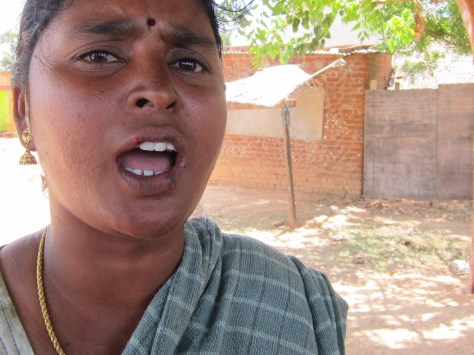
Anitha spits blood and wipes her lips as she talks to me. A few sentences later, a large blister on her lips begins to glisten with blood again, and she has to spit it out one more time. Hundreds of villagers at Idinthakarai have similar clusters of blisters on their lips. They say that they developed the sores as a reaction to the tear gas that was used during the clash that took place between police and protesters who were protesting the Kudankulam Nuclear Power Plant. This event occurred on tenth September. Nearly a week later, the sores continue to remain fresh and open, and a scab does not seem to be forming for any of those who were involved in the clash.

Anitha 


Continue reading Expired Explosives and Health of Kudankulam: Anoo Bhuyan

The Unreality of Wasseypur: Javed Iqbal

Guest post by JAVED IQBAL

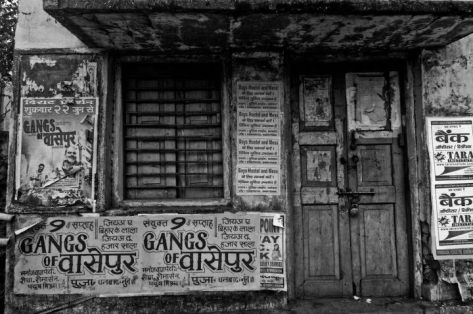
Posters for ‘Gangs of Wasseypur’ in Dhanbad. All photographs by Javed Iqbal.

‘The ending of the film was shown properly,’ speak unanimous voices, the well-known folklore of Wasseypur, Dhanbad, ‘Gangster Shafiq Khan was really gunned down at the Topchachi petrol pump like it was shown in the first part of the film.’

‘That’s how it’s done in Dhanbad.’ Continue reading The Unreality of Wasseypur: Javed Iqbal

Letter to the Editor, Times of India: Narmada Bachao Andolan

This guest post by CHITTAROOPA PALIT is the text of a letter to the editor of the Times of India, which the paper has not published

Subject: Rebuttal to the story “Reality bites: Khandwa’s made-for-TV protest” published in Times of India.

Dear Sir,

We are shocked to read the story “Reality bites: Khandwa’s made-for-TV protest” in your esteemed newspaper, which has been published with prominence. The story is false and fabricated. The journalist did not meet any Mehtab Singh but she quoted him. The journalist did talk to my colleague and senior activist of NBA Mr. Alok Agarwal but chooses not to quote him. It may be noted that the OB van and a team of your own group Times Now was there at satyagrah site all the time covering live from 6th September but none of these issues were raised.

Continue reading Letter to the Editor, Times of India: Narmada Bachao Andolan

Are We Not Alive: Women’s Voices from Kudankulam

Guest post by ANITHA. S

As I sit here in my home village of Idinthikara watching the hot sun light up the waves rolling onto the shores, I think of the news that has hit the world today about the Koodankulam Nuclear Power Plant. All of you must have seen the news that Madras High Court has given the go-ahead for the KKNPP.

When we carried the dead body of democracy and burnt it in the outskirts of our village on Aug15th, 2012, little did we realize that so soon we would witness the real death of democracy. As this last nail is being tightened on our lives, we realize how insignificant has been our voice. But this has only strengthened our vow to be together. Continue reading Are We Not Alive: Women’s Voices from Kudankulam

Why is the Indian media building a case for internet censorship rather than against it?

Hundreds of webpages now stand blocked in India, the government has openly been appealing to internet companies to pre- or post-screen content and remove what the government wants it to remove. One Google Transparency Report after another has been revealing how the number one target of the government is criticism of politicians and government. Just imagine what would the Indian media’s response to such censorship have been like had it been hundreds of books or articles we were talking about? Instead of asking Facebook to ‘pre-screen’ our posts, had Kapil Sibal been asking for someone to pre-screen articles in the newspapers, would it not be like the Emergency?
Okay, point taken. Let us not trivialise the Emergency, which entailed jailing of dissidents and forced sterilisation and so on. But still, there’s so much internet censorship in India now that it is surprising that instead of outrage you find the Indian media actually building the case for censorship. What about hate speech, they ask. What about the trolls, Why is there so much abuse on the internet? Continue reading Why is the Indian media building a case for internet censorship rather than against it?

Reading the Violence in Assam: Here and There: Musab Iqbal

Guest post by MUSAB IQBAL
… the fact that violence was not merely transitional, a birthmark or a departure, but a much more general and continuous aspect of modern life – Gyanendra Pandey

1.

The misreading or out of place reading of any local and contextual issue and putting it in a wrong frame can be very catastrophic. The recent episode of violence in Assam and the fury it triggered across the country is a classic example of such misreading. But apart from the misreading this complete episode is certainly indicator of certain other phenomenon underlying our fragile society.

Moreover it looks that this is not only adding to verbal construction of abuse but also a very controlled confusion working at someone’s behest. The rally and violence in Mumbai, Ranchi, and Jamshedpur whose motivating factor was this violence happening in northeast and cross border against “Muslims”. The other episode, which adds to cynicism, is through popular newspapers in South India and in Assam publishing that Assamese will be subject to target and then under the cloud of rumor and suspicion these residents of the state is forced to run.

Continue reading Reading the Violence in Assam: Here and There: Musab Iqbal

Resisting Caste Violence – Facing Brutal Repression: NTUI on Maruti-Suzuki

Statement issued by NEW TRADE UNION INITIATIVE on the incidents at Maruti-Suzuki’s Manesar Plant

Dated 19 July, 2012, New Delhi

The present spate of violence at the Manesar plant of Maruti Suzuki as a fallout of a protest by workers against a casteist comment made by a supervisor at a dalit worker reflects the continuing use of ‘caste’ as a method of subordination and oppression reflecting the persistence of deeply rooted primordial structures of society that complement capitalist exploitation. When co-workers protested, the management suspended the abused worker and refused to re-instate him and instead resorted to brutal violence, orchestrated by goons, against the workers and targeting the union leaders.

It is important to note that the Maruti Suzuki management is yet to constitute the Grievance Redressal Committee and the Welfare Committee at its Manesar plant which was agreed upon after the last dispute in October 2011. The present dispute is a well planned instigation by the management to systematically derail the ongoing negotiations on the Charter of Demands submitted by the Maruti Suzuki Workers Union in April 2012 and to discredit the sustained and united struggle of the workers at the Manesar plant. Continue reading Resisting Caste Violence – Facing Brutal Repression: NTUI on Maruti-Suzuki

Some Reflections on Capital and the Workers’ Movement After Manesar

Workers’ Violence and Corporate Violations of Law

It has been a long time in the making. The violence at Maruti-Suzuki’s Manesar plant on 19 July 2012, that led to the ghastly killing of the general manager, Awanish Kumar Dev was waiting to happen. While the killing was gruesome, I believe this is merely a ‘freeze shot’ of a larger film that has been playing for a very long time now. While it is the media’s wont to focus only on these moments of spectacular violence and then dish out reports from handouts provided by managements and the police, sometimes, such moments of conflagration do illuminate what has been in the dark for so long.

What follows below is an attempt to think through some of the issues that seem to me to lie at the bottom of the violent event. The ‘violent event’ here is not simply what took place in Maruti-Suzuki’s Manesar plant now; it is rather a shorthand for the whole series of such conflagrations that have been taking place over the past few years in the National Capital Region (NCR) – starting with Honda Motors and Scooters 2005,  Graziano Trasmissioni 2008, and many others since – Rico Auto Industries, Pricol Ltd and so on. The struggle in Honda Motors that had been brewing for a long time had eventually spilled over into a series of public protests with severe police violence in the full glare of the media. Things have never been the same in the entire belt since. Rico Auto Industries incident in September-October 2009 subsequently became an important milestone – galvanizing as it did a number of other workers’ strikes. There it had started when the workers struck work after 17 of their colleagues had been dismissed ‘on disciplinary grounds’. Actually, the workers rightly felt that this was to quash their attempt to form a union. And while the workers were protesting at the gate, a group of hired goons attacked them, killing one of the workers and injuring many others. In the Graziano Trasmissioni the issue of contention was the reinstatement of 136 dismissed workers which led to a massive unrest in the unit in Greater NOIDA, leading eventually to an incident not very different from the present one. Continue reading Some Reflections on Capital and the Workers’ Movement After Manesar

CPI(M)’s ‘July Crisis’ and Challenges for Rebuilding the Left

In an unprecedented move ,  the JNU unit of the SFI (SFI-JNU) has been dissolved by the ‘Delhi State Committee of the Students’ Federation of India’ [SFI is the CPI(M) student wing]. What is interesting about the press statement issued by the ‘Delhi State Committee’ following this momentous decision, is that it is signed by the Acting President and the Acting Secretary. The state secretary Robert Rahman Raman has since resigned in protest against the decision and the state president, according to him happens to be among those expelled. The state secretary in his statement has protested against the SFI Delhi state committee’s decision, ‘taken with just 12 members present and without adequate consultation or effort to retain the unit.’  The matter then, is far bigger than that of an errant SFI unit.

Clearly, leading state functionaries of the organization too are involved in the heresy that has called forth this action by the high priests of the CPI(M). Anyone who knows the command structure of the CPI(M) and how it works, can see immediately that a decision as important and unprecedented as this cannot have been taken by something as inconsequential as the Delhi state committee of the SFI. Indeed, even the Delhi state committee of the CPI(M) could not have taken this decision without the concurrence of the highest leadership – in this case Prakash Karat, the general secretary, himself. Continue reading CPI(M)’s ‘July Crisis’ and Challenges for Rebuilding the Left

Can University Teachers Bend the Sri Lankan State?

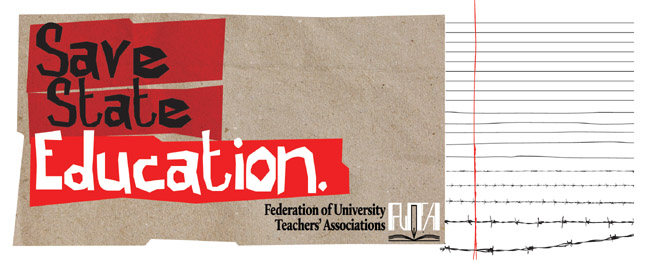
The major strike launched by university teachers in Sri Lanka on July 4th is gaining momentum. Their struggles are proving to be the single most sustained and nationally organised movement in Sri Lanka’s post-war years. This strike follows previous trade union action taken last year where the Heads of Departments of state universities resigned from their positions for several months. With the Government unheeding of their demands, the Federation of University Teachers Associations (FUTA) has reinitiated a full blown strike that is national in character with state universities from all regions of the country participating. Continue reading Can University Teachers Bend the Sri Lankan State?

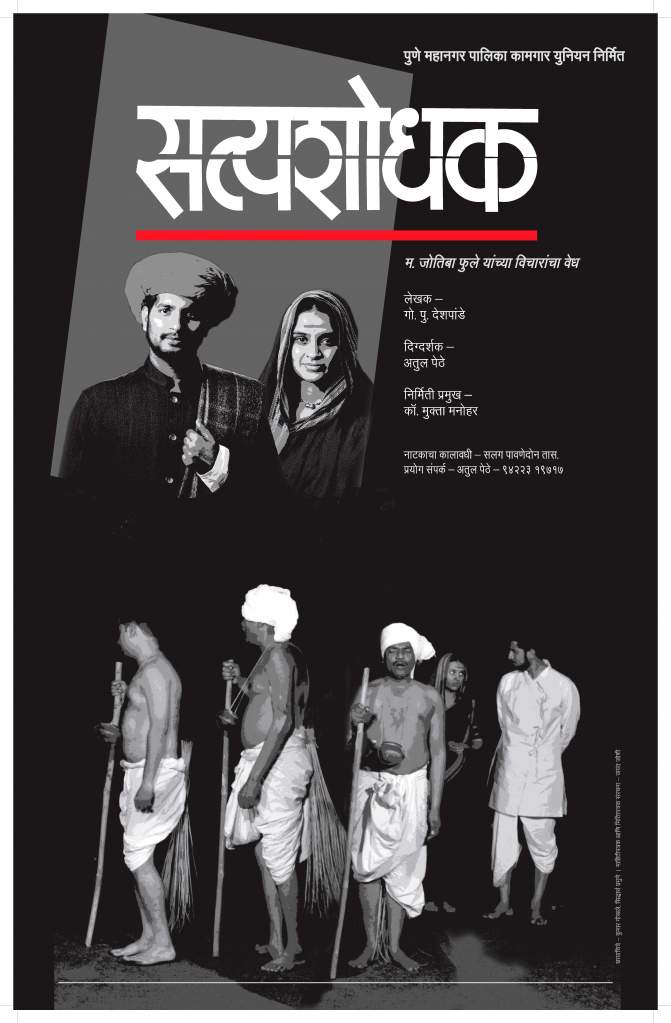
Satyashodhak – A Performance

(A shorter version of this review appeared in Tehelka)

Writer: G P Deshpande

Director: Atul Pethe

Performed by Pune Safai Karmacharis Union

Image

It was apt that a landmark production of G P Deshpande’s 1992 play Satyashodhak on the life of the 19th century anti-caste crusader Jyotiba Phule was performed in a week that witnessed the killing of the head of the Ranbir Sena – a week in which we were reminded that the bitter legacy of caste haunts us as strongly as ever. It was unusual however, that the performance should be held at the recently-opened May Day café and bookstore in Delhi – a space dedicated to the different and more hopeful legacy of the international working class movement, and located close to the heart of a former industrial district in a city that practices careful amnesia about its working classes. It is entirely unusual further that the performers were both Dalit and members of the Pune Municipal Safai Karmacharis Union. While the ancient, poisoned streams of caste and class have often overlapped on the subcontinent, they have not, as we are aware, produced unified or even similar political responses.

Continue reading Satyashodhak – A Performance

The (Auto)Rakshasa and the Citizen

A petition from an organization called Change India invaded my Facebook wall today right before – rather ironically, it turns out— my morning auto ride. The petition is filed under a category on the site called “petitions for economic justice.” When you open it, the image pasted below opens. A sharp fanged, dark skinned “auto-rakshasa” demands one-and-a-half fare. The commuter is “harassed.” The petition that accompanies this image urges the ACP of police to create “an efficient system” so that complaints made to report auto-drivers who overcharge or refuse to ply can be tracked. How, it asks, can “concerned Bangalorean citizens” expect “justice” if their complaints are not tracked?  We all must, it urges, “join the fight.”

Image

Let me first say quite clearly that I do not mean to undermine the intentions and frustrations of those who launched this campaign and, yes, when the meter goes on without asking, it eases a morning commute significantly. The question is: if this does not happen at times (and indeed it doesn’t) then why is this so and what does one do about it? There is a lot to be said about the economics of the issue itself and I welcome others reading who know more to write about it more extensively. But this piece is not about that. It is about the campaign itself and how we articulate political questions in our cities. It is fundamentally about the easy, unremarked way in which a working urban resident and citizen – who is also, after all, a “fellow Bangalorean” and concerned with “economic justice”– can be termed and portrayed a “rakshasa” as if it were a banal utterance.

Continue reading The (Auto)Rakshasa and the Citizen

India must deliver on its repeated commitments to the human rights council: Amnesty International

This release was put out by AMNESTY INTERNATIONAL on 1 June

On 24 May 2012, India’s human rights record came under renewed international scrutiny during its second Universal Periodic Review (UPR) at the UN Human Rights Council. Amnesty International welcomes the recommendations made to India by the reviewing states, many of which reflect concerns raised previously by the organization.

Amnesty International is disappointed, however, that despite India’s assertion that it sees the UPR mechanism as one of “constructive engagement,” the government did not immediately accept any of the recommendations made, some of which were put forward in 2008 during India’s first UPR. Amnesty International urges India to demonstrate by September 2012, a genuine resolve to deliver on its outstanding human rights commitments and the UPR recommendations, when the report on India’s second UPR is formally adopted at the 21st session of the Human Rights Council. Continue reading India must deliver on its repeated commitments to the human rights council: Amnesty International

“The more they censor the internet the bigger we become” – An interview of Anonymous India

In which I interview “Anonymous India” who have organised a massive protest against internet censorship across 11 Indian cities on 9 June.
Some say such attacks (hacking and defacement of Web sites) could be used by the political class to actually strengthen their argument in favour of control and regulation of the Internet. What do you say to that?

Anamikanon: People on the ground are vulnerable to people with a lot of power and no problems misusing it. Anonymous can’t be found to defame, threaten, suppress, stall…. wrong means? Ok. Worth it.

Netcak3: I say the more they censor the Internet, the bigger we become. We strive in users from across the world. Pro tip: Once an idea has been made, you cannot kill it.

Anamikanon: In my view, these are the means that can be safely used without risking life, limb, careers, reputations, family…

Gummy: Defacing is like posting a nill which is illegal and can be removed. Like people post their advertisement bill (poster) at the back of buses and other public places.

Anamikanon: Except we post it in inside their drawing rooms! [Read the full interview.]

Dalit organisations demand NAC to recommend SCP/TSP legislation

This press release comes from the SC/ST BUDGET ADHIKAR ANDOLAN 

The SC/ST Budget Adhikar Andolan welcomes the draft recommendations of the NAC to the GOI. However, it is very disappointing that the National Advisory Council (NAC) has not suggested legislation for SCSP and TSP. It is a known fact that without legislation, accountability would not be possible, and the entitlements under the SCP will not be implemented. The Dalit  organisations strongly urge the NAC to recommend SCP/TSP legislation and that this be placed in the parliament in the coming session.

The recommendations of the NAC on the reform of the Scheduled Caste Sub-Plan (SCSP) were sent to the Government in December 2011. In line with the recommendations of the NAC, the Working Group of the NAC on Dalit Issues have now enunciated a set of Essential Elements of Implementation Framework of SCSP. Some of the recommendations of the NAC are as followed: Continue reading Dalit organisations demand NAC to recommend SCP/TSP legislation

Forging a Nepal for all its peoples

As the constitutional endgame approaches, Nepal is witnessing its most fierce and polarised political debate since the process to transform the state began with the Comprehensive Peace Agreement in 2006. Strikingly, it is not a battle between political parties, but different social groups.

This is the battle over the nature of federalism, the boundaries of future states, and the names and number of provinces. The issue of state restructuring perhaps resonates most among ordinary citizens, especially those belonging to communities excluded from the power structure due to their ethnic, caste, regional and religious identities. It is a battle that has been fought in Constituent Assembly (CA) committees, the State Restructuring Commission, and in the past week, on the streets. Continue reading Forging a Nepal for all its peoples

Resisting the Second Childhood: Towards Universal Pension in India

Guest post by AKHIL KATYAL

Ashiya Begum, an elderly widow, had worked as a road construction labourer after her husband’s death. She recalls that when all the workers used to have lunch by the construction site, she tried to sleep under the bushes as there was no food and it was better than seeing others eat. When the pangs of hunger grew insistent, she would drink a lot of water and then tie her saree end tightly around her stomach and continue to work. At night if the children cried and she had nothing to feed them, she peeped out of her tent to neighbours’ utensils and used to beg a glass of ganji (water which is to be drained out of rice once it is cooked) from them. Everybody got 5-6 spoonfuls of ganji before sleeping. Sometimes in the evening, after the road construction work, she cooked in other people’s houses. They gave her four rotis that the entire family ate…‘Even if I tell you (what we eat to survive),’ she told the researcher, ‘will you ever be able to feel what we eat?’
–          from the ‘Study on Destitution and Hunger’, Centre for Equity Studies, Delhi

Old age mostly inspires the sentiment of the universal in us, the aesthetics of the general, so much so that when we speak of the old, we often let go of the specific and relish statements that tend to be as wide-ranging as they could be naïve: the old are wiser, we say, the age is just a number, our frames turn more literary, more contemplative, it is the dusk of life, we think, or sometimes being metaphorical, we consider to be old to be in a second childhood. The last one is Aristophanes, no less. Continue reading Resisting the Second Childhood: Towards Universal Pension in India

What I learned from “The Patriarchy”: Nilanjana S. Roy

Guest post by NILANJANA S. ROY

Reading Saba Dewan’s post, on patriarchy and St Stephen’s, was a release. For years, I had struggled to make sense of two contradictory things—my years at college were some of the happiest of my life, but the institution that was held up to us as one of the best in India was also built on a flawed and deeply discriminatory set of beliefs.

(It’s hard to write about this in part because it always felt like complaining about what was, in essence, a very privileged life–those of us who went to St Stephen’s were by definition lucky, in our acquisition of English, in our officially liberal families, in our assumption of a secure place in the hierarchies of power in India.) Continue reading What I learned from “The Patriarchy”: Nilanjana S. Roy

Of chick charts, hen charts and other such women’s stories: Saba Dewan

Image credit: Tribhuvan Tiwari / outlookindia.com

Guest post by SABA DEWAN

(For Vrinda, Uma, Sukhpreet, Dipta and all of us who found strength in each other to raise our voices in protest…) 

A few months back I visited St. Stephen’s College in Delhi University for a screening organized by the students there of my film, ‘The Other Song.’ It was my first visit after 26 years when I had been an undergraduate student here from 1982 – ‘85. I confess I have never felt any urge to go back nor have I suffered nostalgia about the three years I spent in St. Stephen’s College although I have carried vivid memories of that time. Sharp, brittle memories that defined many of the choices I have made in life over the years; the most important being of believing in and hopefully practicing a feminist politics based on equality and respect for all. Feminism truly has been a legacy that St. Stephen’s College inadvertently bequeathed to many of its women students of my generation. Continue reading Of chick charts, hen charts and other such women’s stories: Saba Dewan

Koodankulam – Anti-nuclear Struggle Continues: Deepa Rajkumar

As Japan shut down its last reactor, the Koodankulam project is to go critical in ten days.  Because Japan depends on local consensus for its nuclear decisions, unlike the World’s Largest Democracy, the views of Japanese people counts for something. Thousands of Japanese marched in celebrations to celebrate  the switching off of the last of Japan’s 50 nuclear reactors on Saturday May 5th. 

Traditional ‘koinobori’ fish-shaped banners for Children’s Day have become a potent symbol of the Japanese anti-nuclear movement, symbolizing the commitment to leave a safe and clean earth to children.

Meanwhile, back home in Koodankulam, as  this guest post by DEEPA RAJKUMAR reminds us, unrelenting state repression continues of the massive, non-violent struggle against the proposed nuclear plant there.

6,800 people in Koodankulam face charges of sedition and/or waging war against the state, possibly the largest number so charged ever, in colonial or independent India, in just one police station.

Sathish Kumar and R. S. Muhilan began an indefinite hunger strike from 25th April in Tiruchirapalli prison, Tamil Nadu. They were demanding a fair trial, stoppage of new charges being filed against them and the withdrawal of existing false charges against them. Continue reading Koodankulam – Anti-nuclear Struggle Continues: Deepa Rajkumar