Category Archives: Politics

Joint Statement Condemning Arrest of Activists and Public Intellectuals

Following is the final statement with the signatures as they were when it was closed for purposes of releasing to the media and sent to us by the initiators of the campaign.

We, the undersigned, are shocked by the serial raids across the country on the homes of activists and public intellectuals who are critical of the government and the ruling party at the Centre. The arrests of prominent activists and intellectuals Sudha Bharadwaj, Vernon Gonsalves, Gautam Navlakha, Varavara Rao, Arun Ferreira and others, are nothing but an attempt by the government to strike terror among those who are fighting for justice for the marginalised. This is also an attempt by the BJP to invent a false enemy and engage in scaremongering in order to polarise the 2019 elections in its favour. Already, the government and the media houses close to the BJP have been trying to spin a false narrative of a Maoist conspiracy since June, 2018. Terms like “urban naxals” are invented in order to stifle any criticism of the government. We have learnt that the Delhi Police, after having arrested Sudha Bharadwaj, waited for Republic TV to arrive before taking her to the court. This simply shows that the arrests are incomplete without the accompanying sensationalist media propaganda to demonise activists, human rights defenders and intellectuals.

Continue reading Joint Statement Condemning Arrest of Activists and Public Intellectuals

WSS Statement Against Arrests of Sudha Bharadwaj, Vernon Gonsalves, Arun Ferreira, Gautam Navlakha and Varavara Rao

The following is a statement by WOMEN AGAINST SEXUAL VIOLENCE AND STATE REPRESSION (WSS) against the raids on and arrests of activists and intellectuals in different cities.

WSS strongly condemns the arrests of its member Advocate Sudha Bharadwaj, and activists Vernon Gonsalves, Arun Ferreira, Gautam Navlakha, Varavara Rao, and the raids at the homes of Father Stan Swamy, Dr. Anand Teltumbde, Prof. K. Satyanarayana, Pavana, Anala, Kurmanath, Kranti Tekula and others conducted by the Maharashtra police along with the state police of Telangana, Jharkhand, Goa and Delhi. These searches and arrests are a diversionary tactic to draw attention away from the spine chilling revelations about Hindu Sanatan Sanstha and Hindu Janjagruti in connection to the assassinations and bomb terror which they have been masterminding.

Continue reading WSS Statement Against Arrests of Sudha Bharadwaj, Vernon Gonsalves, Arun Ferreira, Gautam Navlakha and Varavara Rao

‘अरबन फासिज्म’ की शुरुआत : वैभव सिंह

Guest post by VAIBHAV SINGH

रामचरित मानस में सुन्दर कांड में एक पंक्ति आती है, जो कही तो विभीषण के मुंह से गई है लेकिन वह आज के लोकतंत्र पर भी लागू होती है। चौपाई में विभीषण कहते हैं- ‘सुनहु पवनसुत रहनि हमारी। जिमि दसनन्हि महुं जीभ बिचारी।’ यानी विभीषण कहते हैं कि मैं ऐसे ही रहता हूं जैसे दांतों के बीच जीभ। प्रसंगांतर करके देखें तो भारतीय लोकतंत्र की हालत भी अब फासीवाद, सांप्रदायिकता व पूंजीवादी लोभ-लालच के जहरीले विषदंतों से घिरी जीभ जैसी नहीं हो गई है जिसे कोई भी काट लेना या आहत कर देना चाहता है?  गिरफ्तारियां, सर्चवारंट, नजरबंदी और मीडिया प्रोपगंडा हमारे देश की सर्वप्रमुख सचाई बन चुकी है और अब इस लोकतंत्र के भीतर सशक्त हो चुके अधिनायकवाद के लिए अब यही चीजें उसके शासन की वैधता का प्रमुख आधार बन गई हैं। जिस देश में हर वक्त मुठभेड़, गिरफ्तारी या देशद्रोहियों की खोज का सत्ता-प्रायोजित अभियान चल रहा हो, वहां लोकतंत्र के बारे में सोते-जागते चिंता न होना स्वाभाविक तौर पर संवेदनहीनता या फिर कमअक्ली का लक्षण माना जा सकता है। जैसे साइनबोर्ड पर किसी ने लिख कर टांग दिया है कि लोकतंत्र की अमुख तारीख को हत्या कर दी जाएगी, वह तारीख नजदीक आती जा रही है। ठीक रघुवीर सहाय की ‘रामदास’ कविता में रामदास की हत्या की तरह सभी को जैसे पता चल चुका है कि लोकतंत्र की हत्या हो जाएगी पर सब अपने-अपने काम में मसरूफ़ हैं। रघुवीर सहाय के शब्दों में-

निकल गली से तब हत्यारा/आया उसने नाम पुकारा/

हाथ तौलकर चाकू मारा/ छूटा लहू का फव्वारा/

कहा नहीं था उसने आखिर उसकी हत्या होगी।

Continue reading ‘अरबन फासिज्म’ की शुरुआत : वैभव सिंह

Fascinating Manu

It is easy to see the linkages between Manu, Nietzsche, Hitler and the worldview of Hindutva supremacism

RSS and Fascism

Manu and his ‘magnum opus’ Manusmriti keeps hogging headlines in the 21st century as well.

Thanks to the fascination it still holds among the Hindutva supremacists of various kinds even around seventy years after the promulgation of Constitution, which in the words of Dr Ambedkar, had “ended the rule by Manu”.

The latest to join the ‘mission glorification’ of Manusmritihappens to be another stalwart from the Hindutva brigade, called Sambhaji Bhide, the leader of Shivpratishthan Sangathan, who also happens to be an accused in the Bhima Koregaon case. Addressing his followers known as dharkaris (believers of violence) – as opposed to varkaris(who go to Pandharpur from Pune on foot), he exhorted them to disseminate Hindu religion and form Hindu Nation. He also added how ‘Manusmriti was superior to the teachings of saints Dnyaneshwar and Tukaram’. 

( Read the full article here : https://newsclick.in/fascinating-manu)

Who feeds whom? Reflections on the Left responses to the Abhimanyu murder case

The recent murder of an SFI activist, Abhimanyu, at the Maharajah’s College, Ernakulam, allegedly by activists of another student organization, the Campus Front, has once again triggered a series of intense campaigns against the Popular Front of India (PFI), which is accused of having terror links, even with the ISIS. This last claim has become commonsense almost impossible to contest.

Continue reading Who feeds whom? Reflections on the Left responses to the Abhimanyu murder case

അഭിമന്യുവധം ഉയർത്തുന്ന കാതലായ പ്രശ്നം

സത്യം പറഞ്ഞാൽ അഭിമന്യു എന്ന വിദ്യാർത്ഥിയുടെ ഞെട്ടിക്കുന്ന കൊലപാതകത്തിനു ശേഷം ആ ചെറുപ്പക്കാരൻറെ മാതാവിൻറെ വിലാപം മാത്രമാണ് ഇപ്പോഴും മുഴങ്ങിക്കേൾക്കുന്നത്. ആ ശബ്ദം മനസ്സിൽ നിന്ന് മായുന്നതേയില്ല.

Continue reading അഭിമന്യുവധം ഉയർത്തുന്ന കാതലായ പ്രശ്നം

Citizens’ Solidarity with Voices of Democracy – Against the Arrest of Five HR Activists

[This is a statement of solidarity endorsed and signed by over 200 intellectuals, artists, academicians, lawyers, journalists, and students in support of the five arrested in connection with Bhima-Koregaon case. In the 43rd year after Emergency was declared in this country, this statement was issued on June 25th 2018 condemning the arrest of such voices of democracy and demanding their immediate and unconditional release.]

We condemn the arrest of five human rights activists, professors and lawyers in connection with the Bhima-Koregaon clashes early this year. The alarming arrest of Advocate and General Secretary of Indian Association of Peoples’ Lawyers (IAPL) Surendra Gadling, Committee for the Release of Political Prisoners (CRPP) Public Relations Secretary Rona Wilson, Head of English Department Professor Shoma Sen of Nagpur University and member of Women against Sexual Violence and State Repression (WSS), cultural activist and founder of Republican Panthers Jaatiya Antachi Chalwal Sudhir Dhawale and anti-displacement activist and Prime Ministers Rural Development Fellow (PMRDF) Mahesh Raut is a clear manifestation of state terror to crush the voices of dissent in this country.

The intemperate use of sections of the IPC and Unlawful Activities (Prevention) Act (UAPA) on all five reveals legal over-reach and exposes the desperation to foist extraordinary and excessive charges on all five to ensure they remain in the clutches of the Fadnavis-Maharashtra government. All the arrested have consistently worked for the assertion of oppressed and marginalised communities against majoritarian forces, spoken out against Brahmanical patriarchy, upheld peoples’ rights to land, life and dignity, and have strived for the release of political prisoners.

Continue reading Citizens’ Solidarity with Voices of Democracy – Against the Arrest of Five HR Activists

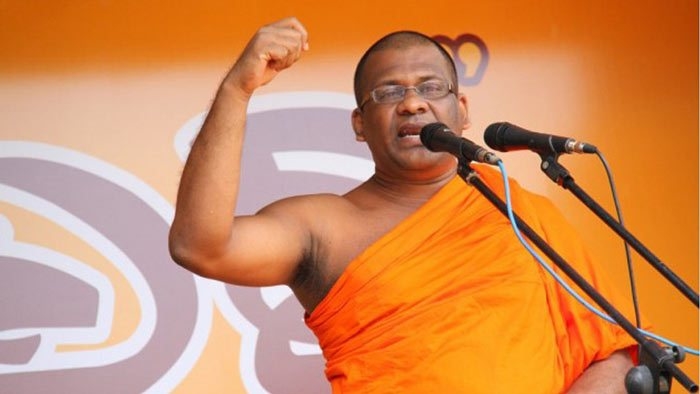
The Monks Who Spew Hate

Why Jailing of Gnanasara Did Not Become News in This Part of Asia

Galagoda Aththe Gnanasara, the controversial leader of Bodu Bala Sena

“Ordered disorder, planned caprice, And dehumanised humanity…”

– Bertolt Brecht in The Exception and the Rule (quoted in The Sunday Leader)

“I have done my duty towards the country,” Gnanasara told reporters as he boarded the bus taking him to prison. Why should I regret?”


Rarely does Sri Lanka convict Buddhist monks.

But few days back a court in Sri Lanka made history when it convicted Galagoda Aththe Gnanasara, the controversial leader of Bodu Bala Sena (Buddhist Power Force) who is referred to as ‘Thero’, The Venerable, and sent him to jail. Scores of his followers, mainly Buddhist monks, were reciting Buddhist prayers when he was being arrested and packed in to the police vehicle.

Reports tell us that Sri Lanka is still facing mini-turmoil over this conviction.

Marches were organised in different cities of Sri Lanka demanding that President pardons him using his special powers. Protesters have also asked that this revered monk should not be forced to wear jail uniform and be allowed to wear saffron robes only.

For people outside Sri Lanka, it would be rather difficult to understand why a Buddhist monk has suddenly become such a polarising figure in the society there.

( Read the full article here : https://newsclick.in/monks-who-spew-hate)

India’s Panicky Response to UN Report on Kashmir: Kavita Krishnan

Guest Post by KAVITA KRISHNAN

The Office of the United Nations High Commissioner for Human Rights (OHCHR) released its first-ever ‘Report on the Situation of Human Rights in Kashmir’ on 14 June, 2018. It is unfortunate though predictable, that India rejected the report and its recommendations out of hand, after having already refused the OHCHR access to Kashmir.

Dismissed Without Reading?

The UN report is, however, a historic opportunity for India’s people to reorient and reassess the conversation around Kashmir. India’s media and columnists could have played an important role in creating a hospitable and educative space for this conversation. Instead, what we have seen is the almost panicky attempt, on part of prominent opinion-makers, to shut down the conversation and dismiss the report as too silly even to merit close scrutiny and debate.      Continue reading India’s Panicky Response to UN Report on Kashmir: Kavita Krishnan

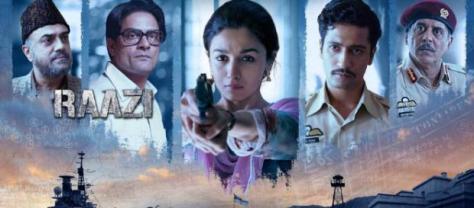
How Does Raazi Resolve The Tension Between Patriotism and Humanity? Kavita Krishnan

Guest Post by KAVITA KRISHNAN

SPOILER ALERT: If you have not seen Raazi, please don’t read this review because it contains spoilers.

Rabindranath Tagore, the composer of the poems that serve as the national anthems of India and Bangladesh, wrote an essay on nationalism in which he asserted, “it is my conviction that my countrymen will gain truly their India by fighting against that education which teaches them that a country is greater than the ideals of humanity.” In a letter to a friend, he wrote, “I will not buy glass for the price of diamonds and I will never allow patriotism to triumph over humanity as long as I live.”

My concern, as I watched Meghna Gulzar’s Raazi, was about how the film handles its central tension – between the values of humanity and patriotism. Continue reading How Does Raazi Resolve The Tension Between Patriotism and Humanity? Kavita Krishnan

The Karnataka Moment and the Search for a ‘Bonapartist’ Figure – Looking at 2019

There are enough reasons for for the upbeat and celebratory mood in the anti-BJP-RSS camp following the resignation of BS Yeddyurappa even before the floor test. After all, for once, the game plan of the Modi-Shah duo fell flat, thanks in no small measure, to the Supreme Court’s intervention in directing that the floor test be done by 19 May, knocking down the (RSS) Governor’s initial provision of 15 days to the government to prove its majority. In a manner of speaking, we escaped just by the skin of our teeth.

Both the parties concerned – the Congress and the Janata Dal (S) – were on tenterhooks throughout and the surreal accounts of the high drama of the past three days read like they could be about the nether worlds of crime and mafias. Offers to buy off MLAs with money ranging from Rs 5 crores and a ministry to Rs 100 crores have openly been alleged but these were the relatively minor matters. Congress and JD (S) MLAs were not allowed to leave Bengaluru as their chartered flights were ‘denied permission’. [An MLA, in fact told the Times of India, in the same report linked here that by manipulating resources, the BJP had ‘caged us’ in the state]. Their security cover was withdrawn. The management of the resort in Kochi (another state, not even ruled by the BJP) they had booked into by the Central leadership, actually backed out stating that they were under tremendous pressure. Then began the trip by road to Hyderabad, where eventually, it was the Telengana police that ensured their safety. Stories of individual MLAs, either being offered with withdrawal of pending cases or being threatened with harassment with new ones have also been doing the rounds. And for those who have been following what has been happening to the AAP MLAs in Delhi, nothing of this should be unbelievable.

Continue reading The Karnataka Moment and the Search for a ‘Bonapartist’ Figure – Looking at 2019

Open letter to the Prime Minister of India on the Kathua and Unnao Rape Cases – The Full Text

To,

The Prime Minister of India,

Prime Minister’s Office, South Block,

Raisina Hill, New Delhi 110 001.

21 April 2018

Mr Prime Minister,

We are academics and independent scholars from India and abroad, writing to express solidarity with, and to endorse the sentiments expressed by, forty-nine retired civil servants in their open letter to you of April 16th 2018 (https://thewire.in/politics/narendra-modi-open-letter-kathua-unnao).

Along with these civil servants and countless other citizens of India and the world at large, we wish to express our deep anger and anguish over the events in Kathua and Unnao and the aftermath of these events; over the efforts, in both cases, of those administering the relevant States to protect the alleged perpetrators of these monstrous crimes; over the subsequent profoundly distasteful efforts of rationalisation, deflection and diversion that have been so much in evidence in the reactions of your party’s spokespersons in the media; and finally over your own prolonged (and by now familiar) silence that was broken only recently with wholly inadequate, platitudinous, and  non-specific assurances of justice for the victims. Continue reading Open letter to the Prime Minister of India on the Kathua and Unnao Rape Cases – The Full Text

Petition to Supreme Court Urging Verdict in Judge Loya Case

The following petition initiated by Prasenjit Bose appeals to the Supreme Court to reconsider the verdict in the case regarding Judge Loya’s death. Since the launch of the petition, over 527 persons have already signed it. A list of 40 prominent signatories is provided below. A hard copy of the petition along with the total list of signatories will be sent to the Supreme Court judges once we collect thousand plus signatures.  The petition can be signed here.

To
The Hon’ble Chief Justice

& His Companion Justices,

The Supreme Court of India

Most Respectfully Sheweth:

We the undersigned citizens of India are deeply anguished by the order passed by a three judge bench of the Supreme Court that there is no merit in the writ petitions seeking an Inquiry into the death of Justice Brijgopal Harkishan Loya on December 1, 2014 at Nagpur.

The three judge bench has concluded that the documentary material on the record indicates that the death of Judge Loya was due to natural causes and that there is no ground for reasonable suspicion about the cause or circumstances of death which would merit a further inquiry. Continue reading Petition to Supreme Court Urging Verdict in Judge Loya Case

Against the Yawning Jaws of Hell: Protest Against Hate on 23 April

After the Modi government came to power, citizens of this country have seen gate after gate of Hell — the Narakas — open relentlessly to suck them in mercilessly or condemn them to be helpless spectators to unspeakable acts of injustice and violence. We have by now crossed the Arbudanaraka and the Nirarbudanaraka many times; the ordeal of having to watch evil unfold in the attacks on people in the name of what they eat, how they love, what they speak, who they pray to, which caste they were born into, what gender was assigned to them at birth — the list is growing day by day. We seem to be reduced to waiting endlessly at the doorsteps of police stations, courts, morgues, nearly overpowered by the stench of power and majoritarian hubris, fighting to stay conscious, waiting for the dead, broken, defiled, or dismembered bodies of our kin, our friends, neighbours, people. For instance, can one ever forget how we stood in sheer anxiety outside the Supreme Court, truly like souls awaiting judgment at the gates of Vaikuntam, reduced to droplets of pure worry? Those of us who fought for Hadiya’s rights can hardly forget.

Continue reading Against the Yawning Jaws of Hell: Protest Against Hate on 23 April

To Gain a View of the Elephant – India, History, Modernity, and Marx : Ravi Sinha

Guest Post by Ravi Sinha

(Marx Bicentennial lecture – Acharya Nagarjuna University, Guntur, March 16, 2018)

etaddhastidarshana iva jatyandhah

That is like people blind by birth viewing an elephant.

  • (Shankaracharya’s bhasya on Chandogya-Upanisad 18.1)[1]


It was six blind men of Indostan,

To learning much inclined,

Who went to see the Elephant

(Though all of them were blind),

That each by observation

Might satisfy his mind.

  • John Godfrey Saxe[2]

The ancient Indian parable of blind men and the elephant, popularized in modern times by John Godfrey Saxe’s nineteenth century poem, has often been deployed in philosophical discourses about the nature of reality and its relationship to sense perception. It has served as a useful metaphor in many an argument about empiricist epistemology, moral relativism, cultural plurality, even religious tolerance. No such usage is intended here. My purpose in starting out with the parable is mostly methodological – how does one put together a vision of the beast based on necessarily partial observations of it. Continue reading To Gain a View of the Elephant – India, History, Modernity, and Marx : Ravi Sinha

नवोदय और भारत की साझी हानि: यश पाल रोहिल्ला व संतोष शर्मा

Guest post by YASH PAL ROHILLA and SANTOSH SHARMA

हाल के वर्षों में हुई दो घटनायें उल्लेख के लायक हैं। पहली एक कॉलेज में पढ़ने वाली छात्रा ने मुखौटा लगाकर भीड़ के सामने अपनी कहानी बयान की, जिसमें उसने बताया कि किस तरह से उसे कॉलेज की पढ़ाई के लिए, लिए गए कर्ज को उतारने में देह फरोख्ती का सहारा लेना पड़ा। दूसरी घटना मे लगभग एक लाख विद्यार्थी सड़कों पर उतर आए क्योंकि उन्हें मंजूर नहीं था कि उनके देश की सरकार परा-स्नातक की पढ़ाई के लिए भी ट्यूशन फीस ले। पहली घटना अमेरिका में हुई और दूसरी जर्मनी में। दोनों घटनाएं विचारधारा सम्मत हैं: पहली पूंजीवाद का फल है और दूसरी लुप्त होते सामाजिक लोकतंत्र की निशानी।

भारत की वर्तमान सरकार ने अमेरिका वाला रास्ता अपना लिया है। इसका एक पुख्ता उदाहरण है जवाहर नवोदय विद्यालय में फीस वृद्धि। जवाहर नवोदय विद्यालय की स्थापना करना एक विशिष्ट व आदर्शोन्मुख कदम था। यह कदम, तब जब राजीव गांधी प्रधान मन्त्री थे और पी.वी नरसिम्हा राव मानव संसाधन विकास मन्त्री, 1986 की राष्ट्रीय शिक्षा नीति के तहत लिया गया। इस नीति के तहत, अन्य कदमों के अतिरिक्त, देश के हर जिले में नवोदय विद्यालय होगा जिसमें छठी कक्षा में 80 सीटों पर दाखिला होगा; दाखिले के लिए पांचवीं स्तर से कठिन व मेधा मापने वाली प्रतियोगी परीक्षा होगी जिसमें कम से कम 75 प्रतिशत सीटें ग्रामीण क्षेत्र के विद्यार्थियों और बाकी शहरी क्षेत्र के विद्यार्थियों के लिए आरक्षित होगीं। एक तिहाई लड़कियों के लिए और अनुसूचित जाति व जनजाति के लिए सरकारी प्रावधान के अनुसार। अन्य पिछड़ा वर्ग का आरक्षण अभी भी लागू नहीं है। हालांकि यह कहना आवश्यक है कि उस वक्त जब नवोदय विद्यालय की शुरूआत हुई थी तब कहीं पर भी यह आरक्षण नहीं था। विद्यालय आवासीय सुविधाएं देगा और सारा खर्च केन्द्र सरकार वहन करेगी।

Continue reading नवोदय और भारत की साझी हानि: यश पाल रोहिल्ला व संतोष शर्मा

ADMIN NOTICE: KAFILA COLLECTIVE

STATEMENT BY KAFILA COLLECTIVE

Reports in the media indicate that Lawrence Liang, a member of the Kafila collective, has been found guilty of sexual harassment by an internal committee set up by Ambedkar University, Delhi, through due process. He will no longer be writing on Kafila.

PadMan, Patriarchy and the Poor Man’s Innovation: Tannistha Samantha and Mukta Gundi

This is a guest post by TANNISTHA SAMAMTHA and MUKTA GUNDI


With the success of “PadMan”, Akshay Kumar has established himself to be a bleeding-heart ‘feminist’. News channels are pouring praises for a film that introduces a ‘bold’ topic while regurgitating the crucial link between safe menstrual practices and women’s health. While the message is old (and important), the euphoria around it is new. Continue reading PadMan, Patriarchy and the Poor Man’s Innovation: Tannistha Samantha and Mukta Gundi

Civil Disobedience under Democracy: The Case of Boycott of Centralised Compulsory Attendance in JNU: Tejal Khanna

Guest post by TEJAL KHANNA

It is often advised that civil disobedience in the form of breaking a law must not be practiced under a democracy. It is because democracy by giving the space for open discussion prevents a situation wherein people are compelled to think of civil disobedience. Moreover, if citizens develop faith in civil disobedience then that only undermines the rule of law. Such an act doesn’t strengthen democracy but rather helps in diminishing its ethos. People must be discouraged to break laws because in a democracy, it is they who elect their representatives through free and fair elections. These representatives then make laws to which open disobedience must not be practiced. Citizens can also vote for change of leadership in the subsequent election cycle, if they feel their representatives have been incompetent. However, while these provisions fulfil the conditions of a well functioning procedural democracy, what recourse do citizens have, when their representatives don’t act in the interest of the governed continuously but function in an autocratic manner? What if laws are made without following the spirit of democracy? Does that really result in making a substantive democracy?

Continue reading Civil Disobedience under Democracy: The Case of Boycott of Centralised Compulsory Attendance in JNU: Tejal Khanna

The Crisis in JNU – Calling out the Administration : Parnal Chirmuley

Guest Post by Parnal Chirmuley

This is the complete version of the edited text published as “Learning Without Regimentation: On Compulsory Attendance” published in The Hindu on February 19, 2018

It may, at first glance, seem odd that students of the Jawaharlal Nehru University, New Delhi, are pouring out in the thousands in angry protest against the administration’s move to enforce compuslory attendance. A leading national daily even misrepresents the boycott of this move by students and faculty as a struggle for the ‘right to not attend classes’, suggesting that they are angry over a triviality, which it is not. It is yet another assault by the present University admnistration against proven academic practices that choose not to infantilise students, and rely more on active learning and participation than on mere physical presence. It has been one among other important practices that has set this university apart. The nuances, therefore, of the anger among the students and faculty of JNU need to be fleshed out.

Continue reading The Crisis in JNU – Calling out the Administration : Parnal Chirmuley

No your lordship, everybody opposing Aadhar is not following an“NGO line”: Baidik Bhattacharya

Guest post by BAIDIK BHATTACHARYA

We live in strange times. A judge in the country’s Supreme Court believes anyone challenging the government’s decision to impose Aadhar-based surveillance regime is following an “NGO line.” Another judge wonders in the court whether “one nation one identity” is not the necessary path forward. Soon, one wonders, if any opposition to surveillance, and any resistance to being spied upon by the state, will be deemed anti-national not only by the government but also by our top judiciary.

Since the hearings on the various anti-Aadhar pleas are being heard in the Supreme Court, and since such inconsiderate observations are being made regularly, let us look at a few problematic aspects of the biometry-based Aadhar idea itself—not only the technical glitches and possible misuses (of which there are many), but the central philosophy that underlines the state’s eagerness to bring every citizen under one biometric identity.

Continue reading No your lordship, everybody opposing Aadhar is not following an“NGO line”: Baidik Bhattacharya