Category Archives: Politics

आज़ादी की एक लड़ाई चम्बल की घाटी में : अंकित झा

Guest post by ANKIT JHA

आज़ादी किसे पसंद नहीं है? सभी मनुष्यों कीआत्मा में निहित एक अधिकार आज़ादी. सभी बंधनों से मुक्ति, ना कोई शासक ना कोई शासन. स्वयं का स्वयं पर अधिकार. एक आज़ादी की लड़ाई चम्बल से.जाति संघर्ष के परे,वर्ग संघर्ष के परे. परन्तु सब को समाहित किये एक अनोखा संघर्ष. मध्य प्रदेश के चम्बल संभाग में स्थित जिला श्योपुर.और सतत चला आ रहा ज़मीन संघर्ष.  इस देश में किसी गरीब व वंचित वर्ग के लिए ज़मीन का अधिकार पाना कभी आसान नहीं रहा.हालाँकि समय-समय पर सरकार, समाजसेवी संगठन तथा कुछ आन्दोलनों द्वारा इसका भरसक प्रयास किया गया है कि समाज में सभी के पास सामान रूप से ज़मीन हो. लेकिन हर बार यह प्रयास किसी न किसी कारण से असफल रहा.इन असफलताओं का कारण अधिकाँश समय उच्च वर्ग का अपनी ज़मीन से मोह तथा वंचित वर्ग का निरंतर शोषण रहा है.सरकार हो या अधिकांश समाजसेवी संस्थाएं, इसी ख़ास वर्ग की नुमाइंदगी करते रहे हैं. ना ही संघर्ष को सफलता मिली और ना ही कोई रास्ता. अब जिस व्यक्ति को अपनी जीविका हेतु संघर्ष करना पड़ता हो, उसके अन्दर ऐसी संघर्ष की चाह पैदा करना पाना मुश्किल कार्य है. फिर यदि शोषित वर्ग वनों में रहने वाले आदिवासी वर्ग हो तो कार्य नामुमकिन सा प्रतीत होता है.यह नामुमकिन ही है, जबतक इच्छा शक्ति एकता परिषद सी ना हो.

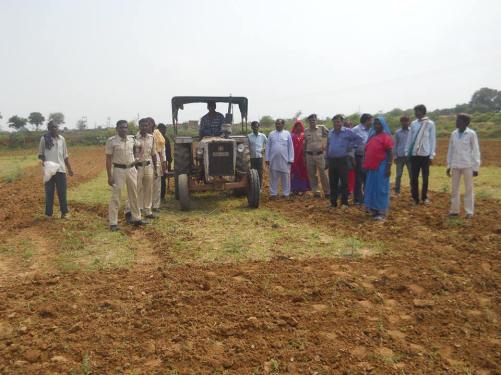
Ekta parishad leaders & administration demarcating formerly land for giving possession to the Sahariya tribal people

विगत 10 वर्षों से भी अधिक से श्योपुर में ज़मीन माफियाओं ने जबरन आदिवासियों की ज़मीन पर कब्ज़ा कर रखा था और कईयों ने तो इन ज़मीनों को हरियाणा, पंजाब तथा उत्तरी राजस्थान से आये बड़े किसानों को बेच दिया था. इन बाहरी किसानों ने आदिवासियों को उनकी ही ज़मीन पर मजदूर की नौकरी प्रदत्त करवा के उनपे शोषण का नया तरीका अपनाया.यह कतई किवदंती नहीं है कि खेत में कार्य कर रहा मजदूर उन बड़े किसानों के गुलाम से भी बदहाल स्थिति में कार्य करते हैं. ये दिहाड़ी मजदूर किसी संघर्ष की लालसा में अपने एक दिन के आय को नहीं खो सकते. ऐसे समय में एकता परिषद् ने संघर्ष को नया नाम दिया.उन्होंने इसे आज़ादी के लिए किये जाने वाला संघर्ष कहा. अपनी ज़मीन वापस पाने की आज़ादी. अपना अधिकार वापस लेने की आज़ादी.एकता परिषद् एक गांधीवादी संस्था है जो वंचित वर्ग के जल, जंगल व ज़मीन के लिए संघर्ष करती है. विगत 2 दशकों से भी अधिक समय से शोषित व वंचित वर्ग की सेवा तथा उनके सशक्तिकरण के लिए संस्था कार्यरत है.संस्था ने सबसे पहले ज़मीनी हकीकत पता किया तथा सभी जानकारी लेने के पश्चात सभी आदिवासी जिनकी ज़मीन पर कब्ज़ा था उन्हें आगे आने के लिए प्रेरित किया. जब आदिवासी तैयार हुए तो उन्होंने जिला कलेक्टर को तुरंत कार्रवाई तथा अपने स्वामित्व को पुनः प्राप्त करने हेतु ज्ञापन सौंपा. इस ज्ञापन का असर यह हुआ कि प्रशासन तुरंत हरकत में आया.

Continue reading आज़ादी की एक लड़ाई चम्बल की घाटी में : अंकित झा

Civil War in Hindu Society – Happy Independence Day!

UPDATE FROM UNA :  THIS IS FROM TEAM UNA

Received August 15th evening

Violence broke out this morning on the highway.

We’ve been at Una Police Station since afternoon. The Una victim families, Balubai Sarvaiyya and others who feel threatened want police to escort them back to their villages after violence broke out on the highway today morning. Two cars have been burnt, vehicles are being stoned, roads are blocked. They also want police to put up a post in their villages. But the police is keeping mum. The families continue to agitate in whatever ways they can to express their anguish but the police is clearly indifferent. The Yatra came to an end today on a high note but how much has anything changed?

As Dalits march in hundreds of thousands in the Dalit Asmita Yatra from different places to Una, where four Dalits were flogged for skinning dead cattle, one contingent was physically attacked by ‘upper’ caste villagers at Samter village yesterday. A Bolero with 8 people inside was attacked, the vehicle was damaged and petrol was poured on the vehicle

(Video courtesy Dalit Camera)

Here is the route of this extraordinary journey covering 81 kilometers

Continue reading Civil War in Hindu Society – Happy Independence Day!

एक विद्रोहिणी का अकेलापन

इरोम हम जैसा होना चाहती है ?
Image result for irom sharmila
(Photo Courtesy : Times of India)
कुछ कुछ तस्वीरें ताउम्र आप के मनमस्तिष्क पर अंकित हो जाती हैं।
चंद रोज पहले टीवी के पर्दे पर नज़र आयी और बाद में प्रिन्ट मीडिया में भी छायी उस तस्वीर के बारे में यह बात दावे के साथ कही जा सकती है। इस फोटोग्राफ में इरोम शर्मिला – जो आज़ाद भारत के सबसे खतरनाक दमनकारी कानून सशस्त्र बल विशेष अधिकार अधिनियम (Armed Forces Special Powers Act) के खिलाफ संघर्ष की एक प्रतीक बनी रही हैं – अपना सोलह साल से चल रहा अनशन तोड़ती दिख रही हैं। उन्हें एक चम्मच में शहद आफर किया जाता है और वह बेहद भावुक हो जाती हैं, महज एक बंूद लेकर उसे लौटा देती हैं।
ईमानदारी की बात है कि इस तस्वीर को कई कोणों से पढ़ा जा सकता है – एक कोण हो सकता है कि एक किस्म का हताशाबोध कि दुनिया के पैमाने पर ऐतिहासिक कही जा रही इतनी लम्बी भूख हड़ताल के बावजूद इस खतरनाक कानून को टस से मस नहीं किया जा सका, एक अन्य कोण हो सकता है इस एहसास का कि यह सरकार इस कदर संवेदनाशून्य हो चुकी है कि उससे लड़ने के लिए एक नयी किस्म की रणनीति की जरूरत है – बेकार में जान देने के बजाय, अपनी उर्जा को नए सिरेसे एक नए किस्म के संघर्ष मंे लगाने का – तीसरा कोण यह भी हो सकता है कि  महामानव या महामानवी घोषित किए गए किसी व्यक्ति का उस आरोपित प्रतिमा से तौबा करते हुए यह बताने का कि वह भी एक साधारण मानवी है, जिसके अन्दर बाकी लोगों जैसा जीवन जीने की हसरत है।

Continue reading एक विद्रोहिणी का अकेलापन

Not Pakistan, but Modi has pushed Kashmir on the Brink : Ashok Swain

This is a guest post by ASHOK SWAIN

Since the death of a young and charismatic separatist named Burhan Wani, Kashmir has erupted into violence and chaos. Weeks of violent protests in the Valley have resulted in the deaths of at least 50 people and over 5,000 injuries. Kashmir is not new to violent protests and civilian deaths, but this time the intensity of the protest and the passion of the protesters is unprecedented. Continue reading Not Pakistan, but Modi has pushed Kashmir on the Brink : Ashok Swain

Statement against RSS attack on journalist Neha Dixit and press freedom

UPDATE: The statement now includes below, 31 endorsements received from Gujarat as of 19 August 2016

This statement is being posted with the hundred-plus signatures received between 1 pm and 8 pm today. Please endorse in the comments section if you wish to do so.

We, the undersigned journalists, activists and academics, condemn in the strongest terms, the brazen attack launched by RSS organizations and individuals on journalist Neha Dixit and Outlook magazine for a thorough investigative report by Dixit based on three months of field work. This report revealed how different Sangh outfits trafficked 31 tribal girls, some as young as three years, from tribal areas of Assam, to Punjab and Gujarat. Orders were issued to these organizations by the Assam State Commission for the Protection of Child Rights, the Child Welfare Committee (Kokrajhar), the State Child Protection Society, and Childline (Delhi and Patiala), to return the children to Assam. These orders were violated with impunity by Sangh-run institutions with the help of the Gujarat and Punjab governments.

On the publication of this report in Outlook, a police complaint was lodged at Latasil Police Station on grounds of inciting communal hatred, and the police registered an FIR against Indranil Roy (Publisher), Krishna Prasad (Editor) of Outlook and Neha Dixit, writer of the story. The complainants are Bijon Mahajan (BJP spokesperson and Gauhati High Court advocate), Mominul Awwal (BJP Minority Cell) and Subhash Chandra Kayal (Assistant Solicitor General).

Instead of launching an investigation into the trafficking, the police have chosen to act on a frivolous and motivated complaint against those who exposed the crime.  We demand that the police immediately file charges against those who conduct child trafficking.

In addition, RSS organizations have started a campaign targeting Neha Dixit and Outlook in social media, claiming “defamation”, and we can expect more trumped up police complaints and legal interventions. We are also aware that these Hindutva brigades often take the law into their own hands, unleashing violence with impunity, emboldened by the current regime.

RSS organizations and individuals have long used the law and police machinery to hound artists and intellectuals from MF Hussain to Ashis Nandy, invoking the legal section of “inciting communal hatred” to stifle freedom of expression, using it whenever their own communally violent and hate-inducing tactics and actions are revealed and made public. Journalists are particularly vulnerable, as their investigative reports that reveal RSS organizations’ strategies to attack minorities, Hinduise tribals and created hatred between communities, are themselves targeted as “inciting communal hatred”. Continue reading Statement against RSS attack on journalist Neha Dixit and press freedom

Democratic centralism – ‘freedom of thought (sic.) and unity in action’? Rajinder Chaudhary

This is a guest post by RAJINDER CHAUDHARY; you can view his previous post on democratic centralism, on Kafila here.

The title of this note uses a quotation from ‘On Democratic Centralism’ by Com Prakash Karat carried in The Marxist, XXVI, 1, January-March 2010. This piece by the then General Secretary of the CPI(M) and the constitution of CPI(M) available on its official site (as updated in October 2015) throws interesting insights into operationalisation of the principle of democratic centralism, which recently once again came into public view in the Jagmati Sangwan episode. (All quotations henceforth are from either of these two documents.)

            Prima facie ‘unity in action’ appears quite desirable but is it really so in all situations? Does it require to ‘bind the entire collective into implementing that decision’ in all situations as Karat argues, or ‘the individual shall subordinate himself to the will of the collective’ as article XIII 1(b) of party constitution requires? Do all actions-decisions that a communist party undertakes in a parliamentary democracy like ours are of the war like situation requiring marshalling of all resources without exception? Obviously, all organisational decisions cannot be equally crucial to require binding the whole organization to it. Why can’t there be freedom of action where some members or units decide to focus on health issues and others on educational issues, and some may refrain from either? Why can’t some members/units try particular tactics of organization, follow a calendar of their own and others a different one? If it sounds that one is stretching the centralism aspect a bit too far, it may be noted that Karat points out that the ‘democracy is practiced, before the conference when the political line is being formulated. Centralism comes in when the line is being implemented’, ‘when the party is formulating its policies, at the time of conferences etc., there will be democracy in action, free discussions within the party forums. Once a call for action is given, the aspect of centralism will predominate’. As if defining the political line once in three years, clinches everything and thereafter, on no other issues independent and dencentralised decisions can be taken. In fact article XXXIII of the party constitution, makes it explicit that democratic centralism means “the centralised leadership based on inner-Party democracy under the guidance of the centralised leadership”. There is a whole article on “Inner-Party Discussions” (article XXI) which states thatState Committee can initiate inner-Party discussion on an important question of Party policy concerning that particular State… with the approval of the Central Committee” (emphasis added). So, even discussion at state level on state issues can only be initiated with the approval of the Central Committee (and off course format has to be approved too). This amply clarifies the meaning of ‘freedom of thought (sic.) and unity in action’ and where emphasis lies in ‘democratic centralism’. No wonder many times one has come across situation where Party members are just curious to know what the party line on particular issue was and not the detailed arguments and would not speak on a current issue until unless party line was clear.

Continue reading Democratic centralism – ‘freedom of thought (sic.) and unity in action’? Rajinder Chaudhary

Cow-Gangs of Akhand Bharat and the Dalit Revolt – Hindutva Unravels

As the cow-gangs of Hindutva go on a rampage and the the prime minister, Narendra Modi, adopts a posture of strategic silence, the country is rapidly being pushed to the brink of a civil war. This might sound a trifle far-fetched but classically, when large numbers of people begin to believe that there is no government for them, the time is not far when they will start making preparations for defending themselves. It started with the attacks on Muslims but soon enveloped the Dalits as it was bound to. The Una incident, which sparked off a veritable revolt, was followed up by subsequent attacks in Lucknow. The Progressive Dairy Farmers’ Association in Punjab, involving large number of Sikh farmers, has also been fighting continuing harassment and violence by cow-gangs of Hindutva in Punjab for some time now. The PDFA president has also stated that they might be forced to act in self-defense. The president Daljit Singh Gill, in fact, reportedly told mediapersons that “(I)f someone attacks the farmers, we will stop them now,” and “(I)f something goes wrong, it is the government’s responsibility.”

Even as the cow-gangs continue with their vigilantism unrestrained and unchecked, a large demonstration yesterday at Jantar Mantar by Samta Sainik Dal, actually sent out yet another signal. It spokespersons said in so many words that they were now prepared to take on the cow-gangs physically, if and where necessary.

Tracing SSD’s lineage back to Dr Ambedkar’s initiative in the 1924, the President of the organization openly blamed the ‘Manuvadi’ forces, in cahoots with the police and bureaucracy, backed by the government. He was candid that it is not the Sikhs or Muslims or Christians who are attacking the Dalits today but the Hindus who are doing it in the name of nationalism and that people were now in a mood to fight back unitedly together.

Not only is Modi’s deafening silence now coming to be seen as a sign of encouragement and complicity, with BJP leaders like Hyderabad MLA Raja Singh openly justifying the Una attack, and no action being taken against him by the party yet, it is clear that this vigilantism is endorsed by the highest quarters in the party. For those who may have missed seeing Raja Singh’s video, this is what he said:

“Jo Dalit gaye ke maas ko le ja raha tha, jo uski pitai hui hai, woh bohut hi achhi hui hai (Those Dalits who were taking the cow, the cow meat, those who were beaten, it was a very good thing to happen).

Continue reading Cow-Gangs of Akhand Bharat and the Dalit Revolt – Hindutva Unravels

A response to “Kashmir is Feminist Issue” by Sonam Mittal: Tupur Chatterjee

Guest Post by Tupur Chatterjee

Sonam Mittal’s recent piece in Kafila, “Kashmir is Feminist Issue” draws upon an oft-cited gendered analogy to describe the Kashmir’s relationship with India and Pakistan. Though it makes a few pertinent points about the nexus of power and patriarchy and the urgent need for Indian feminist solidarity with the Kashmiri resistance, I found the analogy deeply problematic and strongly feel that it needs further unpacking to underline its worrying implications.

Continue reading A response to “Kashmir is Feminist Issue” by Sonam Mittal: Tupur Chatterjee

In Solidarity With Irom Sharmila – Repeal AFSPA: Forum Against Oppression of Women

Statement issued by FORUM AGAINST OPPRESSION OF WOMEN
index

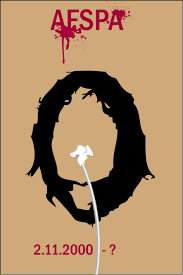
Let Us Work Together To Create New Strategies Of Struggle Against Armed Forces Special Powers Act (AFSPA)

We wholeheartedly support the decision of Irom Sharmila to withdraw, her fast of nearly 16 years for the revocation of AFSPA, we salute Irom Sharmila for her undying spirit, heroic struggle and undeterred determination in struggle against AFSPA.
It is our responsibility to take the struggle further and also support Irom Sharmila in her continuing struggle against AFSPA.
 
The history of post-Independence India is also the history of subjugation of the citizens of the North-eastern region. There has been a systematic crushing by the Indian state of their aspirations, and a consistent betrayal of promises made. The Armed Forces Special Powers Act (AFSPA) was enacted as long ago as 1958, in order to suppress the genuine protests of the region’s inhabitants.
 
What is essentially a political issue has been treated simplistically as a law and order problem. AFSPA gives unbridled powers to the army and airforce. (Mizoram is the only part of India where the air force has actually bombed its own people.) The original Act allowed state governments to declare an area to be ‘disturbed’ and to call in the army. A 1972 amendment further allowed the central government to override state governments in order to do the same in any area.
 
AFSPA gives army officers the power to arrest without warrant, to shoot and kill on mere suspicion, to destroy property, and many other such draconian powers. The armed forces are required to act “in aid of” civilian authorities, but that caveat exists only on paper. In reality the army has virtually taken over large areas for decades together now, becoming a force unto itself, answerable to none. No army personnel may be prosecuted without permission from the central government – a permission hardly ever granted. Even bodies like the National and State Human Rights Commissions have little jurisdiction when it comes to human rights violations in the context of AFSPA.
 
What might have served at best as a short-term measure has become a permanent feature in Manipur and most of the North East (except Tripura where AFSPA was withdrawn in May 2015) and some parts of Kashmir. Yet the AFSPA is in violation of various international instruments that India has ratified, such as the Universal Declaration of Human Rights (UDHR), the International Covenant on Civil and Political Rights (ICCPR), the Convention Against Torture, the UN Code of Conduct for Law Enforcement Officials, the UN Body of Principles for Protection of All Persons Under Any Form of Detention, and the UN Principles on Effective Prevention and Investigation of Extra-Legal and Summary Executions.  It is patently unconstitutional, which makes it all the more unfortunate that the Indian Supreme Court got carried away by security concerns and upheld the constitutional validity of the Act.
 
In Manipur there has been widespread unhappiness, with the continuing abuse of human rights by the armed forces under cover of AFSPA causing bitter grievances to surface. Protests against these abuses are a constant feature. In one unique protest in 2004, angered by the custodial rape, torture and killing of 32-year-old Manorama who was picked up from her home on “suspicion”, a number of women paraded naked in front of an army base in protest against the army’s atrocities against women. The other unique and non-violent protest has been that of Irom Sharmila, poet and activist from Manipur. In what has possibly been the longest fast-unto-death anywhere, she has spent more than fifteen years now refusing food and demanding the repeal of AFSPA. For these fifteen years she has lived under arrest and been kept alive through intravenous force-feeding by the authorities.

Continue reading In Solidarity With Irom Sharmila – Repeal AFSPA: Forum Against Oppression of Women

Kashmir’s Freedom is India’s Freedom: Hum Kya Chahte? Azadi

I do not think ordinary Indians support the brutality of army occupation in Kashmir. Despite what the Indian state says, and despite what the Indian army and CRPF are doing, I honestly do not believe that any ordinary Indian supports the torture of young men, the blinding of people attending a funeral, the rape of women, the killings and maiming and abuse and humiliation that are now a routinized fact of daily life in the Kashmir valley. To believe that ordinary Indians enjoy watching this spectacle of violence, that ordinary Indians take pleasure in the torture of children, would be to think India is now a country comprised of sadistic psychopaths. I honestly do not think ordinary Indians are psychopaths. I do think, however, that ordinary Indians, and I count myself amongst them, have somehow managed, till now, to keep some distance between what is happening in Kashmir and the idea of India as a whole. After all, India is a large and complex country, a huge and diverse society. Everything that happens in Kashmir, the brutality of the army and the security forces, cannot signify the whole truth of India we tell ourselves. It seems somehow unfair to us ordinary Indians that what happens in Kashmir reflects on us all.

But the time has come now to squarely face some hard truths about ourselves, and the dissimulations, psychological and social, by which we continue to live in this country and call ourselves ‘Indians’. Continue reading Kashmir’s Freedom is India’s Freedom: Hum Kya Chahte? Azadi

Kashmir, Summer 2016: Angana Chatterji

Guest Post by Angana Chatterji 

In 2011, I had written an essay on Kashmir entitled: “The Militarized Zone,”which was published in an anthology on Kashmir (Verso Books).

What was apparent then is all too real now. I reproduce an edited fragment here today, in solidarity with Kashmiris who are being asphyxiated in their land and subjected to life under conditions akin to collective internment, and their allies across India who are being intimidated to conserve the silence. Speaking up on Kashmir is inevitably accompanied by fear for many even as silence is a betrayal of humanity. Continue reading Kashmir, Summer 2016: Angana Chatterji

Statement Against State Violence in Kashmir: Ashoka University Students and Alumni

Guest Post by Ashoka University Students and Alumni

Letter condemning the State Violence in Kashmir

To

The Govt of India. and the Govt. of Jammu and Kashmir.

We, the undersigned—current students, alumni of the Young India Fellowship, and faculty of Ashoka University—write to voice our deepest anguish and grave concern at the violent turn of events in Kashmir in the past few days. The violence perpetrated by the Indian State after the extra-judicial execution(1) of 22-year old Hizbul Mujahideen Commander Burhan Wani (2) is highly condemnable. The Indian Army, Kashmir Police and other task forces have reacted violently with bullets, pellets and lathis in the clashes that erupted after Burhan’s funeral. This was immediately followed by many more protests and demonstrations as part of Kashmiri resistance to the military occupation of Kashmir by the Indian State. In the violent repression of the protests which had a huge ground support (evident from the large attendance to Burhan’s funeral) , 55 civilians (3) have been killed and around 3100 people (4) were severely injured by the pellets(5), lathis and bullets, some of whom have lost their eyesight. We, unequivocally, condemn this brutal use of force by the Indian State in dealing with the protests after the killing of Burhan Wani. Continue reading Statement Against State Violence in Kashmir: Ashoka University Students and Alumni

Cow Vigilantism as Terror : New Socialist Initiative

Guest Post by  New Socialist Initiative

Can the Saffron Establishment ever wash its hands of the growing menace?

(For Hindi version, click the link http://nsi-delhi.blogspot.in/2016/07/blog-post_26.html)

( Courtesy : Cartoonist Satish Acharya, https://www.facebook.com/cartoonistsatishacharya/)

Cow vigilantism which has received tremendous boost since the ascendance of BJP at the centre got its first fitting reply in Gujarat recently. The way in which a self-proclaimed Gau Rakshak Dal – owing allegiance to Shiv Sena – attacked a group of Dalits in Una (11 th July 2016) who were skinning a dead cow, publicly flogged them, led them to the police station charging them with cow slaughter and even circulated a video of the whole incident on social media to spread further terror, has caused tremendous uproar. Continue reading Cow Vigilantism as Terror : New Socialist Initiative

बरवक्त यहां ‘गाय’ कानून तोड़ने का सुरक्षित तरीका

cow politics

..उना, गुजरात की इस घटना ने पूरे देश को स्तब्ध कर दिया है. पिछले दिनों इस मसले पर बात करते हुए गुजरात सरकार के चीफ सेक्रेटरी जीआर ग्लोरिया ने गोरक्षा के नाम पर चल रही गुंडागर्दी को रेखांकित किया. उन्होंने बताया कि समूचे गुजरात में दो सौ से ज्यादा ऐसे गोरक्षा समूह उभरे हैं जो ‘अपने हिंसक व्यवहार के चलते और जिस तरह वो कानून को अपने हाथ में लेते हैं, उसके चलते कानून और व्यवस्था का मसला बन गए हैं.’

ग्लोरिया ने अपने बयान में यह भी जोड़ा कि ऐसे समूहों के खिलाफ हम सख्त कार्रवाई करनेवाले हैं क्योंकि भले ही यह ‘स्वयंभू गोभक्त हों मगर वास्तव में गुंडे हैं.’ शहर से गांव तक फैले उनके नेटवर्क तथा स्थानीय पुलिस के साथ उनकी संलिप्तता आदि बातों को भी उन्होंने रेखांकित किया.

ध्यान रहे कि यह पहली दफा नहीं है जब गोरक्षा के नाम पर बढ़ रही असामाजिक गतिविधियों की तरफ संवैधानिक संस्थाओं या उनके प्रतिनिधियों की तरफ से ध्यान खींचा गया हो. अभी ज्यादा दिन नहीं हुआ जब पंजाब-हरियाणा हाईकोर्ट ने भी इसी बात को रेखांकित किया था.

अदालत का कहना था कि ‘‘गोरक्षा की दुहाई देकर बने कथित प्रहरी समूह जिनका गठन राजनीतिक आंकाओं एवं राज्य के वरिष्ठ प्रतिनिधियों की शह पर हो रहा है, जिनमें पुलिस भी शामिल है, वह कानून को अपने हाथ में लेते दिख रहे हैं.’..

( Click here for complete article : http://hindi.catchnews.com/india/protection-of-cow-violation-of-law-1469285844.html/fullview)

Students Protest in JNU Over Rising Civilian Casualties in Kashmir

The number of unarmed civilians killed in instances of firing by the armed forces, police and paramilitaries enforcing the occupation of Kashmir by the Indian state in the latest wave of violence has crossed fifty. Many more have been blinded by pellet guns. Hundreds have been injured and hospitalized. Reports of protests are coming not only from the Kashmir valley, Kargil, Drass and Jammu, but also from many cities in India. From Delhi (where there has been a public protest at Jantar Mantar, a press conference at Gandhi Peace Foundation and a student protest at Jawaharlal Nehru University), from Kolkata, which saw a massive turn out in a public march, from Chennai, from Patna, and from Kochi and Tricky in Kerala.

On Friday 22nd July, I went to a night protest march and public gathering by students at Jawaharlal Nehru University, Delhi. The march was called by Shehla Rashid, Vice President, JNUSU and Rama Naga, General Secretary, JNUSU (Both AISA activists) There were perhaps two hundred students gathered peacefully. The march began around 10:00 pm, made its way around the university campus and the protest continued well past midnight. Several student organizations, AISA, BASO, Hundred Flowers, Collective, DSU and individual students participated in the march. Shehla Rashid, Vice President, JNUSU and an AISA student activist, addressed the gathering before the march began, stating clearly, that this was going to be a peaceful expression of the democratic right to protest against the atrocities being enacted by the Indian state on the people of the part of Kashmir that is under Indian occupation. She asked the students to be vigilant in case any disruptive slogans were raised by planted agent-provocateurs. The entire march, and the protest meeting was documented by the students, so as to ensure that no ‘doctored videos’ would raise their ugly digital heads in the days to come. The students raised the demand for freedom for the people of Kashmir, and for people in all parts of South Asia. The slogans connected the realties of the people of Kashmir, the North East, Bastar, Jharkhand, with the experiences of Dalits, Workers, Peasants, Women, Students and Minorities. Slogans were raised against the killings and blindings by pellet guns in Kashmir. against torture, again rape, against draconian acts like AFSPA and PSA. The march made its way through the entire campus and culminated outside Chandrabhaga Hostel, where a meeting was held on the steps. The meeting lasted over two hours, was completely peaceful,and more than two hundred students listened to the speakers with close attention.

Police officers and campus security guards were present, and recorded everything. The students also recorded everything. And the indefatigable Shamim Asghor Ali made video recordings of several speeches, and uploaded them on to youtube, which we are lucky to be able to share here. We are also grateful for the still images uploaded by V. Arun, several others also took pictures and videos, which are now being shared on Facebook. Continue reading Students Protest in JNU Over Rising Civilian Casualties in Kashmir

What Made Burhan a Hero?: Muzaffar Ali

This is a guest post by MUZAFFAR ALI

Around two lakh people participated in the funeral procession of Burhan Wani: the slain Hizb militant from Shareifabad, Tral. Without a break Kashmiris are offering prayers in absentia and paying tributes to the `martyr.` Community kitchens in his locality have been set up to feed people who come to pay tributes. Defying curfew, people are crossing hills and hamlets on foot to reach his native place. Graffities in the Lalchowk area of Srinagar hail him as a hero who lives in “our hearts.” Never before has anyone witnessed such a tremendous support or tribute base for a slain militant. Militants have died before as well, but his death has given life to something unprecedented. Banners in his honour have been installed across the valley to convey the message that he will be remembered. The valley is on boil, and people are risking lives to attack armed police officers and CRPF personals. The death toll according to reports in Rising Kashmir has reached 43 and thousands of people are injured, many of them critically. While the state and the propagandistic TRP driven media emphasize Burhan being a ‘terrorist’, Kashmiris hail him as their ‘hero’ and ‘saviour.’ The question is what turned Burhan into a hero and why are Kashmiris across age groups eulogizing him? What is inspiring people to raise a slogan like, “mubarak tas maajeh yes ye zaav: shaheed hai aav, shaheed hai aaav” (congratulations to the mother who gave birth to Burhan—the Martyr). Continue reading What Made Burhan a Hero?: Muzaffar Ali

A Non-Obituary – Life and Times of an Insaan: Bobby Kunhu

Guest post by BOBBY KUNHU

“To be mortal is the most basic human experience, and yet man has never been able to accept it, grasp it, and behave accordingly. Man doesn’t know how to be mortal. And when he dies, he doesn’t even know how to be dead.” – Milan Kundera, Immortality
Insaan was a person who deliberately and desperately sought to mortalise himself in a world obsessed with immortality. He was very clear that he did not want to leave any footprints of his life when he died, no children, no money, no property, no awards, no monuments, no records, no pictures – except for those inevitable because of State restrictions that could trouble people who handled his death – like death certificate. He was working hard since his retirement towards his death fighting his way through the bureaucracy for anonymity in death! Then why am I writing about him disregarding his long cherished wish? Firstly his life was too important not to be chronicled; secondly whenever we joked that we would make a saint of him after he died he responded that he did not believe in an afterlife and what people did after he died was not his concern and finally, this is my way of grieving the loss of someone who was dear to me and whose relationship with me is not at all definable!
Insaan was not new to obituaries. In fact it was an obituary that brought him into my life. The story dates back to 1982, when Advocate P. M. Padhmanaban was visiting his relatives in Bombay. My grandfather, M. Rasheed had asked him to look up Insaan, his political co-traveler and fellow trade unionist from whom he had not heard in a while. On enquiries Padhmanabhan was informed that Insaan had succumbed to a long bout of jaundice and was no more. Dutifully he passed on the information to my grandfather, who wrote a long obituary in the Sunday edition of the Malayalam newspaper Mathrubhumi. The following Sunday as my grandfather was sitting with his cup of tea and perusing his morning newspapers at the Verandah of his Calicut house, Insaan walked in with a copy of the newspaper that carried his obituary!

Continue reading A Non-Obituary – Life and Times of an Insaan: Bobby Kunhu

Alleged Maoist on His Release From Prison and Other Matters: Interviewed by Shailza Sharma

Guest post. BACHCHA PRASAD SINGH who was recently released from Patiala Central Jail, interviewed by SHAILZA SHARMA

Bachcha Prasad Singh was released from Patiala Central Jail on May 31, 2016 after being kept in illegal judicial custody for an extra three days. In a time when all verification processes are possible online, he was dragged by police officials on a 32 hour road journey from Patiala to Kanpur, for verification of his identity and pending cases. When the Kanpur court and jail authorities refused to take him in custody since he had been granted bail in the FIR registered at Kanpur, the jail authorities could not do much and he was again taken back to Patiala. There were murmurs among the police officials ‘isko Punjab se nahin chhodna’ (He should not be released from Punjab).  Only when a habeas corpus was filed in Hon’ble Punjab and Haryana High Court by the Senior Advocate R.S. Bains, the Patiala jail authorities were compelled to release Bachcha Prasad. Harassment at the hands of the Patiala jail authorities was his fate on the day of his release as well, his barrack, his belongings and his bags, which were already in custody of the jail authorities were stripped and searched and he was thoroughly humiliated.

Knowing that it is the modus operandi of the State to re-arrest political prisoners, immediately upon their release on false pretexts, it was the apprehension of his lawyers that the State was creating circumstances which could lead to his re-arrest. However, it is a testament to the dedication and life of the 57 year old revolutionary who after more than 6 years of imprisonment, considered this episode in his life nothing but a brief pause. Continue reading Alleged Maoist on His Release From Prison and Other Matters: Interviewed by Shailza Sharma

Democratic Centralism – Public Issue, Private Debate: Rajinder Chaudhary

Guest post by RAJINDER CHAUDHARY

Recent expulsion/resignation of Jagmati Sangwan from CPI(M) is reflective of organizational structure and functioning of the left. It has implications beyond the immediate specific issue of whether alignment of Party with the Congress in recently held Vidhan Sabha elections in Bengal was right or not, or for CPI(M) itself. At stake is principle of ‘democratic centralism’.  Jagmati Sangwan episode has reminded me of an episode of my student days in Panjab University in early 80’s. I was convener of ‘Democratic Students’ Forum’ an independent left leaning student group on the campus (with no link with any political party as such). I was convener but found that my opinion was most often than not a minority opinion. So, effectively I was doing things, implementing decisions that I did not agree with. After many months of very intense work, I expressed my desire to be relieved of the responsibility. This was not accepted. Friends tried to persuade me to change my mind and continue with the responsibility as I ‘was making very valuable contribution’. Organisational colleagues were also personal friends, rather the only personal friends. One had no life beyond the organization. So, there was both organizational as well personal/emotional appeal to continue with the post but I found it was too much to carry out decisions with which one personally differed on grounds of principle. I requested at least a break, a breather from hectic schedule for some time. But rather than accepting my request/resignation from the post of convener, I was “expelled” from the organisation.  And this was just a small, independent left leaning student group that called itself ‘democratic students’ forum’ rather than a unit of a communist party, which goes on to indicate that the problem is rather deep rooted and wide ranging. (I have cross checked my memory of this episode with some other key participants of this incident.) Continue reading Democratic Centralism – Public Issue, Private Debate: Rajinder Chaudhary

Police in Kashmir Raid Newspaper Bureaus, Detain Employees, Seize Copies: Prabodh Jamwal

Guest Post by Prabodh Jamwal

Two of Kashmir’s leading newspapers, Kashmir Times and Rising Kashmir said that Jammu and Kashmir police raided their office on Saturday night, seized their printed copies and arrested their employees – a clear act of choking and gagging media in crisis-hit Kashmir valley. Copies of other newspapers, including Kashmir Reader and Kashmir Observer were also seized and their circulation prevented.

Continue reading Police in Kashmir Raid Newspaper Bureaus, Detain Employees, Seize Copies: Prabodh Jamwal

Release Piyush Sethia Manush! Coalition for Environmental Justice – India


Piyush-k0hB--621x414@LiveMint

Piyush Sethia (Manush) (Image courtesy LiveMint)

Coalition for Environmental Justice – India has issued this statement:

We write as concerned citizens and environmental justice activists in support of Piyush Sethia of Salem, Tamil Nadu who has been arrested, denied bail and beaten  inside Salem Central prison. Piyush is a noted environmental activist of Salem Citizen’s Forum (SCF). He has been booked under IPC  sections 341,188, 353 and 506 (2).

On 8.07.2016, when Piyush and other members of SCF were protesting against the railway authorities for starting the construction work of Mulvadi gate over-bridge in Salem without giving prior notice to the people in the area and without laying an alternate road, police arrested Piyush and two other activists, Eesan Karthik and Muthu of SCF.

On 14.07.2016, the Salem Magistrate’s court dismissed Piyush’s bail application while granting conditional bail to the other two activists. Piyush has been kept in solitary confinement since the day of his arrest. And as per Piyush’s wife and his lawyer, Piyush is being subjected to physical and mental harassment and not allowed  to receive reading material or allowed to speak to his wife and other supporters freely. Infact, some of the supporters in Salem are being intimidated and threatened via phone calls to isolate Piyush. According to Piyush’s lawyer, Piyush was beaten ‘for a good half an hour before they sent him to solitary confinement’. Yesterday Piyush informed his lawyer that ‘he was abused by a group of unknown persons numbering nearly 30 inside the prison several times’. We are shocked at this high-handedness of prison authorities and custodial assault on Piyush.

Piyush has done commendable work in the field of Environmental Protection and Climate Change mitigation. We would like to bring to your notice some of them:

1. He leads Salem Citizens Forum to revive many water bodies in Salem city like Mukaneri, Ammapettai eri Kundukkal eri, Ismailkhan eri, Arisipalayam Theppakulam and Pallappatti well.

2. He has created a co-operative forest in Dharmpuri extending upto 150 acres, with the support of his friends and well wishers. This mountain forest acts as a water catchment area for Ettimarathupatti Canal which supplies irrigation water to 17 villages in the vicinity.

3. He has led many citizens’ initiative to protect the natural resources of Salem and its surrounding areas. He has also initiated many green and sustainable livelihood projects and protected the Salem, Yercaud and Hoggenekkal Dam areas from environmental damage.

4. In the recent floods of Chennai and Cuddalore, Piyush and members of SCF, Nizhal and Dharmapuri People’s Forum mobilized 35 containers of relief material and tirelessly worked to reach the materials in time. This won Piyush a CNN-IBN award recently. He was also named as one of the advisors of Nilam, Neer, Neethi (Land, Water, Justice) initiative of Ananda Vikatan group which was kicked off following the floods to protect water bodies in Tamil Nadu.

We demand:

Immediate release of Piyush and all charges foisted against him and other activists be withdrawn forthwith.

Sign the petition for the release of Piyush Manush