As the debate on the three-language policy has intensified, what was originally an exchange between ministers of the union government and the government of Tamil Nadu, or between leaders of the Bharatiya Janata Party (BJP) and the Dravida Munnetra Kazhakam (DMK), has become a subject of commentaries and criticisms coming from observers, intellectuals and activists. The union government says that no state could be exempted from the implementation of the three-language formula as envisioned in the New Education Policy (NEP) 2020 and adds that Hindi is not made mandatory under the present formula. The condition is that two of the three languages must be native Indian languages. The DMK leadership argues in response that the three-language policy can still be an indirect route to push Hindi into the state. The latter has appeared firm in its argument that it is the state’s prerogative under the federal system to determine its language and education policy (though during emergency education was shifted to the concurrent list of the union government). It also opposes the measure adopted by the union government, that is, to link the funding under the Samagra Shiksha Abhiyan to the implementation of NEP 2020 and the language formula it includes. The parties which are not in alliance with the DMK in the state allege that the DMK has staged this conflict in order to ignite sub-national/regional sentiment to strengthen its position before the elections.
Yesterday was a day of great strength, solidarity, and remembrance of women workers’ historic struggles for rights and against tyrants. Support for the striking ASHA workers poured in from civil society — cine artists Kani Kusruti, Divya Prabha, Rima Kallingal, and Jolly Chirayath, writers Arundhati Roy, Sara Joseph, and Rosemary, feminist academic researchers Nivedita Menon and Janaki Nair, filmmakers Leena Manimekalai and Paromita Vohra expressed solidarity with the workers. Paromita Vohra inaugurated the morning’s meeting. A cross-section of Kerala ‘s civil and political society, spoke in solidarity. Representatives of feminist groups spoke. The Dalit Human Rights Movement conducted a solidarity march led by their leader Reshma K. Gomathi, of Pomblai Otrumai, spoke about what lay ahead for the striking workers, based on her experience of confronting the CITU during the Munnar tea garden workers’ strike. Representatives of the United Nurses Association took out a solidarity march and their leader spoke in the meeting. Hundreds of ASHA workers and representatives of ASHA worker unions from Tamil Nadu and Karnataka were present.
The workers welcomed all , but also spoke their mind. When the Siva Sena — a group of men — arrived, they were politely asked to vacate centre stage and make space for a woman from their ranks. The representative of the national federation that the KAHWA is affiliated to declared in completely non-ambiguous words that the fight was against the Union government; she welcomed support from members of the NDA but told them that their support was crucial not in Kerala but in Delhi. We expect you to offer the same support when we approach the union government, she said. And also noted: no political party, including the Congress, will take up the issues of the ASHAs wherever they are in power .
Meanwhile, the voice of the national CITU, A R Sindhu, continued to repeat the Kerala CITU male leadership’s ‘silly little sheep’ hypothesis about the striking women workers, and the much-flogged conspiracy theory against the SUCI, using the same bunch of fallacies deployed by the CPM’s fallacy-peddlers’ union workers ( a union that is still a future possibility, but a real one) led by the likes of K K Shahina. Sindhu speaks like the Kerala CITU’s B Team, even though she calls for talks to end the strike. B team because outright strike denigration seems to be the privilege of the Alpha males in the CITU.
What is truly appalling about her long essay in the Malayalam online magazine Truecopy is its chilling lack of empathy. V T Bhattatirippad , the social reformer, once remarked about the CPM leader EMS Namboothirippad that he was the kind of person who, when faced an urgent call for help with a woman in labour desperately thrashing about in pain, will respond with long analyses about the terrible lack of health care facilities, the bad roads in the country, the need for more doctors etc. He was right about these of course, but that cannot replace an empathetic response.
A R Sindhu and Veena George respond in this way — without empathy. The ASHA workers are striking because the CPM’s election manifesto promise of Rs 700 a day for scheme workers is expiring soon. They are desperate with delays and the sheer impossibility of surviving in Kerala where the cost of living is relatively high. The workers’ strike is actually out of desperation, but the CPM last leaders meet it with a bunch of cold bureaucratic reasons that are all already well known: central funds are insufficient, they are delayed, you are merely scheme workers, we pay you more than x,y, z… And when they persist and continue to talk about their crisis-ridden lives, Veena George loses her cool, and dons a true kochamma tone — what a load of bother, she stomps her little foot in impatience. Go away, go ask the Union government! Her Royal Highness’ guard rush to her aid at once, trying to shoo the beggars away, while the CITU male leadership aim poison tipped arrows of misogynist insults at them.
However, whatever the monarchical imagination of our rulers, we still think ourselves as the citizens of a democratic country. Sindhu is miffed that certain academics and intellectuals are on the side of the striking workers. C’mon, Sindhu! Your government in Kerala has a whole menagerie which has an entire collection of cosseted intellectuals.
I ask you, send them out against these’ untamed’ intellectuals! We untamed creatures deserve some fun too, I tell you.
ASHA workers on strike for the twenty eighth day, sleeping in front of the State Secretariat in Thiruvananthapuram.
Happy Women’s Day from Kerala, the Land of Women’s Empowerment!!
On this day, true to the fighting spirit of the women workers who fought valiantly for their rights and who faced the tyrant’s bullets fearlessly, Kerala’s COVID-warriors, our ASHA workers, sleep on the rain-soaked pavement in front of the State Secretariat in the capital city of Kerala.
Happy Women’s Day, Pinarayi Vijayan and Veena George. You must getting ready for the day refreshed by sleep in your soft beds, in the mansions that we the citizens of Kerala have funded for the comfort of our rulers.
Happy Women’s Day, Com. Thomas Isaac. Yes, you wouldn’t have been so famous the world over, if not for ‘women’s empowerment’ and the whole local-level development jingbang! See how empowered they are now. I am sure you must be happy now.
Happy Women’s Day, all of you in the CPM who have fattened on the achievements of women development workers — T N Seema and others — and the CPM hanger-ons who have managed a ‘feminist look’. Those women have learned to resist power, what a shame! I can imagine you rolling your kohl-lined eyes, frown-lines creasing those big red bindis on your foreheads . Those who set out to empower Kerala’s poorest women are now truly EM-powered. What an interesting and convenient twist!
Happy Women’s Day to Kerala’s ‘development movement’, the Kerala Sastra Sahitya Parishat! But I did not know that a people’s science movement went into mauna vratas, en masse. There can be no other explanations for their stunning silence, for all their concern about Kerala’s local-level development and public health.
Happy Women’s Day, feminist development experts who have all got nice shares of glory, along with other resources, from the Kerala government’s propaganda upholding its commitment to women’s empowerment … you who have not bothered to utter a single word despite seeing this rank injustice unfold … Private expressions of shock are useless, you know?
The Kerala government’s mulish refusal to negotiate with the striking ASHA workers is baffling no matter what angle you may think of it. The promise of raising the ASHA workers’ daily pay to Rs 700 was an LDF election promise, part of the election manifesto — how can they call it unreasonable now? Raising the pay of ASHA workers would bring back to the well-feeling of twenty six thousand grassroots workers who are well-respected in their communities, but the CPM leadership does not bother, and the CITU studs seem determined to piss them off. In the legislative assembly, Veena George reels off breathtakingly false information, when anyone with access to the official website of the Sikkim government can read government orders that expose her.
But civil society now sees the hubris and expressions of support and anguish at the government’s apparent lack of grace and respect for life -saving labour are pouring in. I am posting here a particularly striking one, a poem by the well-known poet in Malayalam, Desamangalam Ramakrishnan. Aasha in Malayalam means a fervent wish; it also means hope. In this short poem, the poet uses the word to evoke a feeling for the crisis we Malayalis face — of hope in a system, that once swore by the values of care and social justice, intertwining it with the government’s deliberate cruelty to the striking workers. The poem is titled Aashaikku vakayundo?
Any chance of aasha?
Desamangalam Ramakrishnan
Any aasha? – is there any hope left, ask the mothers who wait with handfuls to line the pockets outside the hospital’s operation theatre.
Harassed travellers, waiting endlessly till the middle of the night ask: Any aasha left? Any hope that a bus, any bus, might come?
Any aasha, hope?
Caring-women, bringers of food, water, comfort, tell those who wait in terror, locked down at home: do not abandon hope, do not give up your aasha even if an elephant pins you on its tusk…
Any hope? Through steep and narrow paths the caring-women run, to knock on the door of a piteous scream and drive away the sickness with love. They say: abandon not your aasha; be not bereft of aasha, let the humble shoots of hope sprout.
Is there hope, is there aasha? Though it’s just a few paltry coins, when will it fill the waist-folds of one’s dignity and pride?
When it writhes its last writhing on the door step of the king of the land who tied its tongue and left it to beg, our pottan theyyams, oracles, leveller-spirits, will break their chains, swarm out of cellars, surely.
Or, has Power turned the one who once sprinted through these paths holding aloft the flag woven from the threads of our blood, into a mad brute?
I am writing to appeal to your sense of justice and support for workers’ rights especially with regard to the Kerala Asha workers struggle for timely payments, commensurate incentives and remuneration on par with other development workers.
The participation, unstinting labour and commitment of women has been central to several development initiatives in the country, including Kerala. The sad and ironic part is that these women workers are labelled as volunteers and their labour not given its due recognition, respect and remuneration commensurate with the ever-expanding portfolio of responsibilities they shoulder. To remind ourselves, during the Covid pandemic Asha workers across the country bravely, and at considerable personal risk, reached out support to their communities.
Many of us look to Kerala to take the lead to determine and protect the rights of all workers even those labelled as “volunteer workers”. And I am sure Sir, your government is all too aware that “volunteer” is a misnomer, as Ashas are doing full time work.
Once again, I appeal to you and your government to take a positive to meet the demands of the Asha workers.
The nauseatingly patriarchal attack by the CITU State Secretary K N Gopinath on the striking ASHA workers sets a new low, but it is not unexpected. K N Gopinath’s ugly, sexually-coloured remark was about the BJP MP Suresh Gopi’s visit to the protest site. After the police pulled down the did not allow the tarpaulin shelters, the striking workers continued the strike in the pouring rain. The MP distributed umbrellas to the workers. Gopinath said that he knew that the MP distributed umbrellas, but he did not know if “he distributed kisses” there. When questioned, he admitted that the reference was to a sexual harassment complaint against the MP. The man kept defending his offensive remark, in his own admittance a sexually-coloured one, even when questioned strongly by journalists.
As the ASHA workers’ resolve continues to remain unbroken in the third week of their struggle, the CITU leadership in general and the CPM cyber spokesmen in particular are losing their cool completely. S Mini is a familiar figure to people in Thiruvananthapuram in the many battles for justice that we have witnesses over the past twenty years . She is among the few women in Kerala who have embraced a full public life without desire for power, status, or visibility. The organisation she is part of, the SUCI, has long suffered ridicule. The big bully of left politics in Kerala, the CPM, has long tried to pick on them. Like all bullies, the latter keeps talking of how small they are.
In the past few weeks, the CPM ministers, CITU leaders like Ilamaram Kareem and CPM cyber propagandists have been relentless in their attack against the SUCI, heaping on them insult after insult. The preferred insults have been ‘anarchists’ and ‘tin-pan fund collectors’. The SUCI is a small group of committed people who have however produced significant political impact. They have indeed been a thorn in the flesh of the local CPM for quite some time — from at least the anti-waste dumping struggle at the panchayat of Vilappilsala in 2012 to the K-Rail protests, the SUCI’s intrepid persistence was important in forcing the government to back off. These insults are not new either; we have been hearing them since back in 2012 or earlier. But the Kerala Asha Health Workers’ Association has been especially targeted for slander, as though they were just a tool of the SUCI.
The Tamil Nadu Textile and Common Labour Union (TTCU) stands in solidarity with the ASHA workers of Kerala, whose strike has now entered its third week. As a women’s trade union we understand how difficult it is for women workers to step away from their responsibilities and take to the streets. It is never an easy decision, but one that becomes necessary when all other avenues to have their voices heard are exhausted.
The ASHA workers’ strike in Kerala is entering its third week. We are appalled by the CPM-led government’s apathy and the disgusting ignorance of the CPM’s own history of trade unionism displayed by their spokespersons in the media. Maybe the forgetfulness of history is deliberate, because the CPM can no longer continue to nurture even minimally the ‘party of the poor’ image that it built in the middle decades of the twentieth century. While the ASHA workers were on strike in front of the State Secretariat and an ASHA Workers’ mass meet called by the striking association drew a very large number of such workers to the capital city, the government was busy holding an investors’ meet. Such a government cannot be expected to be attentive to the needs and rights of the workers, perhaps.
“ Do Not Put Each Foot in a Different Boat.” – Chinese Proverb
A defeat in elections should not be The End of politics for a political party.
There are examples how parties who were humbled in one election could bounce back with huge majority in next elections.
It is a different matter that with AAP ( Aam Aadmi Party) things seem to be unfolding in rather unpredictable ways, thanks to its rather unceremonious exit from the citadels of power in Delhi and defeat of all its top leaders in the recently held elections to the assembly.
Nobody would have imagined that its Supreme Leader would feel so insecure after the loss that he will summon all MLAs of his party – which is leading the government in neighbouring Punjab – to the national capital the very next day for consultation or may be sweet talk.
No doubt it did give way to speculations about increasing disgruntlement within his party and its legislators and their being in search of greener pastures.It also rekindled debate about the personality centric functioning of the AAP or how a close confidante of Kejriwal was appointed on a key post under Bhagwant Mann – Chief Minister of Punjab – last year itself which was construed as clipping of his wings by the opposition. ( Read the full article here : https://countercurrents.org/2025/02/whether-aaps-defeat-can-become-a-wake-up-call-for-new-cheerleaders-of-hindutva-lite-politics/
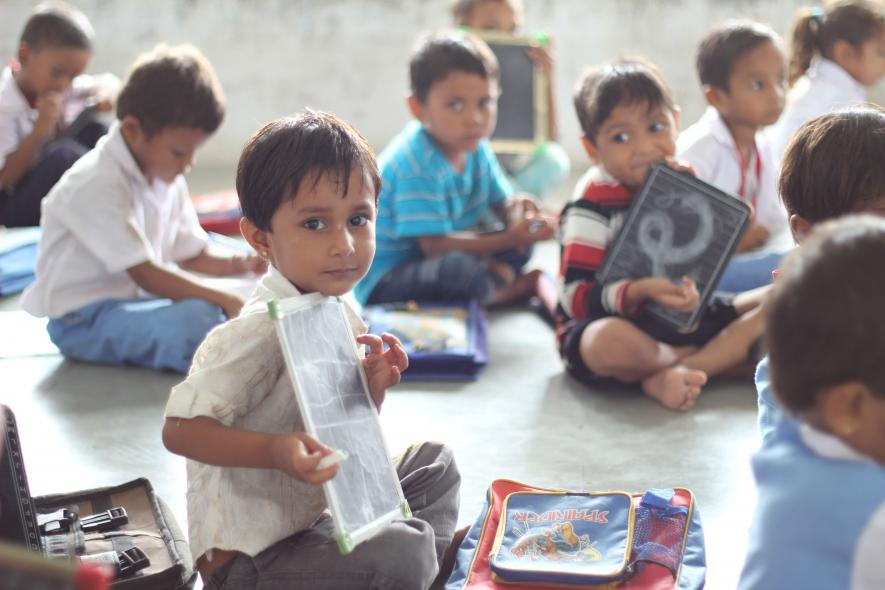
Aisha, a 7 year old girl living in Khajuri Khas Colony of Delhi, is yearning for a day when like her elder sister Asma, she would also be admitted to a nearby government school.(1)
This possibility is growing dimmer by the day, as the school has refused her admission and asked for Indian documents like Aadhar – which refugees do not possess.
Aisha is the younger daughter of Ahmad, a Rohingya refugee who has finally reached Delhi and has duly received his UNHCR card – which refers to the document issued by the UN refugee agency.
Thanks to the circular issued by Delhi government ( Dec 24) led by AAP asking schools to ensure strict guidelines during admissions perhaps Aisha will have to remain satisfied with the same private school which lacks facilities.With a drive underway to ensure that children of “illegal Bangladeshi immigrants” are not allowed enrolment, Aisha knows very well that her fate is sealed. (2)
The Mahakumbh has provided Hindu Supremacist forces an opportunity to further marginalise and invisibilise Muslims, and further push for a ‘Hindu Constitution’.
Whether Uttar Pradesh Chief Minister Yogi Adityanath will be able to recover his image after the tragedy at Mahakumbh, which officially killed more than 30 people and wounded many, many more, is a question being raised in hushed voices in the corridors of power in Delhi.
Obviously, questions are also being raised about the great hiatus between the massive propaganda undertaken around the Mahakumbh and the level of preparations for this ‘biggest congregation on earth’….
For Chief Minister Adityanath, who had ‘positioned himself as the ‘host of the biggest congregation on earth’, the path ahead looks challenging, with the tremendous ineptness of the administration led by him on full display. Much has been reported about conscious attempts made allegedly to downplay the tragedy and how it continued for the whole day. A UP minister, supposed to be close to the Chief Minister, even made a controversial statement that “such small events keep happening in large gatherings.” The statement caused so much uproar that he had to issue an apology. The mainstream media added another page of shame to its track record when it continued to publish government handouts, and did not even deem it necessary to report the tragedy. ( Read the full article here : https://www.newsclick.in/road-kumbh-paved-hindu-rashtra-intentions)
The erosion of democracy worldwide has placed all those who self-identify as democrats in a conundrum. We are loath to recognise the inherent imperfections of democracy because it is by championing democracy that we seek to challenge authoritarian rule. However, the failure to acknowledge the potential distortions of democracy has consequences, obliging us to confront the question of the ways in which democracy must be safeguarded, if necessary against itself.
About the Speaker :
Niraja Gopal Jayal joined King’s India Institute as Avantha Chair in October 2021. She was formerly Professor at the Centre for the Study of Law and Governance at the Jawaharlal Nehru University, New Delhi and presently also Centennial Professor (2019-23) at The London School of Economics, in the Department of Gender Studies.She has also held visiting appointments at, among others, Princeton University, King’s College, London, and the EHESS, Paris.
Her book Citizenship and Its Discontents (Harvard University Press and Permanent Black, 2013) won the Ananda Kentish Coomaraswamy Prize of the Association of Asian Studies in 2015. She is also the author of Representing India: Ethnic Diversity and the Governance of Public Institutions (Palgrave Macmillan, 2006) and Democracy and the State: Welfare, Secularism and Development in Contemporary India (OUP, 1999). She has co-edited The Oxford Companion to Politics in India, and edited, among several others, Democracy in India (OUP, 2001) and Re-Forming India: The Nation Today. (Penguin Random House, 2019) Her most recent book is Citizenship Imperilled: India’s Fragile Democracy (Permanent Black).
How to denigrate India’s historic freedom struggle and humiliate the sacrifices of martyrs, and keep sermonising happily ever after
Image Courtesy: Wikimedia Commons
‘Though this be madness yet there is method in it…’
–‘Hamlet’, Shakespeare I.
The search for the real Independence Day has perhaps become longer in the Hindutva supremacist circles.
Close on the heels of the likes Kangana Ranaut, film actress and ruling Bharatiya Janata Party (BJP) Member of Parliament, who had (in)famously said that “India attained freedom in 2014 and 1947 was ‘bheek’”, or alms and Vikram Massey, another flop Bollywood hero, questioning the freedom of 1947 as “so-called” Independence, has come the news that the numero uno of the Sangh Parivar, Mohan Bhagwat, has joined the ranks.
Speaking on the first anniversary of the Ram Temple inauguration day in Indore (as per the Hindu calendar), the Rashtriya Swayamsevak Sangh (RSS) chief underlined that this day of consecration should actually be celebrated as “true independence” of Bharat, which faced enemy attacks “parachakra” for several centuries.
As expected, Bhagwat’s remarks have received widespread condemnation in Opposition circles. Congress leader Rahul Gandhi has even called it an act of “treason” and asserted that they were an affront to every Indian. He even underlined that the “[R]SS chief would have been arrested in any other country” for such controversial remarks.
Looking at the fact that Bhagwat happens to be the supremo of the ‘biggest cultural organisation in the world’, whose ideology drives India today, who has the complete liberty of sharing his pearls of wisdom whenever he deems it necessary, at times even boomeranging on the organisation, it is difficult to imagine that any action would be taken against him, or whether he will be censured for his controversial remarks, which are an attack on the sacrifices and historic legacy of the freedom fighters as also on the Constitution. ( Read the full text here :https://www.newsclick.in/bhagwat-puran-different-kind)
I started writing on Kafila in 2007. I met Nivedita at a conference in Delhi where she listened to my research on sexuality and development in Kerala; she took me by the arm gently, persuaded me to start writing in a non-academic but rigorous style, and showed me the possibilities of the new medium.
Following is a statement issued by 250 organizations and individuals, including the National Alliance of People’s Movements (NAPM) against arrests and intimidation of activists raising concerns regarding the ecological impact of so-called “developmental” projects. The statement was issued on 13 November 2024
Stop Arbitrary Detentions and Intimidation of Social & Environmental Activists in Jammu & Kashmir
Save Ecology & Uphold Democratic Rights in J&K and entire Himalayan Region
National Alliance of People’s Movements (NAPM), along with other people’s organizations and concerned citizens from across India strongly condemns the arbitrary detention of social and environmental activists in Jammu & Kashmir under the Public Safety Act (PSA). Those detained under the provisions of J&K Public Safety Act, 1978, include Mohammad Abdullah Gujjar (resident of Sigdi Bhata), Noor Din (resident of Kakerwagan), Ghulam Nabi Choppan (resident of Trungi – Dachhan), Mohammad Jaffer Sheikh (resident of Nattas, Dool) and Mohammad Ramzan (resident of Dangduroo – Dachhan), trade union leaders from Kishtwar district.
Professor of Economics at the University of Massachusetts Amherst
Time and Date:
Sunday, 17 th November 2024l, at 6 PM (IST)
Topic : ‘Democracy and the logic of capitalism: The recent Indian experience
Abstract :
Many analyses of the recent erosion of democracy in India have dwelt on political and social forces. I will examine the role of economic forces unleashed by a particular form of capitalist development, and how they may have contributed to this process in recent decades.
About the Speaker
Professor Jayati Ghosh, Professor of Economics at the University of Massachusetts Amherst, a member of the Club of Rome’s Transformational Economics Commission and Co-Chair of the Independent Commission for the Reform of International Corporate Taxation, Formerly a Professor with the Centre for Economic Studies and Planning, JNU, Delhi, has also worked as a Consultant with the Planning Commission of India. Recipient of many awards including UNDP Award for Excellence in Analysis 2005, she has authored- co edited around twenty books on Economics.
Here is a list of a few of her recent books :
-Women, Gender and Work (Volume 2): Social choices and inequalities, (volume coedited with Mark Lansky, Dominique Meda and Uma Rani, 2016, Geneva: International Labour Office.
-Interpreting the World to Change It: Essays for Prabhat Patnaik (volume co-edited with C. P. Chandrasekhar), New Delhi: Tulika books, 2017.
– Demonetisation Decoded (with Prabhat Patnaik and C. P. Chandrasekhar) New Delhi: Routledge Taylor and Francis India, 2017.
– Indian Banking: Current challenges and alternatives for the future, AIBOC, Chennai, 2018.
– Informal Women Workers in the Global South: Policies and Practices for the Formalisation of Women’s Employment in Developing Economies, (edited volume) Routledge, 2020
– The making of a catastrophe: The Covid-19 pandemic and the Indian economy, New Delhi: Aleph Book Publishing, Forthcoming 2021.
– Development: A collection of articles from the International Labour Review, ILO Centenary Volumes, Geneva: ILO, forthcoming 2021 (co-edited with Uma Rani)
दुनिया में जनतंत्र पर मंडराते खतरों की तरफ हाल के समय में बार-बार लिखा गया है। जानकारों ने इस बात को साफ किया है कि किस तरह जनतंत्र का कवच साबित होने वाली उसकी संस्थाओं को अंदर से कमजोर करके, कार्यपालिका, विधायिका या न्यायपालिका को अंदर से खोखला करके या इन सुरक्षा कवच ( guardrails of democracy) का अपहरण करके भी इसे बखूबी अंजाम दिया जा सकता है।
भारत में जहां हम कार्यपालिका का, अर्थात उसकी विभिन्न संस्थाओं को प्रभावहीन बनाने या उन्हें सत्ताधारी पार्टियों के मातहत करने की परिघटना को बारीकी से देख रहे हैं, मगर अभी तक न्यायपालिका में आ रहे बदलावों की तरफ हमारी निगाहें कम गई हैं।
गौरतलब है कि भारत में ऐसे बहुत कम कानून के विद्वान हैं या वकील हैं जिन्होंने भारत की न्यायपालिका के गति विज्ञान को बारीकी से देखा है और उसके रास्ते हमारे सामने रफ्ता-रफ्ता नमूदार हो रहे ख़तरों की तरफ इशारा किया है। जनाब डॉ. मोहन गोपाल, का नाम ऐसे लोगों में शुमार है।
कानून के यह आलिम और प्रैक्टिशनर हिन्दुत्व वर्चस्ववादी ताकतों के नज़रिये के बारे में और उनकी रणनीतियों के बारे में बारीक समझ रखते हैं और संविधान के हिसाब से एक धर्मनिरपेक्ष, लोकतांत्रिक, समाजवादी और संप्रभु भारत को हिन्दू राष्ट्र में तब्दील करने के उनके इरादों के बारे में बताते हैं कि ‘वह संविधान को उखाड़ फेंक कर नहीं बल्कि सर्वोच्च अदालत द्वारा उसकी एक हिन्दू दस्तावेज के रूप में व्याख्या करके’ अमल में लाना चाहते हैं।