Category Archives: Politics

75 Years of Bhonsala Military School: Militarising Minds, Hindutvaising the Nation

Image

..to bring about military regeneration of the Hindus and to fit Hindu youths for undertaking the entire responsibility for the defence of their motherland.

to educate them in the ‘Sanatan Dharma’, and to train them “in the science and art of personal and national defence”

– From the aims of ‘Central Hindu Military Education Society,’ NMML, Munje Papers, subject files, n 24, 1932-36)

This training is meant for qualifying and fitting our boys for the game of killing masses of men with the ambition of winning victory with the best possible causalities (sic) of dead and wounded while causing the utmost possible to the adversary.

– Preface to the scheme of the Central Hindu Military Society and Its Military School’NMML, Munje Papers, subject files, n 25, 1935

Nashik: Expressing concern over the dominance of ‘rich and powerful people’ in politics, besides the soaring inflation rate, Rashtriya Swayamsewak Sangh (RSS) chief Mohan Bhagwat said that India’s situation was better during the British rule…Speaking at a function organized by Bhonsala Military School (BMS) to celebrate its platinum jubilee year in Nashik on Monday, Bhagwat …laid stress on the need for imparting military education to students, citing rising threat to the nation.

– ‘India was better off under British rule: Mohan Bhagwat’, Times of India, Feb 22, 2012

Continue reading 75 Years of Bhonsala Military School: Militarising Minds, Hindutvaising the Nation

Feminism and the Family – Thoughts on International Women’s Day

Excerpts from my forthcoming book Seeing Like a Feminist (Penguin India/Zubaan Books).

Have you heard of ‘nude make-up’?

This is what it is:

‘Nude makeup looks are all about your skin looking fresh and dewy, without looking like you’re even wearing any makeup. All you need is eyeliner, mascara, nude lipstick, and a highlighting blush that will give your skin a natural-looking glow.’[1]

The whole point of nude makeup clearly, is to spend hours painting your face in order to make it look like you never touched it at all.

The maintaining of social order is rather like that. It requires the faithful performance of prescribed rituals over and over again throughout one’s lifetime. Complex networks of cultural reproduction are dedicated to this sole purpose. But the ultimate goal of all this unceasing activity is to produce the effect of untouched naturalness.

When one ‘sees’ the world like a feminist though, with the gaze of a feminist, it’s rather like activating the ‘Reveal Formating’ function in Microsoft Word (what an earlier generation of WordPerfect users knew as ‘Reveal Codes’). The feminist gaze reveals the strenuous, complex formatting that goes on below the surface of what looked smooth and complete. Continue reading Feminism and the Family – Thoughts on International Women’s Day

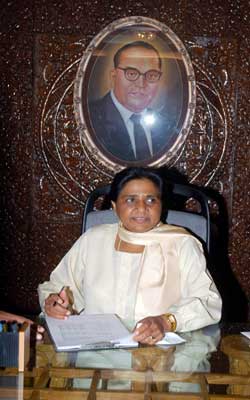
Why Mayawati’s defeat is the BSP’s victory

Satish Chandra Mishra with Mayawati at a rally near Delhi during the Lok Sabha elections in 2009, amongst the last such appearances together

Even before the results came out, the Mayawati cabinet passed a resolution to dissolve the assembly. Never before has an incumbent shown such confidence about losing. Mayawati’s body language during the campaign was proof of the same lack of confidence. Mayawati was going to lose, the Samajwadi Party was in the air. And yet, Mayawati must be relieved right now. She knows that this defeat of hers is, ironically, a victory of the Bahujan Samaj Party and what it stands for. Here’s how.

Continue reading Why Mayawati’s defeat is the BSP’s victory

Some thoughts on the “hawa” in Indian elections

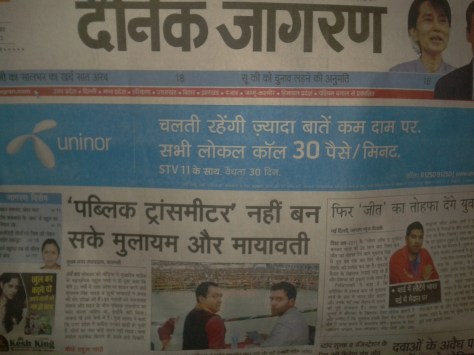
‘Public transmitter’ nahi ban sakey Mulayam aur Mayawati. (Mulayam and Mayawati could not become public transmitters.)

In the Hindi original of that line, the phrase public transmitter is in single quotes only because they are English words in a Hindi paper. The entire sentence is not in quotes. A sentence like this, if it were the title of a text, would count as an expression of opinion. And yet, it was a news headline in the Varanasi edition of UP’s largest selling daily, Dainik Jagran. In case you could not guess who it was trying to help, there was the photo of Rahul Gandhi below the headline. This was the lead story. Continue reading Some thoughts on the “hawa” in Indian elections

Why Rahul Gandhi’s Congress flopped in Uttar Pradesh

In 2008 if you had said the Congress could revive in Uttar Pradesh you would have been laughed at. No party structure or caste base, you would have been told. In 2009, Rahul Gandhi earned perhaps the first laurel of his political career by proving critics wrong. He beat conventional wisdom by saying no to allying with the Samajwadi Party and the Congress won just 22 of 406 seats. Since then, Congress revival in UP has been taken for granted in many corners. Some pundits were predicting as many as 100 seats for the Congress this election. This speculation had a good basis: Rahul Gandhi always left crowds happy. And he flew on a helicopter addressing as many as 4 rallies a day. If you spoke to the people who attended his rallies, you’d be surprised by the amount of goodwill he created for himself. The rise in vote share despite the poor seat performance is proof for the rising appreciation of the Congress’ efforts to regain relevance in state politics. But then, what went wrong? Continue reading Why Rahul Gandhi’s Congress flopped in Uttar Pradesh

Joint Statement on police atrocities and state repression on anti-POSCO struggle

See names of signatories below; please send your endorsement to asit1917 at gmail dot com

We strongly condemn the attack on and illegal abduction by the Odisha police of Umakanta Biswal, a famer belonging to Dhinkia village of Odisha, and an active member of POSCO Pratirodh Sangram Samiti (PPSS), that has been engaged over the last six years in resisting the forcible acquisition of their land by the Odisha government for handing over to the South Korean multinational corporation POSCO. This incident, which occurred on 2nd March 2012, is the latest in the series of atrocities inflicted by the Odisha government and by hired goons associated with the government and the POSCO company, on the people of these villages. Umakanta Biswal, who was engaged in agricultural activity in his paddy field at the time of his abduction, was pursued by a group of armed plainclothes policemen on a motorbike, and shot at when he tried to escape. He has reportedly been kept in Paradip prison, and has not been produced in front of a magistrate within 24 hours of his arrest, as is required under law. We have cause to fear that he is being tortured in police custody, and are gravely concerned about his safety. Continue reading Joint Statement on police atrocities and state repression on anti-POSCO struggle

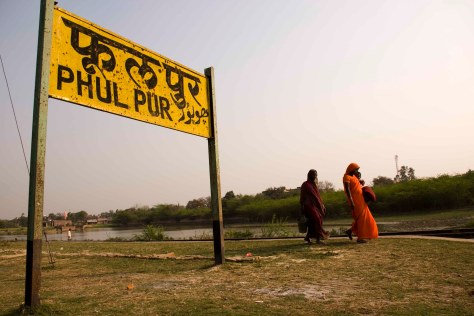
Seeing UP from Phulpur

Photograph by Akif Ahmad for Fountain Ink magazine

In which I go to Phulpur, once famous as Nehru’s seat, and do walk-the-talk with village-level workers of the four main political parties in Uttar Pradesh. Here. Continue reading Seeing UP from Phulpur

Gujarat genocide – the state, law and subversion: R B Sreekumar

Guest post by R B SREEKUMAR, former Director General of Police, Gujarat, who deposed before the Nanavati Commission.

Gujarat riot victims prevented from protesting against Narendra Modi during his sadbhavna fast in September 2011.

The Gujarat genocide in 2002, resulting in killing of nearly 1,500 innocent citizens, mostly from India’s major minority community and subsequent pervasive subversion of governmental machinery to sabotage justice delivery to riot victims, has to be understood as a man-made disaster. A disaster broughtabout by lack of professionalism and lack of integrity and commitment to the letter, spirit and ethos of the Constitution of India, on the part of all officials of the state, from the Chief Minister Narendra Modi to the police constables.

An analysis of the sequence of events from the time of the gruesome killing of 59 Hindu passengers in the train burning incident on 27 February, 2002 to this day, will bring up many unambiguous facts and data on deliberate acts of omission and commission by political leaders, bureaucrats and policemen, aiming at the actualization of the anti-Muslim carnage in Gujarat in 2002, and since then, the lopsided justice delivery to riot victims.

Continue reading Gujarat genocide – the state, law and subversion: R B Sreekumar

Everything you wanted to know about the great Kingfisher Airlines scam but didn’t know who to ask

This slideshow requires JavaScript.

All your queries will be answered here.

Delhi Police Special Cell – Encounters, Frame-ups, Impunity: Manisha Sethi

Guest post by MANISHA SETHI

An RTI enquiry has revealed that Delhi Police Special Cell’s conviction rate is a paltry 30 per cent. Nearly 70 per cent of the accused it charge-sheeted over the past five years were acquitted for want of credible evidence. Do these figures tell us something? A news story in a leading English daily bemoans this trifling record and quotes a senior police officerattributing this to the fact that “police sometimes get tangled in cross evidences and it becomes tough when you rely more on circumstantial evidences”. [i] This evokes the image of a bumbling policeman, reminiscent almost of Jacques Clouseau, tripping over reams and strings of evidences, in an impossible attempt to build a watertight case against the villains. But Special Cell couldn’t be farther from this sort of cute sloppiness. Continue reading Delhi Police Special Cell – Encounters, Frame-ups, Impunity: Manisha Sethi

Understanding Indian human rights movements through the lives of two human rights defenders: Jinee Lokaneeta

Guest post by JINEE LOKANEETA

Watching Advocate alongside Democracy Dialogues: a Tribute to Balagopal, both by Deepa Dhanraj, made for a powerful experience for its remarkable documentation of human rights movements in Andhra through the lives of these two human rights defenders and the collectives that they were a part of whether it was Andhra Pradesh Civil Liberties Committee, Human Rights Forum or People’s Union for Civil Liberties. There is of course a sharp sense of loss, since in the last few years we have lost both these incredible people but one was grateful for this effort to record and document their inspirational lives in such a beautiful manner. It also points to a further need for us to understand the connections of human rights groups to law, the relationship of human rights defenders to the courts, and their role in pushing for the realization of some of substantive aspects of the Indian Constitution in the process. Continue reading Understanding Indian human rights movements through the lives of two human rights defenders: Jinee Lokaneeta

Caste and Exploitation in Indian History: Bharat Patankar

Guest post by BHARAT PATANKAR translated by GAIL OMVEDT

Introduction: The Process of Exploitation

Exploitation arising from the caste hierarchy is a particular feature of the South Asian subcontinent. There was no such exploitative system in other continents or in countries outside of South Asia. But since caste exploitation has been a reality for 1500-2000 years this shakes the belief that only class can be the basis of exploitation. And because of this we have to transcend the attempt to find a way only pragmatically and deal with the issue on a philosophical and theoretical level. Class has been theorized extensively in terms of exploitation; to some extent gender also, but not caste. Exploitation as women in various forms has also been a reality for thousands of years; this also is not through “class”. This reality from throughout the world gives a blow to the idea that exploitation can only be class exploitation. This can also be said of exploitation arising on the basis of racial and communal factors. Continue reading Caste and Exploitation in Indian History: Bharat Patankar

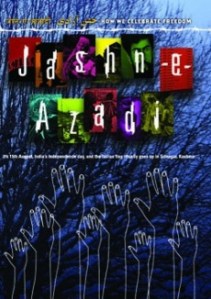
Jashn-e-Azadi successfully screened at Delhi University despite right-wing threats & police pressure: AISA

Guest post by ALL INDIA STUDENTS’ ASSOCIATION (AISA)

AISA and Students of Sociology Department (DU) Successfully Screen Jashn-e-Azaadi in DU, Braving Attacks and Threats by ABVP and ‘Bhagat Singh Kranti Sena’! Hundreds of Delhi University Students Participate in Film Screening and Discussion with Sanjay Kak, Director of Jashn-e-Azadi!!

Today hundreds of DU students and teachers participated the screening of the documentary film  Jashn-e-Azaadi organized by AISA and students of sociology in the Department of Sociology, Delhi University. “Predictably this screening had to held in the teeth of opposition from right-wing fascist forces like ABVP and the Bhagat Singh Kranti Sena, who tried their level best to stall the screening. Moreover, the DU administration and the Delhi Police also shamefully sided with these forces and tried to pressurize the Sociology department to stop the screening”, said Harshvardhan Tripathi Secretary DU, AISA.

Continue reading Jashn-e-Azadi successfully screened at Delhi University despite right-wing threats & police pressure: AISA

Screening Jashn-e-Azadi at Presidency University, Kolkata: Waled Aadnan

Guest post by Waled Aadnan

It can be said that 86/1 College Street, Calcutta, has seen a microcosm of the history of modern India unfold within its walls. Since 1874 when the already fifty-nine year old Presidency College shifted to its current address, future Presidents and Prime Ministers of  India, Pakistan and Bangladesh; Nobel Laureates, freedom fighters, an Academy Award winner, Bharat Ratnas; the leadership of the Naxalite movement of the 60s and 70s; and eminent judges, writers, journalists, scientists and actors, have spent their student days at 86/1.

Two years ago, soon after I joined the institution, the Left Front government upgraded Presidency College to the status of a state University in a last-gasp bid to hold on to the votes of the bhadralok intellectuals. 2012 dawned with no Student Union elections having been held the previous year, and it is in this backdrop that the following events unfold.

Salman Rushdie’s well-publicised ostracism from the Jaipur Literature Festival was met not with outrage in Presi’s canteen addas, but with the absence of even a poster put up in protest. News filtered in of a seminar in Symbiosis University being “threatened.” But little awareness existed among students who were more inclined to read tabloid-like, unputdownable newspapers than their relatively austere counterparts, including The Hindu which broke the story.

Continue reading Screening Jashn-e-Azadi at Presidency University, Kolkata: Waled Aadnan

Caste Discrimination in Cyclone Thane in Tamil Nadu and Pondicherry: NDW-NCDHR

A preliminary report of an investigation into caste discrinimation with regard to Cyclone Thane by National Dalit WatchNational Campaign for Dalit Rights  conducted on 18, 19 January 2012

Cyclone Thane

Cyclonic Storm Thane was the strongest tropical cyclone of 2011 within the North Indian Ocean. Thane initially developed as a tropical disturbance within the monsoon trough to the west of Indonesia. Over the next couple of days the disturbance gradually developed further while moving towards the northwest, and was declared a Depression during December 25, before being declared Cyclonic Storm Thane during the next day. As it was named, Thane started to turn towards the west under the influence of a subtropical ridge of high pressure before its development slowed down during December 27, as a strong outflow and marginally favourable sea surface temperatures fought with persistent vertical wind shear. After its development had slowed down during December 27, Thane became a Very Severe Cyclonic Storm during December 28, before as it approached the Indian states of Tamil Nadu and Andhra Pradesh, it weakened slightly. Thane then made landfall early on December 30, on the north Tamil Nadu coast between Cuddalore and Pondicherry and rapidly weakened into a depression.

Cuddalore and Vilipuram Districts in Tamil Nadu and Pondicherry were the worst affected due to Cyclone Thane. All roads in these three districts are line by wreckage of fallen trees including large tracts of Casuarina plantations completely wiped out. The only trees that seem to have withstood the fury of the cyclone seems to be the Borassus flabellifer or the Palmyra Palm. According to government estimates at least 39 people have been killed by this cyclone in Tamil Nadu and 7 in Pondicherry. Apart from the loss of life, the Cyclone left huge destruction in terms of livelihood, particularly agricultural livelihood and ripped apart the green cover in these already arid districts.

Continue reading Caste Discrimination in Cyclone Thane in Tamil Nadu and Pondicherry: NDW-NCDHR

मायावती जी के मुख्यमंत्रित्व काल का एक संक्षिप्त विवरण: राम कुमार

This guest post by RAM KUMAR is a review of five years of Mayawati’s administration in Uttar Pradesh. An English translation has appeared in Fountain Ink magazine, here.
मुख्यमंत्री मायावती जी को 2007 में मिला स्पष्ट जनादेश  महज मुलायम सिंह यादव के खिलाफ एन्टी-इनकमवंसी फैक्टर ही नहीं था, बलिक अराजकता और गुंडागर्दी के खिलाफ भी जनादेश  था। सरकार का खुले रूप से एन्टी-दलित चरित्र और प्रदेश  के अन्दर सरकार  के एन्टी ब्राहम्ण टोन के चलते प्रदेश  में मुलायम सिंह की सरकार के खिलाफ दलित अति पिछड़े हो गये थे। मुलायम सिंह के  कल्याण सिंह प्रेम की वजह से माइनारिटी (अल्पसंख्यक) भी  मुलायम से नाराज हो  गए। बहन जी ने सर्वजन समाज का नारा देकर   विक्षुब्द तबकों को समेटा। सभी को समेटने में रणनीति के तहत अपना नारा बदल “हाथी नहीं गणेष है ब्रम्हा, विष्णु, महेष है” का नारा लगाया। सर्वजन  फार्मूला और मुलायम के खिलाफ गुस्सा बहन जी को पूर्ण बहुमत से सत्ता में लेकर के आया।

बहन जी एक  सशक्त शासनकर्ता के रूप में जानी जाती थीं। इस बार भी बहन जी सत्ता में आयींऔर  सत्ता में आते ही तुरन्त उन्होनें  घोषणा की कि अराजकता और गुडागर्दी नहीं चलेगी, कानून का राज्य चलेगा। इसको  सिद्ध करने के लिये उन्होंने सबसे पहले जो राजनेता अपने साथ बहुत सारे शस्त्रधारियों को लेकर चलते थे,  उन पर प्रतिबंध  लगाया और एलान किया कि  कोई भी नेता सार्वजनिक स्थल पर तीन हथियार से  ज्यादा में दिखे तो उनके खिलाफ कार्यवाही की जायेगी। यही नहीं अपनी पार्टी के एम. पी. रमाकान्त यादव जो आजमगढ़ से हैं, एक गरीब मुसिलम के मकान पर जमीन कबजाने के चक्कर में जबरदस्ती बुलडोजर चलवाया इसकी खबर जब बहन जी को लगी उन्होंने रमाकान्त यादव को अपने मुख्यमंत्री आवास पर मिलने के लिये बुलाया और वहीं से उनको गिरफ्तार करवाया। यह संदेश  देने की कोशिशकी  कि सत्ताधारी दल के हों या विपक्षी पाटी के हों, कानून सबके लिये समान है। अपनी ही सरकार के खाधमंत्री और विधायक आनन्द सेन को एक महिला के अपहरण केस  में बर्खास्त कर जेल भिजवाया और अभी तक 26 प्रभावशाली नेता एवं मंत्रियों को पार्टी के बाहर का रास्ता दिखा चुकी हैं। पिछली सरकार में हुयी 17,868 पुलिस जवानों की भर्ती में हुयी धांधली के चलते भर्ती  प्रक्रिया को निरस्त किया और 25 आई .पी.एस. अधिकारियों को भी सस्पेन्ड किया।

Continue reading मायावती जी के मुख्यमंत्रित्व काल का एक संक्षिप्त विवरण: राम कुमार

An Election in Sarvajan Samaj

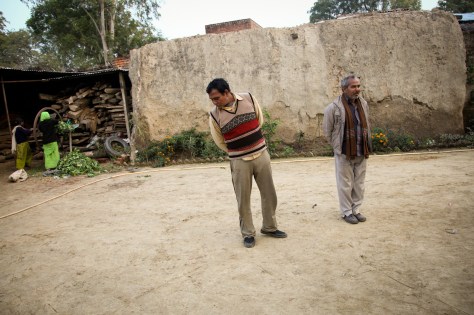
This photograph was taken by Salman Usmani in Ganguali village in Unnao near Lucknow, in early January. On the left is Prabhat Pandey and on the right, Ram Khilawan. Pandey is a Brahmin and Khilawan a Dalit. They’re the BSP’s men in this village, responsible for urging Brahmins and Dalits to vote for the BSP candidate, also a Brahmin. The photo was taken when I asked them to pose together. This is all the ‘brotherhood’ they could show before the camera.

Here’s my story on UP elections, seen through the prism of Brahmins and Dalits. Continue reading An Election in Sarvajan Samaj

A Quick Analysis of the Independence Day Speech by President Rajapaksa

“There is great chaos under heaven – the situation is excellent.” Mao Zedong quoted by Slavoj Zizek a year ago amidst the revolt against Mubarak in Egypt.

Given recent developments, I am jotting down a quick analysis of the positions, concerns and silences in President Mahinda Rajapaksa’s Independence Day speech today. The tone and substance of this speech is slightly different from the last few Independence Day speeches characterised by triumphalism and exuberance. The context of the speech is the mounting protests on the ground and increasing economic pressures.

The location of the speech in the historical city of Anuradhapura and the reference to Kebethigollawa in Anuradhapura District – the site of a horrific LTTE attack on a civilian bus in 2007 with tens of lives lost and scores injured which contributed to shifting the Sinhala public opinion fully behind the war effort – are attempts to remind the public of the horrors of war, the war victory and to mobilise Sinhala Buddhist nationalism. The solution, at the outset of the speech to all of Sri Lanka’s woes, is emphasised as the government’s “giant development works” as part of the march from “backwardness to modernity”.

Continue reading A Quick Analysis of the Independence Day Speech by President Rajapaksa

Letter from the Stinkcity of Thiruvananthapuram

Respected development tourists, leftists and scholars from the West who have been coming here seeking your heterotopia, welcome to the city of Thiruvananthapuram.

Yes, you are here to see that Kerala which gives you relief from the relentless decline of the left in your part of the world.You have been honouring us with such visits since the 1970s. We have been happy to oblige, cast and recast to suit your projections. When ‘social development’ was fashionable in the UN circles, Kerala was indeed the space where you found ‘social development’ thriving. But when ‘human development’, the theoretical and political provenances of which are quite different from those of ‘social development, became your preference, Kerala transmogrified itself most willingly into the paradise of ‘human development’. And then you came to be fascinated by ‘participatory development’, we diligently turned into the very fount of ‘participatory development’. Thank you very much for keeping us afloat in the imagination of Western left developmentalist intellectuals (though I do see that the oodles of ‘agency’ showered upon us by you may actually be your way of compensating for the shrinking of your own agency in the face of the triumphant march of neoliberal capitalism in your homelands) Continue reading Letter from the Stinkcity of Thiruvananthapuram

The untold stories of a political process

AP Photo by Altaf Qadri

Less than a month before the 2009 Lok Sabha elections, the wedding of a top Uttar Pradesh bureaucrat’s daughter at the Taj Hotel in Lucknow presented senior journalists invited from Delhi with an opportunity to interact with the state’s leading bureaucrats—who are, in Chief Minister Mayawati’s reign, more important than politicians. For a select few celebrity editors, there was even a rare durbar with Mayawati herself, who carefully arrived after the governor had left, presented flowers to the newly married, and proceeded to a barricaded enclosure to meet India’s opinionmakers. I don’t know what the conversation was like, but I saw the journalists’ lips move more than hers.

After the meeting was over, I asked one celebrity TV anchor what he thought the election results were going to look like. He said the Mayawati-led Bahujan Samaj Party (BSP) was very strong, and predicted she could win 50 of the 80 seats the party was contesting. The Delhi media’s awe of Mayawati was at a historic peak; they had taken her prime ministerial ambitions seriously. I told this studio journalist that the buzz in Lucknow was that the Congress could spring a surprise. “No chance,” he said. “They don’t have any organisation. Azharuddin is my friend and he called me to say he needs my help. Even a celebrity like Azharuddin is going to lose!” Read More…

उत्तर प्रदेश चुनाव 2012 और पसमांदा मुस्लिम समाज

This is the text of a pamphlet released by the PASMANDA INTELLECTUALS FORUM, Lucknow. It comes to us via Khalid Anis Ansari

पसमांदा समाज की मुख्य माँगें

हमने उत्तर प्रदेश विधान सभा चुनाव, 2012 के मद्देनज़र पसमांदा (दलित और पिछड़े) मुसलमानों   की पांच बड़ी मांगें तय की हैं. आइए, आगे बढ़ने से पहले हम इन मांगों पर नज़र डालें:

  1. पसमांदा मुसलमानों की उत्तर प्रदेश में 15% आबादी है. इस कारण सारी पार्टियां उनकी आबादी  के हिसाब से टिकट दें;
  2. सवर्ण (अशराफ) मुसलमानों को सर्वोच्च न्यायालय के मंडल (इंदिरा साहनी) फैसले (1992) के तहत आरक्षण की  परिधि से बाहर रखा जाये क्योंकि वह संविधान केअनुच्छेद 16 (4) और 15 (4) के तहत ‘सामाजिक और शैक्षिक’ तौर पर पिछड़े तबके नहीं माने जा सकते हैं;
  3. केन्द्र और उत्तर प्रदेश की ओबीसी लिस्ट को बिहार फार्मूले के तहत पिछड़ा वर्ग और अति-पिछड़ा वर्ग में विभाजित किया जाये और सारे पिछड़े मुसलमानों को सामानांतर रूप से पिछड़ी हिंदू जातियों के साथ अति-पिछड़ा श्रेणी में विधिवत शामिल किया जाये;
  4. दलित मुसलमानों / ईसाइयों को 1950 के राष्ट्रपति आदेश (पैरा 3) को रद्द कर के एससी लिस्ट में शामिल किया जाये;
  5. भूमंडलीकरण और नवउदारवादी आर्थिक नीतियों के चलते पसमांदा समाज के कारीगर/दस्तकार/मजदूर तबकों और लघु-उद्योग की बर्बादी को रोका जाए और उनको फिर से पटरी पर लाने वास्ते उचित नीतियां बनाई जाएँ.

Continue reading उत्तर प्रदेश चुनाव 2012 और पसमांदा मुस्लिम समाज