Category Archives: Politics

’बिगड़ैल बच्चे की खोज में’: हिमांशु पंड्या

“क्या आपको इस बात का अहसास है कि ताकाहाशी को ‘तुम्हारी पूँछ तो नहीं है?’ पूछने पर कैसा लगा होगा” बच्चे शिक्षिका का जवाब नहीं सुन पाए. उस समय तोत्तो चान यह नहीं समझ पायी कि पूंछ वाली बात से हेडमास्टर साहब इतना नाराज़ क्यों हुए होंगे क्योंकि अगर कोई उससे यह पूछता कि तोत्तो चान तुम्हारे क्या पूंछ है? तो उसे तो इस बात में मजा ही आता.
-‘तोत्तो चान’ (तेत्सुको कुरोयांगी, अनुवाद – पूर्वा याग्निक कुशवाहा)

दलित चेतना और कार्टूनों का पुनर्पाठ
इस कार्टून पर चली ऐतिहासिक बहस के बाद अब यह पक्के तौर पर कहा जा सकता है कि साहित्य से आगे अभिव्यक्ति के अन्य क्षेत्रों में भी दलित चेतना ने दस्तक दे दी है। शायद हम कल चित्रकला और बहुत आगे संगीत में भी दलित चेतना युक्त दृष्टि से इतिहास का पुनर्पाठ देखेंगे। Continue reading ’बिगड़ैल बच्चे की खोज में’: हिमांशु पंड्या

A democratic process in Pakistan: Abdullah Zaidi

Guest post by ABDULLAH ZAIDI

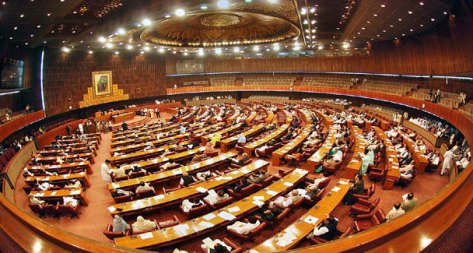
Pakistan’s National Assembly

In a way, the story of Pakistan is the story of a centralised state manipulating the provinces. It is also the story of an overgrown and overfed military destabilising all political forces that posed a challenge to its narrative. It is also the story of institutions wrestling for their due and undue share of power. Finally, it is the story of a powerful state and a weak society. The one thing that is common to all of these dynamics is the power struggle between elected and unelected institutions.

After return to civilian rule in 2008, the country has seen several developments that have somewhat changed these dynamics. Continue reading A democratic process in Pakistan: Abdullah Zaidi

Is the Hurriyat divorcing democracy and freedom?: Gowhar Geelani

Guest post by GOWHAR GEELANI

By any stretch of imagination, the All Parties Hurriyat Conference [APHC] has ceased to be an amalgam of ‘all parties’. It seems that this conglomerate of several pro-freedom political, social and religious parties is actually being run by a chosen few in a dictatorial manner. It is no secret now that the fissures in the Hurriyat ‘M’, the one led by the popular head-priest based in Srinagar, Mirwaiz Umar Farooq, run neck deep.

The APHC was formed on 10 March 1993 to find a political solution to Kashmir dispute after a large-scale armed rebellion since 1989 had successfully highlighted the need for a resolution to the long-standing dispute. Essentially, this conglomerate was formed with the clear aim of achieving the “right to self-determination” for Kashmiris in accordance with the United Nations’ Security Council Resolutions vis-à-vis Kashmir.

But all is not well with the Hurriyat (M). One of its prominent leaders, Professor Abdul Gani Bhat has openly challenged group’s constitution by declaring that the UN resolutions on Kashmir have become “irrelevant”.

Continue reading Is the Hurriyat divorcing democracy and freedom?: Gowhar Geelani

In Defense of Critical Pedagogy: A Petition

The following is a petition initiated by a group of scholars who have been centrally involved in the debate on pedagogy and the writing of textbooks that followed National Currriculum Framework 2005

We have been watching with deep dismay the events as they have unfolded on the floor of the Indian Parliament and outside. Uproar against an individual cartoon has now snowballed into a wide-ranging attack against the new NCERT textbooks. The office of one of the Advisors of the Political Science textbooks has been ransacked, the Political Science textbooks have been withdrawn from circulation, and the Government has resolved to conduct an inquiry into the role of those who sanctioned the inclusion of the offending material in the textbooks. Clearly what is at stake here is not just the life of cartoons on the pages of school textbooks.

But the fear of cartoons is not unimportant. It tells us a lot about the democracies we now inhabit. Jawaharlal Nehru told Shankar Pillai ‘Don’t spare me Shankar’. B.R. Ambedkar saw the cartoon that is now being seen as ‘offensive’. He had no problem with it. Nehru and Ambedkar, and great democrats like them, were aware of what cartoons mean. They were aware that creative cartoonists like Shankar or Laxman can encourage us to question what is taken for granted, reveal the ambiguities and contradictions of individuals, persuade us to see things in a new light. India has a long creative tradition of satire and irony. The productive power of laughter has been used not only in movements for social justice, but in children’s literature as well. If we celebrate this tradition, we celebrate democracy. Only in non-democratic countries is there a fear of cartoons. Continue reading In Defense of Critical Pedagogy: A Petition

पाठ्यपुस्तक का संघर्ष 

संसद राजनीति और लोकतंत्र पर स्कूली किताबों में कार्टून नहीं चाहती हैइस मसले को लेकर संसद के दोनों ही सदनों में सारे राजनीतिक दलों में अभूतपूर्व मतैक्य देखा  गयाएक राजनीतिक  दलजिसका नाम नेशनल कान्फरेंस हैइस दमनकारी बहुमत से अलग स्वर में बोलने की कोशिश करता रह गयाउसे क्रूर बहुमत ने बोलने नहीं दियाआखिर वह एक बहुत छोटे से इलाके का थामुख्य भूमि में बन रही सहमति में विसंवादी स्वर पैदा करने की अनुमति उसे दी ही कैसे जा सकती थीउसे उसकी लघुता के तर्क से नगण्य माना जा सकता थायह स्वर कश्मीर  से आ रहा था जिसे भारत का अंग बनाए रखने के लिए देश के क्रूरतम क़ानून की मदद लेनी पड़ती है.

 यह विवरण यहाँ अप्रासंगिक लग सकता है.लेकिन मुझे इसमें एक तरह की प्रतीकात्मक संगति दिखलाई पड़ती हैवह संगति  असहिष्णुताजन्य  अधैर्य  के तत्व से निर्मित होती है जो हमारे सामाजिक और सांस्कृतिक जीवन को परिभाषित करता है और इसीलिए सरलीकरण की पद्धति उसके चिंतन की दिशा तय करती है. Continue reading पाठ्यपुस्तक का संघर्ष 

When Laughter becomes a laughing matter: Statement by CSSSC Faculty Members on the Cartoon Controversy

Going by the ruckus surrounding cartoons these days, by the angry, at times violent, reactions of elected lawmakers against any kind of caricature of prominent personalities, it seems ‘laughter’ itself has become a laughing matter in contemporary India. And, this indeed is puzzling. The emerging trend of automatically equating lampooning with character assassination, of treating every expression of joviality targeting persons deputed by people to run the republic as being fundamentally slanderous and libelous, cannot but result in undermining the nation’s democratic charter.

Those who now readily question the public right to parody celebrities or icons are also guilty of forgetting that India has a long tradition of producing social and political commentaries in the form of hilarious visuals and words. The lack of sense of humour of persons at the helm of power today is so profound now that we may very soon lapse into a state of amnesia in relation to the deeply admired and dearly loved cartoonists, such as, Gaganendranath Tagore, R. K. Laxman, K. Shankara Pillai (better known as Shankar), Attupurathu Mathew Abraham (known popularly as Abu Abraham), O. V. Vijayan, Mario de Miranda (better known as Mario).

It is on behalf of the ‘little men’, from whose perspectives the celebrated cartoonists dared to make light heavy-going matters, that we condemn the somber Indian politicians’ and their lathi-wielding goons’ zeal to persecute persons committed to the cause of irony, irreverence and critical humour in public life.

Tapati Guha-Thakurta

Sibaji Bandyopadhyay                                                                     Lakshmi Subramanian

Indraneel Dasgupta                                                                        Sugata Marjit

Manabi Majumdar                                                                           Jyotsna Jalan

Dwaipayan Bhattacharyya                                                          Prachi Deshpande

PranabKumar Das                                                                           Priya Sangameswaran

Rosinka Chaudhuri                                                                        Anirban Das

Saibal Kar                                                                                           Somnath Ghosal

Bodhisattva Kar                                                                               Partha Chatterjee

Centre for Studies in Social Sciences, Calcutta (CSSSC)

May 14, 2012

‘Your problem was that you weren’t satisfied with mentioning one haram thing per story’

You may have read it by now but in case you haven’t, the best article on Manto’s birth centennial came from Mohammad Hanif:

Your problem, Manto sir was that you weren’t satisfied with mentioning one haram thing per story. We do realise that in the world of short stories sometimes you have to describe bad things, things that our religion and our culture don’t approve of but couldn’t you have exercised a bit of moderation? As if having a prostitute as your main character wasn’t enough, you had to make her drink alcohol, and as if her drinking wasn’t bad enough you had to make her go to sleep with a flea-ridden dog. And I am not even mentioning the uncalled for description of her blouse where she stuffs her haram-earned money. Why did you have to do all that when you could have written about banana peels? [Read]

Solidarity March: Justice for sex worker mothers

Press statement issued by Mitra Sanghatana (Collective of children of sex workers )and Veshya Anyay Mukti Parishad (VAMP), a collective of sex workers, Maharashtra.

File photograph of members of SANGRAM and VAMP, collective of sex-workers, celebrating Dr Ambedkar Jayanti

Women’s groups and progressive organisations in India are shocked that Ms. Anu Mokal, a pregnant sex worker in Satara, was beaten up by police inspector Dayanand Dhome on April 2, along with her friend Ms. Anjana Ghadge. Three days later, on 5th April, she suffered a miscarriage. The incident occurred on 2nd April 2012, around 7.30 pm, when Anu Mokal, who was four months pregnant, and Anjana Ghadge were bringing dinner for their friend who was admitted in the civil hospital. Near the Satara bus stand area, senior Police Inspector Dayanand Dhome accused them of soliciting and when they refuted it abused them and called them liars. Dhome and his subordinates started beating Anu and her friend Anjana. Dhome repeatedly kicked them and said that women like Anu are a ‘shame’. Her pleas that she was four months pregnant fell on deaf ears. Anu and Anjana were detained and put in a lockup. They were eventually released on April 3.

Continue reading Solidarity March: Justice for sex worker mothers

Condemn the Arrest of Advocate Shanavas by “Hi-tech Cell”!

This statement has been released by Manisha Sethi, Adeel Mehdi, Ahmed Sohaib, Sanghamitra Misra and others foJAMIA TEACHERS’ SOLIDARITY ASSOCIATION

Demand his immediate release!

The undersigned condemn in strongest terms the arrest of Advocate Shanavas, a leading human rights activist of Kerala. Advocate Shanavas, who lives and practices in Trivandrum, was arrested on 1st May 2012, and his office raided and his files seized by the Crime Branch of the state. Ostensibly, his arrest has been made by the “Hi-tech Cell” of the Kerala Crime Branch for conspiring to leak intelligence communication in the infamous Email surveillance scandal that rocked the state a few months ago—where a leading daily of the state has alleged that the Hi-tech Cell was snooping on the emails of nearly 250 Muslim individuals and institutions. Continue reading Condemn the Arrest of Advocate Shanavas by “Hi-tech Cell”!

A Statement Supporting the Delhi HC Judgment on Section 377: Ruth Vanita

Guest post by RUTH VANITA, Professor at the University of Montana. This statement was written in the context of the teachers’ intervention in the Supreme Court in the appeal by religious groups against the Delhi High Court judgement on Section 377 . This statement does not form part of court documents. You can read Shivaji Panikkar’s statement here

I belong to a middle-class family of educationists, various members of which migrated to Delhi from Rangoon and Lahore at Partition. I was educated entirely in Delhi, first at Springdales School, and then at Miranda House. I got my Ph.D.  from Delhi University. I started teaching at the age of 20 at Miranda House; I taught there for 18 years and then for two years as a Reader in the English Department, Delhi University, before taking early voluntary retirement in 1997.

Continue reading A Statement Supporting the Delhi HC Judgment on Section 377: Ruth Vanita

A Statement Supporting the Delhi HC Judgment on Section 377: Shivaji Panikkar

Guest post by SHIVAJI K PANIKKAR,  art historian and Dean, School of Culture & Creative Expressions, Ambedkar University, Delhi. This statement was written in the context of the teachers’ intervention in the Supreme Court in the appeal by religious groups against the Delhi High Court judgement on Section 377 . This statement does not form part of court documents.

You can read Ruth Vanita’s statement here.

I was born in a traditional, upper caste Hindu family and lived in Kerala till I was 22 years old, and since then shifted to study, work and live inBaroda,Gujarat. In 1975c I completed a B.A in Kerala with Economics and History as my subjects. InBarodathrough 1980s, at MS University I did another B.A. in Dance (Bharatanatyam), an M.A. and Ph. D in Art History as specialization. I was appointed as Professor in 1998. Till recently I was Head of Department of Art History & Aesthetics, Faculty of Fine Arts, M.S. University of Baroda. I have an experience of teaching at the University of about 25 years.

Since childhood    I knew I had homosexual inclinations, and lived it secretively till the age of about 43/45 years. Since then I lived an openly gay life; a fact that I couldn’t any more hide in my personal life as well as in my professional life. It was a matter of emotional and intellectual honesty and integrity that I accepted in public my sexual orientation, and no more live a life of fear and oppression.

Continue reading A Statement Supporting the Delhi HC Judgment on Section 377: Shivaji Panikkar

Teachers’ Intervention in the Supreme Court on Section 377

The Delhi High Court judgement reading down Section 377 to decriminalize consensual sex between adults was appealed against in the Supreme Court by several religious groups. However during the appeal, the Government of India withdrew its objections to the High Court judgement. In addition, there were some parties that intervened to support the judgement – parents, medical practitioners and teachers, among others. The Supreme Court judgement is awaited, but meanwhile, I am posting below the  position of the 16 teachers who intervened in this matter. This statement does not form part of court documents.

As teachers we essentially wanted to make the argument that Section 377 vitiates for everybody (and not just for gay people) the general atmosphere of free expression, learning, enquiry, and dignity that an academic environment should ensure.  That we oppose Sec 377 because its existence on the statute books legitimizes an atmosphere that runs counter to the spirit of openness and acceptance of difference that should mark modern academic spaces.  Its existence is not only an affront to those who are non-heterosexual, but it is an affront to each and every person in the academy who believes that every teacher and student has dignity that should be respected, and that learning is a continuous and life-long process, in which fixed ways of thinking are continuously challenged and reshaped by winds of change.

  Continue reading Teachers’ Intervention in the Supreme Court on Section 377

A Brief Summary of the Interlocutors’ Report on Kashmir: Shoaib Rafiq

This guest post by SHOAIB RAFIQ is an analysis of the Home Ministry-appointed group of interlocutors’ report on Kashmir 

We swear by the fundamentals of absurdism
of that all we have learned
our solutions will mimic the ludicrousness
that we employ in our education, research, and other related shit. Continue reading A Brief Summary of the Interlocutors’ Report on Kashmir: Shoaib Rafiq

Updates from Koodankulam

Via NITYANAND JAYARAMAN

Koodankulam: Curb on Free Speech

Video Interviews with  eminent legal scholar Dr. Usha Ramanathan and Adv. R. Vaigai, a senior lawyer from the Madras High Court.

Since March 19, 2012, when Tamil Nadu Chief Minister Jayalalithaa announced that work on the controversial Koodankulam nuclear plant could be resumed, and even before that actually, the protesting villagers have been at the receiving end of a vicious state led campaign to paint their non-violent struggle as a violent one, and to crush their campaign into silence by using harsh sections of the Indian Penal Code. More than 7000 cases of “sedition” and “waging war against the Government of India” have been filed just in the Koodankulam police station just between September and December 2011. These are part of 107 cases filed against 55,795 people during the same period. That is probably more than in any other police station in India. Certain sections of the media too have played the role of a willing partner in propagating the State’s propaganda. In pursuing this counter-campaign against its own people, the State Government has placed itself above the law of the land and pursued an openly anti-democratic agenda.

See interviews in two parts at at 

1. chaikadai.wordpress.com

2. chaikadai.wordpress.com

PRESS RELEASE

Cases against K-protestors a parody of law: Fact Finding Team

18 April, 2012. CHENNAI – A fact-finding team headed by senior journalist Sam Rajappa confirmed that the Government had indeed restricted movement of essential goods and people in the days following the Chief Minister’s March 19th declaration announcing her support to the nuclear plant. The report, which was released at a press conference in Chennai, noted that the spirit of opposition to the nuclear power plant was very high, and warned that arresting the leaders could lead to a serious law and order problem in the region.

Continue reading Updates from Koodankulam

On the India hand in Nepal

In an interview with this writer for The Hindu newspaper last week, Maoist chairman Prachanda explained the sudden decision to send the Nepal Army to the cantonments, revealed the possible meeting points on constitutional issues, said that he would have no objection to an NC-led government promulgating the constitution, and declared his personal ambition of wanting “5-10 years” to “implement his vision”. But the bit that has drawn the most attention here in Kathmandu is his public acknowledgment of India’s role in Nepal’s political transformation—from the 12-point agreement, to the CA elections, to the declaration of republic and the progress in the peace process.

Expectedly, ultra-nationalist websites have latched onto this as proof of Prachanda’s “subservience”; right wing stalwarts have the “We told you so” smug look about how they were right all along that this was an external plot. In a different context, there has also been commentary projecting India’s current phase of engagement with the Maoist as somewhat opposed to the Nepali people’s aspirations for peace and democracy.

It would be useful to look at the several issues enmeshed here separately, based on the evidence currently available. Continue reading On the India hand in Nepal

Workers Struggle in Dehradun

The following is a statement from Uttarakhand Nav Nirman Mazdoor Sangh and the Inquilabi Mazdoor Sangh received via Shankar Gopalakrishnan

Between 12 and 1 yesterday, 15 April 2012, the Uttarakhand police lathi charged more than 300 workers who have been sitting on a protest in Dehradun for the last ten days. 11 workers who have been on hunger strike (six from April 6th and five who joined them on April 9th) have been forcibly hospitalised in Doon Hospital, where they are resisting attempts to force-feed them. 326 workers have been arrested and detained in various jails in the city.

The workers have been on strike for more than three weeks now. They are employees of the Rockman and Satyam Auto plants in Haridwar, both major suppliers of Hero Motors. As in Manesar, Haryana last year, these workers are being paid extremely low wages for more than 12 hours of work a day; when they sought to form a union to demand respect for labour laws, the five leaders of the union were illegally sacked immediately and the others threatened with a similar fate. On March 19th the majority of permanent workers at Rockman came out on strike in protest at this illegal brutality, and on March 22nd they were joined by all the permanent workers at Satyam. Continue reading Workers Struggle in Dehradun

A State of ‘Encounters’: Madhumita Dutta

This guest post has been written by MADHUMITA DUTTA, a Chennai-based activist and writer, in conversation with Savukku Shankar, a former employee of the police department and a freelance journalist

“This state has witnessed more than 90 encounters in the last 15 years.  Tamil Nadu is a state of encounters!” laments ‘Savukku’ Shankar. ‘Encounters’, a euphemism for extra-judicial killings, began in the state in the 1980s when the government started cracking down on members of Maoist organisations around Dharmapuri district of Tamil Nadu.

On April 9th of this year, a Division Bench constituted by the Madras High Court was to commence its final hearing on PILs filed by Advocate Puzhalenthi, asking filing of murder charges against policemen involved in the recent ‘encounter’ deaths of five alleged bank robbers in Velachery; and questioning the magisterial enquiry ordered by the government under Cr. P.C. 176 (1A). Said Shankar, “That section applies only to custodial deaths, but this is an encounter killing”. The matter finally got adjourned to 5th of June. It is not uncommon for cases like this to drag on for years in the Courts. A special bench constituted by the court to hear 26 ‘encounter’ cases that took place in Tamil Nadu between 2006 and 2010 is yet to commence its hearings. Continue reading A State of ‘Encounters’: Madhumita Dutta

My Days in Tihar Jail

Mrs Gandhi, the then Prime Minister of India, represented the Rai Bareli seat in the Lok Sabha. On 12th June 1975 she was unseated on charges of election fraud and misuse of state machinery in a landmark judgement by Justice Jagmohan Lal Sinha of the Allahabad High Court.  Fakhr-ud-Din Ali Ahmad, the then President of India, declared internal emergency on the 25th of June,  on the recommendation of a pliable cabinet presided over by Mrs G. The people of India lost all civil liberties for a period of 21 months.

Trade unions were emasculated, political opponents were arrested, newspapers censored, the only place where a semblance of freedom survived, for a short while, were the universities, most were in turmoil and were being singled out for special attention. Students unions were being banned and activists were being picked up and thrown in jail.

Continue reading My Days in Tihar Jail

Between Aid Conditionality and Identity Politics – The MSM-Transgender Divide and Normative Cartographies of Gender vs. Sexuality: Aniruddha Dutta

This guest post by ANIRUDDHA DUTTA continues a theme raised on Kafila by Rahul Rao

Late last year, the UK and US governments made announcements supporting the global propagation of LGBT (lesbian-gay-bisexual-transgender) rights as human rights, suggesting that the future disbursal of aid might be made conditional on how LGBT-friendly recipient countries are perceived to be. The potential imposition of ‘gay conditionality’ on aid has been rightly critiqued for imposing a US/European model of sexual progress on ‘developing’ countries, which may justify covert geopolitical agendas and fail to actually benefit marginalized groups. But whatever form such conditionalities may take in the future, a more implicit and routine form of aid conditionality has been already at work, relatively unnoticed, for several years now – the presumption of distinct and enumerable minorities corresponding to categories like homosexual or transgender as target groups for aid in socio-cultural contexts where gender/sexual variance may not be reducible to such clear-cut categories or identities. Increasingly, community-based organizations (CBOs) working to gain gender/sexual rights or freedoms need to define themselves in accordance with dominant frameworks of gender-sexual identity to get funding both from foreign donors and the Indian state, creating identity-based divisions among CBOs and presenting existential challenges to communities that do not exactly fit these categories.

Continue reading Between Aid Conditionality and Identity Politics – The MSM-Transgender Divide and Normative Cartographies of Gender vs. Sexuality: Aniruddha Dutta

Life After Capitalism? A Document From Another Time

The French Marxist philosopher Louis Althusser, who perhaps reflected most on the question of ‘ideology’, once wrote that “ideology moves, but with an immobile motion that keeps it where it is”. Althusser did not make any claim about the truth or falsity of ideology. At a certain level, ideology undoubtedly refers to something that is real or true. What interested Althusser instead, was the relationship of ‘ideology’ to what he called ‘science’ – namely, that critical activity, which continuously works to take knowledge forward. Science, according to him, always lived by focusing on that which it did not know; ideology on the other hand, was that which remained with the obviousness of the already-known. Every new question that a science poses is effectively subsumed by ideology to give us something that we already knew. That is why science, he believed, was always  pursued, beseiged and occupied by ideology and had to continuously struggle to free itself from its grasp in order to live.

The CPI(M)’s ‘Draft Resolution on Some Ideological Issues’ prepared by the party for discussion and adoption at the party’s 20th Congress that began in Kozhikode today, is truly an ideological document in Althusser’s sense. It claims to move with the times and update the party thought apparatus but in reality, moves in order to stay where it is. It works to relentlessly re-present all the difficult questions of our times as if they were already known to the founders of something called ‘Marxism-Leninism’.

Continue reading Life After Capitalism? A Document From Another Time

CPI(M) shelves class struggle in action: Sankar Ray

Guest post by SANKAR RAY

[As the CPIM)’s 20th Congress began in Kozhikhode today, we bring two pieces marking the occasion. AN]

Unbelievable though it may seem even to the staunchest critic of CPI(M), ‘class struggle’ is totally missing in the 20950-plus word Draft Political Resolution (DPR) of the CPI(M), circulated and debated inside the party for over two months, that will be finalized with amendments, deletions and additions, at the 20th party Congress at Kozhikode between 4 and 9 April. The finalized political resolution is to be party’s tactical line until the 21st Congress four years later. The omission of ‘class struggle’ in the DPR, a basic document for committed struggle is stupefying as communists the world over frequently quote Marx that the history of mankind is “the history of class struggles”.

It’s not new as class struggle was omitted in the Political Resolution adopted at the 19th Congress ( Coimbatore, 29 March- 3 April 2008). But unlike at Coimbatore, the latest draft document talks of ‘people’s democracy’, CPI(M)’s main ideology, enshrined in the Updated Party Programme ( adopted at a special party conference in October 2000 at Thiruvananthapuram). But the pledge for moving forward to “a new, alternative path – towards people’s democracy and socialism” is vague.

Continue reading CPI(M) shelves class struggle in action: Sankar Ray