Category Archives: Politics

“Nobody Can Stop The Revolution”

Over the weekend, a number of journalists received the following statement from Ganapathy; General Secretary of the Communist Party of India (Maoist). In the text, Ganapathy clarifies the Maoist stance on a broad range of topics – particularly Kashmir, the Commonwealth Games, the Ayodhya Verdict, Mamta Bannerjee in Bengal, Obama and the North East.

However, the fact that the questions are posed by an obviously sympathetic “interviewer” and our inability to send any follow-up questions means that, I personally, treat this as a policy document rather than an “interview”. To get a quick newsy sum-up, you could read my report for The Hindu.

I felt it would be interesting for our readers to go through this text to get a sense of “What Maoists Want”.  As a reporter, I am only too aware of how Maoist politics is severely under-reported as opposed to their military tactics.

As neither the Maoists, nor Mr Ganapathy are currently in a position to defend their views on Kafila; I have disabled comments on this post. Afzal’s acerbic (and spot on) comment has changed my mind. Have allowed comments on this piece.Hopefully, this document shall serve as a reference point for further discussions on the Maoist movement.

Continue reading “Nobody Can Stop The Revolution”

Greed-Kerala Express, Anyone?

The panchayat elections in Kerala are over and the dust has settled in the battle-field. In the past weeks, I have been repeatedly asked, why aren’t you writing something on the elections? Well, I told them, I have many failings but I do not suffer from Schadenfreude.

Continue reading Greed-Kerala Express, Anyone?

Sedition: ‘The highest duty of a citizen’

Sedition: the attempt “to excite disaffection towards the Government established by law in India”, a crime under Section 124 A of the Indian Penal Code, a provision introduced by the British colonial government in 1860.

The only revisions to this colonial legal provision since its passing have been over the years, to remove anachronistic terms like “Her Majesty”, “the Crown Representative”, “British India”, “British Burma” and “Transportation for life or any shorter term”.

But it seems “Disaffection towards the government”, the archaic usage notwithstanding, is a timeless crime. Section 124A, therefore, these few cosmetic changes apart, has remained unchanged for the last 150 years.

Continue reading Sedition: ‘The highest duty of a citizen’

Sedition provision gags free speech: Barun Das Gupta

This is a guest post by BARUN DAS GUPTA

The detractors of Arundhati Roy have found a fresh casus belli against her for her recent speech (Oct. 21) in New Delhi, on Kashmir. The participants in the polemics include such intellectuals as Swapan Dasgupta, a journalist and a BJP leader. The burden of their criticism is that Arundhati should be arrested for sedition because by her speeches she has caused hatred and disaffection towards the Government and actually championed the secession of a part of India, that is, Jammu and Kashmir.

Let us examine this matter of “creating hatred and disaffection” towards the Government, not from the legal point of view but from the political point of view. Section 124A of the Indian Penal Code says: “Whoever brings or attempts to bring in hatred, contempt or excites disaffection towards the Government shall be punished ……” Before proceeding further, let us note that the concerned section speaks of “disaffection towards the Government”, without specifying whether by “Government” the Central Government is meant or the State Governments. Since there is no explanation, it may be inferred that “Government” means both Central and State Governments. Continue reading Sedition provision gags free speech: Barun Das Gupta

WikiLeaks, Azadi and Arnab Goswami: Monobina Gupta

Guest post by MONOBINA GUPTA

This Friday Dean Baquet, Washington Bureau Chief of the New York Times defended his paper’s publishing of explosive information gathered by WikiLeaks, putting the US intelligence and the military establishment squarely in the dock for the Iraq war. The largest ever classified military leak in history, the WikiLeaks revelations have exposed the complicity of the US military and civil administration in whittling down the number of civilian deaths/casualties as well as ignoring hard information about the torture of US soldiers in the hands of Iraqi forces.

Baquet said that his paper worked on stories culled from nearly 4,00,0000 documents furnished by WikiLeaks as “it would any other journalistic project.” He also pointed out that it is not often that reporters get to scrutinize documents testifying to the largest US intelligence leak ever.

Continue reading WikiLeaks, Azadi and Arnab Goswami: Monobina Gupta

Bhagwat Purana of a Different Kind

(This post is by SUBHASH GATADE. It was initially inadvertently posted under Aditya Nigam’s name. The error is deeply regretted.)

I. Conflating Hinduism and Hindutva

Mr Mohan Bhagwat, the ‘young’ Supremo of an eighty plus year old exclusively male cultural organisation called Rashtriya Swayamsevak Sangh is in high spirits these days.

It is not very difficult to understand the glee on his face which has to do with the latest developments in the cause celebre of Sangh Parivar. One can even notice that every member of this different kind of ‘family’ also seem to be upbeat , whose representatives can be traced on neighbourhood playground in the morning doing drills, playing games or listening to ‘sermons’ of their seniors which they call Baudhik.

Continue reading Bhagwat Purana of a Different Kind

Lovely’s Lane: Alok Rai

Guest post by ALOK RAI

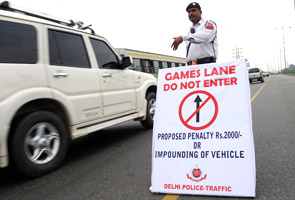
It was bound to come sooner or later. The wonder – the absolute, outrageous, impudent surprise of it all is that it has come so soon. The Games have barely limped to their pathetic conclusion – and those of us who are waiting for the post-Games reckoning are waiting but impatiently, inadequately consoled by the sound of the sharpening of the knives, the braiding of the hangman’s rope – or, most likely, the Japanese water torture of the promised Shunglu probe. And in the midst of this unfolding fiasco, this still-running disaster, the lovely Mr Arvinder Singh Lovely, Delhi’s Transport Minister, has made the suggestion that the insult of the Games lane, the closing off to the public of a significant part of the road which has been made with public money, be made permanent. This – as we were told in full-page ads paid for by us – was done with threats of  a hefty fine or, worse, far worse, being exposed to the courtesies of a Delhi cop. The ineffable experience of crawling along patiently (but proudly, always proudly!) while sundry others flashing CWG insignia whizzed past in the CWG lane – an experience that so many of us chose to miss, could now become a permanent feature of the metro experience. I can’t wait!

Continue reading Lovely’s Lane: Alok Rai

Reading Ayodhya Judgement II: Biswajit Roy

Guest post by BISWAJIT ROY

In my earlier piece, I had noted Justice Khan’s pluralist-nationalist sentiments and his anguished pleas to Muslims to ‘avail the opportunity to impress others with the message’ of ‘peace-friend ship- tolerance’ by accommodating Hindu faith-based claims to the area under the central dome of the demolished mosque as Ram Janamsthan. But I failed to find similar sentiments or espousal of the need of inter-community reconciliation on equal footing in the ‘bulky’ exposition of Justice Agarwal, despite his concurrence to Khan’s order for three-way partition of the disputed land, as well as justice Verma’s judgment that had awarded entire place to Hindus.

Continue reading Reading Ayodhya Judgement II: Biswajit Roy

Tehelka’s Populist Turn? Bobby Kunhu and Sudeep KS

Guest post by SUDEEP KS and BOBBY KUNHU

The magazine joins the Great Kerala Terrorist Hunt. This was sent as a rebuttal to Tehelka, but has not been published.

Kerala’s Radical Turn – cries the cover of the last issue of Tehelka (dated 9th October, 2010). The cover story by V K Shashikumar, that plays the familiar tunes of Islamophobia, hints at Tehelka‘s Populist Turn. It will be interesting to see where Tehelka goes from here, and what happens to its current reader base that distinguished the magazine from the likes of The Indian Express and The Times of India and India Today.

In the article, Here Come the Pious, Shashikumar lists some facts and his personal fears, on the eve of the Allahabad High Court judgment on the Babri Masjid land dispute. What is missing in the entire article is reason. The byline says that “A new Islamist body, the Popular Front of India, is causing alarm with its religious overdrive in the south.” After one goes through the article, however, what one gets is a glorified picture of the outfit. Whether the author likes it or not.

Continue reading Tehelka’s Populist Turn? Bobby Kunhu and Sudeep KS

How to Not Read the Ayodhya Judgement: Hilal Ahmed

Guest post by HILAL AHMED

There are three areas which I think we need to underline.

A. Technical problem: The question of applied principles

I ask a very fundamental question: How could a modern secular judiciary- technically an institutionalized ‘interpreter’ of the Constitution- determine the legal disputes related to religious places of worship on the grounds of ‘faith-based’ evidences?

All the three judges seem to recognize the fact that the Hindu beliefs should be (must be) taken as legal facts. Interestingly, these beliefs are supported by archeological report of 2003 to form an argument of judicial nature.

However, and quite astonishingly, the Sunni Wakf Board’s (SWB) case was dismissed on legal-technical grounds following a very mechanical interpretation of the Limitation Act.

But for Nirmohi Akhara and VHP case (referred as Ram Lalla virajman) the principle of faith was given primacy and in order to substantiate it further ASI report which is full of contradictions, is expanded to arrive on a conclusion.

Continue reading How to Not Read the Ayodhya Judgement: Hilal Ahmed

Bovine Intervention

This article on Kashmir by HILAL MIR was written in 2008, when a land transfer dispute became a catalyst for azadi protests of a scale not seen since 1991. Two years later, it remains relevant.

Moo! Moo! Oh ye white men in blue camouflage uniforms and caps, hearken to my bootless cries. Continue reading Bovine Intervention

‘Shastra Pujas’ – What’s Religious About Worshipping Weapons ?

I.

Schools are meant for play and studies where kids slowly blossom into adolescents. Schools are meant for books, laboratories and other cultural activities which cater to the all round development of its students. Schools are meant for opening up of minds, inculcating inquisitiveness and curiosity, explain the wonder that is the world and lead the students towards further enquiries and promoting inclusiveness cutting across different ascriptive categories with which all of us are born with.

Of course, in emergency situations, schools even metamorphose into shelter homes for the victims of a natural calamity or a social catastrophe.

But certainly, no sane person can imagine that school premises can ever be used for worshipping deadly weapons – loaded pistols and illegal rifles. But it appears that on this count RSS – the all hindu male organisation – thinks differently. It is not for nothing that schools which run under the aegis of its affiliated organisation are freely handed over for such programmes under the specious reason that it is a religious programme. Any close watcher of the ground level situation can vouch that worshipping of weapons on Dusshera has nothing to with religion rather it is part of social tradition. Despite this reality organising of ‘shastra pujas’ has of late become a national phenomenon and hindutva organisations are known to play an important role in it. It serves a double purpose for them : consolidate their constituency by using religion as the legitimising force, terrorising the ‘others’ simply by taking out ‘religious processions’ brandishing weapons.

Continue reading ‘Shastra Pujas’ – What’s Religious About Worshipping Weapons ?

Scorched by Blind-spots – Prabhat Babu and the CPI(M): Andaleeb Mondal

Guest post by ANDALEEB MONDAL

[Recently Prabhat Patnaik published an article “Dial M for modernity” in The Telegraph, about what is right about the CPI(M). This piece is a response to that article. There are some very elliptical Bengal-specific references in the piece that have been retained as they add to the flavour. AN]

The CPI(M) regime is alive in West Bengal and Kerala. As the numbers go, it could hardly be more alive in Bengal, its throbbing vitality being underscored by a now-famous comparison of assembly seats between the CPI(M) led Left Front and the principal opposition – “Amra 235, ora 35” ( We are 235, they are 35).This famous phrase was uttered by a self-proclaimed progressive writer with supreme empathy for toiling masses, who incidentally is the nephew of another writer-poet whose progressive credentials and dedication to people’s causes resonated in Bengal and beyond, without having the honour of being propped up by state sponsorship. Of course I am being snide and I do not intend to embark on a comparative literary analysis. To look for evidence of continuity among them is absurd – the filial accident being least of the reasons. However, conjuring up continuities do serve some purpose, occasionally.

Times shape people vice versa and such mutual shaping has always happened – sometimes imperceptibly, sometimes vigorously. They do bear the imprint of past times and ethos and hence in the absence of observable points of radical change, one may fall into the trap of assuming a kind of “historical” continuity. This idea of continuity can obfuscate continuous drifts in time. In the life of political organizations and ideologies , such feigned continuities primarily have a three-pronged way of self-maintainance. Let me call them – rituals, manifestos and lastly, for lack of a better epithet, kula-devatas ( clan deities). This permeates most political formations in the Indian landscape – the present discussion is about the CPI(M). However, a semblance of similarity in these Three Great cliches can be kept up.

Continue reading Scorched by Blind-spots – Prabhat Babu and the CPI(M): Andaleeb Mondal

We are all Kashmiris! Or at least should be!: Dibyesh Anand

Guest post by DIBYESH ANAND

Dibyesh Anand is Associate Professor at Westminster University and writes on majority-minority relations in China and India

Democracy is as much an idea, as it is a political system. An idea for which millions have given life and even more have been killed. When non-democratic or quasi-democratic states suppress people, it is a shame, but when established democracies kill their own citizens for exercising their legitimate right to protest, it is a bigger tragedy. Bigger because it is not only men and women who die, but also the hope that democracy offers a humane and representative form of government at least for its own people.

This is the hope that is dying in the world’s largest democracy as the security forces continue to kill unarmed protestors every day for the last two months in Indian controlled Kashmi. Till date, more than a hundred, mostly young men and children, have been killed by those who are supposed to be the protectors. Evidence of torture, gratuitous killings, and sheer brutal dehumanisation of ordinary people are in abundance and yet the Indian state responds by threatening action against those who reveal the evidence and against forums (such as facebook, youtube) that allow these to be made public. There is no sense of humility, regret or introspection. No promise of impartial inquiry and strict punishment for the law-enforcers who kill and maim with impunity. Not even A of an apology.

Continue reading We are all Kashmiris! Or at least should be!: Dibyesh Anand

Lucas Tete, Maoist violence and K Balagopal: Biswajit Roy

Guest post by BISWAJIT ROY

It’s a welcome development that Arundhati Roy, G N Saibaba, Mahasweta Devi, Sujato Bhadra and others have condemned the killing of Maoists’ POW and Bihar policeman Lucas Tete as reported by Bengal Post. The civil society personalities sympathetic to the Maoist cause and human rights groups in general are sometimes criticized correctly for being silent on brutalities by Maoists and other insurgents while opposing the atrocities by the security forces and private armed squads, in case of West Bengal, CPM’s armed cadres. The Maoist leadership’s response to the intellectuals’ criticism is still not known. But the condemnations seemed to have played a role in their decision to free the rest three policemen. In an earlier occasion in Bengal, senior Maoist leader Kisenji had succeeded in extracting a huge media mileage by using the captive officer-in-charge of Sankrail police station as a pawn to bargain with the state government.

It is another matter that the Maoists could not extract much from the government except bail for some tribal and non-tribal women undertrials who had been languishing in jails as Maoist sympathizers. But the high-profile drama over Kisenji’s on-camera vitriol against the Centre and state in full camera glare and the eventual release of the ‘POW’ police officer through the good office of media persons had definitely made Kisenji a household name in Bengal and allowed him to occupy the political center-stage.

Continue reading Lucas Tete, Maoist violence and K Balagopal: Biswajit Roy

Dressing and Death-Threats in Kerala : Re-former Man’s Second Coming?

(cross-posted on www.countermedia.in)

Shamshad Hussain, J. Devika

The death threats received by a young woman student of engineering, Rayana R Khazi, a native of Cherkalam in Kasaragod, over a period of the past ten months, have been in the news in Kerala recently. The threats which were issued over the phone, on the streets, and by letters, have demanded just one thing: Rayana should comply with ‘Islamic dress-norms’; she should don the purdah. She has received four threatening letters. Of these, three issue death-threats, outright. The fourth is in the form of a warning that offers lengthy advice. One of these says: you have not heeded many warnings issued. We, Muslim brethren, will now decide your fate. This letter, which begins and ends in the name of Allah, is unsigned. Continue reading Dressing and Death-Threats in Kerala : Re-former Man’s Second Coming?

Governing Kashmir: Critical Reflections on the Historical Present

Guest post by RICHARD SHAPIRO

The Indian state’s refrain to the people of Kashmir is as follows: Indian rule of Kashmir is legitimate because India is a secular democratic republic, organized by rule of law and constitutionally guaranteed human rights. As a democratic state, rule of law may be suspended for national security reasons to protect the state, and such action has been necessary in Kashmir because of cross-border terrorism and ‘separatist’ elements in Kashmir that includes armed militants. The suspension of democratic rights in Kashmir, India states, is necessary to protect India as a secular democratic republic. Elections are periodically held and touted as proof of democracy in India, but without a vibrant civil society ensuring social freedoms, electoral processes obfuscate the subjection of Srinagar to New Delhi and give Indian governance greater legitimacy than if the center took official control over the state of Jammu & Kashmir.

What is the logic of the Indian state to which Kashmiris are subjected? The people of Kashmir must be denied the rights guaranteed to citizens of India because every Kashmiri is considered a real or potential threat to India. Kashmiris are citizens of India who are denied the rights of citizens to protect the state as the guarantor of rights. Law and order demands the denial of democratic rights to the people of Kashmir. Freedom of assembly and movement, freedom of speech and expression, freedom of press, freedom of religion are the basic rights that make India a legitimate state, and it is precisely these rights that must be denied all Kashmiris because when Kashmiris exercise these rights it is considered evidence of the anti-national sentiment of Kashmiris. Continue reading Governing Kashmir: Critical Reflections on the Historical Present

A Twist in the Tale, Or, the New Copernican Revolution

Even as the rejection of Vedanta’s application to mine in Niyamgiri is being widely hailed as a victory for tribal rights, there is of course one set of very predictable voices, which has leapt in to start damage control for their corporate heroes. Thus one such cheerleader of Capital tells us that the ‘real twist’ in the script is that the ‘denial of bauxite mining in Niyamgiri’ can mean disaster for the future of a poor region and a poor state!

On the other hand, a statement by the Campaign for Survival and Dignity – a platform of tribal and forest dwellers’ organizations from all over the country has hailed the decision, arguing that: “The project’s main problem was that it violated the Forest Rights Act’s provisions requiring ‘recognition of habitat and community forest rights’ and the consent of the gram sabha prior to taking forest land. This sounds like technical legalisms. But the basic point is that, under the law, the Dongria Kondhs have the power to protect and manage their forests and lands. Simple, but unprecedented; it has never happened before.”

For our scribe however, the “really nuanced” stories of Niyamgiri are not those of the tribals and forest dwellers. They come from “the likes of Raju Sahu who came from Bihar to Kalahandi 10 years ago and runs four tea/food stalls on the state highway that links Lanjigarh – where Niyamgiri and the Vedanta factory are situated – to Bhawanipatna, the district HQ”.  Sahu apparently told our journalist-investigator that his business has more than trebled in the last four years since Vedanta started operations there. This is true for any big economic enterprise that gets set up – a large number of small businesses sprout up around it. There would be as many stories about poor people who benefited from the life that grew up around say, giant public sector units – the end of which is celebrated by these cheerleaders of Capital.  Will the perishing of those small businesses as a fall-out of the closure of PSU’s be accepted by our nuanced story-teller as a justification for the continuation of PSU’s? Never. For we know that there are always different standards for judging the merits of corporate marauders. You can tell even before you start reading a column by a Shekhar Gupta or a Tavleen Singh or a Saubhik Chakrabarti, what is coming – be it Niyamgiri, Bhopal and Union Carbide, the loot of the Commonwealth Games or the studied silence on matters relating to DIAL and GMR. And sometimes, just sometimes, we happen to know why…

Continue reading A Twist in the Tale, Or, the New Copernican Revolution

Building, dead bodies and the emergency decree in Thailand

This is a guest post with photographs by ANON.

Sunday 1 August 2010

Activists and people in the red shirt movement organized the event Building, dead bodies and the emergency decree at the memorial “14 October 1973”, a memorial built to remember those who died fighting against the dictator on that date.  This event was organized to raise funds to help the victims and their families, affected by the Thai government crack down during the pro-democracy Red Shirt Political protests in April 2010 and May 2010. Continue reading Building, dead bodies and the emergency decree in Thailand

Naba Dutta of Nagarik Mancha Arrested Under False Charges

[Well known labour and human rights activist and one of the important functionaries of Nagarik Mancha, Naba Dutta was arrested by the West Bengal police in extremely strange circumstances, after he along with his colleagues was returning from a sit-in programme at the Block Development Officer’s office. The following is a press release issued by Kirity Roy of the Banglar Manabadhikar Suraksha Mancha (MASUM) and Programme Against Custodial Torture & Impunity (PACTI).]

Mr. Naba Dutta along with his 3 companions, Ms. Progna Paromita Dutta Roy Chowdhury, Mr. Gautam Ghosh and   Mr. Dipankar Mazumdar – all attached with Nagarik Mancha, a civil society organization mainly focused on environmental and labor issues –  proceeded for a preannounced programme of sit- in in front of the Block Development Officer’s office at Narayangarh block of West Midnapur. The programme was organized by Lodha Shabar Vumij Kalyan Smiti. Mr. Naba Datta and his companions started from Kolkata by a vehicle (Toyota – Qualis 2.4 D Model) with registration number WB-02M-8565. After reaching the place they peacefully completed the meeting and started for Kolkata by the said vehicle. The driver of the car Mr. Ashok Midhya and Mr. Joydeb Singh of Lodha Shabar Vumij Kalayan Samiti was also in the car with the abovementioned activists of Nagarik Mancha. While Mr. Naba Datta and his associates with the driver (names mentioned above) were on their way to Kolkata, one police vehicle intercepted them and asked to follow their vehicle without showing any reasons. When asked about the reason for such illegal act the police personnel who made the said persons captive replied as, ‘we are taking you at Narayangarh Police Station’. Mr. Naba Dutta’s car followed the police vehicle without making any further argument. All the police personnel who had taken the persons in hostage were not in police uniform but were using a police car while being in plain clothes. When the cars crossed the Narayangarh Police Station, Mr. Naba Dutta and his companions sensed some foul play and asked the police personnel about their actual motive and where they wanted to take them but the police personnel declined to give any answer and told the driver of Naba Datta’s car to follow their vehicle.

Continue reading Naba Dutta of Nagarik Mancha Arrested Under False Charges

University Community for Democracy on relay hunger-strike against CWG evictions

We have had an earlier post on the University Community for Democracy which was formed in the wake of the arbitrary and authoritarian eviction of students from the hostels of Delhi University for the Commonwealth Games, but which raises wider questions about the “reckless logic by which the city is being re-made”.

This is their latest press release, followed by their letter to the National Commission for Women.

University Community for Democracy

PRESS RELEASE 10/08/10

The University Community for Democracy is initiating a RELAY HUNGER STRIKE FROM  9 AM TO 9 PM, 12TH AUGUST THURSDAY ONWARDS at the Arts Faculty Main gate, North Campus. Each day there will be five people (teachers, students and researchers) who will be on a hunger strike, as well as many others who will sit in solidarity.

The University Community for Democracy has been challenging a number of decisions taken by both Delhi University and the government with regard to the commonwealth games for over a month now. The Forum is deeply concerned by the gross violations of rights that the city has witnessed in the name of the Games and condemns the irresponsible manner in which Delhi is being prepared for this mega- event.

Continue reading University Community for Democracy on relay hunger-strike against CWG evictions