Contemporary India is something of a conundrum for most political theorists. What is it? How does it hang together? What do people believe in? Given the large canvas, I’d like to focus here on one small aspect of belief in Hinduism and Hindutva today. Towards this objective, I’ll take up a somewhat old pronouncement by the foremost BJP leader and prime minister, in 2014, during a conference of doctors and other professionals that there must have been plastic surgeons in ancient India who attached an elephant’s head on a human body and created Ganesha. And, that Karna’s extra uterine birth suggested that there was a knowledge of the science of genetics during that period. The scientific community and those adept at history were appalled, rolling their eyes in dismay at the confusion between true history and mythology. Is such a response, i.e., a scorn or embarrassment about the unscientificity of the claim regarding the existence of these ancient sciences/events, adequate to the statement made? Did the prime minister actually believe this? What is it that is being said by Hindutva politicians, ideologues and thinkers when such pronouncements are made, or for example, that vedic mathematics was the progenitor of mathematics as a discipline? And what about the rewriting of history books to valorize the Hindu past, erasing a “dark medieval period” and denigrating Muslim “invaders”? Continue reading Belief in contemporary India: an essay in the constitutive imagination: R Srivatsan→
A ‘unity of purpose’ has been witnessed between Hindu and Muslim supremacists, who consider themselves the sole spokespersons of ‘their community’.
There are rare occasions when literary academies associated with governments wilt under mob pressure.
Rarer are occasions when they even cancel the very programme they had organised with much fanfare.
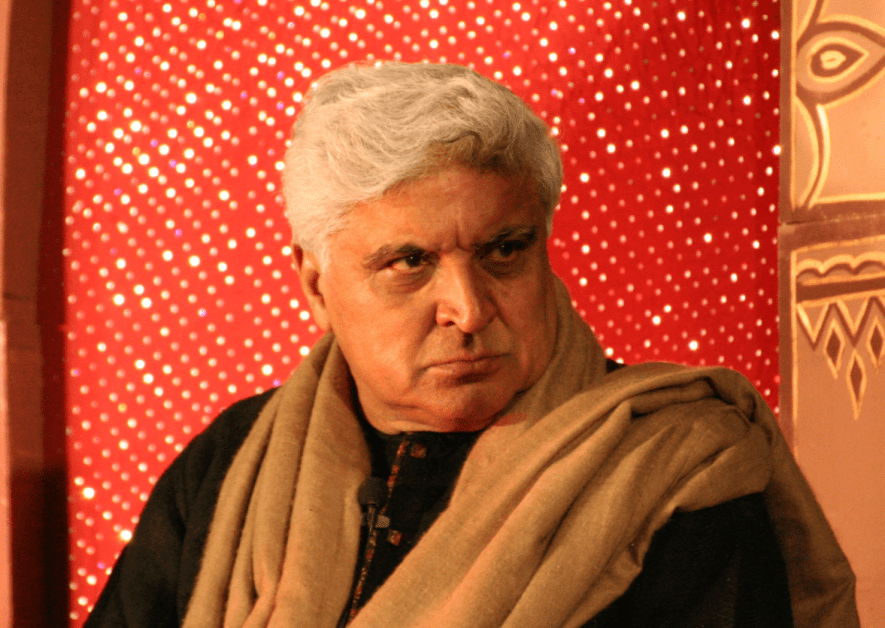
It has been more than 10 days that West Bengal witnessed such a spectacle, when the West Bengal Urdu Academy suddenly postponed a programme where it intended to discuss ‘Urdu in Indian Cinema’ for four consecutive. Javed Akhtar — one of the foremost living Urdu poets — was also invited as a key speaker in the programme.
Two prominent Islamist organisations in Kolkata, Jamiat Ulema-e-Hind and the Wahyahin Foundation, had protested the invitation, as they considered Akhtar’s views on religion problematic, labelling him as someone who “speaks against religion and God”.
Akhtar is a declared atheist and openly talks about it on public fora, and that had irked these people.
The organisations even threatened to launch a state wide agitation — much on the lines of their agitation against Bangladeshi author Taslima Nasreen which as everyone knows had forced her to leave the state (2007) — if the government did not heed their demand.
Mamata Banerjee, the West Bengal Chief Minister, did not want to take any risk as elections to the state Assembly are not too far.
The CCG’s concern that the proposed PPOHS Act is ‘unconstitutional’ and is an ‘open invitation to ‘oppressive misuse’ needs to be heeded.
Image : Courtesy Fiickr
Whether history will repeat itself, that is the question being asked about Punjab government’s renewed attempt to enact a law supposedly against ‘sacrilege’?
Anyone who is a keen observer of the social-political developments in the state knows very well that it has a history of such efforts (2015 and 2018) where similar attempts were made to amend laws related to sacrilege, and both attempts proved unsuccessful as they failed on the yardstick of constitutionality.
As per reports, the proposed Punjab Prevention of Offences against Holy Scriptures Bill, 2025 (PPOHS Act), which was recently referred by the state legislature to a committee for further discussion, has come under the scanner of experts of the Constitution and concerned citizens.
A leading voice among them, namely the Constitutional Conduct Group (CCG) — a platform of retired civil servants and diplomats– has in an open communication underlined how Punjab government’s proposed ‘PPOHS Act’ is ‘unconstitutional’ and is an ‘open invitation to oppressive misuse’ .
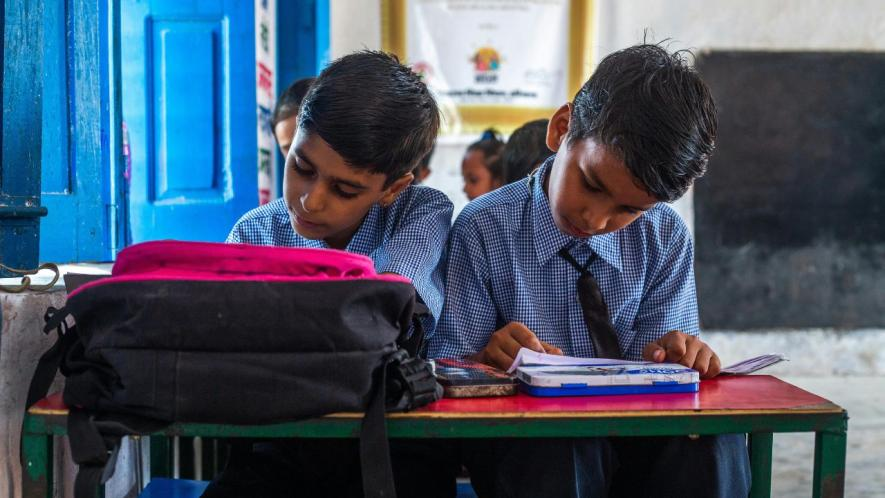
Why the Yogi Adityanath-led BJP government’s move of using public funds for imparting religious instruction violates Article 28 of the Constitution.
Representational Image. Image Courtesy: Pexels
“No religious instruction shall be provided in any educational institution wholly maintained out of State Funds” unless “established under any endowment or trust which requires that religious instruction shall be imparted in such institution”. (Article 28 of the Indian Constitution)
It has been more than 75 years since the founding fathers (and mothers) of the Constitution took this bold stand when they were shaping the guidelines around which the newly independent country would move forward. ..
…..Much water has flown down the Ganges, the Jamuna and all rivers of the country and it appears that slowly, but not so silently, attempts are on to water down the provisions of this Article and facilitating religious instruction in government schools through the back door.
The manner in which Yogi Adityanath-led Bharatiya Janata Party (BJP) government in Uttar Pradesh has suddenly decided to hold summer workshops on the Ramayana and the Vedas in government schools across the state, without any broader consultation with the stakeholders involved in this endeavour, is symptomatic of the brazen attitude of the government. We are told that these workshops will be organised under the aegis of the International Ramayana and Vedic Research Institute, Ayodhya, and will include activities, like Ramlila, Ramcharitmanas recitation, Vedic chanting, painting, and mask-making.
[The following post by writer Sadique Hossain highlights the way in which with approaching state elections, Bengal’s Muslims are being increasing forced into silence, as contending political parties, especially the CPI(M) and the TMC, stake out their respective agendas. While the stance of all parties is telling, that of the Left is particularly myopic, argues Hossian. AN ]
2026-এ পশ্চিমবঙ্গে বিধান সভার নির্বাচন হতে চলেছে৷ বাকি প্রায় দশ মাস৷ কিন্তু এখন থেকেই মুখ্য দলগুলো তাদের ন্যারেটিভ কী হতে পারে – তা প্রায় স্পষ্ট করে দিয়েছে৷ তারা দৃশ্যত রমজান মাসটিকেই বেছে নিয়েছিল ভোটের দামামা বাজানোর কাজে৷
ইদের কিছুদিন আগে সেটা শুরু হল বিজেপির বিধায়ক শুভেন্দু অধিকারীকে দিয়ে৷ তিনি বিধানসভার বাইরে ঘোষণা করলেন – বিজেপি ক্ষমতায় এলে তৃণমূল থেকে নির্বাচিত মুসলিম বিধায়কদের চ্যাঙদোলা করে রাস্তায় ছুঁড়ে ফেলবেন৷ তাঁর বক্তব্য ধ্বনিত হতে থাকল বিজেপির অন্যান্য বিধায়কদের গলাতেও৷ ইদের পরেই রামনবমী ছিল৷ মাঝখানে ওয়াকফ বিল পাশ হয়ে গেল লোকসভা আর রাজ্যসভাতেও৷ এরমধ্যে তৃণমূলের হুমায়ুন কবীর শুভেন্দুর কথার প্রেক্ষিতে বললেন শুভেন্দুকে মুর্শিদাবাদে ঢুকতে দেওয়া হবে না৷ এমনকি জোর করে মুর্শিদাবাদে ঢুকতে এলে, দাঙ্গা বাধাতে এলে ভাগীরথের জলে ভাসিয়ে দেওয়া হবে৷ এক্ষেত্রে তৃণমূল অবশ্য তাঁকে থামাতে দেরি করল না৷ শো-কজ করা হল৷ এবং হুমায়ুন কবীর প্রথমদিকে ফোঁসফোঁস করলেও পরবর্তীতে চুপ করে গেলেন৷
,,The rewriting spree has not left untouched RSS’s own history itself.
The biggest manifestation of this exercise is evident in the way we have before us a new look Dr Keshav Baliram Hedgewar (1888-1940) founder member of RSS and its first Supremo.
He is being called as ’‘born patriot’’, one amongst the ‘great revolutionaries who fought for India’s independence, ’’social reformer’ , ’maker of Modern India’ etc etc. disregarding the fact that all his life he focussed his attention to build Hindu Unity, to usher India into a Hindu Rashtra and never once gave a call to the organisation he founded with others – namely RSS – that it joins the anti colonial struggle. He did go to jail during the anti colonial struggle but not as a member of the RSS but as a member of Congress Party.
Many monographs, books .. – are also before us which are trying to emphasise this new image, obliterating many inconvenient aspects of his tumultous life or maintaining tactical silences over them. The latest in series is the way he is being projected as a leader of the “jungle satyagraha” at Pusad, Maharashtra which was organised as part of the Civil Disobedience Movement led by Congress. [10]
How Hindutva Supremacists are engaged in ‘rewriting history’.
‘There are times when madness reigns
And then it is the best who hang’
– Albrecht Haushoffer
[January 7, 1903 – April 23, 1945, German geographer, diplomat, author, who faced martyrdom for his resistance to Nazism]
Uday Bhembre, the 87-year-old widely respected Konkani writer, son of legendary freedom fighter Laxmikant Bhembre, who has been a Sahitya Akademi awardee, is a worried man these days.
He has discovered to his dismay that his courage to speak the truth and challenge a narrative being peddled by the ruling dispensation in Goa, .. regarding well established facts of Goa’s own history, would lead to protests, led by Right-wing formations and many among them trespassing his house at night and pressuring him to issue an public apology.
Not very many people outside Goa know how this great writer – he was even a MLA (1984-89) — had neglected his literary career to fight for rights of Konkani language and has been against attempts to merge Goa into Maharashtra, to preserve its culture.
Thanks to the existence of powerful voices of resistance and a vibrant civil society in Goa, a significant number of people have publicly condemned these attempts to intimidate Bhembre and demanded strict action against the perpetrators and exposed the collusion of the Right-wing formations with people in power. Many even went to meet the noted writer to express solidarity with him. ( Read the full article here :https://www.newsclick.in/goa-who-fears-truth)
आस्था और गंदगी सहयात्री रहते आए हैं। आस्था के तमाम जाने-माने केन्द्रों पर या अपनी आस्था को सेलिब्रेट करने के नाम पर मनाए जाने वाले समारोहों में-प्रचंड ध्वनि प्रदूषण और रौशनी का प्रदूषण आदि के माध्यम से-इसकी मिसाल अक्सर देखने को मिलती है। प्लास्टर ऑफ पेरिस की मूर्तियों से भरे गंदे जलाशय-जिनकी मौजूदगी पानी के ऑक्सीजन की मात्रा पर विपरीत असर डालती है, पानी में ही फेंकी गयी सूखे फूलों की मालाएं आदि आदि से महानगर भी अछूते नहीं रहते हैं।
इस सम्बन्ध में ताज़ी मिसाल महाकुंभ के बहाने से उजागर हुई है, जब केन्द्रीय प्रदूषण नियंत्रण बोर्ड (CPCB) की रिपोर्ट ने इस बात को उजागर किया कि किस तरह प्रयागराज के पानी में उन्हें उच्च स्तर पर मल के जीवाणु मिले हैं, जो किसी भी सूरत में नहाने योग्य नही है। इस सिलसिले में नेशनल ग्रीन टिब्यूनल ने उत्तर प्रदेश प्रदूषण नियंत्रण बोर्ड (UPPCB) के अधिकारियों को तलब भी किया है कि ‘प्रयागराज/इलाहाबाद में गंगा, यमुना के पानी की गुणवत्ता के उल्लंघन को लेकर-उन्होंने जो दिशानिर्दश जारी किए थे उस पर उन्होंने अमल नहीं किया है।
गौरतलब है कि राष्ट्रीय ग्रीन टिब्यूनल (NGT) ने उत्तर प्रदेश प्रदूषण नियंत्रण बोर्ड की इस बात के लिए भी आलोचना की है कि अपनी जो रिपोर्ट उन्होंने प्रस्तुत की है, उसके सैम्पल पुराने है और सभी 12 जनवरी के पहले के-अर्थात कुंभ मेला शुरू होने के पहले के है। ….
…निस्संदेह महाकुंभ के अवसर सीवेज युक्त पानी को लेकर उठे सवाल अब दबना मुश्किल है। सरकार जो भी प्रचार करे, अधिक से अधिक लोग अब इस बात का अनुभव करेंगे कि गंगा किनारे उन्होंने जो ‘पवित्र स्नान’ किया उस वक्त वह पानी कत्तई शुद्ध नहीं था। यात्रियों का एक छोटा सा हिस्सा अब यह कहने का साहस भी जुटाएगा कि किस तरह सत्ताधारी समूह ने उनकी धार्मिक आस्था का दोहन किया है। [ Read the full article here :https://janchowk.com/beech-bahas/the-other-aspect-of-the-holy-bath/]
“ Do Not Put Each Foot in a Different Boat.” – Chinese Proverb
A defeat in elections should not be The End of politics for a political party.
There are examples how parties who were humbled in one election could bounce back with huge majority in next elections.
It is a different matter that with AAP ( Aam Aadmi Party) things seem to be unfolding in rather unpredictable ways, thanks to its rather unceremonious exit from the citadels of power in Delhi and defeat of all its top leaders in the recently held elections to the assembly.
Nobody would have imagined that its Supreme Leader would feel so insecure after the loss that he will summon all MLAs of his party – which is leading the government in neighbouring Punjab – to the national capital the very next day for consultation or may be sweet talk.
No doubt it did give way to speculations about increasing disgruntlement within his party and its legislators and their being in search of greener pastures.It also rekindled debate about the personality centric functioning of the AAP or how a close confidante of Kejriwal was appointed on a key post under Bhagwant Mann – Chief Minister of Punjab – last year itself which was construed as clipping of his wings by the opposition. ( Read the full article here : https://countercurrents.org/2025/02/whether-aaps-defeat-can-become-a-wake-up-call-for-new-cheerleaders-of-hindutva-lite-politics/
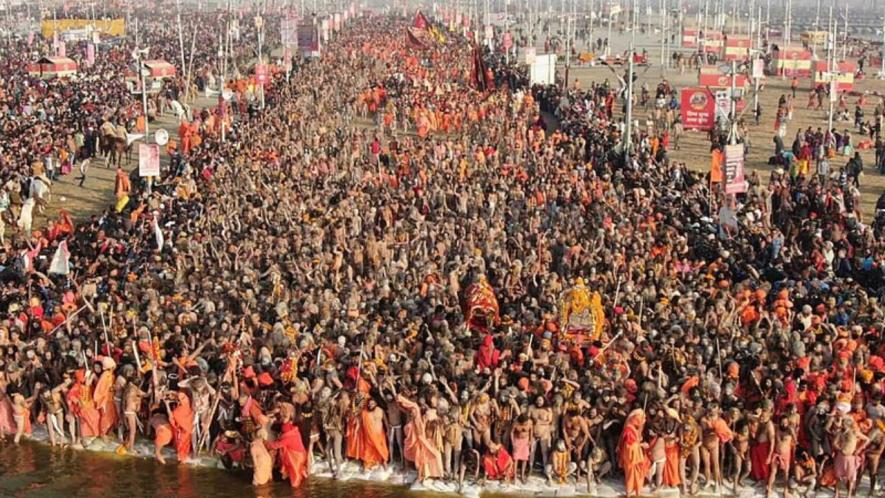
The Mahakumbh has provided Hindu Supremacist forces an opportunity to further marginalise and invisibilise Muslims, and further push for a ‘Hindu Constitution’.
Whether Uttar Pradesh Chief Minister Yogi Adityanath will be able to recover his image after the tragedy at Mahakumbh, which officially killed more than 30 people and wounded many, many more, is a question being raised in hushed voices in the corridors of power in Delhi.
Obviously, questions are also being raised about the great hiatus between the massive propaganda undertaken around the Mahakumbh and the level of preparations for this ‘biggest congregation on earth’….
For Chief Minister Adityanath, who had ‘positioned himself as the ‘host of the biggest congregation on earth’, the path ahead looks challenging, with the tremendous ineptness of the administration led by him on full display. Much has been reported about conscious attempts made allegedly to downplay the tragedy and how it continued for the whole day. A UP minister, supposed to be close to the Chief Minister, even made a controversial statement that “such small events keep happening in large gatherings.” The statement caused so much uproar that he had to issue an apology. The mainstream media added another page of shame to its track record when it continued to publish government handouts, and did not even deem it necessary to report the tragedy. ( Read the full article here : https://www.newsclick.in/road-kumbh-paved-hindu-rashtra-intentions)
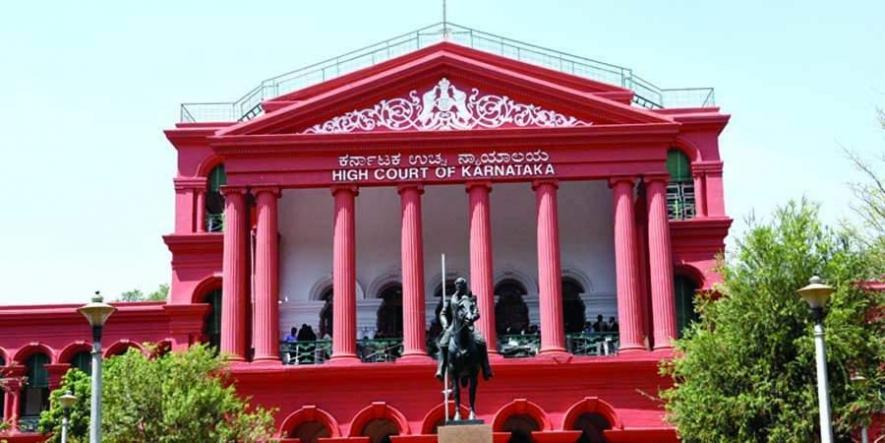
The judiciary in Karnataka is once again the focus of discussion in the national media.
The judiciary in Karnataka is once again in the news.
The latest case in a series of such cases is the Karnataka High Court’s recent judgment saying that shouting ‘Jai Shri Ram’ inside a mosque does not outrage religious feelings.
In an ambience where Right-Wing forces are hell bent upon creating more discord in the society, this judgement can easily be used by those who wish to further vitiate the atmosphere in the country. There are instances galore when such elements have tried to mount atop religious places of ‘other’ communities and deliberately create tension.
There is a feeling of sadness and surprise that despite the incident being caught live on CCTV, where the duo was seen entering a mosque late at night on their motorcycle, the courts did not look into the intention behind their act.
No doubt legal eagles in the country or civil liberty activists would be looking into the Karnataka HC judgement to formulate a suitable response and possibly challenge it at higher levels. For example, at the immediate level, it is being argued by analysts that the single-judge bench’s comparison of this issue with the highest court’s ruling in ‘Mahendra Singh Dhoni vs. Yerraguntla Shyamsundar’ case was notably different. ( Read the full article here : https://www.newsclick.in/who-entitled-hurt-religious-sentiments)
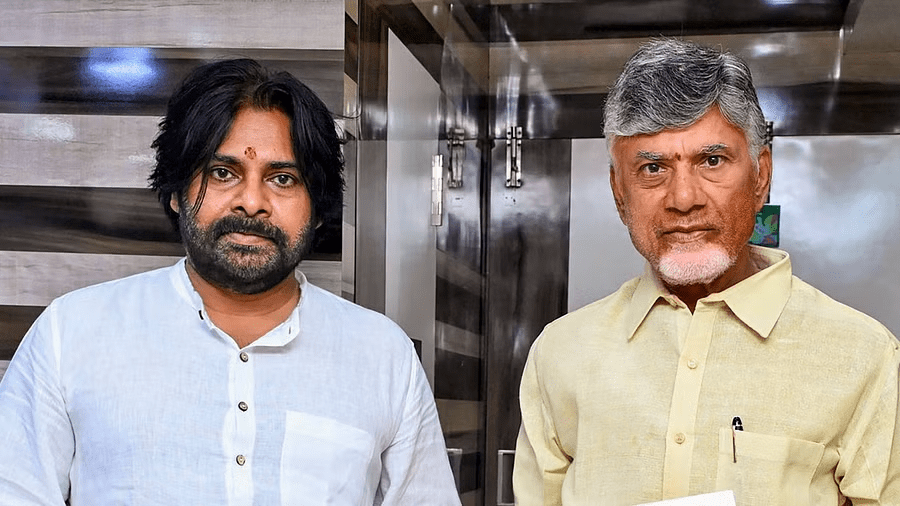
नरम हिन्दुत्व या ‘सेकुलर’ दलों की लड्डू पॉलिटिक्स?
Credit: PTI photo
(क्या आंध्र प्रदेश दक्षिण में हिंदुत्व प्रयोग की नई प्रयोगशाला बनाने जा रहा है। दक्षिण के अग्रणी अख़बार डेक्कन हेराल्ड ने पिछले दिनों इस मसले पर विशेष सामग्री पेश की थी ा गौरतलब है कि इस सूबे की आंतरिक गतिविधियों पर शेष मुल्क की तब निगाह पड़ी, जब तिरुपति के लड्डू के मसले को सुर्खियां मिली . मगर ‘हिंदुत्व लाइट’ का यह सम्मोहन महज वहीं तक सीमित नहीं है )
सियासत भी अजीब होती है। अकसर इस बात का अंदाजा भी नहीं लग पाता कि कैसे वह शैतानों के सन्त में रूपांतरण को मुमकिन बना देती है और कैसे अन्य समुदायों के जनसंहारों को अंजाम देने वालों को ‘अपने लोगों’ के हृदयसम्राट या रक्षक के तौर पर स्थापित कर देती है।
शायद इसी विचित्रता की यह निशानी है कि अमेरिका के पूर्व राष्ट्रपति डोनाल्ड ट्रम्प द्वारा हैती से आए आप्रवासियों को लेकर फैलायी जा रही झूठी ख़बरें कि वे कुत्तों का भक्षण करते हैं, अमेरिका की आबादी के अच्छे-खासे हिस्से को अविश्वसनीय नहीं लग रही- जिनका लगभग अस्सी फीसदी हिस्सा साक्षर है। इन झूठी और नफरती ख़बरों को लेकर हैती से जुड़े समूहों को ही अदालत का दरवाजा खटखटाना पड़ रहा है।
जहां दुनिया का सबसे ताकतवर जनतंत्र कुत्तों को लेकर पैदा किए गए एक विवाद में उलझा दिखता है, वहीं खुद को दुनिया में डेमोक्रेसी की माता कहलाने वाले भारत में लड्डू के इर्द-गिर्द खड़े किए गए इसी किस्म के एक फर्जी विवाद में पिछले दिनों लचीले हिन्दुत्व की राजनीति के नए रणबांकुरे उलझे दिखे थे । ( Read the full article here : https://junputh.com/open-space/soft-hindutva-and-laddoo-politics-of-naidu/)
इन दिनों कर्नाटक उच्च न्यायालय के एक न्यायाधीश वी. श्रीशानंद सुर्खियों में हैं। उन्होंने बीते 28 अगस्त को एक अदालती सुनवाई के दौरान बेंगलुरु के एक मुस्लिम-बहुल इलाके को पाकिस्तान कह दिया और एक महिला वकील को लेकर आपत्तिजनक टिप्पणी की। इस बयान के कथित वीडियो पर सोशल मीडिया में जब काफी शोर मचा, तब मुल्क की आला अदालत घटना के को लेकर हरकत में आई। उसके कारण अगले ही दिन श्रीशानंद को खुली अदालत में खेद जताना पड़ा।
सुप्रीम कोर्ट के मुख्य न्यायाधीश चंद्रचूड़ की अध्यक्षता में पांच जजों की पीठ ने 20 सितंबर को श्रीशानंद के बयान पर स्वत: संज्ञान लेते हुए उसे ‘अनावश्यक’ करार दिया और कर्नाटक उच्च न्यायालय के रजिस्ट्रार जनरल को इस संबंध में रिपोर्ट बना कर भेजने का आदेश दिया था। सुप्रीम कोर्ट ने यह भी कहा था कि वह सुनवाई के दौरान जजों के प्रेक्षण को लेकर कोई दिशानिर्देश जारी कर सकती है। अगली सुनवाई की तारीख 25 सितंबर दी गई थी।
इस दूसरी ही तारीख पर मामले को निपटा दिया गया। 25 सितंबर को सुनवाई शुरू होते ही मुख्य न्यायाधीश ने बताया कि 23 सितंबर को ही कर्नाटक उच्च न्यायालय के रजिस्ट्रार जनरल द्वारा उक्त रिपोर्ट जमा कराई जा चुकी है। चूंकि जस्टिस श्रीशानंद ने खेद जता दिया है, तो सर्वोच्च अदालत इस मामले को आगे नहीं ले जाएगी और उन्हें नोटिस नहीं देगी।
दिलचस्प है कि सर्वोच्च न्यायालय ने केस को निपटाते हुए जजों के लिए कथित ‘दिशानिर्देशों’ का कोई जिक्र नहीं किया, जिसका हवाला 20 सितंबर को दिया गया था। इससे भी ज्यादा हैरान करने वाली बात है कि इस मामले में श्रीशानंद के बयान को मुख्य न्यायाधीश ने “बुनियादी रूप से भारत की अखंडता के खिलाफ” करार दिया। पहले उन्होंने इसे “अनावश्यक” कहा था।
Bhakti Era as the Plebeian Plateau in the Civilizational Landscape of India
Guest Post by Ravi Sinha on a possible framework for looking at the millennial trajectory of Indian civilization
We have by now devoted several sessions to mapping the millennial trajectory of the Bhakti Movement across the history and the cultural geography of the subcontinent. Starting with the Tamil lands in the 7th century we followed Bhakti performing the pradakshina of the cultural landmass of the subcontinent, crossing the Vindhyas in its northward journey sometime in the 13-14th century. Our endeavour has been to understand the role of Bhakti in shaping the cultural and the civilizational mind of India. This, in turn, has been motivated by task of making sense of the role this mind plays in contemporary politics and in the rise of fascistic Hindutva in recent decades.
As we stated in the proposal to a previous session, we seek to understand the impact of Bhakti at two different time-scales. On the shorter time-scale of contemporary politics one looks at the phenomenon of communalism. The mainstream of the anti-colonial national movement considered Bhakti Movement as the harbinger of religious tolerance and syncretism that would help evolve the Indian brand of secularism. The subsequent history, however, paints a mixed picture. A social fabric and a cultural mind weaved by the Bhakti ideologies do not offer the kind of resistance to communalism and sectarianism as was expected of them. In our previous sessions we mainly stayed with evaluating the impact of Bhakti at the political-historical time-scale characterized by the problem of communalism and the rise of Hindutva.
On a longer – millennial – time-scale, however, one can evaluate the Bhakti phenomenon in the civilizational context. One can ask something like the Needham Question – why did the Indian civilization, despite its glory and accomplishments in the ancient and the medieval periods, fail to realize its cultural and scientific potentials? Why was it defeated often and why was it eventually colonized? Why did the West forge ahead, why has India lagged behind? Did the cultural mind and social ethos prepared by the Bhakti Movement play a role in the civilizational decline of India? These are very large questions not amenable to easy answers. But one must prepare to wrestle with them as they are of crucial importance for imagining and fashioning a desirable future for India. In this session, we finally arrive at the task of outlining a framework for asking and answering these questions.
For this purpose, we propose to take help of two large concepts – one of Axiality and the other of Modernity. The idea of axial revolutions was proposed for the civilizational breakthroughs that happened in the middle centuries of the first millennium BC in several different and unconnected societies – Judea (land of the Old Testament in the era of prophets), Greece (of pre-Socratic philosophers as well as of Socrates, Plato and Aristotle), China (of Confucius, Mencius and others) and India (of Upanishads, six systems of philosophies, and of Buddha) being the prime examples. We will briefly go through the idea of Axiality and see how we can understand it in the sequence of human cultural and cognitive evolution progressively from the mimetic (pre-linguistic, primarily based on gestures, rituals and body-language) to the mythic (linguistic but largely oral and narrative-based) to the theoretic (rational, abstract, normative and self-reflective). We will try to locate the Indian antiquity in the sequence of cultural evolution.
We will then make a millennial jump and outline the idea of Modernity, which can, in this context, be seen as a new kind of axial transition. The first axial transition did take the civilizations concerned from the mythic era to the theoretic era, but it still depended on the idea of the transcendental to reorder life in the realm of the mundane. The transition to Modernity, for the first time in human history, brings human autonomy to the centre-stage of history and civilization. Elimination of human dependence on the super-natural and on the transcendental is brought explicitly on the agenda and an objective and scientific knowledge of the cosmos is deployed into the service of human emancipation and freedom.
While the Indian civilization was a key example of the axial breakthrough two and a half millennia ago, its transition to Modernity has been faltering and patchy. While this may be true for many civilizations, it is especially disconcerting in the case of India which has had such a glorious antiquity at least in the domains of the mythic and of the theoretic. Of course, entire history of the intervening two millennia culminating in the colonial subjugation at the hands of the modernist imperialists is implicated in the complex and faltering progress of Modernity on the subcontinent and it cannot be explained on the basis of one cause or developments in any single arena. But one can be reasonably certain that the developments in the cultural-religious-civilizational arena play an important role in the civilizational transitions and transformations. The role of the millennial march of Bhakti must be assessed and evaluated in this context.
We will also engage with the theoretical issues that arise in this context of the materialist explanation of historical progress. There is no doubt that the historicalbreakthroughs and the transitions from one stage of history to the next happen through the push of advancing forces of production and, in this respect, the cultural-civilizational transformations are correlated with the developments in the material conditions of life. But there is a significant difference between the respective dynamics of systems and civilizations. While history progresses through replacement of one system by the next, in case of civilizations the older ones never entirely go out of existence. The older ones merely become the subterranean layers on which new layers arise or get deposited. The mimetic-ritualistic and the mythic, for example, have not disappeared from human civilization even after the axial-theoretic and the modernist-scientific stages have become increasingly entrenched.
Once again, I am not sure whether all this can be covered in one session even at the level of very sketchy outline of the argument. But the idea is to start thinking about these issues which, abstract and theoretical as they may sound, are of critical importance in making sense of contemporary politics and history.
Select Bibliography
Johann P Arnason, “The Labyrinth of Modernity: Horizons, Pathways and Mutations”, Rowman and Littlefield, 2020
Robert N Bellah, “Religion in Human Evolution: From the Paleolithic to the Axial Age”, Harvard University Press, 2011
S N Eisenstadt, “The Great Revolutions and the Civilizations of Modernity”, Brill, 2006
Neville Morley, “Antiquity and Modernity”, Wiley-Blackwell, 2009
Sheldon Pollock, “The Language of the Gods in the World of Men: Sanskrit, Culture, and Power in Pre-modern India”, University of California Press, 2006
Israel’s unending war against Palestine – with due support from the Western World – is widely known.
Less known is the fact that representatives of extreme patriarchal Judaism have unleashed a war of a different kind against women. (1)
With their growing ascent in social life their emphasis has been increasingly on segregation of women in public domain….including their being bundled to the back side of public transport buses. (2)
Much has already been written about situation of women in Muslim majority countries.
Right from they being denied right to education, one can cite numerous examples about the laws and customs which prohibit or restrict their participation in education, job or other professions or they being prohibited from mixed gatherings. (3)
The debacle faced by BJP at Ayodhya-Faizabad is a big loss of face for the party and the broader Sangh Parivar.
“Those who cannot remember the past are condemned to repeat it.”
– George Santayana, The Life of Reason, 1905.
‘Zor ka Jhataka Dheere Se Lage‘ (roughly translated ‘powerful jolt felt lightly’)
The catch line of a song – or perhaps a famous ad campaign – very well describes the reverses faced by the Bharatiya Janata Party (BJP) in the recently held Lok Sabha elections.
So Suresh Gopi, persistent in his effort to ‘take Thrissur’ (his own words), has finally managed to win the Thrissur seat in the 2024 Lok Sabha elections. I have been deluged with messages and queries from friends outside expressing shock and surprise.
Towards 75 years of adopting the Constitution, it is time for a new beginning.
‘Secularism is the religion of humanity …. It is a protest against theological oppression, against ecclesiastical tyranny, against being the serf, the subject or slave of any phantom, or of the priest of any phantom. “
– Robert Green Ingersoll
Simple ideas are perhaps the most difficult to implement.
For a country of around 1.4 billion, which has witnessed internecine violence on religious lines at the time of Independence, and which has turned a new leaf by adopting a Constitution based on secularism, which abhorred even mentioning the word God, why it is still difficult to avoid religious rituals in public domain, at least in the precincts of the courts?
आधा ज्ञान या आधी जानकारी हमेशा ही खतरनाक साबित होती है।
2021 की जनगणना तक करने में फिसड्डी साबित हो चुकी मोदी सरकार की इकोनॉमिक एडवाइजरी काउंसिल की तरफ से चुनावों के ऐन बीच जारी आंकड़े शायद यही कहानी कहते हैं। इस रिपोर्ट के जरिए 1951 से 2015 के कालखंड के दौरान विभिन्न समुदायों की आबादी में हुए परिवर्तनों के आंकड़े पेश किए गए, जिसमें हिन्दुओं, जैनियों तथा अन्य धार्मिक अल्पसंख्यकों की आबादी मे कुल गिरावट देखने को मिली है, जबकि मुसलमानों की आबादी बढ़ी है। और इस रिपोर्ट को लेकर सत्ताधारी पार्टी के प्रवक्ताओं ने तथा मुख्यधारा के गोदी चैनलों ने जनसंख्या का हौवा दिखाते हुए बहस भी छेड़ने की कोशिश की ।
पीटीआई की तरफ से जारी यह आंकड़े इस प्रकार थे:
वर्ष 1951 से 2015 के बीच जहां हिन्दुओं की आबादी में 7.8 फीसदी की घटोत्तरी हुई वहीं मुसलमानों की आबादी 43.1 फीसदी बढ़ी। अगर हम आंकड़ों का ब्रेकअप करें तो 1950 में जहां आबादी में हिन्दुओं की तादाद 84.68 फीसदी थी तो वह 2015 में 78.06 फीसदी तक पहुंची थी , जबकि मुसलमानों की आबादी जहां 1950 में कुल आबादी का 9.84 फीसदी थी तो 2015 में वह 14.09 फीसदी तक पहुंची। भारत के जैन समुदाय के बारे में भी बताया गया कि उनकी आबादी देश की कुल आबादी के 0.45 फीसदी से लेकर 0.36 फीसदी तक कम हुई है।
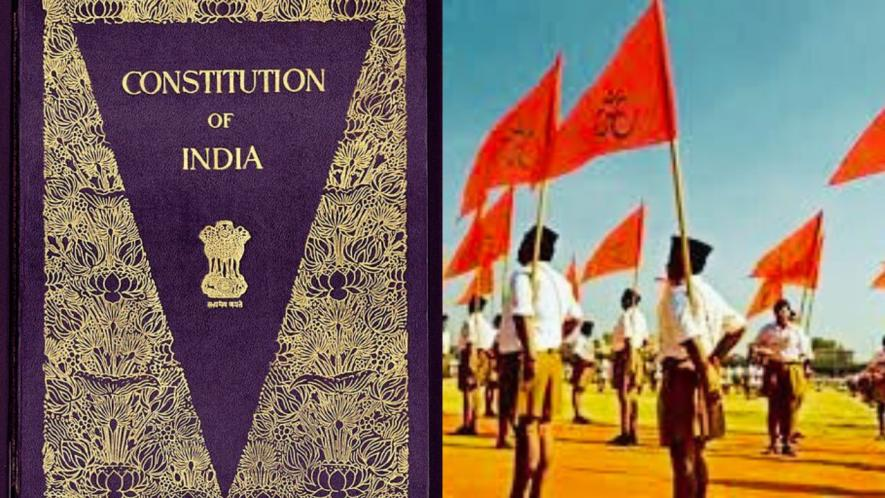
The Vajpayee government tried to change the Constitution, but lost in 2004. We must be vigilant, as a similar chorus is being raised again by Hindutva Supremacist forces.
..make India an independent sovereign republic and guarantee and secure for all the people of India social, economic and political justice; equality of status and opportunities and equality before law; and fundamental freedoms—of speech, expression, belief, faith, worship, vocation, association and action—subject to law and public morality;
and also ensure that
adequate safeguards shall be provided for minorities, backward and tribal areas, and depressed and other backward classes.
(Excerpts of Objectives Resolution in the Constituent Assembly, moved by Pandit Nehru on December 13, 1946 and adopted unanimously by the Constituent Assembly on January 22, 1947)
It was just another press conference in the national capital.
The only difference was that it was held at the house of a member of Parliament belonging to Bharatiya Janata Party (BJP), the main opposition party then…
This was on December 25, 1992. Less than three weeks before India had witnessed one of its deeply troubling, disturbing moment in its history where a mosque, which stood for more than 500 years, had been demolished by a horde of people who had gathered there from different parts of the Country, mobilised by the forces of Hindutva supremacism.
..Swami Muktanand and Vamdeo Maharaj, who were closely associated with the Ram Mandir movement (India Today, January 31, 1993) addressed the press meet.
‘This Constitution is anti Hindu‘ and needs to be rejected.”We have no faith in country’s laws‘ and ‘Sadhus are above the law of the land‘.’
..The press meet ended rather abruptly.
Journalists, who had gathered there to hear something about the movement, felt cheated that what unfolded there was an anti-climax.
A brief outline of the talk is also shared below :
Theme : Bhakti Streams of Religious Movements in Medieval North India
Outline
The idea is to take up discussion of the Bhakti Movement as it moves to medieval North India. It is often stated that the Bhakti Movement was born in the Tamil land in the 6th-7th centuries and over the next millennium it made its way to the northern and eastern parts of the subcontinent. In his famous Patel Lectures of 1964, the famous Sanskritist Professor V Raghavan engagingly described the pradakshina yatra (clockwise circumambulation) of the Bharat Bhumi by Bhakti carried on the shoulders of singing saint-poets. Such a narrative, however, can contain only partially the historical truth. It is difficult to locate a singular source of a phenomenon that covered the entire subcontinent and took twelve hundred years to accomplish that. Given its scope and complexity and its temporal span, it is even more difficult to attribute to it a linear historical momentum that would carry it along an identifiable trajectory across the subcontinent. ..




 KAFILA - COLLECTIVE EXPLORATIONS SINCE 2006