Category Archives: Right watch

Open Letter to the Prime Minister of India: Simar Singh

Guest Post by SIMAR SINGH

Honourable Prime Minister of India,

I am fifteen years old, and I’m not an anti-nationalist, but I believe that having an opinion that differs from that of the state isn’t a crime.

I’m not an anti-nationalist, but I believe that physical and verbal abuse by lawyers against the accused in a courtroom in the presence of the police is a defamation of our legal system and violation of the Right to Fair Trial as stated in the Article 10 of the Universal Declaration of Human Rights.

I’m not an anti-nationalist, but I believe that verbal harassment of an accused on National Television in the name of Media Trial is unjustified. I don’t know journalism or media better than those running the news provision system of our country but what I do know is that each journalist or media personnel or any human being for the matter of fact is subjected to converse or debate with another human being with a certain decency and a sense of respect towards other’s opinion. Defamation of an accused by a journalist by labelling him/her as an anti-nationalist and calling them a shame to the nation is a violation of the article 41 of the Norms of Journalism Conduct published by the Press Council of India in 2010 and a threat to one’s dignity and public image. Continue reading Open Letter to the Prime Minister of India: Simar Singh

Several Counts of Anti-Nationalism and Zero Counts of Sedition! Kanad Bagchi

This is a guest post by KANAD BAGCHI

The Supreme Court has time and again emphasized the significance of adducing reasons while rendering administrative and judicial orders. Indeed, a reasoned opinion is arguably the fullest expression of the principle of audialterampartem and is a sine quo non in the dispensation of justice. It appears, one might argue, that the Delhi High Court (hereinafter ‘Court’) in its order granting interim bail to Kanhaiya seems to have taken the dictate of the Supreme Court rather earnestly in what was, needless to say, a very ‘detailed’ and ‘incisive’ analysis of the bail application.

While poetic prose is neither repugnant nor unknown to our Court’s jurisprudence, and the present order is yet another captivating addition to that, it is when prose and poesy subsumes legal reasoning, one begins to wonder whether the rule of law would be better served without it. It is more worrisome however, when the judiciary sidesteps its role from enforcing a strict interpretation of criminal law in an attempt at articulating its own perceived sense of nationalism, loyalty and allegiance, wholly divorced from the Constitution and the laws.

Continue reading Several Counts of Anti-Nationalism and Zero Counts of Sedition! Kanad Bagchi

Encounters With the State and Other Comedies: Asmit Pathare

This is a guest post by ASMIT PATHARE

In response to JNUSU’s call for observing 2nd March as International Day of Protest and to demand justice for Rohith Vemula and the release of the then three arrested students, numerous organisations decided to gather outside Dadar station (E) and carry out a peaceful protest. Among them were All India Students’ Association (AISA), All India Students’ Federation (AISF), Students’ Federation of India (SFI), Democratic Youth Federation of India (DYFI), All India Youth Federation (AIYF), University Committee for Democracy and Equality (UCDE) and others. The protest was supposed to begin at 5pm. Continue reading Encounters With the State and Other Comedies: Asmit Pathare

St Louis Universities Stand With JNU: A Statement


Kanhaiya Kumar, the president of the Jawaharlal Nehru University Student Union (JNUSU) in New Delhi, India, was arrested on Feb 10 on charges of sedition and criminal conspiracy. Kanhaiya was present at a meeting on the evening of Feb 9, where incendiary slogans were allegedly raised. Seven other students were also charged. Mr. Kumar is not accused of raising the slogans; indeed the identity of the person(s) who raised the slogans remains a mystery. Charging a student leader for sedition for another’s mere sloganeering is prima facie absurd. Further, the assault of Mr. Kumar, other students and faculty, and even journalists, in court premises by lawyers and others sympathetic to the government, do not inspire confidence in a fair judicial process. Continue reading St Louis Universities Stand With JNU: A Statement

Betrayal at Midnight – Review of ‘Muslims against Partition’ : Guest Post by Karthik Venkatesh

Guest Post by Karthik Venkatesh

Muslims Against Partition — Revisiting the legacy of Allah Bakhsh and other patriotic Muslims

Freedom at midnight put some people in a spot – those Muslims who chose to stay back in India and did not opt for Pakistan. Pakistan was always conceived as a nation that would be created in areas where Muslims were in a majority in undivided India i.e., the north-western portion and a part of the eastern portion. It was difficult to visualize how all of India’s Muslims would be accommodated there because the reality was that Muslims were and are found in every nook and corner in this country. How then was Pakistan going to fulfill its purpose? It clearly could not. Recognizing this and recognizing the danger to those Muslims who could not go to the ‘promised land’, many Muslim leaders opposed the creation of Pakistan. Muslims against Partition by Shamsul Islam (Pharos Media, 2015) is their story. It details how such leaders were in effect betrayed after having striving unreservedly for a united India. Continue reading Betrayal at Midnight – Review of ‘Muslims against Partition’ : Guest Post by Karthik Venkatesh

Sedition is a Shade of Grey or, Bharat Mata’s Smothering Embrace: Ankur Tamuliphukan and Gaurav Rajkhowa

The dominant narrative around the recent JNU incident has been that the unwarranted police action and the concerted acts of violence, incitement and misinformation that followed are all part of a determined push by the saffron brigade. After love jihad and beef, the story has it, it is “sedition” and “Pakistani agent” this time—we are living in a state of undeclared emergency. A sense of disbelief and apocalyptic doom seem to underpin these sentiments, along with a nostalgic optimism for a quick return to harmony and normalcy. But such things have happened far too many times, and far too often for us to harbour such illusions. For what we are going through is in effect a recalibration of that normalcy.

To read political slogans literally is an absurdity. But in the hands of the present government, it is a calculated absurdity that reads “Bharat ki barbadi…” as armed conspiracy against the state. The variables are many—arrests, fake tweets, rampaging lawyers, patriotic house-owners and now, open calls for murder. But the calculus resolves itself into the same formula every time: national/anti-national.

At the outset, the opposition to the attack on the university campus seems to have coalesced around two points—first, maintaining a safe distance from the “anti-India” slogans raised at the meeting; and second, showing themselves as the real nationalists, standing against the saffron thugs in patriot’s disguise. Partly in response to a vicious media campaign, videos of “real nationalist” speeches at the protest venue are being posted on social media everyday. We are told at length about the “real” Indian behind the deshdrohi, his credentials, and how he wants his India to be. Things reached a disturbing pitch when spokespersons of the traditional Left went on record to express their displeasure at the real culprits not being caught. Without doubt, the saffron brigade cannot be allowed the prerogative of deciding what “the nation” means. But why do so from the flimsy ramparts of sedition? Continue reading Sedition is a Shade of Grey or, Bharat Mata’s Smothering Embrace: Ankur Tamuliphukan and Gaurav Rajkhowa

Hate as Harmony – Law and Order under Saffrons


Muslims were equated to “demons” and “descendants of Ravana”, and warned of a “final battle”, as the Sangh Parivar held a condolence meeting here for VHP worker Arun Mahaur, who was killed last week allegedly by some Muslim youths. Among those present on the dais were Union Minister of State, HRD, and BJP Agra MP Ram Shankar Katheria as well as the BJP’s Fatehpur Sikri MP Babu Lal, apart from other party local leaders, who joined in the threats to Muslims. Speaker after speaker urged Hindus to “corner Muslims and destroy the demons (rakshas)”, while declaring that “all preparations” had been made to effect “badla (revenge)” before the 13th-day death rituals for Mahaur.

(http://indianexpress.com/article/india/india-news-india/muslims-warned-of-final-battle-at-sangh-meet-mos-katheria-says-weve-to-show-our-strength/#sthash.ZBMcpoFo.dpuf)


What does someone do in the winter of one’s own life when you discover that the values you cherished, the principles for which you fought for have suddenly lost their meaning and the world  before you is turning upside down ?

Perhaps you express your anguish to your near and dear ones or write a letter about the deteriorating situation around you in your favourite newspaper or as a last resort appeal to the custodians of the constitution that how you are ‘forced to hang your head in shame’.

Admiral Ramdas, who has served Indian Military for more than four decades and has remained socially active since then, followed his voice of conscience. Continue reading Hate as Harmony – Law and Order under Saffrons

Who were the masked slogan shouting men at JNU? Does the Delhi Police know?

Police plan Big-Brother cameras for JNU, we have learnt. A senior police official told The Telegraph that this measure would help in identifying

students who often raise anti-national slogans and stage protests. It will also help us in preventing clashes among students belonging to different ideologies – the Left, the far-Left and the ABVP.

Remember, dear citizens, the police were actually present at the event at JNU on February 9th. We will return to this point, but they don’t really need CCTV surveillance, they are physically present on JNU campus in civilian clothes, and with JNU ID.

This,  also recollect, is the very same police force that stood by while a mob attacked JNU students and faculty and assaulted Kanhaiya at Patiala House; the same police who cannot arrest the man who publicly, with name and phone number, offered a reward for killing Kanhaiya – they “booked him for defacing property”, and will “analyse the poster carefully” before deciding whether other provisions of the IPC apply.

When all the evidence is available – the name, picture and phone number of a man who issues a death threat, he cannot be booked for anything more serious than the actual pasting of the poster on walls, because “the posters have to be analysed”.

Violence unfolds before their very eyes, and the Delhi Police cannot act.

These guys need CCTV surveillance?

This entirely compliant police force, now acting as the private army of the BJP, is concerned about preventing clashes in JNU, which has never ever had violent clashes, when it cannot carry out the normal functions of a police force anywhere else in the city.

So what will a CCTV system establish that the Delhi Police don’t already know?

Consider the following facts, and do come to your own conclusions. We have. Continue reading Who were the masked slogan shouting men at JNU? Does the Delhi Police know?

Another patriotic song to counter ‘Mere desh ki dharti’

Justice Pratibha Rani began her bail order on Kanhaiya Kumar with the patriotic song “Mere desh ki dharti”, an upbeat celebration of the beautiful land that yields gold and pearls. Her judgement was emotional about the soldiers who give their lives so that the rest of us can be safe.

Here is another sort of patriotic song from another Hindi film, which Justice Pratibha Rani might connect to. This haunting song about the futility of war also goes out to all those who say it is insulting to the armed forces to raise our voices against widespread militarization of the Indian subcontinent.

The refrain of the song is – “Ask the departing solider, where do you go?” It talks about death and destruction, of weeping women and hungry children. The poet is Makhdoom Mohiuddin (a communist and a Muslim – anti-national on two counts). Whose wars do these men fight?

Would we all be safer, including our soldiers, if the elites of neighbouring countries and a global military industrial complex did not have immense stakes in keeping tensions running high?

Sex workers demand Azadi from ‘Goddess’ Durga: Veshya Anyay Mutki Parishad, Muskan and Sangram

Guest Post by Veshya Anyay Mutki Parishad, Muskan and Sangram

Dear Students of JNU,

Salute! Jai Bhim! Laal salam! We will win this war against sedition! March 3rd, International Sex Workers Rights Day, Zindabad!

We write from the sex worker’s rights movement to hail your struggle and to add to the discourse you have sparked. We would like to discuss why using the term sex worker in the alleged pamphlet in JNU on Mahishasura Martydom Day is a concept fraught with the Whore Stigma. The use of the politically correct sex worker instead of the commonly used `prostitute’ does not take away from the fact that it is used to depict an insalubrious deed. The use of this term has only led to more misunderstandings of the term itself.

Sex worker is the term used by the sex worker’s rights movement in order to claim dignity to the work adults do consensually by providing sexual services for money. The sex workers use this term to give dignity to those that exchange sexual services for money but the use here is to supposedly strip the `goddess’ in this instance, of any dignity. The term since then has taken a life of its own. From a politically correct term it is now being used to describe anti-nationals, anti-goddesses even anti- patriarchy! But the thinly veiled contempt for the sex worker is huge in every utterance, from the Hindu Goddess Durga to the `anti-national’ women students in JNU. Continue reading Sex workers demand Azadi from ‘Goddess’ Durga: Veshya Anyay Mutki Parishad, Muskan and Sangram

A historian’s response to the petition against Sheldon Pollock: Janaki Nair

Guest post by JANAKI NAIR

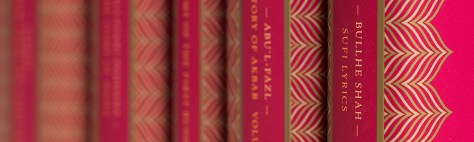
spine-details-vertical

A petition, signed by 132 “academics” asking Rohan Murty and Narayan Murthy to dismiss Prof Sheldon Pollock from his role as Editor of the Murty Classical Library Series, is receiving attention that the signatories did not anticipate.  I put the word “academics” in quotes because the commitment of the signatories to an academic evaluation of Sheldon Pollock’s intellectual leadership is nowhere in evidence, since a quotation from Pollock was changed mid-way through the signature campaign. Nor does it seem as if the signatories have ever held any one of the hot- pink,  beautifully produced volumes in their hands, where   as much attention has been paid to looks and fonts,  as to the quality of translations.

Had they done so, they too would have appreciated the significance of this effort, in bringing to the wider reading public the oceans of literary texts and traditions, in a mind-boggling array of languages,  from a period covering two and a half millenia.  The individual translators and editors are among the best in the field. Thanks to this series, so many more Indians and others will learn of the sheer beauty and anguish of Punna, a  Therigatha poet (translated from Pali, 3rd century BCE).  People of the south will hear the voice of Bulle Shah, translated from Punjabi, and those from other parts of India will read Allasani Peddanna, translated from Telugu.  True we will miss the mellifluous chanting, or the energetic sounds of performance: for now, we will have to make do with the books on hand. Continue reading A historian’s response to the petition against Sheldon Pollock: Janaki Nair

Bastar to Delhi – Increasing Threat to the Rule of Law and Freedom of Expression

STATEMENT BY CONCERNED CITIZENS

It seems that an undeclared state of emergency is sought to be imposed upon us: a series of seemingly unconnected events across the country, in universities (most recently in Hyderabad and Delhi), factory premises and court halls, our streets and over large parts of the countryside, bear this out. We would like to draw wider attention, in particular, to recent disturbing developments in Jagdalpur, Bastar, that have been somewhat overshadowed by events in the Jawaharlal Nehru University, New Delhi.

In Delhi as in Bastar, the state is using its coercive power to stifle dissent and lock up dissenters by labelling them anti-national or, in the case of Bastar, Maoists. In Chhattisgarh, it has long been standard practice to label anybody with an opinion of development contrary to the mainstream view (of development as corporate welfare and environmental destruction) as a Maoist. This is usually a prelude to police action ranging from harassment and intimidation to arrest, torture, and even death. The adivasi inhabitants of Bastar have not enjoyed the rule of law since 2005, when the Salwa Judum, a vigilante paramilitary group, was formed in the name of combating Maoism. Nor does the law offer much protection to ordinary people elsewhere seeking to exercise their constitutional rights as law enforcement agencies and governments trample upon civil liberties in the name of nationalism.

Continue reading Bastar to Delhi – Increasing Threat to the Rule of Law and Freedom of Expression

Consolidated Solidarity Statements in Support of JNU

JNU Solidarity Poster

Kafila posted a set of solidarity statements recently in support of the students, faculty and autonomy of JNU. We are posting another set, received from the following organisations:

  1. First-Decade JNU Graduates and Other Graduates – 548 signatories.
  2. Faculty, Staff and Students at the Indian Institute of Management, Bangalore.
  3. California Students and Faculty. California, U.S.
  4. Current Fellows of the Jawaharlal Nehru Institute of Advanced Study, JNU, Delhi.
  5. Colorado College, Colorado, U.S.
  6. Faculty at DePaul University, Chicago, U.S.
  7. Faculty, Students and Staff, Brown University, Rhode Island School of Design (RISD) and University of Rhode Island, Providence, U.S.
  8. McGill and Concordia Universities, Canada.
  9. Canadian Academics from Various Universities.

Please click on Read More below for the statements and signatories:

Continue reading Consolidated Solidarity Statements in Support of JNU

जेनयू की सफाई पर स्मृति ईरानी की सफाई: नियति शर्मा

Guest post by NIYATI SHARMA

लोकसभा में स्मृति ईरानी जी की सफाई उर्फ़ भाषण बहुत भावुक, मनोरंजक और प्रभावशाली था। लोग उन्हें ‘आयरन लेडी’ का खिताब दे रहे हैं- यह उनके तर्क के लिए या उनके तेवर के लिए, या फिर उनके यह कहने के लिए की वो अपना सर काट के मायावती जी के चरणों में रख देंगी, पता लगाना थोड़ा मुश्किल है । सोचा था स्मृति जी कुछ सवालों का जवाब देंगी पर असल में मिली एक लम्बी, मेलोड्रामाटिक सफाई जिससे उन्होंने अपनी सरकार की सारी गलतियों पे पर्दा डाल दिया।ऐसी स्तिथि में हम मजबूर हो गए हैं की स्मृति जी से जो सवाल पूछे जाएँ वो तथ्य-सम्बंधित होने के साथ साथ अति भावनात्मक भी हों।

स्मृति जी के अभिनय के सारे सालों का अनुभव उनके भाषण में साफ़ दिखाए दिया। लोकसभा में स्मृति जी के हाव भाव से आक्रोश टपक रहा था पर क्या उन्हें इतना क्रोधित होने का हक़ है? स्मृति जी का यह मानना है की उनके ऊपर काफी बेबुनियादी आरोप लगे हैं, पर यह मामला स्मृति ईरानी जी के बारे में नहीं है, यह मामला उन मासूम छात्रों के बारे में है जिनकी ज़िन्दगी को उन्होंने दांव पर लगा दिया है। आखिर उन ‘बच्चों’ का क्या जिनके ऊपर उन्होंने और उनकी सरकार ने पिछले कुछ दिनों में अनगिनत आरोप लगाये हैं? स्मृति ईरानी जी तो मंत्री हैं, अगर आरोप लगे भी, तो उनकी ज़िन्दगी बर्बाद नहीं होगी, पर जिस क्रूरता से सरकार और मीडिया ने छात्रों का चरित्र-हनन किया, वह कभी भी इससे उभर नहीं पाएंगे। कन्हैया, उमर और अनिर्बान न ही मंत्री हैं जिनके पास कोई राजनैतिक सहारा है और न ही उनके परिवार इतने धनी हैं की वह अपना जीवन, अपनी इज़्ज़त पुननिर्मित कर पाएं। स्मृति जी, आप तो सिर्फ अपने बारे में सोच रही थीं की आप पर और आपकी परफॉरमेंस पर क्या क्या सवाल उठाये गए, क्या आपने एक बार भी सोचा की इन छात्रों के पास आगे ज़िन्दगी में सफाई देने का कोई मौका नहीं होगा? क्या आपने, माँ होने के नाते, यह सोचा की यह छात्र अब कभी भी साधारण जीवन नहीं जी पाएंगे?

Continue reading जेनयू की सफाई पर स्मृति ईरानी की सफाई: नियति शर्मा

Left, Hindutva and Indian nationalism: Pritam Singh

Guest Post by PRITAM SINGH

Triggered by the recent events at JNU, it is inspiring that the Left and genuine liberal voices in India are standing up to the Hindutva fascist onslaught. However, I find it very disappointing that the current Left leadership and some left intellectuals and sympathisers (especially belonging to the CPI and CPM) are succumbing to the pressure of chauvinist Indian nationalism. One would be shirking one’s responsibility if one were not to criticise that misguided and seemingly scared Left for its pitiable practice of for ever chanting mantra of ‘unity and integrity of the country’ in a self-defeating game of competitive Indian nationalism. The Left is beating its breast and going to the town chanting that we are ‘desh bhagats’ in a foolish retaliation against Sanghi’s charges of left being desh dirohi. Tomorrow, the Sanghis will say that you are ‘Ram dirohi’ when you oppose the building of the Ram Mandir. Would you then start saying: we are Ram Bhatkas? Let us not succumb to Sanghi’s brow beating tactics. Let us openly proclaim that India is not one nation but a historically determined territorial space of many nations, nationalities and emerging/potential nations and nationalities. As capitalism expands in India and the regional diversity of India flowers further, new voices of national self-determination would start becoming more articulated.

Continue reading Left, Hindutva and Indian nationalism: Pritam Singh

Does the Indian Constitution Speak for a Nation? Arvind Elangovan

Guest post by ARVIND ELANGOVAN

Like many others, I too have been anguished about the recent developments in JNU. Not only because the institution is my alma mater, but also because there has been a concerted effort now to frame the discourse in terms of nationalism and anti-nationalism. Sadly, in responding to the charge of anti-nationalism, defenders of free speech and other associated values of the integrity of the university are also participating in this discourse and arguing why dissent is not anti-national. While I agree with this latter point of view, I would like to join those voices that argue that the question of nationalism is irrelevant to the functioning of the state. The unity and integrity of India, understood in its territorial sense, is not strengthened by ideas of nationalism nor is it weakened by expressions of antinationalism.

In the context of the current debate about nations, nationalism, and anti-nationalism, an oft-evoked ally is the Indian constitution. Commentators across the board have praised the Indian constitution for either embodying an ‘idea of India,’ one that is noble and worthy, or praised the institutions that are sanctioned by the constitution, such as the Honorable High Courts and the Supreme Court. Strangely, across the ideological divides, it has become a commonplace perception that the nation as embodied in the Indian constitution has been violated, or at the very least not respected. Conversely, at the other end of the spectrum, it is believed that the Indian constitution expressly provides provisions to persecute individuals or groups for espousing ‘anti-national’ views. The belief among the latter group is that the constitution protects the idea of the nation, however it may be defined. This remarkable unity in such a divisive moment in Indian politics today is both a reason for pause and an invitation to at least cursorily reexamine the text and the history of this important document called the Indian constitution. Continue reading Does the Indian Constitution Speak for a Nation? Arvind Elangovan

Jat Quota Stir and Violence in Haryana: Satendra Kumar

This is a guest post by SATENDRA KUMAR


jaat-protest--_647_022016112612
IMAGE COURTESY: INDIA TODAY

There is an uncanny academic public silence over the Jat quota stir and the unjustified violence enacted during the stir in Haryana. The scale of violence and destruction is such that it competes for the worst instance of caste violence in Haryana’s post-Independence history. So far 30 people have lost their lives while over 200 people were injured in the nine-day violent Jat agitation demanding job quotas in Haryana. There is anger, fear and helplessness among those who lost their kin, homes, businesses and properties.At least 10 Haryana districts were severely affected by the violence. After such a huge loss, as if it was a routine, matter the Union Home Minister announced that a committee led by M Venkaiah Naidu will examine the demand by Jats for reservation in central government jobs.

In Haryana, the BJP’s government in the state has promised to bring a Bill granting OBC status to Jats in the upcoming assembly session. The Jats’ demand for reservations in the central OBC list is not new. Since 1995, Jats in Haryana have been demanding an OBC (Other Backward Class) status, which will help them secure the 27 per cent reservation in government jobs. Earlier in 1997, the Jats in Haryana, Uttar Pradesh and Madhya Pradesh had demanded themselves to be included in the central OBC list. It was rejected by the National Commission for Backward Classes. Subsequently UPA government’s decision to include Jats from 9 states in the OBC list was also rejected by the Supreme Court in March 2015. Despite all this, political parties such as Congress and BJP continue promising quota to Jats during election campaigns. These promises have encouraged the Jats to organize and agitate for quotas. However, their agitations for reservations have not been so violent. That is why the most pressing and important question that needs analyses is why has the current agitation by Jats been so violent? Perhaps three factors will help us to understand this severe violence and loss of property worth crores of rupees.

Continue reading Jat Quota Stir and Violence in Haryana: Satendra Kumar

Bahujan Discourse Puts JNU In The Crosshairs: Pramod Ranjan

PRAMOD RANJAN writes in Forward Press

It is essential to find out how this university, created in 1966 by a special Act of Parliament, became a leftist bastion. The answer lies in its unique reservation system. In this university, from the very outset, aspirants from backward districts, women and other weaker sections were given preference in enrolment. Kashmiri migrants and wards and widows of defence personnel killed in action also get preference (see box). The nature of the questions in the admission tests of the university is such that only the ability to answer multiple-choice questions related to one’s discipline is not enough to see one through. Only those students who have, apart from command over their own subject, analytical skills and reasoning power get admission here. The undergraduate courses of foreign languages are an exception in this regard. But even here, once they have a bachelor’s degree, they can join an MA or an MPhil course only if they have the aforementioned skills. Thus, for years, JNU has been home to the finest and most fertile minds from economically and socially deprived sections of society. And when they analyze the hows and whys of their socio-economic background, they get drawn to Marxism.

This fully residential university, spread over 1000 acres and nestled in the lush green Aravalli Range, never attracted the elite class. The hostels serve plain food and residents drink from jugs – instead of glasses. Estimates suggest that at least 70 per cent students of the university come from either poor or lower-middle-class families…

After the enrolments last year, the percentage of students in JNU from SC, ST and OBC has gone up to 55. A large number of Muslims are enrolled in Arabic, Persian and other language courses in JNU. Data on them is not available. But if, along with them, the number of Ashraf Muslims and other minorities is added, it can be safely presumed that at least 70 per cent of the students in the university are non-Dwij. Note that the number of OBC students in JNU has gone from 288 in 2006 to 2434 in 2015, ie a tenfold increase in nine years. The number of women students has also gone up substantially (see chart)…

This article also points out uncanny similarities between the police report of February 2016 on the controversial cultural event at JNU  and a Panchjanya editorial of 2015.

Read the rest of the article here.


Statement by JNU Faculty on Bar Council of India Report on Patiala House events of February 15 and 17, 2016.

In a shockingly partisan statement that blatantly misrepresents events, the Bar Council of India has issued a report that justifies the well documented attacks by a mob of lawyers on JNU students, teachers and media at Patiala House Courts over two days (February 15 and 17, 2016) as ‘a reaction to the incidents, which are grave in nature and very dangerous for the country’. BCI Joint Secretary Ashok Kumar Pandey claimed that a large number of JNU teachers and students and others had arrived at the court in three to four buses and raised slogans and used ‘provocative words’. This led to the untoward incident in which ‘both the sides took part,’ said the report, adding that ‘any true citizen or a lawyer of India’ was supposed to react strongly to the ‘anti-India’ slogans.

We, the undersigned faculty members of Jawaharlal Nehru University, wish to set the record straight. Nine of us reached Patiala House Court No 4 between 1 and 1.15 pm on 15th February 2016 to attend the hearing on Kanhaiya Kumar’s bail plea. The sole objective of our presence there was that when Kanhaiya Kumar was produced he would see the faces of his teachers in the courtroom. At that time, a few students and other teachers of JNU, and some members of CPI, the parent organization of Kanhaiya’s student group, were already waiting silently outside, similarly wanting him to see friendly and familiar faces when he was produced. There were about 15 to 20 of them, hardly enough to fill 4 cars, let alone one bus.

Continue reading Statement by JNU Faculty on Bar Council of India Report on Patiala House events of February 15 and 17, 2016.

A Review of Purifying the Land of the Pure – Pakistan’s Religious Minorities : Guest Post by Karthik Venkatesh

Guest Post by Karthik Venkatesh

Pakistan was created as a homeland for the sub-continent’s Muslims and yet, even before it had formally taken birth, its founder in a famous speech delivered on August 11, 1947 stated his intention to establish a secular nation where religion would be relegated to the private sphere and the public discourse would be given to pressing development issues. Jinnah’s first cabinet consisted of an Ahmadi (considered by orthodox Muslims as a heretical sect), Sir Zafarullah Khan and Jogendranath Manadal, a Hindu from East Pakistan. Jinnah himself was a Shia while the majority of Pakistan’s Muslims were Sunnis. Roughly one-quarter of Pakistan was non-Muslim at the time of independence and secularism seemed a realistic option. Also, Jinnah’s actions appeared to imply that it would actually be practised. But events proved otherwise.

During Jinnah’s time itself, as Ispahani adeptly documents, an unhealthy nexus had begun to develop between politicians and extremist religious groups. His death in 1948 merely served to accentuate this process. In March 1949, PM Liaquat Ali Khan moved the Objectives Resolution in the Constituent Assembly which set the tone for the Islamisation of Pakistan. Continue reading A Review of Purifying the Land of the Pure – Pakistan’s Religious Minorities : Guest Post by Karthik Venkatesh

Offer truth and hope, not drama: Faculty of University of Hyderabad to Smriti Irani

Dear Ms Irani,

Thanks to your stunning performance, we, many faculty members from the University of Hyderabad, are compelled to do what we should have done in the last one month or so, but could not bring ourselves to – write, write about Rohith, write about our other students, write about the state of academics, write about ourselves and write about society at large.

Our first acknowledgement to this therefore goes to you for revealing yourself and for bringing us back from grief, from reflection, from teaching and from various other mundane things we do as part of our job.

As we watched you in disbelief on our TV screens on 24th February 2016, you, in a voice choked with emotion, again and again referred to the “child” whose death has been used as a political weapon. We were left bewildered.

At what precise point, Madam Minister, did this sinister, anti-national, casteist, Dalit student of the University of Hyderabad transform into a child for you? Definitely not in those five rejoinders from MHRD (the ministry of human resource development) between 03-09-2015 and 19-11- 2015 with the subject line “anti-national activities in Hyderabad Central University Campus”? Definitely not when you chose to overlook and endorse what can only be read as extraordinarily aggressive and unfounded allegations by a minister in your own government, Mr Bandaru Dattatreya?

Read the rest of the letter in The Telegraph