Category Archives: Right watch

India First and the BJP anti-conversion platform: Goldie Osuri

Guest Post by GOLDIE OSURI

We seem to live in an age where paradoxes become parodic simplifications in the seemingly global race to support all manner of fascist majoritarian nationalisms. I recently saw a youtube video, where P.P. Hegde of the NaMo Brigade linked the meaning of Namo Namaha—the letting go of ego in meditation—to the image of a giant saffron-vested image of Narendra Modi.

Namo Namaha. Literally, not-me, not my ego-self. Linked to a giant PR machine promoting an individual, the face of Hindutva fascism, nothing but ego. The lack of an ironic sensibility in such campaigns is perhaps sadly characteristic of our time.

Similarly anti-conversion campaigns targeting Christians seem paradoxical and parodic in their demand for Acts of Religious Freedom which literally entail religious unfreedom. Recently, the BJP leader of Andhra Pradesh, Venkaiah Naidu stated that the ‘BJP will bring an anti-conversion law to ban religious conversions in the country if it is voted to power in 2014 General Elections’. 

Continue reading India First and the BJP anti-conversion platform: Goldie Osuri

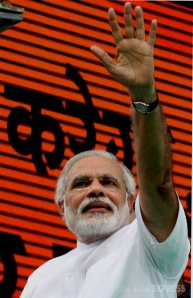
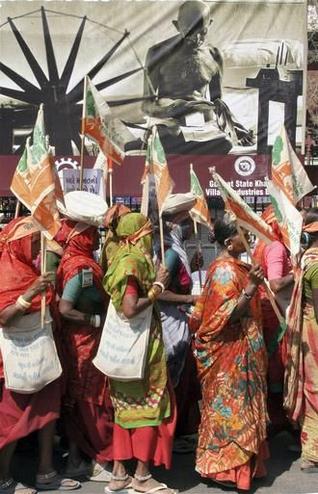
Can Narendra Modi Apologize to Four Hundred and Five Million Rural Women in India?

1744_Rural_Women_Keral 1742_Rural_Women_Gujar B_Id_424710_Narendra_Modi_

Rural Indian Women (Courtesy India Post) and An Urban Indian Man (Narendra Modi)

I watched the television broadcast of BJP’s Prime Ministerial candidate Narendra Modi’s speech at the Japanese Park in Rohini in Delhi on Sunday morning with breathless anticipation and some trepidation. With the restless anxiety that he would spin at least half a new idea, that could induce some naive fence-sitters in Delhi, my city, to sign up behind his juggernaut along with the rest of his zombie horde.

Would his spin doctors have worked hard and tirelessly overnight to give their client a new teflon coating? Would his savvy advisers have given him a sharp new statistic to play with, an incontrovertible fact, a compelling argument that would persuade my fellow citizens? Continue reading Can Narendra Modi Apologize to Four Hundred and Five Million Rural Women in India?

Common sense and Hindu nationalism – Why the Catholics in Goa are not Hindu: Albertina Almeida & Others

This Guest Post by ALBERTINA ALMEIDA, AMITA KANEKAR, DALE LUIS MENEZES, JASON KEITH FERNANDES AND R. BENEDITO FERRÃO is a response to a statement by Chief Minister of Goa, Manohar Parrikar.

Can a Goan Catholic be Hindu? Can Catholics professing a tradition of Catholicism that is over five centuries old be considered Hindu in culture? This is what the Chief Minister of Goa, Manohar Parrikar, sought to suggest in a recent interview with Sambuddha Mitra Mustafi of the New York Times India blog India Ink, where he said:

I am a perfect Hindu, but that is my personal faith, it has nothing to do with government. India is a Hindu nation in the cultural sense. A Catholic in Goa is also Hindu culturally, because his practices don’t match with Catholics in Brazil [a former Portuguese outpost like Goa]; except in the religious aspect, a Goan Catholic’s way of thinking and practice matches a Hindu’s. So Hindu for me is not a religious term, it is cultural. I am not the Hindu nationalist as understood by some TV media – not one who will take out a sword and kill a Muslim. According to me that is not Hindu behavior at all. Hindus don’t attack anyone, they only do so for self-defense – that is our history. But in the right sense of the term, I am a Hindu nationalist.

Parrikar’s bizarre statement was in response to the question of whether he saw himself as a Hindu nationalist. Of course, a quick and easy response to his statement would be to summarily dismiss it as expected rhetoric flowing from his saffron affiliations; yet, questions persist, not least because of the peculiar and oft-misrepresented Goan scenario. Continue reading Common sense and Hindu nationalism – Why the Catholics in Goa are not Hindu: Albertina Almeida & Others

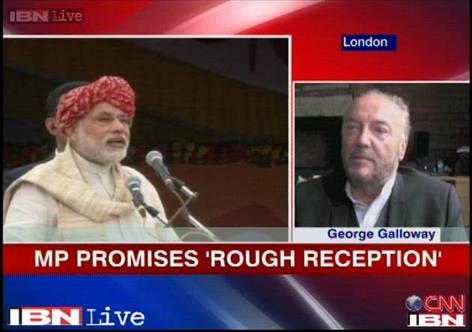
Modi Goes To London

Image

Good news is followed by a flood of bad news.

Narendra Modi, the ‘architect’ of today’s Gujarat, must be realising the truth of this dictum despite the fact that the corporate media – to quote an analyst – ‘loves’ him.

Whether it is the growing resistance of the peasantry inside the state to his vision of development, compelling him to withdraw a major chunk of villages from the much discussed Mandal-Becharaji Special Investment Region (SIR), or the crude manner in which his government’s anti Dalit stance is coming to the fore, the signals are definitely ominous. Continue reading Modi Goes To London

Why Do ‘They’ Love Narendra Modi ?: Shankar Gopalakrishnan

Guest Post by Shankar Gopalakrishnan

On August 14th, Narendra Modi declared that his Independence Day speech would attract as much attention as that of the Prime Minister. He appears to have been right. The fact that this is hardly unexpected should not obscure the deeper puzzle that it hides. It is a rare occurrence for a state level leader to suddenly get so much prominence in the media, and that too for such a long period. Why, then, have powerful forces in our society – including most of the media – chosen to endorse Modi? Why the sudden promotion of this particular leader at this particular time? What is it that he and his regime are offering?

Continue reading Why Do ‘They’ Love Narendra Modi ?: Shankar Gopalakrishnan

आतंकवादी कविता के विरुद्ध युद्ध: अपूर्वानंद

‘शिक्षा बचाओ आन्दोलन’ ने आतंकवाद के खिलाफ अंतर्राष्ट्रीय युद्ध में नई जीत हासिल की है. वह कालीकट विश्वविद्यालय के स्नातक स्तर की  अंग्रेज़ी की पाठ्यपुस्तक –‘लिटरेचर एंड कंटेम्पररी इश्यूज’ से ‘अल कायदा से जुड़े एक आतंकवादी’ इब्राहिम अल रुबाईश की कविता ‘ओड टू द सी’ को निकलवा देने में सफल रहा है.  आन्दोलन की केरल इकाई के सचिव ने इस कविता को पाठ्यपुस्तक में शामिल करने को ‘गंभीर मामला’ बताते हुए कहा था कि किताब को वापस लेने और विश्वविद्यालय द्वारा माफी माँगने के बाद इसकी जांच होनी चाहिए कि ‘बोर्ड ऑव स्ट्डीज़’ और अकेडमिक काउन्सिल’ में आतंकवादियों के समर्थक कौन हैं जिससे इस तरह की सामग्री के चुनाव के पीछे की साजिश का पर्दाफ़ाश हो सके.

कुलपति ने फौरन अपने डीन प्रोफ़ेसर एम.एम. बशीर को मामले की जांच करने को कहा. उन्होंने कहा कि ऊपर से निर्दोष लगने वाली इस  कविता में रुबाइश ने अत्यंत अर्थगर्भी प्रतीकों का इस्तेमाल किया है जो खतरनाक भी हो सकते हैं.मसलन, उसने ‘फेथलेस’ शब्द का प्रयोग किया है जो अरबी शब्द ‘काफिर’ का अंग्रेज़ी अनुवाद है. फिर जैसा आज का अकादमिक रिवाज है, वे इंटरनेट पर गए और पता किया कि इस कवि  ने अमरीका के खिलाफ जंग का आह्वान भी किया था. भला इसके बाद और सोचने की ज़रूरत ही क्या रह जाती है?पाठ्यपुस्तक के संपादकद्वय में से एक ने लगभग माफी माँगते हुए कहा कि डेढ़ साल पहले इसे संपादित करते वक्त रुबाइश के बारे में ज़्यादा सामग्री ‘ऑनलाइन’ मौजूद न थी. अगर उन्हें कवि के  राजनीतिक रुझान  का जरा भी अंदाज होता तो वे इसे कतई न चुनते. Continue reading आतंकवादी कविता के विरुद्ध युद्ध: अपूर्वानंद

The BJP’s very own Stalin

Yashwant  Sinha is a worried man these days. He is apprehensive of his leader Narendra Modi being taken for a ride by the Congress party. He says that the Congress party is laying a trap for him, a trap of the binary of Communalism and Secularism and  fears that his upward looking Narendra Modi might fall in it. So, well  wisher that he is of Narendra Bhai, he wants to alert him: do not get  entangled in the conspiracy of the wily Congress. He appeals to Narendra Modi to stick to people’s issues and not let the political discourse  shift to the terrain of the Secularism  versus Communalism debate. Continue reading The BJP’s very own Stalin

पाकिस्तानी गाली नहीं है : अपूर्वानंद

लखनऊ के बारहवीं कक्षा के एक छात्र आदित्य ठाकुर ने हाल में विदेश मंत्रालय के सचिव को हाल में  एक पत्र लिखकर तकलीफ जताई  है कि भारत का संचार तंत्र , विशेषकर टेलिविज़न पड़ोसी मुल्कों के खिलाफ नफरत का प्रचार करता है. आदित्य ने यह पत्र ‘इंडिया न्यूज़’ नामक  टी. वी. चैनल  के एक कार्यक्रम से दुखी होकर लिखना तय किया. कार्यक्रम पाकिस्तान में पोलियो की बीमारी की समस्या पर केंद्रित था. ऊपरी तौर पर एक गंभीर मसले पर चर्चा करने के लिए बनाए इस कार्यक्रम का शीर्षक था, ‘लंगड़ा पाकिस्तान’. आदित्य ने लिखा है पूरा  कार्यक्रम  पाकिस्तान के बारे में प्रचलित ‘स्टीरियोटाइप’, उसके प्रति अपमानजनक  और सनसनीखेज प्रसंगों से भरा पड़ा था.रिपोर्ट लगातार पाकिस्तान को ‘दुनिया को तबाह करने के सपने देखने वाला’ कह कर संबोधित कर रही थी. ‘बम का क्या करोगे पाकिस्तान , खाओगे?’ और ‘दो बूँद से मत डरो पाकिस्तान’ जैसे संवादों से कार्यक्रम की पाकिस्तान के प्रति घृणा जाहिर थी. Continue reading पाकिस्तानी गाली नहीं है : अपूर्वानंद

आत्मा से मुठभेड़ की चुनौती: अपूर्वानंद

इशरत जहाँ एक उन्नीस साल की लड़की थी जब वह मारी गई.शायद उसके बारे में इसके अलावा इस निश्चितता के साथ हम कुछ और कभी नहीं जान पाएंगे. इसकी वजह सिर्फ यह है कि जिन्हें इस देश में सच का पता लगाने का काम दिया गया है वे एक लंबे अरसे से झूठ को सच की तरह पेश करने का आसान रास्ता चुनने के आदी हो गए हैं. उनके इस मिथ्याचार पर कभी सवाल न खड़ा किया जा सके इसका सबसे अच्छा तरीका है राष्ट्र रक्षक की अपनी छवि का दुरुपयोग निस्संकोच करना. जो राष्ट्र की रक्षा करता है उसे उसकी रक्षा के लिए किसी को मात्र संदेह के आधार पर मार डालने का हक है, यह हमारे देश का सहज बोध है. सिर्फ अशिक्षितों का नहीं, उसने कहीं ज़्यादा राजनीति शास्त्र की किताबों से नागरिक अधिकारों का ज्ञान प्राप्त किए हुए स्नातकों का. उन सबका जिन्हें देश की जनता के पैसे से संविधान की हिफ़ाजत के लिए अलग-अलग काम सौंपे जाते हैं. और भी साफ़ कर लें, इन स्नातकों में भी उनका जो प्रशासनिक और पुलिस अधिकारी हैं, जासूसी के अलग-अलग महकमों से जुड़े ऑफिसर हैं, जिनकी असली पहचान कभी उजागर नहीं हो पाती. अगर दूसरे मुल्क में वे पकड़े जाएं तो वही देश उनसे हाथ धो लेता है जिसकी सुरक्षा में वे अपनी असली पहचान छिपाए फिरते हैं.

क्या कोई यह कहने की हिमाकत कर सकता है कि राष्ट्र-राज्य के खिलाफ साजिशें नहीं होतीं, कि राष्ट्र-विरोधी शक्तियों का अस्तित्व ही नहीं! यह बिलकुल अलग बात है कि राष्ट्र विरोधी का बिल्ला किन पर आसानी चस्पां किया जा सकता है और किन पर वह बिलकुल चिपकता ही नहीं. मसलन, इस्लामी राष्ट्र का तस्सवुर धर्मनिरपेक्ष भारतीय राष्ट्र के बिलकुल खिलाफ है, क्या इसके लिए किसी अतिरिक्त व्याख्या की आवश्यकता है? लेकिन यह समझना और समझाना टेढ़ी खीर है कि हिन्दू राष्ट्र की कल्पना भी उतनी ही राष्ट्रविरोधी है! आज से बीस साल पहले और आज भी   खालिस्तान का ख़याल इस्लामी राष्ट्र जितना ही राष्ट्र विरोधी माना जाता था. Continue reading आत्मा से मुठभेड़ की चुनौती: अपूर्वानंद

Ishrat Jahan, Narendra Modi and the IB: How Not to be Non-Non Terrorist

The CBI charge-sheet in the Ishrat Jahan encounter case and its aftermath has led the BJP and supporters of Narendra Modi (within and without the Intelligence Bureau) to discover the joys of time travel. Apparently, David Coleman Headley’s testimony in 2010 (which says that Ishrat Jahan was an LeT operative) has given the Gujarat police officials a means to tell us why they killed Ishrat Jahan in 2004. Or, following on from Shivam Vij’s recent tweets, we could say: “The IB says that Headley says that Ishrat Jahan was a non-non terrorist…”

We will discuss more about this heady Headley testimony and ‘non-non terrorism’ later, but for now, let us admit that the secret of how a statement in the future can influence the unfolding an event six years in the past is known only to those who are partisan to Mr. Modi and his party. It is not for nothing that they call him a Yug Purush (‘The Man of Time’)- all times, past, present and future, can do his bidding, or so thinks the BJP. Continue reading Ishrat Jahan, Narendra Modi and the IB: How Not to be Non-Non Terrorist

Media Campaign and the Ishrat Jahan Case: Faraz Ahmad

Guest post by FARAZ AHMAD: Even after the Central Bureau of Investigations (CBI) presented of its charge-sheet in CBI special court in Ahmedabad on July 3 in the infamous Ishrat Jahan encounter case of Gujarat of 2004 charging the Gujarat police, together with the IB of faking the encounter with Ishrat and three others, the media campaign, more particularly of the Times of India to damage CBI’s credibility continued unabated, with Bharti Jain’s lament on behalf of the IB.

However it is obvious that Bharti Jain’s is neither the first nor the last spirited defence of the questionable activities of our security and intelligence officers committing all kinds of crimes under the cover of protecting the nation from supposed external and internal threat. Unmindful of this, the media campaign is so visibly influenced by the BJP, attempting to discredit the CBI investigations and label these as biased before these are examined by the rightful authority, the courts, guided by competent lawyers of both the prosecution as well as Defence. Continue reading Media Campaign and the Ishrat Jahan Case: Faraz Ahmad

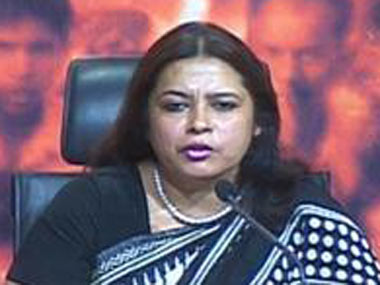
Women condemn Meenakshi Lekhi’s sexist slandering of Ishrat Jahan

Meenakshi Lekhi
Meenakshi Lekhi

Over 115 women have signed a letter seeking an apology from Ms. Meenakshi Lekhi for her sexist slandering of deceased Ishrat Jahan in a television channel. The letter has also been sent to the Chairperson of the National Commission for Women for appropriate action.

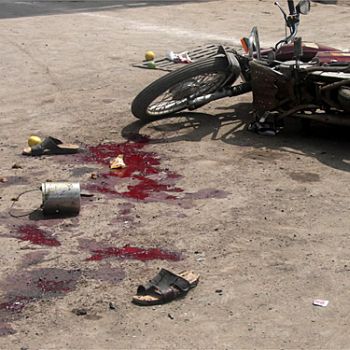
As the noose is tightening around the conspirators who cynically and coldly planned and executed the killing of teenaged Ishrat Jahan and three other people in 2004, there is a concerted campaign – the final, last ditch bid to save their skins – by tarnishing the image of this college student. There have been planted stories in the media linking her to a terrorist group –all of them false and concocted, even as the Gujarat High Court has clearly said that the CBI’s mandate is to simply investigate whether Ishrat and others were killed in cold blood. Continue reading Women condemn Meenakshi Lekhi’s sexist slandering of Ishrat Jahan

A letter to Chetan Bhagat from Indian Muslim Youth

Given below is the text of a letter that was initially written by a group of individuals and sent as a rejoinder to the article written by Chetan Bhagat titled,Letter from an Indian Muslim Youth published in The Times of India on 30 June 2013. The letter was sent to The Times of India The signatories include non-Muslims, because a large number of the emails read, ‘I am not a Muslim but I am equally disgusted by Chetan Bhagat’s letter’. Given below is the text of letter followed by more than 200 signatures:

A Letter to Mr. Chetan Bhagat from Indian Muslim Youth

3rd July 2013

Dear Mr. Bhagat, Continue reading A letter to Chetan Bhagat from Indian Muslim Youth

Will ACP Kisan Shengal of Mumbai ATS be prosecuted?: Yug Mohit Chaudhry

malegaon_blast_2

Guest post by YUG MOHIT CHAUDHRY: On Friday, 8th September 2006, four bomb blasts occurred in Malegaon killing thirty-one persons and injuring three hundred and twelve others. The case was originally investigated by the Maharashtra Anti-Terrorist Squad (ATS). After re-investigating the case, the National Investigation Agency (NIA) has concluded that the ATS fabricated evidence against nine persons. This unprecedented acknowledgement raises important questions about how terrorist cases are investigated, police misconduct and the rule of law in India. It remains to be seen whether the government will take action against the ATS investigating officer, Assistant Commissioner of Police (ACP) Kisan Shengal, for fabricating evidence on a capital charge. Continue reading Will ACP Kisan Shengal of Mumbai ATS be prosecuted?: Yug Mohit Chaudhry

मोदी: तिलिस्म और हक़ीकत

– सुभाष गाताडे

जुल्म

तशद्दुद

झूठ

बग़ावत

आगजनी

खूं

कर्फ्यू

फायर ….

हमने इन्हें बिरसे में दिए हैं

ये बच्चे

क्या देंगे हमको ???

(कविता: बच्चे – मुसाफि़र पालनपुरी,

‘कुछ तो कहो यारों!’ सम्पादन: आयशा खान)

1

नूरा कुश्ती की समाप्ति के बाद


सियासत में आपसी सत्ता-संघर्ष अक्सर व्यक्तियों के इर्दगिर्द सिमटते दिखते हैं। Continue reading मोदी: तिलिस्म और हक़ीकत

IB’s desperate and dirty tricks to scuttle the Ishrat Jahan investigation

This is a press statement put out on 14 June 2013 by a group of individuals whose names are given at the end.

It is a clear indication of the desperation being felt by the IB establishment as the heat turns on its senior officers in the Ishrat Jahan probe, that they are down to doing what they do best: use pliant sections of the media to plant stories to deflect scrutiny and create a favourable public mood.  Following the summons issued to IB Special Director Rajender Kumar by the CBI (which is probing the case on the direction of the Gujarat High Court), the IB Director first sought to sell the familiar old story of ‘investigation will hit the morale of the IB’ – it seems as though a blanket immunity from any scrutiny and accountability is the only guarantee of IB morale.  The IB then ran complaining to the Prime Minister; and when nothing worked, it used the agency’s tried and tested trick of enlisting the support of discredited ‘journalists’.  Continue reading IB’s desperate and dirty tricks to scuttle the Ishrat Jahan investigation

Madhu Mausi, Namo Mamu and the Ghost of Uncle Pepper

I’ve been thinking a lot about magic lately. The kind of magic that gets pulled at fairgrounds and birthday parties, or on stage, where the impossible is made to appear possible, where material objects dematerialize and specters appear, tantalizing us into suspending our disbelief. Some magicians, including those I would like to think of as friends, do what they can with consummate skill, so that we attain a state of wonder while they effect transformations using ordinary things for extraordinary purposes. They make us inhabit parallel universes on a table top. There is a kind of poetry and grace in that kind of magic. That is the kind of magic that makes men out of god-men, and re-affirms even a non-patriot’s faith in the ‘waters of India’.

There is another kind of magic, a bag of tricks that relies on the cheapening of our impulses, on our addictions to false premises, on our giving in to our basest instincts. And because sometimes old cliches are useful, we could call this kind black magic. The greatest practitioner of this art, at this moment, seems to me to  be none other than the man who is setting himself up as the caudillo of the future, the chief minister of Gujarat, our prime-minister in waiting, Narendrabhai Damodardas Modi. We,a stunned would be electorate, are the rabbit he is aiming to pull out of his hat.
Continue reading Madhu Mausi, Namo Mamu and the Ghost of Uncle Pepper

Three questions for Madhu Kishwar: Dilip D’Souza

Guest post by DILIP D’SOUZA

Dear Madhu,

20+ years ago, I picked you up at the airport in Austin and you stayed at my home there for a few days. You had come there to deliver a lecture, as I’m sure you remember. We developed a friendship based on a degree of mutual respect and liking. I think you’ll agree? Several years after that I remember a stimulating afternoon sitting with you in Panchgani, catching up on many things and discussing various issues threadbare.

We haven’t met in some years now, but I’m going to call on the privilege of our 20+ years of friendship as I write these lines.

I have no problem at all with your desire to learn about Gujarat and Narendra Modi for yourself. Nor with your desire to see beyond what you’ve called the “targeting” of Modi. Nor with your speaking in support of Modi: if there are people who criticize Modi, I understand and accept that there are those who support him — it’s a democracy we live in after all. Nor with your speaking your mind: you have always done so and it’s the least I expect from you. (In turn, it’s the least you should expect from me). Continue reading Three questions for Madhu Kishwar: Dilip D’Souza

Disinformation and Journalistic Ethics: A Letter from Harsh Mander

We are publishing below a communication received from Harsh Mander, a former member of the National Advisory Council, regarding misrepresentation of his position and his politics by no less a person than the editor-in-chief of the Indian Express. The misrepresentation could easily have been corrected, had the mistake been really a mistake but by not publishing the letter or even an editorial correction, newspaper and the editor seem to be acknowledging that the error was in fact, intended. In the language of the Cold War, acts such as these were called ‘disinformation’. 
Response to Mr Shekhar Gupta’s article ‘The Bleeding Heartless’ in the Indian Express, June 1 2013
 

In response to an article by Mr Shekhar Gupta ‘The Bleeding Heartless’ in the Indian Express, June 1 2013, I sent the letter reproduced below on 3 June 2013, which has not yet been carried by Indian Express. I try not to respond polemically to articles which disagree with my views on public policy or other issues, as these differences are perfectly legitimate in a democracy. And who is to be sure that I am right, and my critics are wrong? But this was different, because it utterly falsely described my ideological position on Maoism as sympathetic, whereas I have always been passionately and publicly opposed to all forms of violence, including Maoist violence. Moreover it linked this to my membership in the NAC, and through that by implication to the many pro-poor agendas I sought to bring into and support within the NAC in the two years that I was a member. Finally Indian Express did not check with me the full facts reported in the opinion piece. I therefore felt I should respond formally to the report. But since this response has not been carried, and on the other hand it is being publicly referred to by others as well, I felt it would be best to place this reply in the public domain. – Harsh Mander Continue reading Disinformation and Journalistic Ethics: A Letter from Harsh Mander

Gujarat and the Illusion of Development: Shipra Nigam

This Guest post by SHIPRA NIGAM is a review of a volume of essays edited by Atul Sood Poverty Amidst Prosperity: Essays on the Trajectory of Development in Gujarat (Aakar Books 2013).

gujarat-farmers_507544e

Thousands of farmers protested in March this year in Ahmedabad against the state’s industrialization policies

This volume of essays is the outcome of a detailed study by a team of contributing research scholars led by Atul Sood. This timely evaluation provides an insight into many crucial questions: What are the constituent elements of Gujarat’s growth story? To what extent can the successful features of Gujarat’s growth story be attributed to the political regime fashioned by Narendra Modi? Is it possible to replicate even this limited success story at the national level – as Modi’s starry eyed upper and middle class following would like to believe? More significantly: what are the implications of Gujarat’s Development Model in terms of its sustainability and its desirability? What happens when we assess this development through a set of comprehensive   measures, judge its implication for the average citizen’s material wellbeing, and see what it means for the political and economic rights of citizens?  Continue reading Gujarat and the Illusion of Development: Shipra Nigam

Asghar Ali Engineer (1939-2013)

B_-_portrait.Ashgar_Ali_Engineer-Salzb05__c__RLA_Foundation__Ulrike_AltekruseAn obituary by ZAHIR JANMOHAMED: I first met Asghar Ali Engineer in January 2002 in Mumbai. I was a fellow with the America India Foundation and a few weeks later I would be posted to work with an NGO in Ahmedabad.

A few minutes before his presentation, I noticed him standing off to the side in silence, staring at the ground. I walked up and introduced myself. I was young, in my twenties, and I did not know what to say.

“As-salaam alaikum,” I said.

“Wa-alaikum salaam,” he replied.

I am not sure what response I expected but I thought that perhaps because he and I share the same faith that we might have a special bond, that my greeting would spark a conversation. After all, I always thought phrases like these serve less as greeting and more as an announcement, as in, I am part of the same religion as you.

But Asghar saab just held my hand and then put his hand on his heart. “Nice to meet you,” he said, and then stared at the ground again in silence. I thought it was odd, rude even.

As I continued to meet Asghar saab, I realized that he had very little patience for superficial connections. I witnessed this when I saw him greet crowds after his lectures. If you told him you were from the same caste or city he would not be as excited as if you told him that you also believe that we must fight patriarchy with the same vigor that we must fight communalism. Continue reading Asghar Ali Engineer (1939-2013)