Category Archives: Violence/Conflict

#NoDissentNoCOUNTRY #StandwithJNU

Bol, ke lab azaad hai tere: Speak for your lips are yet free


Akshaya Tankha (JNU 2006) University of Toronto

A full Hindi transcript and video of Kanhaiya Kumar’s speech may be found here: http://kafila.org/2016/02/15/jnusu-president-kanhaiya-kumars-speech-before-being-arrested/

A complete English translation may be accessed here:http://www.telegraphindia.com/1160216/jsp/frontpage/story_69576.jsp#.VsVc8HQrK8r

Statements of Solidarity For JNU From Various Quarters

We at Kafila have been receiving amazing statements of solidarity with JNU and its elected students’ President Kanhaiya Kumar over the past three days. We are posting them below, along with affiliations: South Asia University (teachers and students); Grinnell College, USA, Ambedkar University Delhi Faculty Association, Democratic Teachers Network, Hyderabad, and over a hundred students from Department of English, Delhi University.


STUDENTS OF SOUTH ASIA UNIVERSITY

We, the students of South Asian University, New Delhi (comprising of students from eight SAARC nations – Afghanistan, Bangladesh, Bhutan, India, Maldives, Nepal, Pakistan and Sri Lanka) strongly oppose the idea that one’s nationalism be defined in terms of hatred towards another nation (for example, Indian nationalism be defined as hatred towards Pakistan, or vice versa). We cherish the common cultural and social heritage of the South Asian region, and shall not let any kind of jingoist nationalism being endorsed by any religious group, political party or state hinder our shared solidarity. However, in recent times, such groups and establishments have unleashed an attack on democratic and critical voices in our universities across the South Asian region, masked under religious conformity, state intervention or sometimes in the form of an act of terrorism.

Thus, we stand in complete solidarity with the student and faculty community of Jawaharlal Nehru University (JNU) in their collective struggle against the ongoing police intervention by slapping the baseless charges of sedition on many students, including the arrest of JNUSU President – Kanhaiya Kumar, and against the massive propaganda terming the JNU as ‘a den of anti-nationals’. We would like to reiterate that our collective nationalism stands responsible only to the interests of our people and our land, and not to the divisive forces which have had and are still trying to create boundaries between us.

STATEMENT OF SOLIDARITY WITH STUDENT PROTESTS IN INDIA, FROM STUDENTS, FACULTY, AND STAFF OF GRINNELL COLLEGE

Grinnell-JNU Solidarity

Continue reading Statements of Solidarity For JNU From Various Quarters

On framing JNU for an imaginary crime: Aditya Sarkar

This is a guest post by ADITYA SARKAR

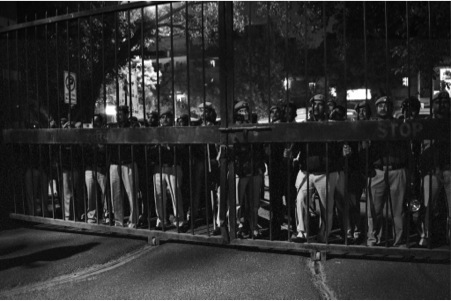
JNU has entered an indefinite state of siege. Police have been swarming all over campus, raiding hostels, picking up students and interrogating them. The ABVP, predictably, have been directing them to the lairs of ‘anti-national elements’. When immense demonstrations of public solidarity with the accused students were organized, ABVP activists have attacked these, in one case mounting a violent physical assault on a visiting speaker. The JNU administration has gone to the extent of cutting off the power supply to the microphones used at a protest meeting. At Patiala House on Monday the 15th of February, the BJP’s MLAs and what appear to be a group of lawyers have assaulted JNU students, faculty and supporters in full view of the police, with what can only be regarded as smug impunity. More than one observer has remarked that this is the Emergency all over again.

It is clear that the arrayed forces of the central government are pitted against a campus which has long been an object of hatred for the Right. There’s no telling how matters will develop in the days and weeks to come. So it might be necessary to step back a bit and consider the sequence of events that led to the current situation.

In the past month, JNU students organized a protest meeting which raised the issue of Kashmiri rights, and drew attention – just as Rohith Vemula’s protest in Hyderabad had done – to the execution of Afzal Guru in 2013. Since the mainstream news outlets systematically censor any attempt to reopen that extremely murky case, it’s worth reminding ourselves of precisely why the execution was so controversial. The terrorist attack on Parliament in December 2001 produced a police investigation on which serious doubt was cast from the beginning. Afzal Guru’s laptop and mobile phone, key pieces of evidence, had not been sealed prior to investigation. One of the other accused in the case, a Delhi University lecturer (who was later emphatically acquitted) was viciously framed by Zee News, which used the police charge-sheet to make a documentary ‘establishing’ his guilt. The court proceedings were even more revealing. The Supreme Court admitted that there was no hard evidence to conclusively establish Afzal Guru’s involvement in criminal conspiracy. But these admissions were merely qualifications to what was perhaps the most extraordinary decision in the history of the judiciary in independent India. Afzal Guru was eventually hanged in 2013 on the basis that only this would appease ‘the collective conscience of the nation society’.

Continue reading On framing JNU for an imaginary crime: Aditya Sarkar

Some thoughts on love in times of hate – from a JNU student : Pallavi Paul

Guest Post by Pallavi Paul

As I comb through the deluge of responses and opinions  that have been circulating on television, social media, newspapers and conversations  over the arrest of JNUSU president Kanhaiya Kumar, there is one particular fear that sticks out repeatedly. The fear  of JNU being a ‘transformative’ space. Where young and innocent minds are changed. The question that follows then is- changed into what? Even as we see ABVP students vociferously defending police action on all media platforms, the Sanskrit department continuing with classes in spite of the call for strike in support of Kanhaiya and faculty members like Hari Ram Mishra (CSS) issuing media statements against the student agitation currently underway- the simple formula that JNU transforms its students into ‘anti-national’ elements (going by the current interpretation of the term) begins to appear erroneous. In addition to having a culture of critical thinking, debate, questioning and radical left politics – JNU has also had an equally dynamic history of Hindutva and Brahaminical politics. For every protest on Afsal Guru there is a Guru Dakhshina Karyakram, for every Sitaram Yechury addressing students there is an Ashok Singhal (who visited the campus in 2002 even amidst intense protests). This fear then, if seen clearly begins to appear more and more abstract. It bases itself on a ‘sense’ of the campus- rather than its actual political fiber. Infact if one hears carefully it is the larger fear of things changing, things changing irreversibly.

Continue reading Some thoughts on love in times of hate – from a JNU student : Pallavi Paul

JNU Bashing is an old pastime, but things just got much, much worse

In light of the glorious vigilantism being witnessed today, in which the lumpen lawyers at Patiala House are joining hands with Guardian of the Nation Horn-nob Go-Swamy on primetime TV A few years ago, finding myself in a heated but very enjoyable argument on why women change their surnames after marriage, somebody yelled from across the room, “What has JNU done to you?!”

I wasn’t surprised, only annoyed. Reducing my entire biography and political beliefs to an institution I attended once upon a time is a favourite pastime in India, when that institution happens to be JNU. I could have explained to the genius who shouted this that if I do have political opinions, neither were they surgically implanted in me at JNU nor will they wither away like the bourgeois state in Marxism if JNU ceases to exist. I should have been grateful that the JNU-phobia was posed through the formal courtesy of a query. Usually, it takes the form of a statement, “You JNU folk are all lunatics!”

In family settings, JNU-bashing is the preferred insult to shut down an argument, “It’s the JNU in you speaking!” At seminars, a question or a paper can be made illegitimate with the simple investigative exercise of determining if you’re from ‘a particular institution with a particular ideology’. Of course, the person asking the question has miraculously escaped institutions and ideology, remaining gloriously neutral in this fractured world.

Continue reading JNU Bashing is an old pastime, but things just got much, much worse

The Tendency of the Price of Young Life to Fall and the Hope that it May Rise

The war on young people continues. In this post we will only consider it’s arithmetic. Not even its algebra, simply its arithmetic.

I am prompted to do this by a strange acoustic co-incidence. While standing as part of a cordon of faculty and friends protecting the students of JNU on the public meeting on the 13th of April from a handful of ABVP activists who liked invoking blood and bullets in their slogans, I head one that stayed with me, and made me revisit a question that often bothers me.

lance-naik-hanumanthappa

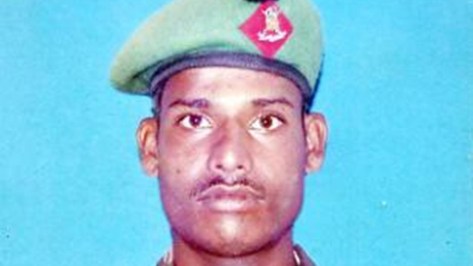
This was the slogan ‘Hanumanthappa hum sharminda hain, tere qatil zinda hain’. (‘Hanumanthappa we are ashamed, your murders are still alive’ ). Lance Naik Hanumanthappa, as we all know now, was a thirty two year old soldier of the Indian army who survived six days under an avalanche on the Siachen Glacier in Kashmir and then died of multiple organ failure in a Delhi military hospital. His young body must have had a tremendous and a passionate yearning for life. Sometimes I think of what a fine father or husband or lover or friend a man who loved life so must have been, could have continued to have been.

Continue reading The Tendency of the Price of Young Life to Fall and the Hope that it May Rise

Who’s Afraid of JNU? Or, The Sedition That Wasn’t: Sania Hashmi

This is a guest post by SANIA HASHMI

JNU Sedition

Over the past couple of days, Zee News has been declaring to the world that Lance Naik Hanumanthappa died because he’d rather not breathe the same air as we at JNU do. That this statement is the worst possible trivialisation of a martyr’s death which is being exploited for petty sensationalism by our own version of the fourth estate is a separate issue, too nerve-wracking to be given precedence over the tragedy that unfolded in our campus yesterday with the arrest of our democratically-elected President Kanhaiya Kumar. A Zee News screen grab showed the word ‘Deshdrohi’ in 72-pt screeching yellow font pasted across Kanhaiya’s unsuspecting face. What was his fault? As an eyewitness from ground zero who was present at Sabarmati at the time of the protest, let me begin by answering the obvious questions that despite the numerous clarifications on part of the students and the JNUSU on social media and elsewhere are meeting deaf ears. It is interesting how despite being told that the Students Union and the student body in general had nothing to do with it and have in no uncertain terms condemned any alleged slogan against our country, the trolls are still putting decibels to shame with the very same questions. And no, I am not just talking about Nupur Sharma. So yes, let me begin by putting a few things on record in respect of Kanhaiya’s arrest. Did Kanhaiya organise the event? NO. Did he raise anti-India slogans? NO. Did he hail Pakistan? NO. Did he intervene to prevent ABVP-instigated violence in his capacity as the President? YES. Has he been vocal against the brahmanical tyranny of the RSS? YES. Has he been tirelessly fighting for the Rohith Vemulas of this world? YES. Has he been a torchbearer for students’ rights across the country? YES. Is this why you have arrested him? Is this your justice? If this struggle for a just society is anti-national in your eyes, we all plead guilty! If this is your witch-hunt for people who cannot conform to your ideological blinkers, we all plead guilty! If we must be party to the violent hooliganism of the ABVP in order to be called patriotic, rest assured, we all plead guilty!

WATCH KANHAIYA KUMAR’S SPEECH HOURS BEFORE HIS ARREST TO SEE WHAT THE GOVERNMENT OF INDIA CONSIDERS ANTI-NATIONAL. Clearly, Kumar’s fault was that he said in this speech that he doesn’t need the RSS’s certificate to be called a nationalist.

Continue reading Who’s Afraid of JNU? Or, The Sedition That Wasn’t: Sania Hashmi

Dissent in dark times : Ajita Banerjie

This is a guest post by AJITA BANERJIE

In the dark times, will there also be singing?

Yes there will also be singing.

About the dark times

– Bertolt Brecht.

In the dark times we live in right now, resistance to fascist forces could lead to arrest or death. Dissent comes with a rather heavy price to pay.Issues of democratic-national relevance  have ranged from consuming beef, resisting death penalty, resisting political control over academic institutions, protesting against privatisation of education and the most recent tragedy of Rohit Vemula’s suicide. Continue reading Dissent in dark times : Ajita Banerjie

Tibetan Artists Silenced at Dhaka Art Summit: Ahmad Ibrahim

This is a guest post by AHMAD IBRAHIM

20160207_200806
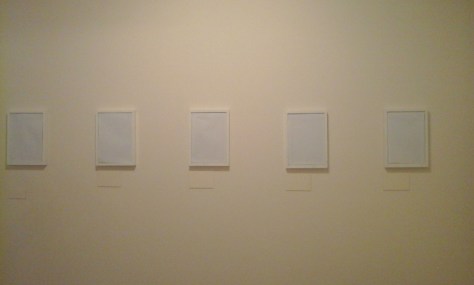
These pictures, which depict blank walls, are symbolic of the attack. Pictures of the original art cannot be shared due to copyright issues.

On the 7th of February, Tibetan artist Nortse and Indian artists Ritu Sarin and Tenzing Sonam had their photographs and art installations removed at the behest of the Chinese ambassador to Dhaka from the Dhaka Art Summit taking place in Shilpakala Academy in the capital of Bangladesh. The art project by Nortse was titled Prayer Wheel, Big Brother and Automan (2007) which showed the artist don traditional Tibetan clothes along with modern objects to show the surveillance that marks their lives. .Ritu Sarin and Tenzing Sonam produced a piece called “Last Words”, which consists of five facsmilies of five last messages written by the self-immolators in Tibet, along with their English translations. Ritu Sarin and Tenzing Sonam depicted Tibetan monks in the act of self-immolation as a way of political and religious protest against the occupation of Tibet by the Chinese government. At the end of the 6th of February, both artists were still depicted on the walls of the Art Summit. On the 7th, what greeted the visitors and patrons were blank stretches of white wall with white frames. It was as if the works had never existed. This is not the first time the Chinese government has tried to shut down political art work that aims to show the real face of Chinese occupation of Tibet. What is even more reprehensible is that it happened inside the walls of an institution that was proclaiming itself to be a haven of bold art and artistic expression. That the Chinese government could go to such lengths to silence an exhibition happening thousands of miles away shows the depth of their oppression over an entire country. Since February 2009, 142 Tibetans have self-immolated in their homeland, 120 dying from their actions.

A link to Tenzing Sonam’s twitter:

A Facebook link to a picture when the exhibit was still standing. 

Ahmad Ibrahim is a Dhaka based journalist.

If You Can’t Beat Them, Join ’em – Or, Ente Dinkeswara!

A new wave, nay, tsunami, of (THE) Faith has risen in Kerala. Soon, it will sweep the Nation.  This is the mighty thrust of Lord Dinkan, now known all over Kerala as Dinkamatam – or Dingoism.

…. Yellow, and black, and pale, and hectic red/ Pestilence-stricken multitudes: O Dinka,/ Who chariotest to their dark wintry bed ... [from ‘Ode to Dinka’ by the early Dinka devotion poet Muroidea Muridae Murinae, later stolen by Shelley and rewritten as ‘Ode to the West Wind’. Note that Dinkan,  superhero airborne rat and Shelley’s West Wind are both powers of the Air]

If you don’t believe me, visit this url:

https://www.dinkoism.com/

Now, like many others, I too was an unbeliever until I went there. One click, and I knew this was truly Faith. Market logic is nowadays the true marker of anything genuine (redefined an anything worth pursuing), and Dinkoism is unmatched in this regard. Even Amritanandamayi who successfully packages and sells all styles of Hinduism (the astrologer-obsessed style, the Saibaba-singing-style, the Sivakasi-print style, the shallow version of the Upanishadic style, the Christian-inflected Hugging-Mother style, the belligerent Hindutvavadi-style) cannot match him. Upon opening this Divine page, my eyes fell upon a notice in Malayalam which said: Mega offer before the world ends in 2012 [that needs updating, I suppose – small error; the spirit is more important] . 100 % guarantee in securing sin-free existence. Many years of service. Ridding of curses undertaken responsibly. We have no branches. Now, what further proof did I need to be convinced that this was the true Faith? Who doubts now that faith in the Logic of the Market precedes faith in faith? The Logos of Dinkan and the Logic of the Market are in perfect harmony!

Continue reading If You Can’t Beat Them, Join ’em – Or, Ente Dinkeswara!

Stop the attack on Rohith’s mother! Solidarity Committee for Rohith’s mother Radhika

STATEMENT BY SOLIDARITY COMMITTEE FOR ROHITH’S MOTHER RADHIKA

We believe there  is a concerted effort on the part of the powers-that-be to diffuse the nation-wide mass protests against Dalit research scholar Rohith Vemula’s death and caste discrimination in higher educational institutions. They are keen to demonstrate that Rohith did not face caste discrimination by claiming that his mother Radhika is not a Dalit. Rather than addressing the critical issues that his death and the protests have raised, these misdirected attempts seek to dissolve the issue in narrow legalese. And thereby somehow save the people named in the students’ complaint from the stringent penal provisions of the SC/ST Atrocities Act. This malicious campaign is unethical, illegal and undemocratic. Continue reading Stop the attack on Rohith’s mother! Solidarity Committee for Rohith’s mother Radhika

The Terror That Is Man: Shaj Mohan

Guest post by SHAJ MOHAN

Manifold is the un-homely, yet nothing is more un-homely than man — Sophocles

The middle of the previous century is understood to be the termination of all kinds of containments of man, having witnessed the worst containment in the Camp[i]. This termination resulted from a crisis that is both philosophical and political: what is the de-termination of man such that he is not the contained? A summary of this scenario is found in a trivial understanding of Foucault’s statements concerning “the end of man” (The Order of Things) and Derrida’s deconstruction of the notion of the “the end” in his essay “Ends of Man” (Margins of Philosophy). As a result of the exigencies of the philosophical and the political, the concept of the state located itself, in the occidental domain, away from the containers. The State would no longer claim to be the clergy and the sovereign of containers such as race and religion. Instead, the State demanded only the right to primary containment—first Indian and then Muslim, first British then White, first Spanish then Basque. The list, the differences, the classification and the management of all the other containers—religion, caste, language, race, public, private—were left up to the new clerics, the new academic disciplines and the NGOs. If all containers were opened up then everything should have flooded out and mixed to form a substance of a new world of people; rather, a substantiality for the in-terminable formation of people. This new people-substance should have dissolved the traces of all the containers, the way science-fiction often imagines the future to be. It should have left for us tales which are the negative of memories, that is, taboos, or myths. For example, the tales that we received about incest from the ancients, the tales of cannibalism in fairy tales, the tales of the world’s resistance to Nazism. Continue reading The Terror That Is Man: Shaj Mohan

Why is the World Ignoring Palestine’s ‘Third Intifada’? Shubhda Chaudhary

Guest post by SHUBHDA CHAUDHARY

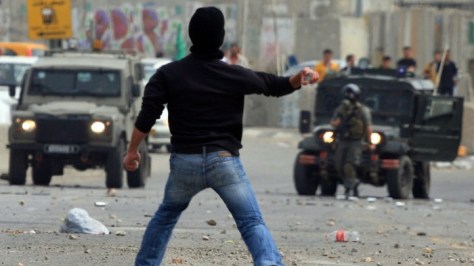
Already ravaged by two political Intifadas in the past, Palestine is now undergoing a third ‘leaderless Intifada’ in West Bank and Gaza. In fact, there is disagreement over whether a leader is even needed. In a striking paradox, several names are being considered for the leadership that does not exist: Jerusalem Intifada, Mass Intifada, Revolutionary Wave and Third Intifada.

Third Palestinian Intifada - On its way or Already Arrived? image courtesy Alwaght
Third Palestinian Intifada – On its way or Already Arrived? image courtesy Alwaght
revolutionary woman intifada streetby Quadraro, image courtesy Deviant Art.
‘revolutionary woman intifada street’ by Quadraro, image courtesy Deviant Art.

As West Asia is too gripped in sectarian conflict and the rise of ISIS, this emerging trend is going unnoticed. But the violence is already cementing the layers of distrust that Palestinians harbor against Jews, with calcifying hatred.

After the desecration of Al-Aqsa Mosque and other sacred Islamic sites in various parts of the occupied Palestine by Israelis, Palestinians have been pouring out on the streets. The retaliatory attacks by Palestinians have claimed the lives of seven Israelis while leaving a number of them injured. It should be noted that the average age of demonstrators and people responsible for stabbing and running over people is less than 20 years old. They were born after the Oslo Accord between the Palestinian Liberation Organization and Israel in 1993 and 1995. They are just coming of age, and it’s hard for them to see any future but a bleak one. Continue reading Why is the World Ignoring Palestine’s ‘Third Intifada’? Shubhda Chaudhary

In solidarity with Rohith Vemula: Concerned students and faculty at the Indian Institute of Management, Calcutta

Open letter to the President of India from Concerned students and faculty at the Indian Institute of Management Calcutta.

To

The President of India

Subject: An urgent appeal to address discrimination and political interference in academic institutions in the wake of the death of RohithVemula.

We, a group of students and faculty of the Indian Institute of Management Calcutta,expressour grief over the loss of the precious life of RohithVemula, a Dalit research scholar, at the University of Hyderabad.The events that transpired in the particular case were indeed tragic, with allegedinfringement of freedom of expression, caste discrimination and partisan interference by the higher State apparatus. This event is symptomatic of the larger malaise of failure of our institutions to provide a climate where students, irrespective of their social backgrounds, could find a way to excel. To create such a climate would require synchronised efforts in the parts of the State, the educational institutions and the society at large. Continue reading In solidarity with Rohith Vemula: Concerned students and faculty at the Indian Institute of Management, Calcutta

Operation Ekalavya : Jhandewala, New Delhi, Rohith Vemula’s Birthday, 30th January 2016

Dear young friends who went to Jhandewala on Rohith Vemula’s birthday,

a1078-rohit-facebook-and-storysize_647_011816123527

And all those who were there in spirit, in Delhi, Hyderabad and elsewhere. I am writing to you because I think you might have all taken things much further than anyone can quite imagine or understand at present.

I am writing to you, for today and for tomorrow, so that every time in the future that young people gather to celebrate their friend Rohith’s birthday, we might all begin to have a different kind of conversation. So that the boundaries between mourning and celebration, between anger and joy may always remain blurred enough for us to know what to do next, each time.

Since you had a close encounter with the police and their colleagues in the RSS on Rohith’s birthday, I want to spend a little time thinking about them with you. Bear with me. I sincerely hope we will not have to bear with them for much longer.

Continue reading Operation Ekalavya : Jhandewala, New Delhi, Rohith Vemula’s Birthday, 30th January 2016

Reclaiming academia: understanding the student movement of our time: Tony Kurian and Suraj Gogoi

This is a guest post by TONY KURIAN and SURAJ GOGOI

Students from different parts of the country started protesting since a Dalit student from one of the premier universities of the country (University of Hyderabad) committed suicide on account of caste discrimination by the administration. This new wave of protests can be traced back to Occupy UGC which erupted when University Grants Commission (UGC) decided to stop the monthly research stipend known as non-net fellowship of Rs 5000 and 8000 for MPhil and PHD respectively. The ministry concerned has since constituted a panel to review the decision on account of student’s protests. On the other hand, we are seeing India becoming part of World Trade Organization (WTO) agreement on higher education. These instances should not be regarded as isolated moments but should be viewed as an integral part of a story unfolding. It is in this context that one should locate the student movement of our time. The movement itself is receiving much media attention, and, it was mostly couched as a student’s movement against the government. For sure, the immediate demands of the students is to ensure justice to Rohith Vemula. The present wave of student movement is aimed at reclaiming academia both from an exclusivist culture which permeates much of our academic institutions, and increasing influence of free market logic in our higher education.

 Why are we seeing a new wave of student protests?

To understand why a movement like that we are witnessing now is extremely important for a vibrant and democratic academic space, we should explore some of the unwritten rules of academia itself and our academic institutions. Research is a long-term investment for the person who undertakes it. Every day he or she spends as a full time researcher is a day forgone from the job market. For a research scholar to earn a permanent job, it can take anywhere between five to ten years after the master’s programme.

Continue reading Reclaiming academia: understanding the student movement of our time: Tony Kurian and Suraj Gogoi

Saluting Rohith Vemula on Republic Day: Meena Kandasamy and Ravichandran Bathran

Meena Kandasamy in The Hindu:

Rohith, you have left behind your dream of becoming a science writer like Carl Sagan, and left us with only your words. Each of our words now carries the weight of your death, every tear carries your unrealised dream. We will become the explosive stardust that you speak of, the stardust that will singe this oppressive system of caste. Within every university, every college, every school in this country, each of our slogans will carry the spirit of your struggle. Dr. Ambedkar spoke of caste as the monster that crosses ones path every way one turns, and within the agraharams that are the Indian educational institutions, our very physical presence must embody the message of caste annihilation. Let every despicable casteist force wince when they encounter a Dalit, a Shudra, an Adivasi, a Bahujan, a woman staking claim within academia, let them realise that we have come here to end a system that has kept trying hard to put an end to us, that we have come here to cause nightmares to those who dared to snatch our dreams. Let them realise that Vedic times, the era of pouring molten lead into the ears of the Shudras who hear the sacred texts, the era of cutting the tongues of those who dared to utter the knowledge that was denied to them, are long gone. Let them understand that we have stormed these bastions to educate, to agitate, to organise; we did not come here to die. We have come to learn, but let the monsters of caste and their henchmen bear in mind that we have come here also to teach them an unforgettable lesson.

Read the rest of this tribute here.

RAVICHANDRAN BATHRAN in Tehelka

A person who is conscious of and sensitive about caste discrimination is certain to become alienated in every psychological, emotional, social and political sense in today’s campuses that breed free-market-loving, reservation hating students who benefit from caste-intensive social networks. This is why the Dalit and anti-caste students’ movement is crucial in democratising our campuses. These outfits question the present, past and future of the society we live in. They may be few in number and not always successful, but their actions are solely committed to the welfare of Dalit students as they have no other support system in our campuses. I am proud to say that many like me are the product of such movements in the universities.

Read the whole article here

Manipur Tribals Protest on Republic Day: Ajita Banerjie

Guest Post by AJITA BANERJIE

Untitled 2

As the country prepares itself in all the glory to celebrate Republic Day, nine bodies remain unburied in Churachandpur. With what started as a local strife between the protesting tribals and the police, the struggle is now for a graver concern – land, rights and identity.

On 31st August 2015, several young people from the tribal communities in Churachandpur took to the streets protesting against the three controversial bills. The Protection of Manipur People Bill, 2015, the Manipur Land Revenue and Land Reforms (Seventh Amendment) Bill, 2015, and the Manipur Shops and Establishments (Second Amendment) Bill, 2015, were passed unanimously by the Manipur Assembly and were a response to the earlier demand of introducing the Inner Line Permit. The protest turned violent and in the clash, nine young civilians were killed by brutal police force. Out of the nine, the youngest to have lost his life was an eleven year old boy who was shot dead by the police. What seemed like collateral damage in a political strife, became a symbol of revolution for the hill tribes. To stage their protest, the families of the 9 martyrs have refused to bury the bodies until the government takes cognizance of their demands to withdraw the three bills that threaten the very basic rights of the tribals and makes them refugees in their own land.

Continue reading Manipur Tribals Protest on Republic Day: Ajita Banerjie

Academics protest Rohith Vemula’s death

Statement by concerned scholars

The suicide of Rohith Vemula is now the subject of a ridiculous inquiry to be conducted by a Committee set up by Union HRD Minister Smriti Irani. The real reason and the politics behind it are clear to those who are willing to open their eyes. As academics, we are concerned that such a situation should prevail in Universities, and wish to register our protest.

Muzaffarnagar Baaqi Hai was to be screened at the University of Hyderabad. The action was planned by the Ambedkar Students’ Association. The Akhil Bharatiya Vidyarthi Parishad, student goons of the RSS, used force to try and halt this. Dalit students were subjected to verbal abuse as well as physical force. As a result of agitations the ABVP had to apologise in writing. This was what caused such tremendous heartburn to the Hindutva forces. While the screening of Muzaffarnagar Baaqi Hai has taken place in various parts of the country, and has also given rise to conflicts in various parts of the country, it is in UoH alone that the consequences turned so aggressive with full participation of the top echelons of the University. The new Vice Chancellor, Appa Rao Podile, had five PhD students suspended. They were subjected to social ostracism as well. Thrown out of hostel, debarred from entering library, administrative spaces, they were hounded in a way that no administration has hounded any upper caste student in our memory. It is also reported that an MHRD letter designated them anti-national for opposing the hanging of Yakub Memon. The MHRD, today  proclaiming autonomy of Universities, was goading UoH through several letters to take action against the ASA. Rohith had even written a letter to the Vice Chancellor a couple of weeks ago, where he suggested the University provide means of committing suicide to Dalit students. Even after this the authorities did nothing. And after the suicide, the police acted in a brutal and shameless manner, grabbing the body of Rohith and disposing of it in secrecy instead of handing it over to his relatives. 

Continue reading Academics protest Rohith Vemula’s death

“Nobody killed Rohith Vemula”: Kishalaya Mukhopadhyay

This is a guest post by KISHALAYA MUKHOPADHYAY

“Nobody killed Rohith Vemula”. Perhaps someday there will be a film like this. Perhaps someday people will start talking about the exploitation of dalits, the need for annihilation of caste, the systematic discrimination in all spheres of society including the government, corporate, bureaucratic and educational sectors. Perhaps caste as an analytical category will become as politically charged as gender has become post-Nirbhaya. Today there is a discourse around marital rape, victim blaming, domestic violence and other aspects of patriarchy that has transcended even if slightly only the small coterie of feminist scholars within whom this discourse used to be limited to. Continue reading “Nobody killed Rohith Vemula”: Kishalaya Mukhopadhyay

अता मोहम्मद खान के लिए दो मिनट का मौन

एक ‘कब्र खोदनेवाले’ के जनाज़े में इतने लोग शायद पहले कभी नहीं जुटे हों। अलबत्ता पिछले दिनों जब 75 साल की उम्र में अटटा मोहम्मद खान का इन्तक़ाल हुआ, तब यही नज़ारा दिख रहा था।
उत्तरी कश्मीर के सीमावर्ती शहर उरी के चहाल बिम्बयार गांव के निवासी रहे अटटा मोहम्मद खान ने अपने घर में ही अंतिम सांस ली थी। लम्बे समय से वह अस्थमा से पीड़ित थे। सोचने की बात थी कि ऐसे शख्स के लिए इतने सारे लोग क्यों मातम में थे ?
असल बात यह है कि वह कोई मामूली ‘कब्र खोदनेवाले’ नहीं थे। वह कश्मीर के रक्तरंजित इतिहास के एक ऐसे साक्षी थे, जिन्होंने अपनी रेगिस्तानी आंखों में बहुत कुछ समेट कर रखा था। वह कश्मीर की सिविल सोसायटी में चर्चित चेहरा थे, जबसे उन्होंने सूबे में फैली अचिन्हित कब्रों (unmarked graves) को ढंूढने में इन संस्थाओं की सहायता की थी। और जब हुक्मरानों की तरफ से बुलावा आया तो किसी से बिना डरे खुल कर वह सबकुछ बयां किया था। कुछ साल पहले राजधानी से निकलने वाले एक अंग्रेजी अख़बार /’Tragedies buried in Kashmir’  , मेल टुडे ने 28 मार्च, 2008/ ने जब कश्मीर में दफनायी गयी इन तमाम त्रासदियांे को उकेरना चाहा, तो अनाम, अचिन्हित कब्रों की अपनी रिपोर्ट में अट्टा मोहम्मद खान से भी की गुफतगू शामिल थी। वर्ष 2013 में उन्होंने अपना बयान निबंधों की एक किताब में दर्ज किया था, जिसका संकलन स्थानीय पत्रकार फहद शाह ने किया था।

Continue reading अता मोहम्मद खान के लिए दो मिनट का मौन