Category Archives: Violence/Conflict

A Case of Dalit Assertion Over Adivasi Land: Agrima Bhasin

Guest post by AGRIMA BHASIN

“We won’t beat you at your house, we will beat you in the bazaar, in front of everyone!” A common caveat, often hurled at a dalit by an upper caste. But in this case, they were dalit men who spat this warning at a tribal family. A group of dalits in Alampur village, Sagar district, Madhya Pradesh are forcefully asserting their rights (since 2003) over a belt of forest land belonging to Balram, a tribal resident and his family. The family have farmed the five acres of land for 40 years and were finally awarded forest rights over it by the state government of Madhya Pradesh in 2009. Continue reading A Case of Dalit Assertion Over Adivasi Land: Agrima Bhasin

Reject amendments to UAPA – An appeal to members of the Rajya Sabha: JTSA

This release was put out by the JAMIA TEACHERS’ SOLIDARITY ASSOCIATION on 3 December 2012. Full list of signatories at the end.

It is saddening and surprising that at a time when more and more evidence is surfacing about the extensive abuse of anti-terror laws in targeting minorities, tribals, deprived sections as well as political activists, the government has chosen to move amendments in the present UAPA 2008. These amendments will make the law even more draconian and amenable to human rights violations.

 You will remember that the amendments in the Unlawful Activities Prevention Act 1967 were passed in December 2008 without any thoroughgoing debate in the aftermath of the horrendous carnage in Mumbai. The Bill was not referred to any Parliamentary committee despite calls by several members for such a scrutiny and consultative process. Whilst the widespread sense of shock and reprehension at the Mumbai killings may have been weighing on the minds of the Hon’ble Members of Parliament then, four years later, surely, there is no reason to push through the amendments without a wider debate.   Continue reading Reject amendments to UAPA – An appeal to members of the Rajya Sabha: JTSA

Kurdistan, a Forgotten Nation of 40 Million People: Kamal Chomani

Guest Post by KAMAL CHOMANI

It has been for about 13 months I am living in Bangalore, India. I am here to study masters. India to me, as it is, is incredible. I feel as if I am at home. People here are friendly. My teachers and colleagues are just great. I have to confess that for a student that is his first time to leave his home for such a long time, certainly, will face many difficulties, but no difficulties have hurt me as much as a question of Indian people ‘where are you from?’

I am from Iraq, but Iraq is not my country. I cannot speak Arabic which is the official language the country. Luckily three more Iraqi people are with me who have helped me to manage my Arabic. My culture is different from Arabs. I don’t want to look like a nationalist, because I am telling the truth. I am a Kurd! My mother tongue is Kurdish. My homeland is Kurdistan.

So, who are the Kurds?

Kurdish community in Italy protesting for Ocalan's release. Photo courtesy demotix.com
Kurdish community in Italy protesting for Ocalan’s release. Photo courtesy demotix.com

Kurds are the original inhabitants of Middle East. They are the biggest stateless nation around the world that they are still struggling for freedom and independence. They have been forgotten by the world.

Yes, Kurds are a forgotten nation of 40 million populations. In India, few people know who Kurds are. I am really surprised when some Indians ‘love’ Saddam Hussein, the former Iraqi president. Saddam has killed more than 300,000 Kurds. He used poisoned gas against Kurds and killed 5000 Kurds in only one hour in Halabja, which is known as Hiroshima and Nagasaki’s sister! He mass murdered more than 182,000 Kurds in Anfal (Genocide) operations. The Anfal case is going to be an international case. Sweden Parliament has just decided to recognize it as a genocide act against humanity. In UK, Kurdish people have started a huge campaign to make pressures on UK parliament to recognize as Genocide. Continue reading Kurdistan, a Forgotten Nation of 40 Million People: Kamal Chomani

Sex, Lies and God’s Promise: Response to a Diatribe

An article titled “In Defence Of Israel” is being circulated to media-persons in India by the Spokesman of the Embassy Of Israel in Delhi. This article, published in Open magazine, was written by Jonas Moses Lustiger (a student based in Paris, who has earlier lived in India).  The article names me specifically, and refers to mine and Aditya  Nigam’s posts on Palestine in Kafila, but I was not interested in engaging with Lustiger’s largely ill-informed, propagandist and misrepresenting rant. But now that it appears we are responding directly to the Israeli state, I feel perhaps I should put some things on record.

(Our three posts on Kafila are Nakba and Sumoud, Living the Occupation and Imagining Post-Zionist Futures)

 Let me begin by stating my complete agreement with Lustiger on three of his key statements in the Open article.

First:

It is true that Israel’s current government is one of the worst it has known and most of its citizens have lost hope for peace. It is also true that Israeli society is turning more racist, intolerant and ignorant of the suffering and existence of their immediate neighbours—Palestinians. Of course, the Palestinian people have been denied many rights and have been living under precarious conditions since Israel’s 1967 occupation of the West Bank and Gaza. True, they have been repeat victims of unjustifiable violence and a large proportion of Israeli politicians deny their claim to an independent land, even as Israel threatens the viability of a Palestinian state by wielding tools of colonisation. 

Pretty much sums up our three posts on Kafila – what’s not to agree?

Second:  Continue reading Sex, Lies and God’s Promise: Response to a Diatribe

Abolition of Death Penalty – A Time for National Reflection: PUCL

This release was put out yesterday by the PEOPLE’S UNION FOR CIVIL LIBERTIES

The secretive and stealthy hanging of Ajmal Kasab in Pune’s Yerwada Prison yesterday, 21st November, 2012, brings to an end the legal process involved in trying Kasab for the brutal assault by trained terrorists from across the border on Mumbai, the commercial capital of India which left 166 persons dead.

The Mumbai carnage of November 2008, more popularly abbreviated to a single term `26/11,’ constitutes one of the most heinous and deliberate attempts in recent years to cause mass mayhem and terror in India. Kasab was the only member of the terrorist team sent from Pakistan apprehended alive; he was caught on film diabolically using his modern automatic weapon in a cold blooded fashion, killing numerous people. The hanging, and the trial and legal proceedings which preceded it,  admittedly  complied with existing laws which permit death penalty, and cannot be faulted as such.  While it may be argued, as many do  that the hanging will help in an `emotional closure’ to the families of victims of 26/11, there are others who point out that other key issues still remain to be addressed.  Families of victims in specific, as also other concerned citizens, have pointed out that Kasab was only a foot soldier and not the mastermind, who still remain at large. Continue reading Abolition of Death Penalty – A Time for National Reflection: PUCL

Why I was saddened by Kasab’s execution

Rejoice, fellow Indians. Ajmal Kasab has been hanged. But please excuse me, I am not joining you. Your cheering and hooting and hurrahs feel like a medieval lynch mob celebrating the death of the sinner and not the sin. Barbaric is the word that comes to mind.

This isn’t merely about the morality or aesthetic of capital punishment. I want to ask you: what did we just achieve? Ten terrorists had come to kill and be killed, to cause maximum damage of the sort that they surely knew they’d be killed. Nine of them were killed in direct encounter. Did we hail their deaths? Do we say their deaths were justice? So if we killed Ajmal Kasab four years later- “with due process” – what exactly have we achieved? Continue reading Why I was saddened by Kasab’s execution

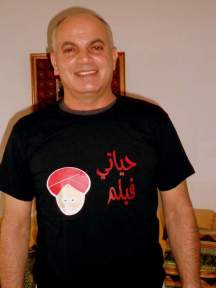
Amitabh Bachchan in Gaza

T shirt from shop in Ramallah. The Arabic text reads, “My life is an Indian film”. Photo by Sunaina Maira.

Radhika Sainath writes:

Palestinians in Gaza love Indians. They love Indian dancing, they love Indian music, they love Indian clothes. Whenever I walk out of the house, someone inevitably asks “hiyya hindeyee?” Is she Indian? ”I knew it!” they say when the response is in the affirmative. “Bheb al Hind,” I love India….

So Amitabh, Abhishek, Aishwarya, Amir, Hrithik, Kareena, Salman, Shahrukh, if you’re reading this, how about a shout out to 1.5 million of your biggest fans in the Gaza Strip? Israel has forbidden pasta, tea, cement and freedom flotillas from entering Gaza, but it hasn’t stopped Bollywood. We watch you under the Israeli drones and the F-16s, after being shot at by the Israeli navy and army while fishing, picking olives or going to school. You bring a sliver of joy to people living under the world’s longest occupation in the world’s largest prison, and for that we thank you.

Read the rest of this post by Radhika Sainath at Notes from Behind the Blockade Life: politics and nonviolent resistance inside the Gaza Strip.

Satyameva Jayate? On the impending execution of Afzal Guru

Someday, we will count how many minutes it took for television in India to start baying for Afzal Guru’s blood (once again) after Ajmal Kasab was buried in Yerwada Central Jail in Pune.

A man called Mohammad Afzal Guru, son of Habibullah Guru, currently resident in Ward Number 6 of Jail Number 1 in Tihar Central Prison in Delhi will hang to satisfy the bloodlust of the Indian Republic, unless the President of India decides otherwise. This text is an attempt to make us think about this decision and its ramifications carefully.

Continue reading Satyameva Jayate? On the impending execution of Afzal Guru

A 26/11 victim who refuses to celebrate Kasab’s execution

While the media has reported most families of those who died in 26/11 as hailing the execution of Ajmal Kasab, Bollywood actor Ashish Chowdhry refuses to be one of them. His sister Monica and her husband were amongst those who were killed at the Oberoi trident hotel. Given below are screenshots of Chowdhary’s tweets. Read from the last tweet upwards. Continue reading A 26/11 victim who refuses to celebrate Kasab’s execution

Ek Tha Tiger: Death and Bal K. Thackeray

We have reasons to be grateful that Bal K. Thackeray has died, a normal, natural death. Several of those whom he admired, didn’t. Adolf Hitler, the fellow ‘artist’ he often invoked, killed himself, his mistress and his dog. Indira Gandhi, and her son Sanjay, the mother and son firm of despots that Bal Thackeray endorsed, didn’t go gently into the night either. Sanjay Gandhi, the ‘bold young man’ whom Thackeray recognized as a fellow spirit came spiraling down in his own airplane, demonstrating that the indifferent sky does occasionally listen  to the prayers of the earth to alleviate its burden. Indira Gandhi and her son Rajiv both fell to the forces that their own ruling dispensation had nurtured, Khalistani zealots and the LTTE.  Bal Thackeray was lucky to have lived as long as he did, sipping his lukewarm beer, spitting out his bile. Very lucky. As for us, we are fortunate that Thackeray did not get to go down as a Maratha martyr, just as a lapsed cartoonist, a would-be caudillo and a has-been demagogue. Continue reading Ek Tha Tiger: Death and Bal K. Thackeray

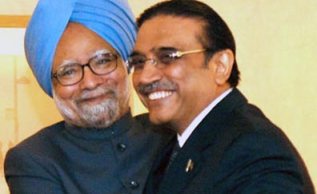
Why Manmohan Singh should not visit Pakistan

Dr Manmohan Singh is the longest serving Indian prime minister since Jawaharlal Nehru, but history will perhaps note more pertinently that he was the most discredited and unpopular prime minister since Chandra Shekhar Singh, who was in office for a mere eight months. So spectacularly disastrous has his second term in power been that the speed of political crises he battles is now more than one a week. Few will be able to count a single achievement of UPA-2.

And yet there is one achievement, and that is his handling of Pakistan.

The Indian home secretary was returning from a very positive visit to Pakistan when 26/11 happened. The 2008 terrorist attacks in Mumbai shocked not just India but the world. They were not like the bomb blasts we have become accustomed to; their impact was much more than 166 lives. They held India’s commercial capital hostage. They were an act of war and few even in Pakistan pretend that those attacks did not originate from Pakistani soil, across the Arabian Sea. Few in India buy the theory that state actors in Pakistan were not involved. Continue reading Why Manmohan Singh should not visit Pakistan

Imagining Post-Zionist Futures – Israeli Apartheid and Palestinian Resistance III

This post is the third of a series based on a visit by Nivedita Menon and myself to Palestine in mid-September 2012. The first two are Nakba and Sumoud and Waiting for the Third Intifada.

It was the 18th of September, our third evening in Ramallah. We were at the Ramallah Cultural Palace to listen to Palestinian youth bands perform. The place was teeming with people, mostly young, in their twenties and thirties. The hall was packed, the atmosphere so electric that even if Magid had not been there to explain, there was no  way we could have missed the excitement and the anger that the songs evoked in the  audience. Interestingly, not all the songs were about Zionist oppression and the travails of everyday life in occupied Palestine.  When a song critical of the PA (Palestinian Authority) began, the hall went up in spontaneous applause, endorsing the  sarcastic lyrics directed at PA that has lately been involved in carrying out repression on its own population.

Liberation Graffitti on Wall in Ayda camp, Photos AN/NM

The complexity of the current phase of the movement arises from the fact that now, the new forces of Palestinian liberation are arrayed, not merely against Israeli occupation but also against this entity called PA and the Oslo Accords that put in place the political arrangements that mark the division of territories today. An arrangement that was supposed to be merely an interim one lasting but a few years, until the question of Palestinian statehood could be settled, has become a quasi-permanent one that is seen to threaten the longer-term goal itself.

Continue reading Imagining Post-Zionist Futures – Israeli Apartheid and Palestinian Resistance III

The Uttar Pradesh administration has a prominent role in the burning of Bhadarsa: Rihai Manch

This release was put out by the RIHAI MANCH on 9 November

Jannatunisa, a victim of violence in Bhadarsa

Faizabad 9 November 2012: An investigation team of Rihai Manch visited the Bhadarsa village which was affected by communal violence during Dussehra celebrations. The team found out that the violence was well planned and was executed by communal elements in connivance with the administration. The role of the media in this incident is also suspicious. The team also found that the administration is forcing the affected families to erase any evidence of the incident and they have not even been compensated. No FIR has yet been registered yet. The team has also requested the Sheetla Singh Investigation Commission (constituted by the Press Council of India) to visit the area. Continue reading The Uttar Pradesh administration has a prominent role in the burning of Bhadarsa: Rihai Manch

भदरसा के जलने में प्रशासन की अहम भूमिका: रिहाई मंच

This release in Hindi about recent communal violence in the Bhadarsa area of Faizabad district of Uttar Pradesh comes to us from the RIHAI MANCH. Please help us translate this into English by translating just one paragraph in the comments

Jannatunisa

फैजाबाद, 9 नवम्बर 2012। रिहाई मंच के जांचदल ने दशहरा के दौरान हुयी साम्प्रदायिक हिंसा से प्रभावित भदरसा गांव का दौरा किया। जांच दल ने पाया कि भदरसा में हुयी हिंसा पूरी तरह सुनियोजित थी जिसे साम्प्रदायिक तत्वों और प्रशासन की मिलीभगत से अंजाम दिया गया जिसमें मीडिया की भूमिका भी संदिग्ध थी। जांच दल ने यह भी पाया कि प्रशासन की तरफ से आगजनी से पीडित परिवारों से घटना के साक्ष्य जबरन मिटवाए जा रहे हैं जबकि पीडि़तों को न तो उचित मुआवजा मिला है और ना ही एफआईआर दर्ज किये गये हैं। जांच दल ने प्रेस काउंसिल द्वारा गठित शीतला सिंह जांच आयोग से भी भदरसा जाने की मांग की है। Continue reading भदरसा के जलने में प्रशासन की अहम भूमिका: रिहाई मंच

“We may weep but we will stay”: Women resist evictions in Palestine: Kalyani Menon Sen

Guest post by KALYANI MENON SEN

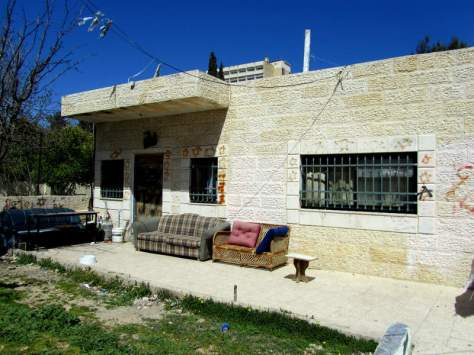
Umm Nabil’s settler-occupied house is painted with Israeli symbols. (Photo: Aruna Rao)

Umm Nabil al Kurd is 82 years old. She is tiny and frail – her hands tremble as she takes the mike. But her voice is steady as she describes how she lost her home.

“We came to Jerusalem from Haifa as refugees in 1948” she says. “The Jordanians allotted us our house. We have lived there for 60 years – my children were born there. It was small and broken when we moved in – we extended it and improved it as our family grew. We planted a garden. When my son got married and the grandchildren came, we built a separate unit for him at the back of the main house. We built with our own money, with our own hands. Then, two years ago, the Israelis came with the police and told us to leave. They said the house was theirs. They pushed me to the ground, called me filthy names, turned their dogs on me. They threw out our furniture and moved into the house. We went to court but the judge said we were occupying the house illegally – he told us to pay 100,000 shekels as rent for the years that we had lived in the house. We had to pay – my husband would have been imprisoned if we did not. We are still fighting the case – the next hearing is in July but I don’t know if we will ever get the house back.” Continue reading “We may weep but we will stay”: Women resist evictions in Palestine: Kalyani Menon Sen

Israeli Apartheid and Palestinian Resistance II – Living the Occupation

Planning to visit Palestine? Good news, Indian citizens don’t need a visa to enter Palestine. One small thing though. Palestine is occupied, and you cannot enter Palestine except through Israeli border control. The occupied Palestinian territories (OPT) have no control over their external borders.

Entry to Ayda refugee camp in the West Bank, established in 1950. The key is the symbol of the Right of Return of Palestinians. (Photo AN/NM) 

Whether you fly in through Ben Gurion airport in Tel Aviv, or enter by road from Jordan or Egypt – it’s an Israeli visa that is required – there is no such thing as a visa to Palestine. Indeed, from the point of view of the occupying state, there is no Palestine, only Palestinian Territories – that is, West Bank and Gaza, the two green bits in the fourth map reproduced in the previous post. (There are also no Palestinians, according to Israeli state classifications – there are Israelis and there are bureaucratically differentiated Arabs, as we’ll see below). Continue reading Israeli Apartheid and Palestinian Resistance II – Living the Occupation

Why is Naipaul Being Honoured?: Girish Karnad

This is the text of GIRISH KARNAD‘s speech at the Mumbai Literature Festival, as compiled by Outlookindia.com from various sources.

On Friday afternoon at the Tata Literature Live! festival in Mumbai, playwright Girish Karnad surprised audiences with an unexpected and spirited critique of Nobel laureate Vidia Naipaul. Naipaul was awarded the Landmark and Literature Alive’s Lifetime Achievement Award on October 31. Karnad was originally supposed to talk about “his life in theatre” in his session, but instead launched into a scathing critique of Naipaul and the conferral of the award to him

This is what he said at the festival:

At the Mumbai Literature Festival this year, Landmark and Literature Alive have jointly given the  Lifetime’s Achievement Award to Sir Vidia Naipaul.

The award ceremony held on the 31st of October at the National Centre of the Performing Arts coyly failed to mention that Naipaul was not an Indian and has never claimed to be one. But at no point was the question raised. Continue reading Why is Naipaul Being Honoured?: Girish Karnad

Allah Baksh, a people’s obituary: JKCCS

This release was put out yesterday by the

JAMMU & KASHMIR COALITION OF CIVIL SOCIETY

On 24 October 2012, the news of the death of former Deputy Inspector General [DIG] Allah Baksh broke out. Politicians, government officials, business groups, and certain elite sections of the Kashmir valley shamelessly competed with each other in offering condolences.

It is a shocking phenomenon which JKCCS condemns as Allah Baksh was notoriously known for his involvement in the 21 January 1990 Gaw Kadal massacre when he was the Deputy Superintendent of Police [DSP]. The Gaw Kadal massacre was one of the first massacres in the post-1990 armed conflict in which reportedly more than 50 civilians were killed. For this massacre an FIR was registered against the dead and surviving civilians [3/1990 Police Station Kralkhud] but no one was held accountable for the massacre itself.

Continue reading Allah Baksh, a people’s obituary: JKCCS

Boycott Zionazi Apartheid at Delhi International Arts Festival!

[Posted below is a statement by artistes, writers and the Indian Campaign for the Academic and Cultural Boycott of Israel. The statement is self-explanatory. However, as we shall be explaining in a series of posts on Kafila soon, Zionism in Israel has perfected the most hated techniques of their own twentieth century tormentors, the Nazis, against the people of Palestine. Worse still, it has given these techniques a veneer of ‘normalcy’ – and every ‘cultural exchange’ with Israel only helps further normalize this most despicable form of colonial occupation.  ‘Settlements’, in this game of occupation, become the mode of annexing more and more of the Palestinian territory through settling of civilian Jewish populations in what still remains of Palestinian areas. – AN]

Call to boycott The Cameri Theatre at the Delhi International Arts Festival 2012

The organizers of the Delhi International Arts Festival (DIAF) — the Prasiddha Foundation, the Hindustan Times and the Indian Council of Cultural Relations (ICCR) — have invited The Cameri Theatre from Israel to perform at Siri Fort on November 4th as part of the Festival’s celebration of “the spirit of Delhi”.

The Cameri Theatre serves as an official propaganda tool for the State of Israel — a state that occupies Palestinian lands and practises apartheid policies on the Palestinian people. The Cameri theatre is complicit in the Israeli Occupation of Palestine because it chooses to perform in the illegal settlement of Ariel. Ariel is one of the largest settlements in the occupied West Bank, located on expropriated agricultural Palestinian land. The construction of Israeli settlements on occupied Palestinian land violates international law, and amounts to a war crime.

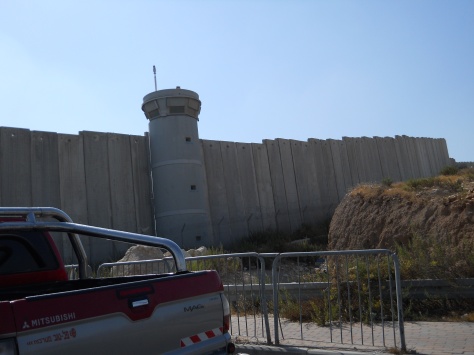
The apartheid wall with watch tower - photo taken during a visit in September
The apartheid wall with watch tower – (photo AN/NM) taken in September

Illegal Ariel contaminates Palestinian water and agricultural lands. Illegal Ariel is surrounded by walls and fences, and closely guarded by soldiers and armed security personnel. A theatrical performance in this illegal settlement is, by definition, a performance to an exclusively Israeli audience. Palestinians living even in the nearest village are physically excluded from attending. By performing in such circumstances, the Cameri profits from and legitimizes Israel’s illegal colonization policies, and becomes an accomplice to these crimes.

Continue reading Boycott Zionazi Apartheid at Delhi International Arts Festival!

The Beginning of the Middle of the End: Haseeb Asif

Guest post by HASEEB ASIF

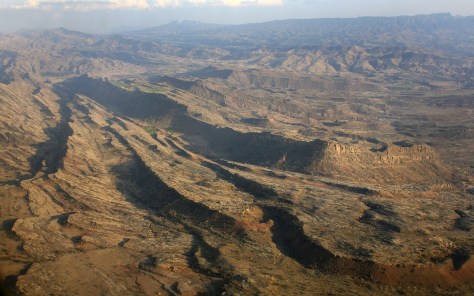
Pakistan’s remote North Waziristan tribal area is seen from the air Feb. 17, 2007. Photo by John Moore/Getty Images

One day as I walked to the market to buy some eggs, I noticed strange graffiti on a wall. Emblazoned in red paint was an invitation to join the fight against zionist subversion, western imperialism and painful hemorrhoids; the end having been muddled with a physician’s note.

It was an open call to Jihad by a militant Islamic organization. Jihad! The camaraderie, the righteousness, the third degree burns; it’s all I’d ever wanted. I was tired of being oppressed. There I was, in the prime of my youth, jobless, eggless, with subnormal visual acuity and four strands of the dengue virus, and who was to blame? I could imagine the conversation with my therapist.

“Doctor, I’m moody, I can’t sleep and I never seem to have enough energy to do anything.”

“Why, I believe you’re suffering from oppression”

I called their toll free number and signed myself up. They sent me a brochure and a medical plan; both had pictures of the same mutilated bodies.

‘Jihad summer camp, three months, graduating candidates get a certificate of martyrculation and up to 72 virgins in heaven (note: amount varies according to stock), HEC accredited, facial hair mandatory’.

I consulted with my parents, my mother was thrilled; she’d always wanted a martyr in the family. Father just grunted and made a time honoured gesture with his middle finger.

Two days later a brother Mehsud showed up at my door, he’d been sent by the organization to escort me back to their base.

“It’s a great thing you’re about to do, brother.” I was only packing my clothes. Continue reading The Beginning of the Middle of the End: Haseeb Asif

To Build A Bridge in Kashmir: A fable by Abhijit Dutta

Guest post by ABHIJIT DUTTA

Once upon a time, a young politician – young enough to have a ‘baba’ appended to his name – came to Kashmir to build a bridge in Srinagar. Now as anyone who knows Srinagar knows, the city is filled with bridges. Some are famous, like Gawkadal, some are pretty, like Zero Bridge, and some are simply without charm, like the Abdullah Bridge that goes from fountain square to Rajbagh. There are several others too, each with their own unique character, their own unique relation to the Jhelum.

When he was told about the many bridges in Srinagar, the politician shouted, “I want to build a bridge.”

“But we don’t need a bridge,” said a man softly to him, wanting not to embarrass this well-meaning man who had come to Kashmir from aafar. In response, the young politician turned around and shouted once again: “I want to build a bridge.” Continue reading To Build A Bridge in Kashmir: A fable by Abhijit Dutta