
Our panel was a queer one in all the wonderful senses of that word. At trainings with lower court judges on sexual violence laws in the Saket District Courts in Delhi, the five of us would find ourselves next to each other every few months. On a dais surrounded by that distinctly sarkari flower arrangement, first sat Suzette, a survivor of a brutal rape in a moving car in Park Street in Kolkata. Then in line: a survivor of an acid attack; a representative of a sex workers union; a well known hijra activist and I, speaking as a gay man. We were usually on the third day, right after lunch, when we would face nearly a hundred slightly sleepy judges from the region. They had been updated on new sexual violence laws, gone through a case exercise on how to apply them, been given a CD, a folder, the requisite handouts. The boxes were ticked. Technically, they were up to date. Ours was a different job: to animate, if such a thing is possible, a sense of empathy in the judges, to shift even slightly the way they thought of the rainbow of dubious morality that we represented.
South Africa in the Twilight of Liberalism: Richard Pithouse
[Note: Recent events in South Africa – from raging student movements across university campuses to xenophobic violence in the streets of Durban – seem to echo so many struggles both inside and outside the university “here.” This is the first of hopefully several posts from South Africa, that seek to listen and travel across.]
Guest Post by RICHARD PITHOUSE
South Africa was supposed to be different. We attained our freedom, such as these things are, after everyone else but Palestine. It was late in the day but the afternoon sun was glorious and the best people, people who had passed through the long passage of struggle, told us that we would be able to avoid the mistakes made everywhere else.
There was a mass movement that, whatever its limits, had won tremendous popular support and carried some noble ideals through its travails. Its leaders cast long shadows. Our Constitution, we were always told, was as good as they get. Liberalism, apparently vindicated by history, had its evident limits but there was, it was said, lots of room for deft manoeuvre within those constraints. We were assured that there was room for everyone at what Aimé Césaire had called the ‘rendezvous of victory’.
For a long time the presence of all kinds of features of the past in the present was widely understood as something that would be resolved in time. Land would be redistributed, schools would flourish, houses would be built, there would be jobs – the kind of jobs that reward hard work – and universities would emerge, bright and bold, from their cocoons spun by settler culture. Time, it was generally believed, was on the side of justice and the eventual redemption of the suffering, striving and struggles of the past.
Continue reading South Africa in the Twilight of Liberalism: Richard Pithouse
Media and the Death of Democracy: Nissim Mannathukkaren
Guest Post by NISSIM MANNATHUKKAREN
We live in a world where there is more and more information, and less and less meaning—Jean Baudrillard
Recently, there has been an outpouring of scathing critique against Arnab Goswami and his television programme, The Newshour in some sections of the English-language Press. One magazine cover story called him, “The Man Who Killed TV News.” The immediate context of this critique is Goswami’s branding of some prominent ecological and political activists as “anti-national” and his calling for a ban on the Nirbahaya documentary and legal action against a competing channel which was supposed to be air the documentary. This unprecedented and shockingly ironic position against free speech by a leading media personality was rightfully termed by a critic “as low as a journalist can sink.”
While these criticisms of the “murderous rage” evoked by Goswami draped in the nationalist tri-colour every night and the punishment he metes out to his opponents in a “medieval-style kangaroo court,” also known as an “open debate,” are entirely apt and necessary, they also miss the forest for the trees. Goswami is only a symptom of the post-liberalization corporatized and privatized media landscape of India. If Goswami did not exist, he would have been created. It is not Goswami alone who has killed news, it is the vast majority of the media, especially, television that has done so. What is more obscene than Goswami’s execrable theatrics is how he is deeply enmeshed in the structures of capital and power that he seemingly rails against every night. These structures have not just enmeshed him, but the others as well who are aghast at his aesthetics (or the lack of it). Continue reading Media and the Death of Democracy: Nissim Mannathukkaren
Why are we always Encroachers? Tribal farmers in Khammam District, Telangana: Vasudha Nagaraj
Guest Post by VASUDHA NAGARAJ
Korsa Subba Rao, a man from Koya tribe, cultivates about three acres of forest land in a village in Khammam district. His family has been doing so for several generations. Subba Rao has a ration card, voter identity card, Aadhar Card and a NREGA job card. However, for the land that he tills, he has no papers whatsoever. Ironically the only evidence he has is an FIR issued by the Forest department. For committing a forest offence of encroaching into the forest – cutting down trees and putting it to podu cultivation.
Like Korsa Subba Rao, in Khammam district, there are thousands of farmers belonging to Koya, Konda Reddis and Lambadi tribal communities cultivating one to four acres in forest lands. Most of them have been cultivating since the times of their forefathers. Often this is their only income. However, factors such as scanty rain, untimely rain or pest can drastically reduce this income. The prevalence of malaria and other mosquito borne diseases also adds to the toll.
Here, it needs to be understood that forest lands do not always imply green forests. A forest land can be dense forest, moderate forest, shrub growth and also barren land. In Khammam district, thousands of acres of forest lands have been put to cultivation since several decades. But any cultivation of forest land is considered to be illegal, as it is an offence as per the AP Forest Act, 1967. In this scheme of things, the tribal farmers are seen as “encroachers”. The irony is that they are encroachers inspite of being the original inhabitants of the land. Because of this illegality and because of the power of the Forest Department to register criminal cases, the tribal farmers live in a constant fear of eviction from their lands. Continue reading Why are we always Encroachers? Tribal farmers in Khammam District, Telangana: Vasudha Nagaraj
Ambedkar’s Ideology – Religious Nationalism and Indian Constitution: Ram Puniyani
Guest Post by RAM PUNYANI
In order to gain larger legitimacy, RSS has been making claims of sorts. One of that which was made few months back was that Gandhi was impressed by functioning of RSS. Now on the heels of that comes another distortion that Ambedkar believed in Sangh ideology (Feb 15, 2015). This was stated recently by RSS Sarsanghchalak, Mohan Bhagwat. There cannot be bigger contrasts between the ideology of Ambedkar and RSS. Ambedkar was for Indian Nationalism, Secularism and social justice while the RSS ideology is based on two major pillars. One is the Brahmanic interpretation of Hinduism and second is the concept of Hindu nationalism, Hindu Rashtra.
Where does Ambedkar stand as for as ideology of Hinduism is concerned? He called Hinduism as Brahminic theology. We also understand that Brahmanism has been the dominant tendency within Hinduism. He realized that this prevalent version of Hinduism is essentially a caste system, which is the biggest tormentor of untouchables-dalits.
Continue reading Ambedkar’s Ideology – Religious Nationalism and Indian Constitution: Ram Puniyani
Frontline’s Calculus of Caste: C. K. Raju
Guest post by C. K. RAJU
[Frontline carried a historically ill-informed article on Indian calculus which also had mathematical and casteist errors. When the errors were pointed out, the magazine ignored it, contrary to journalistic ethics. Here is Prof Raju’s response to that article.]
Frontline (23 Jan 2015) published an excessively ill-informed article by Biman Nath on “Calculus & India”. The article suppressed the existence of my 500 page tome on Cultural Foundations of Mathematics: the Nature of Mathematical Proof and the Transmission of Calculus from India to Europe in the 16th c. (Pearson Longman, 2007). This suppression was deliberate, for Nath and Frontline ignored it even after it was pointed out to them. They also refused to correct serious mathematical and casteist errors in the article. That is contrary to journalistic ethics. To understand my response, some background is needed.
According to my above book and various related articles, the calculus developed in India and was transmitted to Europe. The second part of the story is lesser known. As often happens with imported knowledge, calculus was misunderstood in Europe. Later that inferior misunderstanding was given back to India through colonial education, and continues to be taught to this day just by declaring it as “superior”. That claim of superiority was never cross-checked to see if it is any different from the other flimsy claims of superiority earlier made by the West, for centuries, for example the racist claim that white-skinned people are “superior”. Continue reading Frontline’s Calculus of Caste: C. K. Raju
Loot in the name of Cholera: Sabareesh Gopala Pillai
This is a guest post by SABAREESH GOPALA PILLAI
The meaning of “health is wealth” is changing. Health — the lack of it in fact — is a gold mine today. India’s health industry is almost growing at twenty per cent year-on-year, and is estimated to reach probably about Rs 1.3 trillion by 2020. While many would attribute this to the increase in life expectancy, higher income levels, greater reach of health insurance and growing lifestyle-related diseases, the story is not so straight or simple. Continue reading Loot in the name of Cholera: Sabareesh Gopala Pillai
सलाम, एदुआर्दो गालियानो , अलविदा !!
ऐसी कलम सदियों में एक होती है जिसमें इंसानी खून की धमक और दमक साथ हो.ऐसी ही एक कलम , इंसानी दर्दमंदी से लबरेज़ आज रुक गई है. वह किसी एक जुबान की कैदी न थी. पूरी कायनात उसकी नोक पर रक्स करती थी. एदुआर्दो गालियानो , सलाम,अलविदा!!
जूता
1919 को इंकलाबी रोज़ा लक्समबर्ग का बर्लिन में क़त्ल कर दिया गया.
कातिलों ने उसे राइफल से कुचल-कुचल मारा और एक नहर के पानी में फेंक दिया.
बीच में, उसका एक जूता निकल गया .
किसी ने उसे उठा लिया, कीचड़ में पड़े उस जूते को .
रोज़ा एक ऐसी दुनिया की तमन्ना करती थी जहां इन्साफ को आज़ादी के नाम पर निछावर नहीं कर दिया जाएगा और न आज़ादी इन्साफ के नाम पर तर्क कर दी जाएगी .
हर रोज़ कोई हाथ उस बैनर को उठा लेता है.
कीचड़ से, उस जूते की तरह .
आजादों का राज
यह पूरी सत्रहवीं सदी में होता है.
भाग निकले गुलामों की बस्तियां कुकुरमुत्तों की तरह उग आती हैं. ब्राज़ील में उन्हें क्विलोम्बो कहते हैं.यह एक अफ्रीकी लफ्ज है जिसके मायने हैं समुदाय हालांकि नस्लवादियों ने इसका अनुवाद किया चंडूखाना या वेश्यालय .
पल्मारेस के क्विलोम्बो में, पूर्व गुलाम अपने मालिकों से आज़ाद रहे और चीनी की तानाशाही से भी जो और कुछ भी उगने नहीं देती.वे हर तरह के बीज रोपते हैं और सब कुछ खाते हैं.उनके पूर्व-मालिकों का भोजन जहाज़ों से पहुँचता है. उनका मिट्टी से.अफ्रीकी तर्ज पर बने उनके लुहारखाने उन्हें कुदाल, खुरपी, फावड़े देते हैं जिससे वे धरती पर काम कर सकें और छुरे,कुल्हाड़ी और भाले कि वे उसकी हिफाजत कर सकें.
Fairy Tales and Feminist Theory in the Face of Fear: Indus Chadha
This is a guest post by INDUS CHADHA
For about a year now, I have been teaching 33 wide-eyed and wise middle schoolers. As we have read fiction, studied history, exchanged stories, and tried to understand the world together, I have found my students to be wonderfully curious and innately compassionate. As the school year drew to a close, I wondered how to conclude our time together. Because our parting at the end of a fulfilling year together was bittersweet, I was looking for something both lighthearted and meaningful. I settled on an old favorite of my own, The Paper Bag Princess, an unconventional fairy tale that turns the ‘prince saves princess from the dragon’ stereotype upside down. As always, I was amazed by my students’ heartfelt and fresh responses to the story. Continue reading Fairy Tales and Feminist Theory in the Face of Fear: Indus Chadha
हिन्दुत्व की प्रयोगशाला बनता दिल्ली विश्वविद्यालय: जीत सिंह सनवाल
Guest post by JEET SINGH SANWAL
केन्द्र में भाजपा के नेतृत्व में सरकार बनने के बाद से राष्ट्रीय स्वयं सेवक संघ का राजकीय शिक्षा नीतियों से लेकर शिक्षण संस्थाओं के क्रियाकलापों में बढ़ता हस्तक्षेप किसी से छुपा नहीं है। शिक्षा नीति में बदलाव लाने व इस बाबत मानव संसाधन विकास मंत्रालय को सुझाव व विश लिस्ट सौंपने में संघ ने काफी तत्परता दिखाई है। कई मीडिया रिपोर्टों के अनुसार संघ ने प्रत्यक्ष व अप्रत्यक्ष रूप से उनके लिए काम करने वाले तमाम लोगों की लिस्ट सरकार को भेजकर शैक्षिक व सांस्कृतिक संगठनों में उनकी नियुक्ति की मांग की। आशा के अनुरूप पिछले दस माह के भाजपा सरकार के कार्यकाल में विभिन्न संगठनों मेें कई सरकारी नियुक्तियां की गयी और संघ विचाराकों को अपेक्षा से अधिक सम्मान देकर ताजपोशी की गयी। नागपुर के एक प्रतिष्ठित संस्थान में डायरेक्टर पद पर नियुक्ति पाने के लिए तो एक व्यक्ति ने अपने संघ से जुड़े होने के प्रमाण प्रस्तुत करते हुए संबंधित मंत्री को नियुक्ति हेतु आवेदन किया। आशा के अनुरूप मंत्रालय ने भी उन्हीं की नियुक्ति की।
शैक्षिक व सांस्कृतिक संगठनों में इस प्रकार के हस्तक्षेप के पीछे संघ की बुनियादी रणनीति है। प्रख्यात मानवाधिकार कार्यकर्ता राम पुनियानी के अनुसार संघ पहले से ही प्रगतिशील शैक्षिक व सांस्कृतिक विमर्श को बदलकर अपना राजनैतिक आधार मजबूत करने में विश्वास रखता है। दिल्ली विश्वविद्यालय के प्रो0 अपूर्वानन्द के अनुसार संघ की यह रणनीति शिक्षा के अज्ञानीकरण की ओर जाता है। भा.ज.पा. को पूर्ण बहुमत मिलने व संघ के प्रचारक का प्रधानमंत्री बन जाना, उनकी इस रणनीति को आगे बढ़ाने के लिए मुफ़ीद है। विभिन्न शैक्षणिक व सांस्कृतिक संगठनों में पिछले कुछ महीनों से हो रहे इन बदलावों में दिल्ली विश्वविद्यालय का उदाहरण काफी अलग है। संघ दिल्ली विश्वविद्यालय में शोध, शिक्षण के साथ-साथ छात्रों के मोबिलाईजेशन के जरिये, अपने विवादास्पद एजेंडे को धार देने का प्रयास कर रहा है। संघ की विचारधारा व उनके कार्यक्रम पहले से ही विवादों में रहे हैं। उनके उग्र हिन्दुत्व व अल्पसंख्यकों से वैमनस्य किसी से छुपा नहीं है। ऐसे में दिल्ली विश्वविद्यालय में संघ की बढ़ती औपचारिक व अनौपचारिक सक्रियता, विश्वविद्यालय व बौद्विक जगत के लिए चिंता का विषय है। Continue reading हिन्दुत्व की प्रयोगशाला बनता दिल्ली विश्वविद्यालय: जीत सिंह सनवाल
Land Acquisition and Delays Over Democracy: Shubham Jain, Sarangan Rajeshkumar, Dhruva Gandhi
Guest post by SHUBHAM JAIN, SARANGAN RAJESHKUMAR and DHRUVA GANDHI
The Right to Fair Compensation and Transparency in Land Acquisition, Resettlement and Rehabilitation Act, 2013 was passed with Objective to promote transparency and participative governance in the acquisition of land for industrialisation and urbanisation and to, thereby, ensure overall socio-economic development. In the pursuit of this objective, the law introduced mechanisms as Social Impact Assessment, Consent, and Rehabilitation et al.
This law, however, attracted widespread criticism from the industry on account of the supposedly time consuming barriers created for the acquisition of land. Accordingly, the Ordinance of 2015 was promulgated as a measure to hasten the process of Land Acquisition and to, thereby, contribute towards the economic development of the country. Unfortunately, most of the debate on this Ordinance has barely focussed on the problems it sought to address and, consequentially, there has been a dearth of an analysis of solutions proposed therein in the backdrop of these problems. Let us, therefore, contextualise the debate on the Ordinance and, then, examine the merits of the same. Continue reading Land Acquisition and Delays Over Democracy: Shubham Jain, Sarangan Rajeshkumar, Dhruva Gandhi
An Interview on the Continuing Relevance of Marx
The following is an interview with PRADIP BAKSI, an independent Marx scholar based in Kolkata. He has translated and edited some of the notes and manuscripts of Karl Marx on mathematics and on the history of land relations in India. He has also written on Marx’s study of some of the natural sciences and technologies of his time. The interview was conducted by SANKAR RAY, a senior journalist based in Kolkata.
Sankar Ray [SR]: What are your views on the relevance of Marx for India today, in the context of the financial crisis continuing since 2008, a certain renewal of interest in Marx’s Capital and, of late in Piketty’s Capital for the 21st Century?
Pradip Baksi [PB]: Despite the echo of the title of Marx’s famous book in the title of Piketty’s bestseller, the latter is an exercise within one of the currently fashionable strands of Marx-innocent political economy. In contrast Marx’s Capital is a part of an unfinished and incomplete program of critique of political economy, proposing a continuous reconstruction of it as a science.
While marshalling a very large and interesting dataset on growing inequality within contemporary capitalism, Piketty proposes to make that inequality bearable through taxation within future capitalism, and thereby holds a brief for that very capitalism. Marx, it is true, left his critique of political economy incomplete and unfinished, but he never held any brief for capitalism.
The ongoing financial crisis has triggered some interest in these two books in some quarters. This financial crisis and this interest may or may not last long. I do not wish to speculate about that. The questions of relevance or otherwise of Marx for India, and for the rest of the world, however, are questions of a different order. Continue reading An Interview on the Continuing Relevance of Marx
The Sin and the Error : Ravi Sinha
Guest Post by RAVI SINHA
…it takes an error to father a sin. ─ J. Robert Oppenheimer[1]
Future historians of India may well describe the past year as a year of political sin. This was the year in which the man who had earlier presided over the Gujarat Carnage was awarded the ultimate prize. The year saw an election that touched a new low marked by shallowness, vulgarities and lies – in no small measure by the labors of the man himself. Equally appalling have been the exertions of a large class of literati and glitterati to portray philistinism and inanities spouted by the most powerful mouth as wisdom of a visionary leader.
An entire country seems to have gone blind – unable to see that the emperor has no clothes. In this age of incessant television it should be obvious to anyone that the supreme leader does not carry conviction even when enunciating relatively higher banalities. He is at his natural best only when he mocks someone as a shehzada or slanders and vilifies an entire community through phrases such as ame paanch, amara pachees. It is an irony of history that the republic which had Nehru as its first prime minister has one now for whom even common mythology is too cerebral. He must vulgarize Pushpak Viman and Ganesha and reduce them to quackeries of aviation and surgery.
Misfortune of the nation goes beyond the man. Forces of the diabolic housed in the hydra-headed Parivaar can now accomplish the impossible. They can now occupy the political center stage without leaving off the lunatic fringe. They can adopt Gandhi without renouncing Godse; erect world’s tallest statue of a leader who had punished their forefathers for assassinating Gandhi; even co-opt Bhagat Singh without batting an eyelid about what he stood for and what he had to say about ideologies like theirs. They can further refine the art of doublespeak. Their “statesmen” can pave the way for corporate plunder and call it sab ka vikas (development for all). Their “ideologues” can advocate sab ka saath (inclusion of all) by exhorting Hindu women to give birth to a minimum of four children each, lest Hindus are reduced to a minority “in their own country”. Continue reading The Sin and the Error : Ravi Sinha
“Those Backward People” – Arun Jaitley and a Long Ugly History
Two days ago, Finance Minister Arun Jaitley sought to make a special mention of “poor, dalits, tribals, backwards, those who are landless.” The occasion was the the Land Acquisition Bill, which,
“we are bringing, as per that the industrial corridors which would be set up in the country, those backward people, the 300 million landless people would get employment opportunities,”
First, Mr Jaitley, what exactly is the mechanism your government proposes by which the “backwards” released from the land will be absorbed into industry? Is there a guarantee by the industry owners? Is there a provision for skill training in the same industrial corridors? Are there ITI institutes being set up? Forget these, is even primary or secondary education going to be expanded so that farmers’ children, at some point in the distant future can take advantage of the supposed industrial boom? Continue reading “Those Backward People” – Arun Jaitley and a Long Ugly History
Being Empowered the Vogue Way – Is There Anything Left to be Said?
Really, nothing. It’s been more than a week since the Vogue Empower video directed by Homi Adajania and featuring Deepika Padukone amongst others, has appeared, been watched, digested, commented upon, counter-videoed, spoofed and counter-spoofed. And a week on the internet constitutes nothing less than a geological age of course, so there’s been a veritable melting Ice Age of responses. To list just some of the reactions to the video – the female fan responses, that say kudos to Deepika for “saying it like it is”. Uncritically starry-eyed as they are, they point to the real chord struck by the video with thousands of young women fighting, thinking, arguing and surviving their way through a breathtakingly conflicted urban India. This is an India that by all appearances works hard and parties hard, in the process occupying a fraught and frequently violent terrain of interaction between the sexes.
Continue reading Being Empowered the Vogue Way – Is There Anything Left to be Said?
Come and see the blood on my skirt: Statement from Organisers
Statement from the organisers of this campaign in University of Delhi : SHAMBHAVI VIKRAM, RAFIUL ALOM RAHMAN, DEEPTI SHARMA, DEVANGANA KALITA
No more Whispers!
No more Murmurs! No More Silence!
Its time we scream!
Come and see the blood on my skirt.
Come and see the blood on my skirt.
Come and see the blood on my skirt.
All these years we have been taught to hide or hush up the fact that women bleed. And yet, despite all the hushing up and all the bleeding blue that society, media and our families have been piling upon us, women still continue to bleed and bleed they shall till the end of ‘man'(!)kind. This blood that has been marked ‘impure’, marked ‘dirty’, marked ‘shameful’, has brought many of us much pain and here we are not talking just about menstrual cramps.
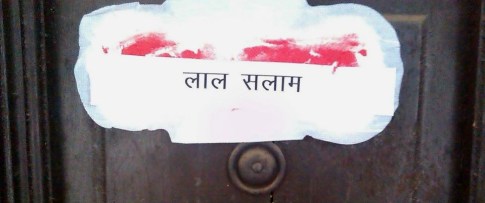
Continue reading Come and see the blood on my skirt: Statement from Organisers
Updating of “National Register of Citizens” and Recent Political Developments in Assam: Abdul Kalam Azad
Guest post by ABDUL KALAM AZAD
On 21st July, 2010 one of my close family relatives, Mydul Mullah (25) was one among the thousands of marginalized Muslims of Barpeta district who were demonstrating in front of Deputy Commissioner’s office at district headquarter demanding an error-free fresh NRC (National Register of Citizens). Eventually, police brutally cracked down on the picketers and fired upon them for the ‘crime’ of exercising their democratic right to peacefully protest. After the police firing Mydul Mullah along with his three comrades Khandakar Matleb (20), Siraj Ali (27) and Majam Ali (55) succumbed to the bullet injuries. The Tarun Gogoi led Assam government was forced to suspend the faulty NRC pilot project due to unprecedented public outrage.
The question of ‘illegal migration’ from Bangladesh has been one of the most significant and emotive topics in the political milieu of Assam for almost half a century now. .
The six-year long movement (1979-1985) against illegal immigration, popularly known as the Assam Movement, spear headed by All Assam Students Union claimed itself to be a secular and nonviolent new social movement of ‘indigenous’ people to drive out the illegal immigrants. But analyses of scholars and social scientists like Prof. Hiren Gohain, Prof. Monirul Hussain, Dr. Debabrata Sarma, Diganta Sarma etc. reveal that as soon as the Assam movement accommodated right wing RSS workers into its leadership, the whole movement turned against Muslims of Bengali origin in Assam. Heinous massacres like that of Nellie, Chaolkhuwa, Nagabandha etc. were orchestrated against Muslims of Bengali origin and in broad day light thousands of people were killed. After six years of deadlock, the movement culminated in the signing of the ‘Assam Accord’ with the Government of India in 1985. The accord says that the immigrants, who came to Assam after 25th of March, 1971 will be detected and deported from Assam. One of the mandates of the accord was to update the 1951 National Register of Citizen to facilitate identification of illegal immigrants from Bangladesh in Assam. Continue reading Updating of “National Register of Citizens” and Recent Political Developments in Assam: Abdul Kalam Azad
धर्मनिरपेक्ष कर्तव्यनिष्ठा और अल्पसंख्यक संकीर्णता
उच्चतम न्यायालय के न्यायमूर्ति कुरियन जोसेफ ने भारत के मुख्य न्यायाधीश एच.एल.दत्तू को ख़त लिखकर गुड फ्राइडे के दिन न्यायाधीशों का सम्मलेन करने पर ऐतराज जताया. उन्होंने लिखा कि इस पवित्र दिन को वे अपने परिजनों के साथ केरल में रहेंगे, “मैं गहरी पीड़ा के साथ इस बात की ओर आपका ध्यान दिलाना चाहता हूँ कि ऐसा महत्त्वपूर्ण सम्मलेन उस समय नहीं किया जाना चाहिए जब हममें से कुछ लोग इन पवित्र दिनों में धार्मिक अनुष्ठान में व्यस्त होते हैं और जो पारिवारिक मिलन का अवसर भी होता है.” उन्होंने कहा कि ऐसे महत्त्वपूर्ण कार्यक्रम दीवाली, दशहरा या ईद में नहीं किए जाते.
न्यायमूर्ति कुरियन ने कहा कि गुड फ्राइडे जैसे धार्मिक और राष्ट्रीय अवकाश के दिनों में इस तरह के कार्यक्रम करके न्यायपालिका दूसरी संवैधानिक और सार्वजनिक संस्थाओं को एक प्रकार का गलत सन्देश दे रही है जिससे वे सभी धार्मिक या पवित्र दिनों को समान महत्त्व और प्रतिष्ठा न देने को बाध्य महसूस करें.
न्यायमूर्ति कुरियन को इसकी आशंका है कि वे ईसाई हैं और इसी कारण उनके ऐतराज को साम्प्रदायिक माना जाएगा, “कृपया यह न सोचें कि मैं कोई साम्प्रदायिक संकेत दे रहा हूँ. चूँकि मैं देख रहा हूँ कि हम जैसे संस्थान, जिन पर संविधान के अनुसार धर्मनिरपेक्ष माहौल की हिफाजत और धर्मनिरपेक्ष छवि को प्रमुखता देने की जिम्मेदारी है, धीरे-धीरे संवैधानिक जिम्मेदारियों से विमुख हो रहे हैं, मैंने इस चिंता को लिखित रूप में व्यक्त करने को सोचा.” Continue reading धर्मनिरपेक्ष कर्तव्यनिष्ठा और अल्पसंख्यक संकीर्णता
An Open Letter to the Protestors at the National Law University: Space Theatre Ensemble
Guest post by SPACE THEATRE ENSEMBLE
Thank you for renewing this much needed dialogue on freedom of expression.
We happen to be, by sheer coincidence, a four-piece all-women theatre group that performs poetry, and have been following the correspondence over the sexist performance of stand-up comedian Avish Matthew with some interest – all the more so since we are now touring in Delhi and its environs.
The protestors are absolutely right when they point out that domestic violence is not a laughing matter and we completely endorse their views on why Avish’s jokes just weren’t funny.
We do not believe in laughter as just therapy to laugh off the stress of living the good life.
However, as a professional theatre ensemble we also strongly disagree with the predictable, and frankly irrelevant form of agitprop used by the protestors against Avish. Protest need not be chaotic, so far more vehemently we condemn the supposedly liberal students and others who heckled, booed, poked and shoved but stopped just short of physically molesting the protestors. Continue reading An Open Letter to the Protestors at the National Law University: Space Theatre Ensemble
Ban-man on the prowl again: Malvika Sharad
Guest Post by MALVIKA SHARAD on the recent call by Delhi University Students’ Union for a ban on the street play by Khalsa College theatre group, Ankur.
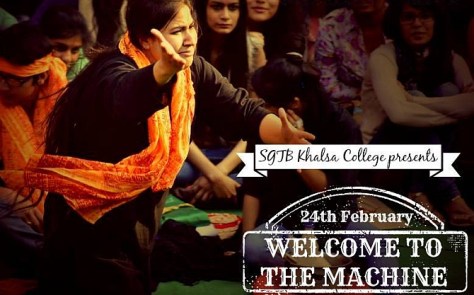
One evening in 2013, a group of ‘street play seniors’ as we call them, visited us in the front lawns of my college, Lady Shri Ram College for Women. They were from various colleges across DU who had been actively involved in street theatre, and had been invited to give the newly formed street play team of that year, an introduction to the art form. Among those seniors was a dynamic young chap from Khalsa College, who reiterated several times that street theatre fills you with such immense courage that you end up doing things you never thought you would, for that courage comes from the sheer truth and brutal honesty that street theatre is based upon. He said that freedom of expression is taken to a whole new level when you perform amidst crowds, and state the truth looking directly into their eyes. A fire is born within you that cannot be extinguished, it burns brighter with every performance of the play. You become fearless in voicing your opinions and thoughts, so fearless that you don’t even realize how far you have pushed your own limits and emerged triumphant.
After a whole year dedicated to doing street plays in Delhi, I have learnt how right he was, that young student not much older than us. I find I have come out of my shell, shedding my inhibitions at a pace and scale I had never imagined. Torn chappals don’t bother me anymore, my sun-burned skin makes me look beautiful, I don’t flinch with embarrassment while sitting, sometimes lying, on the floor of the metro station out of sheer weariness, though co passengers stare at me with judgemental eyes, I can’t bring myself to stop romanticizing the mud and the dirt that hug me every time I wear my soiled street play kurta… But above all, I can articulate my thoughts properly now, I am not scared of speaking in public unlike the times when I was a meek docile person, cocooned in the comforts of home and parental pampering. I owe this change in my attitude and personality to street theatre, which taught me what it is to live confidently and fearlessly.
And then they came for Oyasiqur Rahman Babu !

Courtesy : m.bangladeshtime.com
….It is not the young who are writing obituaries for the old,…I have seen the blood shed by so many young people steadily mounting up until now I am submerged and cannot breathe. All I can do is take up my pen and write a few articles, as if to make a small hole in the mud through which I can draw a few more wretched breaths. What sort of world is this ? The night is so long, the way so long….
( Lu Xun, Written for the Sake of Forgetting, P 234, Selected Works of Lu Xun, Vol III, Beijing)
Md Oyasiqur Rahman Babu , aged 27 years is dead. A travel agency executive by profession and a secular blogger by passion he was killed by radical Islamists in Tejgaon, Dhaka when he was going to office in Motijheel. The three assailants – who did not personally know each other – met just for planning the murder and then executed it with military precision.
Thanks to the courage exhibited by trans genders living nearby who caught hold of these murderers while the locals who watched the act before their eyes just dithered to move. Zikrullah, a student of Hefazat-e-Islam’s Hathazari Madrasa in Chittagong, and Ariful, student of Mirpur Darul Uloom Madrasa – were caught while the third member of the team, Abu Taher of Mirpur Darul Uloom, managed to flee the spot. The arrestees said they had killed Oyasiqur for writing on religious issues. It is a different matter that none of them had read his blog, they even did not know what blogging is, they just executed the order issued by some mastermind. Continue reading And then they came for Oyasiqur Rahman Babu !

