Pabnava to Natham: Whatever Happened to the Struggle for Annihilation of Caste!

ImageDalit residents of Pabnava, district Kaithal, Haryana would never be able to forget this year’s birth anniversary of Dr Babasaheb Ambedkar. The intervening nights of April 13 and 14 would forever remain etched on their minds. They still shiver when they remember how a four hundred strong mob of the local landowning community called Ror Marathas, armed with spears, batons and other sharp edged weapons, attacked the basti and ransacked more than 200 houses and left 6 dalits injured. It was supposedly to avenge the ‘dishonour’ wrought on them by a dalit youth who had dared to marry one of ‘their girls’.

To quote Raji, one of the victims, ‘..they came like a tornado’.

One could easily notice simmering tension in the village since a few days, as news had come in that Meena (21) daughter of an influential Ror Maratha from the village called Pirthi Singh had married a dalit boy Suryakant s/o Mahendra Pal and had eloped with him. Continue reading Pabnava to Natham: Whatever Happened to the Struggle for Annihilation of Caste!

The David Headley Lies Continue: There is Nothing ‘New’ About It

This release from the JUSTICE FOR ISHRAT JAHAN CAMPAIGN comes to us via Manisha Sethi.

“If you tell a lie big enough and keep repeating it, people will eventually come to believe it.” This is a quote often misattributed to the Nazi propagandist Joseph Goebbels. So widely is it believed to have been the key to Goebbelsian propaganda that it often employed by those whose politics is inspired by Goebbels’s Feuhrer.

This is exactly what we are seeing in this frenzied rush to pronounce Ishrat Jahan as a Lashkar operative by a section of media and commentators friendly to the ‘IB sources’.

Knowing full well that CBI’s mandate is only to enquire into the nature of the encounter – to probe whether Ishrat Jahan and three others were killed in cold blood – and realizing increasingly that the CBI investigation is leading to the unraveling of a plot so sordid that serious questions are going to be raised about the manner in which certain elements within the IB and agencies cynically used national security issues for vested interests, there is an attempt to pop up red herrings. False questions, planted stories, lies, fabrications – anything that will take the focus away from the guilt of those who conspired to abduct, drug and kill a teenaged college girl.

Continue reading The David Headley Lies Continue: There is Nothing ‘New’ About It

The BJP’s 2014 bid: A state-wise look and three key states where Modi may be risking party fortunes : Manish Dubey

This is a guest post by MANISH DUBEY: The Bharatiya Janata Party (BJP) lacks effective presence in several States, including large ones such as Andhra Pradesh (AP), Kerala, Tamil Nadu (TN) and West Bengal (WB) and others in the North-east (NE) barring Assam to an extent, and is unlikely to mount a credible challenge in the 168 Lok Sabha (LS) seats these account for.  Its 2014 tally from these States will remain in the lower single digits, as it was in 2004 and 2009. Odisha and Punjab, with 34 LS seats between them, are unlikely to add substantially to the party’s tally either. In Odisha, the ruling Biju Janata Dal (BJD) and the Indian National Congress (INC) are better entrenched. In Punjab, seat sharing arrangements with the locally dominant partner, the Shiromani Akali Dal (SAD)- Badal, will limit potential (individual) pickings for the party. Pickings are also likely to be limited from Jharkhand (14 LS seats) where besides the INC, a number of regional parties, each with strong local bases and candidates, would be in the fray. Till recently, even Karnataka (28 LS seats) would not have provided much hope but things may look up a trifle with Yeddyurappa reportedly negotiating a return or at least some kind of electoral understanding.

The small States and UTs, i.e., those with 10 LS seats or lesser, account for 40 LS seats and the BJP has a mixed LS election record on these, a record much dependent its performance in Delhi’s 7 LS seats.  Of the 284 LS seats (over half the 543 LS seats) accounted for by all the above mentioned States and UTs, a realistic tally for the BJP would be about 40, similar to that of the LS elections of 2004 (40 LS seats, including 18 from Karnataka) and 2009 (again 40 LS seats, including 19 from Karnataka) with potential gains in some places offset by a reduced tally in Karnataka (Yeddyurappa’s return or even an electoral understanding with him will reverse the misfortune of the recent Assembly elections only partly for the BJP). No Narendra Modi Magic is likely to boost the BJP’s tally here given mainly the state of the party itself.  Continue reading The BJP’s 2014 bid: A state-wise look and three key states where Modi may be risking party fortunes : Manish Dubey

Ilavarasan: At a deadly new junction of caste and electoral politics: Rajan Kurai Krishnan

ilavarasan_divya-350_070513040519This is a guest post by RAJAN KURAI KRISHNAN
The gruesome death/alleged murder of Ilavarasan, a Dalit youth, at the outskirts of Dharmapurai on the afternoon of 4th July has come as a shock to all those who have heard of his case. Murders, ironically called honour killings, and socially abetted suicides as outcomes of inter-caste marriages are of course as common as catching cold in most parts of India. However, what has made Ilavarasan’s case something that could penetrate the armour of the middle class everyday plated with trained nonchalance to extract a possible expletive under their breath is the fact that his case has been in the limelight for more than eight months now.

It was a few weeks after his marriage with Divya, a girl belonging to the caste of Vanniars, a Most Backward Caste in the official description of Tamil Nadu Government,  in October 2012, Divya’s father was found dead allegedly having committed suicide due to the “dishonour” caused by his daughter’s marriage. Making the suicide an excuse, the Vanniyars organized riots in which three Dalit hamlets, about 250 houses, were destroyed. The scale of violent destruction caught the national attention and so did the love story behind the riots. The young couple earned a media profile while trying to live in peace beyond the reach of the raging Vanniyar caste men. It was fated that was not to be. The Vanniar caste leaders used Divya’s mother to temporarily separate Divya from Ilavarasan by using the well known tactics of emotional blackmail. They then broke the communication link between Ilavarasan and Divya. When Ilavarasan saw Divya in the court on the first of July, Divya told the court that she would live with Ilavarasan after convincing her mother. Divya’s lawyer, however, managed to make her tell the press that she is separated from Ilavarasan forever. Ilavarasan, on the other hand, told India Today, that he was highly hopeful of re-uniting with Divya. After two days, he was found dead near a railway track in broad daylight. Given this history, the news had some potential to shock people. Continue reading Ilavarasan: At a deadly new junction of caste and electoral politics: Rajan Kurai Krishnan

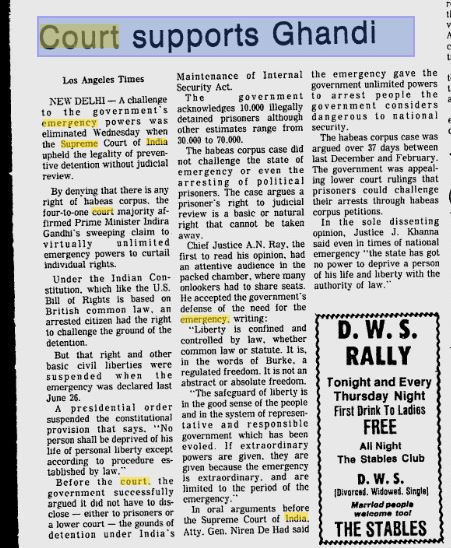
The shameful role of the Indian Supreme Court in the Emergency of 1975: Rajinder Sachar

This guest post by RAJINDAR SACHAR comes to us via the PEOPLE’S UNION FOR CIVIL LIBERTIES.

Lewiston Morning Tribune - Google News Archive Search - Mozilla Firefox_2013-07-14_19-25-11

Nations which do not remember their immediate past are in danger of repeating their tragic mistakes. This thought came to me on June 26th, 2013 (the Emergency day of 1975) when on random questioning of age group of 35 in the country (who are said to make up about half the population) I found that most of them did not know of any particular significance of the day – and more tragic, fairly large number of people above the age of 35 fared no better. Continue reading The shameful role of the Indian Supreme Court in the Emergency of 1975: Rajinder Sachar

Salaam, Sharmila Rege!

2006112210820401

Sharmila (right) receiving the Malcolm Adiseshiah Award (2006) from Padmini Swaminathan, Director of Madras Institute of Development Studies (Source: The Hindu)

Sharmila Rege passed away yesterday, aged 48, a month after she was diagnosed with cancer. Sharmila described herself as a Phule-Ambedkarite feminist, and was a dear friend to many of us, a political activist of enormous integrity and the moving spirit behind Krantijyoti Savitribai Phule Women’s Studies Centre at Pune University. Her scholarship was immense and inspiring, consistently traversing the minefields of caste and gender, constantly complicating one with the other. Writing Caste, Writing Gender: Reading Dalit Women’s Testimonios brought together first-person accounts of eight Dalit women from the 1920’s to the present – the voices of Babytai Kamble, Shantabai Kamble, Muktabai Sarvagod, Shantabai Dani, Kumudtai Pawde, Urmila Pawar, Janabai Girhe and Vimaltai More, emerge powerfully and relentlessly in their matter-of-fact assault on caste society’s smugness and violence. Sharmila worked with these ‘testimonios’ (a term she drew from Latina feminism) in a series of’ ‘translations’ – translating from Marathi, translating time and place, translating herself, and encouraging  readers to translate themselves too, in terms of Phule and Ambedkar’s scholarship and politics, to read themselves through the lens of the non-Brahmin and Dalit movements in Maharashtra. Continue reading Salaam, Sharmila Rege!

पाकिस्तानी गाली नहीं है : अपूर्वानंद

लखनऊ के बारहवीं कक्षा के एक छात्र आदित्य ठाकुर ने हाल में विदेश मंत्रालय के सचिव को हाल में  एक पत्र लिखकर तकलीफ जताई  है कि भारत का संचार तंत्र , विशेषकर टेलिविज़न पड़ोसी मुल्कों के खिलाफ नफरत का प्रचार करता है. आदित्य ने यह पत्र ‘इंडिया न्यूज़’ नामक  टी. वी. चैनल  के एक कार्यक्रम से दुखी होकर लिखना तय किया. कार्यक्रम पाकिस्तान में पोलियो की बीमारी की समस्या पर केंद्रित था. ऊपरी तौर पर एक गंभीर मसले पर चर्चा करने के लिए बनाए इस कार्यक्रम का शीर्षक था, ‘लंगड़ा पाकिस्तान’. आदित्य ने लिखा है पूरा  कार्यक्रम  पाकिस्तान के बारे में प्रचलित ‘स्टीरियोटाइप’, उसके प्रति अपमानजनक  और सनसनीखेज प्रसंगों से भरा पड़ा था.रिपोर्ट लगातार पाकिस्तान को ‘दुनिया को तबाह करने के सपने देखने वाला’ कह कर संबोधित कर रही थी. ‘बम का क्या करोगे पाकिस्तान , खाओगे?’ और ‘दो बूँद से मत डरो पाकिस्तान’ जैसे संवादों से कार्यक्रम की पाकिस्तान के प्रति घृणा जाहिर थी. Continue reading पाकिस्तानी गाली नहीं है : अपूर्वानंद

In Memory of a Puppy/ Ek Pillay Ki Yaad Mein

puppy-modi Continue reading In Memory of a Puppy/ Ek Pillay Ki Yaad Mein

We’re singing Holi songs: Inayat Anaita Sabhikhi

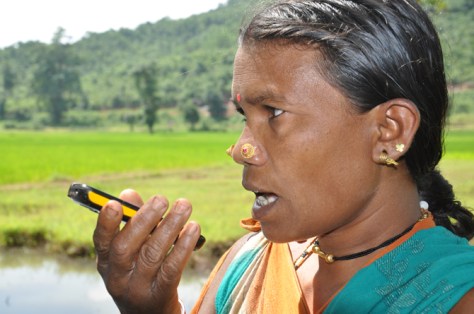
Guest post by INAYAT ANAITA SABHIKHI: CGNet Swara is a voice based portal, where stories reported by citizen journalists are available for playback online on their website or through a regular mobile phone. By dialing the CGNet number, you can either record a message or listen to the previous four messages recorded on the server. This is primarily operating in the Central Gondwana region, a tribal belt in central India known to be economically and socially disadvantaged.

woman-reporting

A reporter for CGNet Swara

The idea behind this, as explained by its founder, Shubhranshu Choudhury in this TEDx talk is to democratise the use of media. It is an attempt to combat the neglect and skewed approach of mainstream media towards this entire region and its people. Continue reading We’re singing Holi songs: Inayat Anaita Sabhikhi

Performing Heritage

By SOHAIL HASHMI: Navina Jafa’s Performing Heritage: Art of exhibit walks is one of few books dealing with the process of conducting heritage and culture walks in India. But the subject is a rapidly expanding and lucrative field that – until now – has not been very well understood.

Jafa is a student of history, a trained classical dancer, a conservationist and a heritage activist. Normally those with their fingers in too many pies end up mixing their metaphors, but this author specialises in inventing her own – the title of this book, for instance. Performing artists, performing acrobats, performing monkeys are terms that all of us are familiar with, but the concept of heritage that performs is more unusual.

The text exists simultaneously on two planes. The first locates heritage walks in the realm of public performances, distinguishing them from exhibitions in controlled environments like museums and art galleries. The second is more illustrative, and is presented as an explanation of the arguments being advanced across the first strand. Continue reading Performing Heritage

Economic Democratisation in Sri Lanka

Even as there are important debates on a political solution to the national question, militarisation, Sinhala Buddhist nationalist mobilisation and authoritarianism, Sri Lanka is also going through a major neoliberal economic transformation. A recently formed Collective for Economic Democratisation has been engaging such matters through a political economic lens. Their recent editorial is on the political economy of devolution even as there is a major debate underway in Sri Lanka on the question of the powers to the provinces and a political solution. Their earlier editorial is on the rising costs of neoliberal policies in Sri Lanka. They have also published commentaries on urbanisation including on Colombo as a world-class city and the World Bank’s urbanisation policies in Sri Lanka. The website of the Collective for Economic Democratisation is also a useful resource of economic news and developments.

Lies, Damn Lies and NaMo – Why I do not support Modi and why you shouldn’t either: M Akhil

ImageGuest Post by M AKHIL: Listen to the flourish. The stage is set, the side-kicks are in place and the sycophants are scampering tirelessly to welcome their emperor. Narendra Modi has started his journey to the high seat of Indraprastha.

Curiously enough, his current ride is being celebrated as a victory lap by his ardent supporters. A bit too quick, don’t you think? Especially for a man who was only a few years ago, in terrible danger of being convicted for one of the most gruesome state-sponsored genocides in the history of independent India. Of course, he hasn’t been convicted yet, but many of his ministers and close aides have been. Babu Bajrangi’s confessions on record must be more than enough proof for Modi’s culpability. 1 Alas! Facts get twisted in the most unimaginable ways as they threaten to blow away an edifice carefully built by a dominant plutocracy with immense help from the ‘State-Temple-Corporate Complex’. 2 Here, I shall attempt to bust the Modi bubble which is being ridiculously pumped up by the holy nexus, even as you are reading this. After all, the BJP is possibly the party with the highest following among Indian netizens and the online publicity team of the current supremo is meticulous. An alternative view will be stark, but hopefully it will serve as food for thought for those among us getting nauseated by the dominant narrative. Continue reading Lies, Damn Lies and NaMo – Why I do not support Modi and why you shouldn’t either: M Akhil

The Emperor’s Urs: Riddhi Bhandari

Guest post by RIDDHI BHANDARI
Photographs by SIDDHI BHANDARI

1-DSC_0180

When I first reached Agra for fieldwork, one of the first things guides and shopkeepers around the Taj Mahal told me about was the Urs: “Urs ke liye zaroor rahiyega. You must stay for the Urs. The Taj is different and worth seeing.” Continue reading The Emperor’s Urs: Riddhi Bhandari

Palamau, Ardh Satya and the Activist Life: Vikrant Dadawala

This is a guest post by VIKRANT DADAWALA: “We have lost a lot”, says Manoj-ji, president of Vikas Sahyog Kendra. “Aadmi ko ek bar aag choo jaye toh woh ekdam se peeche ho jaata hai.” (If fire touches a man once, he flinches every time)

I am standing outside the Vikas Sahyog Kendra office in Daltonganj, Palamau. It is the end of my first day as an intern with the organization. Manoj-ji is trying to give us, three interns, a sense of why Vikas Sahyog Kendra does not have a signboard. “Niyamat Ansari and Lalit Mehta’s murders shook us badly”, Manoj-ji says. “We’re no longer as fearless as before.”

I am little disappointed, unreasonably so. It is evening but still mindlessly hot. My first impressions of Daltonganj take in its bareness – unfinished buildings, loudspeakers blaring bhajans, the ostentatious houses of minor bureaucrats and contractors standing like castles against the dry summer wind. Continue reading Palamau, Ardh Satya and the Activist Life: Vikrant Dadawala

आत्मा से मुठभेड़ की चुनौती: अपूर्वानंद

इशरत जहाँ एक उन्नीस साल की लड़की थी जब वह मारी गई.शायद उसके बारे में इसके अलावा इस निश्चितता के साथ हम कुछ और कभी नहीं जान पाएंगे. इसकी वजह सिर्फ यह है कि जिन्हें इस देश में सच का पता लगाने का काम दिया गया है वे एक लंबे अरसे से झूठ को सच की तरह पेश करने का आसान रास्ता चुनने के आदी हो गए हैं. उनके इस मिथ्याचार पर कभी सवाल न खड़ा किया जा सके इसका सबसे अच्छा तरीका है राष्ट्र रक्षक की अपनी छवि का दुरुपयोग निस्संकोच करना. जो राष्ट्र की रक्षा करता है उसे उसकी रक्षा के लिए किसी को मात्र संदेह के आधार पर मार डालने का हक है, यह हमारे देश का सहज बोध है. सिर्फ अशिक्षितों का नहीं, उसने कहीं ज़्यादा राजनीति शास्त्र की किताबों से नागरिक अधिकारों का ज्ञान प्राप्त किए हुए स्नातकों का. उन सबका जिन्हें देश की जनता के पैसे से संविधान की हिफ़ाजत के लिए अलग-अलग काम सौंपे जाते हैं. और भी साफ़ कर लें, इन स्नातकों में भी उनका जो प्रशासनिक और पुलिस अधिकारी हैं, जासूसी के अलग-अलग महकमों से जुड़े ऑफिसर हैं, जिनकी असली पहचान कभी उजागर नहीं हो पाती. अगर दूसरे मुल्क में वे पकड़े जाएं तो वही देश उनसे हाथ धो लेता है जिसकी सुरक्षा में वे अपनी असली पहचान छिपाए फिरते हैं.

क्या कोई यह कहने की हिमाकत कर सकता है कि राष्ट्र-राज्य के खिलाफ साजिशें नहीं होतीं, कि राष्ट्र-विरोधी शक्तियों का अस्तित्व ही नहीं! यह बिलकुल अलग बात है कि राष्ट्र विरोधी का बिल्ला किन पर आसानी चस्पां किया जा सकता है और किन पर वह बिलकुल चिपकता ही नहीं. मसलन, इस्लामी राष्ट्र का तस्सवुर धर्मनिरपेक्ष भारतीय राष्ट्र के बिलकुल खिलाफ है, क्या इसके लिए किसी अतिरिक्त व्याख्या की आवश्यकता है? लेकिन यह समझना और समझाना टेढ़ी खीर है कि हिन्दू राष्ट्र की कल्पना भी उतनी ही राष्ट्रविरोधी है! आज से बीस साल पहले और आज भी   खालिस्तान का ख़याल इस्लामी राष्ट्र जितना ही राष्ट्र विरोधी माना जाता था. Continue reading आत्मा से मुठभेड़ की चुनौती: अपूर्वानंद

Ishrat Jahan, Narendra Modi and the IB: How Not to be Non-Non Terrorist

The CBI charge-sheet in the Ishrat Jahan encounter case and its aftermath has led the BJP and supporters of Narendra Modi (within and without the Intelligence Bureau) to discover the joys of time travel. Apparently, David Coleman Headley’s testimony in 2010 (which says that Ishrat Jahan was an LeT operative) has given the Gujarat police officials a means to tell us why they killed Ishrat Jahan in 2004. Or, following on from Shivam Vij’s recent tweets, we could say: “The IB says that Headley says that Ishrat Jahan was a non-non terrorist…”

We will discuss more about this heady Headley testimony and ‘non-non terrorism’ later, but for now, let us admit that the secret of how a statement in the future can influence the unfolding an event six years in the past is known only to those who are partisan to Mr. Modi and his party. It is not for nothing that they call him a Yug Purush (‘The Man of Time’)- all times, past, present and future, can do his bidding, or so thinks the BJP. Continue reading Ishrat Jahan, Narendra Modi and the IB: How Not to be Non-Non Terrorist

Bodhgaya Bomb Blasts : Moving Beyond the ‘Usual Suspects’

I.

Encore!

Mr Praveen Swamy has ‘discovered’ the ‘usual suspects’ once again.

Narrating .'[t]he same old, depressing story of incompetence and apathy’ behind the Bodh Gaya bombings he has shared  with the readers how “[I]ndia’s police and intelligence services knew there were plots to attack the temple.” and how “.. jihadists quite publicly announced they intended to attack Buddhist targets. ..From January, government sources have told Firstpost, the Intelligence Bureau had issued several warnings pointing to heightened risks to Buddhist religious targets in India, as a consequence of anti-Muslim violence in Myanmar.” [FirstPost]

Of course, after giving enough hints about who the perpetrators could be, he has been careful enough to add – supposedly to maintain objectivity of his profession that: Continue reading Bodhgaya Bomb Blasts : Moving Beyond the ‘Usual Suspects’

IB says Headley says it’s too hot…

…CBI says it’s the humidity.

While the implausibility of David Headley having named Ishrat Jahan as an LeT operative has already been called out, there’s another problem here. How does anyone cross-check IB’s claim considering none of us has access to Headley?

In other words, the IB can make any insinuation and say Headley said it and we’ll have to believe at as truth.

This is apart from the fact that the judicial process in the news is not about whether or not Ishrat Jahan was an LeT terrorist. It’s about whether she was murdered in cold blood by Gujarat police. To that extent the IB does have a point in arguing that it cannot be blamed for how a state government interprets its inputs. Technically, the IB cannot be held responsible for murder by Gujarat police. But does that mean the IB cannot or should not be held accountable for what inputs it sends across?

Anyway, I posted a series of satirical tweets the other day making fun of the use of David Headley to justify the murder of Ishrat Jahan. Here are some of them.

Continue reading IB says Headley says it’s too hot…

Hindustan Times continues IB’s campaign to vilify Ishrat Jahan: Justice for Ishrat Jahan Campaign

On 2nd July, Hindustan Times Delhi edition carried a story with the headline “Ishrat Jahan has links with Kashmir Separatists”. The content of the story contradicted this sensational claim. Even more stunningly, the same story, sans this malicious headline, appeared in the Ahmedabad edition of the newspaper. Originally a story by the paper’s Ahmedabad correspondent, Mahesh Langa, Delhi-based correspondent Abhishek Saran added his byline and headline in the Delhi edition. It was clear what his contribution to the story was.

A letter by Shamima Kauser’s lawyer Vrinda Grover to Hindustan Times forced them to withdraw the headline and print a correction the following day. Continue reading Hindustan Times continues IB’s campaign to vilify Ishrat Jahan: Justice for Ishrat Jahan Campaign

DU’s FYUP shall only increase chaos: Abha Dev Habib

Guest post  by ABHA DEV HABIB: Delhi University has been in a state of utter chaos and confusion ever since admissions to the Four Year Undergraduate Programme (FYUP) started with the announcement of the first cut-off list on 27 June 2013. For the first time windows were closed before time on the aspirants because of over admissions in various courses across colleges. Colleges could not have broken the rules in this manner without the backing of the DU administration. Students and parents knocked on every door including the Vice Chancellor’s but without any effect. Demanding justice, parents and students staged a dharna in one of the colleges – this too fell on deaf years. This was bound to happen with the situation of lawlessness at the University increasing day by day. The DU administration, with the support of the Government, has assumed a role beyond the bounds of rule books. Continue reading DU’s FYUP shall only increase chaos: Abha Dev Habib

‘Ladies Still not Empowered in Kerala?’ Questions Raised by the Solar Scam

How does one respond critically and effectively when non-politics, non-government, and non-sense, all rolled together, assail the political public? I have been thinking about this recently — surely, this is a question that troubles all those who would wish to keep the focus of public life on politics and power. We witness, in present-day Kerala,politics being reduced to the internal bickerings over power indulged in by the powerful elite interest-groups that constitute the ruling UDF. Or, reduced to ‘sex scandals’ or ‘domestic squabbles’ when gender politics surfaces.  Simultaneously, we are witnessing the era of non-government and the severing of the link between public politics and government. While the bickerings between the coalition partners of the UDF continues unabated, news of infant deaths and severe malnutrition continue to flow from tribal hamlets in Attappady; the problems of mounting waste in both towns and rural areas continues to be criminally neglected; dengue and other dangerous fevers continue to exact daily, rising tolls all over the state. And even as the consequences of widening social inequalities become more and more visible, this government’s discourse of welfare remains pegged insistently on human mercy and charity. It continues to be dismissive of concerns of social justice and power — even as these harrowing tales continue to appear in the press, there is no dearth of advertisement of the goverment’s kaarunyam. And in the midst of all this, the Chief Minister being projected as the exemplar of human goodness and chairty! Or, the UN, ever-interested in ‘innovation’, conferring an award on his Mass Contact Programme at a time when his government has been least innovative or imaginative in solving problems that now stare us in the face. the This of course is the non-sense — the absurdity of it all. Continue reading ‘Ladies Still not Empowered in Kerala?’ Questions Raised by the Solar Scam

DISSENT, DEBATE, CREATE