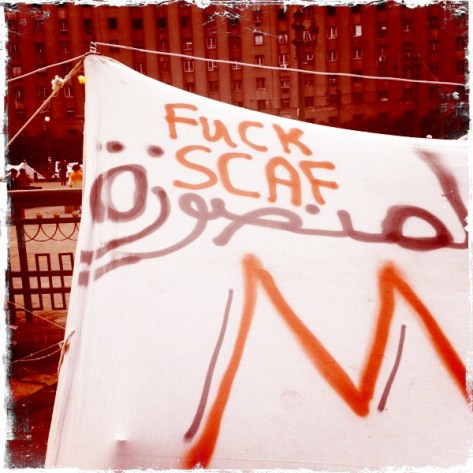
Apples and Oranges in Egypt’s Historic Election: Alia Allana

This guest post by ALIA ALLANA, a despatch for Kafila from Cairo, is the eleventh in a series of ground reports from the Arab Spring. Photos by Alia Allana

This slideshow requires JavaScript.

“Votes and rocks: just two ways to get heard,” said Salma.

Continue reading Apples and Oranges in Egypt’s Historic Election: Alia Allana

A case for remission of punishment for Dr Khaleel Chishty under Article 161 of the Constitution of India: Kavita Srivastava

Guest post by KAVITA SRIVASTAVA

Pardon and or Remission of Punishment for Pakistani prisoner Dr. Khaleel Chishty under Article 161 of the Constitution of India by the Governor of Rajasthan

Continue reading A case for remission of punishment for Dr Khaleel Chishty under Article 161 of the Constitution of India: Kavita Srivastava

An open letter from a photojournalist assaulted by Indian security forces in Kashmir: Yawar Kabli

Guest post by YAWAR KABLI

AP photo by Yasin Dar: Local Kashmiri photographers Yawar Nazir, left, and Showket Shafi wait for treatment after they said they were assaulted by police and paramilitary forces during a protest in Srinagar, India, on Nov. 25. At least four journalists said they were assaulted by police and paramilitary forces Friday as they covered a protest in Indian-controlled Kashmir.

All freedoms enshrined in the Constitution of India are being violated or altogether thrown away by the Jammu and Kashmir Police. One could substantiate that with any number of examples. We were not the first pressmen to be thrashed by the police while covering the stone-hurling protests in the Kashmir. On Friday, 25 November 2011, without any rhyme or reason policemen along with the Central Reserve Police Force (CRPF) thrashed four of us, including me, and snatched away our expensive cameras. They did not even hesitate to bundle us into police vehicles while taking us to the Khanyar police station.

Continue reading An open letter from a photojournalist assaulted by Indian security forces in Kashmir: Yawar Kabli

‘Did the generals think we were fools?’ Alia Allana reports from Cairo

This guest post by ALIA ALLANA, a despatch for Kafila from Cairo, is the tenth in a series of ground reports from the Arab Spring. Photos by Alia Allana

A week into protesting, the revolution became about preservation lest someone forgets.

Mohammed Mahmoud Street, the sight of intense fighting was officially off-limits for protestors. A concrete wall separated the protestors and police. Atop the wall army soldiers kept guard. The aim was simple: to keep protestors from barging past and facing-off with the authorities, like they had done for the past few days. But sometime in the night, a maverick with a graffiti can had his way and the beige concrete wall now read, “Change is coming soon.”  Continue reading ‘Did the generals think we were fools?’ Alia Allana reports from Cairo

Uthao, uthao video ab, won’t you make the video now?

This photograph shows photojournalist Shahid Tantray being assaulted by the Central Reserve Police Force in Srinagar on 25 November 2011

No tears will be shed for press freedom for attacks on journalists in Srinagar by the Central Reserve Police Force and the Jammu and Kashmir Police. Fahad Shah reports what happened in Srinagar yesterday:

Journalists were beaten up and one of them detained, today, when they were covering the post-Friday prayers protests in the Old City, here at Srinagar. Umar Mehraj, who works as video journalist for Associated Press says he, along with other journalists, was covering protests when Central Reserve Police Force (CRPF) and local policemen start beating. He said while beating, the forces were shouting, “Uthao, uthao video ab (Shoot, shoot the video now.).” Umar says his camera was broken and they were abused too.

Continue reading Uthao, uthao video ab, won’t you make the video now?

When an Ecofeminist Dies: Anupam Pandey

Guest post by ANUPAM PANDEY

“The government said, “If they only planted trees, we wouldn’t bother with them. But they also plant ideas. And I say, it’s true”

Wangari Mathaai (1940-2011)

When the death of Steve Jobs evoked such unprecedented emotions of manic proportions in India which is not even a market of consequence for Apple, it is astounding that the passing away of Wangari Mathaai (a few days before Jobs’ death) did not even create a ripple of interest. But then, in the power hierarchy of global capitalism, what is the worth of the life of an ecofeminist compared to that of the one which is associated with one of the most popular consumer brands in the world? Continue reading When an Ecofeminist Dies: Anupam Pandey

Andre Schiffrin in conversation with S Anand

‘Most publishing conglomerates are owned by people very far to the right’ said André Schiffrin to S Anand of Navayana, his Indian publisher, during this conversation, of which a short version appeared in The Hindu Sunday Magazine on 20 November 2011.

Legendary publisher André Schiffrin warns us that we are witnessing ‘a rebirth of the old colonialist methods of export and import’.  Schiffrin founded the The New Press in 1991 after being forced to quit Pantheon (a division of Random House), where he could no longer work with the new CEO, Alberto Vitale, who would ask Schiffrin who Carlos Ginzburg was and why books could not have a sell-by date like cheese and milk do. Schiffrin, who has published Jean-Paul Sartre, Michel Foucault, Noam Chomsky, Günter Grass, Art Spiegelman, Matt Groening, Margurite Duras and Gunnar Myrdal among others, was in India earlier in November for the launch of the Indian edition of his memoir The Business of Words, a combined edition of The Business of Books (2001) and Words & Money (2010). Continue reading Andre Schiffrin in conversation with S Anand

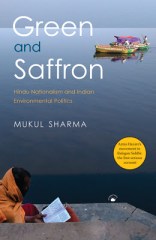
Green and Saffron: Hindu Nationalism and Indian Environmental Politics

Cover - Green and Saffron

My book Green and Saffron is just out. The book details and an interview  are on the blog of Permanent BlackFrom the publishers’ notice:

This book examines contemporary environmental issues and movements in independent India on the one hand, and the development of Hindu conservative ideology and politics on the other. It includes the first thorough investigation of Anna Hazare’s movement in Maharashtra.

Mukul Sharma argues that these two social currents—environmental conservation and Hindu politics—have forged bonds which reveal the hijacking of environmentalism by conservative and retrograde worldviews. This, he says, constitutes a major aspect of hinterland political life which neither academics nor journalists have seriously analysed. Environmentalism and politics cannot be seen as separate from each other, for environmental issues are being defined in new ways by an anti-secular form of Hinduism. In turn, Hindu ideologues are gaining mileage for their ideology by espousing major environmental projects. Continue reading Green and Saffron: Hindu Nationalism and Indian Environmental Politics

Shame on G.K. Pillai: Women demand an apology for his sexist comments

Released by JAMIA TEACHERS’ SOLIDARITY ASSOCIATION

24 November 2011

Stung by the SIT report which concluded that Ishrat Jahan was executed in cold blood, former Union Home Secretary G.K. Pillai—hard-pressed to defend his affidavit to the Supreme Court that Ishrat was a Lashkar operative—has stooped to now slandering the girl’s personal life suggesting that her checking into different hotels with “another man” was definitely suspicious. Perhaps, Mr. Pillai wishes us to believe that all those young women who travel and work independently are ‘suspicious’ and could have terrorist links. Continue reading Shame on G.K. Pillai: Women demand an apology for his sexist comments

Egypt, Revolution 2.0: Alia Allana reports from Tahrir Square

This guest post by ALIA ALLANA is a despatch from Cairo for Kafila, the ninth in a series of ground reports from the Arab Spring. Photographs by Alia Allana

This slideshow requires JavaScript.

The police lobbed another tear gas canister and soon the feeling of suffocation would take over. But he didn’t move, instead he stood in the center; he continued to wave the Egyptian flag. The sound of rubber bullets being fired drowned under the sound of the drum. The drum was the harbinger of doom: when it was sounded by protestors, when the cacophony cut through the air, the message was simple – run, run as fast as you can because the police would begin their attack, again.

Continue reading Egypt, Revolution 2.0: Alia Allana reports from Tahrir Square

Some FAQs about Koodankulam and Nuclear Power: Nityanand Jayaraman and G. Sundar Rajan

Steel drums with nuclear waste. The inescapable byproduct generated from the fission of nuclear fuel in the form of uranium or plutonium creates what is called nuclear waste. This waste comes in a huge variety of extremely radioactive material with half-lives ranging from 8 days to hundreds of thousands of years. In other words their radioactivity takes a really, really long time to decay, thousands of times our human life-times. These fission products if released to the environment will last a long time, and it is almost impossible to decontaminate them.

NITYANAND JAYARAMAN and G. SUNDAR RAJAN of the Chennai Solidarity Group for Koodankulam Struggle developed  the  fact-sheet below in response to real questions that they encountered during the course of street and college campaigns. They say: “The questions were sincere, so we felt a sincere response was warranted.”

Continue reading Some FAQs about Koodankulam and Nuclear Power: Nityanand Jayaraman and G. Sundar Rajan

Mobpublic vs. Counterpublic in Kerala

[with inputs from Baiju John]

Recent events in Kerala convince me that we need to think more closely about the ways in which our political public life is being slowly overwhelmed by something that is profoundly anti-public but somehow manages to resemble it — I’m tempted to call it the Mobpublic. I’m of course not referring to formal politics, where political parties and powerful communities continue to squabble without any serious difference in their programmes. Very little of either the political or the public survives in them; all one hears for most of the time are the tales of internal squabbling which is neither political (yes, despite all of V S Achuthanandan’s efforts to coopt oppositional civil social struggles) nor public. Perhaps the decline of the political is a condition for the rise of the mobpublic.

Continue reading Mobpublic vs. Counterpublic in Kerala

Arrested Development – a comparative study of Delhi’s schools and prisons: Sajan Venniyoor

Guest post by SAJAN VENNIYOOR

“Schools are prisons,” sang the Sex Pistols. “Another brick in the wall,” raged Pink Floyd, “Teacher, leave them kids alone!” Schools and prisons have been so frequently equated in the popular imagination that it has become a cliché almost never held up to scrutiny. But even a cursory study of Delhi’s schools and prisons belies the comparison.

Sure, Delhi’s schools and prisons are both dreadfully overcrowded. Delhi’s jails, built for 6250 prisoners, house 10500 on an average.  We cannot say with any statistical certainly just how overcrowded our schools are, as the Dept. of Education has no idea how many schools it runs or the actual number of teachers and students therein.

But in almost every major indicator of human development, the penal system far outperforms the public school system in Delhi. Continue reading Arrested Development – a comparative study of Delhi’s schools and prisons: Sajan Venniyoor

JTSA welcomes the SIT report on Ishrat Jahan, demands free and fair probe into Batla House ‘Encounter’

This release comes from the JAMIA TEACHERS’ SOLIDARITY ASSOCIATION

21 November 2011 

JTSA welcomes the SIT report which has concluded that the teenaged college girl Ishrat Jahan and her three companions were killed in cold blood—and were not terrorists on way to kill Narendra Modi. This has reinforced the findings of the Tamang Enquiry Report which had drawn similar conclusions in 2009, and which the Gujarat government had tried to suppress and discredit.  The SIT report has given credence to the allegation of civil rights activists that the officers in Gujarat police had executed several people through the last decade in collusion with the highest political authority in the state. The police officers gained medals and promotions and Modi built his image as the Hindutva hero by highlighting the alleged assassination attempts on him. Continue reading JTSA welcomes the SIT report on Ishrat Jahan, demands free and fair probe into Batla House ‘Encounter’

Dilli

Dilli, the name most people of Delhi use for their city, is “a multiple-award winning documentary that has played in over 50 international film festivals across North America, South America, Africa, Europe and Asia”. Recently released online.

Continue reading Dilli

तिलिस्म-ए-होशरुबा, उर्फ़ पूंजी की अनकही कहानी

[यह लेख हाल में प्रभात खबर के दीपावली विशेषांक में छप चूका है  और मेरी हालिया किताब डिजायर नेम्ड डेवेलपमेंट के कुछ अंशों पर आधारित है.]

एक ज़माना था जब इंसान जिंदा रहने के लिए पैदावार किया करता था. बहुत पुरानी बात नहीं है – यही कोई सौ डेढ़ सौ बरस पहले का किस्सा है. आज जब हम जिंदा रहने के लिए नहीं बल्कि ‘जीडीपी’ या ‘सेंसेक्स’ जैसे कुछ अदृश्य देवताओं का पेट भरने के लिए पैदावार करते हैं, तब यह बात हमारी याद्दाश्त से तकरीबन गायब हो चुकी मालूम होती है की ये देवता दरअसल बहुत नए हैं. ‘जीडीपी’ की उम्र बमुश्किल अस्सी साल होगी, और ‘सेंसेक्स’ तो हमारे यहाँ १९७९ में ही वजूद में आया है. याद रखने काबिल बात है की इन दोनों का लोगों के वास्तविक जीवन से कोई रिश्ता नहीं है और यह बिलकुल मुमकिन है कि लोगों के जीवन-स्तर में लगातार गिरावट के साथ साथ आंकड़ों में हमें दोनों में अच्छी खासी बढोतरी दिखाई दे. मसलन, यह संभव है कि आप जंग के वक़्त लगातार जीडीपी में इज़ाफा देखें जब वास्तव में लोगों कि ज़िंदगियाँ बद से बदतर होती जा रही हों.

Continue reading तिलिस्म-ए-होशरुबा, उर्फ़ पूंजी की अनकही कहानी

An account of deadly clashes in Tahrir Square: Alia Allana

This guest post by ALIA ALLANA is a despatch for Kafila from Cairo, the eighth in a series of ground reports from the Arab Spring. Videos and photos by Alia Allana

This slideshow requires JavaScript.

A peaceful protest with men selling candyfloss and making chai turned into an orgy of violence.

Tahrir Square had been quiet for the earlier part of the day today. The Sunday afternoon saw couples strolling, a mother carried her sleeping child, his face was buried in her bosom, scooters with loud speakers blared music.  There was no chanting and very few slogans. Small and sporadic groups of people protested. They called for change.

Continue reading An account of deadly clashes in Tahrir Square: Alia Allana

Trading with the Enemy: Raza Rumi

Guest post by RAZA RUMI

Reports suggest that Pakistan has decided, in principle, to grant the Most Favoured Nation (MFN) status to India. Much progress has taken place since the earlier announcement and several parleys between the officials suggest that trade relations may finally ‘normalise’. India already conferred MFN status to Pakistan in 1996. India and Pakistan have no formal trade agreement. Until now Pakistan maintained a Positive List of importable items from India consisting of 1075 items.

Most Favoured Nation: Under the WTO agreements, countries cannot normally discriminate between their trading partners. Grant someone a special favour (such as a lower customs duty rate for one of their products) and you have to do the same for all other WTO members. This principle is known as most-favoured-nation (MFN) treatment. It is so important that it is the first article of the General Agreement on Tariffs and Trade (GATT), which governs trade in goods. MFN is also a priority in the General Agreement on Trade in Services (GATS). Continue reading Trading with the Enemy: Raza Rumi

A few questions about a few thousand new auto-rickshaws in Delhi: Simon Harding

Guest post by SIMON HARDING

On Friday, Supreme Court judges KS Radhakrishnan and CK Prasad gave the go-ahead for 45,000 new auto rickshaw permits to be issued in Delhi. The move has the potential to drastically improve the city’s auto-rickshaw service for passengers and drivers alike, but many unanswered questions about distribution, implementation and numbers remain.

There are currently around 55,000 auto-rickshaws in the capital. The number of autos has not grown since the Supreme Court stopped the issuing of new auto permits in 1997 due to concern about the pollution emitted from the old dirty two-stroke petrol engines (now replaced with CNG).

The number has not remained frozen. Evidence suggests that it has actually fallen since 1997 because around 20,000 autos were lost during the CNG switchover as many drivers had their permits cancelled as they were too slow to convert their autos to the new fuel or simply could not afford the conversion. The fall in numbers contrasts with the growing demand for autos from Delhi’s population, which grew 21.6% in the period 2001-2011.

Continue reading A few questions about a few thousand new auto-rickshaws in Delhi: Simon Harding

In The Indian Express, a statistical Nehru-Gandhi oddity

Over at the Indian media blog Sans Serif, Pritam Sengupta counts the number of advertisements by the Government of India on the holy occassion of the late Prime Minister Indira Gandhi’s birth anniversary, and discovers a statistical oddity:

While it is natural that ToI and HT should garner so many ads given their large circulations in the national capital, the second place for the Express group is revealing considering it sells less than five per cent of market-leaders ToI and HT in the Delhi market, which both sell in excess of 5 lakh copies.

The tabloid Mail Today, which has the third highest circulation among the Delhi newspapers, too gets fewer ads than the Indian Express. [Read the full post]

Air India Hostesses Vindicated: Press statement by Air India hostesses

It’s been a long struggle for Air India hostesses who have been fighting for the basic right to be treated equally with their male counterparts. What follows is  a press statement they issued after finally having won the right to be considered for appointments to the position of In-Flight Supervisor, the person in charge of all the cabin crew. It is shocking enough that Air India maintained a system where only men could be appointed to this post until December 2005, when a Delhi High Court decision finally permitted women to be considered for the post. Even more disturbing is the fact that the union claiming to represent the ‘workers’ of Air India, the Air India Cabin Crew Association, chose to contest this decision, as if the women employees of Air India are not as much ‘workers’ as the men are. Continue reading Air India Hostesses Vindicated: Press statement by Air India hostesses

DISSENT, DEBATE, CREATE