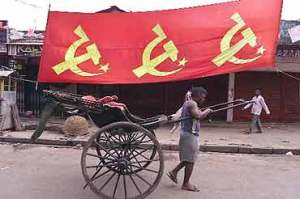
Old Left is Dying! Long Live the Left!

[Following the publication of the previous post – the statement on the future of the Left, we have received some important comments that seek to take the debate forward, alongside those predictable, invective laden rants that we know only too well by now. We need to keep the debate on the future of the Left in India going, irrespective of these comments that seek to derail any meaningful discussion. We must continue to assert that ‘the Left’ far exceeds the decadent and decrepit lot that now goes by the name of Left parties in this country. This  post is a slightly modified and longer version of an article that appeared in Bengali yesterday in Ekdin.]

In a recent newspaper article, former Left Front finance minister Ashok Mitra, observed: “The Left Front, led by the Communist Party of India (Marxist), has not merely lost the poll in West Bengal, it has been made mincemeat of.” He was underlining the obvious, catastrophic significance of the results – at least from the Left Front’s perspective. The signs are there for everybody to see, especially when all important leaders of the LF government have faced resounding defeat and the overall vote share of the LF has declined by almost 9 percent since the last assembly election. Mitra’s reference is important as much was being made of the fact that he signed in support of the LF in the course of the election campaign.

But such was the state of drunkenness in power, that only a Biman Bose could say, when virtually everyone knew what was coming, that the LF would still gain a comfortable majority and those who were predicting their decline would have to “swallow their own spit.” More incredibly, even after the elections, indeed after the results came in, both Bose and Prakash Karat in Delhi focused on the fact that their votes had increased by 11 lakh votes in absolute terms. Of course, the minor detail they mentioned in passing was that the TMC alliance had increased its votes much more. The even more minor point that there had been as many as 4.8 million more votes polled this time as compared to 2009 was, of course, beside the point.

Continue reading Old Left is Dying! Long Live the Left!

‘End of the Left’ in India? Statement by Leftists after recent election results

Text of statement by Jairus Banaji, Sukumar Muralidharan, Dilip Simeon, Satya Sivaraman and Rohini Hensman endorsed by 224 others.

In a minor replay of 1989 and the fall of the Berlin Wall, the Indian media have been gloating at the defeat of the Left Front in West Bengal especially and have repeatedly suggested that this signals the ‘end of the Left in India’. Even at the best of times our news channels tend to avoid serious analyses of the underlying trends within the country, since they have transformed the news itself into a form of entertainment on models surpassed only by the U.S. news networks.

For its part the CPI(M) leadership has been at pains to minimise the significance of the defeat (in Bengal especially) and said that it would be wrong to write off the Left. For them ‘the Left’ means the Left Fronts in Bengal and Kerala and of course chiefly the CPI(M) itself.  They stress the fact that they still retain a considerable vote share, just over 40% in West Bengal for example, and there is indeed some truth in this claim.

Continue reading ‘End of the Left’ in India? Statement by Leftists after recent election results

Two years after the war: justice, reconciliation and the UN Panel Report

I am posting the Editorial of the latest issue of dissenting dialogues, a social justice magazine on Sri Lanka. The lengthy Editorial discusses the situation two years after the war and the much debated UN Panel Report on accountability for crimes committed towards the end of the war in Sri Lanka.

The May 2011 Issue also has an interesting article by Kanishka Goonewardena on the political economy of World Cup cricket titled, Space, time and cricket: from M.C.C to M-C-M’. The article engages the work of C.L.R. James, David Harvey and Giovanni Arrighi while discussing the shift of cricket (and) capital to India.

The entire Issue No 3, May 2011 of dissenting dialogues can be downloaded as a pdf file from the Sri Lanka Democracy Forum website.

Continue reading Two years after the war: justice, reconciliation and the UN Panel Report

Militant Rationalities: Ali Usman Qasmi

This is a guest post by ALI USMAN QASMI

Stark indifference of various religious organizations and scholars over suicide bombings and the recurrent target killing in Pakistan during the last few years is appalling. Woefully the mainstream print and electronic media deems it enough to issue the obligatory bland statements signifying absolutely nothing in condemnation of killings of innocent civilians. The act of terrorism in itself is relentlessly condoned, although the lost lives of civilians evoke some reaction which too is quite guarded to say the least. Even while expressing sympathy over the death of civilians,  the ‘atrocities’ of the Western powers in general and USA in particular are invariably referred to as the catalyst resulting in all the mess that the Pakistani people find themselves in, at the moment. Thus, unequivocal condemnation of those responsible for all the mayhem in the country is conspicuously missing, which amounts to a tacit approval of these terrorist acts. Far more tormenting than the devil may care attitude of religious parties and their leadership, is the role played by writers of the right wing persuasion, particularly in the Urdu media. While the mass appeal of the religious parties is considerably thin, nevertheless, right-wing ideology is widely shared and adhered to. Continue reading Militant Rationalities: Ali Usman Qasmi

अफ्स्पा: एक काले कानून की आधी सदी: महताब आलम

Guest post by MAHTAB ALAM

आज  बाईस मई की सुबह जब ऑफिस या काम पर जाने की चिंता से बेफिक्र हम सोते रहेंगे, उसी समय नॉर्थ-ईस्ट और कश्मीर की जनता जो सुबह देखेगी, वह कानून के नाम पर बर्बरता की  53 वीं  सालगिरह होगी.  जी हाँ, मैं आर्म्ड फोर्सेस स्पेशल पावर्स एक्ट (अफ्स्पा) की  बात कर रहा हूँ. कानून के नाम पर, ला-कनूनियत नाफ़िज़ करने का घिनौना हथियार. जिसके खाते में अगर कुछ लिखा है, तो सिर्फ ला-क़नूनियत और बरबरियत की न खत्म होने वाली दास्तानें.

 बाईस मई 1958 को नागा लोगों को ‘नियंत्रित’ करने के लिए ये कानून अमल में लाया गया. नागा जनता के पुरजोर विरोध के बावजूद, अपनी आदत के मुताबिक भारतीय संसद ने 18 अगस्त 1958 को इस कानून पर अपनी मुहर लगा दी. पहले- पहल ये कानून  सिर्फ नागा जनता को ‘नियंत्रित’ करने के लिए बना और कहा गया कि जल्द ही हटा लिया जायेगा. पर ऐसा कभी हुआ नहीं. बल्कि धीरे-धीरे ये ‘कानून’ पूर्वोत्तर के 7 राज्यों से निकलता हुआ कश्मीर की घाटी तक पहुँच गया. आख़िरकार, कानून के हाथ लम्बे होते हैं. वैसे भी, अगर भेड़िये को एक बार खून का स्वाद मिल जाये तो फिर उसे कौन रोक सकता है और खासतौर पर खून ‘विदेशी’ या अलग नस्ल का हो. इस पूरे मामले में भी कुछ ऐसा ही दिखता है. Continue reading अफ्स्पा: एक काले कानून की आधी सदी: महताब आलम

Four years after the Mecca Masjid Blast, Justice Still Denied: Lateef Mohd. Khan

This note comes from LATEEF MOHD. KHAN of the Civil Liberties Monitoring Committee, Hyderabad

The Makkah Masjid bomb blast is completely different from all the other blasts of the country because on 18th May 2007, at a time many terrorist attacks took place in the Makkah Masjid. First of all the Hindutva terrorists planted the bombs and targeted the people praying on Friday in the house of Allah i.e. Makkah Masjid, immediately after that, the Hindutva police of Hyderabad through using the firing experts, fired at the praying people and those who were helping the victims. After this, the third terrorist act done by the Police was that they blamed Muslim community itself for the blast through media. Muslims were shocked at this layer by layer terror acts; they never thought that Hyderabad which is considered as the fort of Muslims, the bomb would be blasted at the historical Makkah Masjid. In fact, this act was to attack the fort of Muslims. With this the confidence of Muslims is shaken. Continue reading Four years after the Mecca Masjid Blast, Justice Still Denied: Lateef Mohd. Khan

‘The situation in Ngaba is getting worse’: An interview with Tsewang Rigzin of the Tibetan Youth Congress

Guest post by T RIYAS BABU

Lobsang Sangay meets Tibetan activists in Delhi

It all started on March 16 this year when a Tibetan monk named Phuntsok set himself ablaze in protest against China marking exactly three years since the bloody crackdown by Chinese troops on the people of Ngaba County of Tibet in 2008. Chinese government tightened security and its stronghold on Ngaba in general and Kirti monastery in particular. Tibetans allege the authorities even blocked food supplies to the monastery in an attempt to starve around 2,500 monks. They say many have been arrested and a large number are missing. Continue reading ‘The situation in Ngaba is getting worse’: An interview with Tsewang Rigzin of the Tibetan Youth Congress

Why the Left Front did not Endure: Sharib Ali and Shazia Nigar

Guest post by SHARIB ALI and SHAZIA NIGAR

“But it is unlikely that such a review exercise will to lead to the kind of “reformed” Left that its critics are rooting for — a Left tamed by its defeat into accepting the set of economic policies that, in the name of growth, intensify and create new inequalities; a Left subdued… The relentless pressure being put on the Left today is precisely to give up its class approach, to adapt itself to neo-liberal realities represented by the set of policies popularly referred to by workers as LPG — liberalization, privatization, globalization”

– Brinda Karat in The Indian Express

The op-ed piece by Brinda Karat is a brave effort at self defense after almost 5 days of uncomfortable silence following one of the most humiliating defeats in the history of the left movement in India. The article, defensively titled ‘The Left will endure’, is revealing in a number of ways. One that the CPI (M) has nothing much left to say, and two, that most of what it says is an expression of many of the beliefs that the Left Front  continues to hold, or at least professes to hold – even with all evidence against the same –  in review of its performance in West Bengal.

But, before an analysis, it is necessary to point out that Karat’s use of the term ‘The left’ is also a little problematic as it cannot be said with certainty that all people or parties associated with the color red are willing to call the CPI(M) brand of politics their own, and, definitely, not all of them are necessarily in position at the moment to feel the need to say that ‘ the left will endure’.

What the article attempts is to argue:

  1. That the defeat of the Left Front in Bengal was somehow a defeat because of the values that the Left Front professes to hold – equal and sustainable growth, labor rights, class approach to issues, and its refusal to accept foreign capital, etc.
  2. That the critics have written the Left Front off, and are attempting to browbeat them into neo-liberal submission.
  3. That the Left Front record in Bengal has been most applaudable in terms of its commitment to people, secularism, growth, and maintaining a thriving democratic culture in Bengal inspite of the lack of a strong opposition.

Most of the above are only ‘theoretically’ true, and meet reality only at a tangent.

Continue reading Why the Left Front did not Endure: Sharib Ali and Shazia Nigar

Putting the “Jan” into the Lokpal Bill: Nikhil Dey and Ruchi Gupta

Guest post by NIKHIL DEY and RUCHI GUPTA

For many who quite rightly guessed that the Lokpal Bill drafted by the Government would be a non-starter, the alternative merited automatic support. However, little was known about the contents of the two Bills, except that the alternative being proposed by ‘India Against Corruption’ had the prefix of being a “peoples” Lokpal. The consequences are too important to leave to the expertise of the drafting committee. The people must comprehend, and play their part in ensuring that there will be an Act that will empower them to fight corruption- not make them surrender their hopes to yet another anti-corruption organization. How people-centric is the Jan Lokpal Bill (JLP)?

While the JLP is going through rapid revisions – 12 so far – the basic framework and some principles have remained constant. Broadly the Bill can be divided into four sections: the mandate and scope of the Lokpal; composition and selection of the Lokpal; powers of the Lokpal; and functioning of the Lokpal. The composition and selection of the Lokpal is substantively one of the least contentious sections – concerned largely with procedural matters and subjective preferences, rather than ideological or legal viewpoints. A discussion of the other three sections follows.

Continue reading Putting the “Jan” into the Lokpal Bill: Nikhil Dey and Ruchi Gupta

Beyond the Bluster-Equity and Justice in West Bengal: Abusaleh Shariff and Tanweer Fazal

Guest post by ABUSALEH SHARIFF AND TANWEER FAZAL

One of the key issues being keenly watched in the recently concluded assembly elections in West Bengal was the direction in which the Muslim vote was going. Muslims constitute 25 per cent of West Bengal’s population. Despite such high concentration, the near absence of Muslims from public arena—art, culture, literature, public service, education—is alarming and should cause consternation in any polity, especially one that claims its legitimacy in the name of the poor and the marginalized. However, any suggestion that the long Left Front rule had rendered Muslims of West Bengal poorer and deprived than other social groups was taken as an affront to the so-called ‘exceptional’ record of the Left Front. Figures were trotted out, statistics read out in support of this track record. However, there is a difference between sops, assurances and promises made in an election year and the actual performance of a regime that has ruled a state for more than 30 years.

Continue reading Beyond the Bluster-Equity and Justice in West Bengal: Abusaleh Shariff and Tanweer Fazal

Young Women in Kerala : Between Empowerment and Death? — Part II

[With inputs from Sudeep K S]

Are there honour killings in Kerala? No, perhaps. However, like in everything else, Kerala has a way of telling the world that things can be done differently. Well, it appears that we can continue to claim another kind of exceptionalism — in national evils. Kerala has its own special way of ‘doing’ caste and patriarchy as well, which researchers and activists have forcefully argued recently. It is possible that the deadly consequences of stepping out of community-ordained boundaries in love and marriage can visit Kerala in  ways that we cannot really detect with our usual instruments.

Continue reading Young Women in Kerala : Between Empowerment and Death? — Part II

वाम मोर्चे की करुण विदाई: ईश्वर दोस्त

Guest post by ISHWAR DOST

ममता की संघर्ष गाथा जीत का जश्न बन कर कोलकाता की जिस राइटर्स बिल्डिंग में प्रवेश कर रही है, उसके गलियारों में कुछ वक्त के लिए ही सही, सन्नाटा-सा तैर गया होगा। यादें उभर आई होंगी। चौंतीस साल का साथ पत्थरों तक के लिए कम नहीं होता। वे मूक दीवारें एक इतिहास की गवाह हैं। एक अपराजेय-से लगते लंबे दौर की; जिसने चुनावों के सात समंदर पार किए; अभेद्य लाल दुर्ग के तिलिस्म को खड़ा किया। अब लोकतंत्र में सबसे लंबे शासन का एक अंतर्राष्ट्रीय कीर्तिमान विदा हो गया। विदाई इतनी करुण और क्रूर कि पिछले मुख्यमंत्री विधानसभा की ड्योढ़ी तक नहीं पहुंच पाए। तैंतीस में से पच्चीस मंत्री विधानसभा से बेदखल हो गए। माकपा बंगाल विधानसभा में कांग्रेस से भी छोटी पार्टी हो गई।

2008 से एक के बाद एक पंचायत, संसद, नगरपालिका चुनाव हारने के कारण इस नतीजे में आश्चर्य की कोई बात नहीं बची थी। सड़क चलते राहगीर तक को पता था क्या होने वाला है। मगर व्यापक वाम से जुड़े बुद्धिजीवियों और पार्टी के भीतर के ही बौद्धिकों तक के आलोचनात्मक विश्लेषण माकपा की आंखें नहीं खोल सके। वाम मोर्चे को बंगाल में अपनी अपरिहार्यता के तर्क पर इतना यकीन था कि उसने अपने लिए आश्चर्य और धक्के का सृजन कर लिया। उसके लिए यह ‘अभूतपूर्व उलटफेर’ हो गया। आलोचकों को मुंहतोड़ जवाब देने की फितरत माकपा को आखिरकार जिस आश्चर्यलोक और रंजो-गम के गढ़हे में ले गई, उससे सावधान रहने की चेतावनी देते हजारों लेख अखबारों, पत्रिकाओं, ब्लॉगों में कदम-कदम पर बिछे थे।

Continue reading वाम मोर्चे की करुण विदाई: ईश्वर दोस्त

School Days…

I sometimes wonder if Foucault had gone to school in India if he would not have written his opus on punishment on the school rather than the prison. Anyone who has gone to school in India will tell you there is no institution that combines discipline and punishment in quite the same way as school. Everyone has tales to tell. Continue reading School Days…

HPV Vaccine – Undeniable Violations and Unidentifiable Violators: SAMA

This guest post has been sent by the SAMA team

Enquiry Committee Report on HPV Vaccine Projects – Of Undeniable Violations and Unidentifiable Violators

 Sarojini N and Anjali Shenoi

 Sama – Resource Group for Women and Health

This is in continuation with our previous post (17 May 2010) on the Human Papilloma Virus (HPV) vaccine ‘Demonstration Projects’ conducted by an American NGO PATH, in collaboration with the Indian Council of Medical Research (ICMR) and the two state governments of Andhra Pradesh and Gujarat. These projects have raised several pressing questions related to the ethics of biomedical research in India and the deflection of public health priorities in a context where the influence of the pharmaceutical industry is increasing.

Following strong opposition by civil society groups and a member of parliament, these ‘projects’ were temporarily suspended by the Ministry of Health and Family Welfare (MoHFW). At the same time, the Ministry also appointed a Committee to enquire into the “Alleged irregularities in the conduct of studies using HPV vaccine” with a time frame of three months to submit its report.

A year later, the report submitted by the Committee has identified several deficiencies in the planning and implementation of the project such as ambiguity in the nature and purpose, implementation of the projects, “the need for continued pharmacovigillance of the HPV vaccine” etc.

Continue reading HPV Vaccine – Undeniable Violations and Unidentifiable Violators: SAMA

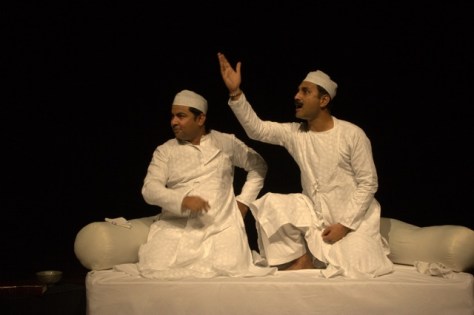
An Actor’s Journey from Text to Performance

The revival of Dastangoi completed six years this month

Whenever I begin preparing for a new performance words sit heavy in front of me as boulders. Alien, unknown boulders.  I look up and I see them littered till wherever my eyes can see. I do not know these words. I did not create them. I do not know their context. I do not know what all they hide within. But I have to deal with them.

This is one of the fundamental struggles of an actor. To grapple with the text he intends to perform. Every time I encounter a new text for performance this line from Noon Meem Rashed’s iconic poem “Zindagi Se Darte Ho” comes to haunt me:  Continue reading An Actor’s Journey from Text to Performance

Young Women in Kerala : Between Empowerment and Death? — Part I

[This was a note titled ‘We Still Need Feminism’ which I wrote on March 31 on my Facebook page; I thought it relevant to re-post it here as it appears that an ‘honour killing’, of a sort — an ‘honour suicide’ — may have actually surfaced in Kerala. More on that in the next post]

In JNU, last week, some of us were noticing how there seemed to be a notable increase in the numbers of students, both women and men, from the Hindi heartland. It is interesting, said one of my friends, that the deterritorialised university spaces in Delhi can no longer back off from directly confronting the tensions through which these societies now live through. “Look at that girl,” she said, pointing to a sprightly young woman, a bright student who I’d briefly met earlier,”she comes from a family that’d kill her if she married out of her gotra. And she is involved with a young man who’d not even of her region. We must fear the worst and prepare to confront evil.” For a brief moment, in my fright, I thought, well, at least we don’t have honour killings in Kerala. Honour kidnappings, yes, but I haven’t heard of too many honour killings. Maybe honour killings are still on their way here (like dowry deaths were, in the 1980s, when I was growing up into a young woman). We have some time to rally against them. Continue reading Young Women in Kerala : Between Empowerment and Death? — Part I

We Are Where We Know Not What Befalls Us… in Bengal!

Kahan le Chale ho... (image courtesy Small Strokes)

Ham wahaan hain jahaan se hamko bhee
kuchch hamaaree khabar naheen aatee

Roughly translated literally, this famous couplet of Ghalib’s would mean: “We are at that place from where we do not get any news about ourselves”. A somewhat surreal place to be in! It is not just that you are holed in, a place where you are cut off from the world and no longer get any news of the outside – say Plato’s Cave. This descent is into a Cave from where you get no news about yourself! You are in a state of incommunicability with your own self. Clearly, a Self that is deeply at odds with itself.

This is clearly the place where the Bengal communists have descended. Else, who could not have seen the avalanche coming? Even when they lost the 2009 parliamentary elections, they thought that they lost because those sitting in Delhi’s AK Gopalan Bhawan chased the chimera of the Third Front (and they have been repeating this till yesterday, everyone from Buddhadeb to Gautam Deb)! Of course that was a chimera but to delude yourselves that your defeat had nothing to do with your own doings, that ‘the people’ oh love you soo – that is only possible when you have descended into that surreal space.  The interesting thing is that apart from the self deluding communists of the CPM brand, even the ordinary person on the street knew what was coming. Continue reading We Are Where We Know Not What Befalls Us… in Bengal!

The Poet of Romance and Revolution

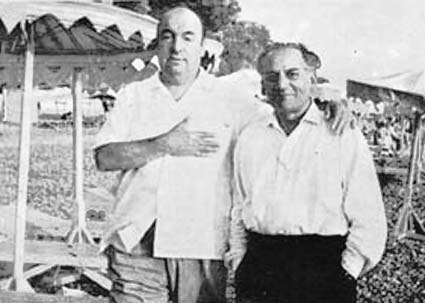
Pablo Neruda with Faiz Ahmed 'Faiz'

If you met him on the street you would never imagine that he was a poet, and not your run of the mill poet, but  among the most important poets of the 20th century, not only in Urdu, not only in  the subcontinent but in the entire world of the 20th century. I have always wondered how could someone who invariably dressed in rather unimpressively stitched, unromantic terry-cot Safari suits, someone who could at best pass off as a joint secretary in the ministry of shipping or something similar, be such a wizard with words and not only with words but with content and with form?

Continue reading The Poet of Romance and Revolution

Har Qadam pe Zamin Tang Hoti Jayegi… (The Land Will Shrink With Every Step)

For the last few days, a few lines from Sahir Ludhianivi’s long poem Parchhaiyan, have been repeatedly coming back to me. A poem that I had read ever so often in my early youth and thought I had long forgotten, suddenly reappeared in a flash. Here go some of the lines (not really in the order in which they appear in the poem, but in the order in which they came to me):

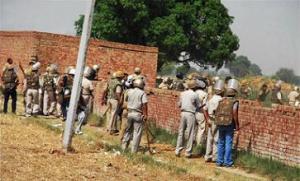
Noida farmers clash with police over land acquisition
Villages turned into police camps

चलो कि चल के सियासी मुक़ामिरों से कहें/ कि हमको जंगो-जदल के चलन से नफ़रत है

कहो कि अब कोई क़ातिल इधर अगर इधर आया/ तो हर क़दम पर ज़मीन तंग होती जाएगी

हर एक मौजे-हवा रुख़ बदल के झपटेगी…

ये खेत जाग पड़े, उठ खड़ी हुईं फ़सलें/ अब इस जगह कोई क्यारी न बेची जाएगी

[Roughly translated: Come let us tell the political gamblers/ that we hate the business of war and strife

Let us tell them that if a murderer dares to come hither/ The land will shrink with each step

Every wave of the air will turn turn against you

These fields have come alive, with the crops swaying on them

No more shall even a bed (of the field) be sold]

Though Sahir’s poem was written as a protest against war, some of these lines resonate with other, more immediately relevant matters. Ironically, Sahir was protesting against the war mongers pillaging civilain populations but here we are, with the new war mongers of our times: what else is the neo-liberal dream but that of pillage and loot of civilian populations by armed forces of civilian governments. And as they, ‘is hammam mein sab nange hain‘! [All are naked in this  in this bathhouse]:  From Buddhadev Bhattacharya of West Bengal to Mayawati of Uttar Pradesh – spokespersons all of the oppressed! And it makes little difference whether it is a BJP-led NDA government in power at the Centre or a Congress-led UPA.

Continue reading Har Qadam pe Zamin Tang Hoti Jayegi… (The Land Will Shrink With Every Step)

‘मेरे लिए लेस्बियन होने का सबसे बढ़िया पहलू है मज़ेदार सेक्स’

Published originally in English  here

Translated by AKHIL KATYAL

मैंने हाल ही में एक डोक्युमेंटरी फिल्म देखी, प्रतिभा परमार की १९९१ में बनायीं हुई खुश, जो कि दक्षिण ऐशिआयि एल.जी.बी.टी (लेस्बियन, गे, बिसेक्सुअल, ट्रांसजेंडर)  लोगों कि अलग-अलग ज़िन्दगी के बारे में थी। एक लेस्बियन महिला से जब फिल्म में पुछा गया कि ‘लेस्बियन होने का सबसे बढ़िया पहलु क्या है?’ तो उसका जवाब था ‘मेरे लिए लेस्बियन होने का सबसे बढ़िया पहलु है पूरी तरह से ख़ुशगवार, मज़ेदार सेक्स!’ फिर वो महिला, पूरे नब्बे दशक के फैशन में सजी हुई, ऐसे मुस्कुराई,
कि लगा  कि वहीं उसी वक्त, उसी जगह, उसे अपने मज़ेदार सेक्स के सारे पल याद आ गयें हों।
मुझे, एक क्युइर एक्टिविस्ट के नाते, जो कि इस फिल्म के बनने के समय कुछ आठ साल कि थी और जो कि सार्वजनिक ढंग से एल.जी.बी.टी लोगों के बारे में न्यायालयों में और पत्रकारों से बोलती आई है, एक भी ऐसा पलयाद  नहीं आ रहा है, जब मैंने सेक्स के बारे में कुछ लिखा या बोला हो। Continue reading ‘मेरे लिए लेस्बियन होने का सबसे बढ़िया पहलू है मज़ेदार सेक्स’

पीर पराई जानै कौन?: कुलदीप कुमार

Guest post by KULDEEP KUMAR

अज्ञेय की प्रसिद्द कविता-पंक्तियाँ हैं:

“दुःख सबको मांजता है/
स्वयं चाहे मुक्ति देना वह न जाने/
किन्तु जिनको मांजता है/
उन्हें यह सीख देता है/
कि सबको मुक्त रखें.”
लेकिन दुःख की इस सीख पर क्या कोई अमल भी करता है? पुराना या आज का इतिहास तो इसकी गवाही नहीं देता. बल्कि देखने में तो यह आता है कि दुःख के भी खाने बन जाते हैं. हमें केवल अपना या अपनों का दुःख ही दुःख लगता है. पराई पीर जानने वाले वैष्णव हम नहीं हैं.

जबसे सुना है कि ओसामा बिन लादेन की ह्त्या उसकी दस-बारह साल की बेटी की आँखों के सामने हुई, तभी से विचलित हूँ. मुझे मालूम है कि आज जिस तरह की फिजा बन गयी है, उसमें यह कहना भी जोखिम से खाली नहीं है. मुझे ओसामा बिन लादेन के प्रति सहानुभूति रखने वाला घोषित किया जा सकता है. उसकी बेटी को तो पता भी नहीं होगा कि उसका बाप वाकई में क्या था. क्या उस बच्ची का दुःख इसलिए कम हो जाता है क्योंकि वह ओसामा की बेटी है? हम लोगों ने अपने लिए जिस तरह के तर्क गढ़ लिए हैं, उनके अनुसार तो इस बच्ची के दुःख के बारे में सोचना और बात करना भी आतंकवाद के प्रति सहानुभूति दिखाना होगा.

Continue reading पीर पराई जानै कौन?: कुलदीप कुमार

DISSENT, DEBATE, CREATE