Firing and Repression on Factory Workers in Gorakhpur

The workers of Ankur Udyog Ltd., a factory in the Bargadwa industrial area in Gorakhpur, eastern UP were attacked by goons called by the factory owner the morning of 3 May. At least seven workers were seriously injured in firing by the goons. Apparently, the factory owners of Gorakhpur have been very angry with the workers for attending the May Day rally at Jantar Mantar, Delhi and one of them suspended 18 workers as soon as they went to resume work. The workers protested against this and the factory owner sent hired goons who fired on the workers injuring 19 of them. The workers had cornered the goons inside the factory but the police came and took them away and let them free. FIRs have been registered from both sides.

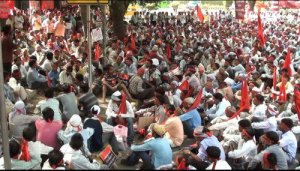
may day rally
May Day rally- workers' charter movement

As the tension and repression of the factory owners and the district administration mounts, the workers have planned to go on Satyagraha from May 8 (tomorrow) and the administration is determined to not let it happen. We have received messages saying that trade union organizers fear for the life and safety of the workers and their leaders. The voice of protests from many forums and due to the incident being covered by the local media, the administration has refrained from taking any one sided action till now. But conspiracies are being hatched behind the scenes. Its not a distant reality that the leaders might be killed in fake encounters, or slapped with false charges or lynched by mobs instigated by the factory owners or Adityanath’s goons.

Continue reading Firing and Repression on Factory Workers in Gorakhpur

Choice in the labour market – sex work as “work”

The summary of preliminary findings of the first pan-India survey of sex-workers is now available on-line.  3000 women from 14 states and 1 UT were surveyed, all of them from outside collectivised/organised and therefore politically active spaces, precisely  “in order to bring forth the voices of a hitherto silent section of sex workers.”

The significant finding is this: About 71 percent of them said they had entered the profession willingly.

(The data on male and transgender sex workers has not been processed yet).

The study was conducted by Rohini Sahni and  V Kalyan Shankar under the aegis of the Center for Advocacy on Stigma and Marginalisation (CASAM),  supported by Paulo Longo Research Initiative (“a collaboration of scholars, policy analysts and sex workers that aims to develop and consolidate ethical, interdisciplinary scholarship on sex work to improve the human rights, health and well being of women, men and transgenders who sell sex.”). The study was supported by a large number of groups, organizations and individuals in each state, who helped to conduct the surveys.

This background is important, because it appears to be a study that is well grounded, and drawing on large networks of local interconnections.

Continue reading Choice in the labour market – sex work as “work”

The Death of Merit: A short film series by the Insight Foundation

From here.

This documentary is first in the series of our efforts to document caste-based discrimination prevalent in Indian higher education system resulting in large number of suicides of Dalit students in Indian campuses.

It is based on the testimonies of parents and family members. In next few days, we are coming up with few more documentaries to expose the kind of caste-based hostility and harassment Dalit and Adivasi students have to suffer from the faculties, fellow students and administration in some of the country’s premier educational institutions. These documentaries are part of our efforts to make Indian educational system inclusive in real sense and free from caste-discrimination.

Here’s more on The Death of Merit.

Two statements on the Environment Ministry’s ‘forest clearance’ to POSCO

In response to the Union Environment Ministry’s decision, given below are two press releases, from POSCO Pratirodh Sangram Samiti and Campaign for Survival and Dignity

POSCO PRATIRODH SANGRAM SAMITI

(based out of villages Gadkujang, Nuagaon and Dhinkia in Erasama block of Jagatsinghpur district, Odisha. )

A Mercenary Minister and a Lying Government Cannot Crush Our People
Money Worth More to Government than Truth, Law and Justice; but the Corrupt and the Criminal Will Not Triumph

2 MAY 2011: Today, in a sanctimonious order riddled with lies and distortions, the Environment Ministry allowed thePOSCO project to proceed. The livelihoods of 4000 families (over 20000 people) and the laws of the land have been sold to the highest bidder. Certain facts should be brought to the notice of the public: Continue reading Two statements on the Environment Ministry’s ‘forest clearance’ to POSCO

A government that wants to destroy its own airline?: Susmita Dasgupta

Guest post by SUSMITA DASGUPTA

Many moons ago, when our sweet little dupleix in Dover Lane was enlarged into a three storey house to make space for a tenant, our first tenant was an Indian Airline pilot. Similarly, many modern condominiums in our locality were being rented out to pilots and air hostesses. This was a mark of Dover Lane having arrived as a respectable colony in Ballygunje from its rather modest middle class veneer. The airlines are always looked upon as a creamy layer of the middle class; offering prospects and possibilities that are matched only by the IT, bureaucracy and the army. It has the class of being high salaried, élan of professional excellence and the allure of a closed group cadre. In other words, it has the best of all worlds notwithstanding the attraction of international travel with sops like free tickets for dependent members of the family. The pilots, who are the core of this sector, are on strike in India’s only public sector in the aviation sector, namely Air India. Continue reading A government that wants to destroy its own airline?: Susmita Dasgupta

The Ghosts Will Walk: Sanjay Kak reviews Mirza Waheed’s “The Collaborator”


By SANJAY KAK

Kashmir will haunt India the way Algeria haunts France.

I remember that from ten years ago, on one of those early e-groups, the provocation almost buried in the dense threads that made up conversation there. “It will haunt Indian intellectuals”, the young Kashmiri correspondent had promised darkly, “in the way Algeria continues to haunt the French”. From its first pages, as the eponymous young narrator of The Collaborator walks us into the heart of his terrors, and introduces us to his hell, Mirza Waheed’s novel gives notice that the long overdue time of that haunting may be upon us.

The book is set somewhere in the mountains of Kashmir, but not the unchanging, pastoral idyll of Bollywood cinema, of Gulmarg’s meadow and Pahalgam’s river; nor the ordered beauty of the Mughal imagination, of Shalimar and Nishat bagh. Instead it’s located in the present, in its “militarized wilderness”, in Nowgam, a “new village” settled in the violent aftermath of 1947. The mortal cut of the partition of Kashmir between India and Pakistan put a sudden end to the nomadic life of this community of Gujjar pastoralists, and Nowgam has grown in the way scarred tissue forms over wounds. Almost half a century later, sandwiched between the belligerence of those two nations, in the shadow of Koh-i-gham, the mountain of sorrow, the sound of heavy artillery fire being exchanged across these rugged peaks has become routine.

Read the full review, published in Bibliohere (download .pdf).


The Middle-class and the State: Shashank Kela

Guest post by SHASHANK KELA

These fragmentary reflections on the historical relationship between the middle-class and the state may help to place the brouhaha over Anna Hazare in a fresh perspective.

No one celebrates capitalism quite as enthusiastically as your average (well, all right, above average) Marxist historian. Few conservative encomiums on the subject have the lapidary elegance of Perry Anderson’s Lineages of the Absolutist State, or the remorseless logic of Robert Brenner’s celebrated paper on the origins of capitalism.[1] This line goes back all the way to Marx in whose work praise of capitalism and execration of its effects are perpetually balanced.

Capitalism’s motor is the bourgeoisie or the middle-class. Its ancestors – the burghers of the medieval west European town and large landowners in the countryside – transformed the crisis of feudalism into opportunity with the help of the state. The result: mercantilism, enclosures, poor laws; the reorganization of agriculture on rational, commercially profitable lines. The cumulative effect of these developments was to extinguish avenues of subsistence hitherto available to the poor, throwing them on the market as sellers of their labour. Continue reading The Middle-class and the State: Shashank Kela

The Fragility of Oppositional Civil Social Ecology and the Impact of V S

Now that most of us Malayalees are basking in the warmth of the global ban on Endosulfan,even enjoying a brief spell of ‘unity’ (yes, even the UDF folk have joined, if more warily), what I’m about to write will probably make me quite unpopular. Well, here goes —  I have been watching the unfolding of events since last month’s elections to the Kerala State Assembly right up to the gathering of protest and the CPM-led charge against Endosulfan and it all looked like the ultimate festival of depoliticized mediatized dramatics. The dramatics during candidate-selection, the emotional performances of candidates, pretenders, leaders etc etc of various sorts for TV, the weepy complaints combined with nimble hopping across the LDF-UDF boundary by seekers of candidature, the lack of attention to manifestoes and the general attrition of discussion, all of this seemed to taper endlessly — exactly like the long-drawn-out daytime temple rituals during the Pooram at Thrissur. It was indeed a festival, consumed heavily and enjoyed immensely by the people — perhaps not in the sense of being a ‘festival of the people’.

Continue reading The Fragility of Oppositional Civil Social Ecology and the Impact of V S

Osama and Obama: Or How Much Work Can One Death Do…

Yesterday Osama Bin Laden was killed in an operation by American troops in Abbottabad, Pakistan. Barack Obama addressed the American nation in a televised address at 11:30 P.M. at night. It is a curious address. You can watch it below.

Continue reading Osama and Obama: Or How Much Work Can One Death Do…

Brilliant Tutorials: Trisha Gupta reviews Siddharth Chowdhury’s “Day Scholar”

Guest post by TRISHA GUPTA

On the face of it, Siddharth Chowdhury’s Day Scholar, is a coming of age novel. The book’s own inside cover actually describes it as a “crazed and profane coming of age tale”, whose plot is ostensibly about how Patna boy Hriday Thakur (“who hopes to be a writer some day”) is first “trapped… by a series of misjudgements” and later “saved from a terrible end”. But much like Chowdhury’s previous offering, Patna Roughcut (also billed as “a story of love, idealism and sexual awakening” that takes us to “the heart of an aching, throbbing youth”), Day Scholar – despite a self-referential moment when its protagonist is asked by his father about how his Bildugsroman is coming along – is not a book that seems containable within the neat boundaries of the coming-of-age genre. Continue reading Brilliant Tutorials: Trisha Gupta reviews Siddharth Chowdhury’s “Day Scholar”

In Memory of the Unknown Worker, this May Day

Nations build memorials to the Unknown Soldier. A militarized imagination in which the glory  of the Nation is embodied in a nameless and faceless  figure who courts death. This  faceless Unknown Soldier must die so that the myth of the nation can live, and a mythical National Interest devastate the everyday lives of the powerless.

This May Day, let us sing to the memory of the Unknown Worker – celebrated by no one, not even in abstraction!  The faceless figure on whom rest our lives of luxury, our ‘growth’ and the profits of the bourgeois. I borrow the the term ‘unknown worker’ from  Susie Madrak.

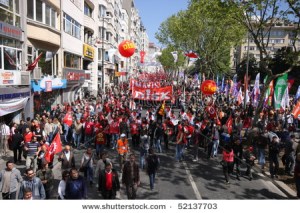
may day rally in istanbul's taksim square

Let us, we who have no nation – antinationals, postnationals, aliens, refugees, immigrants, undocumented workers, development refugees – sing the strains of the Internationale. Let us recall the days when the poetry of the International truly belonged to the ‘wretched of the earth’, the time when the Internationale was not yet taken over and made into the official anthem of nations, parties and governments. The long winter of party-state-nation appropriations of the voices of struggle, that set in more than a century ago, and once again imprisoned them, may be nearing its end.

Continue reading In Memory of the Unknown Worker, this May Day

The Disappearance of Susheel Raina: APDP protests unabated disappearances in Kashmir

Susheel Raina

Press Release issued on 28 April 2011 by the ASSOCIATION OF PARENTS OF DISAPPEARED PERSONS, led by Parvez Imroz. The APDP also staged a protest in Srinagar. 

Susheel Raina, 21, son of Badrinath Raina disappeared from Chandergam, Aishmuqam in district Anantnag (Islamabad) on 4th April 2011. Susheel left his home to collect a certificate from Boys Degree College Anantnag (Islamabad) and since then never returned.

Police is said to be investigating, as they claim about hundreds of others who have disappeared in last two decades. These investigations either never begin or never end and in very rare cases where police investigations have indicted the perpetrators, no one has been prosecuted. Continue reading The Disappearance of Susheel Raina: APDP protests unabated disappearances in Kashmir

The Present of the Absent State

[An edited version of this review has appeared in Biblio.]

The Absent State: Insurgency as an Excuse for Misgovernance
by Neelesh Misra and Rahul Pandita
Hachette India, 2010
272 pages, 495 Rs

Indian journalists have written books on conflict as diaries of their years of reportage, putting together their stories and experiences. The task of looking at conflicts with a broader perspective has been left to the security experts who mostly write from, well, a security ‘angle’. It is great, then, to see a book by two journalists, on the conflicts in Kashmir, the north-east and the Maoist belt. Journalists won’t give you footnotes but at least they can write lucid prose. Continue reading The Present of the Absent State

A Few Lessons on Marxism and Politics

“At a certain point in their historical lives, social classes become detached from their traditional parties. In other words, the traditional parties in that particular organizational form, with the particular men who constitute, represent and lead them, are no longer recognized by their class (or fraction of a class) as its expression” – Antonio Gramsci, Prison Noteboooks, International Publishers, New York, 1971, p. 210. Emphasis added)

This is how Gramsci, sitting inside Mussolini’s fascist prison, began his now celebrated discussion of the ‘crisis of hegemony’. I cite this here apropos of the discussion that has gone on some of the previous posts by Monobina Gupta, Sankar Ray and myself on the CPM/Left in West Bengal, in the course of which, I have been accused of ‘coming out’ as a supporter of the Trinamool Congress, which some have also termed as a fascist or even ‘super-fascist’ organization! Clearly, these gentlemen neither know the history of fascism nor indeed of Marxism. Fed on pamphlets of a certain marxist catechism, they have learnt only one thing: the division of the world into two camps where ostensibly, battle lines are permanently drawn between parties that apparently have a ‘mandate from heaven’ of bearing a particular class character, either bourgeois or working class. I hope none of those who have learnt their ‘dialectics’ or their ‘historical materialism’ from marxism-made-easy pamphlets of Emile Burns, Maurice Cornforth and Stalin will jump to pronounce Gramsci a postmodernist who denies this supposed ‘class essence’ of parties . (I am told though that these too are passe now; ‘cadres’ these days are not meant to read beyond party resolutions and ‘theoretical’ essays of Prabhat Patnaik, whose own world has stopped with Michal Kalecki).

Continue reading A Few Lessons on Marxism and Politics

Music and politics – the power of minimalism: Prasanta Chakravarty

Guest post by Prasanta Chakravarty

I want to tell you about a song.  A song and a singer that few will call political. I want to talk about a song called Daya Karo (Have Mercy) sung by Mousumi Bhowmik, which appears originally in her album Ami Ghor Bahir Kori/ In and Out of My Room (2001).

Though she would routinely perform in certain public events and campus fests in Kolkata, Bhowmik has always been a peripheral figure in the popular imagination on Bangla singers who appear in the last couple of decades. She does not qualify as a mainstream modern popular singer. It is an equally barbed proposition to accommodate her within a new group of singers who would tilt the popular musical scenario in Kolkata and its suburbs by some straight talking, angst ridden compositions and solo performances throughout the nineties. Some of these singers have of late plunged into active politics and one of them has even become a Member of Parliament.

Continue reading Music and politics – the power of minimalism: Prasanta Chakravarty

Cultures of Corruption: Kalpana Kannabiran

Guest post by KALPANA KANNABIRAN

We are a country given to idolatry – both the erection and demolition of idols a favourite pastime that buries under the rubble questions of ethics and constitutional morality.   While this penchant for idolatry raises larger questions,  I will concern myself at this point with the effigy (or the idol upside down) called corruption.

While there has undoubtedly been a marked shift in the languages of corruption in the neo liberal era, calling for new and different strategies to combat it, the fight against corruption is not new.  When women’s groups campaigned decades ago against the testing of banned drugs and contraceptives on poor people by the ICMR, the question that was raised was about the nexus between pharmaceutical companies and state actors that involved deals for which poor and vulnerable communities were pushed to the guillotine.  With Bhopal, the question came up again on the deals between multinational companies (Union Carbide in this case) and the government that violated every principle of human rights, natural justice, constitutional morality and the ethics of care in governance.  Was the derailment of justice effected without corruption at every level? Apart from providing care to the affected, was not the struggle for justice in Bhopal a struggle against corruption?  When the People’s War Group (as it was then called) abducted an elected representative two decades ago (who was later released), the reason they gave to the negotiators was that he misused public funds in the district and asserted that theirs was a fight against corrupt representatives.

Continue reading Cultures of Corruption: Kalpana Kannabiran

The afterlife of a massacre

Aman Sethi/ The Hindu

I just finished a long essay for the cover of the May 2011 issue of Caravan  magazine. In “At the Bloody Crossroads”,  I plot the fate of the village of Tarmetla in the course of a year of ‘counterinsurgency”.

At 5:55 AM ON 6 APRIL 2010, Golf Company of the 62nd battalion of India’s Central Reserve Police Force [CRPF] radioed field headquarters at Chintalnar to report they were receiving small-arms fire in the “Tarmetla sector” and had sustained one injury. Golf Company was conducting a three-day area-domination exercise in the forests of Dantewada…

Operation Khanjar (“Dagger” in Hindi) was Golf’s last manoeuvre before the company was rotated out of Chintalnar to a less sensitive post. They were accompanied by their replacements from Alpha Company, who had just arrived from battalion headquarters in Barsur. The objective was to make their presence known in the district’s scattered hamlets: they were to spend three days sanitising the sector of guerrilla presence and acquainting the men of Alpha Company with the rolling hills and dry riverbeds that surround the CRPF camp at Chintalnar….

At 7:45 am, Golf Company’s deputy commandant, Satyawan Yadav, made a phone call from the vortex of the ambush to say that his company had been completely surrounded—and then the phone went silent.

Read the full story on Caravan’s website. I will be happy to answer questions/comments on Kafila

Modest? Sexy? Or just an athlete?

By goddess, it’s that spot again – at once familiar and deeply uncomfortable. Us feminists in the same rage as the patriarchs and religious right, over the same damn thing. For very different reasons, we bellow (cutely), but is anybody listening?

The  Badminton World Federation has announced its new dress code that requires women players to wear skirts  “to ensure attractive presentation of badminton.” Almost every Indian woman player has objected, saying that dress should be one’s personal preference.

Of course most workplaces have dress codes.  So this is about more than simply an infringement of individual tastes. This is about the utter blatant sexism of this particular requirement. Basically, what’s the BWF saying quite shamelessly? That they expect more people to come to the sport if they can see suggestively flying skirts (on women). Even if there are shorts beneath, which they have grudgingly permitted. It’s not enough to show legs, skirts have to fly. Continue reading Modest? Sexy? Or just an athlete?

वामपंथ, माकपा और जनवादी क्रांति बकौल प्रभात पटनायक

[This post is a response to Prabhat Patnaik’s article ‘Why the Left Matters’ which appeared in the Indian Express on 17 March. A version has appeared in two parts in Jansatta]

पांच राज्यों में विधान सभा चुनाव हो रहे हैं. इनमें से दो, बंगाल और केरल वाममोर्चा शासित प्रदेश हैं. केरल में तो भारत के अन्य राज्यों की तरह  चुनावों के परिणामस्वरूप सरकारें बदलती रही हैं , बंगाल ने पिछले  चौंतीस  साल से वाम मोर्चे के अलावा किसी और सरकार का तजुर्बा करना ज़रूरी नहीं समझा है. इसे अक्सर बंगाल की जनता की राजनीतिक परिपक्वता के तौर पर व्याख्यायित किया गया है. बौद्धिक जगत में साम्यवादी विचार की वैधता के लिए भी जनता द्वारा दिए गए इस स्थायित्व का इस्तेमाल वैसे ही किया जाता रहा है जैसे कभी सोवियत संघ और अन्य पूर्वी युरोपीय देशों या अभी भी चीन में  साम्यवादी दल के  सत्ता के अबाधित रहने से उसे प्राप्त था.  बल्कि कई बार इसे अन्य  राज्यों की जनता के राजनीतिक दृष्टि से पिछ्ड़े होने के प्रमाण के रूप में भी पेश किया जाता रहा है . इस बार स्थिति कुछ बदली हुई लग रही है. अगर बंगाल में अनेक स्तरों के स्थानीय निकायों के चुनाव कुछ इशारा कर रहे हैं तो वह सत्ता परिवर्तन का है.

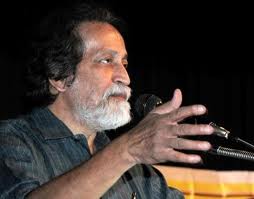
Prabhat Patnaik, leading CPI-M aligned intellectual

संसदीय प्रणाली पर आधारित लोकतांत्रिक व्यवस्था में इस प्रकार का परिवर्तन जीवन का नियम माना जाता है, बल्कि इस अस्थिरता में ही उसकी जीवंतता का स्रोत भी देखा जा सकता है. लेकिन बंगाल की जनता द्वारा मत-परिवर्तन की संभावना एक विशेष बौद्धिक संवर्ग के लिए चिंता का विषय बन गई है. प्रख्यात अर्थशास्त्री प्रभात पटनायक ने कुछ पहले इस संकेत की असाधारणता की ओर ध्यान दिलाते हुए एक टिप्पणी लिखी है. बल्कि यह जनता और विशेषकर भारत के शिक्षित समुदाय से एक अपील ही है – भारत की लोकतांत्रिक क्रांति की रक्षा की अपील. उनके कहने का सार यह है कि भारत की सतत वर्धमान लोकतांत्रिक क्रांति पर प्रतिक्रांतिकारी शक्तियों के बादल मंडरा रहे हैं और इस बार यह खतरा वास्तविक और आसन्न है. इस खतरे का सामना करने के लिए प्रभात आवश्यक मानते हैं कि वामपंथ को चुनाव में प्रतिकूल परिणाम न झेलना पड़ॆ.  उनके अनुसार वामपंथ को कोई भी चुनावी धक्का दरअसल लोकतांत्रिक क्रांति के लिए मरणांतक आघात साबित हो सकता है.

Continue reading वामपंथ, माकपा और जनवादी क्रांति बकौल प्रभात पटनायक

India’s Kashmir policy described in one photograph by Javed Dar

This photograph of an Ikhwani camp in south Kashmir was taken by JAVED DAR in 2008. Standing in the middle is a well-known ‘government gunman’, Jehangir Khan. Photo courtesy Conveyor.

Did You Say ‘US Imperialism’, Prakash Karat? Sankar Ray

Guest post by SANKAR RAY

The CPI(M) general secretary Prakash Karat and the Left Front chairman Biman Bose deserve thanks for referring to the WikiLeaks revelation about the US enthusiasm in seeing a change of guard at the Writers’ Buildings, the seat of the Government of West Bengal.

Prakash Karat, CPM general secretary
Prakash Karat, CPM general secretary, courtesy rediff.com

Quoting the cable no 230353 10/20/2009, Mr Karat conveyed the gist of it as follows: “Since the May 2009 parliamentary elections elevated West Bengal’s regional party, All India Trinamool Congress, from obscurity to the second largest constituent party in the United Progressive Alliance, its leader, Mamata Banerjee, has conscientiously sought to re-brand herself as West Bengal’s Chief Minister-in-Waiting. She is using the considerable administrative resources at her disposal as Railway’s Minister, political resources as leader of the state opposition party, and personal resources to initiate this transformation. Supporters and critics acknowledge the new image, but question whether it is indeed a new product, or simply new packaging. Backed by a large parliamentary constituency and allied with the ruling Congress party, Banerjee’s Trinamool is well placed to win the 2011 state assembly elections if she can continue along her current path of self-restraint and avoid making any mistakes along the way.” For details, the reader has to visit http://pragoti.org, even though it’s unabashedly pro-CPI(M).

The CPI(M) supremo observed that the AITC brass “is very much within private outreach. I’m in no position unfortunately to investigate and tell you what they are doing to fulfill this general direction they’ve given in the cable”.

Continue reading Did You Say ‘US Imperialism’, Prakash Karat? Sankar Ray

DISSENT, DEBATE, CREATE