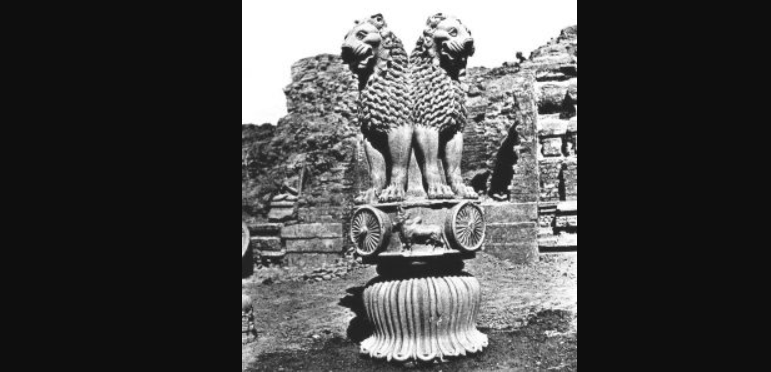
Ashokan lions adorn Indian currency and the Dharmachakra features in the tricolour. Neither symbol has any sanctity for the ideologues of the ruling dispensation.
Thousands of kings and emperors shone for a brief moment in history, then quickly disappeared. But in ‘The Outline of History: The Whole Story of Man’, H.G. Wells writes, “Ashoka shines and shines brightly like a bright star, even unto this day.” The famous British historian EH Carr also wrote, “What is history? It is a continuous process of interaction between the historian and his facts, an unending dialogue between the present and the past.”
Yet, history is a continuous ‘us versus them’ for some individuals and outfits in India. Their interaction with the past typically degenerates into a vicious monologue aimed to vitiate the present and control the future. Nowhere is their vandalism of history more visible than what the Hindutva brigade is doing to the last great Mauryan ruler, Ashoka (304-232 BCE). Often compared with a medieval Mughal ruler—whom the Hindutvadis detest and distort in equal measure—they are now transforming the Ashokan period beyond recognition into a symbol of cruelty and bigotry.
Ashoka is widely known to have filled with remorse after the tremendous bloodshed in the battle of Kalinga. After that, he is known to have devoted his life to “conquest by Dhamma or right/moral life”. It is less known that Ashoka was among the earliest rulers to launch public utilities such as hospitals, encouraged tree-plantation, dug public wells and ordered the construction of rest houses along roads. His commitment to public reason is considered phenomenal, as he, two hundred years before Christ, organised the earliest open general meetings in the world.
The second lecture in the ‘Sandhan Vyakhyanmala’ series – initiated by New Socialist Initiative ( Hindi Pradesh) will be delivered by Sanjeev Kumar, Well known Critic and Deputy General Secretary of Janwadi Lekhak Sangh on Saturday 15 th January 2022 at 6 PM (IST). He will be speaking on हिंदी की मार्क्सवादी बहसें : ‘विचारधारा’ से विचारधारा तक ( Hindi ke Marxwadi Bahasein : ‘Vichardhara’ se Vichardhara tak) The focus of this lecture series – as you might be aware – is on the Hindi belt, especially, on literature, culture, society and politics of the Hindi region where we intend to invite writers, scholars with a forward looking, progressive viewpoint to share their concerns. The inaugural lecture in the series was delivered by poet and thinker Ashok Vajpayi, where he spoke on ‘Thought and Literature”
सन्धान व्याख्यानमाला दूसरा वक्तव्य हिंदी की मार्क्सवादी बहसें : ‘विचारधारा’ से विचारधारा तक वक्ता : श्री संजीव कुमार आलोचक संयुक्त महासचिव, जनवादी लेखक संघ 15 जनवरी , शनिवार शाम 6 बजे
सारांश
क्या वजह है कि हिंदी में पिछली सदी के 40 और 50 के दशक में प्रगतिशीलों के बीच जितने मुद्दों पर मतभेद उभरे, उनमें वही मत संख्याबल से विजयी रहा (और कमोबेश अभी तक है) जो हिंदी लोकवृत्त की स्थापित मान्यताओं के प्रति पूरी तरह से अनालोचनात्मक था? क्या यह एक परिवर्तनकामी वैचारिकी का परचम लहरानेवालों के भीतर वर्चस्व की प्रदत्त व्यवस्था का पोषण करनेवाली विचारधारा की सुप्त मौजूदगी थी जो भक्ति आंदोलन की विभिन्न धाराओं के रिश्ते, कथित हिंदी नवजागरण में भारतेन्दु और उनके मंडल के योगदान, हिंदी-उर्दू और उनके इलाक़े की सभी भाषाओं के आपसी संबंध, साहित्य में यौन-नैतिकता जैसे तमाम मसायल पर सभी असहज करनेवालों सवालों को हाशिये पर धकेल रही थी? क्या प्रगतिशील और मार्क्सवादी होने में अपने ‘संस्कारों’ के साथ एक तकलीफ़देह लड़ाई लड़ने और उपलब्ध सहूलियतों-रियायतों का त्याग करने की जो अपेक्षा निहित होती है, यह उससे पल्ला छुड़ाना था? या कि यह प्रगतिशील आंदोलन को वर्चस्वशाली बनाने के लिए सबको अपने साथ ले चलने की एक कार्यनीतिक पहल थी जो कि शायद सफल भी रही?
एक आत्मावलोकन से शुरुआत करनेवाला यह पर्चा इन प्रश्नों की दिशा में एक प्रस्थान है।
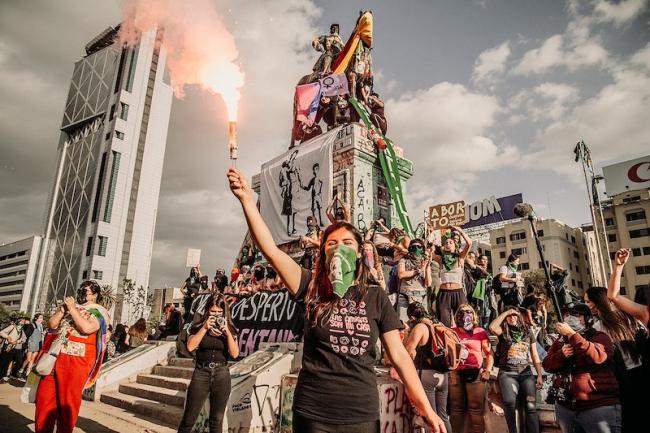
Feminist demonstration in Santiago – a crucial factor in the Boric victory, image NACLA
A New Left Resurgence
‘Leftists are Ascendant in Latin America as Key Elections Loom‘ announces a recent report in New York Times. And this report isn’t talking only of Leftist victories of the last two years but also of possible forthcoming ones in Brazil and Colombia, later this year. ‘Economic suffering, widening inequality, fervent anti-incumbent sentiment and mismanagement of Covid-19 have all fueled a pendulum swing away from the center-right and right-wing leaders who were dominant a few years ago’ underlines the report.
Close on the heels of the victory of Xiomara Castro as the first Left-wing, woman President in Honduras in the beginning of December 2021, came the news of the victory of Gabriel Boric in Chile (19 December). Unlike the socially conservative Left wing position of Peru’s Pedro Castillo, who stands opposed to abortion and same-sex marriage, the Chilean victory, in particular, has been strongly backed by the feminist and queer movements. Honduras’ Xiomara Castro too has legalization of abortion as one of her election planks, which is significant since it is one the few countries that has a complete ban on abortion as of last year.
We are a group of former civil servants of the All India and Central Services who have worked with the Central and State Governments in the course of our careers. As a group, we have no affiliation with any political party but believe in impartiality, neutrality and commitment to the Constitution of India.
We are issuing this open statement to voice our grave apprehensions regarding the provision in the recently enacted Election Laws (Amendment) Act, 2021 to link the Electoral Photo Identity Card (EPIC-Voter ID) issued by the Election Commission of India (ECI) with the Aadhaar card issued by the Unique Identification Authority of India (UIDAI), an agency of the Government of India.
The literary award must generate wider discussion in society on what plagues us. After all, the writer has always been outspoken against extremism.
This year’s Jnanpith Award for best literature has gone to Damodar Mauzo, the famous Konkani novelist and short story writer. The great Assamese poetic talent, Nilmani Phookan Jr, has also been awarded the Jnanpith for 2020. Hopefully, as we celebrate “their outstanding contribution towards literature,” our discussions will not remain confined to the literary domain.
In his acclaimed novel, ‘Karmelin’ (1980), Mauzo writes about the abuse of women who go to work as housemaids in the Middle East. This novel came long before everybody started talking about this issue. His story, ‘The Burger’, is about two school friends, Irene and Sharmila, and the guilt little Irene experiences over ‘polluting’ Sharmila with a beef burger. Another story describes how cow vigilantes intimidated a Dalit youth long before others talked about the phenomenon.
Maybe Mauzo could see beyond the immediate and obvious, which prompted his social and political actions on issues of concern to all of society. That social engagement allowed him to observe the dangers that lurked in our society in the form of the right-wing, and gave him courage to never shy away from boldly speaking out against them.
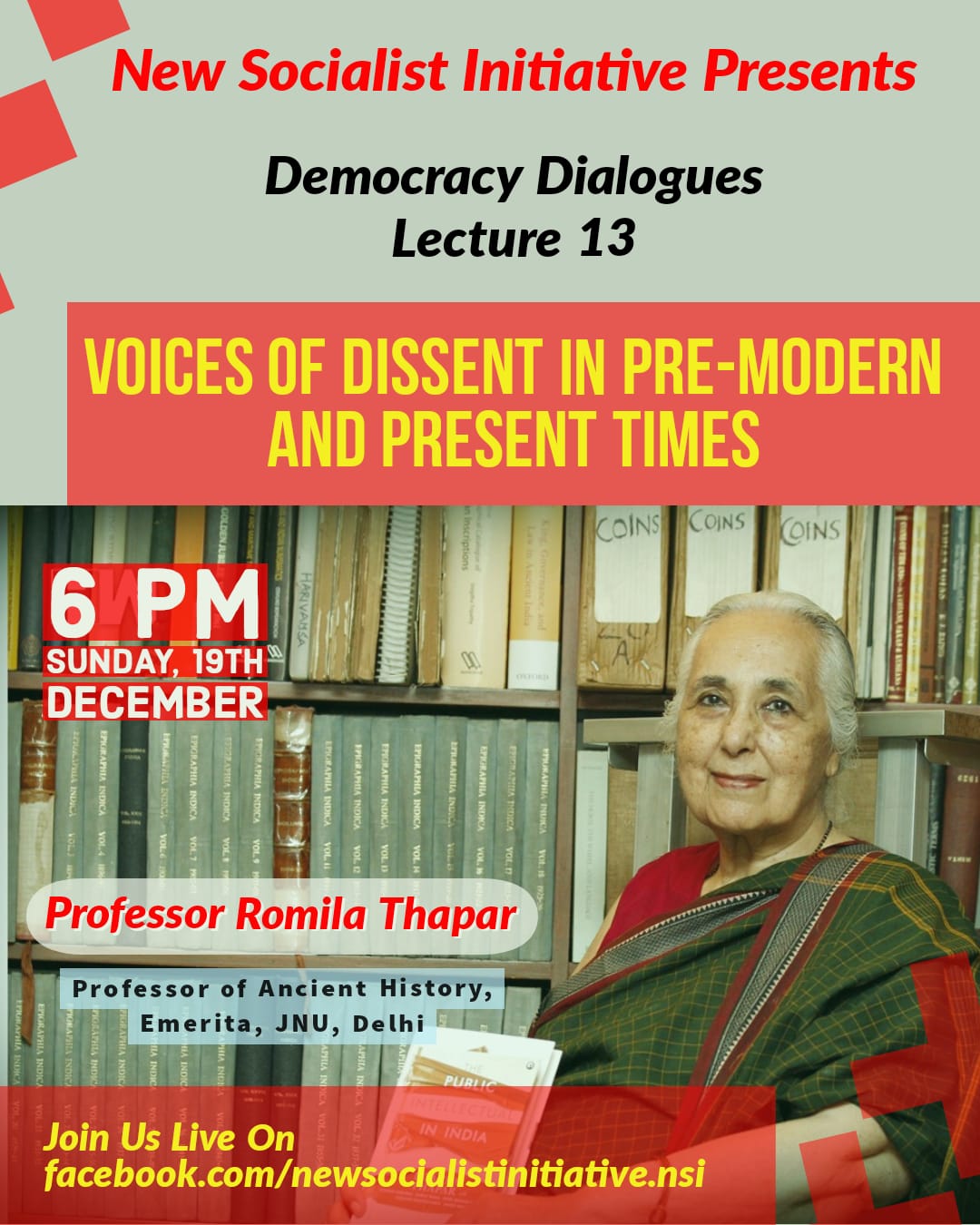
The13 th Lecture in the Democracy Dialogues Series organised by New Socialist Initiative will be delivered by Prof Romila Thapar, Professor of Ancient History, Emerita, JNU, author of many books and a leading public intellectual on Sunday 19 th December 2021 at 6 PM (IST). Prof Thapar would be speaking on ‘Voices of Dissent in Pre-Modern and Present Times‘
About the Speaker :
Internationally renowned scholar of Ancient History, Prof Thapar was elected General President of the Indian History Congress in 1983 and a Fellow of the British Academy in 1999. In 2008, she was awarded the prestigious Kluge Prize of the US Library of Congress which complements the Nobel, in honouring lifetime achievement in disciplines not covered by the latter.
Prof Thapar has been a visiting professor at Cornell University, the University of Pennysylvania, and the College de France in Paris and holds honorary doctorates from the University of Chicago, the Institut National des Langues et Civilisations Orientales in Paris, the University of Oxford, the University of Edinburgh (2004), the University of Calcutta and from the University of Hyderabad.
Here is a select list of Prof Thapar’s publications
Ashoka and the Decline of the Mauryas, 1961 ( Oxford University Press) ; A History of India : Volume 1, 1966 ( Penguin) ; The Past and Prejudice, NBT ( 1975) ; Ancient Indian Social History : Some Interpretations, 1978 ( Orient Blackswan) ; From Lineages to State 1985 : Social Formations of the Mid-First Millenium B.C. in the Ganges Valley, 1985 ( Oxford University Press) ; Interpreting Early India, 1992 ( Oxford University Press) ; Sakuntala : Text, Reading, Historie, 2002 ( Anthem) . Somanatha : The Many Voices of History, Verso ( 2005) ; The Aryan : Recasting Constructs, Three Essays ( 2008) ; The Past As Present: Forging Contemporary Identities Through History, 2014
For security reasons the zoom invite will be shared individually. Please write to us at democracydialogues@gmail.comif you are interested in attending the lecture
p.s. Here is a playlist of lectures in the series :
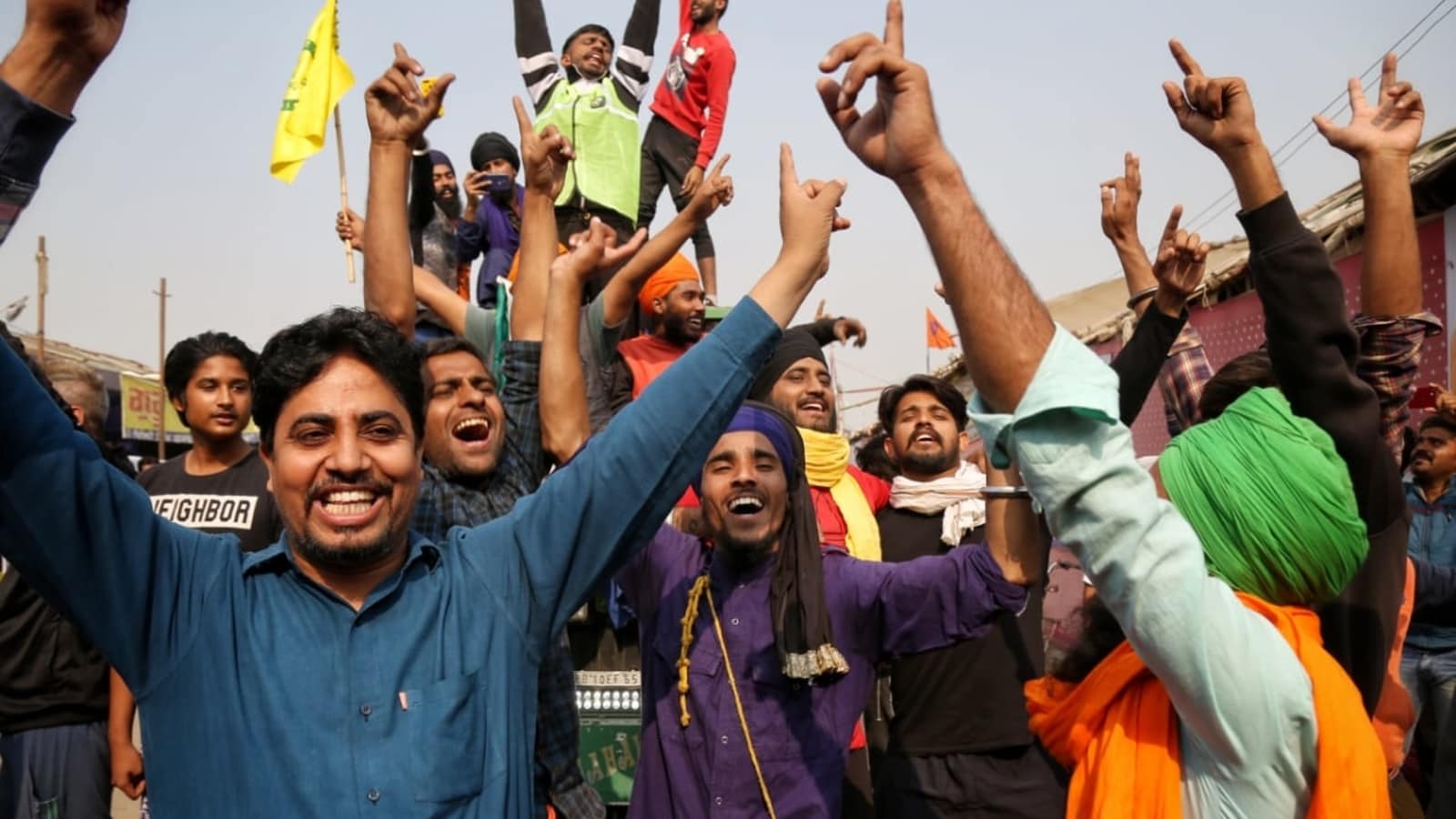
The victorious farmers at Delhi borders, image courtesy NDTV
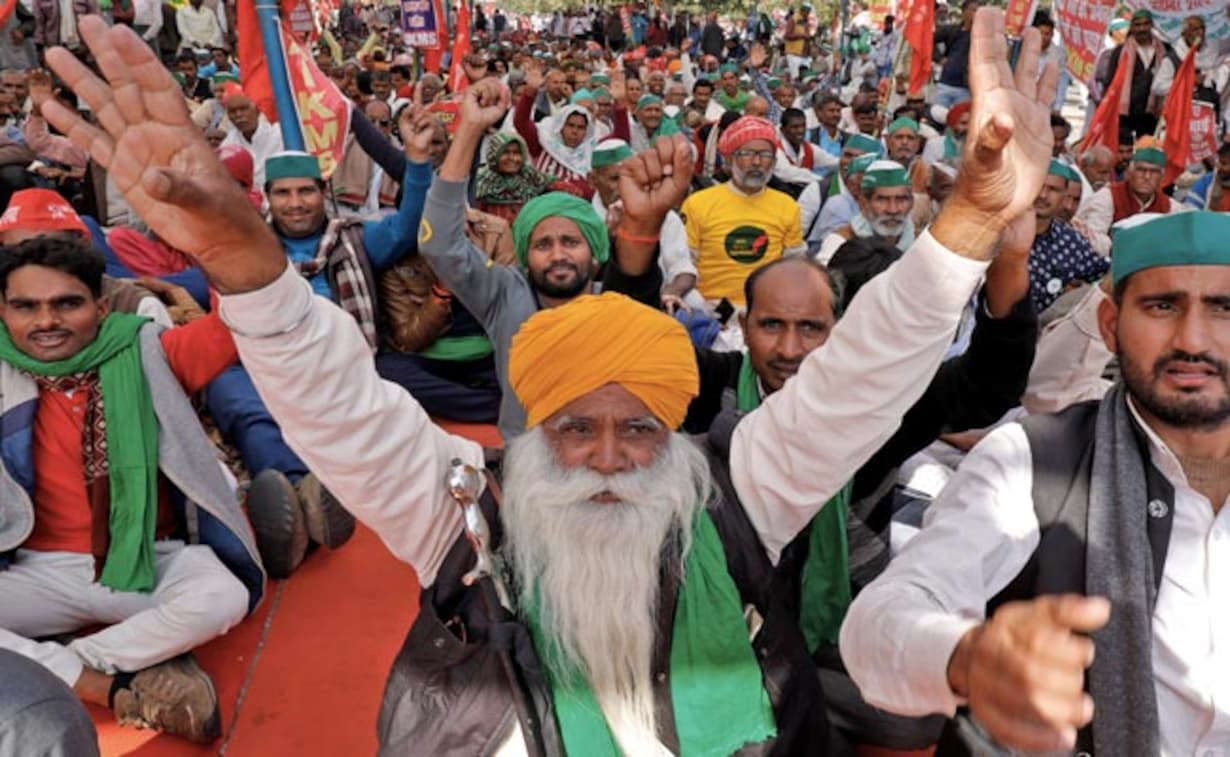
It is a time for rejoicing and celebration. It is a time for thanksgiving. For the victory of the farmers is not just theirs. Theirs was not just a struggle to protect their own livelihoods but also a valiant battle fought for all of us, so that we continue to get our food at affordable prices. It is a time for thanksgiving also because the movement has broken the hubris of an arrogant government that has absolutely no accountability whatsoever. It has given us some breathing space.
Even as this piece is being written, the victorious farmers camping at the Delhi borders for the last one year are preparing to leave for their homes. It has been a long haul for them in the course of which over 700 have died. It has been especially trying for the Punjab farmers who had started the stir months before they decided on their march to Delhi on 26 November 2020. Nobody had expected that the shifting of the venue to Delhi would end up being one long ordeal, continuing months on end, through the freezing winter, scorching Delhi heat and torrential rains. Not to mention an intransigent government that had already started the ground work for corporatization of agriculture and handing over parts of it to Adani and Ambani, even before the laws were formally promulgated.
The infamous infant-snatching case in Kerala has opened up too many harsh truths about this society. It is not easy to express the pain in acknowledging it. After all, for many of us who have stuck back here with the intention of participating in what was once a fairly vibrant political life, this monstrosity that looms over all aspects of life, private and public (as so terrifyingly evident in the experience of Anupama Chandran) is a daunting sight. Not that there weren’t glimmers of it earlier, but the full menace has become visible only now.
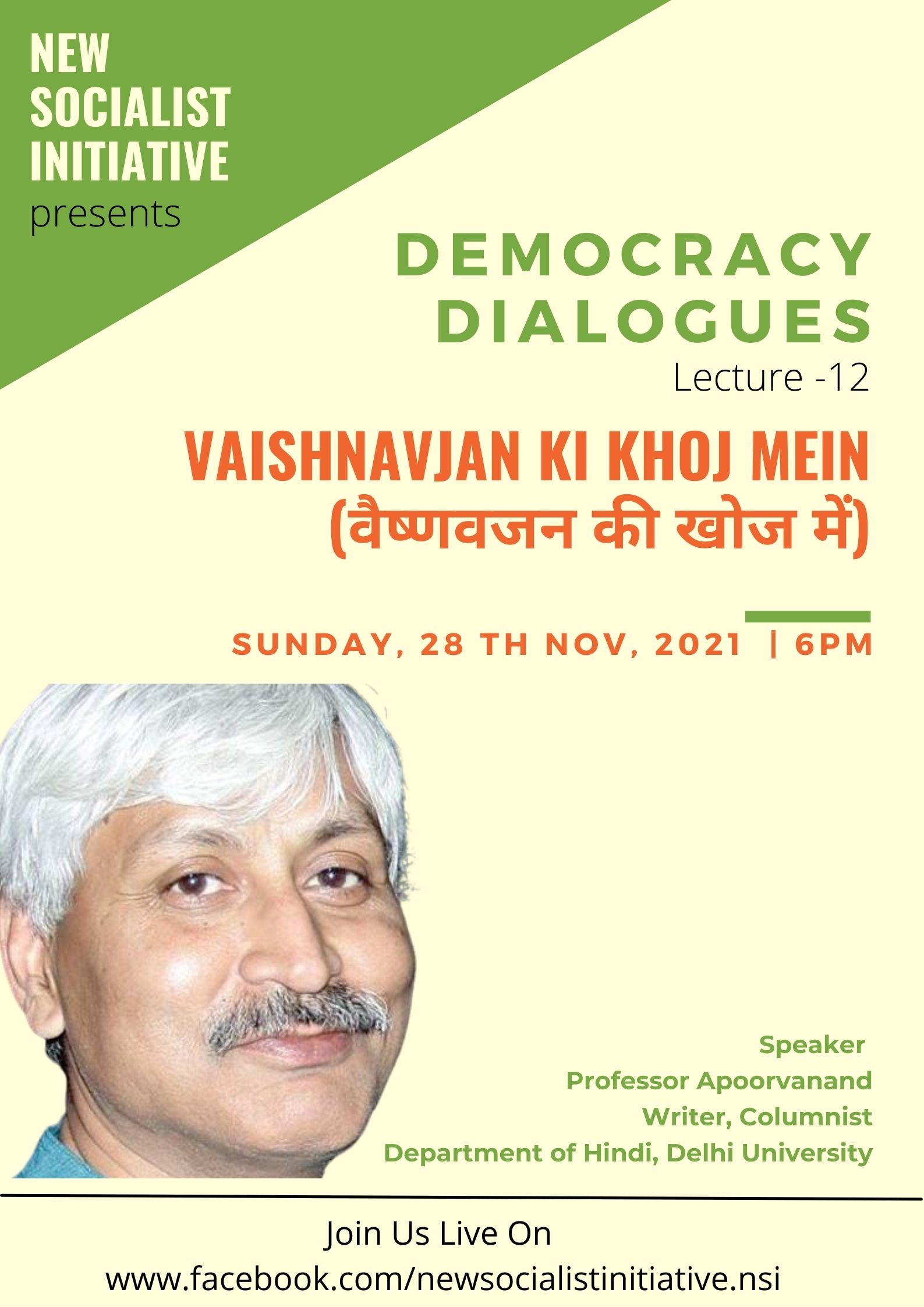
न्यू सोशलिस्ट इनिशिएटिव की तरफ से आयोजित ‘डेमोक्रेसी डायलॉग्स सीरीज ‘ का 12 वां व्याख्यान अग्रणी लेखक, स्तम्भकार, दिल्ली विश्वविद्यालय में हिंदी विभाग से सम्बद्ध प्रोफेसर अपूर्वानंद 6 बजे शाम, रविवार, 28 नवम्बर 2021 को प्रस्तुत करेंगे।
विषय : ‘वैष्णवजन की खोज में’
“वैष्णवजन की कल्पना को राजनीतिक और सामाजिक पटल पर स्थापित करने का श्रेय गाँधी को है। इस बात पर ध्यान जाना चाहिए कि उपनिवेशवाद विरोधी आंदोलन में या राष्ट्र की स्वतंत्रता के संघर्ष में गाँधी ने वैष्णवजन को संभवतः इस आंदोलन के लिए आदर्श आंदोलनकारी के रूप में पेश किया। वह कैसा जन है? पीर और पराई , इन दोनों से उसका रिश्ता क्या होगा? और क्यों एक सच्चा जनतांत्रिक जन वैष्णवजन ही हो सकता है? हमारे संविधान की प्रस्तावना में हम भारत के लोग जिस यात्रा पर निकले हैं क्या वह इस वैष्णवजनत्व की तलाश की यात्रा है?”
हिंदी तथा अंग्रेजी अख़बारों तथा अन्य प्रकाशनों में तथा टीवी की चर्चाओं में अपनी निरंतर सशक्त उपस्थिति दर्ज करते रहने वाले प्रोफेसर अपूर्वानंद सार्वजनिक जीवन में न्याय, समता और तार्किकता के पक्ष में अपने सक्रिय हस्तक्षेप के लिए जाने जाते हैं .
आप ने कई किताबें भी लिखी हैं, जिनमें से कुछ के शीर्षक इस प्रकार हैं : ‘सुंदर का स्वप्न ‘ ( वाणी प्रकाशन, 2001 ) , ‘साहित्य का एकांत’ ( वाणी प्रकाशन , 2008 ), The Idea of University ( Context, 2018 ) , Education at the Crossroads ( Niyogi Books, 2018 )
GR Santhosh Kumar captured the crux of the unbelievable denigration of democracy by the ruling CPM leadership who are out to defend their local level leaders guilty of the grossest patriarchy that rivals any khap panchayat misogyny. The context is the ongoing struggle by a couple, Anupama Chandran and Ajithkumar, to find their baby who was abducted by her parents, both influential local-level leaders of the CPM, last year and given away illegally for adoption. The story of Anupama’s experience of unspeakable death threats, physical violence, cheating, exposure to health risk, forced confinement, denial of vital information and means of communication, casteist insults, and on and on strips off the claims of women’s empowerment which the left in Kerala has claimed for so long. On social media, thousands of left supporters have literally rubbished women’s rights and the Indian Constitutional morality itself, even as the AIDWA in Kerala has been largely struck dumb.
The cartoon is a spoof on Raja Ravi Varma’ famous mother-and-child painting ‘Here Comes Papa’ in which an aristocratic woman dressed in a way identifiable as ‘traditional’ holds her baby and points to it the unseen ‘papa’ . Though the cartoon is captioned ‘Know the pain of the adopting mother’, an obvious reference to the cry by CPM sympathisers on social media that the child need not be returned, and that the adopting mother was fitter, and though the protagonists here are Pinarayi Vijayan and Anupama’s father, Peroorkkada Jayachandran, who he has been defending, it has layers. Ajithkumar’s dalit status and his earlier marriage has, in the eyes of CPM supporters, rendered him unfit for fatherhood — of a child by the daughter of an influential CPM family. Papa, then, and Papa’s coming, continues to be our favourite obsession.
What the farmers’ movement has achieved is nothing short of historic, even if the authoritarian government had not gone back on its intent for uncompromising implementation of the laws meant to reinforce major structural changes for facilitating corporate dominance of the farm sector. The inflexible approach of the government and the massive repression has claimed almost 700 lives since agitation began nearly one and half years back. Be it celebration or analysis, we must pay sincere homage and tributes to all those dead.
Throughout the terrible times we have seen these last two years, it is the news from Kerala that has helped so many of us to keep faith in governance – that a state can be honest, open, participatory, concerned for its people, focused on health, and not play politics, all of these have been remarkable and many of us, Keralites and non-Keralites alike, have drawn valuable lessons from the Kerala experience.
Today morning we woke up to the news that the Child Welfare Committee has ordered that Anupama’s child must be brought to Kerala in five days for a DNA test.
However, the process is still overseen by the officials who directly connived to give the baby away for adoption. The family’s criminal acts are still under a very lax, lagging investigation. Anupama’s educational certificates are still in their possession and the police refuses to intervene to restore them to her.
Indeed, the evil that Prof Kannabiran identifies so excellently in this letter must still be fought, until justice is done. Just the return of the child to Kerala cannot replace justice. Anupama suffered tremendous domestic violence, deliberate endangerment, cheating, and illegal custody at the hands of her family. That cannot be papered over,
… we are troubled that the state finds it hard to grant a woman the right to lead a life of her choice and to have custody over her child. These are hard won rights, and it has taken generations of struggle by women, many of whom are from your state, to secure both civil and legal acknowledgement for women’s rights to marriages of their choice, and for their right to motherhood, divorce, adoption and so on.
That the entire state machinery, ostensibly at the behest of parents who are important functionaries in the ruling party, has been deployed to not only keep the baby, mother and father apart but hem them in such a way that redressal will require untangling of very many complex issues that have deliberately been tied together, reveals the deep and destructive patriarchal underpinnings of the party and family.
Anupama has committed no crime. She got pregnant. She did not murder anyone. She did not rob a bank. She did not betray the nation. She committed no terroristic threats or acts. She is not a smuggler, a thief, a rapist, or a crook. She got pregnant. Getting pregnant is not a crime. She got pregnant and decided to keep her baby. This is not a crime.
The strange case of ‘honour-baby-snatching”,: involving a local-level CPM leader in Thiruvananthapuram city, Peroorkkada Jayachandran is still haunting us despite every attempt by the CPM cyberwarriors to smother it. Mr Jayachandran still feels completely justified and hundreds of left supporters, including so-called progressive women, are ready to proclaim that this dastardly act is a ‘father’s right’. Mr Jayachandran’s nineteen year old daughter Anupama fell in love with a dalit man, a leader of the DYFI, got pregnant by him, and decided to keep the child. Anupama’s parents decided that there was loss of honour in this and proceeded to perpetrate unspeakable violence on the young woman, trying to force her to abort her baby, and finally by snatching away her baby days after it was born. They twisted the entire machinery of child protection and adoption and the police to give the child away without the consent of its parents.
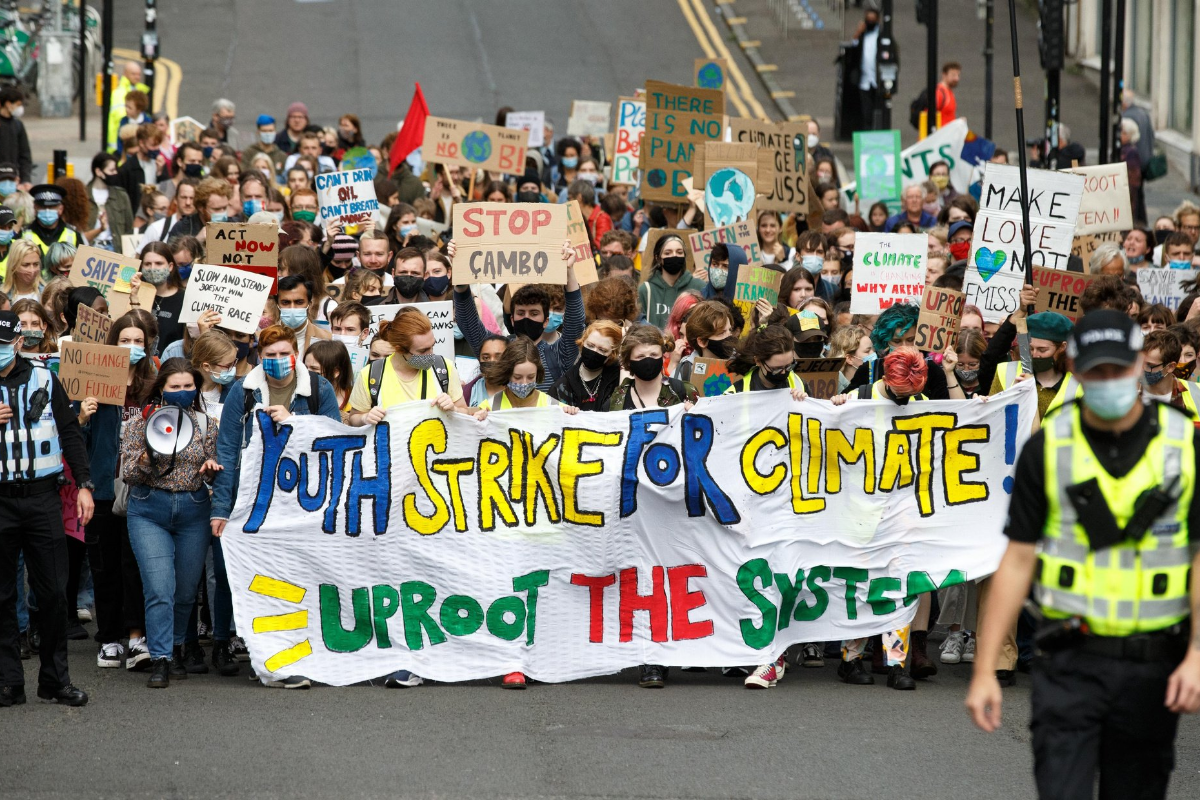
Demonstration in Glasgow during COP26, image courtesy The Herald
We are in the midst of a climate emergency – and this is no longer a secret. In fact, in November 2019, 11,000 scientists declared in a signed statement, in no uncertain terms that “planet Earth is facing a climate emergency.” “Scientists”, they said, “have a moral obligation to clearly warn humanity of any catastrophic threat and to ‘tell it like it is’.” They noted that even 40 years after the First Climate Conference attended by over 50 scientists (in Geneva in 1979) had agreed that there were alarming trends of climate change that made it necessary to act, the situation has only worsened. “Alarming trends” have since given way to a full-on emergency. Although the 2015 Paris Agreement arrived at in COP 21 is considered a paradigm shift in that it produced a legally binding international climate treaty (adopted by 196 parties), the change since then has not been significant.
हिन्दी इलाके को लेकर विचार-विमर्श के लिये “सन्धान व्याख्यानमाला” की शुरुआत इस शनिवार, 13 नवम्बर, को शाम 6 बजे प्रख्यात कवि और विचारक श्री अशोक वाजपेयी के व्याख्यान से हो रही है.
इस व्याख्यानमाला की शुरुआत के पीछे हमारी मंशा ये है कि हिन्दी में विचार, इतिहास, साहित्य, कला, संस्कृति और समाज-सिद्धान्त के गम्भीर विमर्श को बढ़ावा मिले. हिन्दी इलाक़े के सामाजिक-सांस्कृतिक विकास को लेकर हमारी चिन्ता पुरानी है. आज से बीस साल पहले हमारे कुछ अग्रज साथियों ने “सन्धान” नाम की पत्रिका की शुरुआत की थी जो अनेक कारणों से पाँच साल के बाद बन्द हो गयी थी. इधर हम हिंदी-विमर्श का यह सिलसिला फिर से शुरू कर रहे हैं. यह व्याख्यानमाला इस प्रयास का महत्वपूर्ण अंग होगी.
हममें से अधिकांश लोग “न्यू सोशलिस्ट इनिशिएटिव” नाम के प्रयास से भी जुड़े हैं. यह प्रयास अपने आप को सामान्य और व्यापक प्रगतिशील परिवार का अंग समझता है, हालाँकि यह किसी पार्टी या संगठन से नहीं जुड़ा है. इसका मानना है कि भारतीय और वैश्विक दोनों ही स्तरों पर वामपन्थी आन्दोलन को युगीन मसलों पर नए सिरे से विचार करने की और उस रौशनी में अपने आप को पुनर्गठित करने की आवश्यकता है. यह आवश्यकता दो बड़ी बातों से पैदा होती है. पहली यह कि पिछली सदी में वामपन्थ की सफलता मुख्यतः पिछड़े समाजों में सामन्ती और औपनिवेशिक शक्तियों के विरुद्ध मिली थी. आधुनिक लोकतान्त्रिक प्रणाली के अधीन चलने वाले पूँजीवाद के विरुद्ध सफल संघर्ष के उदहारण अभी भविष्य के गर्भ में हैं. दूसरी यह कि बीसवीं सदी का समाजवाद, अपनी उपलब्धियों के बावजूद, भविष्य के ऐसे समाजवाद का मॉडल नहीं बन सकता जो समृद्धि, बराबरी, लोकतन्त्र और व्यक्ति की आज़ादी के पैमानों पर अपने को वांछनीय और श्रेष्ठ साबित कर सके.
“सन्धान व्याख्यानमाला” का प्रस्ताव यूँ है कि हिन्दी सभ्यता-संस्कृति-समाज को लेकर हिंदी भाषा में विचार की अलग से आवश्यकता है. हिन्दी में विचार अनिवार्यतः साहित्य से जुड़ा है और हिन्दी मनीषा के निर्माण में साहित्यिक मनीषियों की अग्रणी भूमिका है. हम हिन्दी साहित्य-जगत के प्रचलित विमर्शों-विवादों से थोड़ा अलग हटकर साहित्य के बुनियादी मसलों से शुरुआत करना चाहते हैं. प्रगतिशील बिरादरी का हिस्सा होते हुए भी हम यह नहीं मानते कि साहित्य की भूमिका क्रान्तियों, आन्दोलनों और ऐतिहासिक शक्तियों के चारण मात्र की है. हम यह नहीं मानते कि साहित्यकार की प्रतिबद्धता साहित्य की उत्कृष्टता का एकमात्र पैमाना हो सकता है. हम अधिक बुनियादी सवालों से शुरू करना चाहते हैं, भले ही वे पुराने सुनायी पड़ें. मसलन, साहित्य कहाँ से आता है – ऐसा क्यों है कि मानव सभ्यता के सभी ज्ञात उदाहरणों में साहित्य न केवल पाया जाता है बल्कि ख़ासकर सभ्यताओं के शैशव काल में, और अनिवार्यतः बाद में भी, उन सभ्यताओं के निर्माण और विकास में महती भूमिका निभाता है. साहित्य के लोकमानस में पैठने की प्रक्रियाएँ और कालावधियाँ कैसे निर्धारित होती हैं? क्या शेक्सपियर के इंग्लिश लोकमानस में पैठने की प्रक्रिया वही है जो तुलसीदास के हिन्दी लोकमानस में पैठने की? निराला या मुक्तिबोध के लोकमानस में संश्लेष के रास्ते में क्या बाधाएँ हैं और उसकी क्या कालावधि होगी? इत्यादि. हमारा मानना है कि “जनपक्षधर बनाम कलावादी” तथा अन्य ऐसी बहसें साहित्य के अंतस्तल पर और उसकी युगीन भूमिका पर सम्यक प्रकाश नहीं डाल पातीं हैं. बुनियादी और दार्शनिक प्रश्न संस्कृतियों और सभ्यताओं पर विचार के लिए अनिवार्य हैं.
इस व्याख्यानमाला में हम विचार-वर्णक्रम के विविध आधुनिक एवं प्रगतिशील प्रतिनिधियों को आमन्त्रित करेंगे. ज़रूरी नहीं है कि वक्ताओं के विचार हमारे अपने विचारों से मेल खाते हों. हमारी मंशा गम्भीर विमर्श और बहस-मुबाहिसे की है.
प्रख्यात कवि और विचारक श्री अशोक वाजपेयी इस शृंखला के पहले वक्ता होंगे जिनका मानना है कि साहित्य की अपनी “स्वतन्त्र वैचारिक सत्ता होती है; उस विचार का सामान्यीकरण नहीं किया जा सकता; वह विचार अन्य विचारों से संवाद-द्वन्द्व में रहता है पर साहित्य को किसी बाहर से आये विचार का उपनिवेश बनने का प्रतिरोध करता है; साहित्य का विचार विविक्त नहीं, रागसिक्त विचार होता है.”
आप सभी इस शृंखला में भागीदारी और वैचारिक हस्तक्षेप के लिये आमन्त्रित हैं.
“I am 44 years old and to date, I haven’t seen this level of violence in my life. There is nobody who is ready to take responsibility for whatever is happening here”, said Abdul Mannan, a businessman in Kailashahar, Tripura.
For 9 days anti-Muslim violence-ravaged Tripura, the Northeastern state of India. But neither the government nor the ‘mainstream’ media wanted to treat it with the seriousness it demanded. Muslims in different parts of Tripura have been facing communal violence by mobs led by the affiliates of the ruling party. The violence was and is being sought to be naturalized by calling it a response to the violence against Hindus inBangladesh.
It all started on 21st October when a video surfaced over the internet where a mob in the militant Hindutva outfit, the VHP (Vishwa Hindu Parishad), with swords, stones, and sticks in their hands took out a rally against the killings of Hindus in Bangladesh. After that rally, Tripura saw massive violence against the Muslims in the State. Neither did such rallies nor did the violence against Muslims stop after 21st October. After the video went viral all over social media, reports started pouring about several mosques getting vandalized and a sense of fear gripped the Muslims in Tripura.
If you scan the pages of the mainstream newspapers or the TV coverage of that period it would appear that there was nothing wrong with Tripura. It shows however what is wrong with us, our media and the government.
I should be forgiven for this flippant-sounding title. But it is a living reality in Kerala that gender politics is increasingly reduced to soppy sentimental drama. Honestly, if there are CPM supporters out there, especially the Delhi-elite breed who call this title mere click-bait, I don’t give a flying fuck about what you think. You are not living this nightmare, we are.