Delhi Police inquiry into Delhi violence 2020: Statement by Prof Apoorvanand

Delhi Police continues its motivated “enquiry” into the systematic and planned violence  in NE Delhi in February 2020, framing through fake “disclosure statements” and “confessions”, students, teachers, film makers, activists and other citizens who peacefully protested the unconstitutional CAA.

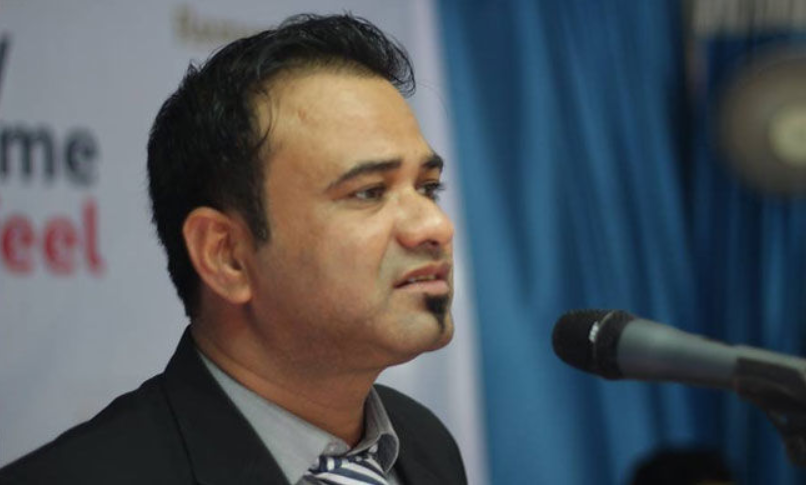
In this context, reports in the media yesterday stated that Delhi Police have filed a supplementary chargesheet naming, among others, Apoorvanand, Professor of Hindi at Delhi University, well known academic, fellow Kafila collective member and a relentless defender of democracy, which is under severe threat from this regime. 

The following statement has been issued by him in response.

Statement by Prof Apoorvanand

It has been brought to my notice that a supplementary Chargesheet filed in connection with FIR 50/2020 has certain disclosure statements by accused in custody, that mention my name, together with that of Rahul Roy, Umar Khalid, Jayati Ghosh , Sita Ram Yechuri and Yogendra Yadav. These names are mentioned in uncorroborated statements attributed to accused who are in custody, where it is claimed that they provided support in organising the anti- CAA protests. Continue reading Delhi Police inquiry into Delhi violence 2020: Statement by Prof Apoorvanand

राष्ट्रीय शिक्षा नीति 2020 – पिछले तजुर्बों से बेख़बर एक दस्तावेज़ : राजेन्द्र चौधरी

Guest post by RAJINDER CHAUDHARY

राष्ट्रीय शिक्षा नीति 2020 के दो मुख्य भाग हैं, स्कूली शिक्षा और उच्च शिक्षा. हम इन दोनों क्षेत्रों का मूल्यांकन करेंगे. किसी भी नीति की तरह इस शिक्षा नीति में भी कुछ स्वागत योग्य कदम हैं, कुछ कमियाँ हैं, कुछ बातें छूट गई हैं और कुछ खतरनाक पहलू हैं. हम तीनों पक्षों को चिन्हित करने का प्रयास करेंगे. दुर्भाग्य से इस नीति के दो अलग अलग अंग्रेजी प्रारूप सरकारी वेब साइटों पर उपलब्ध हैं. एक 60 पृष्ठों का और एक 66 पृष्ठों का है. दोनों की अंतर्वस्तु में भी महत्वपूर्ण अंतर है पर इन प्रारूपों में तिथि नहीं दी गई, इस लिए यह तय करना संभव नहीं है कि कौन सा नया है और कौन सा पुराना है. इस विमर्श हेतू हमने 66 पन्नों वाले दस्तावेज़ का प्रयोग किया है. 

काफी समय से एकविषयक कालेज जैसे बीएड कालेज, इंजीनियरिंग कालेज या बिना विज्ञान संकाय या केवल विज्ञान संकाय के +2 स्कूल तो चल ही रहे थे पर हाल ही में एक विषयक विश्वविद्यालयों का चलन बढ़ा है. जैसे स्वास्थ्य, खेल, संस्कृत, बागवानी विश्विविद्यालय इत्यादि. ऐसे एकविषयक संस्थानों में छात्रों को समग्र विकास का मौका नहीं मिलता. उनका दृष्टिकोण बहुत सीमित हो जाता है. इस लिए बहुविषयक शिक्षा संस्थान विषयों एवं छात्रों दोनों के समग्र विकास के लिये आवश्यक हैं. इस कमी को नयी शिक्षा नीति में रेखांकित किया है और दूर करने का निर्णय लिया गया है. यह स्वागत योग्य कदम है. स्कूल को छात्रों तक सीमित न रख कर एक ‘सामाजिक चेतना केंद्र’ के तौर पर विकसित करना, कम्पार्टमेंट परीक्षा के साथ स्कूली छात्रों को अंक सुधार हेतु मौका देना, सार्वजानिक एवं स्कूल पुस्तकालयों का विस्तार एवं इन के लिए आवश्यक कर्मचारियों की व्यवस्था, मातृभाषा में शिक्षा को बढ़ावा देने का संकल्प, छात्रों को अपनी रूचि के अनुसार ज़्यादा विविध विषयों में से चुनाव चुनाव का मौका, जैसे कदम स्वागत योग्य हैं. 

Continue reading राष्ट्रीय शिक्षा नीति 2020 – पिछले तजुर्बों से बेख़बर एक दस्तावेज़ : राजेन्द्र चौधरी

Sursamalaya’s Documentary Series “Folk Stories” – Assam Beyond Bihu, Borgeet and Sattriya: Dipanjali Deka

Guest post by DIPANJALI DEKA

I recently finished watching Sursamalaya’s “Folk Stories” on Youtube, a documentary series made during the lockdown.

 “Folk Stories” depicts the art and life of folk artists from many lesser known genres of Assam. It has released one season as of now and is amply promising, for many reasons. One of them is the accessibility offered, in short crisp episodes, to the social and cultural landscape of Assam beyond the genres of Bihu, Borgeet and Sattriya popularly known to the mainstream.

In the first episode, we meet Mehu Bora from Golaghat who builds traditional instruments like tokari (stringed instrument), dotara (stringed instrument), bahi (flute), pepa (hornpipe) etc.

Sur Samalaya Resource Centre for Arts was established in 1990 by renowned folk artist Dijen Gogoi. What began with a small workshop on instrument-making, later took off to train many local youth in producing almost 100 indigenous musical instruments belonging to various communities of North East India. The Research and Documentation cell of Sursamalaya looks into research, publication and documentation on indigenous cultures, under the ambit of which the series “Folk Stories” has come into fruition. Continue reading Sursamalaya’s Documentary Series “Folk Stories” – Assam Beyond Bihu, Borgeet and Sattriya: Dipanjali Deka

सब चंगा सी: मुरीद बरघूती/अनुवाद: आयेशा किदवई

You can see the English translation by Radwa Ashour of the original poem in Arabic by the Palestinian poet Mourid Barghouti , after this translation into Hindustani by AYESHA KIDWAI

The Roadmap Creeps in the Page of My Notebook by Arpita Singh

सब चंगा सी

मैं अपने आप को देखता हूँ:

सब चंगा सी.

अच्छा ही तो दिखता हूँ,

और कुछ लड़कियों को तो,

मेरे पक्के बाल भी भा जाएं;

मेरा चश्मा सुड़ौल है,

शरीर का तापमान ठीक ३७ डिग्री.

इस्त्री-की हुई कमीज़ है मेरी, और मेरे जुते काटते नहीं.

सब चंगा सी. Continue reading सब चंगा सी: मुरीद बरघूती/अनुवाद: आयेशा किदवई

Secularism and the Myth of ‘Hindu’ Tolerance

‘Secularism’ has now become a bad word and it is quite fashionable to attack, criticize and ridicule it. Just about anyone, regardless of whether s/he has spent even a minute thinking about it, can attack it. A television channel  recently even decided to have a vote on whether we should ‘have’ secularism or not, I understand, after an utterly ill-informed debate. It is almost as if the blame for everything that is wrong with Indian society can be laid at the door of this monster called ‘Secularism’. Modern Hindu ideologues have of course, mastered this art of blaming every evil practice of Hindu society on to some ‘Other’: From untouchability and sati to child marriage, purdah and the everyday violence of caste oppression –  everything apparently happened because of ‘Islam’ and Christianity’. Later, Marxism and secularism were added to the list. And while we are at it, let us remember that the great Bal Gangadhar Tilak led what was perhaps the first mass nationalist anticolonial mobilization, against raising the  Age of Consent of girls for sexual intercourse from 10 to 12 years! Much of that righteous indignation continues to be the hallmark of the new defensiveness that the 21st century ‘raging Hindu’  exhibits.

For everything wrong in the behaviour of these adult men with walrus moustaches, an explanation exists in some founding childhood trauma for which their adulthood can never be held responsible! ‘Secularism’ now is the name of the insistence that wants to hold the modern Hindu responsible for his acts today, rather than let it remain suspended in a permanent state of childhood. I suspect, the term ‘secularism’ today, in Hindu Right discourse, is no longer about the ‘separation of religion and politics’ or ‘sarva dharma samabhava‘ (equal respect for all religions) and ‘dharma-nirpekshata‘ (neutrality between religions) at all, but the ghost-house where all the pathologies of this traumatized child(hood) are played out.

Continue reading Secularism and the Myth of ‘Hindu’ Tolerance

People from across Professions and Continents Come out In Solidarity with K. Satyanarayana

UPDATE

Signatures kept coming in even as we closed the campaign in order to collate them. We are adding at the end of the statement, some names received between our closing and releasing the statement to the media. We are aware that there are many more who wanted to sign but we had to close it, in order to release the statement on time. 

We reproduce below a statement signed by over 720 signatories, in solidarity with Prof K. Satyanarayana, who has been summoned by the NIA today, along with senior journalist KV Kurmanath.

The signatories, from across different professions, include luminaries such as Professors Noam Chomsky, Barbara Harris-White, Jan Breman, Susie Tharu, Sumit Sarkar, Tanika Sarkar, Prabhat Patnaik, John Harris, Gyan Prakash, Rajeswari Sunder Rajan and Utsa Patnaik; leading writers and poets like K. Satchidanandan, Mridula Garg, Geeta Kapur and Gita Hariharan, artists like Sudhir Patwardhan and Vivan Sundaram.

It is an expression of the great respect that Prof K Satyanarayana commands among different sections of people, including a large number of students, that so many people added their names to this statement of solidarity in such  a short time.

We, the undersigned academics, journalists and concerned citizens strongly condemn the fresh round of harassment and arrests of academics and activists by the National Investigation Agency (NIA), which is trying to implicate them in the Bhima Koregaon case. After Partho Sarathi Ray, the NIA has now summoned Prof Satyanarayana and senior journalist KV Kurmanath to appear before it on 9 September. And even as these summons were being served, the NIA has also arrested Sagar Gorkhe and Ramesh Gaichor of the Kabir Kala Manch in connection with the same case.

Dr. K. Satyanarayana is Professor at the Department of Cultural Studies at the English and Foreign Languages University, Hyderabad. He has been instrumental in establishing Dalit Studies as an academic discipline and has a formidable reputation as a scholar and teacher.

Continue reading People from across Professions and Continents Come out In Solidarity with K. Satyanarayana

NEP 2020 – elitist and corporatized education under Hindu Rashtra

This study of the National Education Policy 2020, apart from my own  analysis, draws on extensive commentary on the final document and its earlier drafts, by education policy experts and teachers, including my own union,  JNU Teachers’ Association, which undertook a detailed critique of the Draft NEP 2019.  This needs to be said because neither educationists nor academics were consulted in the process of making the initial policy, nor were states, despite the fact that education is a concurrent subject. We begin therefore with the procedure of finalizing the NEP 2020.

Faulty procedures of formulating and finalizing the policy

No consultative process

All previous education policies have undergone massive consultation processes, as Niraja Gopal Jayal outlines, but not this one. At the press conference announcing the policy, Gopal Jayal points out, it was claimed that an “unprecedented collaborative, inclusive, and highly participatory consultation process” was conducted, but it is clear from the single slide that was shown, that states were not consulted at all.

Continue reading NEP 2020 – elitist and corporatized education under Hindu Rashtra

Statement of Solidarity for Dr. Maroona Murmu from the Faculty of Presidency University

We are publishing below the following statement in support of and solidarity with Dr Maroona Murmu, signed by more than eighty faculty members of Presidency University, was issued yesterday.  

We, the undersigned teachers of Presidency University, Kolkata, are shocked to know about the recent attacks on Dr. Maroona Murmu, Associate Professor of History, Jadavpur University, Kolkata.

Dr. Murmu is an accomplished scholar, an activist, and an intellectual. She is an important voice of our time insofar as she regularly writes and speaks about the rights and plights of the Adivasi community. She is a unique personality to have graced the academia with her rare ability to combine scholarship with activism.

We are aware that the academic space in West Bengal, as elsewhere in the country, is, even today, predominantly Brahminical. Students and teachers hailing from SC, ST, and OBC communities regularly face discrimination due to their caste and tribal backgrounds. The suicides of Chuni Kotal, Rohith Vemula, and Payal Tadvi amply demonstrate the fatal consequences of such discrimination. As various instances from academic institutions from across the country suggest, not only students but teachers from such communities also face victimization regularly. We are also aware that only a tiny percentage of such instances of discrimination make it to the news.

Continue reading Statement of Solidarity for Dr. Maroona Murmu from the Faculty of Presidency University

Has Indian democracy been facebooked ?

Those who disagreed that the internet would challenge dictatorships have been proven right.

facebook India

Belarus-born American writer Evgeny Morozov, a scholar of the political and social implications of technology, is among the early technology sceptics whose words have now proved prescient. Morozov had questioned the claim that the internet would challenge dictatorships even at an inconvenient time to do so. While thousands were out on streets during the Arab Spring, he delivered a Ted Talk on How Internet Aids Dictatorships. Considering that the Arab Spring protests had been organised and coordinated through social media, it quite a brave, even blasphemous, thing to do in those days.

Morozov’s 2011 book, The Net Delusion: The Dark Side of Internet Freedom, focuses on two delusions, namely, “cyber-utopianism” or the belief that the internet fosters an inherently emancipatory culture; and “internet-centrism” or the belief that every important question about modern society and politics can be framed in terms of the internet. His views were considered eccentric for the mood around the net was celebratory at the time. To cite another instance, the noted journal, MIT Technology Review, wrote in 2013 that new technologies would prove “deadly to dictators”. 

( Read the full text here)

Statement by concerned citizens against Delhi Police’s conduct of the probe into Delhi riots 2020

DELHI POLICE – WE, THE CITIZENS OF INDIA, OBJECT TO THE MANNER OF THE DELHI RIOTS PROBE

RESTORE PUBLIC FAITH IN YOUR INVESTIGATION

 Stop coercing ‘confessional’ statements to manufacture evidence

Stop falsely implicating people, including Umar Khalid

Stop wrongly invoking UAPA to give the colour of conspiracy against the state

Over 1000 citizens from all walks of life including, filmmaker Aparna Sen; former Culture Secretary culture Jawahar Sircar; Historian Ramchandra Guha; former Chairperson, Delhi Minority Commission Dr. Zafarul-Islam Khan; Former Governor, Margaret Alva; Academics –  Zoya Hasan, Partha Chatterjee, Jayati Ghosh, Poonam Batra, Sucharita Sen; former senior civil servants – Wajahat Habibullah, Madhu Bhaduri, Deb Mukherjee, Amitabha Pande, Sundar Burra, Aditi Mehta; feminists and trans rights activists – Meera Sanghamitra, Vani Subramanian, Chayanika Shah, Hasina Khan;  Journalists – Vidya Subrahmaniam, Geeta Seshu, Manoj Mitta, Anjali Mody, Antara Dev Sen, Priyanka Borpujari; political leaders, Brinda Karat, Annie Raja, Kavita Krishnan; Artists Kiran Sehgal, Shuddabrata Sengupta & Writer Aruna Vasudev; Social activists – Magsasay Awardees Aruna Roy and Sandeep Pandey; Democratic rights activists Jagdeep Chhokar, Henri Tiphane, Teesta Setalvad, John Dayal, Lara Jesani; Former Chief of Naval Staff, Admiral Ramdas; Scientist, Amitabha Basu, along with scores of others – have issued an urgent statement, strongly objecting to the manner in which Delhi Police has been conducting the probe into the riots cases, and calling on them to restore the public’s faith in the investigation.

Citing strong evidence of coerced ‘confessional’ statements and manufactured evidence, the signatories have sought assurances from the Delhi Police Commissionerate that these practices will be stopped, and have urged them to conduct a fair and impartial investigation to book the real culprits of the riots.

We are alarmed by the news that on Sept 1, 2020, Umar Khalid sent a letter to the Delhi Police Commissioner, Shri SN Shrivastava, with shocking evidence of the Delhi Police manufacturing evidence against him, through extorted statements. The letter reveals that a young man was interrogated by the Delhi Police (Special Cell) and a false confession against Umar Khalid, related to Delhi riots, was extracted and videotaped. The young man was threatened that he would be arrested under UAPA if he refused. He submitted to the coercion for he was scared, and yet his conscience allowed him to speak up about what had transpired.

Continue reading Statement by concerned citizens against Delhi Police’s conduct of the probe into Delhi riots 2020

South Africa’s Climate Justice Charter

On October 16th the Climate Justice Charter will be taken to South Africa’s national parliament, together with the climate science future document, with the demand it be adopted as per section 234 of the South African constitution, which provides for charters to be adopted. All political parties will be invited to a debate on the Charter and will be asked to champion its adoption, based on the current consensus climate science which highlights that South Africa and Southern Africa are heating at twice the global average.

The South African Food Sovereignty Campaign and allies have been leading the building of  a  mass based climate justice movement for the past six years, during the worst drought in the history of the country. Their mass driven resistance has included a hunger tribunal, drought speak outs, a national bread march, food sovereignty festivals, the development of their own Food Sovereignty Act which they took to parliament and several government departments, protest action against food corporations, the media, the   stock exchange  and the second largest carbon emitter in the country called SASOL. In the context of 2019 deep dialogues were held with drought affected communities, the media, labour unions, children/youth and social and environmental justice organisations. All this work of resistance, dialogue  and learning  produced a draft climate justice charter, out of a national conference in November 2019. Since then the document has received  online input, including from a children/youth led online assembly on June 16th and then finally the document was launched on August 28th.

We in India can learn from, build on and connect to such initiatives globally, especially from the global South.

Here is the full text of the South African Climate Justice Charter Continue reading South Africa’s Climate Justice Charter

यह भी तो ठीक है : मुरीद बरघूती/अनुवाद: आयेशा किदवई

You can see the English translation by Radwa Ashour of the original poem in Arabic by the Palestinian poet Mourid Barghouti , after this translation into Hindustani by AYESHA KIDWAI

http://www.metmuseum.org/art/collection/search/454359

“The Death of King Dasharatha, the Father of Rama”, Folio from a Ramayana ca. 1605. Courtesy the Metropolitan Museum of Modern Art


ऐसे मरना भी ठीक है, अपने बिस्तर में

साफ़ तकिया पर सर रखे

अपने दोस्तों के बीच.

ऐसे मरना भी तो ठीक है,

चाहे एक बार ही सही,

हाथ सीने पर बांधे हुए,

खाली, बेरौनक़,

बिन एक भी खरौंच के,

बिन बेड़ियों के,

बिन बैनर उठाये,

बिन याचिका दिए. Continue reading यह भी तो ठीक है : मुरीद बरघूती/अनुवाद: आयेशा किदवई

The ‘Ecopolitical’ Imperative and the Janta Parliament


Janta Parliament, Environment session – courtesy Let India Breathe

A journey of a thousand miles begins with a single step, goes an old Chinese saying.  In the present context, that single step – and an absolutely essential step – for reclaiming the soul of India, is the coimng together of the social movements, non-party groups and the political parties – and this was accomplished in the six-day Janta Parliament held from 16-21 August as an online event. Organized by Jan Sarokar – a forum of 31 organizations and loose platforms ranging from Left aligned women’s organizations, National Alliance of People’s Movements (NAPM), National Campaign for Dalit Human Rights (NCDHR) and National Campaign for People’s Right to Information, to loose networks like Not In My Name – the people’s parliament managed to bring together many political parties together as well in the event. As a kind of base paper, Jan Sarokar had prepared a comprehensive 75-page document entitled ‘People’s Policy for Post-COVID 19 Times‘ covering important and urgent policy initiatives on practically every aspect of economic and social life. Attended by representatives of the Congress, the Left parties, the RJD and AAP among others, the people’s parliament session ended with the representatives of the parties present affirming support to the perspectives emerging out the resolutions adopted, which they felt could form the basis for a Common Minimum Programme not only for the political parties but also between parties and social / people’s movements. Continue reading The ‘Ecopolitical’ Imperative and the Janta Parliament

Why Bloomsbury withdrawing ‘Delhi Riots 2020’ is not about freedom of expression: Nivedita Menon and Aditya Nigam

This post is jointly written by NIVEDITA MENON & ADITYA NIGAM

Bloomsbury India has withdrawn the book Delhi Riots 2020 in the face of massive outrage at its publication. While we commend Bloomsbury’s decision to withdraw, we also note that its statement explaining this act ends with the the following sentence:

‘Bloomsbury India strongly supports freedom of speech but also has a deep sense of responsibility towards society.’

The implication here is clear for those who want to see it. The publication of the book was a matter of ‘freedom of speech’, while its withdrawal comes from a ‘deep sense of responsibility towards society’.

At the outset let us state that we do not question the publication of books with which we do not agree, because intellectual and political differences of opinion, and the freedom to express these are the life blood of a democracy. We have not at any point questioned other publications by Bloomsbury, or by other publishing houses, that express views that support the current regime (which has consistently throttled such freedom of expression, and by whom many of us personally are under serious attack). Nor have we raised objections to the flood of hastily turned out books by many publishers that produce intellectually unsustainable arguments that bolster the politics of the anti-constitutional, Brahminical Hindu Rashtra.

So let us spell out what is reprehensible about Delhi Riots 2020 and why it should not have been published in the first place.

Continue reading Why Bloomsbury withdrawing ‘Delhi Riots 2020’ is not about freedom of expression: Nivedita Menon and Aditya Nigam

Corporate Social Media in India: Sell Hate, Enjoy Profit

The bias that social media platforms such as Facebook display reflects their own world-view as much as it does the regimes they support.

Corporate Social Media in India

A few gave the appearance of being truly psychopathic individuals. The mass of others were ragged and illiterate peasants easily roused to hatred of the Tutsi. Perhaps the most sinister people I met were the educated political elite, men and women of charm and sophistication who spoke flawless French and who could engage in long philosophical debates about the nature of war and democracy. But they shared one thing in common with the soldiers and the peasants: they were drowning in the blood of their fellow countrymen.

Fergal Kane, a journalist with the BBC, wrote these chilling lines in his book, Season of Blood: A Rwandan Journey, winner of the Orwell prize in 1995. The organised and planned killing in Rwanda, one of the darkest episodes of the 20th century, resulted in the death of eight lakh Tutsi.

It is a strange coincidence that a year and a half before these unfortunate developments, the biggest democracy in the world went through its own cataclysmic moment, when Hindutva supremacist forces demolished a 500-year-old mosque after a long and bloody campaign. Even after the demolition large-scale communal riots broke out all over India, in which thousands died and whose scars are still difficult to heal.

There is at least one thing in common between what Rwanda went through and what India witnessed in 1992: both tragedies demonstrated how the media can prepare and provoke ordinary people into unleashing untold miseries on their neighbours. Continue reading Corporate Social Media in India: Sell Hate, Enjoy Profit

Muscular Law Reform in Times of a Pandemic: Pratiksha Baxi

Guest Post by PRATIKSHA BAXI

In May 2020, the Ministry of Home Affairs constituted a Committee to recommend reforms in criminal laws in India with NLU Delhi.  The National Level Committee for Reforms in Criminal Laws (henceforth, the NLUD Committee) is to review and recommend changes to the Indian Penal Code, Criminal Procedure Code and the Indian Evidence Act in 90 odd days. On 26 June 2020, responses were solicited from experts on ‘questionnaires highlighting issues in the Indian Penal Code, Code of Criminal Procedure and Indian Evidence Act’ for which experts were invited to register. The Committee has uploaded a questionnaire, extended time for experts to reply and announced concessional consultation with non-experts. 68 Bare Acts, and 89 Law Commission Reports, along with some links and some op-eds by committee members are uploaded on the website, as resources for experts. The Open Consultation can be accessed for a period of two months starting from 17 July 2020  to 16 September 2020. This process is virtual since the process of reviewing and revising criminal law is being performed during a pandemic.

Continue reading Muscular Law Reform in Times of a Pandemic: Pratiksha Baxi

घेरेबन्दी में पड़े देश और खेल के नये नियमों के बीच हम क्‍या कर सकते हैं?

घेरेबन्दी में पड़े अपने शहर के हालात को लेकर अपने जमाने का शायर कैसी प्रतिक्रिया देता है? अचानक इस बारे में कुछ कहना मुश्किल जान पड़ सकता है, अलबत्ता एक तरीका है फिलिस्तीन के महान कवि महमूद दरवेश के नक्शेकदम पर चलना, जिनकी लम्बी कविता ‘मेमरी फॉर फरगेटफुलनेस’ अर्थात ‘भुलक्कड़पन/स्‍मृतिलोप के लिए स्‍मृति’ वर्ष 1982 में लेबनान पर हुए इजरायली आक्रमण का चित्र खींचती है।

लेबनान की राजधानी बेरूत जहां वह रह रहे थे, बमबारी का शिकार हो रही थी। वे लिखते हैं, ‘‘बेरूत, इज़रायली टैंकों से और आधिकारिक अरबपस्ती से घिरा हुआ’, वह बेरूत ‘अन्दर से अपने आप को थामे हुए था ताकि ‘अरब उम्मीद की राजधानी के उसके मायने की चमक की हिफाज़त की जा सके।’ किताब में दरवेश फैज़ अहमद फैज़ के साथ अपना सम्वाद शुरू करते हैं, जो उन दिनों बेरूत में ही थे।

कलाकार कहां हैं?
कौन कलाकार, फैज़, मैं पूछता हूं
बेरूत के कलाकार
तुम उनसे चाहते क्या हो?
यही कि शहर की दीवारों पर युद्ध को उकेरना
तुम्हें क्या हो गया है फैज़, मैं ताज्जुब प्रकट करता हूं। क्या तुम देख नहीं रहे हो दीवारें ही गिर रही हैं?

यह कविताएं लेखन (स्‍मृति से इतिहास, स्‍मृतिलोप, भुलक्कड़पन) के बीच एक रिश्ता कायम करती हैं। घेरेबन्दी के मध्य यह दृढ़ता, अटलता की यात्रा है। Continue reading घेरेबन्दी में पड़े देश और खेल के नये नियमों के बीच हम क्‍या कर सकते हैं?

साझा बयान : बुद्धिजीवियों-मानवाधिकारकर्मियों को फ़र्ज़ी आरोपों के तहत फंसाये जाने के विरोध में 

जन संस्कृति मंच, प्रगतिशील लेखक संघ, दलित लेखक संघ, प्रतिरोध का सिनेमा, इप्टा, संगवारी,  न्यू सोशलिस्ट इनिशिएटिव और जनवादी लेखक संघ ने प्रशांत भूषण को अदालत की अवमानना का दोषी क़रार दिए जाने तथा भीमा-कोरेगाँव और दिल्ली दंगों के मामलों में बुद्धिजीवियों-मानवाधिकारकर्मियों को फ़र्ज़ी आरोपों के तहत फंसाये जाने के विरोध में यह साझा बयान जारी किया :

भारतीय लोकतंत्र का संकट लगातार गहराता जा रहा है. अभिव्यक्ति की आज़ादी और वाजिब माँगों के लिए चलने वाले संघर्ष का जैसा दमन मौजूदा निज़ाम में हो रहा है, उसकी मिसाल आज़ाद भारत के इतिहास में ढूँढे नहीं मिलेगी. सबसे ताज़ा उदाहरण स्वाधीनता दिवस की पूर्व संध्या पर सर्वोच्च न्यायालय द्वारा प्रशांत भूषण को अदालत की अवमानना का दोषी ठहराया जाना है. यह विचारणीय है कि फ़ैसले में उन्हें भारतीय लोकतंत्र के जिस “महत्त्वपूर्ण स्तम्भ की बुनियाद को अस्थिर” करने के प्रयास का दोषी पाया गया है, उसकी अस्थिरता के मायने क्या हैं और उसके वास्तविक कारक कौन-से हैं/हो सकते हैं! पर यह जितना भी विचारणीय हो, सवाल है कि क्या आप विचार कर भी सकते हैं? इस तरह के विचार-विमर्श की गुंजाइश/स्वतंत्रता/अधिकार को बहुत क्षीण किया जा चुका है और ऐसा जान पड़ता है कि जिनके ऊपर ‘रीज़नेबल रेस्ट्रिक्शन्स’ के दायरे में अभिव्यक्ति की आज़ादी को सुनिश्चित करने का दारोमदार है, वे खुद आगे बढ़कर उस आज़ादी का दमन कर रहे हैं. पिछले कुछ समय में दो घटनाओं को बहाना बनाकर सामाजिक-राजनैतिक कार्यकर्त्ताओं, मानवाधिकार-कर्मियों और लेखकों-बुद्धिजीवियों की गिरफ़्तारी, या तफ़्तीश के नाम पर उत्पीड़न के सिलसिले ने जो गति पकड़ी है, वह बेहद चिंताजनक है. भीमा-कोरेगाँव मामले और उत्तर-पूर्वी दिल्ली के दंगों के असली अपराधी बेख़ौफ़ घूम रहे हैं जबकि इन्हीं मामलों में फ़र्जी तरीक़े से बड़ी संख्या में सामाजिक कार्यकर्त्ताओं और बुद्धिजीवियों को गिरफ़्तार किया जा चुका है. केंद्र के मातहत काम करने वाली राष्ट्रीय जाँच एजेंसी (एनआईए) और दिल्ली पुलिस इन मामलों में पूरी बेशर्मी से अपनी पक्षधर भूमिका निभा रही हैं. ऐसा लगता है कि नियंत्रण एवं संतुलन के सारे लोकतांत्रिक सरंजाम ध्वस्त हो चुके हैं. Continue reading साझा बयान : बुद्धिजीवियों-मानवाधिकारकर्मियों को फ़र्ज़ी आरोपों के तहत फंसाये जाने के विरोध में 

To Sir, With Love – Birthday Greetings for Professor Hany Babu From His Students

Our Professor turned 54 on August 16, while in the custody of NIA. Prof. Hany Babu M.T. from the Department of English, University of Delhi was arrested on July 28 by the NIA in a series of ongoing harassment of academics, and activists who have been vocal against the government and its policies. This act of suppressing dissenting voices in academic spaces by the State threatens the very fabric of the Indian democracy. Prof. Babu has been a strong advocate for social justice, and has worked strenuously in the anti-caste movement. As a professor of linguistics, his classes have always been about demanding an equal space for the varying languages in India and looking at English as an emancipatory language. His teachings have made, and continue to make students critically approach caste supremacy hidden within the rubric of the Indian language structure. He has always highlighted the need for equality amongst language, and language speakers.
Continue reading To Sir, With Love – Birthday Greetings for Professor Hany Babu From His Students

Manufacturing Evidence – How the Police is framing and arresting constitutional rights defenders in India: The Polis Project

Artist Sarita  Pandey

This report is republished from The Polis Project

On the afternoon of 23 February 2020, communal violence broke out in Gokulpuri, a neighborhood in North-East Delhi. From there, it quickly spread to several other areas — including Seelapur, Shivpuri, and Jafrabad — raging on for four days before the situation was finally brought under control. In all, 53 people were murdered, a majority of them Muslim. Hundreds of families, mostly Muslim, were also displaced from their homes and are yet to return as it is still too dangerous. The attacks coincided with Donald Trump’s diplomatic visit to New Delhi on 24 February. This coincidence is one reason why the violence received widespread international media coverage. While large sections of the Indian domestic media have framed the violence as a “communal riot,” it is fairer to describe the events as a state-abetted pogrom against the Muslim community, that was not adequately protected — and, in some cases, was actively attacked — by the Delhi Police.

Time and again the Police have ignored mounting communal tensions, turned a blind eye to the gathering of arms by Hindu nationalist groups, and — once violence is unleashed — abandoned Muslims to their fate. Police complicity in anti-Muslim violence is an old story in India. Since Independence, countless enquiry commissions have indicted the Police for their partisan handling of sectarian conflict. Time and again the Police have ignored mounting communal tensions, turned a blind eye to the gathering of arms by Hindu nationalist groups, and — once violence is unleashed — abandoned Muslims to their fate. This cycle of violence and impunity is one major reason Hindu terror has not been stamped out in India. Yeh andar ki baat hai / police hamaare saath hai, (It’s an internal secret/ the Police are with us) as Hindu mobs chanted during the 2002 Gujarat pogrom. Continue reading Manufacturing Evidence – How the Police is framing and arresting constitutional rights defenders in India: The Polis Project

इलीना सेन – संघर्षों के बीज, संघर्षों के बीच : विमेन अगेन्स्ट सेक्शूअल वायलेंस एंड स्टेट रिपरेशन

A tribute to Ilina Sen by WSS

Ilina and Binayak Sen, photo courtesy NewsLaundry

विमन अगेन्स्ट सेक्शूअल वायलेंस एंड स्टेट रिपरेशन’ (डब्लूएसएस) कोलकत्ता में 9 अगस्त को इलीना सेन के निधन पर अपना गहरा क्षोभ व्यक्त करती है.  69-वर्षीय इलीना एक नारीवादी कार्यकर्ता होने के साथसाथ एक शिक्षक, शोधार्थी और लेखिका भी थीं, जो देश भर के महिला आंदोलन के साथ दिलोजान से जुड़ी थीं. चाहे वह बतौर सामाजिकराजनीतिक कार्यकर्ता के रूप में हो या शिक्षाकर्मी होने के नाते. इलीना के मध्यप्रदेश तथा छत्तीसगढ़ के आंदोलनों एवं अन्य राज्यों के जनआंदोलनों से गहरे जुड़ाव और अपने सक्रिय समर्थन के कारण राज्य, पितृसत्ता और पूंजी के ख़तरों के खिलाफ संघर्षरत महिलाओं और अन्य कमज़ोर तबक़ों को निर्णायक प्रोत्साहन मिला.

अस्सी के दशक के शुरुआती सालों में, इलीना अपने जीवनसाथी बिनायक सेन के साथ आदिवासी क्षेत्र के लोगों और मज़दूर नेता शंकर गुहा नियोगी की अगुवाई में चल रहे आंदोलनों के साथ काम करने के लिए छत्तीसगढ़गईं. यहाँ एक डॉक्टर के रूप में बिनायक सेन ने बच्चों और उनके परिवार के साथ काम किया. आगे चलकर वे छत्तीसगढ़ खदान श्रमिक संघ (सीएमएसएस) के सदस्यों द्वारा निर्मित और संचालित शहीद अस्पताल में काम करने लगे. शुरु में, इलीना राज्य द्वारा प्रोत्साहित उग्र कृषि तकनीक से नष्ट हो रही धान की किस्मों और बीज संरक्षण वाले ‘सस्टेनेबल डेवेलप्मेंट’ के काम में डॉक्टर आर.आर. रिचारिया के साथ जुट गईं. शंकर गुहा नियोगी द्वारा गठित दल्ली राजहरा में शुरू की गई ट्रेड यूनियन में काम करते हुए, इलीना को महिला श्रम और उनके अधिकारों के लिए संगठित करने की अंतर्दृष्टि मिली. स्वायत्त महिला आंदोलनों के सम्मेलनों में वे अक्सर सीएमएसएस का छत्तीसगढ़ी गीत, ‘अनुसूया बाई, लाल सलाम’ गाया करती थीं. Continue reading इलीना सेन – संघर्षों के बीज, संघर्षों के बीच : विमेन अगेन्स्ट सेक्शूअल वायलेंस एंड स्टेट रिपरेशन

DISSENT, DEBATE, CREATE