ABVP and Dalit upsurge: Jatin Goraiya

Guest Post by JATIN GORAIYA who recently resigned from the post of Vice President of ABVP JNU unit. 

Read also his interview to The Telegraph here.

Jatin sent this statement to Kafila, which we publish here in full.

The right wing in our country is keen to strengthen the model of Hindutva fascism in India which is jeopardising the secular fabric of this country. This model of Hindutva fascism is based on a narrow, conservative sense of nation which tends to exclude a major population of dalits, adivasis, muslims and women. This imagination necessarily feeds on this idea of exclusion, the propagators of  RSS and Sangh ideology would never be able to sustain their dominance if they render equal status to Dalits, Adivasis, Muslims and women in this country. Hierarchy and inequality is the basic minimum to keep them in power. At the same time they are trying to inculcate and justify a particular kind of idea of nation and nationalism in people around the country. The BJP has not been able to do any good as far as the rhetoric of development is concerned, so the alternative strategy is to sway people in the name of nationalism and religion. Ideologically they are aware of their hollowness and bankruptcy, so the idea now is to mobilise people in the name of sentimental and unreasonable matters. For example they provide an ideological backup to the Manusmiriti, where women are seen as objects of seduction and are to remain under the feet of men all their lives no matter how brutal he is. Dalits are supposed to serve the upper castes and should be given inhuman punishments if they don’t comply. Following this kind of  mindset, they tend to keep the caste and gender hierarchies and divisions intact, while paying lip service to social justice.

Continue reading ABVP and Dalit upsurge: Jatin Goraiya

Reaching for the Universe


“Universal” is a tricky word. It has an enormous appeal, an unquestioned romance of taking every one along. Universal human rights, universal access to basic services, housing for all. It is the barometer of inclusion done right. The dark side of the romance is that it’s one of the hardest things to actually achieve. Often the “universal” is a vanishing horizon and, like all horizons, the mirage is what makes you lose sight of the very real trade-off’s and constraints in your way.

This week the Delhi Jal Board announced a new horizon towards the idea of universal access to a basic urban service and human need: water. The “Jal Adhikar Connection” (a Right to Water Connection) promises to let households within slums in Delhi apply for legal, metered water connections “irrespective of the status of their residence.” This move – following the Government of Delhi’s already given pledge to extend water and sanitation services to unauthorized colonies – implies that legal, public and metered water could (like electricity) actually cover the city as it exists rather than as it is imagined in plans and laws.

Continue reading Reaching for the Universe

Workers Strike Back : Statement by NSI on the All India Strike

Guest Post by New Socialist Initiative (NSI)

All trade union federations in India, except the BMS affiliated with the RSS, have declared a one day nationwide strike on 2nd September against the price rise and economic policies of Modi government. One of the main demands is a minimum wage of Rs 18,000/ per month. At present the legal minimum wage in most of the Aountry is less than one third of this. The overwhelming majority of workers in India work for even less than the legal minimum wage. The condition of agricultural workers is the worst. In Pudducherry the legal minimum wage for agricultural workers is Rs 1650/ per month. On the other hand, if the minimum wage is calculated to provide consumption needs of three persons for fooAd, clothing, housing, education and medical expenses, then it should be around Rs 26,000/. Clearly, the economic system in the country has failed to provide even essentials of life to the most of its working people. Indian capitalism is a predatory system which feeds on the living labour of Indian people without providing them even the bare minimum needed to survive. Everybody in a working class family has to work. It is no surprise that India has the largest number of child labourers in the world. Working parents can not earn enough to take care of their children. Capitalism in India makes super profits from patriarchy and caste system. As Ambedkar said, caste is division of labourers. It divides workers and forces Dalits to do the least remunerative and dangerous work as agricultural workers, manual scavengers, sanitation workers and in other ‘untouchable’ activities. Women workers are paid a pittance. Without their unpaid extra domestic work, working class families would simply collapse.
All governments in India favour employers over working people. The Modi government however has been specially vicious in attacking workers. It has systematically degraded the National Rural Employment Guarantee scheme by starving it of funds. The proposed GST is likely to stoke the fires of already high food inflation even higher. It has dismantled the existing labour inspection system for the sake of ‘ease of doing business’. Its law on Child labour permits children to work in household units. Make in India programme is premised upon Indian labour being cheaper than global competitors.
The strike call of 2nd September has broken new ground. The trade union movement so far has remained confined to the organised sector which employs only seven percent of the workforce. Workers in the unorganised sector work on contract with no job security. By making the demand for a reasonable minimum wage the main slogan of the strike, trade unions have taken an important first step towards forging the class wide unity of the entire working people.
New Socialist Initiative stands in solidarity with this strike and wishes it a grand success. The road to a society without capitalist exploitation, and which honours and justly rewards the labour of working people is long and arduous. Nationwide strikes which strengthen working class solidarity are its important milestones.


Ambedkar University faculty statement on violence against marginalized communities

Ambedkar University Delhi Faculty Association (AUDFA) expresses serious concern and outrage about the growing spiral of violence against various marginalized communities across the country. In the last one month two states particularly have witnessed violence and protests in an extensive scale.

AUDFA condemns the continued violence against people in the Kashmir valley, where the death toll is continuously rising. The violence in Kashmir this time saw a familiar pattern as before, an (encounter) killing, a funeral where rage is vented through slogans and indiscriminate and abominable violence as a response. Kashmir valley remained under a complete blackout with all modes of communication and transport blocked and curfew imposed for several days. AUDFA urges that immediate efforts towards demilitarization of Kashmir valley must be initiated and steps must be taken towards preventing the killing and injury of civilians.

AUDFA also strongly protests against the brutal beating, flogging stripping and parading of seven dalit men in Una taluka of Gujarat. As protests against this violence, at least twelve dalit men attempted suicide. Massive protests by dalits are evidence towards the failure of the justice system which has not been able to provide redress against the high rates of caste atrocity in Gujarat. AUDFA believes that action needs to be taken against vigilante gauraksha groups (who were the perpetrators of the violence) under the SC/ST (Prevention of Atrocities) Act.

Continuous violence and discrimination against Muslims and the dalits goes against the moral fabric of the Constitution and as a faculty association AUDFA expresses its anxiety over the growing everyday intolerance among and polarisation of the people in this country. We express our solidarity with protests against such ongoing violence.

Gopalji Pradhan                   Rukmini Sen                         Arindam Banerjee

Secretary                                President                               Treasurer


‘गाय की दुम तुम रखो, हमें हमारी जमीन दो’ 

फैलता दलित विद्रोह और बदहवास हिन्दुत्व ..
Image result for una struggle
(Photo Courtesy : indianculturalforum.in, Radhika Vemula addresses Dalit Mahasammelan in Una)
जब मैं पैदा हुआ तब मैं बच्चा नहीं था
मैं एक स्वप्न था, एक विद्रोह का स्वप्न
जिसे मेरी मां, जो हजारों सालों से उत्पीड़ित थी
उसने संजोया था
अब अभी भी मेरी आंखों में अछूता पड़ा है
हजारों सालों की झुर्रियों से ढंका उसका चेहरा
उसकी आंखें, आंसूओं से भरे दो तालाबों ने
मेरे शरीर को नहलाया है ….
– साहिल परमार
/गुजराती के जानेमाने कवि साहिल परमार की  कविता ‘जब मैं पैदा हुआ’ के एक हिस्से का मूल गुजराती से अनुवाद, जीे के वनकर द्वारा,http://roundtableindia.co.in/lit-blogs/?tag=sahil-parmar/
1
गाय से प्रेम, मनुष्य से नफरत ?
 
हर अधिनायकवादी परियोजना की विकासयात्रा में ऐसे मुक़ाम अचानक आ जाते हैं कि उसके द्वारा छिपायी गयी तमाम गोपनीय बातें अचानक जनता के सामने बेपर्द हो जाती हैं और बिगड़ते हालात को संभालना उसके लिए मुश्किल हो जाता है। हिन्दुत्व की ताकतें फिलवक्त़ अपने आप को इसी स्थिति में पा रही हैं। गुजरात में उदघाटित होते दलित विद्रोह ने उसके लिए बेहद असहज स्थिति पैदा कर दी है, जो आज भी विकसित होता दिख रहा है।

Continue reading ‘गाय की दुम तुम रखो, हमें हमारी जमीन दो’ 

A secularism of despondency or a secularism of hope? Vikas Bajpai

Guest post by VIKAS BAJPAI

Mera abai watan, my ancestral home, the place to which I belong, is Lucknow.  Lucknow is ‘my city of joy’; and for me Lucknow’s identity derives from ‘old Lucknow.’ The newer part of the city is a creation of barely thirty to thirty-five years and bears little reflection of what Lucknow otherwise stands for.

There can be little conceptualization of Lucknow’s legendary culture, its tehzeeb, without any imagination of ‘old Lucknow’. As an instance of how deeply this tehzeeb had percolated into society, I still recall, on a few occasions that I happened to accompany my maternal uncle to the Raqabganj sabzi mandi, the hawkers would attract buyers for slender and delicate kakdis (skinny cucumbers) with the poetic call – ‘lijiye – lijiye, laila ki ungliyan, majnu ki pasliyan’ (‘Come, get these delicate fingers of Laila, Majnu’s slender  ribs’, referring to the legendary star-crossed lovers Laila-Majnu).

Old Lucknow’s lanes and by-lanes, its busy bazaars, the Chowk – famous for chikan embroidery and zari work; Prakash ki kulfi in Aminabad (a popular market in old Lucknow); the early morning doodh malai and jalebi stalls; the horse-driven ikkas and the tangas; the masjids and their aazaans; the Siddhanath Mandir next door to our house; burqa clad women and the Muslim men wearing dupalia topis, headgear sometimes worn by Hindu men too, especially on Holi; Chaar Bagh railway station; Hanuman Inter ‘Kalej’ and ‘Quins Kalej’ (colleges from where my mother and father matriculated respectively; in the Awadh area of Uttar Pradesh ‘college’ would typically be pronounced as ‘kalej’); and of course how can one forget the mangoes – all of these shall forever be etched as a part of my childhood memories.

Continue reading A secularism of despondency or a secularism of hope? Vikas Bajpai

Regulating the Surrogacy Industry – A Feminist Perspective: Sarojini Nadimpally, Deepa Venktachalam and Sneha Banerjee

Guest Post by SAROJINI NADIMPALLY, DEEPA VENKTACHALAM and SNEHA BANERJEE of SAMA, a resource group for women and health.

The press briefing on commercial surrogacy by Minister of External Affairs Ms  Sushma Swaraj, on 24th August 2016,  did not come as a surprise to many of us who have been advocating for the rights of surrogate mothers and the regulation of the Assisted Reproductive Technology (ART) industry. Many of the points mentioned in her speech were already in the Draft Assisted Reproductive Technologies (Regulation) Bill 2014. Since 2015, the Ministry of Home Affairs (MHA) had stopped issuing visas to foreigners for commissioning a surrogacy. The Supreme Court of India is currently hearing arguments in a Public Interest Litigation (PIL) demanding a prohibition or ban on commercial surrogacy.  In a recent hearing, the Supreme Court asked the government to develop the framework for the regulation of the  ART and surrogacy industry in India.

The latest regulatory move extends prohibitions in place in the draft ART Bill of 2014, banning commercial surrogacy altogether, and permitting only altruistic surrogacy (without payment), and only for one category of people – heterosexual Indian couples who have been married for five years and do not have any children, specifically excluding NRIs. Only close relatives can be surrogates and there are penalties that are absent in the Draft ART Bill of 2014. The draft ART Regulation Bills (2010, 2014) mentioned marriage as a mandatory clause, with ‘couple’ who could access surrogacy arrangements, defined as a man and woman living in a marital relationship for two years; the current Surrogacy Bill says 5 years.

This approach obviously discriminates against queer couples whose marriage is not legal in India; and as for ‘single’ persons – they are persona non grata. This is highly problematic, moralistic and discriminatory. The briefing was an outpouring of the nation-family-culture rhetoric and patronizing morality. We have not read the current Surrogacy Regulation Bill yet as it is not available in the public domain and hence our concerns are based on the media reports.

Continue reading Regulating the Surrogacy Industry – A Feminist Perspective: Sarojini Nadimpally, Deepa Venktachalam and Sneha Banerjee

Statement Of JNU Faculty On Incident Of Sexual Violence On Campus

We, the undersigned faculty members of JNU, express deep shock and dismay at the news that a complaint of rape has been lodged against a JNU student Anmol Ratan (an activist of a left students organisation but since then expelled from it), by another student of JNU. We express our support and solidarity for the complainant and request the JNU community, the administration, and the GSCASH to ensure that the due process of law is allowed to proceed without any hindrance.

It is of primary importance that the health and safety of the complainant be at the centre of all that the university community and the JNU administration does. This necessitates swift action to ensure that the accused (or those acting on his behalf) do not have any opportunity to intimidate, slander, or harm the complainant or the complainant’s witnesses, tamper with evidence or testimony, or otherwise create a campus environment that indulges in victim blaming or casting aspersions on the motives of the complainant.

We are therefore extremely dismayed to know that more than 48 hours after the complaint has been lodged, the accused has yet to be suspended or declared out of bounds from the university, so that safe conditions of complaint and testimony for the complainant may be maintained. We demand that this be done forthwith. This failure to act has tarnished the image of the JNU administration quite severely.

We also recognize the manner in which over the decades, teachers and students have made JNU a space in which women generally feel safe, and also empowered to report cases of sexual violence when these occur. This atmosphere however, has been caricatured in the recent past by sections of the media and by right-wing individuals as one of irresponsible sexual license, which the JNU administration has done nothing to counter.

We are dismayed also by the instrumental use of this case by some organizations on campus to further their political ambitions.

The JNU administration must undertake to cover all medical and legal costs of the complainant. It must fully cooperate with the investigation. So must all other members of the JNU community, as they are likely to have information relevant to the case and conduct of the accused.

As JNU faculty, we reiterate our commitment to building a campus that is safe, democratic, secular and mindful of the dignity of all sections of our community.

 Signed:

Mohan Rao

Rohit

Ayesha Kidwai

Nivedita Menon

Madhu Sahni

Ranjani Mazumdar

V Sujatha

Ritoo Jerath

Supriya Varma Continue reading Statement Of JNU Faculty On Incident Of Sexual Violence On Campus

The new war on piracy

This is a piece that has come out in today’s Hindu


Recent reports about the change in copyright infringement warnings on various websites have triggered anxiety among many Internet users in India. While the government has maintained a list of banned websites for quite some time, the warning that one earlier saw merely mentioned that the website had been blocked under directions from the Department of Telecommunications, while the new message warns against the viewing, downloading, exhibition and duplication of the contents of the URL as being offences which are punishable under Sections 63, 63-A, 65 and 65-A of the Copyright Act. It further states that these provisions prescribe a punishment of up to three years and a fine of up to Rs.3 lakh.

Internet users in India, many of whom routinely use torrent sites to access a range of entertainment and other content, are understandably worried about the new punitive rhetoric that underlies the warning. It may therefore be useful to unpack what the law actually says on the point and also examine the impulse behind this rhetorical shift within the logic of copyright enforcement.

Conflating various provisions

Sec. 63 of the Copyright Act, which deals with the offence of infringement, provides that any person who ‘knowingly’ infringes copyright or abets in the infringement of the same may be punished with imprisonment (minimum of six months and extendable to three years) and fined up to Rs.2 lakh. The new warning seems to have accounted for inflation and arbitrarily extended the fine amount to Rs.3 lakh, but that is only one part of its disingenuity. What the warning does is to conflate all the provisions and flatten them as though they all deal with a singular thing called infringement. Continue reading The new war on piracy

Dalit Uprising and After …

Why Hindutva Would Not Be The Same Again ?

Image result for una struggle

(Photo Courtesy : newsclick.in)

When I was born I was not a child
I was a dream, a dream of revolt
that my mother, oppressed for thousands of years ,
dreamt.
Still it is untouched in my eyes
Covered with wrinkles of thousand years, her face
her eyes, two lakes overflowing with tears
have watered my body…..

– Sahil Parmar*

Well known Gujarati poet Sahil Parmar’s poem ‘When I Was Born’ perhaps reverberates these days in Gujarat when we are witnessing a Dalit Upsurge- a first of its kind at least in that regions history. It will be a talk of folklore for times to come how flogging of dalits in a village in Saurashtra by Hindutva fanatics suddenly erupted into a mass movement of dalits which could catch imagination of the people cutting across different sections of society. An attempt is being made here to understand the dynamics of the movement and its likely impact on the future trajectory of Hindutva.

Continue reading Dalit Uprising and After …

In Chhattisgarh, a slow and determined CBI cover-up

Statement on Recent Developments in Kashmir: Delhi University Students, Academics and Other Concerned Individuals

Guest Post by Delhi University Students, Faculty and Other Concerned Individuals

The current escalation of violence in Kashmir started on July 8, 2016 after the killing of Hizb ul Mujahideen’s Burhan Wani by the armed forces of the Indian State. As per reports from the local media, Burhan’s funeral was attended by an estimated 4 lakh people, apart from the numerous other assemblies of mourning held in-absentia across the valley.

The essential character of resistance to the Indian state in Kashmir today is not primarily in the form of a guerrilla war between the armed forces and the militants. Since 2008 mass rebellions have broken out against the Indian state, including stone pelting by youth. In the years 2008, 2009, and 2010, the Indian government has responded to the mass movement through the use of brutal violence leading to the killing of over two hundred civilians, and injuring thousands, many of whom have been blinded for life through the use of pellet guns by the Indian armed forces. We have also witnessed how the Indian state has responded to these agitations by imposing continuous curfews, curbing the local press, snapping all forms of communication and by incarcerating the pro-freedom leadership, thus denying the people all avenues to express and demand the fulfillment of their aspirations peacefully. In 2016 the State continues to respond much the same way. As we write this, sixty nine civilians have been killed, including Amir Nazeer, who studied at the University of Delhi. Thousands have been injured and yet again scores have lost their eyesight forever due to the firing of pellet guns. The government has yet again as always, blamed Pakistan for instigating the protests, thus completely refusing to acknowledge the ground reality in Kashmir. Continue reading Statement on Recent Developments in Kashmir: Delhi University Students, Academics and Other Concerned Individuals

Adventures in Creepland: An Open Letter to the District Collector, Calicut, Kerala

This letter is jointly written by the signatories.


Dear Mr Prasanth Nair

We, the undersigned participants of the 7th Queer Pride March held on 12 August 2016 in Calicut, would like to bring to your attention the unforgivably irresponsible attitude of the Kozhikode police towards the rights of young people who identify themselves as queer, and their allies. In what should have been a completely joyous event, their attitude cast a dark shadow, for sure. Continue reading Adventures in Creepland: An Open Letter to the District Collector, Calicut, Kerala

आज़ादी की एक लड़ाई चम्बल की घाटी में : अंकित झा

Guest post by ANKIT JHA

आज़ादी किसे पसंद नहीं है? सभी मनुष्यों कीआत्मा में निहित एक अधिकार आज़ादी. सभी बंधनों से मुक्ति, ना कोई शासक ना कोई शासन. स्वयं का स्वयं पर अधिकार. एक आज़ादी की लड़ाई चम्बल से.जाति संघर्ष के परे,वर्ग संघर्ष के परे. परन्तु सब को समाहित किये एक अनोखा संघर्ष. मध्य प्रदेश के चम्बल संभाग में स्थित जिला श्योपुर.और सतत चला आ रहा ज़मीन संघर्ष.  इस देश में किसी गरीब व वंचित वर्ग के लिए ज़मीन का अधिकार पाना कभी आसान नहीं रहा.हालाँकि समय-समय पर सरकार, समाजसेवी संगठन तथा कुछ आन्दोलनों द्वारा इसका भरसक प्रयास किया गया है कि समाज में सभी के पास सामान रूप से ज़मीन हो. लेकिन हर बार यह प्रयास किसी न किसी कारण से असफल रहा.इन असफलताओं का कारण अधिकाँश समय उच्च वर्ग का अपनी ज़मीन से मोह तथा वंचित वर्ग का निरंतर शोषण रहा है.सरकार हो या अधिकांश समाजसेवी संस्थाएं, इसी ख़ास वर्ग की नुमाइंदगी करते रहे हैं. ना ही संघर्ष को सफलता मिली और ना ही कोई रास्ता. अब जिस व्यक्ति को अपनी जीविका हेतु संघर्ष करना पड़ता हो, उसके अन्दर ऐसी संघर्ष की चाह पैदा करना पाना मुश्किल कार्य है. फिर यदि शोषित वर्ग वनों में रहने वाले आदिवासी वर्ग हो तो कार्य नामुमकिन सा प्रतीत होता है.यह नामुमकिन ही है, जबतक इच्छा शक्ति एकता परिषद सी ना हो.

Ekta parishad leaders & administration demarcating formerly land for giving possession to the Sahariya tribal people

विगत 10 वर्षों से भी अधिक से श्योपुर में ज़मीन माफियाओं ने जबरन आदिवासियों की ज़मीन पर कब्ज़ा कर रखा था और कईयों ने तो इन ज़मीनों को हरियाणा, पंजाब तथा उत्तरी राजस्थान से आये बड़े किसानों को बेच दिया था. इन बाहरी किसानों ने आदिवासियों को उनकी ही ज़मीन पर मजदूर की नौकरी प्रदत्त करवा के उनपे शोषण का नया तरीका अपनाया.यह कतई किवदंती नहीं है कि खेत में कार्य कर रहा मजदूर उन बड़े किसानों के गुलाम से भी बदहाल स्थिति में कार्य करते हैं. ये दिहाड़ी मजदूर किसी संघर्ष की लालसा में अपने एक दिन के आय को नहीं खो सकते. ऐसे समय में एकता परिषद् ने संघर्ष को नया नाम दिया.उन्होंने इसे आज़ादी के लिए किये जाने वाला संघर्ष कहा. अपनी ज़मीन वापस पाने की आज़ादी. अपना अधिकार वापस लेने की आज़ादी.एकता परिषद् एक गांधीवादी संस्था है जो वंचित वर्ग के जल, जंगल व ज़मीन के लिए संघर्ष करती है. विगत 2 दशकों से भी अधिक समय से शोषित व वंचित वर्ग की सेवा तथा उनके सशक्तिकरण के लिए संस्था कार्यरत है.संस्था ने सबसे पहले ज़मीनी हकीकत पता किया तथा सभी जानकारी लेने के पश्चात सभी आदिवासी जिनकी ज़मीन पर कब्ज़ा था उन्हें आगे आने के लिए प्रेरित किया. जब आदिवासी तैयार हुए तो उन्होंने जिला कलेक्टर को तुरंत कार्रवाई तथा अपने स्वामित्व को पुनः प्राप्त करने हेतु ज्ञापन सौंपा. इस ज्ञापन का असर यह हुआ कि प्रशासन तुरंत हरकत में आया.

Continue reading आज़ादी की एक लड़ाई चम्बल की घाटी में : अंकित झा

Whose Terror, Whose Powerlessness? Milind Wani


Guest post by MILIND WANI

On January 7 a car bomb at a Libyan police camp in the town of Zilten killed 60 people and wounded 200 more.  On January 11, bombs in three cities in Iraq, including Baghdad, killed over 130 people. On January 16, ISIS forces attacked the Syrian town of Deir ez-Zor, killing Syrian army members as well as women and children. Death toll estimates range between 130 and 300 people.  On February 1, a suicide bomber detonated a vest outside Afghanistan’s national police headquarters in Kabul, killing 20 and injuring 29. On February 8, ISIS executed approximately 300 activists, police, and military personnel in Mosul, Iraq. On February 21, ISIS detonated car bombs in two Syrian towns heavily populated with Shi’ite Muslims, killing between 140 and 270 people, and wounding over 300 more. In March this year, a car bomb detonated in a busy public square killed at least 37 people in the Turkish capital of Ankara. The same month, on a street filled with shops and cafes in Istanbul, Turkey’s largest city, a suicide bomber killed five people. On March 27, seventy-two people, including 29 children, were killed in a suicide bombing at the largest public park in Lahore, Pakistan. In May Baghdad attacks, at least 69 to 90 were killed in suicide attacks and car bombings in Iraq capital. On June 28, a trio of suicide bombings at an airport in Istanbul killed 45 and injured 200 more. On 3rd July 2016, coordinated bomb attacks were carried out in Baghdad, resulting in mass civilian casualties. A few minutes after midnight local time, a suicide truck bombing in the district of Karrada killed more than 300 people and injured hundreds more. This list is not exhaustive.

In the above backdrop of terror attacks in middle east by the ISIS or groups associated with it, that Pratap Bhanu Mehta should be impelled to write a passionate piece only after the horrendous truck rampage which left 84 dead in Nice says much about how even the most sympathetic of commentators have become party to selective amnesia. But if that was his only sin, one could just put it down to the times we live in where even the most informed ones are not free of ideological biases. However there is much that can be considered as problematic, either in terms of his analysis or the solutions he proposes or the stand he takes and would want us to take. Continue reading Whose Terror, Whose Powerlessness? Milind Wani

Slow Rendering of an Ache & Mahesh Verma’s Translation : Prasanta Chakravarty

This is a guest post by PRASANTA CHAKRAVARTY


“If the translation of poetry is impossible, then the translation of poetry is a genuine art.”

~Nasos Vayenas, Eight Positions on the Translation of Poetry


Translation is an act in the wake of literature. Both the languages – source and target – are variations on literary themes, with neither having priority. But translation depends on an essential paradox: a collision between restlessness and poise, detachment and recreation. In the best translations of poetry this paradox turns into a synthesis that must remain unfinished. Continue reading Slow Rendering of an Ache & Mahesh Verma’s Translation : Prasanta Chakravarty

Civil War in Hindu Society – Happy Independence Day!

UPDATE FROM UNA :  THIS IS FROM TEAM UNA

Received August 15th evening

Violence broke out this morning on the highway.

We’ve been at Una Police Station since afternoon. The Una victim families, Balubai Sarvaiyya and others who feel threatened want police to escort them back to their villages after violence broke out on the highway today morning. Two cars have been burnt, vehicles are being stoned, roads are blocked. They also want police to put up a post in their villages. But the police is keeping mum. The families continue to agitate in whatever ways they can to express their anguish but the police is clearly indifferent. The Yatra came to an end today on a high note but how much has anything changed?

As Dalits march in hundreds of thousands in the Dalit Asmita Yatra from different places to Una, where four Dalits were flogged for skinning dead cattle, one contingent was physically attacked by ‘upper’ caste villagers at Samter village yesterday. A Bolero with 8 people inside was attacked, the vehicle was damaged and petrol was poured on the vehicle

(Video courtesy Dalit Camera)

Here is the route of this extraordinary journey covering 81 kilometers

Continue reading Civil War in Hindu Society – Happy Independence Day!

What exactly happened in Jamia Millia Islamia on 13th August? Jamia Millia Islamia Students

Guest Post by Jamia Millia Islamia Students

What exactly happened in Jamia Millia Islamia on 13th August?

The sequence of events:

Just two days before Independence Day, all the hostel residents were informed personally by the administrative authorities to be careful as there may be some raid by IB or CBI or Delhi Police. Students were instructed not to keep any non-resident student in the hostel.

While it is okay to instruct students not to keep any non-resident student in the hostel, what is problematic is the atmosphere of fear that was created among students. Many of the students were told to be careful regarding ‘KASHMIRI STUDENTS’ in particular.

The hostel authorities repeatedly instructed the students not to come out of their rooms and to be careful.

On the 13th of August, at around 3 p.m., two police constables in uniform and around 15-20 officials in plain clothes were seen sitting just outside the hostel gate. Two constables came inside the gate and started having conversation with the guards while around 10 officials were sitting in their cars inside the hostel campus.
Continue reading What exactly happened in Jamia Millia Islamia on 13th August? Jamia Millia Islamia Students

The Mahmood Farooqui Rape Conviction – A Landmark Verdict: J Devika & Nivedita Menon

This post is jointly written by J DEVIKA and NIVEDITA MENON

Bitter arguments rage within the community that we may term as broadly secular, leftist, even feminist, around the Farooqui judgement – in many ways, this judgement and the case itself, may be to Left politics in India with regard to sexual violence, what “Nandigram” was with regard to the question of land, agriculture and environmental costs of industrialization. That is, the dismantling of an older framework of ethics and politics and the painful emergence of what one hopes will be a new consensus on what constitutes rape, but more importantly, on what the harm of rape and sexual violence is.

The authors of this post have read the judgement and followed the case closely, and that is the basis of our analysis here.

We believe that the judgement and verdict in the Mahmood Farooqui rape case indicates an unmistakeable and important shift in the way in which rape is viewed in a courtroom.

“She was bitter against the accused for committing a sin and taking what was most precious to her i.e her control over her sexuality.”

Judgement in the Mahmood Farooqui rape case

This is a radical break from the dominant discourse on rape. It does not focus on loss of honour or physical hurt as the most deeply felt loss by a rape survivor. It recognises, instead, that “sin” of rape is that it robs a woman of what is most precious to her: control over her own sexuality. Continue reading The Mahmood Farooqui Rape Conviction – A Landmark Verdict: J Devika & Nivedita Menon

Open Letter against Raids in Jamia Millia Islamia University Hostels: Protesting Students from Jamia Millia Islamia

Guest Post by Jamia Millia Islamia Students, Delhi

At the stroke of midnight Jamia Students are leading a massive protest against the administration at Jamia Millia Islamia university and while the concerned authorities are no where to be seen. The protests erupted following the intrusion of Delhi police personnals and some unknown people in plainclothes within the hostel premises. The proctor and the provost of Boys hostel who visited the protesting students stated that they had no information about any such “surprise raid” as it is being reported by a section of media. However, the same media reports are categorically mentioning that the Jamia administration says it was a routine exercise. The students who reside in the hostels are contradicting the administrations claim of being in no knowledge of the so-called “surprise raids” as they were warned by their care-takers that there will be a raid or search soon.

The proctor and the Provost along with other university officials came and assured the students that they are writing a letter to the DCP of Delhi police urging him to take cognisance of the matter and inquire into it. The students demand that the university officials shall call a press conference and tell the media that how without their permission the Delhi police entered the hostel premise. The students have vowed not to disperse from the main gate of the university as a mark of protest until the administration acts on the demands of the protesting students.

The students are articulating this incident with the larger attacks by the cohorts of this government and its various institutions upon universities and students. This incident has raised a plethora of question among students of the university. This institution on account of being a minority institution has been a target of this government and the party in power. Why only Jamia comes under the scanner? Why not such “surprise raids” in the premises of Delhi University, Jawaharlal Nehru University, Ambedkar University and scores of private institutions located in the NCR region? What makes Jamia, its hostel and students so suspicious elements that Delhi police needs to intrude into the premise without taking prior permission?
We students of Jamia Millia Islamia do not wish to be misquoted or misrepresented into the media therefore we take the onus upon ourselves to spread our word and request all democratic and progressive forces to stand with us. 
(A copy of this letter has been sent to Kafila, Wire, The Citizen and others)

एक विद्रोहिणी का अकेलापन

इरोम हम जैसा होना चाहती है ?
Image result for irom sharmila
(Photo Courtesy : Times of India)
कुछ कुछ तस्वीरें ताउम्र आप के मनमस्तिष्क पर अंकित हो जाती हैं।
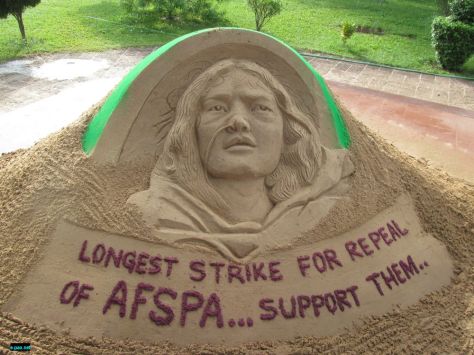
चंद रोज पहले टीवी के पर्दे पर नज़र आयी और बाद में प्रिन्ट मीडिया में भी छायी उस तस्वीर के बारे में यह बात दावे के साथ कही जा सकती है। इस फोटोग्राफ में इरोम शर्मिला – जो आज़ाद भारत के सबसे खतरनाक दमनकारी कानून सशस्त्र बल विशेष अधिकार अधिनियम (Armed Forces Special Powers Act) के खिलाफ संघर्ष की एक प्रतीक बनी रही हैं – अपना सोलह साल से चल रहा अनशन तोड़ती दिख रही हैं। उन्हें एक चम्मच में शहद आफर किया जाता है और वह बेहद भावुक हो जाती हैं, महज एक बंूद लेकर उसे लौटा देती हैं।
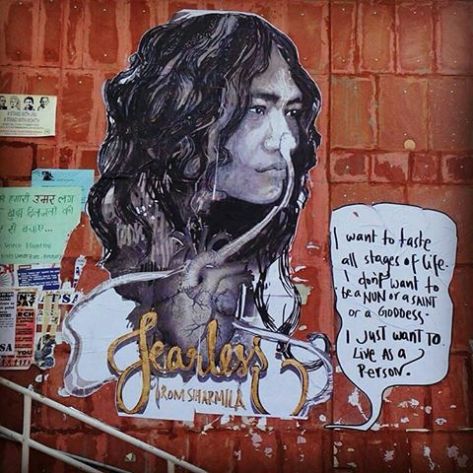
ईमानदारी की बात है कि इस तस्वीर को कई कोणों से पढ़ा जा सकता है – एक कोण हो सकता है कि एक किस्म का हताशाबोध कि दुनिया के पैमाने पर ऐतिहासिक कही जा रही इतनी लम्बी भूख हड़ताल के बावजूद इस खतरनाक कानून को टस से मस नहीं किया जा सका, एक अन्य कोण हो सकता है इस एहसास का कि यह सरकार इस कदर संवेदनाशून्य हो चुकी है कि उससे लड़ने के लिए एक नयी किस्म की रणनीति की जरूरत है – बेकार में जान देने के बजाय, अपनी उर्जा को नए सिरेसे एक नए किस्म के संघर्ष मंे लगाने का – तीसरा कोण यह भी हो सकता है कि  महामानव या महामानवी घोषित किए गए किसी व्यक्ति का उस आरोपित प्रतिमा से तौबा करते हुए यह बताने का कि वह भी एक साधारण मानवी है, जिसके अन्दर बाकी लोगों जैसा जीवन जीने की हसरत है।

Continue reading एक विद्रोहिणी का अकेलापन

DISSENT, DEBATE, CREATE