Restoring Delhi’s Central Ridge – Dilli hai jiska naam I: Pradip Krishen

We thought of a series on Delhi that does not talk only of the narrow lanes of Shahjahanabad, the Mughalia, aka Mughlai delights and the lip-smacking Chaats of Chandni Chowk or the grand ruins of the seven Delhis and the wide open spaces and broad roads, but a series that also looks at the way Delhi has evolved. We wanted to explore the logic of the city and of the forces that have shaped the idea of the city itself.  It was this idea that made us approach people who have engaged with the city with love and care for decades, and we requested them to write for Kafila. 

This series is titled, Dilli Hai Jiska Naam, and here is the first piece, by PRADIP KRISHEN

Restoring Delhi’s Central Ridge:  Pradip Krishen

(All images by Pradip Krishen)

Delhi’s Central Ridge is big — a little more than 850 hectares. That’s 8 and a half square kilometres of semi-wild forest in the heart of a totteringly large metropolis.

The Central Ridge is mostly open thorn forest but it can be quite dense in pockets. An evergreen climber called ‘heens’ (Capparis sepiaria) adds to the impression of density

It’s true the Ridge is degraded and filled with invasive trees from South America, its potholed roads are used as a rubbish dump and there are all sorts of other problems inside, but it’s still remarkable that the Central Ridge exists at all. And that it hasn’t been taken over to make multi-storeyed flats for civil servants. Or worse.
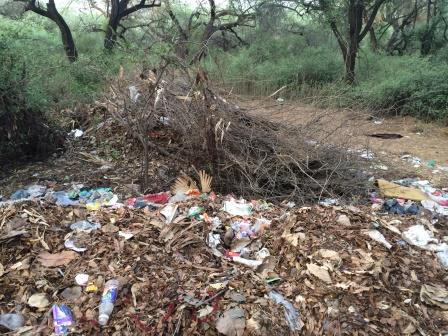
The President’s Bodyguard leases a polo ground inside the Central Ridge and does some damage by scattering rubbish from its Polo clubhouse indiscriminately on the Ridge.

I can’t say I know all of the Central Ridge. But it’s now been nearly 50 years since I first started going in there, and there’s a portion — it could be as much as 90 or 100 hectares or so — that I can claim to know really well because I walk there every day. I’m writing a journal-style book about the C Ridge — only about this parcel I’m most familiar with — and I hope to give you a sense of what it is about the C Ridge that I find not just fascinating but important from the angle of how this city is evolving and growing. Continue reading Restoring Delhi’s Central Ridge – Dilli hai jiska naam I: Pradip Krishen

Who is afraid of anuradha bhasin ?

Attacks on the media have become more “sophisticated”, such as stopping advertisements, which adds to the threat of violence.

Anuradha bhasin

In the first week of October came news from Jammu that the government-allotted apartment where Anuradha Bhasin, the executive editor of Kashmir Times has lived for twenty years, had been ransacked. The act was allegedly perpetrated by the relative of a former member of the Legislative Council. The intruders tried not to be photographed in the act by Bhasin, but later she published them and wrote on social media about how her “jewellery, silverware and other valuables” were taken by them in “connivance with the [Jammu and Kashmir] Estates Deptt and some police personnel”. Bhasin had not been served a show-cause notice to vacate the flat.

Soon after the office of her newspaper, located in the Press Enclave area in Srinagar, was also sealed, again without giving its legal owner or editor any reason. “Today, Estates Deptt locked our office without any due process of cancellation & eviction, same way as I was evicted from a flat in Jammu, where my belongings including valuables were handed over to ‘new allottee’,” Bhasin wrote.

One is suddenly reminded of the various storms the oldest and most-circulated newspaper published from Jammu and Kashmir has faced all these years. In 1983, some 200 Hindu right-wing lumpen, armed with batons and sharp weapons, barged into the offices of Kashmir Times in Jammu and attacked the editor at the time, Ved Bhasin. This attack followed a news report published by the then forty-year-old newspaper, which had apparently “hurt” their sentiments. The grand old man of English journalism, as Ved Bhasin was known in Jammu and Kashmir, survived the attack and continued his work with renewed vigour.

(Read the full article here)

Post Covid world and Bahujan: Pramod Ranjan

Guest Post by PRAMOD RANJAN

Translated from the original Hindi by Ekta News and Features

It is said that had the spread of the Novel Coronavirus not been contained by imposing lockdowns, by now, it would have consumed a substantial chunk of the human residents of the earth. But this claim requires closer examination.

Lockdown killed lakhs of persons the world over and its after-effects have ruined the economies of scores of low- and middle-income countries like India. Crores of persons have been condemned to a life of poverty and misery.

What is going to change
Offices and educational institutions were a gift of modern age. By bringing human minds together, the places of work and the centres of education not only scripted a new chapter in the development of the human race but also brought diverse communities on common platforms. It is almost certain that in the post-Covid world, schools and offices would not exist as we know them today.[1] A new law for bringing about changes in educational institutions has come into force in India.[2] Labour laws have been almost abolished and companies have been given the licence to exploit the workers.[3] Not only manual labourers but white-collar workers, too, would be caught in this web of exploitation and mental turmoil[4]. The rights of journalists and media employees, related to their service conditions and salary and allowances, have been withdrawn through changes in the law.[5]

There is also a real danger that globalization (the spurt in commercial and business activities at the global level around the 1990s) would be reversed. This will spell disaster for the economies of the developing countries. In India and many other countries, the poor could join the middle-income group only due to globalization[6]Continue reading Post Covid world and Bahujan: Pramod Ranjan

We Urgently Need a Rainbow Left – One Hundred Years of Indian Communism

Bolivia Movement for Socialism, image courtesy The Nation

The world today desperately awaits the emergence of a new, rainbow Left that is liberated from the disastrous hold of the twentieth century. Indeed, attempts to find or forge such platforms are visible in different parts of the world. Falteringly and with setbacks to be sure, but there is no doubt that serious attempts are underway. And many of these attempts are powered by a different kind of imagination that is unencumbered, to a large extent, by the suffocatiing grip of the last century.

One hundred years ago, on 17 October 1920, the emigre Communist Party of India was formed in Tashkent with MN Roy as its chief initiator. This date of the party’s formation is, of course, contested by the current CPI, which dates its formation from 26 December 1925, when the first ‘Indian Communist Conference’ was held in Kanpur. The date became a matter of contention, especially after the split  in the CPI and the formation of the CPI(M) in 1964 – and at the core of that contention were two related issues. One opinion at the time of the Kanpur Conference had argued for a home-bred and ‘nationalist’ ‘Indian Communism’, in opposition to which the other section saw itself as a contingent or  a chapter of an international movement. The second question became more of an issue in the later years, after Stalin’s death and the revaluation of his role and the manner in which the Comintern came to play a subordinate role to Soviet foreign policy. In between these two lies the phase of the ‘Bolshevization’ of all socialist and communist parties across the world, which ensured that the CPI too, no longer remain an independent party in the sense in which some were arguing at the time of its formation.

Continue reading We Urgently Need a Rainbow Left – One Hundred Years of Indian Communism

India is Hungry: Who is Listening?

Hunger is a matter of structural anomalies. It cannot just be explained away by who holds the reins of power.

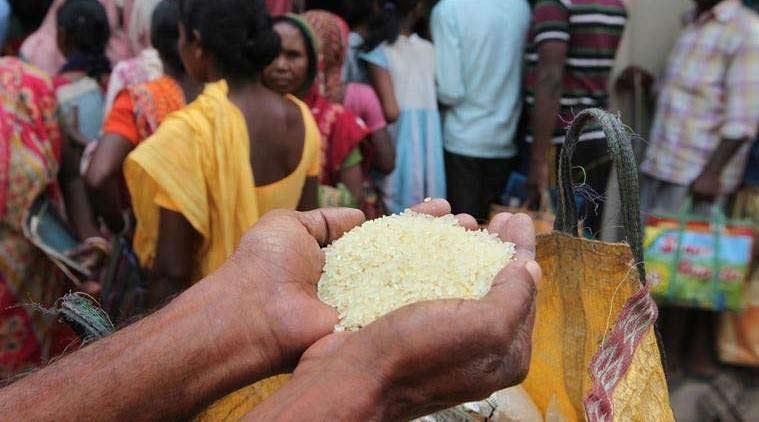
Starvation Deaths Continue to Occur in UP

Image Courtesy: Sabrang India

The “good news” is that India now stands at the 94th position on the Global Hunger Report 2020’s ranking of 107 countries. India has improved several notches over its 102nd rank last year, but is still firmly in the category of countries with a “serious” hunger problem. Only a handful of countries are doing worse than India, such as Rwanda (ranked 97), Afghanistan (99), Mozambique (103) and Chad (107).

The “good news” cannot hide the fact that that with an overall score of 27.2 India has performed worse than its neighbours, Pakistan (ranked 88), Bangladesh (75), Nepal (73) and Indonesia (70).

Seen any way, India has spent yet another year failing to tackle its massive chronic hunger problem. According to official figures, more than 14% of the population is undernourished and the child stunting rate is over 37.4%. One supposes this fits in with the strong belief in some quarters that India is a Vishwa Guru—teacher to the world—and can boldly claim to be a superpower in future.

The situation is such that news of starvation deaths is not uncommon despite excess of food grains stored in the godowns of the Food Corporation of India. Thousands of tonnes of these food grains go waste every year for a number of equally unjustifiable reasons.

(Read the full article here)

Postcolonial Critiques of Modernity : Dr Ravi sinha

( New Socialist Initiative presents the 2nd Lecture* in the Series on Modernity, 18 th October 6 pm IST)

*Youtube Link to the first lecture : https://youtu.be/J5m7Z-I8jPg


Continue reading Postcolonial Critiques of Modernity : Dr Ravi sinha

Petition to Ban Toxic News Channels

The following petition initiated by Prof Apoorvanand ; Bhasha Singh, Journalist/Activist ; Jitendra Kumar, Senior Journalist ;  Mahendra Mishra, Editor, Janchowk and Subhash Gatade appeals to the Associated Chambers of Commerce and Industry of India (ASSOCHAM), The Confederation of Indian Industry (CII), The Dalit Indian Chamber of Commerce & Industry (DICCI) and The Federation of Indian Chambers of Commerce & Industry (FICCI) to boycott toxic new channels.  The petition can be signed here :

It is a welcome sign that two prominent business houses, namely Bajaj Auto and Parle have taken the WELCOME DECISION to not advertise on TV channels spreading hatred. We urge all the advertisers to BOYCOTT HATE MONGERS, because the history is witness that the hate ruins the whole society and does not spare anyone, however rich and high and mighty a person may be. Let us remind ourselves the unforgettable words of Pastor Martin Niemoller that he spoke on emerging from the Nazi prison: “… When they came for me, there was none left to protest”. Don’t ask for whom the bell tolls, it tolls for thee.

These corporates need to recall that not long ago when Black Lives Matter movement was at its peak in the West, more than 1,000 companies had decided to boycott a section of social media platforms for their dubious stand on race.

We are aware of the background: The qualitative changes – for the worse – that have taken place in the Indian media, especially the electronic variant during last few years. The ownership of the large media houses has become limited to a few big players. And these big corporates are not concerned with the concerns of the common people, and use the media for their own and their political masters’ vested interests by focusing on non-issues and indulgence in sensationalism, false propaganda and hatred – thereby actively participating in the destruction of social unity in diversity among Indians that has existed despite any and every difference of class, caste, gender, region, religion, language, ideology or any other.

Without going back to the times when the lynching became the new political weapon – with the accused being welcomed by the ruling party leaders and even minister – during the last few months, we saw that in order to deflect attention from the catastrophe that had befallen on the people in general but migrant labour in particular because of the COVID-19 pandemic and to advance the agenda of demonizing Muslims – a la Jews in Nazi Germany – how ‘Tablighi Jamat’ was willfully portrayed falsely as the ‘corona jehadi’ and what not. Then, we witnessed the suicide of Sushant Singh Rajput being transformed into an endless ‘issue’, and the less said about the latest Hathras gang-rape, the better – the bizarre brazenness of hate-speech and hate-driven crime is unmistakably on the rise!

HIGH TIME THAT BOYCOTT OF HATE MONGERS BECOMES A COLLECTIVE PRACTICE!

A history of conservative strike on books

Even in a future in which books are outlawed, ideas cannot be vanquished.

Nazi's Boook burning

“You may burn my books and the books of the best minds in Europe, but the ideas those books contain have passed through millions of channels and will go on,” wrote Helen Keller, in An Open Letter to German Students in 1933. Keller’s How I Became a Socialist was on the list of books to be burned. “History has taught you nothing if you think you can kill ideas. Tyrants have tried to do that often before, and the ideas have risen up in their might and destroyed them,” she wrote.

Today you cannot perhaps have campaigns like Nazi’s book burnings, nor can books disappear off the shelves as they did in the United States during the McCarthy era. Yet the powers that be have thought of ingenious ways to stop people from reading books.

A recent order by the department of education in Britain needs to be seen in this context. It has ordered schools in England to stop accepting funds from groups or organisations which have expressed the desire to end capitalism. Anti-capitalism is seen by the department as an “extreme political stance”, similar to opposing freedom of speech, anti-Semitism and endorsing illegal activities.

( Read the full text here)

Hathras and Beyond: the Upper Caste Counter-Revolution


If the post-Mandal Dalit Bahujan upsurge was an expression of the democratic revolution, the advent of Adityanath’s BJP government constituted the beginning of a counter-revolution that is on the way to consolidating itself in Uttar Pradesh.

Police at the Delhi-UP order, image courtesy The Print

The facts of the case are well known, even though the Yogi Adityanath government in Uttar Pradesh is trying, ever so hard, to produce a different narrative by resorting to the usual Hindutva tactic of assigning it to an international conspiracy. It is typical of the utterly farcical and shoddy nature of the Indian police (and maybe indicates the regime’s over-confidence) that it in the name  of collecting evidence of the conspiracy, it has done a cut-and-paste job from an American site, even forgetting to delete references to ‘NYPD’ and ‘white supremacism’! Incidents of gang-rape and murder have since also happened elsewhere in the state, notably in Balrampur and Bulandshahr. We are witnessing the heinous episode of the Hathras gang rape and murder when the memory of the Unnao rape case in which then BJP leader Kuldeep Sengar was accused, is still fresh in our minds. The victim’s father died in police custody, having already been very badly beaten by Sengar’s brother and their goons, a video of which was proudly circulated on social media. Some other members of the family were killed in an  accident when a truck with a blackened number plate hit their car. In a second rape case, in the very same Unnao, two years later, a 23-year old woman who had been raped and was on the way to a hearing of the rape case, was caught and set ablaze by five men and died soon after that. In the first case, the rape-accused was a ‘popular’ figure – a Rajput leader – in whose support demonstrations were organized after he was arrested. In the second case, the girl was a Lohar (a blacksmith jati) while those who brutalized and killed her were Brahmins.

Continue reading Hathras and Beyond: the Upper Caste Counter-Revolution

Over 10,000 Feminist groups and individuals condemn gangrape and murder of dalit woman in hathras

Received via SAHELI WOMEN’S RESOURCE CENTRE

We condemn the horrific rape and murder of a young Dalit woman from Hathras, UP.

We stand with the family in their sorrow. Extend support, solidarity and rage.

We demand immediate action against the state officials responsible for mishandling the case, destroying key evidence, and further traumatising the family and community.

SHAME ON THE STATE THAT STANDS WITH THE GUILTY.
SHAME ON THE STATE THAT INCREASES THE IMPUNITY WITH WHICH UPPER CASTE FORCES COMMIT VIOLENCE AND HATE CRIMES.

Today, over 10,000 people from all walks of life, cutting across caste, religion, gender, occupation and community came together from almost every state in India and more than a dozen countries across the world such US, UK, Canada, Australia, UAE, Hong Kong, Japan, Nepal, Netherlands, Sweden, Slovenia etc to demand justice for the heinous rape, brutalising attack and murder of a young Dalit woman from Hathras.

In a sharp statement condemning the incident, they got together to say thatdespite a continuing saga of countless other cases of brutal sexual assault and murders especially of young Dalit women the conscience of this nation does not seem to be shaken enough to do anything serious to stop the systematic targeting of women, Dalits and the poor.

While there is a historicity to these incidents, but under CM Yogi’s rule, Uttar Pradesh has only gone from bad to worse. Crimes against women and Dalits have increased, and police have been given unlimited powers without any accountability. Today UP tops the charts for atrocities against Dalits, it also tops the charts for crimes against women.

Continue reading Over 10,000 Feminist groups and individuals condemn gangrape and murder of dalit woman in hathras

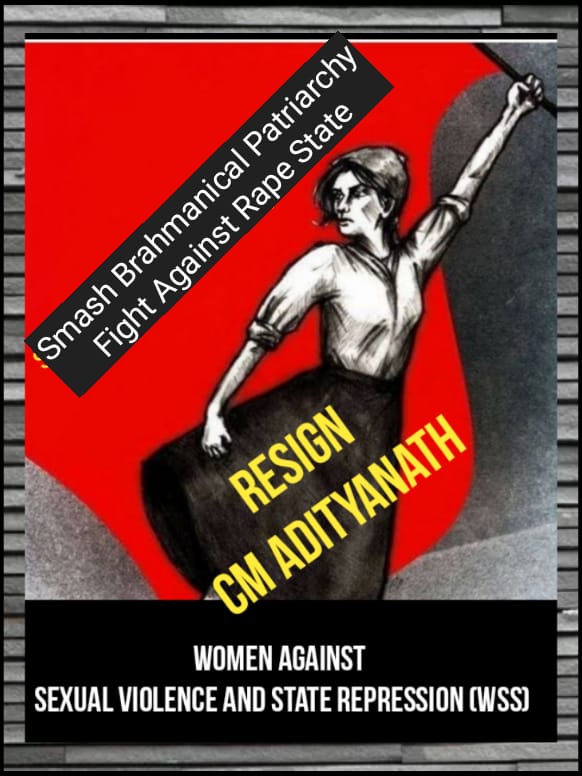
बेटी बचाओ का नारा देने वाले बलात्कारियों को बचाने में लगे हैं – यौन हिंसा और राजकीय दमन के खिलाफ महिलाएँ

Statement by WOMEN AGAINST SEXUAL VIOLENCE AND STATE REPRESSION on Hathras and other cases in UP

यौन हिंसा और राजकीय दमन के खिलाफ महिलाएँ (WSS)  उत्तर प्रदेश में महिलाओं पर बढ़ रही यौन हिंसा पर चिंता व्यक्त करती है। पिछले दिनों हाथरस और बलरामपुर में दलित लड़कियों के साथ हुए बलात्कार और हाथरस के पूरे मामले में उत्तर प्रदेश पुलिस और प्रशासन की लापरवाही और बलात्कारियों को फायदा पहुंचाने वाली कार्यवाही, जिसमें रातों रात पीड़िता के शव को जलाना भी शामिल है, की कड़े शब्दों में निंदा करते करते हैं। 

हाथरस के जघन्य बलात्कार और हत्या की घटना पर रोष व्यक्त करते हुए WSS का कहना है कि उत्तर प्रदेश में महिलाओं और उसमे भी दलित समुदाय की महिला की कोई सुनवाई नहीं है।

Continue reading बेटी बचाओ का नारा देने वाले बलात्कारियों को बचाने में लगे हैं – यौन हिंसा और राजकीय दमन के खिलाफ महिलाएँ

Unpacking Religious Nationalism

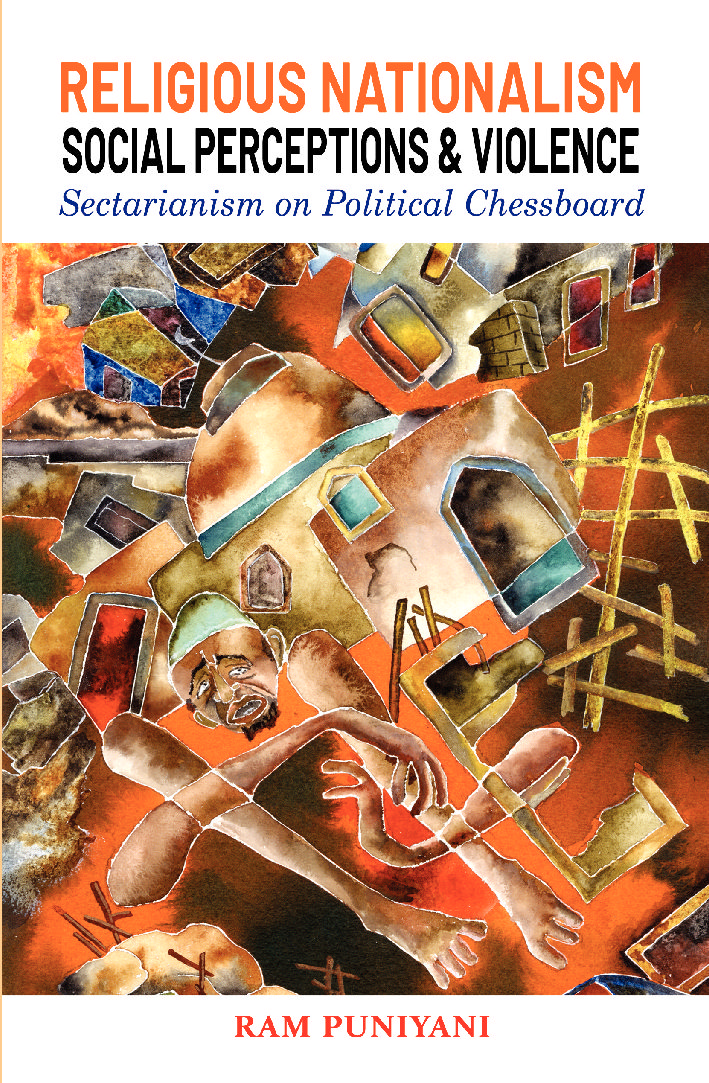
Review of ‘Religious Nationalism – Social Perceptions and Violence : Sectarianism on Political Chessboard‘- Ram Puniyani (Media House 2020)

“Blatant dictatorship – in the form of fascism, communism, or military rule – has disappeared across much of the world. Military coups and other violent seizures of power are rare. Most countries hold regular elections. Democracies still die, but by different means.

Since the end of the Cold War, most democratic breakdowns have been caused not by generals and soldiers but by elected governments themselves.”

(How Democracies Die, Steven Levitsky and Daniel Ziblatt)

The contrast had never been so sharper.

Continue reading Unpacking Religious Nationalism

How to see in the dark? An open letter to the women in cinema collective

Dear friends in the WCC

I am writing to you at a time so dark that unless we hold hands and feel the warmth of each others’ palms, we may even lose our sense of reality. This is my way of holding your hand and gaining strength from your presence.

Continue reading How to see in the dark? An open letter to the women in cinema collective