All posts by Nivedita Menon

The Second Demolition: Ayodhya Judgement September 30, 2010

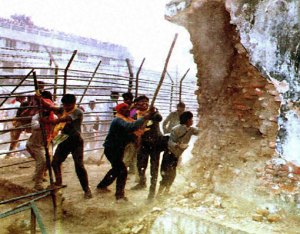
December 6, 1992

A shameful and shocking judgement.

I am shattered by what it does, by its implications for democracy, and by the statement it makes about what we can expect for the future.

My rage is growing with every statesman-like pronouncement from one pompous man after the other in the media, gravely holding forth on the maturity of the compromise that has been reached.

Continue reading The Second Demolition: Ayodhya Judgement September 30, 2010

Repeal AFSPA: Committee for the Release of Dr Binayak Sen Mumbai


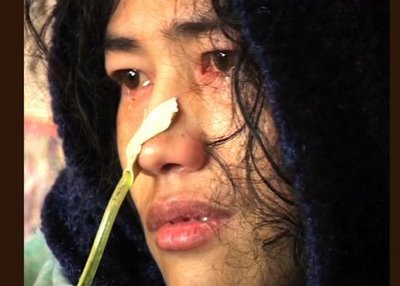
Irom Sharmila has been on a fast unto death for the repeal of the Armed Forces (Special Powers) Act (AFSPA) after troops of the Assam Rifles gunned down 10 civilians at Malom near Imphal airport on November 2, 2000. She is periodically arrested and force-fed by the Indian state.

Dear Prime Minister, Home Minister and Sonia Gandhi,

We have noticed a striking anomaly in the way the armed forces and the state treats the people of Kashmir and the Northeast. When contemplating the use of the armed forces in the forest belt, the armed forces and the state concluded (quite correctly, in our opinion) that they should not be used against the people of this region, including the Maoists, since ‘they are our people’. Yet the very same armed forces have no compunction about being deployed against the people of Kashmir and the Northeast, and the state agrees! Worse still, the armed forces insist that they cannot carry out their duties without AFSPA, which allows them to rape, torture and kill with impunity.

So what is happening here? Are the people of Kashmir and the Northeast not ‘our people’? This is indeed the message that comes across. And if these people feel that they are not regarded or treated as ‘our people’ by the state and armed forces of India, is it surprising that many of them do not want to belong to India?

In fact, AFSPA allows the armed forces to commit atrocities that would be considered war crimes even if they were directed at a foreign enemy. There is no justification for keeping it on the statute books, because it is incompatible with international humanitarian law. Its enforcement in these states has been one of the main reasons why there has been no resolution of the conflicts in them for decades. Consulting the armed forces about the repeal of a law that allows them unlimited power is worse than useless: why would they ever agree? Surely you ought instead to be consulting people like Irom Sharmila, who has been waging a heroic and totally non-violent struggle against AFSPA for ten years!

Shouldn’t the government be asking her why she is ready to sacrifice her life to get this law repealed? And taking her answer deadly seriously before she dies?

FROM
COMMITTEE FOR THE RELEASE OF DR BINAYAK SEN MUMBAI

Apni Dilli Unke Khel

Written, performed and directed by  ASUR (Narendra,  Rakesh, Archna  and Ravi)

The Banality of Shame

BANAL: everyday, ordinary, commonplace

SHAME: the  painful  feeling  arising  from  the  consciousness  of  something  dishonourable done  by  oneself  or another


Jana gana mana adhinayaka jaya he

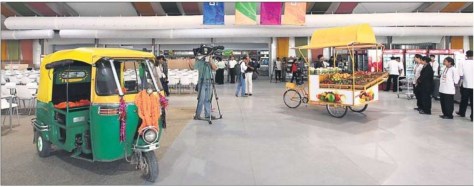
An auto-rickshaw and a street hawker’s pushcart as showpieces in the Commonwealth Games Village dining hall

* MCD to raze dhabas on Games route: It doesn’t matter if you are running your business legally or illegally. If your shops fall on the route of a Games event, chances are that you will have to shut shop. A shop and taxi stand in front of Bal Bhawan — which have been running for 20 years — were demolished by MCD on Saturday and the civic agency is planning to raze all dhabas  functioning along the stretch in the coming days even as the dhaba owners claim that they have been paying rent to MCD.

Continue reading The Banality of Shame

Rayana R Khazi and The Specter of Religious Fundamentalism in the Kerala Public Sphere: Jenny Rowena & K Ashraf

This is a guest post by JENNY ROWENA and K ASHRAF
Rayana R Khazi is a young student from Cherkalam in Kasargode. Recently she has been in the news after she came out to speak to the media about the threatening letters and phone calls that she was receiving, all of which demanded her to wear the Purdah. After Rayana’s revelations, media, human rights and feminist activists have rushed to her aid, starting off yet another round of anxieties about the growth of Islamic fundamentalism.  Even as we fully support Rayana’s need for a more livable life, it is also important that, at this juncture, we look at the numerous issues that this incident brings forth into the public sphere of Kerala.
Control of Women’s Bodies
In this controversy, one of the most important issues being raised is about the control of women’s bodies by male, religious fundamentalists in the Muslim community.  Such responses, be it from a reactionary, anti-Islamophobic perspective or from a more progressive view- point, which is aware of the rampant Islamophobia of our times, carries out a similar function in Kerala. Continue reading Rayana R Khazi and The Specter of Religious Fundamentalism in the Kerala Public Sphere: Jenny Rowena & K Ashraf

Building, dead bodies and the emergency decree in Thailand

This is a guest post with photographs by ANON.

Sunday 1 August 2010

Activists and people in the red shirt movement organized the event Building, dead bodies and the emergency decree at the memorial “14 October 1973”, a memorial built to remember those who died fighting against the dictator on that date.  This event was organized to raise funds to help the victims and their families, affected by the Thai government crack down during the pro-democracy Red Shirt Political protests in April 2010 and May 2010. Continue reading Building, dead bodies and the emergency decree in Thailand

POSCO Pratirodh Sangram Samiti to Jairam Ramesh

This is a press release issued last week by PPSS, pointing out the illegalities   being committed by the Orissa government and the Central Ministry of Environment and Forests in connection with the POSCO project.

POSCO PRATIRODH SANGRAM SAMITI

Dhinkia, Nuagaon, Gadkujang; Jagatsinghpur District, Orissa

11.08.2010

To:

Shri Jairam Ramesh

Minister of Environment and Forests

Paryavaran Bhavan

New Delhi

Sub: Regarding POSCO project – need for withdrawal of illegal final clearance; new Meena Gupta Committee clearly aimed at delaying matters Continue reading POSCO Pratirodh Sangram Samiti to Jairam Ramesh

University Community for Democracy on relay hunger-strike against CWG evictions

We have had an earlier post on the University Community for Democracy which was formed in the wake of the arbitrary and authoritarian eviction of students from the hostels of Delhi University for the Commonwealth Games, but which raises wider questions about the “reckless logic by which the city is being re-made”.

This is their latest press release, followed by their letter to the National Commission for Women.

University Community for Democracy

PRESS RELEASE 10/08/10

The University Community for Democracy is initiating a RELAY HUNGER STRIKE FROM  9 AM TO 9 PM, 12TH AUGUST THURSDAY ONWARDS at the Arts Faculty Main gate, North Campus. Each day there will be five people (teachers, students and researchers) who will be on a hunger strike, as well as many others who will sit in solidarity.

The University Community for Democracy has been challenging a number of decisions taken by both Delhi University and the government with regard to the commonwealth games for over a month now. The Forum is deeply concerned by the gross violations of rights that the city has witnessed in the name of the Games and condemns the irresponsible manner in which Delhi is being prepared for this mega- event.

Continue reading University Community for Democracy on relay hunger-strike against CWG evictions

A Dialogue with God and Dialogues that go missing

Guest post by SUDEEP KS and BOBBY KUNHU

On Sunday 4 July 2010, T J Joseph, a college lecturer, was attacked by a group of people on his way back from the church in Muvattupuzha in central Kerala, and his right hand was chopped off. We believe this heinous act deserves to be condemned, and that such acts pose a major threat to the secular fabric of the Kerala society.

The attack has attracted immediate media attention, and it is said to be related to a recent controversy over a question paper. Joseph, in his Malayalam question paper, had asked one question that apparently hurt the religious sentiments of some people.

The Kerala society’s response to this whole episode has been equally disturbing. Pinarayi Vijayan, state head of Communist Party of India (Marxist), calls it ‘Talibanization of Kerala’. It has been made out to be a question of ‘freedom of speech’. The media, politicians and intellectuals are busy expressing serious concerns over a ‘religion’ that is intolerant and fanatic. The Police has also let out suspicions on some groups involved in this incident, and both the television and print media have been religiously reporting it. Continue reading A Dialogue with God and Dialogues that go missing

Swami & Friends: JTSA’s response to Praveen Swami

The story so far…

Jamia Teachers Solidarity Association was  formed after the so-called “encounter” at Batla House in 2008, in which two students of Jamia Millia Islamia were killed. You may remember posts on kafila at the time, questioning the credibility of police accounts of the “encounter” and criticizing the unethical nature of media coverage:

A little less melodrama, a lot more forensics;

The Jamia Nagar encounter: Curiouser and curiouser;

Shame is a revolutionary sentiment;

Some questions about the Delhi encounter.

In April this year, JTSA, which has been demanding an independent probe into the encounter, issued a statement after the post mortem reports of Atif Ameen and Md. Sajid were made public, revealing that the two boys were not  killed in cross fire as Delhi Police claimed:

Batla House ‘Encounter’: Whom is the JP Trauma Centre Shielding?

On April 25, 2010, Countercurrents published another statement by JTSA, titled Praveen Swami’s Not so Fabulous Fables, which began thus:

“If there is one infallible indicator of what the top Indian Intelligence agencies are thinking or cooking up, it is this: Praveen Swami’s articles. Each time the security establishment wishes to push a certain angle to this bomb blast or that, Swami’s articles appear magically, faithfully reflecting the Intelligence reports. After the Batla House ‘encounter’, he launched a tirade against all those who were questioning the police account of the shootout labeling them all ‘Alices in wonderland’. He went so far as to identify ‘precisely’ how Inspector Sharma was shot by claiming that “abdomen wound was inflicted with [Atif] Amin’s weapon and the shoulder hit, by Mohammad Sajid”.

And no sir, Swami’s conclusion was not based on post mortem reports of the killed, fire arm examination report or ballistic report but on this innocent fact: “the investigators believe that…” He certainly brings in a whole new meaning to ‘investigative journalism’. Swami however felt no need to pen an article when the postmortem reports of Atif and Sajid revealed that they had been shot from close range and that neither of them sustained gunshot wounds in the frontal region of the body—an impossibility in the case of a genuine encounter. Was it because the police and the Home Ministry chose to remain quiet after the revelations—hoping that the storm would quietly blow over?
Praveen Swami wrote an injured response via a letter to Annie Zaidi, which too was published on Countercurrents.
And now read on, as JTSA responds to Swami.

Continue reading Swami & Friends: JTSA’s response to Praveen Swami

Heading for a Bloodbath: Rohini Hensman

This post by ROHINI HENSMAN is an article  published on the Outlookindia.com website on April 22, 2010.

To people desperately trying to avert a bloodbath in the forest belt, the recent PUDR statement on the massacre of 76 CRPF jawans in Dantewada caused considerable consternation, and Sumanta Banerjee’s response to it even more so. According to the PUDR statement,

‘As a civil rights organization we neither condemn the killing of security force combatants nor that of the Maoists combatants, or for that matter any other combatants, when it occurs’.
Sumanta Banerjee objected to the equating of Maoist violence and state violence, saying that
‘these soldiers, by being cannon-fodders of the Indian state, however tragic it might be, suffered the fate that – I’m sorry to say – they deserved…To come back to the latest incident of the Maoist attack on the CRPF camp in Chhattisgarh…. if we accept it as a part of a civil war, such killings are inevitable (just as the CRPF killings of Maoists) in a violent system that has been institutionalized by the Indian state. The difference between the CRPF violence (involving ‘false encounters’, raping of tribal women, burning their homes, etc.) on the one hand, and the Maoist violence on the other (which means attacks on oppressive landlords and the police and para-military forces like the CRPF which come to the aid of the landlords) – has to be distinguished by civil society groups’
Both the statement and the response assume that a civil war is already in progress, and therefore the killing of combatants is not illegal.

Continue reading on outlookindia.

Batla House ‘Encounter’: Whom is the JP Trauma Centre Shielding?

Statement by Jamia Teachers’ Solidarity Association

Days after the startling revelation of the post mortem reports of Atif Ameen and Md. Sajid, which conclusively nailed the lie of the Delhi Police claims that the two boys were killed in cross fire, the security establishment has swung into damage control to ensure that no further information is made public. It is to be recalled that the post mortem reports could be made public only through the persistent efforts of RTI activist and Jamia student, Afroze Alam Sahil and the resolute resistance offered by the teachers and students of Jamia as well as other civil rights activists.

While the post mortem reports have made it amply clear that both Atif and Sajid have been shot from close range and possibly in captivity (as illustrated by the injury marks made by blunt force); the reports also raised several questions: Continue reading Batla House ‘Encounter’: Whom is the JP Trauma Centre Shielding?

An Open Letter to the Democratic and Progressive Groups and Individuals in Aligarh Muslim University and Other Universities in India to Demand Justice for Dr.Siras

To sign this statement, click here

The unforeseen death of Dr Srinivas Ramachandra Siras (Reader and Chair of Modern Indian Languages at Aligarh Muslim University) and the circumstances surrounding it have thrown us into a web of shock, despair and great concern. As an academic community, there are a number of questions that we need to ask and address.

The role of the Aligarh Muslim University authorities in this incident has been nothing short of condemnable. The invasion of Dr Siras’ privacy, the subsequent authoritarian impulse to suspend him and the complete lack of sensitivity by the administration has been outrageous. It has created anxiety about our vulnerability to the exercise of arbitrary powers. The use of such surveillance is not simply a threat to our freedom to make life choices (and sexual choices); it also leads to “self-discipline” due to fear of transgressing majoritarian norms. Continue reading An Open Letter to the Democratic and Progressive Groups and Individuals in Aligarh Muslim University and Other Universities in India to Demand Justice for Dr.Siras

Response to Rohini Hensman: Soumitra Ghosh

SOUMITRA GHOSH is with the National Forum of Forest Peoples and Forest Workers. This post came as a response to Rohini Hensman’s recent post Getting Indian Democracy Right

Is India a democracy? This question has to be seen in context of the complex and plural character of the present Indian state and several other state like formations(for instance the Maoist People’s Sarkar in the liberated zones, the parallel administration run by the Nagas, areas and times where and when the extreme hegemony of one or the other mainstream political party or the feudal landlords substitutes the process of law—and others). There is also the fallacy whether India is a nation-state in the way other nation-states(for instance, China, USA, England) are, and whether the concept of a monolithic Western-type at all democracy applies in the Indian context (and if so, how far?). However, the question Rohini tries to raise deals more perhaps with our ethical constructs of democratic values than the character of the Indian state. If it is the former we enter the realm of ethical a-priories, which I too share: democracy is something that as a political process tolerates pluralism and leaves some space for minority dissents against dominant majorities. To take the democracy debate further and to include the Indian state in it will mean a different discourse, in which I am not going for the time being.

Continue reading Response to Rohini Hensman: Soumitra Ghosh

Thai tyrants use violence to cling to power: Giles Ungpakorn

This is a guest post by Giles Ungpakorn, Thai academic and social activist, formerly Associate Professor at Faculty of Political Science, Chulalongkorn University. He fled to the UK after facing lese-majeste charges in Thailand for his book A Coup for the Rich.

More images of Thai military crackdown on unarmed pro-democracy protesters

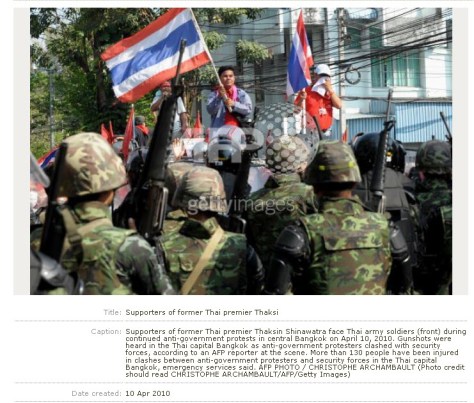
Abhisit’s Democrat Party, the Military and the Bureaucratic Elites, can only cling to power through violence and lies. As they use armed troops and tanks against pro-democracy demonstrators in Bangkok for the 5th time in forty years, the tyrants hope that a blanket of censorship throughout Thailand will allow them to do their dirty work in secret. But their censorship is not working and the assembled masses of pro-democracy Red Shirts are resisting. On the 10th April 2010 the army shot dead 17 unarmed Red Shirt protesters and a Japanese camera man in Bangkok in an attempt to crush a peaceful demonstration. Yet Abhisit Vejjajiva continues to lie. He claims that soldiers “only shot into the air” when they were threatened. Many reports from foreign journalists, and the deaths of 18 people, indicate that the soldiers fired live ammunition directly into the crowd.

Continue reading Thai tyrants use violence to cling to power: Giles Ungpakorn

Response to Arundhati Roy: Jairus Banaji

This is a guest post by JAIRUS BANAJI

Arundhati Roy’s essay “Walking with the Comrades” is a powerful indictment of the Indian state and its brutality but its political drawbacks are screamingly obvious.  Arundhati clearly believes that the Indian state is such a bastion of oppression and unrelieved brutality that there is no alternative to violent struggle or ‘protracted war’. In other words, democracy is a pure excrescence on a military apparatus that forms the true backbone of the Indian state. It is simply its ‘benign façade’. If all you had in India were forest communities and corporate predators, tribals and paramilitary forces, the government and the Maoists, her espousal of the Maoists might just cut ice. But where does the rest of India fit in? What categories do we have for them?  Or are we seriously supposed to believe that the extraordinary tide of insurrection will wash over the messy landscapes of urban India and over the millions of disorganised workers in our countryside without the emergence of a powerful social agency, a broad alliance of salaried and wage-earning strata, that can contest the stranglehold of capitalism?  Without mass organisations, battles for democracy, struggles for the radicalisation of culture, etc., etc.?  Does any of this matter for her?

Continue reading Response to Arundhati Roy: Jairus Banaji

Sree Narayana Guru, the Left, and Chitralekha: Joe.M.S.

This is a guest post by JOE M. S.

The recent controversy associated with the brutal persecution of a Dalit working woman, Chitralekha  by the hoodlums of a ‘leftist’ union has gained wide attention, bringing into limelight the plight of  Dalits in Kerala. The men who participated in this ’festival of masses’, according to reports, predominantly belong to the  backward caste Ezhava/ Theeya community. Anybody with a bit of social concern would have definitely condemned the incident . They would even have expressed their regrets at the deviation of the people belonging to Ezhava caste, the disciples of Srinarayana guru, the famous social reformer, from the avowed policies advocated  by him. But I think, here lies a problem. A re-look at the social history of Kerala is needed   to understand whether the Chitralekha incident is a deviation from the pronounced objectives of the Srinarayana movement as  such, as it is popularly understood, or  the roots for  such a development  was inherent in the   trajectory of   the Narayana movement itself. This does not belittle  the genuine intentions Guru had for social emancipation, at a personal level.

In spite of the cultural specificities of northern Kerala  where  these atrocities were perpetrated on Chitralekha, I think a general study of the impact of Srinarayanism on the whole of Kerala may be of some help to analyse the increasing backward caste arrogance vis-a-vis Dalits. This is particularly so as the discourse on the assumed efficacy of Sri Narayana Guru’s thought is  invoked constantly  by the civil society of Kerala, eternalising his importance  in all spheres. So  I think, a glance at the  impact of his life and efforts  can shed light on the of the constitution/ construction of modern Ezhava identity and the problems associated with it.

Continue reading Sree Narayana Guru, the Left, and Chitralekha: Joe.M.S.

Levelling the playing field before the Commonwealth Games

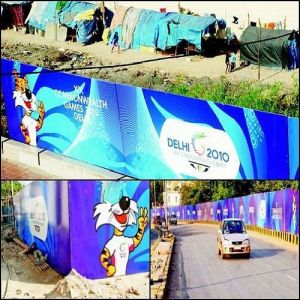
Ahead of the Commonwealth games, the capital city of the country with aspirations towards being anointed First Side-Kick to the only super-power left in the world, is busy cleaning up. Beggars, protesters, poor-looking people in general, out, out, all out.

Pholpata, her child and a friend inside a mobile court in a mini-bus, caught begging and brought before a magistrate who will decide whether to jail them for a year or release them. [The Independent on Sunday]


Also, see Partha Banerjee’s post on this in his blog
The Real Slumdog Story: India’s Ghastly Commonwealth Cleanup.

Meanwhile, of course, the labourers working day and night to complete the endless amounts of construction required to host an event of this magnitude, are “working and living in highly dangerous and deplorable conditions;  earning less than the stipulated minimum wage;  with no access to basic sanitation and health facilities;  and, lacking safety equipment”, found a Committee appointed by the Delhi High Court.

Continuing the saga of national triumph, below, we have AKHIL KATYAL and SHALINI SHARMA on the forced evictions of protesters from Jantar Mantar.

The Delhi State Government and New Delhi Municipal Corporation (NDMC) seem to have a particularly limited vision of a beautiful city. In the run up to the Commonwealth Games, Delhi is seeing a massive beautification drive which is really about an intolerant attitude towards democratic dissent and towards the urban poor. It is an idea of beauty that deals with urban protest or poverty simply by excising it from view.

Continue reading Levelling the playing field before the Commonwealth Games

Democracy and the Communist Party: Aniket Alam

This is a guest post by ANIKET ALAM

This paper, rather preliminary note towards a full paper, attempts to look at the troubled history of democracy (both as a concept as well as a practice) and parties claiming affiliation to Marxism-Leninism. It tries to understand the historical paradox of parties and movements influenced by Marxism being among the more important contributors to democratising our world, but States ruled by parties owing allegiance to Marxism denying democratic rights to their own citizens. It then tries to identify some of the reasons for this large democratic deficit.

But before I begin, two short points about the structure of the paper may be in order. First, I have been fairly hesitant to write on this topic. I can hardly lay any claim to expertise on theoretical debates among Marxists as well as on the details of the history of countries ruled by communist parties. That apart, I am also conscious of my weakness in political theory, specially that relating to democracy and related ideas of liberty and representation. Therefore, the stress will remain more on the historical experience rather than the theoretical arguments. Second, and following from my hesitation laid out above, this paper is basically structured around three writings by two Marxists: Karl Marx himself , and Rosa Luxemburg. You may say I am merely paraphrasing them, or you may say that they are the burqa I wear during this excursion into unfamiliar territory.

Continue reading Democracy and the Communist Party: Aniket Alam

Deshbhakts at Arthur Road Jail: Susan Abraham

This is a guest post by SUSAN ABRAHAM

Shahid Azmi

It took Shahid Azmi’s cold-blooded murder on 11th February 2010 at his office near Kurla, for the world to come alive to his  importance.  Soft spoken and modest, it is the sweep of the cases he fought, challenging the State’s calculated targeting of innocent Muslims, that marked Shahid’s  remarkable achievements as a lawyer within a short span of six years in the legal profession.

One of these cases related to the brutal lathi charge in Arthur Road Jail in central Mumbai, on 28th June 2008, by the jail staff along with convicts and undertrials from the so-called `patriotic’ underworld gangs,  on a select group of undertrial-inmates. This assault was conducted under the overall supervision of the-then Jail Superintendent Swati Sathe. To the outside world, Ms Sathe was a tough no-nonsense, non corrupt woman officer who probably wished to become the next Kiran Bedi. But underneath her stiff khakhi uniform ruled a tough no-nonsense hindutva heart, no less.

Continue reading Deshbhakts at Arthur Road Jail: Susan Abraham

Appeal for talks with broader section of people’s struggles in the forest and mineral belt

Aditya Nigam, Dilip Simeon, Jairus Banaji, Nivedita Menon, Rohini Hensman, Satya Sivaraman, Sumit Sarkar, Tanika Sarkar

In the light of the recent demands raised by sections of the intelligentsia urging the government to heed the CPI (Maoist) “offer of talks”, we insist that “civil society” should rather, put pressure on the government to initiate talks with representatives of all struggling popular and adivasi organizations. The CPI (Maoist) cannot be treated as the sole spokesperson of all the people in the forest and mineral belt, convenient though this may be for the state and for that party. Does the government believe that violent insurgents are the only deserving interlocutors? Continue reading Appeal for talks with broader section of people’s struggles in the forest and mineral belt