A lively debate has been going on lately in Al Jazeera, following the question posed by Hamid Dabashi in an article provocatively titled “Can Non-Europeans Think“? Dabashi’s piece, published earlier in January this year was a response to an article by Santiago Zabala, Research Professor of Philosophy at the University of Barcelona. Zabala’s article, entitled “Slavoj Zizek and the Role of the Philosopher”, was actually on an entirely different issue, as will be evident from the title. Zabala attempts, in this article, to read in Zizek’s persona and oeuvre, the possible implications for the philosopher as such. He dwells on Zizek as a figure who is at once a philosopher and a public intellectual – a role not very easily available, according to him, to academic philosophers.
If most significant philosophers become points of reference within the philosophical community, he says, “few have managed to overcome its boundaries and become public intellectuals intensely engaged in our cultural and political life as did Hannah Arendt (with the Eichmann trial), Jean-Paul Sartre (in the protests of May 1968) and Michel Foucault (with the Iranian revolution).” Zabala explains this rare ability/ possibility by invoking Edward Said on the ‘outsider’ status of the intellectual and by underlining the direct engagement of the thought of such philosophers with contemporary events. He says:
These philosophers became public intellectuals not simply because of their original philosophical projects or the exceptional political events of their epochs, but rather because their thoughts were drawn by these events. But how can an intellectual respond to the events of his epoch in order to contribute in a productive manner?
In order to respond, as Edward Said once said, the intellectual has to be “an outsider, living in self-imposed exile, and on the margins of society”, that is, free from academic, religious and political establishments; otherwise, he or she will simply submit to the inevitability of events.
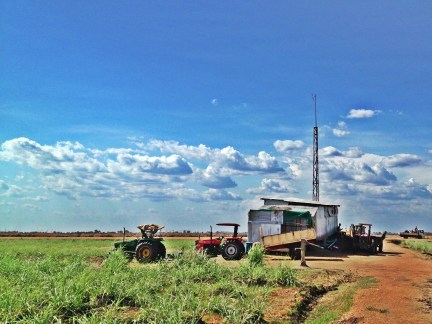 Earlier this month, I travelled to Gambella in South West Ethiopia to visit the 100,000 ha farm managed by