Dear friends
Category Archives: Capitalism
Kudankulam: A brief history and a recent update
These are moments when spaces like Kafila become so important.
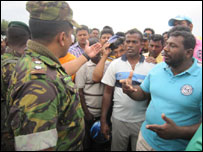
On the 19th of March, news came in that Tamilnadu Police men of six districts led by the ADGP for Crime of the Tamilnadu Police, Mr. O.S.George were sent to Kudankulam. This meant 6000 armed police men, 3 DIGs and 20 SPs were in Kudankulam. The TV reports, when they were still possible, showed police violence and extensive police presence in the village. We also saw women from Kudankulam, the backbone of the movement, declaring that there will be a strong people’s response to this violence and that they cannot be taken peaceful protest cannot be taken for granted. The first project taken up by the police seems to have bee to block off the village from any outsiders. Nearby villagers who tried to approach the villages by sea were also arrested by the police. As of now, all roads to the village have been blocked. Communication systems have been tampered with. Continue reading Kudankulam: A brief history and a recent update
FDI In Retail – What Does the Government’s Own Data Say? Shankar Gopalakrishnan
Guest post by SHANKAR GOPALAKRISHNAN
In his budget speech, Finance Minister Pranab Mukherjee declared that the government’s “decision” to allow FDI in multi-brand retail outlets “has been held in abeyance” until there is a “broad based consensus.” In other words, it’s already a decision, but it’s just being held back until the government feels it can go ahead safely. The question though is: why is the government so convinced of its decision? How does Mr. Mukherjee so firmly declare that “organised retail helps in reducing costs of intermediation… benefiting both consumers and producers”? Has the government done the homework to justify its actions? This note looks at the government’s own data to find out.
As far as is known, there was only one study commissioned by the government in this regard (Business Standard 2007) This was done by ICRIER in 2007, first published as a Working Paper in 2008 (Joseph et al 2008), and subsequently converted into a book – Retail in India: A Critical Assessment – in 2009, with one chapter added by other authors.[i]
Continue reading FDI In Retail – What Does the Government’s Own Data Say? Shankar Gopalakrishnan
Joint Statement on police atrocities and state repression on anti-POSCO struggle
See names of signatories below; please send your endorsement to asit1917 at gmail dot com
We strongly condemn the attack on and illegal abduction by the Odisha police of Umakanta Biswal, a famer belonging to Dhinkia village of Odisha, and an active member of POSCO Pratirodh Sangram Samiti (PPSS), that has been engaged over the last six years in resisting the forcible acquisition of their land by the Odisha government for handing over to the South Korean multinational corporation POSCO. This incident, which occurred on 2nd March 2012, is the latest in the series of atrocities inflicted by the Odisha government and by hired goons associated with the government and the POSCO company, on the people of these villages. Umakanta Biswal, who was engaged in agricultural activity in his paddy field at the time of his abduction, was pursued by a group of armed plainclothes policemen on a motorbike, and shot at when he tried to escape. He has reportedly been kept in Paradip prison, and has not been produced in front of a magistrate within 24 hours of his arrest, as is required under law. We have cause to fear that he is being tortured in police custody, and are gravely concerned about his safety. Continue reading Joint Statement on police atrocities and state repression on anti-POSCO struggle
Everything you wanted to know about the great Kingfisher Airlines scam but didn’t know who to ask
All your queries will be answered here.
Caste and Exploitation in Indian History: Bharat Patankar
Guest post by BHARAT PATANKAR translated by GAIL OMVEDT
Introduction: The Process of Exploitation
Exploitation arising from the caste hierarchy is a particular feature of the South Asian subcontinent. There was no such exploitative system in other continents or in countries outside of South Asia. But since caste exploitation has been a reality for 1500-2000 years this shakes the belief that only class can be the basis of exploitation. And because of this we have to transcend the attempt to find a way only pragmatically and deal with the issue on a philosophical and theoretical level. Class has been theorized extensively in terms of exploitation; to some extent gender also, but not caste. Exploitation as women in various forms has also been a reality for thousands of years; this also is not through “class”. This reality from throughout the world gives a blow to the idea that exploitation can only be class exploitation. This can also be said of exploitation arising on the basis of racial and communal factors. Continue reading Caste and Exploitation in Indian History: Bharat Patankar
Fuel Prices and Protesting Voices in Sri Lanka: Mahendran Thiruvarangan
Guest post by MAHENDRAN THIRUVARANGAN
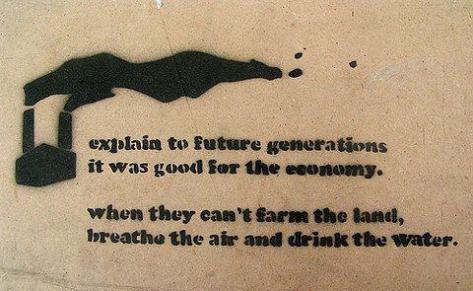
The United People’s Freedom Alliance government’s inability to put forward economic policies that address the grievances of the downtrodden sections of the Sri Lankan polity, outside the frameworks of neo-liberalism, has led to chaos in the country. The government’s move to privatize the higher education sector created a major uproar in the country last year. The academic staff attached to Sri Lanka’s universities began a trade union action demanding higher wages in 2011. In the Katunayake Free Trade Zone, garment sector workers took to the streets against a pension scheme introduced by the government much against the interest of the workers. These protests have brought to light the government’s ill-conceived economic policies, and its indifference to the concerns of the working people. Financial mismanagement, corruption at the various levels of the state, the escalating expenditure on the militarization of the North and East provinces, and the government’s sheer disregard for the fundamental needs of the people have created an atmosphere of economic instability. This situation might lead to political unrest in the future, if the Sri Lankan government continues to lack the will to salvage the economy from neo-liberalism and mismanagement. The government’s move to increase the prices of fuels has aggravated this situation.
Continue reading Fuel Prices and Protesting Voices in Sri Lanka: Mahendran Thiruvarangan
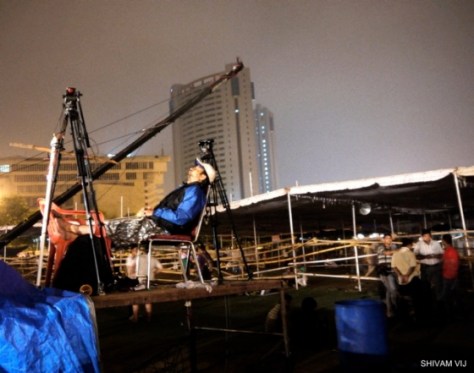
Some pictures from Occupy the World
Stay Thirsty Stay Stupid
With due apologies to Steve Jobs, how does one begin to respond to this latest bit of inanity from Coca Cola?
Open Letter to Haryana CM on Forced Land Acquisition for Gorakhpur Nuclear Power Plant, Fatehabad

Farmers of Gorakhpur village hold a protest in Fatehabad against acquisition of their agricultural land by the Haryana government for a nuclear power plant in the area, August 2010. (The Tribune on-line)
January 16, 2012
Bhupinder Singh Hooda,
Chief Minister, Haryana
Chandigarh
Dear Mr. Chief Minister,
It was with gravest concern and misgivings that we heard of Section 9 of the Land Acquisition Act, 1894, being issued in Fatehabad, Haryana, to forcibly acquire land for the proposed Gorakhpur Nuclear Power Plant Project. This action by the Harayana State Govt. is completely unacceptable on the following two counts:
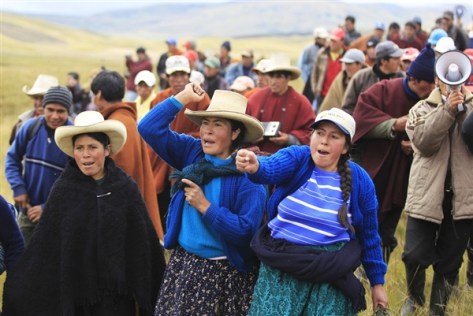
Farmers of Gorakhpur and nearby villages have been sitting in continuous opposition to the proposed nuclear power plant from August 2010. They are fighting for their right to life, livelihood and to safeguarding their fertile and irrigated, three-crop land, all of which will be severely threatened if the project were passed. The fact that a community is in such a long drawn and strong opposition to this project, is of crucial concern and cannot be ignored arbitrarily or repressed in democracy. Continue reading Open Letter to Haryana CM on Forced Land Acquisition for Gorakhpur Nuclear Power Plant, Fatehabad
Jaypee and Mahyco as Indian Express sponsors: There is conflict of Interest here, Sir
[The following is a statement issued by concerned individuals regarding the sponsorship of the ‘Excellence in Journalism’ awards organized by the Indian Express.]
On January 10 and 11, 2012, half page advertisements in the Indian Express (IE) newspaper (at least in the Delhi edition) announced that on Jan 16, 2012 the IE Excellence in Journalism Awards will be given. The advertisement also said that the main sponsor is Jaypee Group and among other sponsors include the Mahyco Monsanto.
One may recall that Indian Express has been on a campaign mode advocating big dams in general. It has been specifically campaigning against the movements like the Narmada Bachao Andolan. In March April 2006 the paper specifically ran a campaign against NBA and also against the then Union Minister Prof Saifuddin Soz[1]. In Oct 2010 the paper ran a campaign for large hydro projects in the North East India when the then Environment Minister Jairam Ramesh held an open public hearing on these projects in Guwahati and then wrote to the Prime Minister, raising concerns about so many hydro projects being taken up in NE India and the impacts thereof.
Bhopal, Media and a “Training Manual”: Shalini Sharma
Guest post by SHALINI SHARMA
It hardly needs any corroboration that the Bhopal Movement led by survivors of the world’s worst industrial disaster adheres to the principles of non- violence as dearly as they adhere to their demands of justice and accountability. However, on the 3rd of December 2011, as thousands of Bhopal gas victims walked towards the city’s railway lines they had little idea that their act of civil disobedience, marking the 27th Anniversary of the disaster, would be sabotaged by the government and that they would be treated like a violent mob.
Anniversary actions are usually treated as rituals by the media. This occasion was different because even though chakka jaam (block the road) has been organised on several previous occasions, the call for blocking the trains or rail roko was an unusual decision. These survivor-led groups were asking the State government to provide the Supreme Court with the right data related to the number of deaths and actual extent of injuries due to the gas exposure.
Continue reading Bhopal, Media and a “Training Manual”: Shalini Sharma
Three Formidable Barriers to the Advance of Democracy: Ravi Sinha
This guest post by RAVI SINHA is the text of the key note address to the Pakistan-India People’s Forum for Peace and Democracy in Allahabad on 30 December 2011
I must begin by expressing my gratitude to the organizers of this Convention and to this Forum for the opportunity and the honor you have given me by letting me address this impressive assembly. Also, I must congratulate you for choosing a theme that articulates, perhaps, the central challenge confronting all peoples and all nations of the world and more so for the peoples and the nations on the subcontinent. We are all witness to and victims of the times characterized by monstrous brutalities of war and deep scars of deprivations, inequities and oppressions. We live under a world order wherein those who brought, for example, untold tragedy and destruction to Iraq will never be brought to justice because they are the global hegemons. They will not be questioned about the hundreds of thousands of dead and maimed Iraqi men, women and children; they will not be questioned about the thousands of dead and decapitated American soldiers; they will not be questioned about the trillions of dollars spent on the war and further trillions destroyed by the war; and they will not be questioned about the kind of Iraq they are leaving behind.
Continue reading Three Formidable Barriers to the Advance of Democracy: Ravi Sinha
‘Protests and Repression: Struggles in the Forests of India’
This note comes from the CAMPAIGN FOR SURVIVAL AND DIGNITY
The last few weeks have seen struggles over forest rights and forest control intensifying across the country. On the one hand there are larger and larger protests taking place, and on the other, the continued use of force by Central and State governments is combined with total silence and apathy on protecting people’s rights. Continue reading ‘Protests and Repression: Struggles in the Forests of India’
Wither Wall Street: Challenge of the Occupy Movement
Over the last three months New York City has been electrified by the Occupy Wall Street movement. Prachi Patankar and I have been participating in some of the actions. We have also been part of a number of discussions within the South Asia Solidarity Initiative (SASI) on how an organisation like ours can bring an internationalist perspective to this movement. Prachi is also on the board of the War Resisters League (WRL). Through such discussions SASI and WRL organised Empire on Wall Street actions. With many of our comrades in India and Sri Lanka asking us about the impact of the Occupy Wall Street movement and its future, we decided to write this article. Continue reading Wither Wall Street: Challenge of the Occupy Movement
News TV – Caught Between an Anna and a Hard Place: Abhishek Upadhyay
Guest post by ABHISHEK UPADHYAY

Anna Hazare has returned with his protests and fasting. Should the media, particularly news TV, be more circumspect this time?
Is it time for the media to learn from the Ramlila Maidan experience in August, or should news channels stick to their earlier editorial line of broadcasting the Anna movement in great detail? Back in August, news TV broadcasted Anna’s “satyagrah” allegedly at the expense of the government. The stage is set again, the jury is out. Continue reading News TV – Caught Between an Anna and a Hard Place: Abhishek Upadhyay
Mining Poisons South Goa Waters: Devidas Gaonkar
A Video Volunteers story on mining in Goa:
Salaulim reservoir, situated in the Sanguem taluka, is the largest dam in Goa. It supplies water to almost entire South Goa, comprising 55% of the state’s population. Although Devidas’s video mentions that there are 8 mines that operate near Salaulim, other sources suggest that there are as many as 15 mining leases within the catchment of the reservoir. This proves to be a grave danger to the dam, the water that flows through it, as well as the people who consume this water.
Continue reading Mining Poisons South Goa Waters: Devidas Gaonkar
Release Abhay Sahoo Now: People’s Union for Civil Liberties
This press release comes from the PEOPLE’S UNION FOR CIVIL LIBERTIES
Bhubhaneshwar / Delhi
5th December, 2011
PRESS RELEASE
• Appeal to the Odisha Government to withdraw the frivolous cases and RELEASE ABHAY SAHOO NOW!
• WITHDRAW ALL THE CRIMINAL CASES LODGED AGAINST THE ANTI POSCO ACTIVISTS and put a stop to repressive measures.
• PUCL APPEALS TO OTHER ORGANISATIONS TO COME TO TOGETHER AND INITIATE A NATIONAL CAMPAIGN FOR THE RELEASE OF ABHAY SAHOO AND SUPPORT OF THE POSCO PRATIRODH SANGRAM SAMITI.
The People’s Union for Civil Liberties, represented by its National Secretary Kavita Srivastava and Odisha Convenor, Pramodini Pradhan visited the area in and around Dhinkia Panchayat in Jagatsinghpur district on 1st December, 2011, where the struggle against the proposed POSCO steel plant is taking place for the last seven years. We also went to Choudwar Jail in Cuttack District on 2nd December, 2011 to meet Mr Abhay Sahoo the leader of the POSCO Pratirodh Sangharsh Samiti, who has been arrested against FIRs motivated by the administration under sections causing sexual assault, wrongfully confining somebody and causing atrocities under the SC & ST Act. Continue reading Release Abhay Sahoo Now: People’s Union for Civil Liberties
The need to influence the trajectory of one’s own life: Ruchi Gupta
Guest post by RUCHI GUPTA

The Arab Spring demonstrations in Tunisia, Egypt, Libya, Bahrain, Yemen, Syria, Jordan, Morocco were hailed in much of the democratic world. However the Occupy Wall Street protests, which till date have spread to 100 cities in the United States and 1500 globally have met with mixed response.
The Arab people are fighting for democracy, and thus their resistance must be respected and supported. But the OWS folks, proudly leaderless and having framed no concrete demands are vulnerable to all manner of criticism, even from those expected to be supportive. Bill Keller, the former editor of arguably one of the most influential newspapers in the world, the ostensibly liberal, New York Times derides, “the Occupiers have been pandered to (“Love your energy!”); patronized (“Here, I’ve drafted you a list of demands …”); co-opted by unions, celebrities and activists for various causes; demonized by the right; arrested and tear-gassed in some cities; and taken lightly by the likes of me”.
However the uprisings in the Arab nations, the OWS demonstrations and even the wave of anti-corruption protests that swept India this year are all ultimately an expression of people’s resistance to disenfranchisement. Whether it’s those fighting for democracy or those who find themselves powerless in face of a system that’s been hijacked by the illegitimate nexus between the financial and political elite (the metaphorical 1%), the underlying sentiment is a demand for fair play and the right of self-determination. Continue reading The need to influence the trajectory of one’s own life: Ruchi Gupta
Statement Condemning the Repression of the POSCO Pratirodh Sangram Samiti
This statement, signed by many individuals and organisations, was released on 29 November by the CAMPAIGN FOR SURVIVAL AND DIGNITY
CONDEMN THE REPRESSION ON POSCO PRATIRODH SANGRAM SAMITI AND THE LIKELY IMMINENT ATTACK ON THE PEACEFUL PROTESTERS OF THE AREA
The undersigned condemn the growing brutality of the state repression being unleashed against the peaceful, democratic protesters of the POSCO project area, who are only fighting for their legal and fundamental rights. This repression has reached a peak with the arrest yesterday (Friday) of POSCO Pratirodh Sangram Samiti leader Abhay Sahoo. The government’s constant announcements of its intention to start construction in the area lead us to apprehend that there will be more violence and brutality against the movement. Continue reading Statement Condemning the Repression of the POSCO Pratirodh Sangram Samiti
Why are Americans so mean to Walmart? Never mind, come to India
They don’t want you in California…

They don’t want you in Chicago… Continue reading Why are Americans so mean to Walmart? Never mind, come to India