
Category Archives: Capitalism

Cultures of Corruption: Kalpana Kannabiran

Guest post by KALPANA KANNABIRAN

We are a country given to idolatry – both the erection and demolition of idols a favourite pastime that buries under the rubble questions of ethics and constitutional morality.   While this penchant for idolatry raises larger questions,  I will concern myself at this point with the effigy (or the idol upside down) called corruption.

While there has undoubtedly been a marked shift in the languages of corruption in the neo liberal era, calling for new and different strategies to combat it, the fight against corruption is not new.  When women’s groups campaigned decades ago against the testing of banned drugs and contraceptives on poor people by the ICMR, the question that was raised was about the nexus between pharmaceutical companies and state actors that involved deals for which poor and vulnerable communities were pushed to the guillotine.  With Bhopal, the question came up again on the deals between multinational companies (Union Carbide in this case) and the government that violated every principle of human rights, natural justice, constitutional morality and the ethics of care in governance.  Was the derailment of justice effected without corruption at every level? Apart from providing care to the affected, was not the struggle for justice in Bhopal a struggle against corruption?  When the People’s War Group (as it was then called) abducted an elected representative two decades ago (who was later released), the reason they gave to the negotiators was that he misused public funds in the district and asserted that theirs was a fight against corrupt representatives.
Continue reading Cultures of Corruption: Kalpana Kannabiran

Chronicle of a Bail Foretold: Saroj Giri

Guest post by SAROJ GIRI

Till very recently it was not possible to discuss Binayak Sen without referring to the corporate land grab and state repression in Chhattisgarh. Somehow Salwa Judum, the displacement of thousands of adivasis and the Maoist movement would come in the picture. Above all, what would come out is Sen’s work in the specific context of the suffering of the adivasis. Indeed soon after the bail order was granted, it came so naturally for Sen’s beaming wife to state that he will of course go back to resume his work in Chhattisgarh.

Upon his release from Raipur Central Jail on April 18 2011, Sen immediately called for a dialogue between the Maoists and the government and reminded us of so many other political prisoners languishing in the country’s jails. In the video showing Sen being greeted by his supporters after his release he enthusiastically joins in giving slogans saying, ‘Shankar Guha Niyogi Zindabad’. But the supporters soon after break into ‘Binayak Sen Zindabad’. You could immediately see this embarrassed look on his face, totally disapproving this iconisation.

Indeed, Sen seems very far off from celebrating his release as a major victory for democracy or a boost forIndia’s image as a modern democracy and so on. He seems really far off from the dominant discourse which seeks to cleanse the ‘Binayak Sen issue’ of the harsh realities of India’s dirty war, the inequality and the injustice towards the adivasis and their suffering. Continue reading Chronicle of a Bail Foretold: Saroj Giri

The Earthquake and Japan: Kojin Karatani

[We are posting below a piece by Japanese philosopher and literary critic Prof Kojin Karatani, sent to us by a friend. Karatani has authored a number of works, including a very important recent book Transcritique: On Kant and Marx (MIT Press 2003). In this brief but thoughtful piece, Karatani talks about the ways in which the experience of the earthquake is forcing many Japanese people to rethink the whole idea of becoming a world economic power and its concomitant idea of development. AN]

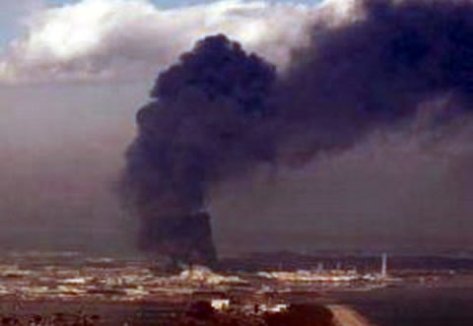
I was on the streets of Tokyo when the earthquake struck. The ground shook violently, while buildings swayed around me for a long time. It was beyond anything I had experienced before, and I sensed that something terrible had happened.  My first thought was of the Kobe earthquake that killed more than 6,000 people in 1995.  Although I did not experience the Kobe earthquake first hand, it hit the region of my hometown where many close relatives lived, and so I headed immediately to the scene of the disaster. I walked the streets where building after building had collapsed into rubble.

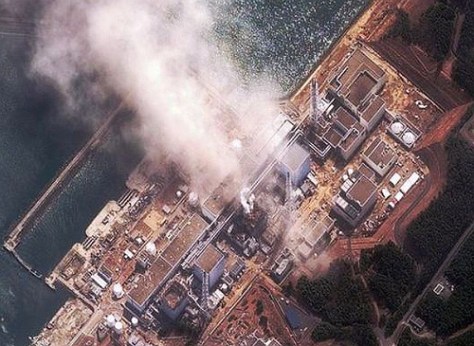
Clearly, the scale of the current disaster far surpasses that of the Kobe earthquake. For it also includes the damage caused by the tsunami to coastal regions across hundreds of kilometers as well as the danger of nuclear catastrophe. Yet these are not the only differences. The Kobe earthquake was completely unexpected. Aside from a small number of experts, no one had imagined the possibility of an earthquake there. The recent earthquake, on the other hand, had been anticipated. Earthquakes and tsunamis have struck the Northeastern region of Japan throughout its history, and frequent warnings had been sounded in recent years. Meanwhile, nuclear power had always given rise to strong opposition, criticism, and warnings.  Yet the scale of the earthquake went far beyond any prior anticipation.  It was not that anticipating the scale of such a disaster was impossible, just that people had purposely avoided doing so.

The full article can be read in Counterpunch.


The evidence from Fukushima: nuclear power means nuclear catastrophe – Daniel Tanuro

Excerpts from an article by Daniel Tanuro, an eco-socialist environmentalist

What has happened is entirely predictable: yet another major nuclear “accident”. At the time of writing, it is not yet certain that it will take on the dimensions of a disaster similar to Chernobyl, but that is the direction in which things, alas, look set to evolve. But whether it develops into a major disaster or not, we are once again faced with evidence that the technology can never be 100% secure. The risks are so frightening that the conclusion is obvious: it is imperative to abandon nuclear energy, and to do so as quickly as possible. This is the first lesson of Fukushima, one which raises absolutely fundamental social and political questions, requiring a real debate throughout society about an alternative to the capitalist model of infinite growth…

Continue reading The evidence from Fukushima: nuclear power means nuclear catastrophe – Daniel Tanuro

Praful Bidwai on Lessons for India from Fukushima

Excerpts from a recent article by Praful Bidwai, journalist, social science researcher and activist on issues of human rights, the environment, global justice and peace.

The crisis holds a number of lessons for India as it embarks on a massive nuclear power expansion programme, which will double and then further triple India’s nuclear power capacity.

First, nuclear power generation is inherently hazardous. It is the only form of energy production that can lead to a catastrophic accident with long-time health damage and environmental contamination. Human error or a natural calamity can trigger a catastrophe—but only because reactors are themselves vulnerable.

Reactors are high-pressure high-temperature systems in which a high-energy fission chain-reaction is only just controlled. Nuclear reactors are both systemically complex, and internally, tightly coupled. A fault or malfunction in one sub-system gets quickly transmitted to others and gets magnified till the whole system goes into crisis mode.

Continue reading Praful Bidwai on Lessons for India from Fukushima

The Hindu, WikiLeaks and Me: Malarvizhi Jayanth

Guest post by MALARVIZHI JAYANTH

Once upon an election, the ruling party was bullying and booth-capturing recklessly. I was there. I saw it. Outside one booth, three Tata Sumos drove away at mad speeds, their screeching, spinning wheels blowing dust into my eyes in a scene straight out of the Tamil movies. I walked into the booth to find it had been ransacked minutes earlier. I saw weeping government officials and ballots with the stamp over the rising sun scattered everywhere. Other reporters saw similar scenes. Reporters received complaints of cash and biriyani(!) being distributed to voters.The management of the newspaper I worked for chose to run the Election Commission’s claims that the elections had been without incident, rather than accounts from several reporters who had seen the captured booths and heard from voters who had been offered bribes. Two days later, when almost all other media (barring the usual suspects) had run outraged stories about the brazenness of the booth capturing, hesitantly, The Hindu followed suit. Today, they announce to us that cash for votes is a way of political life in Tamil Nadu. Yeah, thanks, we know that already. Too bad you couldn’t believe your lowly brown-skinned reporters who told you all about it. A white man sends off a cable about it to his masters and then it becomes news? Really? Continue reading The Hindu, WikiLeaks and Me: Malarvizhi Jayanth

It’s Here, The Privatisation of Higher Education In India

I do not exaggerate. I am not being hasty. The writing is on the wall. What started as a glimmer in the eyes of the IIC-frequenting bureaucrat, the industrialist with profit-making dreams and the politician with an obscenely large government house in Lutyens’ Delhi is now a raging reality. Pick up any newspaper or magazine and check out the number of advertisements for private universities. Do a google search for the latest news reports on committees on higher education. If you have the time and patience, go through all the government documents on higher education in the past five years, almost neatly coinciding with the exit of Arjun Singh as Human Resources Minister and the entry of Kapil Sibal. Speaking of Mr. Sibal, if his cheerfully unapologetic blundering on the 2G scam is anything to go by, we should have an idea of the kind of subtle and layered approach he has in mind when he speaks of ‘reforming the education system.’

Continue reading It’s Here, The Privatisation of Higher Education In India

Nukes, Wikileaks and Corruption: National Alliance of People’s Movements

Press Release by NAPM

PM Must Reveal Truth to Nation
Cancel all the Proposed Nuclear Power Plants and Related Facilities
Moratorium on Dams in High Seismic Zones

New Delhi Delhi, March 18 : Prime Minister Manmohan Singh’s statement after the nuclear disaster in Japan that there is no need to be panicky as India will take all safety measures is not only amateurish but also lacks wisdom.
His statement gives the impression that the Japanese have not taken adequate safety measures. What type of natural calamities or man made lapses are in store for us, no one can visualise or predict leave alone taking safety measures against them.

The Prime Minister who has no control over his own cabinet ministers and has unashamedly wailed in public that he was ineffective due to coalition government, and caused the nation unimaginable and unprecedented loss by allowing mind blowing scams, issuing such absurd statements like taking all safety measures- lacks any tangible weight. Continue reading Nukes, Wikileaks and Corruption: National Alliance of People’s Movements

Impose Immediate Moratorium on All Nuclear Activity in India: CNDP

As the Japanese nuclear disaster stares the world in its face, the unrepentant power elite and the nuclear elite in particular, is attempting to downplay the threats that are in store for us in future. An particularly belligerent representative of the Indian nuclear establishment recently attacked CNDP (Coalition for Nuclear Disarmament and Peace) activist Praful Bidwai on television, calling him a ‘nuclear illiterate’.  While the world watches in horror, predators are active in stepping up their disinformation campaign. Given that India’s record of maintaining minimum safety standards on even the simplest of things is not a patch on the Japanese (leaving aside its world record in corruption!), there is no other way but to demand an immediate moratorium on all further nuclear activity in India. The anti-nuclear movement has raised this demand already in relation to Jaitapur and Haripur in West Bengal.

Meanwhile, here is Praful Bidwai on the Jaitapur project, after his return form a field investigation.

Corruption, CPI(M) and Neoliberalism: Sankar Ray

Guest post by SANKAR RAY

Prasenjit Bose, chief of research cell, central committee of CPI(M) deserves kudos for his article Corruption and Forbearance under Neoliberalism, published in the journal of The Centre for Policy Analysis, and reproduced in pragoti.org. However, corruption is not an exclusive phenomenon under the capitalist system. Socialist countries – I mean the social orders encouraged by the Third International – were also afflicted by corruption, not to speak of People’s Republic of China (both in Mao and post-Mao years). Even the CPI(M)-led governments in Kerala and West Bengal never waged a principled war against corruption.  Hence Bose’s inference that “the state under the neoliberal regime has increasingly become a vehicle for capital accumulation and also a site for primitive accumulation, by the established corporate players as well as new entrants to the big business club” – is only half the truth. Continue reading Corruption, CPI(M) and Neoliberalism: Sankar Ray

Big Media Anyone?

From an article I did for this morning’s Hindu:

DB Power is a subsidiary of DB Corp Ltd, a media conglomerate that owns four newspapers, including the Hindi Dainik Bhaskar and English DNA, that have a combined readership of 17.5 million readers, and the My FM radio station.

The company’s most recent project in Dharamjaigarh shall displace 524 families from six settlements to extract 2 million tonnes of coal every year to fuel a 1320 MW thermal power plant that shall be built in the adjoining district of Janjgir.

No prizes for guessing what the Dainik Bhaskar’s coverage was like:

Black diamond to give sparkle to Dharamjaigarh's destiny

Continue reading Big Media Anyone?

Hypocrisy beneath hammer-and-sickle sign: Sankar Ray

Guest post by SANKAR RAY

Sankar Ray is a veteran journalist based in Kolkata

[This article presents the sordid tale of land acquisitions for the New Rajarhat Township and the involvement of important CPI(M) personnel in this game. One of them, the key protagonist of the story below, was mentioned by Pranab Mukherjee in parliament yesterday, taunting the CPI(M) over its claims to be a crusader against corruption, arousing the ire of its MPs. – AN]

Calling it a ‘shocking experience”, after a visiting a segment of oustees in the Narmada Valley in mid- August 2002,  Sarla Maheswari, then CPI(M) member of Rajya Sabha member told the media – as if her heart bled, and with revolutionary conscience ablaze:  “How can a development project create a disaster in the lives of the most downtrodden tribal people and also thousands of farmers of a huge area? How can it ravage their lives without any protest by mainstream political parties?  Truth indeed is stranger than fiction as the same fire-eating  ‘communist MP’s demagoguery is now in a hot soup as I-T sleuths raided  at  her residence, as a sequel to  detection of an unaccounted sum of Rs 31 crores and 26 benami companies, belonging to the Canopy Group whose chairman is her husband Arun Maheswari. And the CPI (M) brass at the Muzaffar Ahmed Bhavan, Bengal CPI(M)’s state headquarters keep up their recalcitrance, not even demanding a ‘show cause’ of the cash-rich ‘comrade’ . Former MP and CPI(M) CC member Mohd Selim, a spokesman of state party leadership too, ruled out any punitive step until specific indictment by the I-T department, leave alone criticizing the shady land transactions in the controversial New Town project at Rajarhat fully with the knowledge of ‘comrade Sarla Maheswari’  and her family.

Continue reading Hypocrisy beneath hammer-and-sickle sign: Sankar Ray

The Answer My Friend, is Blowin’ in the Wind…

Even as the western and Indian media go ecstatic over the new democratic upsurges in the Arab world, something else has begun to happen. The Tunisian ‘virus’ that spread rapidly via Egypt, is now finding newer and equally hospital bodies elsewhere – that is to say, bodies made vulnerable by the years of plunder by corporate capital. Now, what precisely, is the connection between corporate capital and the Arab ‘jasmine revolutions’? On the face of it, nothing. However, as the state legislature in Wisconsin sat considering a bill to severely curb state workers’ rights of collective bargaining a few days ago, thousands of state employees descended on the building, virtually occupying it.

And as protests against Republican Governor Scott Walker’s assault on collective bargaining rights entered the fifth day, the support for the movement has begun to expand. Demonstrators were joined by union supporters from Illinois, Pennsylvania and New Jersey, as well as national union leaders and civil rights advocate the Rev. Jesse Jackson.

An interesting article by Dan La Botz, “A New American Workers’ Movement Has Begun“, underlines the connections of the ongoing struggle in Wisconsin with the Arab virus!

Continue reading The Answer My Friend, is Blowin’ in the Wind…

“dissenting dialogues” on Egypt, Sri Lanka and other debates

The editorial and the list of articles in the dissenting dialogues Issue No 2, February 2011 are posted below. The entire issue can be downloaded as a pdf file from the Sri Lanka Democracy Forum website.

Editorial

As the second issue of dissenting dialogues goes to press, we join in worldwide celebrations of the ongoing democratic revolution in Egypt, itself sparked off by an uprising in Tunisia. The Egyptian uprising, which has tremendous regional and possibly global consequences, came against a background of simmering unrest directed at a dictator who presided over a brutal, authoritarian regime. This regime was distinguished by its incarceration and torture not only of its own dissidents but of prisoners “renditioned” to it by the CIA, the denial of basic democratic rights on the pretext of fighting Islamism, and rising youth unemployment and inflation.

Although the timing and form of Egypt’s popular revolt could not have been predicted, an examination of the recent history of Egypt contextualises the forces at work. For a start, we cannot avoid looking at the recent history of neoliberalism in Egypt, its relationship to the authoritarianism of President Hosni Mubarak’s government, and the regime’s relationship to imperialism. The post-war history of Egypt also charts and indeed defines the historical trajectory of Third World sovereignty. Egypt’s revolt has to be understood in the context of the progressive socialist, anti-colonial struggle for national self-determination of the Bandung era from the 1950s until the liberalisation of the economy in the 1970s, the International Monetary Fund’s “restructuring” in the early 1990s, and the recent capitulation to the accumulation strategy of global finance capital.
Continue reading “dissenting dialogues” on Egypt, Sri Lanka and other debates

Anbulla kaadu (My beloved forest): Madhumita Dutta

Thervoy Kandigai Industrial Complex. The Government issued orders alienating 1127 acres of poramboke land in favour of SIPCOT for formation of a new Industrial Complex in Thervoy Kandigai village of Gummidipoondi Taluk, Thiruvallur District. The land development work is in progress now.

From the website of Industries Department, Government of Tamil Nadu

What this “land development work” involves, and the price that will be paid in human and ecological costs is something that MADHUMITA DUTTA encountered recently.

“A forest that was once ours is now private, a land that was once green now stands barren, a forest where we played, where we wandered freely is now fenced, men in uniform now guard the forest which we protected for generations.”

Thervoy Kandigai. A small nondescript village in Gummidipoondi Taluk of Thiruvallur district, 50 kms north of Chennai.  Surrounded by dense shrubby forests, natural lakes, rice fields and undulating terrain with misty mountain range of Sathyavedu in Andhra as the back drop. This small dalit village of about 1000 families is in the eye of a storm.  A storm that can blow away the dreams of Tamil Nadu government to hand over hundreds of acres of land to French tyre company Michelin, a big ticketed investment worth Rs 4000 crore for the state.   Continue reading Anbulla kaadu (My beloved forest): Madhumita Dutta

Of land and other demons

The Hindu/Aman Sethi

Since January this year, I have been traveling in North Chhattisgarh to try to understand the scale of land acquisition and dislocation in a state that markets itself as India’s “Power Hub”.

There is something pretty massive going on in North Chhattisgarh – as a recent Down to Earth Cover pointed out :

The state has 10,300 MW of coalbased power capacity, including the captive 2,063 MW that industry consumes. This is about 12 per cent of India’s current coal-based power capacity. To this, it will add 56,000 MW, which is 65 per cent of the country’s coal-based installed capacity, as per the Central Electricity Authority. Nearly two-thirds of this capacity are planned in Raigarh (37 per cent) and Janjgir- Champa (34 per cent).

For this to happen, the state has to acquire vast amounts of land – in some places because the land happens to be above a coal bed, and in other because the land happens to be adjacent to a coal-bed. Most developers prefer “pit head plants”, or plants just adjacent to coal mines to reduce transportation difficulties.

Over the last month, I worked on two interesting legal cases that point to how such acquisition is taking place.  I think the two cases offer an interesting insight into the sort of battles that villagers are fighting.

Continue reading Of land and other demons

A “Green Signal” for The Rape of Justice and the People: POSCO Pratirodh Sangram Samiti

The following is the statement issued by the POSCO PRATIRODH SANGRAM SAMITI on the latest decision of the Environment Ministry on POSCO. The image below from an earlier round of land acquisition attempt is a telling illustration of how the ‘free market’ functions. Received via Shankar Gopalakrishnan.

Courtesy The Hindu
Land being acquired for POSCO. Image courtesy The Hindu

Jairam Ramesh and the UPA government have shown their true colours with their decision today on the POSCO project. Ignoring the reports of its own advisory bodies and enquiry committees, violating its own orders and the laws of the land, this Ministry has shown that the naked face of corporate greed – it is not the “rule of law”, the “aam aadmi”, “inclusive growth” or any of these other lies – that rules this country. The decision today can be summarised in one sentence:”Repeat your lies, give us promises that we all know are false, and then loot at will.”

We repeat: we will not give up our lands, our forests and our homes to this company. It is not the meaningless orders of a mercenary government that will decide this project’s fate, but the tears and blood of our people. Through the road of peaceful demonstrations and people’s resistance we have fought this project, in the face of torture, jail, firings and killings. If this project comes it will come over our dead bodies.
Continue reading A “Green Signal” for The Rape of Justice and the People: POSCO Pratirodh Sangram Samiti

Niyamgiri, You Are Still Alive

This 17 minutes long film won the Vasudha, Environment Award at the International Film Festival of India in Goa, 2010.

The Republic of Exploitation

On this Republic Day, while armoured tanks muscle across Rajpath in New Delhi, little ossified museums of culture called tableaux charm the assembled pass-holding citizenry and the Prime Minister sits like a barely-sentient caricature of himself behind a bullet-proof screen, it may do well to think about the other republic that remains hidden within the bosom of Superpower India – the republic of unfree labour.

This is a world where the laws of the upside world are inverted – where the more you work, the less you are paid, the more your company profits, the poorer you end up and if you find yourself the victim of an injustice and god forbid complain about it, the police put your family in jail. It’s a great irony of our times that we believe the choice before us is between loving the Nation and loving the Corporation, not realising that most of the time its the same person wearing two grotesque masks.  All those who believe that the world begins with their newspapers and television sets and ends at their white picket fences (and all those who don’t), please take a minute to go through the excellent documentation of the war that is raging for workers in this country, put together by the Gurgaon Workers’ Solidarity Group, the Faridabad Mazdoor Sangathan and several other exemplary organisations.

GurgaonWorkersNews – Newsletter 35 (February 2011)

Continue reading The Republic of Exploitation

The New Cellu-lar Jail: Madhumita Dutta & Venkatachandrika Radhakrishnan

Guest post by MADHUMITA DUTTA and VENKATACHANDRIKA RADHAKRISHNAN
The writers are activists based in Chennai working on issues of land, labour, industry and SEZs.

Sriperumbudur grabbed media attention in 1991 when former Prime Minister Mr Rajiv Gandhi was assassinated during an election rally. Since then, this nondescript little village-town in west Chennai, dotted with paddy fields and large expanses of natural water-bodies, has transformed itself into a little ‘Shenzen’- world’s largest special economic zone in Southern China, which churns out one out of every eight mobile handsets sold anywhere in the world. Slated to attract investments worth $4 billion in electronics and automobile manufacturing, Sriperumbudur is now home to the largest mobile handset making factory of Nokia, a Finnish company that can churn out 7.5 lakhs handsets a day. This town and its neighbouring region is also known as the Detroit of India, churning around 12,80,000 cars every year. With a booming manufacturing industry and a promise of 2 lakhs jobs, Sriperumbudur is touted as the jewel in the industrial crown of Tamil Nadu. But of recent this seemingly success story has turned a little sour. Continue reading The New Cellu-lar Jail: Madhumita Dutta & Venkatachandrika Radhakrishnan

Ambika’s Death: Madhumita Dutta & Venkatachandrika Radhakrishnan

Guest post by MADHUMITA DUTTA and VENKATACHANDRIKA RADHAKRISHNAN
The writers are activists based in Chennai working on issues of land, labour, industry and SEZs.

A view of Nokia's Sriperumbudur plant. Photo credit: Economic Times

S Ambika, a 22 year old woman factory-worker, died in the middle of the night in a posh hospital in Chennai on 31st Oct. She was a permanent employee of Nokia Telecom Special Economic Zone (SEZ) in Sriperumbadur in Kancheepuram district of Tamil Nadu. Her agonising death was due to a fatal accident at a panel loading machine in the factory.

Continue reading Ambika’s Death: Madhumita Dutta & Venkatachandrika Radhakrishnan