
Category Archives: Capitalism

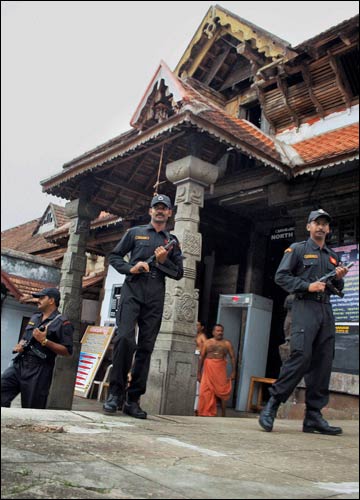
The Lord’s riches are not the Lord’s riches

Photo credit: Press Trust of India

Giving a historical background of why the Sree Ananta Padmanabha Swamy temple in Thiruvananthapuram came to have these riches, Malavika Velayanikal writes in DNA:

True, the bags of gold coins, diamonds, precious stones, 18-feet-long gold necklaces, jewellery weighing many kilograms, and solid-gold statues of gods and goddesses landed in the vault via the king. But in reality, the temple treasury was nourished by the sweat and blood of the masses as well.

One of the main sources of the royal income was taxes. They were incredibly high for the lower castes, with marriages, childbirth and even death being taxed. Country boats, ploughs, carts, umbrellas, headscarves, why, even a moustache, were taxed. Mothers were allowed to breastfeed their newborns only after they paid the ‘mulakaram’ (breast-tax) to the local lord, who would then grant permission. [Must read]

But you won’t hear this said too often because, as Appu Esthose Suresh reports in Mint:

“If the government makes any move, then the believers will protest and BJP will support the people,” he (a temple staff member) was quoted as saying by news agency PTI.

It is precisely the fear of antagonizing a section of the Hindus that is forcing the state government to be cautious.

“This government does not have the courage to go against Hindu sentiments,” said P.R.P. Bhaskar, a political observer. “It will move in a direction which will accommodate the royal palace.”

“The Left Front gained Hindu votes for two reasons. Firstly, its traditional vote base consists of Hindus and a perception that Christian and Muslim votes are moving towards the Congress and its allies had led to a consolidation of Hindu votes. This might help the government change that perception a bit,” he added. [Link]

Hindu appeasement. That’s what will come in the way of a just, fair, pro-people decision about what should be done wit the temple wealth.

Counting the Cost: Industrialism, Capitalism, Socialism

Guest Post by SHASHANK KELA

Years ago, after the fall of the Berlin wall and the collapse of communism, a faux philosopher announced the end of history. What he meant was the permanent victory of capitalism and its correlate, liberal democracy. Unfortunately history has an unkind habit of rolling right along, throwing a sucker punch at intervals – remember Gordon (No Boom and Bust) Brown? The triumph of laissez faire capitalism has been celebrated since the ’80s (when the term Reaganomics was coined for redistributive policies that blithely transferred wealth to the rich). Until the crash of 2008-09 set the cat amongst the pigeons; and sent the semi-converted scurrying back to Keynes – and Marx (especially in Germany where the sales of his books suddenly soared). However after a state bailout of unprecedented proportions, that had the satisfactory effect of restoring the position of the wealthy, especially the bankers and financial whiz kids who had caused the crash, the dust settled down. In the industrialized west, discontent seethes beneath the surface, but the dictum that the experts – the bankers, the CEOs, the policymakers (who swap roles seamlessly) – are right still holds. The majority must accept a decline in their standard of living and the prospects, such as they were, of job security so that growth can continue and the minority prosper even more opulently. This, of course, has long been the received wisdom in India, where, ever since the ’80s, full consensus was reached on the fact that the middle-class is the only class that matters – the rest can go hang. Continue reading Counting the Cost: Industrialism, Capitalism, Socialism →

Cities and Infrastructure – The Road Widening Saga in Bangalore

This evening, I was sitting in a coffee shop and writing about the sociology of information, how information is mired in relationships and how trust, suspicion and social relations develop in the course of circulation and exchange of information. As I was beginning to disentangle the complex web of legitimacy and regulations surrounding information, a friend called to inform that some activists and citizens had been arrested for protesting against the tree felling and road widening at Sankey Road in the northern part of Bangalore. In the last few days, the conflict regarding road widening and tree felling at Sankey Road got strong coverage in the media because citizens began gathering around the trees and the roads to prevent authorities from felling the trees. Despite this, the authorities went about felling the trees for widening the roads. The activists and protestors were clearly becoming a nuisance for the government officials and institutions who have not been able to execute the works. Hence, today, at some point, some of our activist friends were arrested on the false charges that they had assaulted public officials in their conduct of ‘government’ duty. The charges were filed under section 343 or 353 CrPC which also implied that the arrest was non-bailable. Over the course of the evening, news went about on FaceBook and Twitter about these arrests, and people from in and around Sankey Road were called to silently protest at the Aiyyappa Temple where the trees were being felled for enabling the road widening. The arrested activists and citizens were released from jail and all the charges against them were ‘dropped’ at about 6 PM. The court also granted a stay order on the tree felling around the same time, with further hearings and orders to arrive on Monday. Continue reading Cities and Infrastructure – The Road Widening Saga in Bangalore →

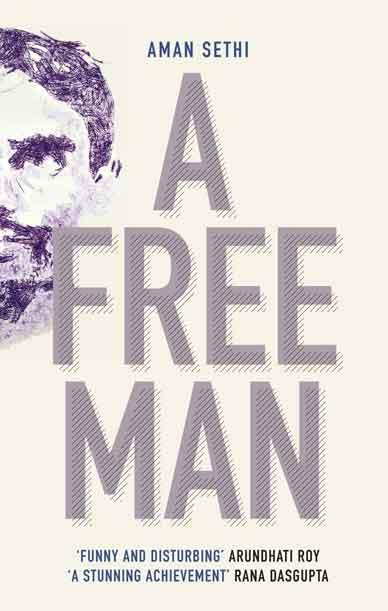
A Free Man

Mohammed Ashraf is short and stubby, with a narrow but muscular chest and small, broad hands balanced on strong, flexible wrists. But Ashraf does not grudge the throw of the dice that has made him a safediwallah with a mazdoor’s body. A small man’s body can do things that a slenderchamak-challo cannot even contemplate.

A small man carries the ground close to him wherever he goes, even as he hangs along the side of a building three storeys high. The memory of the ground that allows him to crawl into crevices, perch on narrow ledges and balance on wobbly parapets. A short man knows the limits of his body, the extent of his reach, the exact position of his centre of balance. Unlike the tall man, he holds no illusions regarding his abilities or his dimensions; he will never overreach, overextend or overbalance.

A Free Man, my first book, should be in stores this July. Read the rest of the excerpt

Arindam Chaudhuri, Silchar

When I read The Caravan‘s cover story on Arindam Chaudhuri some months ago, I wondered when he was suing them. And he’s done it! While a court injunction has made The Caravan remove the story from theire wesbite, you can read it thanks to Google cache. No wonder Chaudhuri’s sued Google India as well! Given below is the full text of the press release put out by The Caravan. Unlike when Chaudhuri took on bloggers in 2005, I’m glad it is an organisation with the resources to fight the case and take him head on – not to say that requires some spine as well. After you’re done reading the release below, entertain yourself with all the Arindam jokes on Twitter.  

IIPM’s Rs500-million lawsuit against The Caravan
In response to our February profile of Arindam Chaudhuri, the IIPM has sued The Caravan. Here’s why we’re fighting the suit. Continue reading Arindam Chaudhuri, Silchar →

“Report the news. It is not news that there are poor people in India.”

In the morning today The Independent‘s Asia correspondent, Andrew Buncombe, blogged his disagreement with Arundhati Roy’s statement that foreign journalists in India have been asked not to report bad news. As a foreign journalist in Delhi he had faced no such censorship from his editors or the government here.

Buncombe made his case strongly: Continue reading “Report the news. It is not news that there are poor people in India.” →

Coke Studio India – the first six songs

So the unanimous verdict is that Coke Studio India (first aired on the Friday that went by) is no match for Coke Studio Pakistan [Wikipedia]. For some it’s been like an India-Pakistan match – I’ve seen Indian congratulate Pakistanis on Twitter for the ‘Coke Studio victory’ and others ask Indian musicians and singers to listen to Pakistani singers and hang themselves. For most, this was not surprising – Coke Studio Pakistan has showcased some of the best music you’ve heard in recent times and it raised the bar too high for Coke Studio India. There’s also the problem of Bollywoodisation of music in India, of dumbing down, producing music aimed at the marriage market and livening up the moods of those stuck in traffic. A celebrity culture has taken the passion out of music in India – it does not seem to come from deep within. New popular music in India leaves you with the kind of feeling that a mall does. Loud and empty.

Continue reading Coke Studio India – the first six songs →

Corruption, the New Caste: Thomas Crowley

Guest post by THOMAS CROWLEY

In the mainstream coverage of the Ramdev hullabaloo, there has been, unsurprisingly, little substantive discussion about corruption itself: its fundamental causes; its widespread effects; the viability of different plans to combat it. Who would want a dry, intellectual discussion of the root causes of corruption when we can stare uneasily at pictures of Baba Ramdev holding a sword and wait with bated breath for his holy army to congregate?

But let’s – for the moment – take seriously Ramdev’s proposal that the death sentence be meted out to India’s corrupt. If the press is to be believed – especially the foreign press – this may just mean killing every Indian. For, implicit in many media reports is the assertion that corruption is part of the Indian psyche, an essential component of what it means to be Indian. In this sense, corruption serves the same conceptual role as caste: it essentializes an ever-changing historical phenomenon, freezing it in time and obscuring its economic and political roots. Much as the British taught Indians and foreigners alike to understand India predominantly in terms of caste, modern commentators are encouraging both desis and firangis to conceptualize India as the land of unending corruption. (Of course corruption has not replaced caste as a mode of understanding India; the fascination with caste still runs deep.)

Continue reading Corruption, the New Caste: Thomas Crowley →

Six Dead Villagers and a Lost Road: This did not happen at Baba Ramdev’s ‘Yoga Camp’ at Ramlila Ground in Delhi

Sometimes, thankfully, one does not need to write an over-long post to make a point.

Everybody knows how the entire television media has been giving enormous airtime to BJP and its allies giving vent to their outrage on the condemnable police action on Baba Ramdev’s ‘Yoga Camp’ in the Ramlila Maidan in New Delhi. One woman, named, Rajbala is still seriously injured. No casualties have been reported so far.

Though it must be said that Acharya Balkrishna, Baba Ramdev’s right hand man, seems to have had the pitch of his voice transposed a few octaves higher, giving his heartfelt statements at press-conferences the timbre of a dulcet castrati. I suppose, depending on how you look at the fate of Acharya Balkrishna’s vocal cords and other organs, that is a casualty. Continue reading Six Dead Villagers and a Lost Road: This did not happen at Baba Ramdev’s ‘Yoga Camp’ at Ramlila Ground in Delhi →

On Lathicharging a Satyagraha: Dilip D’Souza

Guest post by DILIP D’SOUZA

So what do you think happened when the police assaulted a gathering of satyagrahis with lathis? Here’s what happened to some people I met from such a gathering.

  • Tulsibai, 45+, was hit on her stomach and wrist.
  • Manglubai, about 40, was hit on her buttocks.
  • Rajkumaribai, who didn’t know her age, had a deep wound on the upper part of her thigh that she showed us shyly.
  • Jiggelal, 60, was hit so hard on his arms and legs that he blacked out. Continue reading On Lathicharging a Satyagraha: Dilip D’Souza →

POSCO: Lies, Crimes and Atrocities

This statement about today’s events in Jagatsinghpur, Odisha, comes from the CAMPAIGN FOR SURVIVAL AND DIGNITY

Today, more than a thousand armed police besieged the gram panchayat of Dhinkia in Jagatsinghpur District of Orissa to crush the resistance to the POSCO steel plant. For the entire day thousands of people sat in the heat, where several people (including children) and even two policemen fainted. At noon the Collector declared their protest “unlawful” and subsequently loudspeakers blared threats about use of tear gas, lathi charges, “those engaging in unlawful protests being dispersed” continuously for four hours. Efforts were made to divide the protesters as well. The protesters remained firm. Eventually, perhaps afraid of the heavy media presence and unable to break the will of the people, the police withdrew. The people have left some of their number on guard, fearful of the police’s return at any time.  Continue reading POSCO: Lies, Crimes and Atrocities →

Action Alert – Imminent Police Attack on POSCO Affected Villages

Update of anti-POSCO People’s Movement as on 10th June 2011, 12 noon. 

· Police and protesting public are face to face now: Twenty platoon police forces with officers have already reached at the boarder of Govindpur village where more than 2000 villagers are protesting against the forceful land acquisition by government of Odisha for POSCO through 24X7 vigil.

· Protesters are determined to resist any use of force by the government and police forces. Even women and children have come to the forefront as they form the first two shields of protection.

· Senior police officers, with arms and weapons, are threatening people to dismantle through loud speakers. We will let you know the development here

Kindly call the following authorities to lodge your protest.

In solidarity,
Prashant Paikray
Mobile – 09437571547 Continue reading Action Alert – Imminent Police Attack on POSCO Affected Villages →

Commonwealth Games scam: Manmohan knew all, did nothing

RTI activist Subhash Agrawal has obtained correspondence between the then sports minister Mani Shankar Aiyar, and Prime Minister Manmohan Singh, that shows the PM was informed about the scam as early as October 2007. And did nothing. You can download here (.pdf, 4.2 MB) the 52 pages long RTI reply Agrawal got from the PMO.

A major victory for the agitating workers in Gorakhpur

A major victory for the agitating workers in Gorakhpur

Dismissed workers taken back

Factory owners buckle under pressure – Locked out mills to start from June 3

New Delhi, June 2. Workers in Gorakhpur achieved a major victory in their struggle when the factory owners agreed to start the two locked out mills from June 3 and take back the dismissed workers. 12 of the 18 workers will join work immediately and the remaining 6 will be taken back after a domestic enquiry. The workers also forced the owners to accept that no one from the management will be in the enquiry committee; it will have two members from the office staff and one workers’ nominee.

The decision was taken at negotiations held till late night at the district magistrate’s residence. The two owners of the VN Dyers and Processors yarn mill and textile mill, the district magistrate and deputy labour commissioner and seven workers’ representatives were present at the meeting.

These two mills in the Bargadwa area of Gorakhpur were illegally locked out since April 10. Around 500 workers work in both of these mills owned by the Ajitsaria family having an annual turnover of more than 150 crores. 18 workers of these two mills were dismissed by the owners. The workers were agitating for reinstatement of their colleagues and restarting the factories.

Continue reading A major victory for the agitating workers in Gorakhpur →

The Power of Crowdsourcing

The ‘Viral’ Revolutions Spread Across Europe

The New Democratic Upsurges

The mainstream Western media that celebrated the democracy movements in the Arab world not very long back, is relatively silent now. For, then it was the Arab youth’s striving for the ‘western values’ of democracy that it was celebrating. Now that the cry of ‘democracy’ is arising from its very midst, it does not seem to quite know what to do. From May 15 on, for almost two weeks Madrid and other Spanish cities have been witnessing some of the largest demonstrations in recent memory. Protesters have thronged the Puerta del Sol, virtually camping there. As government forces started cracking down, demonstrations began to grow in an ever expanding scale spreading to many other Spanish cities. When the government moved to ban demonstrations on May 20, in the run up to the regional and municipal elections, the protests acquired an even more militant form. A ‘snapshot’ of the rallies in defiance of the ban:

The initial protests against the planned multibillion euro bailout plan for banks, austerity measures and against high unemployment almost 45 percent among the youth), according to reports, were not very large but when the government responded by arresting several activists and demonstrators, things started going out of hand. That was the ‘spark that lit the prairie fire’. As Ryan Gallagher’s report in the New Statesmanput it:

A demonstration against the arrests was organised in the city’s main square, Puerta del Sol, and numbers soon snowballed when word got out over the internet. What began as a group of fewer than a hundred activists reached an estimated 50,000 within less than six days.

The protesters whose arrests had sparked the initial demonstration were released and immediately returned to the square. By the time they arrived, the demonstration was no longer just about their treatment at the hands of the police. It was about government corruption, lack of media freedom, bank bailouts, unemployment, austerity measures and privatisation.

Here is another video of a fierce battle being fought on the streets of Madrid: Continue reading The ‘Viral’ Revolutions Spread Across Europe →

Two years after the war: justice, reconciliation and the UN Panel Report

I am posting the Editorial of the latest issue of dissenting dialogues, a social justice magazine on Sri Lanka. The lengthy Editorial discusses the situation two years after the war and the much debated UN Panel Report on accountability for crimes committed towards the end of the war in Sri Lanka.

The May 2011 Issue also has an interesting article by Kanishka Goonewardena on the political economy of World Cup cricket titled, Space, time and cricket: from M.C.C to M-C-M’. The article engages the work of C.L.R. James, David Harvey and Giovanni Arrighi while discussing the shift of cricket (and) capital to India.

The entire Issue No 3, May 2011 of dissenting dialogues can be downloaded as a pdf file from the Sri Lanka Democracy Forum website.

Continue reading Two years after the war: justice, reconciliation and the UN Panel Report →

Why the Left Front did not Endure: Sharib Ali and Shazia Nigar

Guest post by SHARIB ALI and SHAZIA NIGAR

“But it is unlikely that such a review exercise will to lead to the kind of “reformed” Left that its critics are rooting for — a Left tamed by its defeat into accepting the set of economic policies that, in the name of growth, intensify and create new inequalities; a Left subdued… The relentless pressure being put on the Left today is precisely to give up its class approach, to adapt itself to neo-liberal realities represented by the set of policies popularly referred to by workers as LPG — liberalization, privatization, globalization”

– Brinda Karat in The Indian Express

The op-ed piece by Brinda Karat is a brave effort at self defense after almost 5 days of uncomfortable silence following one of the most humiliating defeats in the history of the left movement in India. The article, defensively titled ‘The Left will endure’, is revealing in a number of ways. One that the CPI (M) has nothing much left to say, and two, that most of what it says is an expression of many of the beliefs that the Left Front  continues to hold, or at least professes to hold – even with all evidence against the same –  in review of its performance in West Bengal.

But, before an analysis, it is necessary to point out that Karat’s use of the term ‘The left’ is also a little problematic as it cannot be said with certainty that all people or parties associated with the color red are willing to call the CPI(M) brand of politics their own, and, definitely, not all of them are necessarily in position at the moment to feel the need to say that ‘ the left will endure’.

What the article attempts is to argue:

  1. That the defeat of the Left Front in Bengal was somehow a defeat because of the values that the Left Front professes to hold – equal and sustainable growth, labor rights, class approach to issues, and its refusal to accept foreign capital, etc.
  2. That the critics have written the Left Front off, and are attempting to browbeat them into neo-liberal submission.
  3. That the Left Front record in Bengal has been most applaudable in terms of its commitment to people, secularism, growth, and maintaining a thriving democratic culture in Bengal inspite of the lack of a strong opposition.

Most of the above are only ‘theoretically’ true, and meet reality only at a tangent.

Continue reading Why the Left Front did not Endure: Sharib Ali and Shazia Nigar →

वाम मोर्चे की करुण विदाई: ईश्वर दोस्त

Guest post by ISHWAR DOST

ममता की संघर्ष गाथा जीत का जश्न बन कर कोलकाता की जिस राइटर्स बिल्डिंग में प्रवेश कर रही है, उसके गलियारों में कुछ वक्त के लिए ही सही, सन्नाटा-सा तैर गया होगा। यादें उभर आई होंगी। चौंतीस साल का साथ पत्थरों तक के लिए कम नहीं होता। वे मूक दीवारें एक इतिहास की गवाह हैं। एक अपराजेय-से लगते लंबे दौर की; जिसने चुनावों के सात समंदर पार किए; अभेद्य लाल दुर्ग के तिलिस्म को खड़ा किया। अब लोकतंत्र में सबसे लंबे शासन का एक अंतर्राष्ट्रीय कीर्तिमान विदा हो गया। विदाई इतनी करुण और क्रूर कि पिछले मुख्यमंत्री विधानसभा की ड्योढ़ी तक नहीं पहुंच पाए। तैंतीस में से पच्चीस मंत्री विधानसभा से बेदखल हो गए। माकपा बंगाल विधानसभा में कांग्रेस से भी छोटी पार्टी हो गई।

2008 से एक के बाद एक पंचायत, संसद, नगरपालिका चुनाव हारने के कारण इस नतीजे में आश्चर्य की कोई बात नहीं बची थी। सड़क चलते राहगीर तक को पता था क्या होने वाला है। मगर व्यापक वाम से जुड़े बुद्धिजीवियों और पार्टी के भीतर के ही बौद्धिकों तक के आलोचनात्मक विश्लेषण माकपा की आंखें नहीं खोल सके। वाम मोर्चे को बंगाल में अपनी अपरिहार्यता के तर्क पर इतना यकीन था कि उसने अपने लिए आश्चर्य और धक्के का सृजन कर लिया। उसके लिए यह ‘अभूतपूर्व उलटफेर’ हो गया। आलोचकों को मुंहतोड़ जवाब देने की फितरत माकपा को आखिरकार जिस आश्चर्यलोक और रंजो-गम के गढ़हे में ले गई, उससे सावधान रहने की चेतावनी देते हजारों लेख अखबारों, पत्रिकाओं, ब्लॉगों में कदम-कदम पर बिछे थे।

Continue reading वाम मोर्चे की करुण विदाई: ईश्वर दोस्त →

HPV Vaccine – Undeniable Violations and Unidentifiable Violators: SAMA

This guest post has been sent by the SAMA team

Enquiry Committee Report on HPV Vaccine Projects – Of Undeniable Violations and Unidentifiable Violators

 Sarojini N and Anjali Shenoi

 Sama – Resource Group for Women and Health

This is in continuation with our previous post (17 May 2010) on the Human Papilloma Virus (HPV) vaccine ‘Demonstration Projects’ conducted by an American NGO PATH, in collaboration with the Indian Council of Medical Research (ICMR) and the two state governments of Andhra Pradesh and Gujarat. These projects have raised several pressing questions related to the ethics of biomedical research in India and the deflection of public health priorities in a context where the influence of the pharmaceutical industry is increasing.

Following strong opposition by civil society groups and a member of parliament, these ‘projects’ were temporarily suspended by the Ministry of Health and Family Welfare (MoHFW). At the same time, the Ministry also appointed a Committee to enquire into the “Alleged irregularities in the conduct of studies using HPV vaccine” with a time frame of three months to submit its report.

A year later, the report submitted by the Committee has identified several deficiencies in the planning and implementation of the project such as ambiguity in the nature and purpose, implementation of the projects, “the need for continued pharmacovigillance of the HPV vaccine” etc.

Continue reading HPV Vaccine – Undeniable Violations and Unidentifiable Violators: SAMA →

Young Women in Kerala : Between Empowerment and Death? — Part I

[This was a note titled ‘We Still Need Feminism’ which I wrote on March 31 on my Facebook page; I thought it relevant to re-post it here as it appears that an ‘honour killing’, of a sort — an ‘honour suicide’ — may have actually surfaced in Kerala. More on that in the next post]

In JNU, last week, some of us were noticing how there seemed to be a notable increase in the numbers of students, both women and men, from the Hindi heartland. It is interesting, said one of my friends, that the deterritorialised university spaces in Delhi can no longer back off from directly confronting the tensions through which these societies now live through. “Look at that girl,” she said, pointing to a sprightly young woman, a bright student who I’d briefly met earlier,”she comes from a family that’d kill her if she married out of her gotra. And she is involved with a young man who’d not even of her region. We must fear the worst and prepare to confront evil.” For a brief moment, in my fright, I thought, well, at least we don’t have honour killings in Kerala. Honour kidnappings, yes, but I haven’t heard of too many honour killings. Maybe honour killings are still on their way here (like dowry deaths were, in the 1980s, when I was growing up into a young woman). We have some time to rally against them. Continue reading Young Women in Kerala : Between Empowerment and Death? — Part I →