Category Archives: Countryside

Over 10,000 Feminist groups and individuals condemn gangrape and murder of dalit woman in hathras

Received via SAHELI WOMEN’S RESOURCE CENTRE

We condemn the horrific rape and murder of a young Dalit woman from Hathras, UP.

We stand with the family in their sorrow. Extend support, solidarity and rage.

We demand immediate action against the state officials responsible for mishandling the case, destroying key evidence, and further traumatising the family and community.

SHAME ON THE STATE THAT STANDS WITH THE GUILTY.
SHAME ON THE STATE THAT INCREASES THE IMPUNITY WITH WHICH UPPER CASTE FORCES COMMIT VIOLENCE AND HATE CRIMES.

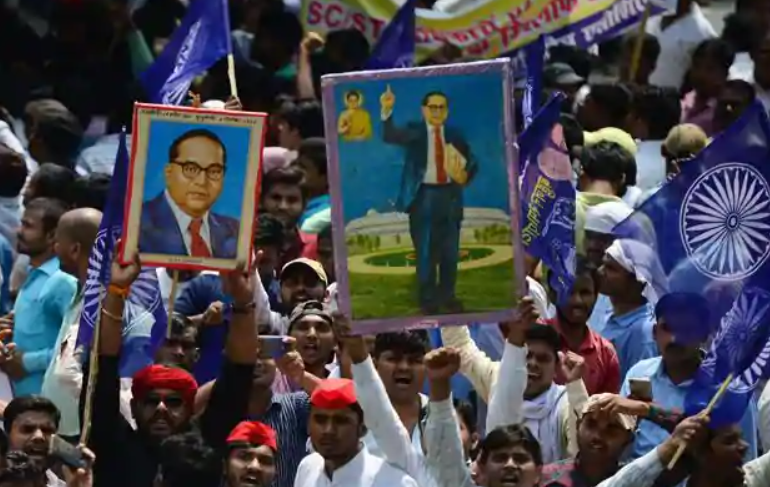
Today, over 10,000 people from all walks of life, cutting across caste, religion, gender, occupation and community came together from almost every state in India and more than a dozen countries across the world such US, UK, Canada, Australia, UAE, Hong Kong, Japan, Nepal, Netherlands, Sweden, Slovenia etc to demand justice for the heinous rape, brutalising attack and murder of a young Dalit woman from Hathras.

In a sharp statement condemning the incident, they got together to say thatdespite a continuing saga of countless other cases of brutal sexual assault and murders especially of young Dalit women the conscience of this nation does not seem to be shaken enough to do anything serious to stop the systematic targeting of women, Dalits and the poor.

While there is a historicity to these incidents, but under CM Yogi’s rule, Uttar Pradesh has only gone from bad to worse. Crimes against women and Dalits have increased, and police have been given unlimited powers without any accountability. Today UP tops the charts for atrocities against Dalits, it also tops the charts for crimes against women.

Continue reading Over 10,000 Feminist groups and individuals condemn gangrape and murder of dalit woman in hathras

AIDMAM & NDMJ Condemn Rising Atrocities Against Dalit Women and Minor Girls in UP

Joint Press Statement issued by All India Dalit Mahila Adhikar Manch (AIDMAM)  and National Dalit Movement for Justice (NDMJ)

On 29th September 2020 India has once again failed Dalit Women and Girls in upholding their rights and safety; we have lost another young life to the savage brutal gangrape and murder. This brutal incident occurred on 14th September in Hathras, Uttar Pradesh and once again exposes the harsh realities of caste based sexual assault faced by Dalit women and girls in this country. Victim was dragged with the dupatta around her neck into the field where she was gang raped; suffered severe spinal cord injury, severely beaten up and also got deep cut in her tongue as she fought back the rapist. She was not in a situation to give her statement till 23rd September 2020 due to the severe injuries that paralyzed her condition.
The level of brutality and inhumanity continues even after the demise of the victim, as the UP police forcibly cremated the body in the early morning around 3 AM on 30th September. Victim’s body was burnt by the police against the will of the family members and not letting them take her home one final time. Beside this, the police locked family members and locals inside the house as per the statement of family members of the deceased.

Rising Atrocities
Such ghastly incidents of violence are perpetrated everyday against women and minors and especially during the Pandemic and the Lockdown. The state of Uttar Pradesh has witnessed several cases of atrocities against Dalit women; with Lakhimpur Kheri leading in the graph of violence. In the past 60 days more than six atrocities were reported in the district against Dalit women and minor girls. Similarly in Saharanpur district, six cases of abduction and rape have been reported where NDMJ has intervened. These gruesome incidents of sexual violence reflect the real picture of Indian society constructed on violent casteist patriarchal structure.
It should be noted that the crime rate against Dalits in Uttar Pradesh has been rising exponentially in the last few years. As per the NCRB report of 2018, Uttar Pradesh tops the list of number of crimes committed against Dalits including Dalit women in 2018. Also, Uttar Pradesh has recorded the maximum number of cases of rape (526), attempt to rape (48), incidences of kidnap and abduction of Dalit women (381) and incidences of assault (711) in the year of 2018 under the SC/ST (PoA) Act. As per the compiled data of the NCRB reports of 2014-18, Uttar Pradesh has witnessed the maximum number of atrocities against Dalit women in India and an increase of 15% in the number or rape cases against Dalit women from 2015-18. 7,920 number of atrocities against Dalit women have been registered under the SC/ST (PoA) Amendment Act in Uttar Pradesh from 2014-18. A big majority of this figure has been for the cases of assault (3,421) and rape (2,410) of Dalit women. Attempt to rape (219) and kidnap and abduction (1,870) also form a major form of violence committed against Dalit women in Uttar Pradesh from 2014-18. Continue reading AIDMAM & NDMJ Condemn Rising Atrocities Against Dalit Women and Minor Girls in UP

Capitalism, Development and Western Hegemony – Looking Beyond to the Pluriverse


Many words are walked in the world. Many worlds are made. Many worlds make us. There are words and worlds that are lies and injustices. There are words and worlds that are truthful and true. In the world of the powerful there is room only for the big and their helpers. In the world we want, everybody fits. The world we want is a world in which many worlds fit…Our words, our song and our cry is so that the dead will no longer die. We fight so that they may live. We sing so that they may love. – Fourth Declaration of the Lacandon Jungle (1996), Zapatista National Liberation Army. Cited as epigraph in Pluriverse: A Post-Development Dictionary.

The New Grave-Diggers of Capital?

‘The world we want is a world in which many worlds fit’. This neatly sums up the idea of the ‘pluriverse’. Reading it, I was reminded of an interview of ‘Subcommandante Marcos’, ‘leader’ of the Zapatistas, some years ago. In that interview, Subcommandante Marcos (then anonymous) recounted that he and his colleagues at the Autonomous Metropolitan University in Mexico, who joined him in the Chiapas mountains in 1984, were Marxists and had basically gone there to organize the indigenous people. And for Marxists that bascially meant to ‘raise their awareness’ about capitalism and exploitation.

Editors: Ashish Kothari, Ariel Salleh, Arturo Escobar, Federico Demaria, Alberto Acosta

Continue reading Capitalism, Development and Western Hegemony – Looking Beyond to the Pluriverse

क्या राम मंदिर की आड़ में अपनी विफलताएं छिपा रही है मोदी सरकार

यह मानने के पर्याप्त आधार हैं कि राम मंदिर के भूमि पूजन के लिए चुना गया यह समय एक छोटी रेखा के बगल में बड़ी रेखा खींचने की क़वायद है, ताकि नरेंद्र मोदी और उनकी सरकार की बढ़ती असफलताएं जैसे- कोविड कुप्रबंधन, बदहाल होती अर्थव्यवस्था और गलवान घाटी प्रसंग- इस परदे के पीछे चले जाएं.

Ayodhya: A hoarding of PM Narendra Modi and other leaders put up beside a statue of Lord Hanuman, ahead of the foundation laying ceremony of Ram Temple, in Ayodhya, Thursday, July 30, 2020. (PTI Photo)(PTI30-07-2020 000044B)

अयोध्या में राम मंदिर के भूमि पूजन से पहले लगा प्रधानमंत्री नरेंद्र मोदी और अन्य नेताओं का एक होर्डिंग. (फोटो: पीटीआई)

बीते दिनों जनाब उद्धव ठाकरे द्वारा अयोध्या में राम मंदिर के प्रस्तावित भूमि पूजन को लेकर जो सुझाव दिया गया है, वह गौरतलब है.

मालूम हो कि आयोजकों की तरफ से जिन लोगों को इसके लिए न्योता दिया गया है, उसमें महाराष्ट्र के मुख्यमंत्री का नाम भी शामिल है, उसी संदर्भ में उन्होंने इस बात पर जोर दिया है कि ‘ई-भूमि पूजन किया जा सकता है और भूमि पूजन समारोह को वीडियो कॉन्फ्रेंसिंग के जरिये भी अंजाम दिया जा सकता है.’

उनका कहना है कि इस कार्यक्रम में लाखों लोग शामिल होना चाहेंगे और क्या उन्हें वहां पहुंचने से रोका जा सकता है? कोरोना महामारी को लेकर देश-दुनिया भर में जो संघर्ष अभी जारी है और जहां धार्मिक सम्मेलनों पर पाबंदी बनी हुई है, ऐसे में उनकी बात गौरतलब है.

गौर करें कि ऐसा आयोजन जिसका लाइव टेलीकास्ट भी किया जाएगा, कोई चाहे न चाहे देश में जगह जगह जनता के अच्छे-खासे हिस्से को सड़कों पर उतरने के लिए प्रेरित करेगा.

और अगर दक्षिणपंथी जमातें इस बारे में अतिसक्रियता दिखा दें तो फिर जगह जगह भीड़ बेकाबू भी हो सकती है और केंद्र सरकार और गृह मंत्रालय द्वारा जारी गाइडलाइंस की भी धज्जियां उड़ सकती हैं.

( Read the complete article here)


No End to Humiliation of Dalits Even After Death

The attitude of respect and reverence towards fellow men is yet to develop in India.

No End to Humiliation of Dalits

Does anybody still remember the Dalits of Chakwara, a village around 50km from Jaipur in Rajasthan, who had launched a struggle to gain access to the pond in their village? It is more than 18 years since the Dalits, supported by human rights organisations, won that fight for water. Their undertaking had echoes with the historic struggle launched by Dr BR Ambedkar in March 1927 at Chavdar tank at Mahad to assert the equal rights of Dalits to water. It is well known to most people that while animals were allowed to use the water of this tank in present-day Raigad district of the state, the Dalits were not. Anand Teltumbde has described the events of this satyagraha in his book, Mahad: The Making of the First Dalit Revolt, published by Navayana in 2016.

But what happened at Chakwara after the Dalits started using the village pond is hardly known: the upper castes slowly stopped using the water from the pond once the Dalits gained access to it, saying it had become “impure”. Enraged by the assertion of the Dalits and keen to humiliate them for it, they dug up the village sewer and directed the waste water to their own village pond. There is no change in the status quo there.

Around 700km away, in Viramgam near Ahmedabad in Gujarat, a village cemetery used by Dalits was recently flooded with sewer water, a stark reminder that the gap of two decades has not changed the caste scenario in the country. The executioners of this sinister plan in Viramgam were the residents of two housing societies in which the well-off and educated middle classes live. For more than the last six months, the graves of the socially-disadvantaged Vankar, Chamar, Rohit, Dangasia, Shetwa and other communities have been surrounded by dirty water. The district administration did not intervene on behalf of the Dalits despite their repeated complaints. The fact that dignity after death is being denied to marginalised communities did not seem to rouse the administration.

( Read the full text here)

बिहार चुनाव आते ही प्रतिबंधित रणवीर सेना को एक बार फिर कौन हवा दे रहा है?

रणवीर सेना, जिस पर बहुत पहले पाबंदी लगायी जा चुकी है, नए सिरे से सुर्खियों में है।

पिछले दिनों उसने अपने सोशल मीडिया पेज पर भीम आर्मी के बिहार प्रमुख गौरव सिराज और एक अन्य कार्यकर्ता वेद प्रकाश को खुलेआम धमकाया है। उसने अपने ‘सैनिकों’ को आदेश दिया है कि उन्हें ‘जिन्दा या मुर्दा’ गिरफ्तार करें। बताया जाता है कि इस युवा अम्बेडकरवादी ने ब्रह्मेश्वर मुखिया- जो रणवीर सेना के प्रमुख थे और 2012 में किसी हत्यारे गिरोह के हाथों मारे गए थे- के बारे में जो टिप्पणी की, वह रणवीर सेना के लोगों को नागवार गुजरी है।

प्रश्न उठता है कि इस तरह खुलेआम धमकाने के लिए, मारने पीटने की बात करने के लिए क्या ‘सेना’ पर कार्रवाई होगी? अगर इतिहास को गवाह मान लिया जाए तो इसकी संभावना बहुत कम दिखती है। Continue reading बिहार चुनाव आते ही प्रतिबंधित रणवीर सेना को एक बार फिर कौन हवा दे रहा है?

Shadow of Laxmanpur Bathe on Bihar Election

An unpredictable element has found a new lease of life thanks to the coming Assembly election.

Laxmanpur Bathe on Bihar Election

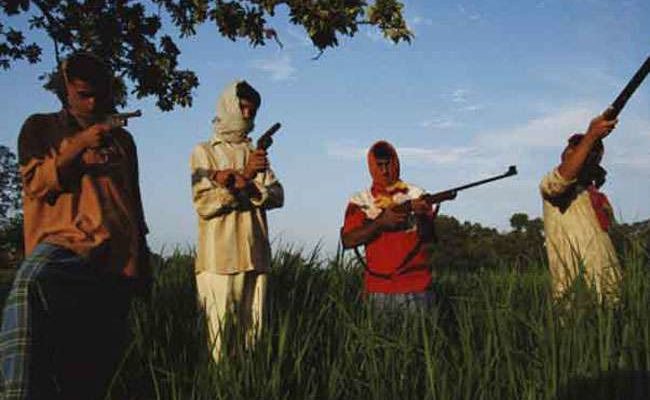
The outlawed Ranvir Sena—the private army of upper caste landlords of Bihar—is in the news again. It recently threatened the Bihar chief of the Bhim Army, Gaurav Siraj, and one of its activists, Ved Prakash, through a Facebook post. The so-called army has “ordered” its “sainiks” to “arrest” him dead or alive. The sena is apparently peeved over how the young dynamic leader of the Ambedkarite organisation has described Brahmeshwar Singh, their slain “Mukhiya” who was killed in 2012.

Will there be any action against those who have threatened the young leader? If history is any guide then there is little possibility of this.

Merely two years ago, Nawal Kishor Kumar, Editor Hindi, Forward Press was targeted by this “sena”. The aggrieved journalist had lodged a police complaint but there has been no progress in the investigation.

It is not that there is no law to punish such miscreants. Social media posts of the threatening kind relate to various offences under the Indian Penal Code, from criminal intimidation punishable under section 503 to section 505 related to creating mischief in public, to section 506 which awards punishment for criminal intimidation and section 153A which relates to penalties for promoting enmity between different groups and so on. In fact, based on its activities, the Ranvir Sena is also liable to be prosecuted under section 3 of the Bihar Control of Crimes Act, section 3 of the Arms Act and section 3 of the Scheduled Castes and Scheduled Tribes (Prevention of Atrocities) Act, 1989.”

( Read the full text here)

Lockdown 4.0 – A Tribute to Labourers by Navchintan Kala Manch

नवचिंतन कला मंच द्वारा – बीते दिनों में अपनी ही धरती पे बेगानेपन का अहसास कर हज़ारों किलोमीटर दूर अपने घरों की उम्मीद के निकले लोगों के साथ हुए हादसों की दास्तान ज़रूर देखें।

The Limits of Public Health Management: Time to Rethink Development in Kerala

One of the effects of the pandemic in Kerala, like in most other parts of the world, is that the government’s narrative muffles all other narratives, and this is not just about the containment of the pandemic. Here the government’s narrative about the pandemic enjoys far greater legitimacy than elsewhere, and with good reason. It is true that Kerala’s greater successes in dealing with the pandemic are unique and commendable; however, to think that therefore, the government is right on everything else is probably a huge mistake. Continue reading The Limits of Public Health Management: Time to Rethink Development in Kerala

Two Reports and Many Strategic Agents: Post-Disaster Thinking in Kerala

Two massive calamities, tremendous losses, continuing signs of serious ecological destruction impending — yet all we Malayalis seem to have produced in response: two reports, and even more frenzied strategic calculation. There is little doubt that the disasters happened in the first place at least partially because of the latter, but there seems to be no rethinking. Instead, we have strategic agents refurbishing their strategies to the new circumstances.

What else explains the Kerala government’s  Rebuilding Kerala Development Programme Report (RKDPR)? It popped up all of a sudden around the end of last year, after the UN-led Post-Disaster Needs Assessment Report (PDNAR), and even members of the Chief Minister’s Advisory Council were caught unawares.  The economist K P Kannan, whose life’s work has been focused on Kerala’s economy, a member of the Council, remarked in a recent interview in the Sastragathy that they did not know of it until the third meeting of the council. None knew who put it together, and there is no mention of this in the report itself. It draws heavily but selectively on the PDNAR, but also perhaps on the projects that were prepared for World Bank funding – and Kannan reaffirms this impression. The draft report was made available online for comments but there is no clear idea about these experts or the public consultations. Continue reading Two Reports and Many Strategic Agents: Post-Disaster Thinking in Kerala

Healing Kerala: Thoughts after the Second Warning


Everywhere the talk is still about rebuilding Kerala: I say, we need to talk about healing Kerala. The change in phrasing is not trivial. When we admit that we need to heal, rather than rebuild, we are admitting much that we did not care to own up till now. That is, we would be agreeing that the problem at hand is a human one and not just one that can be resolved through technical intervention; that, as a complex process, it will take its time and quick-fixes will not suffice.  Thankfully, there is a widespread discussion on the recommendations of the Gadgil Committee Report and the Post-disaster needs assessment report of last year; quarrying has been stopped all over the state. Maybe we will heal, indeed. What do we need to do to heal, and not just rebuild? Continue reading Healing Kerala: Thoughts after the Second Warning

After Kavalappara: Is the Future that of Ecological Patriotism?

I guess bad habits in development take a very long time to unlearn. Even in the face of the direst of warnings.

I know that last year, when taken completely by surprise, Kerala rose to the occasion. It appeared that a new civil society had come to being around the flood rescue and relief work, and that promised a new lease of life for our flagging-if-still-working project of people’s planning and political decentralization. It appeared that there was a real chance to stop the bureaucratic-technocratic coterie from shoving this ecologically-fragile area down the path of utterly destructive infrastructure-obsessed growth. It seemed that we could now seriously expose the depredations of the predatory capitalists, especially in the construction sector. Continue reading After Kavalappara: Is the Future that of Ecological Patriotism?

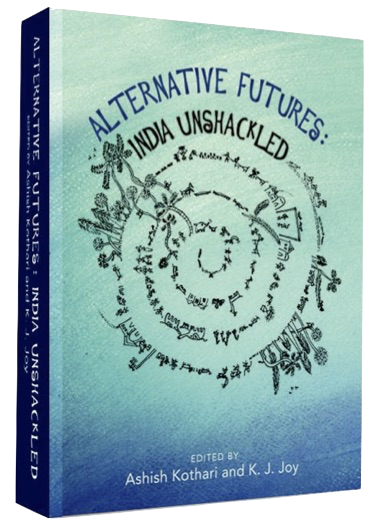
Alternative Futures – India Unshackled

Alternative Futures
Alternative Futures – India Unshackled

After the Berlin wall fell in 1989 and the Soviet Union collapsed in 1991, many consigned ideologies and alternatives to the rubble of history. The end of the cold war was explained as the victory, not just of liberal ethos and individual freedom, but of dynamic, market-driven capitalism championed by likes of Ronald Reagan, Margaret Thatcher and Manmohan Singh. India’s left also embraced this belief in practice, promoting foreign and national capitals and capitalist-led industrialization. They hoped market miracles would generate employment and wealth. Women such as MedhaPatkar, a social activist and a fierce opponent of the globalized developmental model and Sudha Bhardwaj, a trade union activist in Chhattisgarh seemed as thoroughly on the wrong side of the history as it was possible to be. Continue reading Alternative Futures – India Unshackled

Effects of Climate Change are not Contained within Nations – The Impact on India: Nagraj Adve

Guest post by NAGRAJ ADVE

This post is the second part, excerpted and slightly adapted, from the booklet by Nagraj Adve, Global Warming in the Indian Context: An Introductory Overview (Ecologise Hyderabad 2019). The first part appeared in Kafila on 1 July 2019

While the earlier post covered the basic science of global warming, the roots of the problem, and how inequality relates to climate change, this part focuses on key impacts of climate change in India, on humans and other species, and the reasons for urgency in tackling the problem. 

Villagers try to catch fish in drying pond in West Bengal, image courtesy Science News

Before we consider impacts in India and elsewhere, a few things are useful to keep in mind:

– Unlike most other forms of pollution, the source of carbon dioxide and where its effects are felt can be very far apart. Carbon dioxide generated in the United States affects people on the Orissa coast.

– A significant portion of carbon dioxide emitted today will remain in the atmosphere for centuries, influencing future climates.

– Even after the world ceases to emit carbon, higher average temperatures are “largely irreversible for a thousand years” because the gains of lesser radiation being trapped gets offset by the reduced loss of heat to the oceans. Hence, climate change is the new ‘normal’.

– Impacts will worsen because of the time lag between emissions and warming. Some of it is unavoidable. Our urgent intervention is needed to make sure they do not get much worse, and that the situation does not spiral out of our control. Continue reading Effects of Climate Change are not Contained within Nations – The Impact on India: Nagraj Adve

Justice denied – the Dharmapuri rape: Ila Ananya

Guest Post by ILA ANANYA

IMG-20181114-WA0002

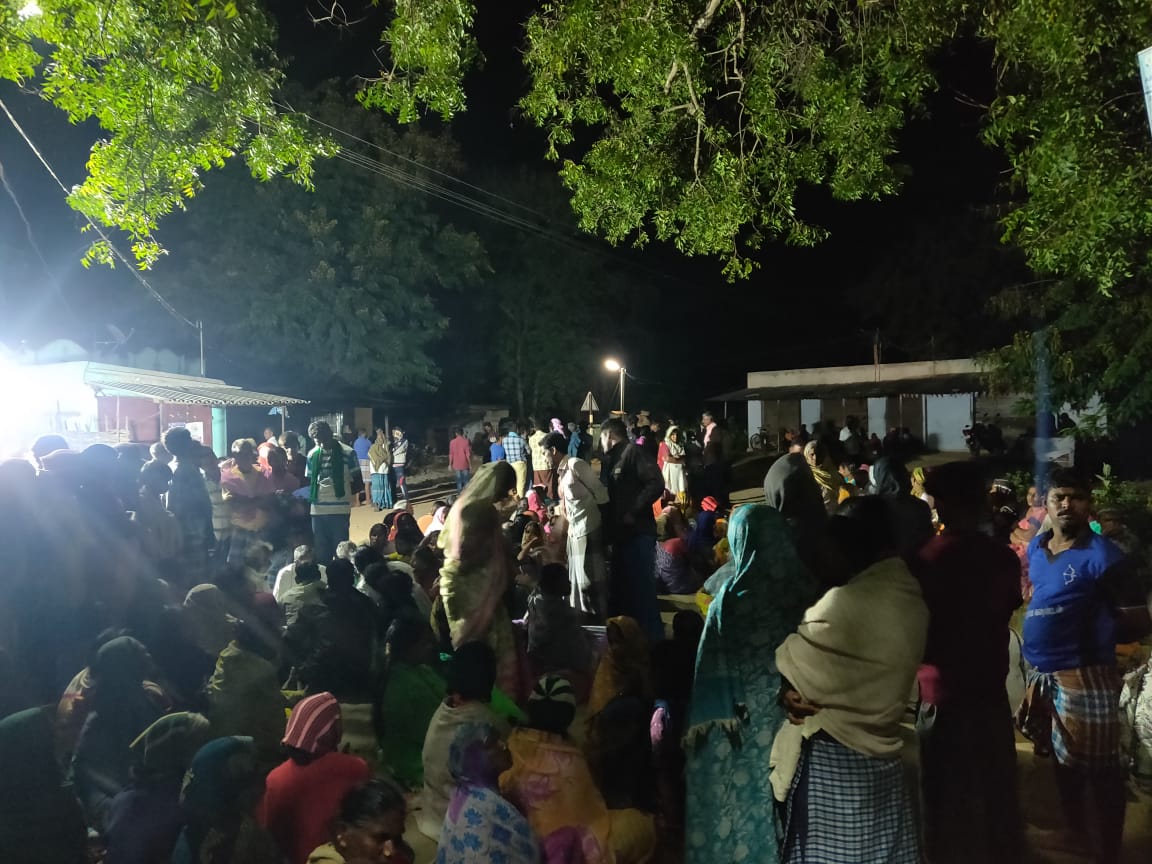
On the night of November 12th 2018, more than fifty people from Sittilingi, a village in Dharmapuri district of Tamil Nadu, made their way back home from Dharmapuri Government Medical College Hospital with the body of a 16-year-old Adivasi (Malaivasi) girl. The girl had been raped on November 5th by two drunk men, and had died in the hospital five days later – a death that her family have described as linked to blatant police negligence, beginning with their refusal to file an FIR, and involving the questionable role of the Child Welfare Committee (CWC) in Dharmapuri. Manjunathan*, a resident of Sittilingi, says that on November 12th, around ten police vehicles and 100 policemen had followed the girl’s funeral procession through the village, all the way to the graveyard. “Till now we have never seen the police,” Manjunathan attests, “now suddenly, since the day of the protest, they have remained in the village, especially at the junction, harassing people.”

This large and unusual police presence in Sittilingi began on November 10th, after around 2000 people gathered on the main road of the village, frequented by buses connecting Salem and Thiruvannamalai, to protest against the rape and death of the girl. Continue reading Justice denied – the Dharmapuri rape: Ila Ananya

The Kisan Charter – ‘Farmers are not just a residue from our past but integral to the future of India and the world’

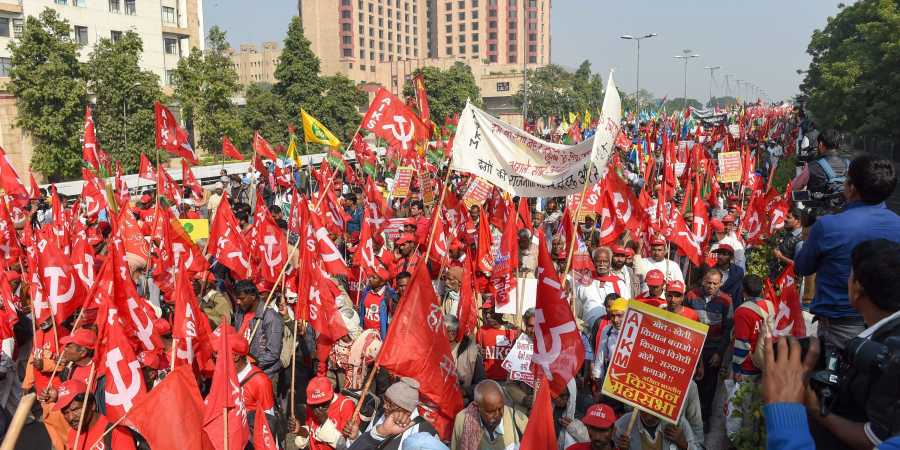
Kisan Mukti March in Delhi, image courtesy New Indian Express

Till just the other day, they were committing suicide, while some of them were demonstrating in Jantar Mantar, Delhi, humiliating themselves by disrobing and eating rats, trying in vain to draw the attention of the political establishment to their plight.  And to pour salt on their wounds, BJP leaders were saying that committing suicide had become a fashion among farmers! Today they are out on the streets, demanding, among other things, that their own debts be written off, not of the powerful and predatory capitalists. (See the Charter of the All India Kisan Sangharsh Coordination Committee below). This is, in all probability, the sign of a decisive shift, for today the charter relseased by the Coordination Committee declares loud and clear that
Farmers are not just a residue from our past; farmers, agriculture and village India are integral to the future of India and the world.

Continue reading The Kisan Charter – ‘Farmers are not just a residue from our past but integral to the future of India and the world’

Disinheriting Adivasis – The Gadchiroli Game Plan: Vidhya A

Guest post by VIDHYA A

Image courtesy Subcontinental wind

In a statement issued on April 16th 2018, the Ministry of Home Affairs (MHA) claimed that the ‘National Policy and Action Plan’ to combat Left Wing Extremism (LWE) is ‘a multi-pronged strategy involving security and development related measures’[1]. This new policy, apparently in place since the NDA government came to power at the centre, claims to have ‘zero tolerance towards violence coupled with a big push to developmental activities so that benefits of development reached the poor and vulnerable in the affected areas’[2]. The statement talks of substantial improvement in the LWE scenario by indicating reduced incidents of violence over the last four years. Within a week of this statement to the press, several Maoists are killed in an alleged encounter in Gadchiroli district of Maharastra and, then, in Bijapur district of Chhattisgarh[3]. The Maharashtra state police immediately issued press notes and organised a press conference on April 24th declaring the operation an unmitigated success. A week later, Chhattisgarh police did the same. Even as the death count of Maoists kept rising, the police claimed that none of their personnel, primarily the elite C-60 force in Maharashtra and the Central Reserve Police Force (CRPF), were seriously injured let alone killed in action.

Continue reading Disinheriting Adivasis – The Gadchiroli Game Plan: Vidhya A

‘Revolution against Das Kapital’ and the ‘Lonely Hour of the Economy’

This is a modified version of the article that was published earlier in The Wire

(T)he economic dialectic is never active in the pure state; in History, these instances, the superstructures etc – are never seen to step respectfully aside when their work is done or, when the Time comes, as his pure phenomena, to scatter before His Majesty the Economy as he strides along the royal road of the Dialectic. From the first moment to the last, the lonely hour of the ‘last instance’ never comes. – Louis Althusser, For Marx, London: Verso 1979, p. 113

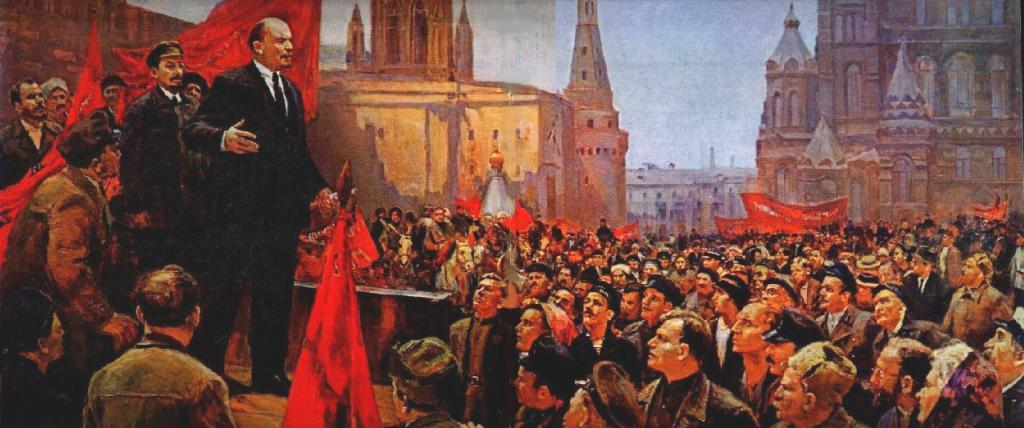
The event known to the world as the ‘October’ revolution in Russia – or simply as the ‘Russian revolution’ – took place on 7-8 November, a hundred years ago. But then why call it the October revolution? Thereby hangs a tale – the tale of modernity, myth-making and of a new imagination of Time.

The moment of revolution, image courtesy libcom.org

As a matter of fact, the Revolution occurred on 25-26 October, according to the Julian calendar (so called because it had been promulgated by Julius Caesar), which Russia, along with a large part of the Western world, followed at that time. It was only in January 1918 that the Soviet government decreed the shift to the Gregorian calendar. The reason was that Russia should join ‘all cultured nations in counting time’, as a decree cited by historian Mark Steinberg put it. Accordingly, the first anniversary of the revolution was celebrated on 7 November 1918 throughout the Soviet Union.

What is interesting here is not so much the shift but the reason assigned for it – joining other ‘cultured nations’ of the world, which in the language of the early twentieth century meant only one thing – the modern West, which had long been setting the norm for everything desirable. Ways of ‘counting time’ too had to be aligned with Europe, lest one be considered insufficiently modern. Spatially, the Czarist Russian empire straddled both Europe and Asia, which had already, in the new reckoning of Time, been cast as ‘advanced’ and ‘backward’ respectively. The desire to become modern and join the ‘cultured nations’ was to run through the history of the revolution and its consolidation into the new Stalinist state. This desire was to be manifested in its deep distrust of the peasantry and rural life on the one hand, and in the frenetic drive to ‘catch up’ with Western Europe. As Stalin would say, he wanted to accomplish in a couple of decades what Europe had in a few centuries, compressing time, as it were, into one dizzying experience for entire society. The continuing ‘past’ had to be annihilated.

Continue reading ‘Revolution against Das Kapital’ and the ‘Lonely Hour of the Economy’

The Gravity of Newton : Rituparna Sengupta

This is a guest post by RITUPARNA SENGUPTA


Amit V Masurkar’s recently-released film Newton explores facets of Indian democracy at its most vulnerable. For these times of ‘nationalist’ bravado, this is a courageous topic.  The film is so named because it adopts for the most part, the point of view of its protagonist, Newton (Nutan) Kumar (Rajkummar Rao, thank you once again!) who resists corruption and hypocrisy at home and work. Continue reading The Gravity of Newton : Rituparna Sengupta

Statement Against Genocide and Deportation of Rohingya Muslims

Violence is sweeping Myanmar and in a short span of two weeks lakhs of ethnic Rohingya refugees have fled to Bangladesh and thousands have lost their lives. Satellite data shows, large parts of the Rakhine state, home to most of the Burmese Rohingya population have been set on fire, and murders, rape, arson, loot and forced displacement of the Rohingya population is taking place on a scale, that should be alarming for all humanity. Even the UN secretary general has called out to Mayanmar to end violence against the Rohingya and Nobel laureate Desmond Tutu has urged Mayanmar state Councillor Aung San Suu Kyi to speak out against the persecution of the Rohingya. The tragedy facing the Rohingya is of an unprecedented scale and needs to be addressed with a sense of utmost urgency.

As Indian citizens, we need to break the silence on ethnic violence against the Rohingya and the unconstitutional proposed deportation of a wide and long-residing Rohingya community from India, to certain death that awaits them in Myanmar. The Rohingyas have been living as a peaceful refugee community in various parts of India since the 1970s, with no criminal records or history of crime. Let us not be a part of this genocide. Let us stand up for justice and humanity, and raise our voice against the killings, displacement and deportation of the Rohingya!

Continue reading Statement Against Genocide and Deportation of Rohingya Muslims

Losing the Soul’s Acid Tongue … Terrorist State, Unbowed Children at Kerala’s Puthvype

[The title is inspired by Balachandran Chullikkad’s searing poetry]

I have recently been asked about why I didn’t write anything about the anniversary of the CPM-led government of Kerala.  Have also been asked why I don’t write about politics in Kerala anymore. The answer to the first is easy and painless: governments are not organic things. You measure your kid’s height and weight and other things and think about how they have grown in their minds and hearts on their birthdays. There is nothing that proves that anniversaries are the best occasions to reflect on how governments have grown and thrived. The answer to the second question is more conflicted and excruciatingly painful: it is because we have no politics in Kerala, but plenty of anti-politics. therefore, what one needs to do is invest in the silent, unglamorous, unpopular,  long-haul intellectual and political labour that may preserve the possibilities of politics in the future, and that may even create internalities capable of courage and responsibility necessary for being political. Continue reading Losing the Soul’s Acid Tongue … Terrorist State, Unbowed Children at Kerala’s Puthvype