
The Supreme Court judgment on women’s entry into Sabarimala has got Hindutva women in Kerala into a hand-wringing, hair-tearing frenzy, and that is to put it lightly. I say ‘Hindutva women’ deliberately, to refer to a sub-set of Hindu women, who (1) believe, like the RSS chief, that the Hindu(tva) lion is under threat from dogs (guess who the dogs are in this case) (2) identify craven submission to Hindutva commonsense about gender as ‘Indian tradition’ (3) are willing to sacrifice all public decency for the sake of upholding that common sense. Continue reading Do Not Ride the Tiger of Hindtuva: Sabarimala Entry and Hindutva Women
Category Archives: Culture
Sewer Workers Deaths – The Meaning of Dalit for Bhartiya Janta Party
Guest post by PRAVEEN VERMA
If Prime Minister Narendra Modi were to write about the recent deaths of sewer workers in India, the headline would be:
Some people attained moksha (nirvana) while experiencing spirituality,
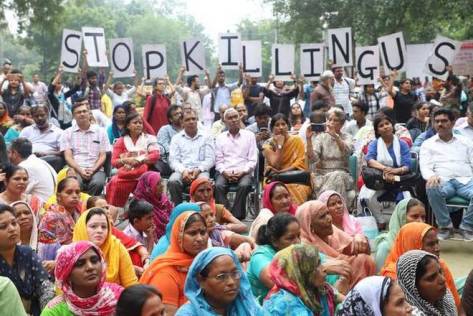
In his casteist book Karmayog, he wrote that manual scavenging is a spiritual experience, hence if some people die during cleaning sewers manually, that would be attaining moksha! In a caste Hindu society this should have been a matter of joy, that even in Kaliyuga, there are still some ‘pious’ soul who could give up all moh-maya and do this punya karma! How true this depiction/ description, one feels like saying: why not make the umpteen godmen-led spiritual movements in India take this route to spiritual moksha? This would perhaps have saved the many rapist-rioter babas from arrest and they could truly do their prayaschit (atonement) in these various, very Indian jails. This is after all the real world of this ‘spiritual experience’ of manual scavenging/sewer cleaning, where ‘Moksha’ means institutional killing!
Continue reading Sewer Workers Deaths – The Meaning of Dalit for Bhartiya Janta Party
How to Deal with Male Chauvinist Piorge: Ten Tips
After the floods comes the pestilence. Even as the rest of us are focusing all our energies on making sure that epidemics and sheer psychological trauma aren’t going to bring our people devastated by floods to the brink of their endurance, here is a bizarre person, a certain P C George, MLA from Poonjar, Kerala, indulging in the worst kinds of patriarchal excess. At this time one would expect our elected representatives to be aiding and comforting people in their respective constituencies. Instead, we have this man spew unspeakable, stupid trash on the public. I do not want to reproduce it here; you can read for yourself. I’d rather try to think of how we may deal collectively with those of his ilk. Continue reading How to Deal with Male Chauvinist Piorge: Ten Tips
Beneath the glitter – Looking at The Asian Games : Praveen Verma
Guest post by PRAVEEN VERMA
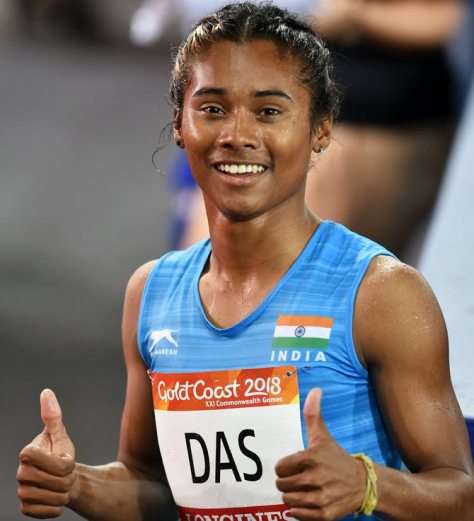
Does it amaze you when you hear the stories of poverty and success in same sentence? Does it amaze us when we hear the stories of some of the best sports-persons and the hardship they have dealt with before and throughout their careers? Does it amaze us when we hear about the sorry state of affairs of sports facilities and some athletes still coming up with great performances? Does it amaze that most of these athletes come from rural India and mostly where they have much economic and social constraints, where work and employment is still precarious? Does it alarm when one get to know that some of these phenomenal sports-persons come from the areas which are still dealing with the issues of hunger, high rate of unemployment, major gender gap? Areas where women coming out and trying to make cut into sports are still taboo? How often does one hear about women from marginal sections (Dalit/Backward caste/tribal) becoming a sportsperson?
Some stories of these kinds make usual snippets in many Hindi newspapers around big sports events. Though, these stories, which are posed as individual heroic one and less of a critical approach to see the working of sports administration, are meant to be sensational and don’t do justice to the entire sports affairs in India. Continue reading Beneath the glitter – Looking at The Asian Games : Praveen Verma
Three decades after Ameena, ‘Bride-Bazars’ continue to thrive in Hyderabad: Lovish Garg
Guest Post by LOVISH GARG
Ameena Begum was only ten years old when she was married to a man old enough to be her grandfather. The man- a 60-year-old Arab from Saudi Arabia had come to her house in Hyderabad to see Ameena’s elder sister for marriage but found her to be too ‘ugly and dark.’ He instead expressed desire to marry the young Ameena which the father readily agreed in exchange for a paltry sum of Rs 6,000. She was later rescued by Amrita Ahluwalia- then an air-hostess with Indian Airlines after she found the young girl crying inconsolably on the Hyderabad-Delhi flight in-route to Saudi Arabia.
This incident put the global spotlight for the first time on the practice of ‘bride-shopping’ in the old city area of Hyderabad where minor Muslim girls from poverty-stricken families are married to older, mostly Arab men for a small sum of money. About three decades after this incident of August 1991- nothing much has changed and the practice of Sheikh marriages continue unabated with estimates suggesting around 2000 of such marriages performed only in the last one year.
The genesis of Sheikh marriages can be traced to the late 19th century when the Nizam of Hyderabad started hiring Chaush Arabs from what is the present-day Yemen. These men served as the military guards and later on high positions in the Nizam’s army and administration. The Arabs also brought with them the ritual of offering gifts and dowry to families who would marry their daughters to them. However, when oil stuck in the Gulf and situation in Hyderabad turned chaotic because of the rising peasant movement and later fall of Nizam- many such Chaush Arabs returned to their homelands.
Statement Issued by NSI on the recent arrests : Democracy Under Siege !
A Statement Issued by New Socialist Initiative (NSI) on the recent arrests of human rights defenders and public intellectuals
Democracy Under Siege !
With Ground Slipping Fast Beneath Its Feet, BJP government Resorting to Draconian Measures !
1.
New Socialist Initiative strongly condemns the arbitrary and malicious manner in which the Pune Police, at the behest of its saffron masters, raided the houses of leading human rights activists, lawyers, professors and poets in different cities simultaneously and arrested five of them – Sudha Bharadwaj, Gautam Navlakha, Arun Ferreira, Vernon Gonsalves and Varavara Rao – under concocted charges.
Demanding immediate release of all these persons unconditionally and withdrawal of fabricated charges filed against them under the draconian Unlawful Activities Prevention Act (UAPA) , it also said that appropriate action should be taken against the guilty policemen as well involved in this act. Continue reading Statement Issued by NSI on the recent arrests : Democracy Under Siege !
Brackish Reflections on the Great Deluge of 2018: Roby Rajan
This is a guest post by ROBY RAJAN
Epic. Biblical. Apocalyptic. These are some of the words that have been used to describe the floods and landslides that have wreaked havoc in Kerala over the last few weeks. Entire towns and cities were submerged, and entire rivers altered their courses overnight. Continue reading Brackish Reflections on the Great Deluge of 2018: Roby Rajan
A List of Little-Knowledge Theories about Kerala in the Wake of this Disaster
By now everyone knows what the Sanghis, probably not just outside Kerala, but also inside, have been up to when others were battling the deluge, saving lives, working round the clock to organize relief: making Lord Ayappan look like a stupid brat (or, actually, painting him in their likeness), spreading idiotic claims that only the rich were affected, or that the Christians/Muslims/commies/everyone who isn’t a Hindutva bigot, are responsible for this catastrophe, and circulating fake photos, from relief work in Gujarat or somewhere else as RSS relief work for Kerala. Really, how we wish we could persuade them all to migrate to the Hindi heartland where ecological disasters are unheard of and will never ever be! Continue reading A List of Little-Knowledge Theories about Kerala in the Wake of this Disaster
A letter to Sanghiannan in the wake of our common woe
[Before you read this post, you might want to read KR Meera’s brilliant portrait of the average Malayali middle-class Sangh supporter, in her story Sanghiannan, which I translated as ‘My Brother Sanghi’, published by Juggernaut at : https://www.juggernaut.in/books/088d472b19d745d29492560654250e15 . I recommend this also because she sketches beautifully the spirit of deep compassion that inheres in the thought of Sreenarayana Guru, who tried to imagine the faith outside the brahmanical framework of caste. This will help you to get a sense of that section of Malayali middle class I address here.]

Continue reading A letter to Sanghiannan in the wake of our common woe
Beware of Poisoning-Eating Maggots in Flood-Hit Kerala
In Malayalam, the usual way of referring to virulence that feeds on negative experience is paashaanathil krmi — or the maggot that is fattened by poison, instead of getting killed by it. Over the past few days, many of us have lived completely on the edge, bereft of sleep or ease, tossing about in a seemingly-unending nightmare, as the rain, floods, and landslides uproot not just our physical world, but the very culture of smugness and complacency that took over our deepest selves over the past twenty years or so. Continue reading Beware of Poisoning-Eating Maggots in Flood-Hit Kerala
Some Reflections on Rape in India: Bobby Kunhu
Guest post by BOBBY KUNHU
A couple of days back, representatives of a group that wanted a petition demanding death penalty for all the accused in the Chennai gang rape case sought an appointment with me. I had clarified that I will not be part of any process demanding death penalty and would be glad to meet them on any other discussion they might want on the case. While, I managed to convince those who met me that death penalty cannot be a deterrent against rape, I suggested that instead of the petition they should spend their efforts to energize a change in the current discourse on rape in whatever small ways possible. The meeting ended with plans of a more substantive plan of action to discuss possibilities of advocating accessible spaces for children vulnerable to physical or sexual abuses at least in the neighborhood. I have summed up some of the points that I made at the discussion and I thought it would be important to share them with a wider audience.
Continue reading Some Reflections on Rape in India: Bobby Kunhu
Response to Critics of AAS-in-Asia boycott: Ajantha Subramanian et al
Continuing the debate on the controversial Association of Asian Studies conference recently held in Delhi, to which Pakistani participants were denied visas by the Indian government, following which there was a call to boycott the conference.
Nandini Sundar wrote an article in The Wire which we re-posted on Kafila. This is a response to that article by Ajantha Subramanian, Suvir Kaul, Rupa Viswanath, Rebecca Karl, Ania Loomba and Nate Roberts, also in The Wire.
As signatories to the call for a boycott of the AAS-in-Asia conference in Delhi (July 4-8, 2018), we have been vocal critics of how the Association for Asian Studies – a membership-funded professional organisation based in the US for scholars of Asia around the world – has handled the government of India ban on Pakistani scholars (based on both nationality and descent). We now write because the debate that our call for action provoked raises important questions about location, ethics and nationalism when it comes to the right to protest. These questions are important in our age of escalating international exchange as well as national chauvinism.
Our critique has focused on the AAS, an organisation that was informed of the preemptive ban and which, in conjunction with Ashoka University, their private university partner in New Delhi, concealed it from the general membership – as well as the general public – for months. Although the organisation claims it did its part by putting the letter banning Pakistanis on its conference website, no one would find it unless they were looking for it. Knowledge of the ban only became public when The Wire broke the story on June 7, 2018.
Read the rest of this article here.
Fascinating Manu
It is easy to see the linkages between Manu, Nietzsche, Hitler and the worldview of Hindutva supremacism
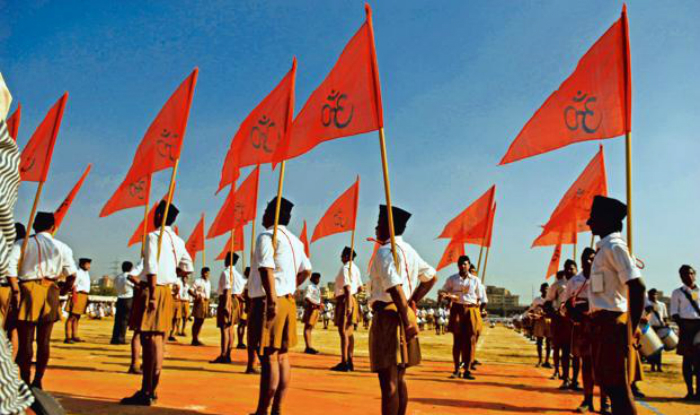
Manu and his ‘magnum opus’ Manusmriti keeps hogging headlines in the 21st century as well.
Thanks to the fascination it still holds among the Hindutva supremacists of various kinds even around seventy years after the promulgation of Constitution, which in the words of Dr Ambedkar, had “ended the rule by Manu”.
The latest to join the ‘mission glorification’ of Manusmritihappens to be another stalwart from the Hindutva brigade, called Sambhaji Bhide, the leader of Shivpratishthan Sangathan, who also happens to be an accused in the Bhima Koregaon case. Addressing his followers known as dharkaris (believers of violence) – as opposed to varkaris(who go to Pandharpur from Pune on foot), he exhorted them to disseminate Hindu religion and form Hindu Nation. He also added how ‘Manusmriti was superior to the teachings of saints Dnyaneshwar and Tukaram’.
( Read the full article here : https://newsclick.in/fascinating-manu)
Bollywood’s re-imagination of growing old: Tannistha Samanta
This is a GUEST POST by TANNISTHA SAMANTA
Although the Indian Hindi film industry has been known to be considerably less gerontophobic than the western popular culture (Hollywood, in particular), our aging Naanas and Naanis have been often represented as either able keepers of family “sanskars” or hyper-ritualized subjects (with added effect if in some diasporic setting)or as self-sacrificing elderly parents to prodigal children (or ruthless grandchildren). Continue reading Bollywood’s re-imagination of growing old: Tannistha Samanta
Who feeds whom? Reflections on the Left responses to the Abhimanyu murder case
The recent murder of an SFI activist, Abhimanyu, at the Maharajah’s College, Ernakulam, allegedly by activists of another student organization, the Campus Front, has once again triggered a series of intense campaigns against the Popular Front of India (PFI), which is accused of having terror links, even with the ISIS. This last claim has become commonsense almost impossible to contest.
Continue reading Who feeds whom? Reflections on the Left responses to the Abhimanyu murder case
അഭിമന്യുവധം ഉയർത്തുന്ന കാതലായ പ്രശ്നം
സത്യം പറഞ്ഞാൽ അഭിമന്യു എന്ന വിദ്യാർത്ഥിയുടെ ഞെട്ടിക്കുന്ന കൊലപാതകത്തിനു ശേഷം ആ ചെറുപ്പക്കാരൻറെ മാതാവിൻറെ വിലാപം മാത്രമാണ് ഇപ്പോഴും മുഴങ്ങിക്കേൾക്കുന്നത്. ആ ശബ്ദം മനസ്സിൽ നിന്ന് മായുന്നതേയില്ല.
Great Dance of Return in Gaza – Performing Palestinian Dabke in the Midst of Zionazi Attacks
This dance – the Palestinian Dabka – was performed amidst firing by Israeli Zionazis on the 30th of June 2018. Remember the cowards stepped up their attack on Gaza as the holy month of Ramzan began. This video has all the ambient noises – of the firing of bullets and other war sounds and is therefore worth listening to. It has also gives you a sense of the extremely tense situation at the border.
To listen to the cleaner version, where you can hear the sound of the music more clearly, click here and listen to the second video.
How Does Raazi Resolve The Tension Between Patriotism and Humanity? Kavita Krishnan
Guest Post by KAVITA KRISHNAN
SPOILER ALERT: If you have not seen Raazi, please don’t read this review because it contains spoilers.
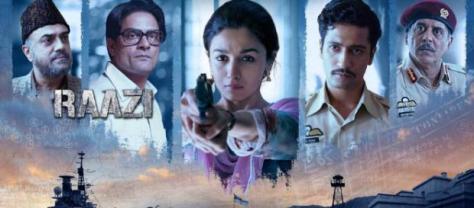
Rabindranath Tagore, the composer of the poems that serve as the national anthems of India and Bangladesh, wrote an essay on nationalism in which he asserted, “it is my conviction that my countrymen will gain truly their India by fighting against that education which teaches them that a country is greater than the ideals of humanity.” In a letter to a friend, he wrote, “I will not buy glass for the price of diamonds and I will never allow patriotism to triumph over humanity as long as I live.”
My concern, as I watched Meghna Gulzar’s Raazi, was about how the film handles its central tension – between the values of humanity and patriotism. Continue reading How Does Raazi Resolve The Tension Between Patriotism and Humanity? Kavita Krishnan
Gayatri Mantra – Aryanism versus Hinduism: Rajni K. Dixit
Guest post by RAJNI K. DIXIT
The Gayatri mantra, as it is called these days, has been assigned a very important position in Hinduism. One is supposed to pray to the Sun god with this verse every morning and evening. It is supposed to be a prayer to the Divine Light to guide our mind in the right direction, and to show us the correct way to live life. At the thread ceremony, which was a rite performed as the initiation of a Brahmin child’s education (samskarajanma or dwijatva i.e. second birth), the Gayatri mantra is spoken in the child’s ear because it is a prayer to guide the mind. It becomes his daily prayer to god for the right guidance and upliftment of mind for his whole life henceforth.
However, this verse was composed in a particular political context, understanding which expands our understanding of what is called Hinduism today.
This verse is composed by the great poet-priest Vishvamitra Gathina, and is selected from a poem of eighteen verses, the 62nd poem of the third mandal of the Rigveda. The major portion of this third mandal or group is composed by Vishvamitra. ‘Gayatri’ is actually the name of the metre that the verse is composed in. The verse is about god Savita, i.e. the sun, and the correct name by which this verse was originally known is the ‘Savitri’ mantra.
Gayatri is not the composition of an ascetic sage. It is written by a poet-priest who was a born politician, a Rajarshi as the later Sanskrit calls him. This was a time when all good poets worked as professional priests. Composition of literature had no existence separate from religion in those times.
Continue reading Gayatri Mantra – Aryanism versus Hinduism: Rajni K. Dixit
Statement on Atrocities on Dalits : New Socialist Initiative
Guest Post by New Socialist Initiative
New Socialist Initiative Condemns Hindutva Engineered and Inspired Atrocities on Dalits
Hardly a day passes without headline news of some or another atrocity on Dalits. On 24 May, a Dalit man in the Ahmedabad district was beaten and his house attacked by a gang of socalled ‘upper’ caste men after he had attached Sinh to his name on his facebook post. On 21 May a dalit ragpicker was beaten to death in a Rajkot factory. Atrocities on Dalits are occurring in the midst of a public ideological environment against them. On 26 May news came of a private school in Delhi asking 8th class students to write a note on how reservations help undeserving and unqualified people for their summer vacation homework. According to National Crime Record Bureau reports for recent years, between 10 to 15 thousand cases of crimes are reported under the Prevention of Atrocities act every year; an average of 35 crimes per day. Many times more crimes actually go unreported. In 2016 Indian courts had over 45 thousand cases under this act. Out of the 4048 cases decided, conviction occurred in 659 cases only. That is, five out of six cases of atrocity against Dalits did not result in any punishment. The number of attacks against one of the weakest and the poorest sections of the society, and the abysmal rate of conviction would put any civilized society to shame, but India chugs along. Continue reading Statement on Atrocities on Dalits : New Socialist Initiative
Against the Yawning Jaws of Hell: Protest Against Hate on 23 April
After the Modi government came to power, citizens of this country have seen gate after gate of Hell — the Narakas — open relentlessly to suck them in mercilessly or condemn them to be helpless spectators to unspeakable acts of injustice and violence. We have by now crossed the Arbudanaraka and the Nirarbudanaraka many times; the ordeal of having to watch evil unfold in the attacks on people in the name of what they eat, how they love, what they speak, who they pray to, which caste they were born into, what gender was assigned to them at birth — the list is growing day by day. We seem to be reduced to waiting endlessly at the doorsteps of police stations, courts, morgues, nearly overpowered by the stench of power and majoritarian hubris, fighting to stay conscious, waiting for the dead, broken, defiled, or dismembered bodies of our kin, our friends, neighbours, people. For instance, can one ever forget how we stood in sheer anxiety outside the Supreme Court, truly like souls awaiting judgment at the gates of Vaikuntam, reduced to droplets of pure worry? Those of us who fought for Hadiya’s rights can hardly forget.
Continue reading Against the Yawning Jaws of Hell: Protest Against Hate on 23 April
 KAFILA - COLLECTIVE EXPLORATIONS SINCE 2006