A Statement Issued by New Socialist Initiative (NSI) on the recent arrests of human rights defenders and public intellectuals
Democracy Under Siege !
With Ground Slipping Fast Beneath Its Feet, BJP government Resorting to Draconian Measures !
1.
New Socialist Initiative strongly condemns the arbitrary and malicious manner in which the Pune Police, at the behest of its saffron masters, raided the houses of leading human rights activists, lawyers, professors and poets in different cities simultaneously and arrested five of them – Sudha Bharadwaj, Gautam Navlakha, Arun Ferreira, Vernon Gonsalves and Varavara Rao – under concocted charges.
Demanding immediate release of all these persons unconditionally and withdrawal of fabricated charges filed against them under the draconian Unlawful Activities Prevention Act (UAPA) , it also said that appropriate action should be taken against the guilty policemen as well involved in this act. Continue reading Statement Issued by NSI on the recent arrests : Democracy Under Siege !→
Epic. Biblical. Apocalyptic. These are some of the words that have been used to describe the floods and landslides that have wreaked havoc in Kerala over the last few weeks. Entire towns and cities were submerged, and entire rivers altered their courses overnight. Continue reading Brackish Reflections on the Great Deluge of 2018: Roby Rajan→
By now everyone knows what the Sanghis, probably not just outside Kerala, but also inside, have been up to when others were battling the deluge, saving lives, working round the clock to organize relief: making Lord Ayappan look like a stupid brat (or, actually, painting him in their likeness), spreading idiotic claims that only the rich were affected, or that the Christians/Muslims/commies/everyone who isn’t a Hindutva bigot, are responsible for this catastrophe, and circulating fake photos, from relief work in Gujarat or somewhere else as RSS relief work for Kerala. Really, how we wish we could persuade them all to migrate to the Hindi heartland where ecological disasters are unheard of and will never ever be! Continue reading A List of Little-Knowledge Theories about Kerala in the Wake of this Disaster→
[Before you read this post, you might want to read KR Meera’s brilliant portrait of the average Malayali middle-class Sangh supporter, in her story Sanghiannan, which I translated as ‘My Brother Sanghi’, published by Juggernaut at : https://www.juggernaut.in/books/088d472b19d745d29492560654250e15 . I recommend this also because she sketches beautifully the spirit of deep compassion that inheres in the thought of Sreenarayana Guru, who tried to imagine the faith outside the brahmanical framework of caste. This will help you to get a sense of that section of Malayali middle class I address here.]
In Malayalam, the usual way of referring to virulence that feeds on negative experience is paashaanathil krmi — or the maggot that is fattened by poison, instead of getting killed by it. Over the past few days, many of us have lived completely on the edge, bereft of sleep or ease, tossing about in a seemingly-unending nightmare, as the rain, floods, and landslides uproot not just our physical world, but the very culture of smugness and complacency that took over our deepest selves over the past twenty years or so. Continue reading Beware of Poisoning-Eating Maggots in Flood-Hit Kerala→
A couple of days back, representatives of a group that wanted a petition demanding death penalty for all the accused in the Chennai gang rape case sought an appointment with me. I had clarified that I will not be part of any process demanding death penalty and would be glad to meet them on any other discussion they might want on the case. While, I managed to convince those who met me that death penalty cannot be a deterrent against rape, I suggested that instead of the petition they should spend their efforts to energize a change in the current discourse on rape in whatever small ways possible. The meeting ended with plans of a more substantive plan of action to discuss possibilities of advocating accessible spaces for children vulnerable to physical or sexual abuses at least in the neighborhood. I have summed up some of the points that I made at the discussion and I thought it would be important to share them with a wider audience.
Continuing the debate on the controversial Association of Asian Studies conference recently held in Delhi, to which Pakistani participants were denied visas by the Indian government, following which there was a call to boycott the conference.
Nandini Sundar wrote an article in The Wire which we re-posted on Kafila. This is a response to that article by Ajantha Subramanian, Suvir Kaul, Rupa Viswanath, Rebecca Karl, Ania Loomba and Nate Roberts, also in The Wire.
As signatories to the call for a boycott of the AAS-in-Asia conference in Delhi (July 4-8, 2018), we have been vocal critics of how the Association for Asian Studies – a membership-funded professional organisation based in the US for scholars of Asia around the world – has handled the government of India ban on Pakistani scholars (based on both nationality and descent). We now write because the debate that our call for action provoked raises important questions about location, ethics and nationalism when it comes to the right to protest. These questions are important in our age of escalating international exchange as well as national chauvinism.
Our critique has focused on the AAS, an organisation that was informed of the preemptive ban and which, in conjunction with Ashoka University, their private university partner in New Delhi, concealed it from the general membership – as well as the general public – for months. Although the organisation claims it did its part by putting the letter banning Pakistanis on its conference website, no one would find it unless they were looking for it. Knowledge of the ban only became public when The Wire broke the story on June 7, 2018.
It is easy to see the linkages between Manu, Nietzsche, Hitler and the worldview of Hindutva supremacism
Manu and his ‘magnum opus’ Manusmriti keeps hogging headlines in the 21st century as well.
Thanks to the fascination it still holds among the Hindutva supremacists of various kinds even around seventy years after the promulgation of Constitution, which in the words of Dr Ambedkar, had “ended the rule by Manu”.
The latest to join the ‘mission glorification’ of Manusmritihappens to be another stalwart from the Hindutva brigade, called Sambhaji Bhide, the leader of Shivpratishthan Sangathan, who also happens to be an accused in the Bhima Koregaon case. Addressing his followers known as dharkaris (believers of violence) – as opposed to varkaris(who go to Pandharpur from Pune on foot), he exhorted them to disseminate Hindu religion and form Hindu Nation. He also added how ‘Manusmriti was superior to the teachings of saints Dnyaneshwar and Tukaram’.
( Read the full article here : https://newsclick.in/fascinating-manu)
Although the Indian Hindi film industry has been known to be considerably less gerontophobic than the western popular culture (Hollywood, in particular), our aging Naanas and Naanis have been often represented as either able keepers of family “sanskars” or hyper-ritualized subjects (with added effect if in some diasporic setting)or as self-sacrificing elderly parents to prodigal children (or ruthless grandchildren). Continue reading Bollywood’s re-imagination of growing old: Tannistha Samanta→
The recent murder of an SFI activist, Abhimanyu, at the Maharajah’s College, Ernakulam, allegedly by activists of another student organization, the Campus Front, has once again triggered a series of intense campaigns against the Popular Front of India (PFI), which is accused of having terror links, even with the ISIS. This last claim has become commonsense almost impossible to contest.
സത്യം പറഞ്ഞാൽ അഭിമന്യു എന്ന വിദ്യാർത്ഥിയുടെ ഞെട്ടിക്കുന്ന കൊലപാതകത്തിനു ശേഷം ആ ചെറുപ്പക്കാരൻറെ മാതാവിൻറെ വിലാപം മാത്രമാണ് ഇപ്പോഴും മുഴങ്ങിക്കേൾക്കുന്നത്. ആ ശബ്ദം മനസ്സിൽ നിന്ന് മായുന്നതേയില്ല.
This dance – the Palestinian Dabka – was performed amidst firing by Israeli Zionazis on the 30th of June 2018. Remember the cowards stepped up their attack on Gaza as the holy month of Ramzan began. This video has all the ambient noises – of the firing of bullets and other war sounds and is therefore worth listening to. It has also gives you a sense of the extremely tense situation at the border.
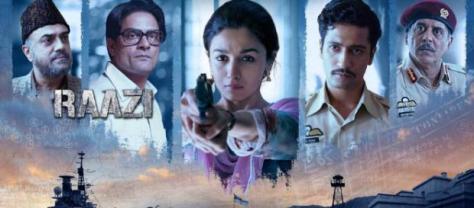
SPOILER ALERT: If you have not seen Raazi, please don’t read this review because it contains spoilers.
Rabindranath Tagore, the composer of the poems that serve as the national anthems of India and Bangladesh, wrote an essay on nationalism in which he asserted, “it is my conviction that my countrymen will gain truly their India by fighting against that education which teaches them that a country is greater than the ideals of humanity.” In a letter to a friend, he wrote, “I will not buy glass for the price of diamonds and I will never allow patriotism to triumph over humanity as long as I live.”
The Gayatri mantra, as it is called these days, has been assigned a very important position in Hinduism. One is supposed to pray to the Sun god with this verse every morning and evening. It is supposed to be a prayer to the Divine Light to guide our mind in the right direction, and to show us the correct way to live life. At the thread ceremony, which was a rite performed as the initiation of a Brahmin child’s education (samskarajanma or dwijatva i.e. second birth), the Gayatri mantra is spoken in the child’s ear because it is a prayer to guide the mind. It becomes his daily prayer to god for the right guidance and upliftment of mind for his whole life henceforth.
However, this verse was composed in a particular political context, understanding which expands our understanding of what is called Hinduism today.
This verse is composed by the great poet-priest Vishvamitra Gathina, and is selected from a poem of eighteen verses, the 62nd poem of the third mandal of the Rigveda. The major portion of this third mandal or group is composed by Vishvamitra. ‘Gayatri’ is actually the name of the metre that the verse is composed in. The verse is about god Savita, i.e. the sun, and the correct name by which this verse was originally known is the ‘Savitri’ mantra.
Gayatri is not the composition of an ascetic sage. It is written by a poet-priest who was a born politician, a Rajarshi as the later Sanskrit calls him. This was a time when all good poets worked as professional priests. Composition of literature had no existence separate from religion in those times.
New Socialist Initiative Condemns Hindutva Engineered and Inspired Atrocities on Dalits
Hardly a day passes without headline news of some or another atrocity on Dalits. On 24 May, a Dalit man in the Ahmedabad district was beaten and his house attacked by a gang of socalled ‘upper’ caste men after he had attached Sinh to his name on his facebook post. On 21 May a dalit ragpicker was beaten to death in a Rajkot factory. Atrocities on Dalits are occurring in the midst of a public ideological environment against them. On 26 May news came of a private school in Delhi asking 8th class students to write a note on how reservations help undeserving and unqualified people for their summer vacation homework. According to National Crime Record Bureau reports for recent years, between 10 to 15 thousand cases of crimes are reported under the Prevention of Atrocities act every year; an average of 35 crimes per day. Many times more crimes actually go unreported. In 2016 Indian courts had over 45 thousand cases under this act. Out of the 4048 cases decided, conviction occurred in 659 cases only. That is, five out of six cases of atrocity against Dalits did not result in any punishment. The number of attacks against one of the weakest and the poorest sections of the society, and the abysmal rate of conviction would put any civilized society to shame, but India chugs along. Continue reading Statement on Atrocities on Dalits : New Socialist Initiative→
After the Modi government came to power, citizens of this country have seen gate after gate of Hell — the Narakas — open relentlessly to suck them in mercilessly or condemn them to be helpless spectators to unspeakable acts of injustice and violence. We have by now crossed the Arbudanaraka and the Nirarbudanaraka many times; the ordeal of having to watch evil unfold in the attacks on people in the name of what they eat, how they love, what they speak, who they pray to, which caste they were born into, what gender was assigned to them at birth — the list is growing day by day. We seem to be reduced to waiting endlessly at the doorsteps of police stations, courts, morgues, nearly overpowered by the stench of power and majoritarian hubris, fighting to stay conscious, waiting for the dead, broken, defiled, or dismembered bodies of our kin, our friends, neighbours, people. For instance, can one ever forget how we stood in sheer anxiety outside the Supreme Court, truly like souls awaiting judgment at the gates of Vaikuntam, reduced to droplets of pure worry? Those of us who fought for Hadiya’s rights can hardly forget.
കേന്ദ്രത്തിൽ മോഡിസർക്കാർ ഭരണത്തിൽ വന്നതിനു ശേഷം നരകത്തിൻറെ വാതായനങ്ങൾ ഒന്നൊന്നായി പിളരുകയും അവ നമ്മേ വിഴുങ്ങുകയും മഹാപാതകങ്ങൾക്ക് നിസ്സഹായരായ ദൃക് സാക്ഷികളാവുക എന്ന അപാരപരീക്ഷണത്തിനു നാം വിധേയരാവുകയും ചെയ്തിരിക്കുന്നു. നിരർബുദനരകവും അർബുദനരകവും പല വട്ടം നാം കടന്നിരിക്കുന്നു. മാട്ടിറച്ചിയുടെ പേരിലും പിറന്നു പോയ ജാതിയുടെയും മതത്തിൻറെയും പേരിൽ നിരപരാധികളായ മനുഷ്യർ ഇവിടങ്ങളിലേക്കു വലിച്ചെറിയപ്പെടുന്നത് അധികവും നിസ്സഹായരായി കണ്ടുനിൽക്കേണ്ട ദുര്യോഗം താങ്ങാവുന്നതിലും അധികമായിരിക്കുന്നു. Continue reading മഹാനരകങ്ങൾക്കെതിരെ : ഏപ്രിൽ 23ൻെറ പ്രതിഷേധക്കൂട്ടയ്മയ്ക്കു വേണ്ടി ഒരു കുറിപ്പ്→
लोग अब समझने लगे हैं कि अपने संकीर्ण एजेंडे को आगे बढ़ाने के लिए सत्ताधारी जमातें भले डॉ आंबेडकर की मूर्तियां लगवा दें, मगर तहेदिल से वह मनु की ही अनुयायी हैं.
एससी/एसटी एक्ट को कमज़ोर करने के ख़िलाफ़ बुलाए गए भारत बंद का दृश्य. (फोटो: पीटीआई)
2 अप्रैल का ऐतिहासिक भारत बंद लंबे समय तक याद किया जाएगा. जब बिना किसी बड़ी पार्टी के आह्वान के लाखों लाख दलित एवं वंचित भारत की सड़कों पर उतरें और उन्होंने अपने संघर्ष एवं अपने जज्बे से एक नई नजीर कायम की.
आजादी के सत्तर सालों में यह पहला मौका था कि किसी अदालती आदेश ने ऐसी व्यापक प्रतिक्रिया को जन्म दिया था. ध्यान रहे कि इस आंदोलन के दौरान हिंसा हुई और चंद निरपराधों की जानें गईं, उसे कहीं से भी उचित नहीं कहा जा सकता!
मगर क्या इसी वजह से व्यापक जनाक्रोश की इस अभिव्यक्ति ने उजागर किए सवालों की अहमियत कम हो जाती है? निश्चित ही नहीं!
The raging controversy over the cover of a breastfeeding woman looking up with no shame about her exposed breast has, quite expectedly, sent conservative fools in Kerala into a raving frenzy. The case against the model and the conservative breast-beating going on now must be dismissed summarily as useless bullshit.
However, I must say that I had very mixed feelings about the cover and the defense offered for it by many. For many arguing in its defense seem to be saying that all one needs is gratefulness for the effort to open up the issue and the space gained, and all else raised isn’t really worth the trouble. Even this intelligent piece in the Ladies Finger slides into such complacency.
If you ask me, this cover is not of a woman breastfeeding, but of one who is declaring her determination to be comfortable while breastfeeding, thereby reinforcing her commitment to breastfeed her baby. I think this difference is important. Breastfeeding is a very intimate act; it is highly physical. If the mother and child are well, happy, and don’t have issues that may make this feel like a chore or hard to do, then it is very highly pleasurable too. As a woman who has breastfed continuously for 9 years with just a short break of a few months during my second pregnancy, I can say this: breastfeeding is also ‘breastfeeling’, so your attention is on the act, and you really don’t want to focus on anything else, especially irritating stares. It is as pleasurable as lovemaking. Many years later (my daughters are 25 and 20 this year), when I remember the act, my nipples rise, tingling. Breastfeeding was also play time, when the little one played with her mum’s breast with her tiny fingers feeling and squeezing it; and my younger one was especially playful, twisting her tiny body in sheer pleasure, and sometimes, remaining still and then naughtily sinking her little tooth into the nipple, rolling her eyes up to check the reaction from her mum! So when we traveled, I always carried a big, opaque duppatta with which I made a ‘tent’ over our heads that covered us completely. We would be sitting in a corner seat in the train, and having fun, she sitting on my lap (and later the tent would be big enough for the three of us, myself, my six-year-old, and one-year-old, the former listening to a story, and the latter happily suckling). We would sing, tickle, do what not. Demanding the freedom to breastfeed without being too bothered about modesty and in public without anyone staring, for me, then, is demanding the right to such intimate pleasure in public. In that sense, this should have been one of the afterlives of Kerala’s Kiss of Love protests.
I don’t have the image of me breastfeeling happily, but here is the picture of my little one after one of our sessions. Does anyone doubt anymore, that it is indeed breastfeeling, not just breatfeeding. Here is she, looking ecstatic, the milk still in her little mouth!
However, the sartorial codes of the model make me feel very disconcerted. Sharanya Gopinathan, in the above piece, argues that Grihalakshmi caters to largely savarna women probably. But no, savarna women are not the demographic majority, and they are possibly not the dominant section in the magazine’s readership. But savarna culture is pervasive in Kerala, cutting across caste and faith, and the cover clearly panders to it. The model’s huge sindoor — mark you, wearing the sindoor is a very recent import from the north to Kerala, the demure-looking sari, and the girl-next-door look was probably calculated to make up for the exposure of the breast. So we have a young woman who announces through her sindoor that she is married — legally and customarily penetrated, to adopt a Foucaldian way with words — and modestly dressed, that she belongs to the elite, evident in her professionally-groomed looks, and also tells the world that she is determined to breastfeed no matter how much the lechs stare. Intended or not, it brings to the mind too readily the dream-girl of the Hindutva modernist vanguard: the educated woman, maybe even a corporate professional, with looks that fit that environment, who is determined to mother well and indeed stay close to her biological ‘essence’, and of course whose maternity has not been allowed to affect her slim body and maidenly-looking breasts. The idea, I think, was to say that such a woman can and should be brave enough to fend off irritating stares — but it backfired with the conservatives, apparently, who are not ready to concede any quarter. Breastfeed she must, remember her womanhood, she must, look pretty and stay slim she must — and demand no open breastfeeding.
When will we see the image of a woman you see in the bus stops every day in Kerala, harried, sweaty, with her budget-beauty parlour looks and less-than-chic sartorial choices sitting in a bus shelter perhaps and immersed in feeding her infant, her not-perfect breasts bulging out un-prettily, caring nothing at all for what the world thinks? She can of course be imagined as staring back defiantly, but the glow of pleasure is what should animate her being and fill her with courage. Normination to be a good biological woman and mother. Not the developmentalist commitment to produce healthy babies. What ultimately counts is the space of intimacy between a mother and her child, which is physical, which involves pleasure — and we need to demand that women should be able to create it everywhere.
And why on earth are we waiting for Grihalakshmi to lead? Thankfully, third wave feminism in Kerala is devoid of prudishness and values pleasure — and among our third gen we have a great many artists — poets, painters, photographers, of many genders! We should be able to assert that what is at stake is breastfeeling, not just breastfeeding. Let us reduce ourselves to neither those who sneak in a litany to biological motherhood through their seemingly radical cover, nor with those who want to see nothing but physical nourishment in breastfeeding.
This is a guest post by TANNISTHA SAMAMTHA andMUKTA GUNDI
With the success of “PadMan”, Akshay Kumar has established himself to be a bleeding-heart ‘feminist’. News channels are pouring praises for a film that introduces a ‘bold’ topic while regurgitating the crucial link between safe menstrual practices and women’s health. While the message is old (and important), the euphoria around it is new. Continue reading PadMan, Patriarchy and the Poor Man’s Innovation: Tannistha Samantha and Mukta Gundi→
Happy International Mother Language Day. This day, declared by UNESCO, is straight up South Asia’s alley as it celebrates linguistic diversity and multilingualism. In other words, it celebrates each Indian.
Here’s what you can do from now on to celebrate it:
1. Resist Hindi imposition. An official language is not the national language. Persian was the language of administration for close to three hundred years, Sanskrit has been the language of knowledge for close to two thousand years, but neither were the only languages in the room. And we know what happened to those languages over time.
2. Defend diversity: Understand that, as in nature, numerical strength is not might (e.g., there may be more cockroaches in the world than humans), so if you belong to a large group of people, then this doesn’t mean that your language is better and more representative of the ‘heart and soul’ of ‘Indianness’. In India, literally hundreds of languages with populations ranging between 500 to 10,000 have flourished (many reported over all the Census) because