Category Archives: Debates

Saffronization, Yoga and the Kerala Left: CP Geevan

Guest post by CP GEEVAN

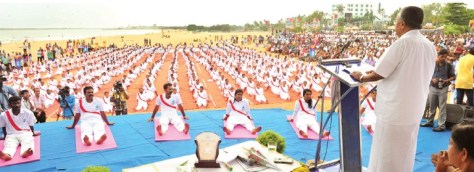
There are many ways in which ‘saffronization’ is being carried out at various levels. It takes the form of virulent battles at one extreme and persistent soft-campaigns at the other. It really does not require deep skills in socio-political analysis to see this entire spectrum of insidious divisive politics – all of that are in the clearly visible band. Surprisingly, the CPI(M) seems to have taken the attitude of a friendly match when it comes to certain variants of soft-saffronization, pretending not to see what is going on behind often innocuous-sounding things like Yoga – the latest weapon being deployed in the saffronization campaign. Instead of questioning the premises of this misplaced ‘national celebration’ and its belligerent imposition that defines the Modi government move, the party has chosen to play a friendly match by wholeheartedly joining the soft-saffronization race.

Pinarayi Vijayan at CPI-MK's Yoga event
Pinarayi Vijayan at CPI-MK’s Yoga event

The CPI(M, Kerala syndicate) has, in many ways, outperformed the RSS in Kerala so much so that the hyper-active media in Kerala had very little to report on how BJP and RSS celebrated yoga day in God’s Own Country. It seemed the Sanghis were pleasantly surprised at the saffronization of the CPI(M) itself! May be, the CPI(M) is gloating over how it out-smarted the Sanghis at their own game but that is not how it works in the world of everyday politics. For their part, the Sanghis could find nothing to object to in the way the new government in Kerala celebrated yoga. It seemed the Gods came to the CPI(M) party headquarters to pay obeisance to the newly enthroned in their glorious new clothes, new language, new style, new gait, new approach, and, of course, some inklings of a new, disquieting politics.

Continue reading Saffronization, Yoga and the Kerala Left: CP Geevan

Gandhi – A Religion of the Question: Ajay Skaria

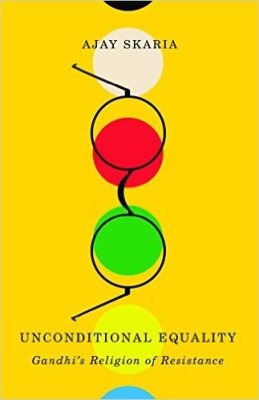
[The following is the ‘Preface’ to AJAY SKARIA’s recent book, Unconditional Equality: Gandhi’s Religion of Resistance by Ajay Skaria. The preface raises interesting questions not only about Gandhi’s politics but also about the idea/s of secularism and religion in what we might call a postsecular world – a world that is, where the naive and uninterrogated binary between the two terms is constantly put into question. Also of interest to readers might be the attempt made by the author to read Gandhi’s writings as a long and ongoing struggle to articulate or ‘understand’ his own politics – a politics that Skaria claims is as much premised on equality among humans as it is on the equality of all being/s.]

Unconditional Equality by Ajay Skaria

Somewhere in the early 2000s, while preparing to teach Mohandas Karamchand Gandhi’s English translation of Hind Swaraj to my undergraduate class, a passage about history in the text intrigued me. Since I happened to have the Gujarati version of that text at hand, I consulted it. The divergence is striking. The Gujarati text criticizes “history” (the English word occurs in the Gujarati text) and contrasts  it to itihaas [usually translated as “history”]. The English text criticizes “history,” but in it there is no equivalent for itihaas; the contrast between history and itihaas is thus obscured. The gap between the Gujarati and English texts, I have since come to realize, is symptomatic of Gandhi’s struggles to think his politics. What this politics involves is by no means clear to him; perhaps he writes so prolifically and indefatigably (his collected works run to ninety-eight volumes in English) precisely in order to try and understand his own politics. This politics becomes even more intriguing when we attend not only to Gandhi as an author or “intending subject,” but to his writing.[1] By dwelling in and on the gaps (between Gujarati and English and also within each of these languages) in his writing, this book tries to draw out his politics.

For me, writing this book has been difficult also because of another gap—that between Gandhi’s insistence that there can be “no politics without religion” and the secular inheritance that I have, as far as I know, no desire to abandon. Gandhi repeatedly describes satyagraha (his most famous neologism, which he coins initially as a translation of “passive resistance”) as his “dharma” or “religion,” even as the religion that stays in all religions.[2] Symptomatic of my difficulty with this religious politics was my inability for long to even recognize it. When Vinay Lal first asked me in 2007 to write an essay on Gandhi’s religion for a volume he was planning on political Hinduism, I protested that I was not interested in this aspect of Gandhi. But with his characteristic persistence, Vinay did not accept my protests, and I ended up writing that essay, which became a precursor of this book.

In the process, my own understanding of dharma and religion as “concepts” has been transformed.[3]

Continue reading Gandhi – A Religion of the Question: Ajay Skaria

Stop Trying to Portray Us as Extremists: Dalit Human Rights Movement

The police investigation about the bomb blast at the Kollam Collectorate on 15 June 2016 has now turned against us. Neither the organization nor its activists have any involvement in this incident. The accusation against us is just a ploy to use draconian laws such as the UAPA to destroy dalit-adivasi resistance.

The demeaning and enslaving social norms in Kerala have, since centuries, denied dalit people the most basic human rights such as the right to education, the right to decently clothe one’s body, the right to travel on public roads, and express one’s views. But India became a democracy that aimed for social democratisation, and Dr B R Ambedkar raised the possibility of social equality and reservations for the underprivileged groups through the Indian Constitution. Yet, sixty-five years later, the classes fundamental to this society have made no social, economic, or cultural progress and they continue to endure caste slavery and and exploitation in all areas of public life. The mainstream political parties who surfaced as the protectors of these classes have never offered them complete protection at any time. Though they have been faithful followers and workers of these parties, members of the disadvantaged groups have had little economic security; they have lacked social education; they have had to cry out for tiny parcels of land. Continue reading Stop Trying to Portray Us as Extremists: Dalit Human Rights Movement

Crushing Dignity, Force-feeding Honour: The CPM is Back in Form Again!

The hunt, it seems, is on again. The CPM in power has begun to show its fangs again, and shamefully, they seem to threaten only dalit people who refuse and criticise their disciplinary/welfarist embrace.  In north Kerala, two dalit women were arrested for having allegedly attacked a DYFI leader who abused them in casteist terms. In the south, the persecution of the Buddhist Dalit Human Rights Movement (DHRM)seems to have begun afresh, with the police and the press foisting on them responsibility for the recent bomb blast at the premises of the Kollam Collectorate. The two women mentioned belong to the Congress party; as for the DHRM, the CPM has had a long-standing grouse against them, carried forward now from their last term in power. I am not sure, but the recent ouster of Laha Gopalan, the leader of the Chengara land struggle in the wake of the CPM’s return to power, could be part of this story too. I have no love lost for that man, who evoked the name of Ambedkar but ran the village set up by the landless in Chengara like a crude caste headman. But the timing of his expulsion and the way the village seems to be under the thumb of the police arouses discomfort. Continue reading Crushing Dignity, Force-feeding Honour: The CPM is Back in Form Again!

A Case for Animals against Executive Culling: Arjun Joshi

Guest post by ARJUN JOSHI

The issue with killing animals highlights an anomaly of sorts. These animals survive on the borders of our moral concepts; the consequence is that we sometimes find ourselves according them a divine moral status, while at other times denying them even basic moral status. Prakash Javadekar, the Union Minister of State for Environment, Forests and Climate Change, recently sanctioned the mass-killing of wild boar in Uttarakhand, nilgai in Bihar and rhesus monkey in Himachal Pradesh. More animals such as peacocks (Goa) and wild elephants (West Bengal) have been declared to be vermin by the state governments, paving the way for their culling too.

Javadekar’s defence is that his orders are premised on complaints his Ministry has received from multiple State governments claiming that the animals are damaging farm-lands.

Construing the actions of an individual, irrespective of their arbitrariness, risks confusing the symptom for the disease. Today, Mr. Javadekar’s actions are based on an ill-informed interpretation of the Wildlife Protection Act of 1972. The Act stipulates the protection of all wild species, barring vermin. By definition, vermin include common crows, fruit bats, mice and rats. A notable exception is made when there is a direct threat to human life by wild animals, and it requires immediate intervention. Apart from these, arguably, justified reasons, the Ministry is disallowed from ordering culling of any other animal. Unfortunately, Mr. Javadekar has bypassed the existing framework, by opting to declare an entire species as vermin – the convenient route out of planned and strategized animal management.

Continue reading A Case for Animals against Executive Culling: Arjun Joshi

[Audio: Hindi] Prashant Jha on Upper Caste Madhesis taking the Sorry Pledge

In the second instance of what I hope will become a regular feature on Kafila, I caught up with fellow journalist and Kafila contributor Prashant Jha on the We Are Sorry Campaign for Social Reform in Madhes , where upper-caste Nepali Hindus acknowledge they have benefited from the centuries long oppression of pretty much everyone else.

In our conversation Prashant addresses the substantive and well-founded criticism of the pledge [another example of upper-castes setting the terms of debate and discourse, largely symbolic] as well as broader questions of Nepali politics and nation-hood.

He will respond to comments on this site. Let me know if there are any particular themes you would like us to explore in our new audio work. All audio files in this series are freely downloadable, and shareable – so you can download them to your phone and listen on your commute to where ever.


Resist the Modi Regime’s Assault on Students, Reject the Subramaniam Panel Report on Student Politics: Shehla Rashid

Guest Post by Shehla Rashid

When politics decides your future, decide what your politics should be !

Shehla Rashid (AISA), Vice President JNUSU, speaks at a student protest, during the 'Occupy UGC' Movement
Shehla Rashid (AISA), Vice President JNUSU, speaks at a student protest, during the ‘Occupy UGC’ Movement

The recent government constituted panel‘s (headed by former cabinet secretary T.S.R. Subramaniam) report on student politics is unconstitutional, highly regressive and politically motivated, and signals the upcoming onslaught of total commercialisation of education and imposition of Hindutva ideology in universities. The TSR Subramaniam Panel’s report is the logical follow up to the Birla Ambani report (which was submitted in 2000), following which student unions across the country were banned. The Birla Ambani report had lamented that student unions are not allowing commercialisation of education: we accept the charge and take pride in it! We believe that education should be a right of everyone, not a privilege of a handful of people.

Continue reading Resist the Modi Regime’s Assault on Students, Reject the Subramaniam Panel Report on Student Politics: Shehla Rashid

रौशनी के बीज बोने का माददा – ‘अंधविश्वास उन्मूलन’ पुस्तकत्रयी के बहाने चन्द बातें 


(‘पहल’ के आगामी अंक हेतु )

Andhavishwas Unmoolan : Vichar - 1

1.

स्मशान में कवि सम्मेलन और वह भी अमावस की पूरी रात।

पिछले साल के अन्त में पुणे से आयी इस ख़बर की तरफ बहुत कम लोगों का ध्यान गया था। ( देखें इंडियन एक्स्प्रेस 14 नवम्बर 2015) उधर शहर में लोग दीपावली मना रहे थे और वहां सैकड़ों की तादाद मंे एकत्रित लोगों के बीच कविताएं पढ़ी जा रही थीं, एक कविता संग्रह का विमोचन भी हो रहा था, कुछ सांस्कृतिक  समूह भी बीच बीच में अपनी प्रस्तुतियां दे रहे थे। पुणे के उपनगर बोपोडी की स्मशानभूमि का परिसर उस अलग ढंग के कार्यक्रम का गवाह बना था।

‘अमावस्या की पवित्र रात में स्मशान में कवि सम्मेलन’ शीर्षक से आयोजित इस कार्यक्रम के मुख्य आयोजक थे , महाराष्ट्र अंधश्रद्धा निर्मूलन समिति – जिसके निर्माण में शहीद विचारक डा नरेन्द्र दाभोलकर ने पहल ली थी – तथा सिद्धार्थ संघ और सिद्धार्थ महिला संघ। समिति के सदस्यों द्वारा गाया एक गीत काफी चर्चित हुआ, जिसके बोल थे ‘बो रहे हैं हम प्रकाश बीज’। भूतों-प्रेतों के ‘अस्तित्व’ या उनके ‘विचरण’ को लेकर समाज में व्याप्त भ्रांत धारणाओं को चुनौती देने के लिए अंधश्रद्धा निर्मूलन समिति के बैनर तले आयोजित इस कार्यक्रम ने बरबस कुछ समय पहले कर्नाटक के बेलागावी सिटी कार्पोरेशन के अन्तर्गत आते वैंकुंठ धाम स्मशान में हुए एक अन्य आयोजन की याद ताजा कर दी थी,  जहां कर्नाटक के उत्पादनशुल्क/एक्साईज मंत्राी जनाब सतीश जरकीहोली ने सैकड़ों लोगों के साथ वहीं रात बीतायी थी अंौर वहां भोजन भी किया था। याद रहे कि महाराष्ट्र की तर्ज पर कर्नाटक विधानसभा में अंधश्रद्धा विरोधी बिल लाने में अत्यधिक सक्रिय रहे मंत्राीमहोदय दरअसल लोगों के मन में व्याप्त इस मिथक को दूर करना चाहते थे कि ऐसे स्थानों पर ‘भूत निवास’ करते हैं। Continue reading रौशनी के बीज बोने का माददा – ‘अंधविश्वास उन्मूलन’ पुस्तकत्रयी के बहाने चन्द बातें 

Ashley Tellis ko Gussa Kyun Aata Hai? What makes Ashley Tellis so Angry: Pallavi Paul

Guest Post by Pallavi Paul.

[ This is a response by Pallavi Paul to a post by Ashley Tellis titled ‘Indians are racist, but Africans are not nice either’ that was published recently on the Daily O]

Let me, at the outset state that I feel almost bad taking on such a soft target . I say soft because there is nothing redeemable about Ashley Tellis’ hatred towards ‘dangerous’, ‘morally corrupt’, ‘threatening’ and most importantly ‘unfriendly’ Africans. However, because we are dealing with someone who stakes claim in political-critical thought (or so I am told), this is important to do.

While Tellis cursorily signposts the odd murder and some statements made by a few ministers, he dedicates the rest of the article to creating a portrait of these “Africans” (an all subsuming term that can accommodate an entire continent). By having been a resident of Kishangarh, a colony in Delhi where some ‘Africans’ also happen to live, he takes on the role of the expert in ‘African’ behavior. He produces eye witness accounts of the depravity of these people.

Continue reading Ashley Tellis ko Gussa Kyun Aata Hai? What makes Ashley Tellis so Angry: Pallavi Paul

The Bose Republic


The recent violent event in Mathura has  outraged many people. But more than anger, there is bewilderment. It is difficult for people to accept that right in the heart of a town like Mathura, part of the mainland, there existed and flourished  a liberated zone. Liberated zones in our imagination are created only by Naxalites or Maoists in the jungles of Chhattisgarh or Jharkhand. And they are inspired by ‘alien’ ideologies like Marxism or Maoism. This makes it easy for us to label them as ‘anti-nationals, conspirators’ who are out to dismember our nation. They have ‘collaborators’ hiding in places like JNU, masquerading as students and teachers. Continue reading The Bose Republic

Islamic Banking in India – For Financial Inclusion of Muslims or to squeeze them further ?


(Photo Courtesy : http://www.malaysiagazette.com)

Faith based banking in a country which has secularism enshrined in its constitution ! Does not it sound anachronous ?

Well, as far as the present dispensation at the centre led by BJP is concerned – which has an altogether different take on secularism – it does not seem to think so. And that’s why it has gladly accepted the proposal by the Saudi Arabia based Islamic Development Bank (IDB) – an international investment organisation – to start its operations here. In fact this proposal is considered a positive outcome of PM Modi’s visit to Saudi Arabia sometime back.( April 2016) Although a date has not been announced when the Bank would start its operations here, all the formalities regarding its launching have been completed and even the city for its first branch in India has been identified. Ahmedabad would see the first branch of this Bank. Continue reading Islamic Banking in India – For Financial Inclusion of Muslims or to squeeze them further ?

On the Need for Obscene and Offensive Humour: Rohit Revi

This is a guest post by ROHIT REVI

Tanmay Bhat, popular Stand Up Comic, recently released a video on the popular social networking platform SnapChat, imitating Sachin Tendulkar, the popular cricketer, and Lata Mangeshkar, the popular Musician. He called it ‘Sachin vs Lata Civil War’, where the two figures argue over who the better cricketer is, Tendulkar or Kohli. It was almost immediately picked by right-winged political groups, such as the BJP and the MNS, and over the course of the day, the few seconds long video became about ‘Tanmay vs Indian Culture’, ‘Comedians vs The Nation’ and so on. Mumbai Police consulted legal experts, in the meanwhile asking YouTube and Facebook to take the video down. The mainstream media, held hour long debates in relation to the video, and those who tuned in heard about ‘drawing lines’ and ‘crossing boundaries’, amidst drowning shrieks on, again, what ‘our’ culture is and what it is not. As customary, MNS Leader Ameya Kopkar, issued a quick threat to assault him, if he ever appeared in public. Sunil Pal, the comedian, called the young brand of comedians of which Tanmay is a part, a group “filled with lesbians and gays”. An effigy was burnt.

This article is not about whether the video was funny or not. It is about a certain brand of offensive humour and the need for it. Continue reading On the Need for Obscene and Offensive Humour: Rohit Revi

Exit Hindutva Terrorists, Enter Lashkar bombers – Towards Clean Chit to Samjhauta Bombers ?

Whether Indian Investigating Agencies Are Being Turned Into Voices of US Intel Agencies

Whether Indian Intelligence Agencies have decided to function as new ‘post offices’ of US intel agencies ? Put it other ways whether US intel inputs have started overriding the meticulous investigations done by Indian intelligence agencies?

There are enough indications which seem to corroborate this observation.

And perhaps the latest in series seems to be the Samjhauta Express bomb blast case, where NIA seems to be contemplating putting the blame on Lashkar terrorists and absolving the Hindutva terrorists involved in the case basing itself on some vague input from US supposedly involving Lashkar-e-Toiba operative. Continue reading Exit Hindutva Terrorists, Enter Lashkar bombers – Towards Clean Chit to Samjhauta Bombers ?

Ambedkar Cannot be Adopted or Appropriated by Hindutva: K Satyanarayana

Transcript and translation of lecture  by Prof. K.SATYANARAYANA, speaking at the launch of book, Ambedkar Can Neither Be Adopted Nor Appropriated by The Hindutva Elements. The book, authored by Bojja Tharakkam, K. Satyanarayana, K. Laxminarayana and K. Y. Ratnam. It was launched in Hyderabad in July last year and is a reply to RSS’ Organiser special edition on Ambedkar. The text and video of the original Telugu lecture received by us via DALIT CAMERA.

All the friends who gave me this opportunity, to the many Ambedkarites present in this hall and to the very senior members, activists and intellectuals, I thank you all. After Anand Teltumbde has spoken, there isn’t much left to speak because he covered all the information in this book and also described completely about a lot of aspects about Maharashtra, about Ambedkar’s like and his work. Therefore there might not be much new information in my speech, but while writing this book, the distortions they made, or the attempts of RSS in relation to Ambedkar, as there is a need for historical context, I will speak about some of those issues. Firstly what Respected Mr. Tarakam has said is, to read some of the names of essays in the Organiser as the book is not available to everybody. When this book Organiser came out, generally RSS-BJP, when they talk about Ambedkar or about Babri-masjid, what we think is that they speak lies, false words, and mistruths and therefore there isn’t any danger as nobody will believe in their load of rubbish and lies. We think that way and if people understand the lies and if they don’t follow those words, there is no danger, but with this same type of propaganda, they completely changed the normal common-sense of the people and today Modi, as a K.D (drawn from an old colonial police/ legal category, it has become a Telugu expression that suggests a person with undesirable traits), as our brother has sung, is sitting in power.

Continue reading Ambedkar Cannot be Adopted or Appropriated by Hindutva: K Satyanarayana

Response on the Suspension of Registration under the FC(Regulation) Act, 2010 : Lawyers Collective

Guest Post by Lawyers Collective

The Lawyers Collective condemns the blatant attempt  of the government of India to victimize the organization and its office bearers India Jaisng and Anand Grover .This is noting but a gross misuse of the FCRA Act which is being used to suppress any form  of dissent . it is far too well know that both Anand Grover and Indira Jaising have represented several persons in their professional capacity as lawyers is several cases against the government and the functionaries including  the President of the BJP party ,  Amit Shah  protesting his discharge in the Sorabudin murder case . The lawyers collective intends to challenge the order as   unconstitutional and required to be set aside . 

The order/show cause notice is a malafide act and an act of vindictiveness on the part of the Government. This is being done because of the cases that Lawyers Collective (‘LC’) and its Trustees, Ms. Indira Jaising and Mr. Anand Grover, are involved in, including but are not limited to Sanjiv Bhatt, Yakub Memon and Priya Pillai. The aim is to destroy the credibility of LC by leaking it to the media, before even serving it on LC. LC till today has not received the order purportedly issued on 31st May, 2016, though it is available to the press. Continue reading Response on the Suspension of Registration under the FC(Regulation) Act, 2010 : Lawyers Collective

Statement against the Attack on the ‘Velivada’ in Hyderabad Central University: SC/ST Faculty Forum and Concerned Teachers of Hyderabad University

Guest Post by SC/ST Faculty Forum and Concerned Teachers of Hyderabad University

In the early hours 28th May 2016, at around 2 P.M., the authorities at the University of Hyderabad removed the tents erected in North Shopcom around the Velivada and the venue of protest following the death of Rohith Vemula. This happened in the darkness of night, shrouded in secrecy and utterly insensitive towards the turmoil it was bound generate within the student community. Such an act reaffirms the dictatorial stance of the present administration as well as its intolerance to dissent.

The removal of the tent is a clear act of provocation against students since it is well known that they are emotionally attached to the Velivada and consider it as a place of mourning and memorial for Rohith. Especially for the Dalit students, it remains the site of challenge against caste discrimination. Further, bringing down the posters of Dr.Babasaheb Ambedkar’s quotes that surrounded the tent is a grave insult to the Father of the Constitution of this country and an atrocity in itself. It is indeed ironic that the university administration that overtly pronounces its intent  to celebrate Dr.Ambedkar’s 125th birth anniversary for a year has no qualms about removing his posters, or barring his grandson, Prakash Ambedkar, from entering the university. Such actions unmask the true character of the administration; revealing its deeply discriminatory, apathetic and disrespectful attitude towards Dalits and their leaders.

Perhaps the University officials have long forgotten that a University is not to be ruled and subjugated through the military doctrine of “shock and awe” (who can forget George Bush’s now ill famous use of the term during the military invasion of Iraq by the US in 2003!). Instead, patience, maturity and genuine dialogue with the students alone can help us through these difficult times. Unfortunately, the authorities have acted in an extremely unbefitting manner, without the slightest concern for the feelings of their own students. Further, this act of destruction appears doubly mindless and vindictive because the presence of a tent in the Shopcom area does not harm anyone. In fact, through the scorching summer, many people take shelter under it beating the intense heat—be it the students having their food there or other workers who need to be around the Shopcom area. Therefore, we see absolutely no justification for its removal, that too in such a stealthy and unceremonious manner, taking advantage of the the anonymity of the night during vacation. Clearly the authorities are well aware how heartless and unethical such an action is and the serious opposition that it is sure to encounter if carried out during daytime.

The thoughtless desecration of the Velivada compels us to ask a few critical questions. Is it necessary to instigate confrontations in a campus that is already struggling to come to terms with the tragic death of Rohith Vemula, the brutal lathicharge and imposition of false cases against students and faculty and the continuous harassment of students that takes many different forms? Is it not the urgent responsibility of the administration be a little more receptive to the concerns and feelings of the students, keeping in mind the larger interests of the University? It is a cruel irony that while the administration proclaims to the world that it wants “normalcy” to return to the campus, its actions remain blatantly aggressive, anti-student and discriminatory.

More than four months have passed by since that fateful night when a brilliant young man with immense potential and a strong sense of social justice gave up his life, hounded by the administration on the basis of a fictitious charge and non-existent evidence.  We may recall that the cruel and unusual punishment of suspension from hostels and all common spaces was handed out to the five Dalit students during another vacation—the winter of December 2015. Is it  just serendipity? Or, perhaps vacation is time of total impunity, when all natural and moral laws are suspended and humanity is forgotten? While the Rohith and his friends were forced to spend the cold winter nights out in the open, distraught students protesting the removal of the tent spent the day under the unforgiving Hyderabad sun near the main gate of the University on 28th May until they were pushed away by  the security guards.

Prof. Appa Rao Podile resumed office with the knowledge of a hand-picked teaching and non-teaching staff (after abandoning the University in a state of despair following the death of Rohith) on 22nd March, 2016, without so much as giving prior notice to the interim VC, Prof. Periasamy, fully aware how this would affect the protesting students and friends of Rohith. Now, once again, the Velivada has been desecrated when the world was asleep. We quote what a leading jurist Amita Dhanda had said recently with respect to the events at HCU: “A VC must not only be fair but be seen to be fair.” We leave it to our readers to decide whether the VC has ever acted or appeared to act as fair!

Evidently, the loss of Rohith’s life has not meant nor taught anything to the the University of Hyderabad authorities. Those who had closed their eyes to the evidence that screamed out that  Rohith and his friends were “Not Guilty”, have moved on. They now head important committees and speak on behalf of the University to the rest of the world. As ranks are bestowed upon the University, they brim over with pride and claim credit. It is well beyond their comprehension as to why large groups of students and faculty should hang on to a make-shift Velivada—with walls made up of flex-board images of Babasaheb Ambedkar, Jotiba and Savitribai Phule and Kanshi Ram. For them, it is time to “cleanse” and “sanitize” the Shopcom of those disturbing reminders that tell us that “Something is rotten in the state of the University of Hyderabad.”

But the memory of injustice is a powerful tool. The very same structure that has been an eyesore to the administration is our history—poignant, gut-wrenching and yet imbuing our present with direction and the strength to struggle. To recall a stirring line that has emerged through the Rohith Vemula movement: “A spectre is haunting the brahminical academia—the spectre of caste.” We welcome and embrace this history. The Velivada is the place where Rohith spent his final destitute days, anxious that his years of hard work and aspiration to give a better life to his family may come to nought. This is where we come to pay our respects and to remind ourselves that there should be no more Rohiths. Around this very place, a community has gathered—of those who may not have known each other  earlier but who understood how critical it was to work towards a world where “a man is not reduced to his immediate identity”. People thronged to this place from different Universities and from all walks of life to pay homage, and in solidarity. Those who could not come still became part of this imagined community—those from Uttar Pradesh, Bihar, Kerala, the North East, in fact, from every part of this country—threaded together by empathy and experience. Rohith became an icon and a rallying cry because his life struck a chord with the large majority of Dalit  and other minoritized and underprivileged groups in India for whom education is still a humungous struggle. More important, breaking into the bastions of higher education remain acts of transgression and trespassing. Perhaps that is why the august body that passed the fatal judgement on Rohith Vemula did not even bother to maintain a facade of impartiality. Unfortunately for them, the masses of India—the Dalit and the underprivileged, those who are the “wretched of the earth” in the immortal and evocative words of Frantz Fanon, recognized this judgement for what it is, even as it came cloaked in the language of discipline and bureaucracy.

The socially marginalized, struggling parents who dream of a better life for their children instinctively know what happened—they completely and empathetically identify with Radhika Vemula who sent her son to the big University only to lose him forever. Similarly, all those students and teachers who have relentlessly and often silently faced discrimination in the hallowed portals of premier institutions of learning also know. We, the concerned faculty and students at the University of Hyderabad know. We shall not forget. We cannot forget. The administration is bent upon erasing the Velivada. Can they erase our memory? Can they erase the memory of that fateful night of January 17th? Rohith has travelled from the shadows to the stars. We ask Mr. Appa Rao Podile and his believers, “Can you destroy the stars? Because every time, on each dark night, when we look up we will see Rohith Vemula and we will remember what he lived and died for.”

Perhaps the University Administration presumes that a Velivada rightfully and customarily belongs to the margins of the village—far far away from the modern, secular/brahminical, high-ranking spaces of the University. However, through an extraordinary and imaginative act of symbolism, Rohith and his four friends have re-installed the Velivada in the midst of the University, in our hearts and in our consciousness. We need not skirt past it or bemoan the loss of the Shopcom (as the administration has been doing). For us it is a living history of sacrifice and struggle, forcing us to continually work towards a more pluralistic and egalitarian idea of the University.

There is a writing on the wall that that the administration cannot whitewash! The Velivada can no longer be cast out into the margins; it is here to stay. The University must take note and be attentive to this momentous turn of history.

SC/ST Teachers’ Forum and Concerned Teachers, University of Hyderabad


In the Name of Fidel – The Left Reads the Mandate: Vipin Kumar Chirakkara

This is a guest post by VIPIN KUMAR CHIRAKKARA

Party has two faces: V.S. Achuthanandan (centre) with Pinarayi Vijayan (left)
Party has two faces: V.S. Achuthanandan (centre) with Pinarayi Vijayan (left) Photo and Caption Courtesy – Indian Express.

In his address to the media in Thiruvananthapuram after the Left won the mandate in Kerala, Sitaram Yechury announced two positions to be given to two leaders of his own party who had successfully contested the elections from there.  One is that of the leader of the legislative party of the CPI-M, or effectively the chief ministership of Kerala.  That went to Pinarayi Vijayan.  The other one went to V.S. Achuthanandan.  He is made the Fidel Castro of Kerala.  Yechury, the embattled general secretary of the party who is also known to be closer to VS than to Vijayan, elaborated on the function of the second position since, seemingly, he felt that people could develop doubts about the implication of this honour, if not an anxiety whether the left victory in a single assembly election is turning Kerala into Cuba.  He clarified that VS will be an inspirational symbol providing advice and direction to the new government, and added that the veteran leader could not head the government due to his advanced age and poor health.  Yechury was, of course, flanked by the state secretary of the party Kodiyeri Balakrishnan and VS himself.  The suspense thriller of this election thus had the curtain fall, with an anti-climactic scene of unity.

It would deprive us of a unique opportunity to know another meaning of the mandate if we ignore how Yechury has read it.  He interpreted the mandate in the same address to the media that was held in Kerala’s capital.  He had a special reading to offer us, indeed different from what we all would ordinarily imagine.  His reading is distinguished from ours by its methodology itself.  He does not look at the assembly elections with reference to states where elections have taken place now. According to him, elections took place in 820 seats.  He took out his cell phone and provided the statistics of the results.  The BJP could win only in 64 assembly seats, the Congress in 115 whereas the Left has been victorious in 124.  He said that this was “the absolute ground reality”.  He assured us, the anxious beings, further that this reality implied no such threat as the return of the saffron.  When a journalist mentioned to him the victory of the Trinamool Congress that had won above 210 seats in West Bengal, he said he had in mind only the national parties.  So, we are expected to understand if we haven’t yet, that the Left’s is indeed an impressive performance as a national party!

Continue reading In the Name of Fidel – The Left Reads the Mandate: Vipin Kumar Chirakkara

लाइब्रेरी २४ घंटे खोलने की मांग पर बीएचयू छात्रों को मिला निलम्बन और जेल: अमरदीप सिंह

अतिथि पोस्ट: अमरदीप सिंह 

एक ओर जहाँ हमारे प्रधानमंत्री माननीय नरेन्द्र मोदी जी डिजिटल इंडिया की बात करते हुए देश के गाँव गाँव मे WI-FI लगाने की बात कर रहे है और साथ ही वाराणसी के  घाटो  का भी WiFi करण हो रहा है वही उनके  संसदीय क्षेत्र  के इतने बड़े सेंट्रल यूनिवर्सिटी  “काशी  हिन्दू  विश्वविद्यालय” के छात्र  इंटरनेट ,लाइब्रेरी और अन्य पढ़ाई के मूलभूत सुविधाओं  से वंचित है  । वर्तमान समय मे उच्च स्तरीय शिक्षा के लिए  इंटरनेट की उपलब्धता को नकारा नहीं जा सकता।

मामला साइबर लाइब्रेरी का है जो पहले 24 घंटे खुलती थी लेकिन नए वाईस चांसलर गिरीश चन्द्र त्रिपाठी के आने के बाद यह मात्र 15 घंटे के लिए खोला  जाने लगा (सुबह 8 से रात्रि 11बजे तक ) । आपको बता दे की BHU के 60 प्रतिशत  से अधिक छात्र विश्वविद्यालय के बाहर  रहते है जहां बिजली की एक बड़ी समस्या रहती है । बाहरी छात्रों के इस समस्या के समाधान के लिए साइबर लाइब्रेरी खोली गई थी जिसमे छात्र वातानुकूलित स्थान पर  इंटरनेट व कंप्यूटर की सुविधा के साथ अपना पठन पाठन का कार्य कर सकते है । परीक्षा के दिनो में इसकी जरुरत और बढ़ जाती है|

13262321_713126608789808_531771798_o

वाईस चांसलर का सम्बधित मामले में  कहना है की जब वे पढ़ा करते थे तो सब  सुविधाएं नहीं थी ,उनके क्लासरूम में AC  नहीं था न ही कंप्यूटर की सुविधा थी, फिर भी वे पढ़े । उन्होंने जोड़ते हुए यह भी कहा की स्नातक के छात्रों को लाइब्रेरी की क्या जरूरत  और आउट ऑफ सिलेबस पढ़ने  की क्या जरुरत है ।यहाँ जानकारी के लिए बता दे की आउट ऑफ सिलेबस न पढ़ने  की सलाह देने वाले कुलपति महोदय इकोनॉमिक्स के अध्यापक रहते हुए “शिव तेरे कितने रूप ” और ” मृत्यु के बाद क्या ?” के लेखक रह चुके है ।छात्र प्रतिनिधिमंडल 500 से अधिक छात्रों द्वारा हस्ताक्षर किये गए पत्र को लेकर कुलपति महोदय से मिले लेकिन कुलपति महोदय के बातचीत का लहजा एक गुरु-शिष्य की बातचीत से कोसों दूर था, साथ ही उन्होंने स्ट्रीट लाइट में पढ़ने की सलाह दी तथा आंदोलन करने पर विश्वविद्यालय से बाहर  फेंकने की धमकी भी दी ।

विश्वविद्यालय द्वारा लाठी ,डंडे  के  दम  पर लाइब्रेरी  से जबरदस्ती निकाले जाने के कारण  छात्र स्ट्रीट लाइट के नीचे पढ़ अपना विरोध दर्ज़ करा रहे थे।  छात्र रोज रात को लाइब्रेरी के मैदान अथवा स्ट्रीट लाइट पर पढाई कर रहे थे परन्तु रात को प्रॉक्टोरियल बोर्ड द्वारा छात्रों को बेवजह परेशान किया गया और छात्रों के आईकार्ड छीने गए एवं पीटा गया। यहाँ तक की साइबर लाइब्रेरी 24 घंटे कराने  के लिए  गाँधीवादी तरीके से रात कैंपस में पढाई कर अपने हक़ की आवाज़ को उठा रहे छात्रों में से २ छात्रों शांतनु सिंह गौर (सोशल साइंस द्वितीय वर्ष  छात्र) और विकास सिंह ( पोलिटिकल साइंस शोध छात्र  ) को कारण  बताओ नोटिस जारी  कर दिया ।

इसी क्रम में छात्रों ने  प्रधानमंत्री कार्यालय के स्ट्रीट लाइट के नीचे बैठ कर प्रतिनात्मक पढ़ाई की साथ ही  दिनांक 16.05.2016 को प्रधानमंत्री, राष्ट्रपति, एमएचआरडी, इत्यादि मंत्रालयों को इस सम्बन्ध में सूचना दी गयी लेकिन प्रशासन के कान पर ज़ू तक नहीं रेंगी । पिछले 17 दिनों से स्ट्रीट लाइट में पढ़ने  को विवश  BHU छात्र  विश्वविद्यालय प्रशासन के उदासीन तथा तानाशाहीपूर्ण रवैये के कारण निराश और हताश  होकर  दिनांक 18.05. 2016 से छात्र अनिश्चितकालीन भूख हड़ताल में बैठने को मज़बूर हुए ।

विद्यार्थी सत्याग्रह के नाम से शुरू इस आंदोलन के दूसरे दिन चीफ प्रॉक्टर समेत आला अधिकारियो का एक दल अपील समेत मिला जिसमे अनशन जारी  रखने पर अनुशासनात्मक करवाई की धमकी और एक कमेटी गठन की बात थी ।

कमेटी के रिपोर्ट आने  और कौन से प्रोफेसर को कमेटी मेंबर बनाया गया है सम्बंधित कोई भी सुचना छात्रों को नहीं दिया  गया यहाँ तक की कमेटी  में छात्रों को शामिल करना तो दूर उन्होंने छात्रों का सुझाव , सलाह तक नहीं लिया |

BHU प्रशासन ने  क्रूर आमनवीय व्यव्हार प्रदर्शित करते हुए आंदोलन स्थल पर उपलब्ध पानी ,बिजली,और शौचालय की सुविधा बंद कर दी । BHU  प्रशासन आंदोलन को कमज़ोर करने के लिए अनशनरत छात्रों के घर पर फ़ोन कर परिवारजनों को डरा धमकाने का काम भी शुरू कर दिया । छात्रों को निष्काषित करने , करियर बर्बाद करने , जेल भिजवाने , उठा लेने आदि  की  धमकियां दिया जाने लगा ।

“आपका लड़का भूख हड़ताल पर है और मरने वाला है “। “आप हमारे बिरादरी के है इसलिए चेता रहे है नहीं तो अब तक आपका लड़का जेल में होता“  आदि ये प्रॉक्टोरियल बोर्ड के शब्द परिवारजनों के साथ  फ़ोन वार्ता पर थे  |

यहाँ तक की मेरे  परिवार को बुलाया गया और तमाम मानसिक दबाव बना आंदोलन छोड़ने और आगे से किसी आंदोलन में भागी न होने का मुझसे लिखित लेने में वे सफल भी रहे । मुझे मेरे परिवार के सामने जलील किया गया । दाड़ी की तरफ इशारा करते हुए वाईस चांसलर ने कहा की ये लड़कियों के दुप्पटा खींचने और छेड़ने वालो की तरह दिख रहा है । आप का लड़का रात में पोर्न देखता है और इसे आंदोलन करने के लिए पैसे भी मिल रहे है ।  मेरे कहने पर की  आरोप साबित होने पर में खुद निष्कासन लिखने कर देने को तैयार हुँ , वाईस चांसलर ने कुतर्की और बहुत बोलने वाला कह बात दूसरी ओर मोड़ दी । मेरे परिवार ने दबाव में यह कहा की अगर वाईस चांसलर को लगता  है की तुम्हारे हटने से आंदोलन टूट जायेगा तो लिख कर दे दो क्योकिं यह आंदोलन एक छात्र का नहीं है न ही समस्या किसी व्यक्ति विशेष की है ,  इसमें सभी छात्रों की भागीदारी होने चाहिए , सिर्फ एक की नहीं ।

मेरे आन्दोलन छोड़ने की सुचना पर 10 भूख हड़ताली छात्रों की संख्या 22 हो गयी । यहाँ छात्र एकता की अनूठी मिशल दिखी । कमेटी ने अपनी रिपोर्ट में लाइब्रेरी की मांग को मनोरंजन और आराम का हवाला देते हुए प्रतिबंधित साइट देखने की भी बात कही । कमाल  की बात है की जब साइट प्रतिबंधित है तो छात्रों खोल कैसे लेते  है ??? और अगर छात्र खोल भी लेते है तो यह एक प्रशासनिक विफलता है  जिस पर प्रशासन को अपने सुरक्षा कर्मियों पर करवाई करनी चाहिए । मंदिर के बाहर से चप्पल चोरी होने पर चोर को दण्डित किया जाता है न की मंदिर बंद किया जाता है । कमेटी ने रात्रि में  छात्राओं का पढ़ना अव्यवहारिक बताया है । उसी दिन देर रात वाईस चांसलर ने अपने स्पेशल पावर का इस्तेमाल करते हुए 9 छात्रों को निलम्बित कर दिया । इससे ज्यादा दमनात्मक रवैया और क्या हो सकता है की पढ़ाई की मांग और शांति तरीके से खुद को पीड़ा देने वाले अनशनरत छात्रों को आगमी वर्ष समेत वर्तमान परीक्षा, हॉस्टल आदि सभी सुविधाओं से वंचित कर दिया ।

2 दिन बाद अनशन के 10वे दिन रात 12 :30  पर BHU की स्ट्रीट लाइट बंद कर दी गई । BHU  के आसपास के सारे मार्केट बंद करा दिए गए और वाराणसी के16 थानों की पुलिस की मदद से अनशनरत  12 भूखे छात्रों को गिरफ़्तार कर लिया गया वह भी उस समय जब छात्र सो रहे थे । शायद  भारतीय इतिहास में यह पहली बार हुआ होगा की पढाई के लिए लाइब्रेरी की मांग पर छात्रों को 10दिन अनशन करना पड़ा और इतने क्रूर तरीके से गिरफ्तार कर लिया गया हो । गिरफ़्तारी के समय पुलिस की संख्या हज़ारो में थी जैसे किसी आतंकवादी को पकड़ने आये हो । मेने अपने जीवनकाल में पुलिस को इतनी सतर्कता बरतते पहले कभी नहीं देखा ।

पुलिस ने रात भर अलग अलग तरीको से मानसिक दबाव बना कर अनशन तुड़वाने  की भी कोशिश की । अगले दिन दिनाक 26 को दोपहर में छात्रों को 5000रु  के निजी मुचलके पर छोड़ा गया । तबियत ख़राब होने पर छात्रों को BHU अस्पताल में भर्ती कराया गया । आंदोलनरत  छात्रों ने आपसी सहमति से गिरते  स्वास्थ को देखते हुए अनशन 72  घंटे के लिए स्थगित  करने का फैसला किया । छात्रों का कहना है की यह आंदोलन खत्म नहीं हुआ बल्कि यहाँ से शुरू  हुआ है , हम स्वस्थ हो कर फिर आएंगे और देश भर के सभी छात्र नेताओं,प्रोफेसर ,बुद्धजीवियों ,सामाजिक कार्यकर्ताओ से यह अपील करेंगे की वह पढ़ाई के लिए हमारे इस आंदोलन के समर्थन में खड़े हो । आज का छात्र पढ़ना चाहता है , वह किसी भी प्रकार का शोषण तथा दमन बर्दाश्त नहीं करेगा ।

अमरदीप सिंह बी.एच.यू  के छात्र है

Congratulations on the Completion of Two Years of Government: Reaction of JNU student, Bihu Chamadia

Guest Post by BIHU CHAMADIA

Congratulations on the completion of two years of government. But I just want to ask a simple one line question. Completion of two years but at what cost? At the cost of increase in the number of farmer suicides, at the cost of creating war-like situations in educational institutions, at the cost of acting as a catalyst of widening the gap between hindu-muslim, at the cost of increasing imports and decreasing exports. Celebration on such a large scale because of course it is the first ever government in the history of the world to complete 2 years of governance ! With on-going crisis in the country BJP spends 1000 crores on a programme for this celebration. We would have no problem if this money was yours but sadly it’s not its ours. So now to all the tax payers who had problem with JNU raising its voice I ask you have you people become blind and deaf or are suffering from amnesia and forgot how to read and write.

Well, you speak well Mr Modi but the problem is that you only speak. You and your whole cabinet knows that each and every student of these educational institutes can give you people a befitting reply to all your one liners but we choose not to. People laugh at what your ministers says and say what a fool but I have a completely opposite view. You people are not fool you people are smart, very smart indeed.  Your every policy and every one liner can have a nice reply. Continue reading Congratulations on the Completion of Two Years of Government: Reaction of JNU student, Bihu Chamadia

बीएचयू में लाइब्रेरी को लेकर आंदोलन अभी भी जारी है: अनन्त प्रकाश नारायण

अतिथि पोस्ट: अनन्त प्रकाश नारायण

Guest Post by Anant Prakash Narayan

This is an urgent appeal from Banaras Hindu University (BHU) students to students, youth, intellectuals and journalists everywhere.  Please come to the support of BHU. Speak for BHU students. Students in BHU have been fighting for the right to study 24/7 in the BHU Library. The curtailing of the hours for which the library is open by the university authorities is a direct assault on the right to study. What else are students meant to do in an university? This is what has led students in BHU to agitate. Students even sat on an indefinite hunger strike for nine days in protest. Students have been assaulted and rusticated for their struggle to study in the library.  The hunger strike has been now lifted, because of the intense pressure of the university administration and the failing health of several students, but the struggle continues. BHU students are appealing to everyone to please send post cards in support of their demands to the Vice Chancellor of BHU.

You can also flood the VC with emails to his address  – vc@bhu.ac.in.

Bombard his office and email with messages in support of BHU students, in support of democracy and rights, for right to quality education and freedom of speech.

This slideshow requires JavaScript.

Students on Hunger Strike Were Forcibly Sent to Hospital by the University Authorities

‘बीएचयू में लडाई जारी है’

बीएचयू में लाइब्रेरी समेत 4 मांगो को लेकर 26 दिनों तक चला आंदोलन अभी भी जारी है। 9 दिनों तक चला अनिश्चितकालीन अनशन हमें प्रशासन के दबाव और साथियों की बिगडती तबीयत के कारण तोडना पडा लेकिन अपने सवालों  के साथ हम आज भी संघर्षरत है। इसलिए देश-दुनिया के सभी छात्रों, विश्वविद्यालयों और बुद्धिजीवियों से हम अपील करते हैं कि हमारे निम्न सवालों के समर्थन में आकर हमारे संघर्ष को मजबूत बनाएं और बीएचयू कैम्पस मे अभिव्यक्ति की लडाई में हमारी मदद करें
Continue reading बीएचयू में लाइब्रेरी को लेकर आंदोलन अभी भी जारी है: अनन्त प्रकाश नारायण

What the UGC Gazette Notification 2016 Portends for the State of Higher Education in India: Rina Ramdev and Debaditya Bhattacharya

This is a guest post by RINA RAMDEV AND DEBADITYA BHATTACHARYA

The much-debated API (Academic Performance Indicator) system, linking promotions of faculty members in Indian universities/colleges to a quantifiable assessment of their performance, was introduced by the University Grants Commission (UGC) in its 2010 Regulations. Since then, there has been mounting resistance and discontent among massive sections of the teaching community – forcing the UGC to withdraw the said assessment framework for a while in 2013, before reintroducing it across institutions of higher education. However, over the years, the ire of protesting teachers has translated into a sustained critique of the API system and its failure to account for the infrastructural inadequacies of public institutions as adversely impacting the promotion prospects of thousands of teachers across the country.

It was rightly argued that a point-based appraisal pattern reduces teaching as an adventure of ideas into a standardised set of visible-verifiable outcomes and deliverables, expending in this, the necessary surplus of every academic encounter. The clock-timed hours of classroom-teaching – convertible into digits and decimals – were not only incommensurate to the disaggregation of thought beyond workdays and work-hours, but also insisted on a corporate-model professionalism limiting the exact interface between the teacher[-as-service-provider] and the student[-as-client].

The perils of quantification notwithstanding, the API system practically sought to make teaching a redundant exercise in terms of ‘necessary qualifications’ for faculty promotions. With a lucrative price-tagging of the ‘value’ of research activities conducted by individual teachers outside of teaching-schedules and the consequent structures of waging intellectual productivity through the numbers of projects and publications, the API contributed to a voiding of the classroom in undergraduate colleges in many parts of the country. Forced to prove her/his levels of productivity as the most essential claim to survival and growth within the field, the teacher needed but little to do by way of engaging students. And yet, on the contrary, the government persisted with its policy of withdrawing research grants and forcing research organisations to look for alternative sources of funding to sustain their work. Consequently, teachers have been infrastructurally forced into producing dubious research in the cause of ‘career advancement’, self-funding their way into business-rackets parading as scholarly platforms.

Continue reading What the UGC Gazette Notification 2016 Portends for the State of Higher Education in India: Rina Ramdev and Debaditya Bhattacharya