Category Archives: Debates

Jazeera in Delhi: Who Can Speak Against the Sand Mafia? : Bindu Menon M

This is a guest post by BINDU MENON M

Jazeera V, who began her fight against sand mining mafia in Kerala one and a half years ago in the North Kerala coastal hamlet Neerozhukkumchal, is now on a sit-in, in front of the Kerala House near Jantar Mantar New Delhi.  She had first approached the village office, the local panchayat, police station, the district authorities and Kerala State government with the appeal to stop sand mining in the beach which grossly violated the Coastal Zone regulations. Ridiculed by the local media and intimidated and physically assaulted by the supporters of the sand mining mafia, she sat in front of Kerala State Secretariat for several weeks before moving to Delhi.  She demands that the central government should immediately take action against the gross violation of laws for protecting the coastal zones. Her struggle in front of the Kerala secretariat at Thiruvananthapuram for 68 days against the inaction of Kerala Government forced Chief Minister Oommen Chandy to invite her to his chamber for discussion. Although he assured her that he would take necessary actions against sand mining on the coast, he was reluctant to give her any written reply. She finally decided to shift her sit in from Kerala to Delhi in protest of Chief Minister’s callous attitude.

Continue reading Jazeera in Delhi: Who Can Speak Against the Sand Mafia? : Bindu Menon M

A Tihar Experience: Nitheesh Narayanan

Guest Post by NITHEESH NARAYANAN 

This account of a young student’s experience of a week in Tihar Jail as a political prisoner gives us the opportunity to reflect afresh on ‘appropriate’ punishment, in the context of the recently revived debates on the death penalty. In those debates, incarceration is assumed to be the more humane punishment, but Nitheesh’s account reopens even older debates on the prison itself as a mode of disciplining society (Foucault), Angela Davis’s stirring question – Are Prisons Obsolete? – in which she argues that the current prison system perpetuates the same power relations of race, class and gender that society is based upon, and widespread critiques of the prison industrial complex in the USA, where private corporations run prisons for profit, using prisoners as practically free labour. (It is alarming therefore, to see an argument for privatizing prisons in India being put forward as a measure to “reform” prisons!)

Here then, offering us a view of prison as a microcosmic reflection of every oppressive power structure outside it, is Nitheesh Narayanan:

Tihar Jail, Central Jail no. 4, Ward no.1, and seven days spent in Barracks 1, 2 and 3. Around thirty of us, including SFI’s National President Com. V Sivadasan and some comrades from JNU decided on a protest demonstration at Kerala House, New Delhi, in solidarity with the series of protests in Kerala against the Chief Minister involved in the Solar Panel scam and to mark our indignation at any form of corruption. There were no policemen at the gate as the protest was unexpected. We entered the compound and sat in the portico of the main building. We burned Kerala Chief Minister Oommen Chandi’s effigy, raising slogans all the while. It was when Com. Sivadasan was addressing the protestors that about a hundred policemen entered the compound and started unleashing violence on us and arrested us. Nine of us were booked under severe offences.

We spent that night in a shabby lockup room full of filth and spit, lying on a newspaper sheet. One of the inmates in that lock-up room was an accused in a crime involving a core and a half rupees and a murder. We were shocked when he told us that in order to weaken the charges against him, he had poured almost fifteen lakhs into the pockets of corrupted officials.  Continue reading A Tihar Experience: Nitheesh Narayanan

Onathallu Redux? Some thoughts on Onam

I remember, as a young child, going with my father one Onam in our ancestral home to watch the local Onam sports-and-games.My admittedly-fuzzy memory is of a large crowd of men gathered in an open paddy field or ground (I remember a lovely cloud of dragon-flies hovering above doing some sort of crazy-excited dance), getting ready for Onathallu — physical combat between
two men. Continue reading Onathallu Redux? Some thoughts on Onam

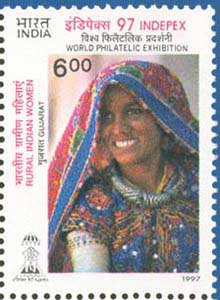
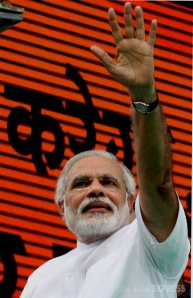
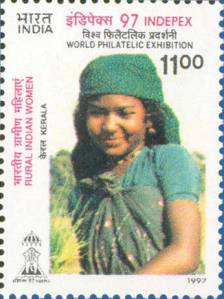
Can Narendra Modi Apologize to Four Hundred and Five Million Rural Women in India?

1744_Rural_Women_Keral 1742_Rural_Women_Gujar B_Id_424710_Narendra_Modi_

Rural Indian Women (Courtesy India Post) and An Urban Indian Man (Narendra Modi)

I watched the television broadcast of BJP’s Prime Ministerial candidate Narendra Modi’s speech at the Japanese Park in Rohini in Delhi on Sunday morning with breathless anticipation and some trepidation. With the restless anxiety that he would spin at least half a new idea, that could induce some naive fence-sitters in Delhi, my city, to sign up behind his juggernaut along with the rest of his zombie horde.

Would his spin doctors have worked hard and tirelessly overnight to give their client a new teflon coating? Would his savvy advisers have given him a sharp new statistic to play with, an incontrovertible fact, a compelling argument that would persuade my fellow citizens? Continue reading Can Narendra Modi Apologize to Four Hundred and Five Million Rural Women in India?

Aadhaar – What next after the SC ruling? Kalyani Menon-Sen

Guest Post by KALYANI MENON-SEN

Poor Mr Nilekani. Just when everything was going swimmingly for him – adulatory interviews in the foreign press, tantalising rumours of a Congress ticket for the 2014 polls, lots and lots of votes on a poll to select the Greatest Living Indian – comes another well-aimed spanner in his works from that bunch of litigacious Jokers who have been playing rasta roko with his Batmobile for some time now.

The Supreme Court ruling of 23rd September is curt and unequivocal – a) two other challenges to Aadhar in the High Courts of Chennai and Mumbai to be clubbed with this one and heard by a Constitution Bench; b) an immediate freeze on linking Aadhar to benefits under social schemes; and c) a direction to tighten up the registration process to make sure that only Indian citizens are enrolled.

Every line of this ruling is a painful blow for Aadhar. It’s bad enough that the Court has taken seriously the charge that Aadhar violates Constitutional rights. The implication that there are serious errors in the registration process is even worse, and pulls the plug on one of the main arguments in support of the UID  – that it will stop leakages in government schemes by weeding out bogus beneficiaries. Worst of all is the decoupling from the “Apna Paisa Apne Haath bandwagon. If the UPA decides not to  jettison the cash transfer scheme – its big-ticket strategy for the 2014 polls – it will find a way to keep it going without Aadhar. Whether or not this strategy pays off, Aadhar will be the loser. Continue reading Aadhaar – What next after the SC ruling? Kalyani Menon-Sen

भगत सिंह और आज का नौजवान: अपूर्वानंद

कभी कभी हर समाज में ऐसे क्षण  आते हैं जब उसे अपने अस्तित्व के तर्क की पड़ताल करनी पड़ती है. उस समय वह अपने किन बौद्धिक संसाधनों का प्रयोग करता है और किन स्रोतों से तर्क की सामग्री जुटाता है, यह  काफी महत्वपूर्ण है.क्या एक समाज के रूप में भारत के लिए अभी ऐसा ही कोई क्षण उपस्थित हो गया है? एक ऐसा तबका है जो भारत नामक किसी एक सामाजिक इकाई के बौद्धिक औचित्य को ही नहीं मानता. उसकी बात जाने दें.भारत अभी भी अनेकानेक लोगों के लिए एक यथार्थ है जिसकी अपनी भावनात्मक और बौद्धिक वैधता है.वे उसे बार-बार समझने और अपने लिए आयत्त करने की कोशिश करते हैं.इस क्रम में वे किनकी ओर  देखते हैं? Continue reading भगत सिंह और आज का नौजवान: अपूर्वानंद

Common sense and Hindu nationalism – Why the Catholics in Goa are not Hindu: Albertina Almeida & Others

This Guest Post by ALBERTINA ALMEIDA, AMITA KANEKAR, DALE LUIS MENEZES, JASON KEITH FERNANDES AND R. BENEDITO FERRÃO is a response to a statement by Chief Minister of Goa, Manohar Parrikar.

Can a Goan Catholic be Hindu? Can Catholics professing a tradition of Catholicism that is over five centuries old be considered Hindu in culture? This is what the Chief Minister of Goa, Manohar Parrikar, sought to suggest in a recent interview with Sambuddha Mitra Mustafi of the New York Times India blog India Ink, where he said:

I am a perfect Hindu, but that is my personal faith, it has nothing to do with government. India is a Hindu nation in the cultural sense. A Catholic in Goa is also Hindu culturally, because his practices don’t match with Catholics in Brazil [a former Portuguese outpost like Goa]; except in the religious aspect, a Goan Catholic’s way of thinking and practice matches a Hindu’s. So Hindu for me is not a religious term, it is cultural. I am not the Hindu nationalist as understood by some TV media – not one who will take out a sword and kill a Muslim. According to me that is not Hindu behavior at all. Hindus don’t attack anyone, they only do so for self-defense – that is our history. But in the right sense of the term, I am a Hindu nationalist.

Parrikar’s bizarre statement was in response to the question of whether he saw himself as a Hindu nationalist. Of course, a quick and easy response to his statement would be to summarily dismiss it as expected rhetoric flowing from his saffron affiliations; yet, questions persist, not least because of the peculiar and oft-misrepresented Goan scenario. Continue reading Common sense and Hindu nationalism – Why the Catholics in Goa are not Hindu: Albertina Almeida & Others

In Delhi’s defence

Reuters photo
Reuters photo

By SHIVAM VIJ: The census counts ’urban agglomerations’, and the Census of India says that Mumbai is India’s largest urban agglomeration. This includes Mumbai’s suburbs. In counting Delhi, the suburbs are not added because They are separated by state boundaries. If you were to add suburbs of the ’National Capital Region’, Delhi’s population would be not 16 million but over 22 million, making it the world’s largest urban agglomeration after Tokyo. This bustling urban centre is made of its people. Today’s Delhi cannot be stereotyped as just the seat of power. There is more to Delhi than the endless roundabouts of Lutyens’ capital.

Delhi’s core – the Partition refugee Punjabi – is not xenophobic like the Marathi ’manoos’ of Mumbai. In fact Delhi today is what Bombay once was, India’s foremost cosmopolitan metropolis. It is the city of choice for people from across India to migrate to with dreams of riches.

A lot has been written about “the Delhi gang-rape”. 16 December 2012 started a conversation that doesn’t seem to end. This conversation has largely been about rape, not about Delhi.
Continue reading In Delhi’s defence

How Would You Like your Death Penalty Steak, Rare, Well Done, or Medium Rare?: Arguments Against the Death Penalty

The anger that I felt when a young woman was brutally raped and killed by a group of men on the night of December 16 last year is not something that will ever go away. It marked not just me, but millions of people in Delhi, and elsewhere. That anger has no closure. Nor do I seek the convenience of such a closure. I do not seek the convenience of closure for the rape and murder of dalit women in Haryana, or of women in Kunan-Poshpora and elsewhere in Jammu & Kashmir or in Manipur who were raped and killed by the soldiers of the Indian army and who are still unpunished. I would like such men to be punished, but I will never demand the penalty of death for them. Not because I have any affection for rapists, but because I have a greater regard and respect for human life, which I do not think that we should allow the state to take away, in cold pre-meditation, whatever the circumstances.

Continue reading How Would You Like your Death Penalty Steak, Rare, Well Done, or Medium Rare?: Arguments Against the Death Penalty

The Many Avatars of Fear: Amrita Nandy

Guest Post by AMRITA NANDY

I have recently come to the US for a year. My “settling down” has happened under the viral shadows of the Rose Chasm debates. (See HERE and HERE)

Personally, the online exchanges struck a chord for me because I too, like Rose, am a student who is new in a foreign country and to its culture, trying to feel at home, adjust, mingle, accommodate and, most of all, make sense of some new experiences.

Before you point out that this juxtaposition of Rose’s context with mine is too simplistic and reductive, allow me to say “of course”.

Of course! A comparison, contrast or parallel of our respective experiences is not where I am headed to.

This is merely my account of being an outsider in America. More precisely, this is my attempt to engage with the articulation of fear in its many avatars and contexts.

Yes, fear!

Continue reading The Many Avatars of Fear: Amrita Nandy

The One Thing White Writers Get Away With, But Authors of Color Don’t: Gracie Jin

In this article, GRACIE JIN asks why only white writers are assumed to be capable of writing about cultures not their own.

Bill Cheng’s first novel, Southern Cross the Dog, debuted in June. His book, a fine example of writing what you don’t know, has been billed as “audacious” and “ambitious,” but you’ll be hard-pressed to find a review that doesn’t wonder at the novelty of a Chinese-American man from Queens, New York, writing about rural black Mississippi…

Unfortunately, most reviewers and interviewers seem to care less about the quality of Cheng’s writing than they do about the answers to these questions: Did the Chinese guy get it right? Can an authentic picture of the South come from a man of Asian descent who grew up in Queens?

…How many celebrated white writers have written characters who were not exactly like them? William Faulkner, Joseph Conrad, Mark Twain, Pearl S. Buck, Colum McCann, Yann Martel, and Arthur Golden immediately come to mind. In a society masquerading as post-racial, it is still only the white man who can speak authoritatively for every man. People of color, on the other hand, are expected to speak only for themselves….

Ideally, the authority of a work of fiction should be judged against the standards of the world that it creates, not by its alignment with a rigid notion of reality. By this measure both Cheng and Johnson’s books are empathetic, engaging, and deeply imaginative. Both are worth a read. Both are fiction.

Read the full article here.

Race too, after all, along with Gender: Arvind Elangovan

A few facts and some thoughts on the reception of Michaela Cross’s experience of India – Guest Post by ARVIND ELANGOVAN

Since Michaela Cross’s experience was part of a study abroad program conducted annually by the University of Chicago, and I was part of the program – for three years as a graduate student assistant (for the Fall quarters of 2007-2009), and one year as faculty in the program (Fall of 2010) – I think I could most usefully contribute by highlighting a few facts about the program itself. In the process I would think aloud about some of the issues that have come up in the reception of Cross’s experience in India, especially in the responses of Rajyashree Sen and Ameya Naik. I choose Sen’s and Naik’s responses partly because they have been the most recent, but also because between them they represent the spectrum of possible positions that one could usefully take about this issue. Needless to add, there have been other responses, such as the one posted by another fellow University of Chicago student on the trip, an article titled ‘In Defence of Rose Chasm (Michaela Cross) and countless other comments, criticisms, and responses that have flooded the Internet world.

However, between Sen and Naik, the basic ends of the spectrum are quite clear. Sen contends that it is not only a white woman’s problem but an issue for all women and that some self-regulation and discipline would have gone a long way to avert the unsavory experiences if not completely eliminate their possibility. Naik, at the other end of the spectrum, points out that the expectation of preparedness or caution urged by Sen belies the possibility of questioning the pervasive culture of sexual violence, in which any cautionary attempt to be safe, is to pay merely lip service to acknowledging the crime of sexual violence, instead of combating more difficult questions about such a culture. Continue reading Race too, after all, along with Gender: Arvind Elangovan

Indians of Another Colour, Or why Goans are More than Just Portuguese: Hartman de Souza

This guest post by HARTMAN DE SOUZA is in response to Europeans of An Other Colour – Why the Goans are Portuguese

The news that Goa’s Catholics obtain Portuguese citizenship and flee wherever they can with their families, availing in fact of whatever loopholes are available, is not that new a phenomenon to Goans following matters on the ground – even though it may now serve to open out a new thread in the discussion of postcolonial societies, and in particular, the travails of immigrant communities in what is supposedly a ‘globalized’ world.

It helps to keep in mind that it is Goa that is the classic case of a ‘failed state’, and not Pakistan, as Indians like to believe. Goa was once a beautiful territory protected by Ghats on three sides, rich with an abundance of water, blessed with fertile land, and made up of villages each of which had control of their commons through a sophisticated system of village governance that far predated the Portuguese Colonialists. Today however it is a state governed by politicians who work hand-in-glove with their crony partners whether in mining, real estate or industry,  a state in a freefall towards entropy. Continue reading Indians of Another Colour, Or why Goans are More than Just Portuguese: Hartman de Souza

A Burden of Proof: A Response to “White Woman’s Burden” by Ameya Naik

This is a guest post by AMEYA NAIK

[On the 26th of August 2013, Newslaundry carried a piece by Rajyasree Sen titled “White Woman’s Burden“. This post is offered as a rebuttal of the views expressed in the essay.]

Dear Rajyasree,

Michaela Cross, aka RoseChasm’s CNN blog piece about her experience of India is, as you say, currently unavoidable on the internet. It does seem to be provoking a dialogue on women and safety in India – at least in social media circles. If the result is that Indian girls and women acknowledge and share their own negative experiences, perhaps thereby to make some Indian men re-examine their perceptions and behaviour, it would still be a step forward.

Unfortunately, some responses represent two steps backwards instead. Your writing (“White Woman’s Burden”, 26 Aug, 2013) is one such; it made me profoundly uncomfortable. The gist of your argument appears to be this: Michaela was not suitably prepared, and she *SHOULD* have known better. Indeed, given her account of her actions and experiences, and the trauma she has experienced therein, it is surprising (to you) how unprepared she was.

Did I just read a young, educated Indian woman entrepreneur – from the hospitality industry, no less – say that an exchange student left traumatised after experiencing molestation (and worse) because she was unprepared? I describe myself as a cynic, but surely this is a new low!

What, pray tell, would suggest she was sufficiently prepared? That she came here, had the experiences she did, and considered them “par for the course” in India? Or that she came here aware of (what you call) the skewed psycho-sexual dynamic between Indian men and women in all its rich and diverse forms, behaved in the most conservative and appropriate fashion – only dancing in “safe places”, avoiding public transport entirely, staying only with trusted hosts or in one of Goa’s five star hotels – and left having experienced only milder forms of violation, like the persistent gaze (which she would know to expect)?

This assertion of yours does have one unexpected benefit – it lets us ignore the fair skin debate. If complexion plays no role, she should still be at least as careful as any Indian woman. If complexion does play a role, she should be even more careful! As silver linings go, though, this is pewter on a thundercloud.

How, pray tell, would the students or the University prepare for their visit to the land of the skewed psycho-sexual dynamic? With little docu-dramas of all the kinds of harassment you can expect, and how to be safe at all times? Would you not seed the most pernicious mistrust in your potential visitors? In fact, why would any of them come at all? Surely the University would simply cancel the trip!

And, while you seem to suggest that this is precisely what the “easily traumatised” should do, we would be the first to protest. Already we cry ourselves hoarse over travel advisories saying India is unsafe for women. That, apparently, is an insult to our national pride. And that seems to be the source of this article: “how dare this unprepared white girl write about India this way?” Only Indian writers can suggest that India has a skewed psycho-sexual dynamic, right? (An interesting dynamic which, of course, makes some – but not all – lechers or potential rapists. And on current evidence, I shudder to ask you who these corrupted ones are, and why only they succumb to this taint.) Because Indian women are prepared for such behaviour, and they know – even when they face it abroad – that it is only an aberration.

Too many responses, too many comments, seem to be in this vein. Why this parochial-with-my-fingers-crossed-so-as-not-to-offend-gendered-perspectives reply at all? My thesis is that it is because Michaela’s account makes us ask a few uncomfortable questions. Such as, how many aberrations to make a norm? How much preparation is enough?

Answering those questions is not a White Woman’s Burden – the onus to answer to them lies on us. Discrediting the person who asked them as “easily traumatised” – and really, as someone who says she has lived through incidents enough of her own, how dare you! – is a thoroughly inadequate reply.

[Ameya Naik is currently in a graduate programme in Boston. A psychologist and lawyer by qualification, he worked in New Delhi across 2012-13.]

Europeans of An Other Colour – Why the Goans are Portuguese: R. Benedito Ferrão & Jason Keith Fernandes

Guest post by R. BENEDITO FERRÃO & JASON KEITH FERNANDES 

This article serves as a response to Sir Andrew Green’s comment on the alleged misuse of Portuguese citizenship by Indian nationals of Goan origin whom the Daily Star and the Daily Mail have characterized as immigrants who travel to Great Britain to take advantage of it. Green’s perspective from a few months ago mirrors prevalent xenophobic views on the rights of immigrants to Europe; hence, the counterpoint offered here hopes to challenge such bias as it will surely continue to be expressed.

On 13 May, 2013, the Goan Ethernet was aflame with outrage at statements made by Sir Andrew Green, chairperson of Migration Watch, carried in the Daily Star and the Daily Mail. The Daily Star reported, “An Indian national from Goa can obtain Portuguese citizenship if their parents were Portuguese citizens prior to 1961,” and quoted Green as saying, “They can then move straight to the UK with their family. On arrival they can avail themselves, immediately, of all the benefits available to UK citizens.” The Daily Mail seems to have been spurred on by Green’s statement, going on to claim that “[a] number of Indian nationals from the former Portuguese territory of Goa are thought to have taken advantage of the loophole. Indians living in Goa can claim they have Portuguese heritage and so claim Portuguese citizenship. They can then move directly to Britain – without ever having to visit Portugal – and bring a family without meeting any qualification test.”

Given the manner in which the matter regarding Goan access to Portuguese citizenship has been reported in the British press, as academics studying Goa and the Goan community, we believe that there is a need to redress such misrepresentations and firmly call out, not only the wilful amnesia about Britain’s imperial past, but also the Anglo-centric interpretation of colonialism, the post-colonial, and de-colonised world order that motivates such representations. In so doing, our aim is to address not merely a need for Goans and others of former Portuguese India to assert the legitimacy of their actions, but to also enable a view of the global order from a position that is more respectful of the formerly colonised. Continue reading Europeans of An Other Colour – Why the Goans are Portuguese: R. Benedito Ferrão & Jason Keith Fernandes

To the German ambassador in India, a letter from Kashmir

This letter was faxed from Srinagar on 26 August 2013 to the German embassy in New Delhi and the Bavarian State Opera. List of signatories given at the end.

To,
Ambassador Michael Steiner,
German Embassy,
New Delhi, India.

Subject:  URGENT Protest Letter to German Embassy on scheduled Zubin Mehta concert in Srinagar, Jammu and Kashmir on 7 September 2013

On 22 August 2013, a press release was issued by the German Embassy that Zubin Mehta would be conducting an orchestra on 7 September 2013 at Shalimar Bagh, Srinagar, Jammu and Kashmir.

The press release quoted you as stating that the concert was for the people of Jammu and Kashmir by way of a cultural tribute. The press release also reads that the concert was intended to give a message of hope and encouragement to the people of Jammu and Kashmir. The concert, said to be a part of a “broader engagement” is being organized by the German Embassy and supported by the “competent authorities both at Central as well as at Union State level”. The costs of the concert are covered by “benevolent sponsors mainly from the business world in India and Germany, as well as “Incredible India‟ and the German Foreign Office”. Continue reading To the German ambassador in India, a letter from Kashmir

To travel or not to travel to India: Karen Dias

This is a Guest Post by KAREN DIAS

The most recent ‘Incredible India’ video ad campaign shows a young woman of seemingly European descent traveling alone through India. She is seen drinking coconut water and being friendly with a man, playing chess with holy men, being helped after a fall by two men, cheering at a snake boat race on a boat filled with men, playing Holi surrounded by more men and strolling on what looks like a deserted beach with a male mahout and his elephant. Sadly, the truth is far from what the video depicts for foreign women traveling in India, and most of them will try their best to not find themselves alone in situations like the ones shown in the video.  Stories of foreign women being verbally and sexually harassed are not new in this country and being accompanied by male friends or relatives is almost never a deterrent. Continue reading To travel or not to travel to India: Karen Dias

Iran-U.S. ties in the wake of Rouhani’s election: Maroosha Muzaffar

This is a guest post by MAROOSHA MUZAFFAR

After eight years of Mahmoud Ahmedinejad’s presidency, Iran elected to power the reformist leader Hassan Rouhani, 64, in elections held in June this year. On Sunday, August 4, he was sworn in as the President of Iran in a ceremony attended by dignitaries from at least 52 countries. Rouhani now holds a job that in the current political landscape of Iran entails, well, a lot of hard work. And his diplomatic skills that so many have already sung paeans to, will now be put to test.  Continue reading Iran-U.S. ties in the wake of Rouhani’s election: Maroosha Muzaffar

भाषा का सवाल और फ़िल्मी सदी का पैग़ाम

हलाँकि फ़िल्म हिन्दी में बन रही है, लेकिन (ओंकारा के) सेट पर कम-से-कम पाँच भाषाएँ इस्तेमाल हो रही हैं। निर्देशन के लिए अंग्रेज़ी, और हिन्दी चल रही है। संवाद सारे हिन्दी की एक बोली में हैं। पैसे लगानेवाले गुजराती में बातें करते हैं, सेट के कर्मचारी मराठी बोलते हैं, जबकि तमाम चुटकुले पंजाबी के हैं।

स्टीफ़ेन ऑल्टर, फ़ैन्टेसीज़ ऑफ़ अ बॉलीवुड लव थीफ़

 पिछले सौ साल के तथाकथित ‘हिंदी सिनेमा’ में इस्तेमाल होनेवाली भाषा पर सोचते हुए फ़ौरन तो यह कहना पड़ता है कि बदलाव इसकी एक सनातन-सी प्रवृत्ति है, इसलिए कोई एक भाषायी विशेषण इसके तमाम चरणों पर चस्पाँ नहीं होता है। आजकल ‘बॉलीवुड’ का इस्तेमाल आम हो चला है, गोकि इसके सर्वकालिक प्रयोग के औचित्य पर मुख़ालिफ़त की आवाज़ें विद्वानों के आलेखों और फ़िल्मकारों की उक्तियों में अक्सरहाँ पढ़ी-सुनी जा सकती हैं।[1] ग़ौर से देखा जाए तो बंबई फ़िल्म उद्योग के लिए ‘बॉलीवुड’ शब्द की लोकप्रियता और सिने-शब्दावली में ‘हिंगलिश’ की प्रचुरता एक ही दौर के उत्पाद हैं, और यह महज़ संयोग नहीं है। हालाँकि सिने-इतिहास में हमें शुरुआती दौर से ही अंग्रेज़ी के अल्फ़ाज़, मिसाल के तौर पर तीस और चालीस के दशक तक बड़ी मात्रा में प्रयुक्त दुभाषी फ़िल्मी नामों में, मिलते रहे हैं। लेकिन होता ये है कि एक दौर की लोकप्रिय या विजयी शब्दावली पूरे इतिहास पर लागू कर दी जाती है, जिससे एक महत्वपूर्ण ऐतिहासिक प्रक्रिया, और उसके भाषायी अवशेष, इतिहास के कूड़ेदान में चले जाते हैं। मसलन अब एक स्थानवाची शब्द लें: एक शहर का बंबई से मुंबई बनना एक हालिया और औपचारिक/सरकारी सच है, एक हद तक सामाजिक भी, वैसे ही जैसे कि हम जिसे ‘बंबई फ़िल्म उद्योग’ कहते आए हैं, वह भी एक ऐतिहासिक तथ्य रहा है, लेकिन हमें इस बात की भी अनदेखी नहीं करनी चाहिए कि आज़ादी से पहले, बंबई के सर्वप्रमुख केन्द्र के तौर पर स्थापित होने से पहले, पुणे, कलकत्ता, लाहौर, मद्रास और कुछ हद तक दिल्ली भी सिने-उत्पादन के केन्द्र रह चुके थे।

Continue reading भाषा का सवाल और फ़िल्मी सदी का पैग़ाम

The Public Secret of Savita Bhabhi: Jyoti Singh

This is a  guest post by JYOTI SINGH

In May 2013, makers of the erotic comic strip came out with the Savita Bhabhi movie, where apart from Savita Bhabhi doing what she is best at, she also helps the two nerds, who mistakenly teleport her into their Orwellian India of 2070, take their revenge upon the notorious I&B Minister who bans all online porn but engages in all offline porn. With this, Savita Bhabhi was back in our ever-so-fickle public memory after 4 years of ban, but yet not quite. Her resurfacing was not as resounding as her going away. One could ascribe this to the spoken language of the movie being Hindi instead of English, which is the original language of the strip and also the official language of all modern day revolutions of the middle class on social media. Perhaps they misjudged the ‘maximum reach’ bit, which rendered her an orphan. Nevertheless, that aside, why isn’t Savita Bhabhi missed enough anyway?

Continue reading The Public Secret of Savita Bhabhi: Jyoti Singh

Decolonization of the Mind

Our modernity is incomplete, our secularism impure, our democracy immature, our development  arrested and our capitalism retarded: ask anyone trained in the social sciences, economics in particular, about what ails India today and you can be sure of getting one or all of these answers. And you can go on adding to the list of more and more things ‘we’ lack. We did not have ‘history’, we do not have social sciences – and of course, we do not have theory/ philosophy.

Everything, in other words, is about our ‘backwardness’ and our need to catch up with the West. And seen through the lens of social science, most of the world looks like this – living ‘inauthentic’ lives, always ever in the ‘waiting room of history’, to steal historian Dipesh Chakrabarty’s suggestive phrase.

In the world view of our state elites, this is actually a form of what one could call, paraphrasing Sigmund Freud, ‘Capital-Envy’. The ‘realization’ that ‘we do not have it’ can be a source of serious anxieties. That is what lies behind the current frenzied desire to ‘catch up’ with the West. And generations of feminist scholarship has challenged this unquestioned Freudian  assumption that the penis is the norm and not to have it, is Lack. Perhaps women do not want it? Freud never conceived of this as possible. Indeed in today’s world, there are many men who claim that they feel they are women trapped inside male bodies. Generations of scholarship has made us realize that the aura of that grand universal theory actually rested on the fact that it did not just describe the sexes; it produced the sexual norm itself.

The vision that propels our political elites and their parallel numbers who write in the media today, is something like that fantasy of Freud. The anxiety produced by this awareness of the ‘primordial Lack’, is what drives them today towards what has been the most violent phase of development in our entire history. Violent uprooting of populations from their land, often at gunpoint, coupled with the most ruthless plunder of our common resources by unscrupulous corporations – all this and more has been going on with the state elites looking on ‘benignly’. For they seem to know something ordinary mortals do not – that all this is but the necessary price to pay for becoming ‘modern’ like them. Continue reading Decolonization of the Mind