Category Archives: Excavation

Save the AP State Archives: Coalition of Concerned Citizens and Academics

This petition is being circulated by a coalition of concerned citizens, local and international academics and scholars

The historical collections at two major archives in Hyderabad, the Andhra Pradesh Government Oriental Manuscripts Library (APGOML) and the Andhra Pradesh State Archives and Research Institute (APSARI), are under threat in the bifurcation of Telangana and residuary Andhra Pradesh. The institutions’ collections are slated for division between the two new states. These collections have long suffered from neglect, and now face the likelihood of irreparable damage from arbitrary division, handling, and transfer.

Local and international scholars and activists have organized a petition to preserve these historical documents. Our primary concern is for the integrity of the collections and we seek to avoid entanglement in the Telangana/Andhra debates. The petition is aimed, in part, at demonstrating that there is a concerned audience of international scholars and interested parties who care about and use these collections. This wider expression of concern will help support the efforts of local citizens who plan to submit the petition to the Governor before the end of the month.

Please take a moment to add your voice:

http://www.ipetitions.com/petition/protect-the-andhra-pradesh-state-archives-and Continue reading Save the AP State Archives: Coalition of Concerned Citizens and Academics

We are all Anwar Congo

1-the-act-of-killing-TAOK_AnwarBehindCamera_rgb

In 1965-66, Indonesia killed one million people it suspected were ‘communists’. Others who became victims of this cleansing were ethnic Chinese. An American filmmaker, Joshua Oppenheimer, goes to Indonesia and bumps into a man, Anwar Congo, who himself killed a thousand people. He and his friends, who were part of the extermination of real or imagined communists, happily boast about what they did and describe it in detail. Oppenheimer tells them that they should make a feature film reenacting what happened. Oppenheimer then makes a documentary about these people making a film about what they did.

The Act of Killing released last year but the world is still talking about it. When you watch it, you can scarcely believe what you see. Anwar Congo shows us how he perfected a method of killing that would produce the least blood. He wraps a steel wire around the victim’s neck, ties the wire to a pole and pulls it from the other end. He then watches how the video looks on television and says he shouldn’t be smiling, his face should look cruel, he shouldn’t be wearing white pants. He’d never wear clothes like that while doing the killings. Continue reading We are all Anwar Congo

The Year That Was and the Challenge of 2014

This is a slightly modified version of the article ‘Winds of Change’, published in Economic and Political Weekly (28 December, 2013). As the year ends and we brace up for the big battle that lies ahead in the coming year, here are some reflections on matters that may have a bearing on that battle. Politics is undergoing a transformation, in India as elsewhere. But perhaps, more importantly, it is also what we have so far understood as politics, that is on the point of transformation. For over a century, social science disciplines have maintained a neat distinction between the political and the economic, between state and capital and so on. Marxism ostensibly challenged this false division – but only to assert that the real thing was ‘economics’; that politics was mere epi-phenomenon. But the story of capital was never an economic story alone. In diverse ways, movements in different parts of the world are about this forced division, and the destruction of politics that followed in actual life as economics became a domain of so-called iron laws and economic models began to determine the ways we were taught to see and understand politics.  In the neoliberal 1990s and part of the 2000s, economic laws and the ‘needs’ of capital became sacrosanct – all politics was made to sing and dance to its tune. Only rank outsiders to this world could ask the emperor’s new clothes kind of questions. That is what seems to be happening. Till now, even those who saw that the emperor was naked, went on a maun vrata (vow of silence), fearing ridicule.

The dying old Kulin Brahmin in Goutam Ghose’s Bengali film Antarjali Jatra suddenly sprang to life on seeing his new attractive wife who had been married to him for the sole purpose of accompanying him in his life beyond as sati. Much like that character, the decrepit and ramshackle BJP seems to have suddenly sprung to life at the fantasy of power, having been out in the cold for almost a decade. And just as the young bride in the film was provided by another old impoverished Brahmin (his unmarried daughter), so an utterly impoverished Congress has provided the BJP with the most tantalizing possibility of what it might get in its life beyond.

How else do we explain the fact that the BJP after 2004, already in shambles with all its old leaders gone and its organization ridden with internal bickering and loss of direction, suddenly seems to have made such a comeback in the recent elections in five states? The ‘return of the BJP’ seems to be the overt message of the results of these elections. For there is certainly no doubt that in the past one year so, ever since the orchestrated rise of Narendra Modi in all-India level politics, the BJP’s fortunes too seem to have started turning. This development, however, was greatly facilitated by the Congress in more ways than one. The Congress seemed determined to hand over the game to Modi and the Hindu Right. Continue reading The Year That Was and the Challenge of 2014

1984 and the Spectre of Narendra Modi: Ravinder Kaur

Guest Post by Ravinder Kaur 

As India begins the countdown to the 2014 general elections, a new discourse has started taking shape around its minority populations. It is called the ‘what about 1984’ argument. The supporters of Narendra Modi in a bid to deflect attention from his role in 2002 pogrom usually throw 1984 at his critics. The critics have lately begun responding by placing 1984 pogrom in  a less grave category in comparison to 2002. The difference we are told is the political ideology – Congress is inherently secular and 1984 an aberration whereas BJP is communal and 2002 symptomatic. This unfortunate comparison means that the ‘what about 1984’ argument has unintentionally turned 1984 pogrom into an exclusive Congress problem even when it sets out to call out Modi’s anti-minority stance. The role of Hindutava ideology has been airbrushed out of the history that led to 1984 pogrom as a consequence.

Continue reading 1984 and the Spectre of Narendra Modi: Ravinder Kaur

Nobody Killed the 58 People Who Died in Laxmanpur Bathe on 1 December 1997: Dipankar Bhattacharya

Guest Post by Dipankar Bhattacharya

Predictably enough, the Patna High Court has acquitted all the 26 persons convicted by the trial court in the Laxmanpur-Bathe massacre case. This is the fourth successive instance of wholesale acquittal of convicts by the Patna High Court in cases of massacre of the oppressed rural poor in Bihar. Once again eye witness accounts have been dismissed as being not fully credible and convicts granted acquittal on ‘benefit of doubt’. The judges could not however disprove the fact that 58 people had been killed and post-mortems done, and hence they asked the trial court to calculate the compensation payable to the nearest kin of the victims as per relevant provisions the Motor Vehicles Act on the basis of the minimum wage prevalent in the area at the time of the massacre. They of course did not forget to add that any ex gratia paid after the massacre should be deducted from the amount of compensation!

Continue reading Nobody Killed the 58 People Who Died in Laxmanpur Bathe on 1 December 1997: Dipankar Bhattacharya

A tale of two passports, the year 1979, and walking to India: Fawzia Naqvi

Guest Post by Fawzia Naqvi

For the first time Pakistan’s elected President has completed his full five-year term and has willingly stepped down to transfer power to another elected President, a herculean achievement for a country with chronic dictatoritus.  The people of Pakistan must be congratulated for ensuring that democracy becomes an enduring grace and not just a good idea in some unforeseeable future.  So while there is earsplitting cacophony of debate and disagreement on virtually all issues, there is near unanimous political consensus that the army should remain in the barracks and that there should be peace with India. The time is now. And Pakistanis have accomplished this in an era when Pakistan is suffering its worst hellish nightmare of daily bombings and killings by terrorists, and a loss of over 40,000 of its own citizens in the last decade or so.  Pakistan teeters on the precipice of a very dark abyss, and has been inching ever closer to this dangerous edge for the last 34 years if not more. The first disturbing sign which I can remember was when the state institutionalized bigotry by officially declaring the Ahmadi community non-Muslim in 1974, opening up a hornets nest of discrimination, violence and unequal citizenship.  A tragic disaster, and fatal capitulation to right wing elements, by Prime Minister Zulfikar Ali Bhutto. No one is really safe in today’s Pakistan but clearly those less safe, those hunted and killed are the Shias, the Christians, the Ahmadis and the Hindus. Those doing the killings have given insidiousness to the meaning of “the land of the pure.”

Continue reading A tale of two passports, the year 1979, and walking to India: Fawzia Naqvi

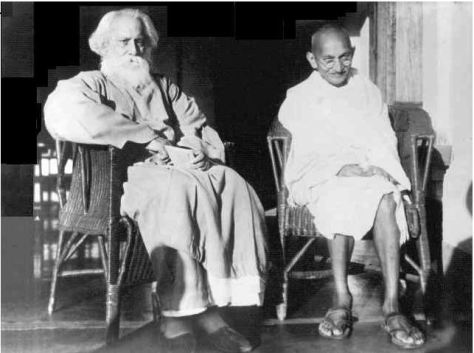
Nationalism in India: Rabindranath Tagore

From RABINDRANATH TAGORE‘s lectures on Nationalism, 1917

tagore-gandhi

Our real problem in India is not political. It is social. This is a condition not only prevailing in India, but among all nations. I do not believe in an exclusive political interest. Politics in the West have dominated Western ideals, and we in India are trying to imitate you. We have to remember that in Europe, where peoples had their racial unity from the beginning, and where natural resources were insufficient for the inhabitants, the civilization has naturally taken the character of political and commercial aggressiveness. For on the one hand they had no internal complications, and on the other they had to deal with neighbours who were strong and rapacious. To have perfect combination among themselves and a watchful attitude of animosity against others was taken as the solution of their problems. In former days they organized and plundered, in the present age the same spirit continues—and they organize and exploit the whole world. Continue reading Nationalism in India: Rabindranath Tagore

The Sunset of the Century: Rabindranath Tagore

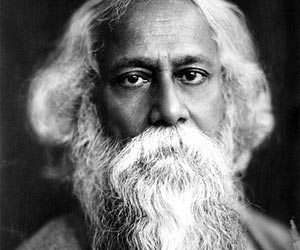
rabindranath-tagoreThe eve of India’s 66th Independence Day is a time as good as any to read this poem by RABINDRANATH TAGORE, even as India gets ready to sing to martial tune another Tagore poem, Jana Gana Mana. This English translation was published at the end of Tagore’s 1918 book, Nationalism.
THE SUNSET OF THE CENTURY

(Written in the Bengali on the last day of last century)

1

The last sun of the century sets amidst the blood-red clouds of the West and the whirlwind of hatred.
The naked passion of self-love of Nations, in its drunken delirium of greed, is dancing to the clash of steel and the howling verses of vengeance. Continue reading The Sunset of the Century: Rabindranath Tagore

Terror and the Indian Mujahideen – A Response to Ashish Khetan: Sharib Ali

Guest Post by Sharib Ali

There is something disquieting in what Ashish Khetan has written and said recently on terror in India (in The Hindu and on Tehelka.tv), and centrally within it, the Indian Mujahideen. More so, because it comes from one of the most credible journalist’s today, who has done some commendable work over the years. A journalist I personally respect. But there are several reasons which compel this response. And yet, this is not just a response, but also an attempt to elucidate the many complex processes within which ‘terror’ is located today, and the way the discourse has transformed, and has implications for a people’s negotiated relationship with their state.

Continue reading Terror and the Indian Mujahideen – A Response to Ashish Khetan: Sharib Ali

What Indian school children learn about the Partition

I wrote recently about the surprising political maturity with which NCERT textbooks teach Indian students about the Partition. These textbooks were prepared under the National Curriculum Framework of 2005. This is of course not limited to the Partition chapter or indeed just the history textbooks. But I was particularly moved to see the Partition chapter. As you read it you realise what school textbooks can do in shaping how future generations see themselves, their own history and identity. I think a lot of people in both India and Pakistan would like to read it. Here it is:

E-book: Sibaji Bandyopadhyay Reader

In the hope that more writers will make their books available online for free, Kafila is publishing an e-book version of Sibaji Bandyopadhyay Reader: An Anthology of Essays, published last year.

The Reader is an anthology of eight essays. The anthology focuses on a myriad of themes: politics of performance; nationalist appropriation and re-constitution of non-dualist Vedanta s tenets; double-take on remembering and forgetting; elusiveness of sexual identities; differences that engender terror. The essays take as their point of departure: a number of pre-modern Indian texts; a late nineteenth-early twentieth century archive of philosophical-cum journalistic writing in English published from Kolkata; specific art-works of Vivan Sundaram, Satyajit Ray, Ritwik Ghatak; the Pandora s Box that gets opened with the release of the film Fire ; Sigmund Freud s protracted struggles to establish fear, fright and anxiety as distinct conceptual categories; the grammar of terror that may be retrieved from the Mahabharata. Continue reading E-book: Sibaji Bandyopadhyay Reader

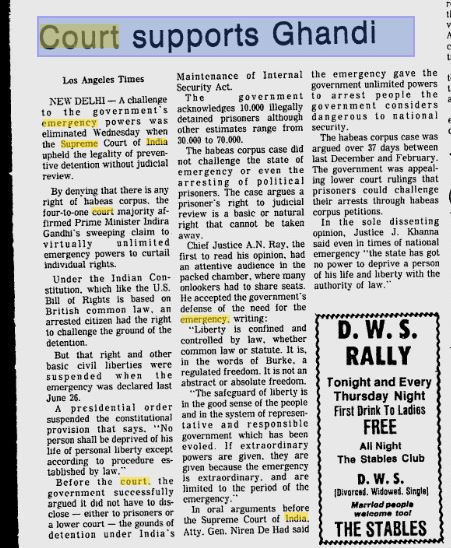
The shameful role of the Indian Supreme Court in the Emergency of 1975: Rajinder Sachar

This guest post by RAJINDAR SACHAR comes to us via the PEOPLE’S UNION FOR CIVIL LIBERTIES.

Lewiston Morning Tribune - Google News Archive Search - Mozilla Firefox_2013-07-14_19-25-11

Nations which do not remember their immediate past are in danger of repeating their tragic mistakes. This thought came to me on June 26th, 2013 (the Emergency day of 1975) when on random questioning of age group of 35 in the country (who are said to make up about half the population) I found that most of them did not know of any particular significance of the day – and more tragic, fairly large number of people above the age of 35 fared no better. Continue reading The shameful role of the Indian Supreme Court in the Emergency of 1975: Rajinder Sachar

Performing Heritage

By SOHAIL HASHMI: Navina Jafa’s Performing Heritage: Art of exhibit walks is one of few books dealing with the process of conducting heritage and culture walks in India. But the subject is a rapidly expanding and lucrative field that – until now – has not been very well understood.

Jafa is a student of history, a trained classical dancer, a conservationist and a heritage activist. Normally those with their fingers in too many pies end up mixing their metaphors, but this author specialises in inventing her own – the title of this book, for instance. Performing artists, performing acrobats, performing monkeys are terms that all of us are familiar with, but the concept of heritage that performs is more unusual.

The text exists simultaneously on two planes. The first locates heritage walks in the realm of public performances, distinguishing them from exhibitions in controlled environments like museums and art galleries. The second is more illustrative, and is presented as an explanation of the arguments being advanced across the first strand. Continue reading Performing Heritage

Ishrat Jahan, Narendra Modi and the IB: How Not to be Non-Non Terrorist

The CBI charge-sheet in the Ishrat Jahan encounter case and its aftermath has led the BJP and supporters of Narendra Modi (within and without the Intelligence Bureau) to discover the joys of time travel. Apparently, David Coleman Headley’s testimony in 2010 (which says that Ishrat Jahan was an LeT operative) has given the Gujarat police officials a means to tell us why they killed Ishrat Jahan in 2004. Or, following on from Shivam Vij’s recent tweets, we could say: “The IB says that Headley says that Ishrat Jahan was a non-non terrorist…”

We will discuss more about this heady Headley testimony and ‘non-non terrorism’ later, but for now, let us admit that the secret of how a statement in the future can influence the unfolding an event six years in the past is known only to those who are partisan to Mr. Modi and his party. It is not for nothing that they call him a Yug Purush (‘The Man of Time’)- all times, past, present and future, can do his bidding, or so thinks the BJP. Continue reading Ishrat Jahan, Narendra Modi and the IB: How Not to be Non-Non Terrorist

Will ACP Kisan Shengal of Mumbai ATS be prosecuted?: Yug Mohit Chaudhry

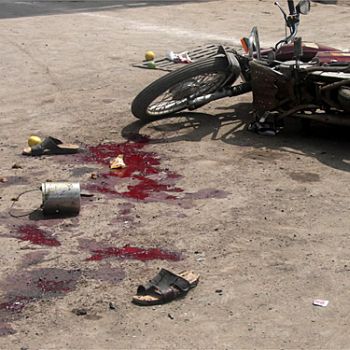
malegaon_blast_2

Guest post by YUG MOHIT CHAUDHRY: On Friday, 8th September 2006, four bomb blasts occurred in Malegaon killing thirty-one persons and injuring three hundred and twelve others. The case was originally investigated by the Maharashtra Anti-Terrorist Squad (ATS). After re-investigating the case, the National Investigation Agency (NIA) has concluded that the ATS fabricated evidence against nine persons. This unprecedented acknowledgement raises important questions about how terrorist cases are investigated, police misconduct and the rule of law in India. It remains to be seen whether the government will take action against the ATS investigating officer, Assistant Commissioner of Police (ACP) Kisan Shengal, for fabricating evidence on a capital charge. Continue reading Will ACP Kisan Shengal of Mumbai ATS be prosecuted?: Yug Mohit Chaudhry

A memorable evening with Vidya Charan Shukla

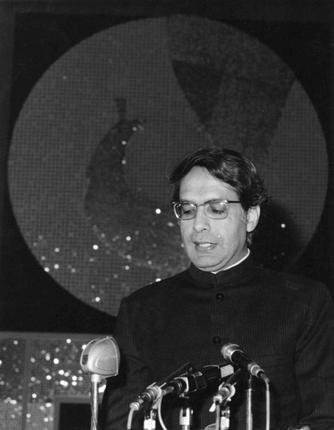
In this January 3, 1977 photo, V.C. Shukla, Union Minister of Information and Broadcasting inaugurates the sixth International Film Festival of India in New Delhi. The Justice Shah Commission of Inquiry which went into the Emergency execesses, had mentioned Shukla's name in its report. Photo: The Hindu Archives / TheHindu.com
In this January 3, 1977 photo, V.C. Shukla, Union Minister of Information and Broadcasting inaugurates the sixth International Film Festival of India in New Delhi. The Justice Shah Commission of Inquiry which went into the Emergency execesses, had mentioned Shukla’s name in its report. Photo: The Hindu Archives

By SOHAIL HASHMI: Though the East and the West have great differences in issues cultural, in one matter they are like twin brothers. Both insist we should not speak ill of the dead. This does not apply to Changez Khan, Hitler and Mussolini. Some would add a few more to the list, but there are chances of violent disagreements on some of those names.

There have been honourable deviations from this haloed creed and if my memory serves me right,  at least one of them has been attributed to The Bard, who made Mark Antony declare at the funeral of Caesar, “Friends Romans and Countrymen, we have gathered here to bury Caesar and not to praise him,” or words to that effect.

These were some of the confused musings that floated to the top of the mind when I heard the news of V.C. Shukla’s passing away. Does the fact that he is dead or the dastardly fashion in which death stalked him and ultimately consumed him, give him an escape from his deeds?

It is a commentary on our justice delivery system that V.C. Shukla, one of those who belonged to the coterie that ran the Emergency establishment for Mrs Gandhi, did not spend a long time behind bars for his acts of commission as Minister of Information and Broadcasting. Some of his achievements as Minister of Information included snapping power supply to newspapers critical of the Emergency, introducing Draconian censorship, banning magazines and newspapers, and sealing printing presses that dared to publish anything critical of the infamous Mrs G or her Emergency regime. Continue reading A memorable evening with Vidya Charan Shukla

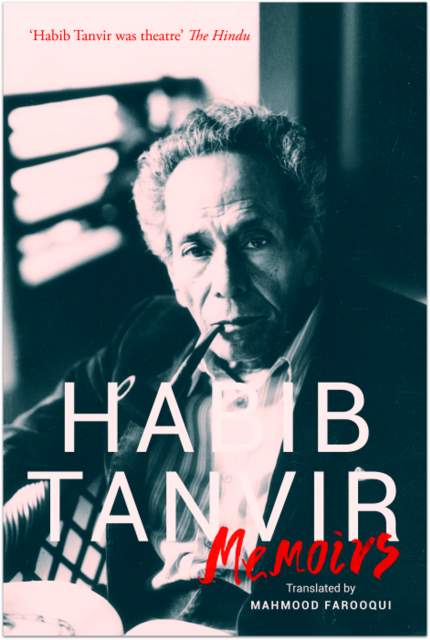
Old Films: Habib Tanvir

This is an excerpt from HABIB TANVIR’s Memoirs, translated by MAHMOOD FAROOQUI, to be released this evening 7 pm at the India Habitat Centre in Delhi.

1-habib-t-mahmood-cover
Memoirs by Habib Tanvir, translated by Mahmood Farooqui, Penguin Viking, Delhi, 2013; Rs. 599, pp. 400

First of all there was the bioscope. A woman wearing ghaghra and choli would roam around from mohalla to mohalla calling out to the children and gathering them at a chowk or in large courtyard, would take out a long stool from her arm pit and place it on the ground, would remove an octangular and muddy looking tin box from her head and place it on top which had a small mouth covered by a black cloth which the child would remove and peer inside. The women usually came from Rajasthan. The box would contain ten or fifteen cards of photographs, she would show them one after the other and also introduce them in a particular musical speech, ‘see the Rauza of Taj Bibi, see the Lal Qila of Dilli…etc.’ At one time only one child could see the pictures, which would be projected through a lens and lit up through a bulb inside the box which would make the photographs appear larger and more dramatic. When one child was through another would take his place. A large and restive crowd of children would be gathered around waiting their turn. Even the elders would be eager to see Hindustan through these pictures. She would charge two to three chhedams from everyone who took a peep. When the show was over, she would hawk her way to another mohalla. Continue reading Old Films: Habib Tanvir

Iqbal Chacha and a Voice from the Past: Sameer Khan

Guest post by SAMEER KHAN: Mr. Chaddha lived in my neighbourhood, a tall lanky elderly gentleman who looked young for his age. I would often see Mr. Chaddha come for a morning walk in our local park, but I stayed aloof, not having an interest in the elderly gentlemen in the park who were either part of laughter clubs or the local residents union.  Whenever I managed to struggle out of my bed for my morning exercise I would notice Mr. Chaddha walking ramrod straight like a soldier. He was never generous with his smiles and would simply nod his head whenever I greeted him.

One pleasant winter morning as I passed Mr. Chaddha in the park I was surprised to hear him call my name. I went towards him, and looking at me from his towering height he asked me, “Can you read and write Urdu?” Startled by the question I answered, “Uncle I can read Urdu but I am not too confident of my writing abilities.“

He said, “Well actually I want someone to write a letter for me in Urdu” Continue reading Iqbal Chacha and a Voice from the Past: Sameer Khan

1984: Gauri Gill

This pamphlet, titled 1984, has been released by GAURI GILL

GAURI GILL writes: This pamphlet contains photographs of the ongoing impact of the 1984 anti-Sikh pogrom in New Delhi – taken by me for Tehelka magazine in 2005 (after the release of the Nanavati Commission report) and Outlook magazine in 2009 (to mark the 25th anniversary of the event); in Trilokpuri, Tilak Vihar and Garhi, as well as at protest rallies in the city. The captions that appear below them are as they were inscribed in the media then. Last month, I decided to ask some artist friends, who were living in Delhi at the time, or have since or prior, or see themselves as somehow participants of the city, to write a small comment alongside each photograph. It could be about the image or a more general observation related to the event; it could be abstract, poetic, personal, fictional, factual or nonsensically true in the way that were Toba Tek Singh’s seminal words on the partition. Continue reading 1984: Gauri Gill

Mining in Goa and Odisha and the CPI, Then and Now: Hartman de Souza

Guest post by HARTMAN DE SOUZA. The article was written a few days before April 12, the CPI’s day of solidarity with Odisha mine workers.

When the Goa State Committee of the erstwhile Communist Party of India (CPI) and its national secretary, our very own Comrade Christopher Fonseca, tells you that April 12th will be observed all over India as a day of solidarity with the Adivasi people of Odisha struggling for seven years to save more than 4000 acres of their ancestral lands from falling to mining conglomerates as rapacious as their Goan counterparts, ageing leftists in the village bar are not too sure whether they should laugh or just weep.

Perhaps one needs to paint the larger picture to highlight the irony that lurks in the shadows.

There was a time it needs to be said, when the CPI ran a long, hard and lonely battle in Goa, led by Comrade George Vaz who it is hard to believe was once Comrade Fonseca’s mentor. He was a short, somewhat portly, soft-spoken, widely-travelled man fluent in at least four languages. Not many Goans would know that Comrade Vaz ran a free kitchen in his home at Assenora open to anyone in need of a simple, nourishing meal, or that some of us who now want to weep in our glasses have eaten there several times…

Continue reading Mining in Goa and Odisha and the CPI, Then and Now: Hartman de Souza

Lethal Lottery: A study on death penalty in India, 1950-2006