Category Archives: Government

Reclaiming academia: understanding the student movement of our time: Tony Kurian and Suraj Gogoi

This is a guest post by TONY KURIAN and SURAJ GOGOI

Students from different parts of the country started protesting since a Dalit student from one of the premier universities of the country (University of Hyderabad) committed suicide on account of caste discrimination by the administration. This new wave of protests can be traced back to Occupy UGC which erupted when University Grants Commission (UGC) decided to stop the monthly research stipend known as non-net fellowship of Rs 5000 and 8000 for MPhil and PHD respectively. The ministry concerned has since constituted a panel to review the decision on account of student’s protests. On the other hand, we are seeing India becoming part of World Trade Organization (WTO) agreement on higher education. These instances should not be regarded as isolated moments but should be viewed as an integral part of a story unfolding. It is in this context that one should locate the student movement of our time. The movement itself is receiving much media attention, and, it was mostly couched as a student’s movement against the government. For sure, the immediate demands of the students is to ensure justice to Rohith Vemula. The present wave of student movement is aimed at reclaiming academia both from an exclusivist culture which permeates much of our academic institutions, and increasing influence of free market logic in our higher education.

 Why are we seeing a new wave of student protests?

To understand why a movement like that we are witnessing now is extremely important for a vibrant and democratic academic space, we should explore some of the unwritten rules of academia itself and our academic institutions. Research is a long-term investment for the person who undertakes it. Every day he or she spends as a full time researcher is a day forgone from the job market. For a research scholar to earn a permanent job, it can take anywhere between five to ten years after the master’s programme.

Continue reading Reclaiming academia: understanding the student movement of our time: Tony Kurian and Suraj Gogoi

Sandeep Pandey threatened by RSS persons on IIT-BHU campus

Close on the heels of the planned disruption of a speech by Siddharth Varadrajan, noted journalist and ex-editor of ‘The Hindu’ on the Allahabad University campus by members of the Akhil Bharatiya Vidyarthi Parishad  (http://thewire.in/2016/01/23/editors-guild-condemns-abvp-threats-to-the-wires-founding-editor-20015/) has come the news that Sandeep Pandey, who has been working as a guest faculty in IIT-BHU for the last two and half years was recently threatened allgegedly by members of the same fraternity on the university campus itself.

It may be added here that Sandeep Pandey’s services were abruptly terminated by the university on the charge of being a naxalite and being involved in ‘anti-national’ activities (http://kafila.org/2016/01/11/letter-against-dismissal-of-prof-sandeep-pandey/). Looking at the aggressive manner in which members of the Hindutva fraternity seem to be moving it is quite possible that their threats will not remain merely at the level of words and one definitely perceives a danger to Sandeep’s well being at their hands. Continue reading Sandeep Pandey threatened by RSS persons on IIT-BHU campus

Before I Speak of the Stars…Ravi Sinha

Guest Post by Ravi Sinha

Let me speak first of Rohith Chakravarthi Vemula. I never met him. I wish I had, although that would have made me hardly any worthier of speaking about him. Had I met him, I would have come to know that I shared with him a passion for science, nature and stars. I would like to think that he would have found in me, despite my being from another generation, a comrade-in-arms and a fellow campaigner for a better world. Perhaps I would have also recognized a few of the scars left over from a childhood spent in poverty. But, there, the similarities would have ended.

We were born in the same country but at two different locations in the social universe. Distances separating these locations are not traversable – reason enough for this universe to collapse. Instead collapsed this remarkable young man who longed to be “treated as a mind” – “a glorious thing made up of stardust” – and who did not wish to be “reduced to his immediate identity and nearest possibility…to a vote…to a number…to a thing”. He was crushed under the weight of a millennial civilization. His end was precipitated by the malignant political forces ready to use state power to banish all reason and every shred of freedom from modern institutions and public sphere. He may have chosen the mode and the time of his death but it was an instance of a death foretold. In choosing death he has challenged the powers-that-be in a manner and with a force that no demons of deception, no army of liars and no battery of ministers can defend against. Continue reading Before I Speak of the Stars…Ravi Sinha

Long Live the Legacy of Comrade Vemula Rohith Chakravarthy : Statement by New Socialist Initiative (NSI)

Guest Post : Statement by New Socialist Initiative( NSI)
Comrade Rohith, we pay our deepest respects to you. We share your concerns. With you and like you we think that Systemic revolutions and great social transformations should go hand in hand. Rohith we fully agree with you that unless the oppressed are armed with scientific knowledge and rationality, revolution and emancipation remain elusive.
New Socialist Initiative pays its respects to Comrade Rohith Vemula, PhD scholar and student leader of University of Hyderabad. Rohith is not just a name of a scholar today. It has become a battle cry against the saffronisation of Indian education system. Rohith is the name of the relentless struggle against the upper caste domination in the institutions of higher education. Rohith has become a symbol of revolt against the decadence of our civilisation. Yes, Rohith committed suicide, killed himself, but not in desperation, not in fruitless vengeance. As his last words amply show, he seemed to be making a political and philosophical statement on the order of the things in this country, on the despicable manuvadi practices raising their ugly heads in the university campuses, on fascist targeting of Muslim minority community, on the rising intolerance and irrationality in our society.

Continue reading Long Live the Legacy of Comrade Vemula Rohith Chakravarthy : Statement by New Socialist Initiative (NSI)

Women in Sabarimala – The Untold Story: Elsa T Oommen

This is a guest post by ELSA T OOMMEN

‘For the last 20 years woman irrespective of their age were allowed to visit the temple when it opens for monthly poojas. They were not permitted to enter the temple during Mandalam, Makaravilakku and Vishu seasons’
– (S. Mahendran vs The Secretary, Travancore Devaswom Board and Ors. (1991) (8) [AIR 1993 Ker 42])

The Supreme Court of India will soon be hearing the final arguments on the question of the restriction imposed on women in the reproductive age from entering the Sabarimala temple in Kerala. The court had earlier questioned the constitutional basis of the restriction at the behest of a the public interest litigation (PIL) placed before the apex court of India by the Indian Young Lawyers Association (IYLA) where it called for allowing women of all ages to be allowed entry to the temple. Continue reading Women in Sabarimala – The Untold Story: Elsa T Oommen

Survey Report on Losses Sustained during Chennai Floods: Concerned Citizens and Activist Groups

Guest Post on Chennai floods by CONCERNED CITIZENS AND ACTIVIST GROUPS  

[Earlier today we had published a post on the Chennai floods. The following is a report of a Survey on losses sustained during the floods, conducted by Arunodhaya: Centre for Street and Working Children; Bhavani Raman; Citizen consumer and civic Action Group (CAG); Karen Coelho, Kavin Malar; Krishnaveni; Madhumita Dutta; Vettiver Collective; Prem Revathi; Priti Narayan; Students of Madras Christian College; TN Labour blog; and V. Geetha]

Sample Survey of Losses Sustained During Chennai Floods

With special reference to losses and damages of possessions, loss of workdays and damage to homes

January 2016

Executive summary

A group of concerned citizens involved in relief work post-Chennai floods, 20015 undertook a sample survey of 610 households (including migrants) across the city to assess losses suffered/damages incurred to homes, goods, occupational tools and also to get an idea of loss of working days. The purpose of this survey was to identify the exact quantum of losses sustained by the population and to direct government to compensate the populace for damages/loss accruing on account of the floods.

  • Places surveyed: Eekaduthangal, Jaffarkhanpet, Saidpet, Kotturpuram (Adyar flood plains), Mudichur (badly affected suburb), Semmencheri, Perumbakkam (resettlement/new housing tenements for low-income groups), Kodungaiyur, Ponneri (outlying suburbs with poor infrastructural developments.
  • More than 95% of people surveyed had not received warnings about impending flooding.
  • Inhabitants of over 85% of households surveyed have lost 25-40 working days and concomitant wages, ranging from Rs 250-500/per day.
  • Almost all households had lost or were left with irretrievably damaged certificates, household articles, including fridge, washing machine, grinder, mixers, lights, fans, stoves, tools of trade, children’s books, cycles and in some cases bikes and scooters.
  • Total losses sustained by households range from Rs 75,000 (including wages lost and cost of damage to homes) to Rs 50,000.

Continue reading Survey Report on Losses Sustained during Chennai Floods: Concerned Citizens and Activist Groups

Slow violence and the Spectacle – Dispossession, segregation, and the Chennai Floods: Priti Narayan

Guest post by PRITI NARAYAN

[This article is followed by a detailed survey report on the losses sustained by people during the Chennai floods, which can be read here.]

“How, in an age that venerates the instant and the spectacular, can one turn attritional calamities starring nobody into stories dramatic enough to rouse public sentiment,” asks scholar Rob Nixon, in his discussion of Rachel Carson’s seminal 1962 book Silent Spring. It is a question worth asking now, in the aftermath of the floods in Chennai.

The floods were spectacular, the initial neglect by the national Indian media notwithstanding. Enough has been written about both about the floods themselves, and the spectacle of thousands of Chennai residents pouring onto the streets and into the water to undertake rescue, relief and rehabilitation work. Now that the spectacle is fading and the celebration of the city’s spirit is dying down, perhaps we can examine the floods more objectively. Not that the deluge has not deserved the attention it has received – reports estimate that over 400 lives have been claimed, and anywhere between 1.8 to 2 million people have been displaced.

But we do not talk as much about the “attritional calamity” that involves the dispossession of the poor of their land  and their subsequent displacement to the peripheries of the city.The lack of affordable housing stock has historically led the poor to occupy land in the central city, from where they access livelihood and educational opportunities. Their location in the city has enabled them to contribute invaluable labour and services to the city’s economy. Off late however, development projects are putting immense pressure on land in the Indian city. Strategies to make a world class city –“beautification”, “development” and “eco-restoration” – envision no place for the poor in Chennai.Transparent Cities Network estimates that at least 1,50,000people from 63 slums have been displaced for development projects over the course of the last 15 years. Not all those displaced have been rehabilitated: at least 22,000 people have been left homeless. There are no estimates of the number of people who have died during displacement or after resettlement, but the instances of crime(including trafficking, prostitution, and mafia-style murders) and suicides in these government-created ghettoes tell a sordid tale. Continue reading Slow violence and the Spectacle – Dispossession, segregation, and the Chennai Floods: Priti Narayan

“Nobody killed Rohith Vemula”: Kishalaya Mukhopadhyay

This is a guest post by KISHALAYA MUKHOPADHYAY

“Nobody killed Rohith Vemula”. Perhaps someday there will be a film like this. Perhaps someday people will start talking about the exploitation of dalits, the need for annihilation of caste, the systematic discrimination in all spheres of society including the government, corporate, bureaucratic and educational sectors. Perhaps caste as an analytical category will become as politically charged as gender has become post-Nirbhaya. Today there is a discourse around marital rape, victim blaming, domestic violence and other aspects of patriarchy that has transcended even if slightly only the small coterie of feminist scholars within whom this discourse used to be limited to. Continue reading “Nobody killed Rohith Vemula”: Kishalaya Mukhopadhyay

अता मोहम्मद खान के लिए दो मिनट का मौन

एक ‘कब्र खोदनेवाले’ के जनाज़े में इतने लोग शायद पहले कभी नहीं जुटे हों। अलबत्ता पिछले दिनों जब 75 साल की उम्र में अटटा मोहम्मद खान का इन्तक़ाल हुआ, तब यही नज़ारा दिख रहा था।
उत्तरी कश्मीर के सीमावर्ती शहर उरी के चहाल बिम्बयार गांव के निवासी रहे अटटा मोहम्मद खान ने अपने घर में ही अंतिम सांस ली थी। लम्बे समय से वह अस्थमा से पीड़ित थे। सोचने की बात थी कि ऐसे शख्स के लिए इतने सारे लोग क्यों मातम में थे ?
असल बात यह है कि वह कोई मामूली ‘कब्र खोदनेवाले’ नहीं थे। वह कश्मीर के रक्तरंजित इतिहास के एक ऐसे साक्षी थे, जिन्होंने अपनी रेगिस्तानी आंखों में बहुत कुछ समेट कर रखा था। वह कश्मीर की सिविल सोसायटी में चर्चित चेहरा थे, जबसे उन्होंने सूबे में फैली अचिन्हित कब्रों (unmarked graves) को ढंूढने में इन संस्थाओं की सहायता की थी। और जब हुक्मरानों की तरफ से बुलावा आया तो किसी से बिना डरे खुल कर वह सबकुछ बयां किया था। कुछ साल पहले राजधानी से निकलने वाले एक अंग्रेजी अख़बार /’Tragedies buried in Kashmir’  , मेल टुडे ने 28 मार्च, 2008/ ने जब कश्मीर में दफनायी गयी इन तमाम त्रासदियांे को उकेरना चाहा, तो अनाम, अचिन्हित कब्रों की अपनी रिपोर्ट में अट्टा मोहम्मद खान से भी की गुफतगू शामिल थी। वर्ष 2013 में उन्होंने अपना बयान निबंधों की एक किताब में दर्ज किया था, जिसका संकलन स्थानीय पत्रकार फहद शाह ने किया था।

Continue reading अता मोहम्मद खान के लिए दो मिनट का मौन

Odd/even – A Baby Step, But a Step Nonetheless: Kaushik Chatterji

Guest post by KAUSHIK CHATTERJI

One January evening a couple of Delhi winters ago, I was at my doctor’s. During the routine examination, he discovered that my blood pressure was rather high: 160/100 to be precise. I asked him what I should do; he said, “walk regularly, reduce salt intake and come back next week”. So I did. The reading remained the same, so I asked him again what I should do; again he said, “walk regularly, reduce salt intake and come back next week”. This went on for a few more weeks. Finally, after five or six weeks of consistently high readings, my doctor prescribed a medicine and added, “walk regularly, reduce salt intake and come back next week”.

Popping pills after an isolated high blood pressure reading is something no doctor worth his/her, er, salt would recommend. Instantaneous readings can vary wildly depending on a wide range of reasons – cold weather, a full bladder or the white coat. It is true of blood pressure; it is also true of air pollution. Its sources are many – from power plants to industries, from open burning of dried leaves to dust from construction sites, from vehicular emissions to road dust.

Continue reading Odd/even – A Baby Step, But a Step Nonetheless: Kaushik Chatterji

Letter against Dismissal of Prof Sandeep Pandey

sandeeppandeyGuest Post : Letter from Ex-Students of Banaras Hindu University against the dismissal of Prof Sandeep Pandey from IIT-BHU for wider endorsement
To

Prof. Girish Chandra Tripathi

Vice Chancellor

Banaras Hindu University

Varanasi – 221005, U.P.

Dear Sir,

We, the ex-students of Banaras Hindu University, and other concerned citizens, are writing to you to express our deep worry about removal of visiting professor Sandeep Pandey allegedly for his “anti-national activities”. He had been teaching a few branches of chemical engineering and a development studies course at the Indian Institute of Technology-BHU for two-and-a half years. Prof. Pandey is also a renowned social activist and a Magsaysay award winner. Continue reading Letter against Dismissal of Prof Sandeep Pandey

तूफानों की जिद देखने का वक्त़

(‘नवउदारवाद के दौर में हिन्दुत्व’ विषय पर अहमदाबाद में प्रस्तुत व्याख्यान का संशोधित एवं विस्तारित रूप)

‘आम लोग धर्म को सच मानते हैं, समझदार लोग झूठ मानते हैं और शासक लोग उपयोगी समझते हैं।’

– सेनेका / ईसापूर्व 4 वर्ष से ईसवी 65 तक/

..अपनों के बीच होने की एक सुविधा यह होती है कि आप इस बात से निश्चिंत रहते हैं कि किसी प्रतिकूल वातावरण का सामना नहीं करना पड़ेगा, जो सवाल भी पूछे जाएंगे या जो बातें भी कहीं जाएंगी वह भी अपने ही दायरे की होंगी। मगर फिलवक्त़ मैं अपने आप को एक अलग तरह की मुश्किल से घिरा पा रहा हूं।

मुश्किल यह है कि जिस मसले पर – ‘नवउदारवाद के दौर में हिन्दुत्व’ -बात करनी है उस मसले को सदन में बैठे हर व्यक्ति ने ‘सुना है, धुना है और गुना है’। और खासकर जो नौजवान बैठे हैं, – जिनकी पैदाइश सम्भवतः बाबरी मस्जिद विध्वंस और उसके पहले लागू किए जा रहे ‘नए आर्थिक सुधारों’ के दौर में हुई थी – उनको फोकस करें तो कह सकते हैं कि उनकी सियासी जिन्दगी की शुरूआत से ही यह दोनों लब्ज और उससे जुड़ी तमाम बातें महाभारत के अभिमन्यु की तरह उनके साथ रही हैं।

निश्चित ही ऐसे वक्त़ उलझनसी हो जाती है कि कहां से शुरू किया जाए।  Continue reading तूफानों की जिद देखने का वक्त़

Reading Phule – Now No More Silences!

“Lack of education lead to lack of wisdom,

Which leads to lack of morals,

Which leads to lack  of progress,

Which leads to lack of money,

Which leads to the oppression of the lower classes,

See what state of the society one lack of education can cause!”

  • Jyotiba Phule

..Most people do not realize that society can practise tyranny and oppression against an individual in a far greater degree than a Government can. The means and scope that are open to society for oppression are more extensive than those that are open to Government; also they are far more effective. What punishment in the penal code is comparable in its magnitude and its severity to excommunication? Who has greater courage—the Social Reformer who challenges society and invites upon himself excommunication or the political prisoner who challenges Government and incurs sentence of a few months or a few years imprisonment?..

(Ranade, Gandhi and Jinnah, Address delivered by Dr Ambedkar on the 101 st birthday celebration of M G Ranade, 18 th January, 1943)

 Introduction

Understanding or rereading a historical figure – whose life and times have impacted generations of scholars and activists – who has been subjected to praise as well scrutiny by best brains of our times becomes a challenging task.  One gets a feeling that whatever has to be said has already been said and perhaps there is not much novelty left. An added challenge becomes when you are face to face with scholars/activists who could be considered experts on the issue having done more detailed and through work on the subject. Continue reading Reading Phule – Now No More Silences!

Evening out the Odds, Learning from the BRT Fiasco

The Chief Minister of Delhi has come out with a very practical idea, an Idea, whose time has come as the American would say. Anyone who says that Delhi’s air is a killer is only putting it mildly. The number of those dying of respiratory ailments on a daily basis stands today at 23, this translates to 161 per week, 644 per month and 7728 per year. The figures were half this 4 years ago.

Even if pollution levels do not worsen in future the cumulative effects of exposure to these high levels of pollution will keep pushing up the death rate and increasingly it will be the kids born today who will grow into wheezing asthmatics, inhaling this deadly cocktail of pollutants increasingly becoming unfit, as they grow, for doing anything that calls for even mild exertions. The resultant costs on medical expenses incurred by their families, in the face of the rapid withdrawal of government spend on public health will assume the shape of a horror movie gone real and it can only get worse unless something is done and done fast. Read the full article, published in Catch News, here

गाय के नाम पर जनतंत्र वध

हिंगोनिया गोशाला, जयपुर के प्रभारी मोहिउद्दीन चिंतित हैं। जयपुर म्युनिसिपल कॉरपोरेशन द्वारा संचालित इस गोशाला में नौ हजार से अधिक गायें रखी गई हैं। इनमें 30 से 40 गायें लगभग हर रोज मर रही हैं, मगर कोई देखने वाला नहीं है। वहां न इनके खाने-पीने का सही साधन है, न ही बीमार गायों के इलाज का कोई उपाय। लिहाजा, 200 से अधिक कर्मचारियों वाली इस गोशाला में गायों की मौत पर काबू नहीं हो पा रहा है। वैसे, एक अखबार के मुताबिक अप्रैल में अकेले जयपुर शहर में हर रोज 90 गायों की मृत्यु हुई, जिनकी लाशें हिंगोनिया भेज दी गईं।

याद रहे, राजस्थान देश का पहला राज्य है जहां स्वतंत्र गोपालन मंत्रालय की स्थापना की गई है। लेकिन जयपुर में प्रति माह 2,700 गायों की मौत के बावजूद इस मसले पर मंत्री महोदय कुछ भी कर नहीं पाए। दरअसल असली मामला बजट का है। मोदी सरकार ने सामाजिक क्षेत्रों की सब्सिडी में जबर्दस्त कटौती की है, जिसका असर पशुपालन, डेयरी तथा मत्स्यपालन विभाग पर भी पड़ा है। पिछले साल की तुलना में इस साल 30 फीसदी की कटौती की गई है। Continue reading गाय के नाम पर जनतंत्र वध

Release Santosh-Somaru! Enact protection law for journalists, Repeal CSPSA: Statement of Solidarity

Statement of Solidarity for journalists’ movement in Chhattisgarh

We extend our unconditional support to the journalists’ movement proposed on December 21, 2015 in Jagdalpur district of Chhattisgarh demanding the enactment of a protection law for scribes and immediate release of two reporters Santosh Yadav and Somaru Naag, who were arrested in September and July this year in fabricated cases and charged under Chhattisgarh Special Public Security Act (CSPSA). We have seen a surge in the attack on right to freedom of expression in recent times where journalists have been intimidated, bullied and even killed in different parts of the country. This has raised questions over legitimacy of democratically elected governments and is threatening the basic principles of democracy. Continue reading Release Santosh-Somaru! Enact protection law for journalists, Repeal CSPSA: Statement of Solidarity

More than 500 jhuggis demolished in Shakur Basti, slum dwellers left on their own to grapple with bone chilling winter.

Report by BIGUL MAZDOOR DASTA

IMG_20151214_095246

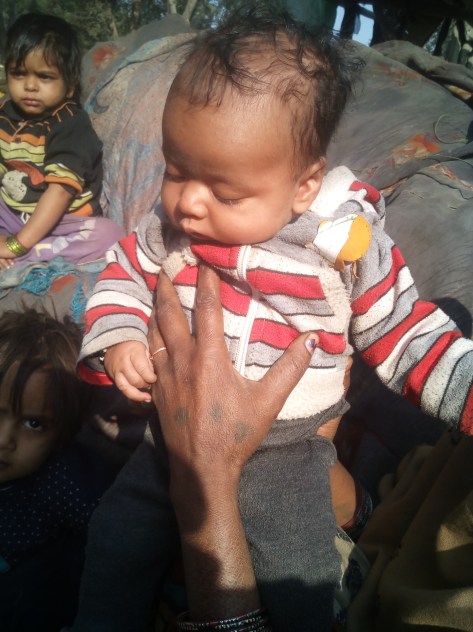
More than 500 jhuggis have been demolished by the Railways in Shakur Basti, Delhi. The demolition took place on last Saturday leading to the death of a six month old child, leaving many injured and an odd 10,000 people homeless in the chilling Delhi winters. The Railway minters Suresh Prabhu is allegedly shocked and unaware. Mr Kejriwal took to twitter to condemn the demolition. Ajay Maken of congress too condemned the demolition. On Monday Rahul Gandhi briefly visited the razed down site where once the shanties stood and thats that! All these electoral political parties have even made what is a tragedy and a very difficult time for the slum dwellers an opportunity of mud slinging onto each other which also doesn’t come as a surprise.

Continue reading More than 500 jhuggis demolished in Shakur Basti, slum dwellers left on their own to grapple with bone chilling winter.

Why media is creating such a panic about juvenile : Kishore


Guest Post by Kishore

Date of a release of the juvenile involved in “Nirbhaya” rape case is coming close and media is once again has started its vicious campaign against juveniles. It is the same media that declared the juvenile most brutal without any basis. Later they were exposed by statement by chief investigation officer that final charge sheet filed by police did not say that juvenile was most brutal. Some of them did a small story in inside pages to rectifying their mistake of calling him most brutal in headlines for months.

Media and certain section of society are very concerned about the prospective threat posed by Juvenile involved in so called “Nirbhaya” rape case. He will be released on 15th December and many sections of the media are “worried” that what if again he commits crime and poses threat to the society. Same papers are not bothered as what happened in last three years to rehabilitate reform and reintegrate him in the society. Same papers did not raised questions if government has made any individual care plan for him with a long term plan to rehabilitate him. May be they were sure that nothing had been done. In fact they believe that nothing can be done and best option is to keep him in jail for life. They are just waiting that he will come out and commit another crime again so they can say that “we told you earlier” Continue reading Why media is creating such a panic about juvenile : Kishore

डा अम्बेडकर के नये मुरीद

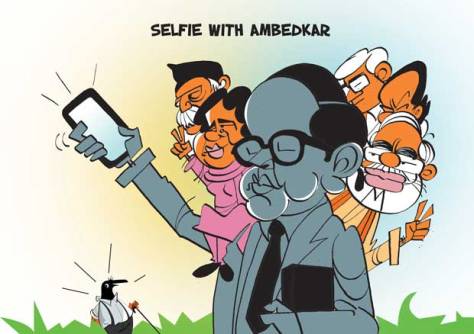
selfie with ambedkar

(Image : Courtesy – http://www.tehelka.com)

शोषित-उत्पीड़ित अवाम के महान सपूत बाबासाहब डा भीमराव अम्बेडकर की 125 जयन्ति के बहाने देश के पैमाने पर जगह जगह आयोजन चल रहे हैं। इसमें कोई दोराय नहीं कि वक्त़ बीतने के साथ उनका नाम और शोहरत बढ़ती जा रही है और ऐसे तमाम लोग एवं संगठन भी जिन्होंने उनके जीते जी उनके कामों का माखौल उड़ाया, उनसे दूरी बनाए रखी और उनके गुजरने के बाद भी उनके विचारों के प्रतिकूल काम करते रहे, अब उनकी बढ़ती लोकप्रियता को भुनाने के लिए तथा दलित-शोषित अवाम के बीच नयी पैठ जमाने के लिए उनके मुरीद बनते दिख रहे हैं।

ऐसी ताकतों में सबसे आगे है हिन्दुत्व ब्रिगेड के संगठन, जो पूरी योजना के साथ अपने अनुशासित कहे जानेवाली कार्यकर्ताओं की टीम के साथ उतरे हैं और डा अम्बेडकर – जिन्होंने हिन्दु धर्म की आन्तरिक बर्बरताओं के खिलाफ वैचारिक संघर्ष एवं व्यापक जनान्दोलनों में पहल ली, जिन्होंने 1935 में येवला के सम्मेलन में ऐलान किया कि मैं भले ही हिन्दु पैदा हुआ, मगर हिन्दू के तौर पर मरूंगा नहीं और अपनी मौत के कुछ समय पहले बौद्ध धर्म का स्वीकार किया /1956/ और जो ‘हिन्दु राज’ के खतरे के प्रति अपने अनुयायियों को एवं अन्य जनता को बार बार आगाह करते रहे, उन्हें हिन्दू समाज सुधारक के रूप में गढ़ने में लगे हैं। राष्टीय स्वयंसेवक संघ (RSS) के मुखिया जनाब मोहन भागवत ने कानपुर की एक सभा में यहां तक दावा किया कि वह ‘संघ की विचारधारा में यकीन रखते थे’ और हिन्दु धर्म को चाहते थे।

इन संगठनों की कोशिश यह भी है कि तमाम दलित जातियां – जिन्हें मनुवाद की व्यवस्था में तमाम मानवीय हकों से भी वंचित रखा गया – उन्हें यह कह कर अपने में मिला लिया जाए कि उनकी मौजूदा स्थितियों के लिए ‘बाहरी आक्रमण’ अर्थात इस्लाम जिम्मेदार है। गौरतलब है कि मई 2014 के चुनावों में भाजपा को मिली ‘ऐतिहासिक जीत’ के बाद जितनी तेजी के साथ इस मोर्चे पर काम चल रहा है, उसे समझने की जरूरत है।

प्रस्तुत है दो पुस्तिकाओं का एक सेट: पहली पुस्तिका का शीर्षक है ‘ंहेडगेवार-गोलवलकर बनाम अम्बेडकर’ ( http://www.isd.net.in/Publication/Booklet/2015/Booklet-66.pdf) और दूसरी पुस्तिका का शीर्षक है ‘ हमारे लिए अम्बेडकर’। (http://www.isd.net.in/Publication/Booklet/2015/Booklet-67.pdf)

पहली पुस्तिका में जहां संघ परिवार तथा अन्य हिन्दुत्ववादी संगठनों द्वारा डा अम्बेडकर को समाहित करने, दलित जातियों को मुसलमानों के खिलाफ खड़ा करने, भक्ति आन्दोलन के महान संत रविदास के हिन्दूकरण तथा छुआछूत की जड़े आदि मसलों पर चर्चा की गयी है। वहीं दूसरी पुस्तिका में दलित आन्दोलन के अवसरवाद, साम्प्रदायिकता की समस्या की भौतिक जड़ें आदि मसलों पर बात की गयी है। इस पुस्तिका के अन्तिम अध्याय ‘डा अम्बेडकर से नयी मुलाक़ात का वक्त़’ में परिवर्तनकामी ताकतों के लिए डा अम्बेडकर की विरासत के मायनों पर चर्चा की गयी है।

Armed Forces as livelihood and State power: Gautam Navlakha

Guest post by GAUTAM NAVLAKHA

Notwithstanding popular perception, professional soldiers do not join the armed services out of overwhelming ‘patriotism’. They are in fact driven by the desire to get a job that offers material security for them and their family. It is predominantly their own livelihood needs that drives people to enlist. On the other hand, the main objective of any government’s concern is to keep the morale of such professional soldiers high, so that they would go out and fight anyone as directed by the government, whether it is ‘enemies’ outside the nation’s borders or within – conducting the predatory war for ‘development’ which profits the corporate class or suppressing popular movements.

More than 101 Districts out of 680 in India are notified as ‘Disturbed Area’ where the military forces enjoy immunity from prosecution and exercise extraordinary authority. In addition, in 35 other districts similar conditions operate even though these have not been notified as “Disturbed Area”. However, the  Union Ministry of Home Affairs exempts the personnel, through a notification, from  prosecution for any crime they commit in course of their service in the designated areas. In the ‘Disturbed Areas’ the Army has begun to exercise veto power over both withdrawal of troops as well as  removal of Armed Forces Special Powers Act.  That apart, the very size of the military force, its use and misuse, its degradation, the fiscal ramifications and socio-political consequences of a bloated military are some of the aspects that invite scrutiny. Continue reading Armed Forces as livelihood and State power: Gautam Navlakha

Silencing Caste, Sanitising Oppression – Understanding Swachh Bharat Abhiyan

The Hindu notions of purity and pollution, inextricably linked with the caste system and the practice of untouchability, underlie the unsanitary practices in Indian society. These beliefs perpetuate the oppression of the “polluted castes,” who are forced to undertake manual scavenging, unclog manholes and clean other people’s filth. The availability of cheap Dalit labour to do these dehumanising jobs can be cited as one of the reasons why development of toilet facilities and a modern garbage and sewage management system have been neglected so far. As long as the Swachh Bharat Abhiyan attempts to delink the relationship between caste and sanitation, its lofty goal of cleaning India will remain unachievable.

(Read the full text here http://www.epw.in/system/files/pdf/2015_50/44/Silencing_Caste_Sanitising_Oppression.pdf)