Category Archives: Government

लोकतंत्र के ईश से दूर होते नीतीश : मनीष शांडिल्य

नीतीश कुमार और मीडिया दोनों एक-दूसरे को बहुत प्रिय हैं. (यहां मीडिया से तात्पर्य मुख्यतः बिहार के मुख्यधारा के बड़े अखबारों से है.) नीतीश कुमार बतौर मुख्यमंत्री मुख्यधारा की मडिया पर बिहार का खजाना लुटाते हैं और बदले में मीडिया अपना युगधर्म भूलकर उनकी झूठी-सच्ची तारीफ में लगा रहता है, उनके पक्ष में तर्क-कुतर्क गढ़ता है, अखबार संदर्भ-बेसंदर्भ उनकी बड़ी-बड़ी तसवीरें छापते हैं. वैसे नीतीश कुमार और मीडिया के बीच के मधुर रिश्ते की और भी दूसरी बड़ी वजहें भी हैं, लेकिन उनकी चर्चा फिर कभी. फिलहाल इस रिश्ते का जिक्र इस कारण क्योंकि पिछले दिनों नीतीश अखबारों के पहले पन्नों पर दिखाई तो दे रहे थे, मगर कुछ दूसरे अंदाज में उनकी तस्वीरें छप रही थीं.

मामला कुछ यूं था. बिहार को विशेष राज्य दिलवाने की मांग (या कहें जिद) के लिए जन-समर्थन जुटाने जब इस बार नीतीश कुमार बिहार भर की ’अधिकार-यात्रा’ पर निकले तो जनता-जर्नादन को अपने अधिकारों की भी याद आ गई. (लिखत-पढ़त में यह उनकी सरकारी यात्रा नहीं थी!) मिथिलांचल इलाके से इस यात्रा के दौरान आम लोगों, खासकर नियोजित शिक्षकों ने अपने मांगों के समर्थन में नीतीश कुमार का ध्यान खींचना शुरू किया. गौरतलब है कि इस मंहगाई में नौकरी करते हुए भी मात्र छह-सात हजार मासिक पाने वाले ‘सरकारी’ शिक्षकांे को बिहार में कई महीनों से वेतन तक नहीं मिल रहा था. अब जनता का तो अपना तरीका होता है (कहीं-कहीं बहकावे में भी आ जाती है, कहीं-कहीं जनता की भीड़ में शरारती तत्व भी घुस जाते हैं), वह कहीं काला झंडा लहराने लगी तो कहीं मंच की ओर चप्पल दिखाने-उछालने लगी. उपेक्षा और परेशानियों से उपजे लोगों के आक्रोश ने खगड़िया जिले में रौद्र रूप धारण कर लिया. और खगड़िया के बाद ही नीतीश कुमार अखबारों में उस अंदाज में दिखाई देने लगे, जिस बदले रूप का ऊपर जिक्र है.

Continue reading लोकतंत्र के ईश से दूर होते नीतीश : मनीष शांडिल्य

Allah Baksh, a people’s obituary: JKCCS

This release was put out yesterday by the

JAMMU & KASHMIR COALITION OF CIVIL SOCIETY

On 24 October 2012, the news of the death of former Deputy Inspector General [DIG] Allah Baksh broke out. Politicians, government officials, business groups, and certain elite sections of the Kashmir valley shamelessly competed with each other in offering condolences.

It is a shocking phenomenon which JKCCS condemns as Allah Baksh was notoriously known for his involvement in the 21 January 1990 Gaw Kadal massacre when he was the Deputy Superintendent of Police [DSP]. The Gaw Kadal massacre was one of the first massacres in the post-1990 armed conflict in which reportedly more than 50 civilians were killed. For this massacre an FIR was registered against the dead and surviving civilians [3/1990 Police Station Kralkhud] but no one was held accountable for the massacre itself.

Continue reading Allah Baksh, a people’s obituary: JKCCS

What Development Means: Dilip D’Souza

This guest post by DILIP D’SOUZA is an excerpt from his book, The Curious Case of Binayak Sen

On a recent trip to the central Indian state of Chhattisgarh, I visited a village called Bamhni. The Jan Swasthya Sahyog (JSS; People’s Health Collective, a rural hospital) of Ganiyari runs an outreach clinic there. Every Tuesday, one or two JSS doctors and a small team of health workers get into a Mahindra Bolero SUV in Ganiyari and drive an hour-and-a-half to reach Bamhni.

I spent much of the day with an even smaller JSS team that reaches out even beyond this outreach clinic. The area we were in is part of the Achanakmar Wildlife Sanctuary, which has existed since the mid-70s. As happens with several Indian wildlife reserves, this one has several villages located inside its boundaries. In 2009, Achanakmar was declared part of Project Tiger, the more stringent Indian effort to save that splendid animal. More stringent, that is, in the conditions it spells out for villages in designated sanctuaries. When Achanakmar joined Project Tiger, the residents of Bamhni and several other villages were told they would have to move out of the “core zone” of the sanctuary, so as to leave the tigers an area where they would be undisturbed. Continue reading What Development Means: Dilip D’Souza

Why is the media not asking hard questions on the deportation of Fasih Mehmood?: JTSA

This statement comes from the JAMIA TEACHERS’ SOLIDARITY ASSOCIATION

In September, we brought out a report, Framed, Damned, Acquitted documenting 16 cases where trials of terror accused had resulted in acquittals for not only lack of evidence but obviously concocted evidence. Each of these cases was accompanied by a section on how media had publicly tried and ‘executed’ these unfortunate men when they were first arrested—to abandon them or bury their stories in the inside pages when they were later acquitted. The release of the report had generated a genuine interest in the media—and one may dare say, an introspection of the media’s own role as the handmaiden of the investigative agencies. Continue reading Why is the media not asking hard questions on the deportation of Fasih Mehmood?: JTSA

Bootlegging Education – Four Strategies for Fighting Back

Yes, this is what we must do now on a large scale – bootleg education.

Thanks to the conjunction of new heights of intellectual bankruptcy with new regimes of intellectual property, a large scale attack on equitable access to education is upon us. A longer discussion on  ‘Intellectual property’ is required, but the immediate provocation for this post is of course the Delhi University photocopying case. Elsewhere on Kafila, there is a post that links to a petition by authors and academics on this issue. The case, very simply is this: three big corporate publishers, namely Oxford University Press, Cambridge University Press and Taylor and Francis have filed a petition in the Delhi High Court, claiming infringement of copyright with regard to course packs used by students. The offender against these giant publishers is a small photocopy shop in Delhi School of Economics. As many legal experts on intellectual property and the Indian copyright law have stated, this kind of photocopying is well within the framework of the law (See some of the discussion here and here).

At the moment, however, I am not concerned with the pure legality of the issue. The question of ‘course packs’ concerns the vital interests of our society as a whole. For there was a time when teaching at the college and university level was  conducted largely through substandard kunjis, or guidebooks – honourable exceptions apart, of course.  Even today we have at least one of the corporate giants (that happens to be among those suing the little Rameshwari photocopier), producing slightly upmarket versions of such guidebooks. University professors willing to write a substandard book a month that fits into some course or the other, are also published by  publishers like these now, euphemistically called ‘textbooks’. In an earlier time, such books of barely passable scholarship (largely plagiarized cut-and-paste jobs) would be published only by dubious publishers.

Continue reading Bootlegging Education – Four Strategies for Fighting Back

Kazmi Solidarity Committee welcomes SC order to grant bail to Syed Kazmi

This release comes from the KAZMI SOLIDARITY COMMITTEE

The Kazmi Solidarity Committee welcomes the Supreme Court order granting bail to Syed Mohammad Ahmad Kazmi after seven months in custody on charges of involvement in the bomb attack on an Israeli diplomatic vehicle.

The committee deplores the obstructive attitude of the prosecution and the Special Cell of the Delhi Police, which have been perversely attempting to keep Mr. Kazmi in prison despite their inability to file a chargesheet within the extended time granted under the Unlawful Activities Prevention Act. Not only did the prosecution seek an extension of 90 days after the mandated period of judicial custody was over, it also used its inefficiency as an alibi, pleading that it needed more time to send out letters rogatory seeking international judicial assistance. While Mr. Kazmi was in custody, the Special Cell left no stone unturned in orchestrating a media trial to establish his guilt, planting malicious stories of his “confession” (while disavowing responsibility for these in court hearings).

Continue reading Kazmi Solidarity Committee welcomes SC order to grant bail to Syed Kazmi

A statement on the arrest of 13 political activists in Tamil Nadu

Tamil Nadu has always had a very high handed police, infamous for extrajudicial killings, torture and arbitrary arrest of political dissidents of all hues. In recent times, thanks to the popular Koodankulam agitation the authoritarian ways of the state police seems to have acquired a ‘nuclear’ edge.

On 6 October 2012, as 13 senior members of the Peoples Democratic Republic Party met at a school in Kundrathur near Chennai city they were all arrested by the ‘Q Branch’, as the local intelligence bureau is called in Tamil Nadu. The arrested members and supporters of the party have been since remanded to judicial custody in Vellore central prison and a case under section Cr. L.A 17 (1) registered against them. Continue reading A statement on the arrest of 13 political activists in Tamil Nadu

Fifty villages

This report was released in Srinagar today by THE CITIZENS’ COUNCIL FOR JUSTICE. It is a statistical study of violence in north Kashmir between 1990 and 2011

An appeal to release three Pakistani fishermen imprisoned in India since 1999: Jatin Desai

Given below is the text of a letter sent yesterday by JATIN DESAI to the Indian foreign secretary

Shri Ranjan Mathai,
Foreign Secretary,
Ministry for External Affairs,
Government of India,
New Delhi -110001

Shri Ranjan Mathai ji,

Greetings from Pakistan-India Peoples’ Forum for Peace & Democracy (PIPFPD).

This is in regarding three Pakistani fishermen arrested in 1999 when their boat was destroyed in a cyclone and they strayed into Indian water. The Indian Coast Guard arrested few Pakistani fishermen including Nawaz Ali Jat, Usman Sachu son of Haji Ibrahim Jat, Zaman Jat son of Haji Jat and Usman Jat son of Ali Mohammad Jat.

Nawaz Ali passed away on September 8 2012 in Civil Hospital, Ahmedabad and his body was sent to Karachi, Pakistan on October 1 2012 by PIA’s Mumbai-Karachi flight. We believe, remaining 3 arrested Pakistani fishermen are in some prison of Gujarat and most probably in Rajkot as Nawaz was taken to Civil Hospital, Ahmedabad from Rajkot Prison. Continue reading An appeal to release three Pakistani fishermen imprisoned in India since 1999: Jatin Desai

Expired Explosives and Health of Kudankulam: Anoo Bhuyan

Guest post by ANOO BHUYAN

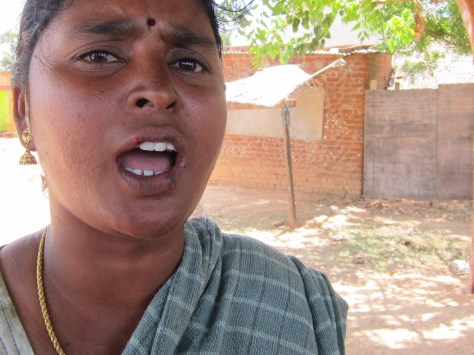
Anitha spits blood and wipes her lips as she talks to me. A few sentences later, a large blister on her lips begins to glisten with blood again, and she has to spit it out one more time. Hundreds of villagers at Idinthakarai have similar clusters of blisters on their lips. They say that they developed the sores as a reaction to the tear gas that was used during the clash that took place between police and protesters who were protesting the Kudankulam Nuclear Power Plant. This event occurred on tenth September. Nearly a week later, the sores continue to remain fresh and open, and a scab does not seem to be forming for any of those who were involved in the clash.

Anitha 


Continue reading Expired Explosives and Health of Kudankulam: Anoo Bhuyan

GPS and receipts will not stop Delhi’s auto-wallahs from overcharging: Simon Harding

Guest post by SIMON HARDING

Last week, the Delhi High Court gave the go-ahead for the compulsory installation of GPS systems and printers in the capital’s auto-rickshaws by dismissing petitions against the policy from auto unions (download judgement .pdf here). The GPS kits are supposed to allow the Transport Department to track the movement of Delhi’s autos. The printer will provide the passenger with a fare-receipt, which will show the distance travelled and the amount paid. The policy will eliminate over-charging and will provide “secure and transparent travel” to the capital, claims The Hindu.

Sadly, the installation of GPS systems will do little to address the problem of over-charging. On the contrary, it may actually exacerbate it. Continue reading GPS and receipts will not stop Delhi’s auto-wallahs from overcharging: Simon Harding

Evidence, Consensus and Policy: Kaveri Gill on the curious case of changes proposed in India’s public health policy

Guest post by KAVERI GILL

The world of development is as prone to fashions as any other. In recent times, ‘evidence-based policy’ has become the new gold standard, following hot on the heels of participation and ownership of policy processes and outcomes by academics, activists and civil society groups. This applies within nation states, especially of the global South. India today epitomises such objective and bottom-up democratic largesse in favour of the ‘aam admi’- for largesse it is, make no mistake – with a near constant refrain of the avowed aim of ‘inclusive growth’. And yet, does it really?

Or is politically correct discourse and seemingly open decision-making processes in the social sector sphere merely dangerous fig leaves for seismic and opaque shifts in policy, which have very little to do with evidence and even less to do with broad-based consensus? Rather, they are an outcome of fixed ex-ante views – which may be termed as a distinct partiality to the Chicago School of Economics – about the path to a fictitious endpoint of a mainstream development paradigm, which itself is faith-based. It is not justified by theory or a heterodox reading of the empirical experiences of presently developed countries, let alone latecomer developing nations which are, for various exogenous and endogenous reasons, likely to have different trajectories altogether. I refer here to the hackneyed line about faster growth being pursued as a necessary, if not sufficient, condition for eventual trickle down, no matter that the ‘dur khaima’ of an equitable society is never arrived at! Continue reading Evidence, Consensus and Policy: Kaveri Gill on the curious case of changes proposed in India’s public health policy

हिंदी का संकट: कुलदीप कुमार

जनसत्ता के 23 सितम्बर, 2012 के अंक में प्रकाशित कुलदीप कुमार के स्तंभ “निनाद” को हम थोड़े संशोधन के साथ छाप रहे हैं.

दक्षिण अफ्रीका के जोहान्स्बर्ग शहर में विश्व हिन्दी सम्मेलन हो रहा है। पहला सम्मेलन 1975 में नागपुर में हुआ था जिसमें जवाहरलाल नेहरू विश्वविद्यालय की ओर से एक प्रतिनिधिमंडल शामिल हुआ था। मैं उन दिनों विश्वविद्यालय की साहित्य सभा का सचिव था और पंकज सिंह उसके अध्यक्ष थे। कवि मनमोहन भी प्रतिनिधिमंडल में शामिल थे। तब तक इमरजेंसी नहीं लगी थी। अगर मेरी स्मृति धोखा नहीं दे रही तो वह जनवरी का महीना था। देश में जेपी आंदोलन ज़ोरों पर था और प्रधानमंत्री इन्दिरा गांधी ख़ासी अलोकप्रिय हो चुकी थीं। हम इस सम्मेलन को तमाशा समझते थे और उसका विरोध करने ही नागपुर पहुंचे थे। दिल्ली से ही एक बयान साइक्लोस्टाइल कराके ले गए थे। जैसे ही इन्दिरा गांधी ने अपना उदघाटन भाषण देना शुरू किया, हम सबने उठकर विरोध में नारे लगाने शुरू कर दिये और उपस्थित प्रतिनिधियों के बीच विरोध-वक्तव्य की प्रतियाँ बांटने लगे। सुबह-सुबह कुछ प्रतिनिधियों के कमरों में दरवाजे के नीचे से हम अपने बयान की प्रतियाँ खिसका आए थे। जैसा कि होना था, बाद में हमें पुलिस ने धर लिया। Continue reading हिंदी का संकट: कुलदीप कुमार

Stuck Between Gandhi and Cultural Crap: Papilio Buddha Reveals Much

Sometimes a minor cut on the surface of the skin will do to reveal the rot beneath. This is precisely what the film Papilio Buddha, made by the New York-based Malayalee film-maker Jayan Cherian, which draws broadly upon contemporary caste politics in Kerala, has achieved for us. In fact, its achievement on this count is simply amazing. At a single stroke, it has brought to light several stinking sores above which Malayalees, especially many Malayalee intellectuals who  occasionally don the garb of public intellectuals, strut. Continue reading Stuck Between Gandhi and Cultural Crap: Papilio Buddha Reveals Much

JTSA responds to Delhi Police’s comments on their report “Framed, Damned, Acquitted”

This guest post by the JAMIA TEACHERS’ SOLIDARITY ASSOCIATION is a response to the Delhi Police’s comments on their report, “Framed, Damned, Acquitted”

Did you think that the Special Cell or the Delhi Police would introspect on its ways after the publication of Framed, Damned, Acquitted? How wrong you were. It is now attempting desperately to defend the indefensible by hiding behind a maze of statistics, ignoring the real questions that the report has raised: namely the brazen and systematic violation of all established legal norms and due process. Continue reading JTSA responds to Delhi Police’s comments on their report “Framed, Damned, Acquitted”

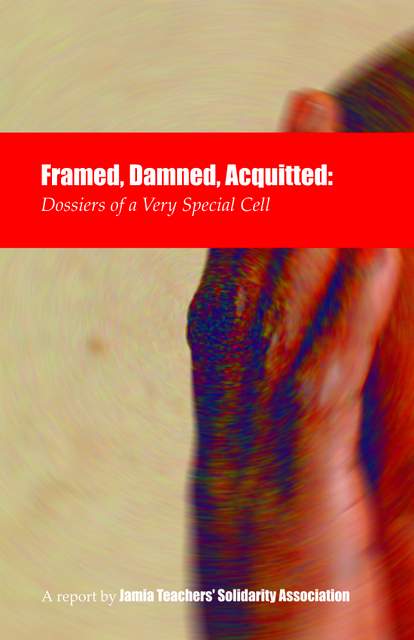
Framed, Damned, Acquitted: Dossiers of a ‘Very’ Special Cell

Given below is the report Framed, Damned, Acquitted: Dossiers of a ‘Very’ Special Cell, released yesterday in Delhi by the JAMIA TEACHERS’ SOLIDARITY ASSOCIATION.

When human rights activists, or families of those arrested on charges of terrorism, allege foul play on part of the investigating agencies, the usual response is this: Surely, there must have been some involvement, or else why would the police arrest him, and not me? Continue reading Framed, Damned, Acquitted: Dossiers of a ‘Very’ Special Cell

‘Big Ticket’ Reforms and Bigger Deceptions: Shankar Gopalakrishnan

Guest post by SHANKAR GOPALAKRISHNAN

When the country’s rulers have to tell barefaced lies to get their policies through, you know that there’s something wrong. Consider the recent “big-ticket reforms,” of which the two biggest (in terms of direct impact) have been the diesel price hike and the opening of the retail sector to FDI. The diesel hike, we’re told, was a “tough decision” necessary to “prune subsidies.” Except that diesel isn’t subsidised in this country. To repeat: there is no subsidy on diesel in India. As for FDI in retail, the Cabinet statement on the policy cites four justifications, accompanied by a “Studies show…” claim. Except that the data in the government’s sole study on the issue does not support three of these four justifications. As for their much touted “safeguards”, at least one has been said to be illegal by the Commerce Ministry itself, while the very same CCEA meeting diluted a similar safeguard for single brand retailers. Continue reading ‘Big Ticket’ Reforms and Bigger Deceptions: Shankar Gopalakrishnan

Aseem Trivedi and the guardians of good taste

There’s a time for everything. When a cartoonist is being arrested for his cartoons, for cartoons that caused no harm, incited no violence, killed no people, then do you discuss his art or his incarceration? Continue reading Aseem Trivedi and the guardians of good taste

Sedition? Who, me?

I am taking the liberty of sharing here this brilliant cartoon by R PRASAD of Mail Today

We Are All Seditious Now

On the Violence Unleashed against Protesting Citizens in Koodankulam: Chennai Solidarity Group

A Statement issued by the Chennai Solidarity Group

Background

For more than a year the people of Idinthakarai village, along with fellow citizens from nearby villages have been protesting the setting up of a nuclear power plant at Koodankulam in Southern Tamil Nadu. The protests have been peaceful and have included people from different strata of society. Women have been in the forefront of the struggle, and over the last year even children have learned about the perils of nuclear power plants and the need to look for alternative energy sources.

In spite of this being a peaceful citizens’ protest, the state has chosen to treat it as dangerous – and arrested hundreds of people, intimidated many others and have more than once treated Idinthakarai village and its environs as if it were ‘enemy’ territory. Sedition charges have been slapped against the protesters, along with other criminal charges. The legality of these measures has since been subject to questioning. A high level Public Hearing, presided over by Former Chief Justice A B Shah has in fact called attention to the manner in which the law has been misused in this instance, and in fact abused to harass and prevent ordinary citizens from exercising their right to protest, and defend their constitutionally guaranteed right to life and livelihood. Continue reading On the Violence Unleashed against Protesting Citizens in Koodankulam: Chennai Solidarity Group

If speaking the truth is sedition then I am guilty of sedition: Aseem Trivedi writes from jail

Aseem Trivedi: self-portrait

This is the text of a statement issued by ASEEM TRIVEDI from inside a jail in Mumbai. Trivedi has been remanded to judicial custody till 24 September for displaying and publishing cartoons that are allegedly seditious, insult national honour and, under the IT Act, are “grossly offensive” and of “menacing character”. An English translation of his letter is followed by the Hindi original.

Friends,

I am a true citizen of this country, not someone who has committed sedition.

If speaking the truth is sedition, then I am indeed guilty of sedition. If raising one’s voice against injustice is sedition, then I am guilty of sedition. If patriotism and the definition of patriotism have changed, then you could say I am guilty of sedition. If Gandhi, Bhagat Singh and Azad were guilty of sedition, so am I.

Even a small child of this country can understand my motive. I oppose the insulting of the people and the Constitution of India. I have been opposing the insulting of the people and the Constitution of India through my cartoons. Continue reading If speaking the truth is sedition then I am guilty of sedition: Aseem Trivedi writes from jail