यह पोस्ट सोशल मीडिया पर कई लोगों ने साझा की थी । बताया जा रहा था कि इसके लेखक सरोज मिश्र हैं। इस बीच इसके असल लेखक से हमारा संपर्क हुआ है जिनका नाम विवेक कुमार उर्फ़ विवेक असरी है। मूल लेख 2010 में छपा था जिसे यहाँ पढ़ा का सकता है।
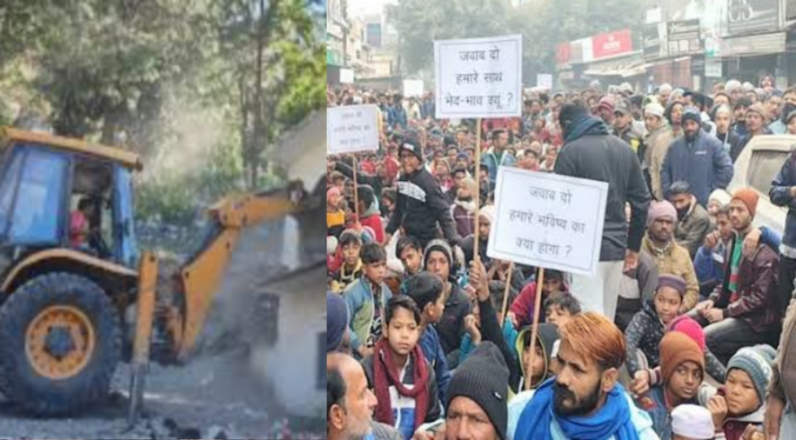
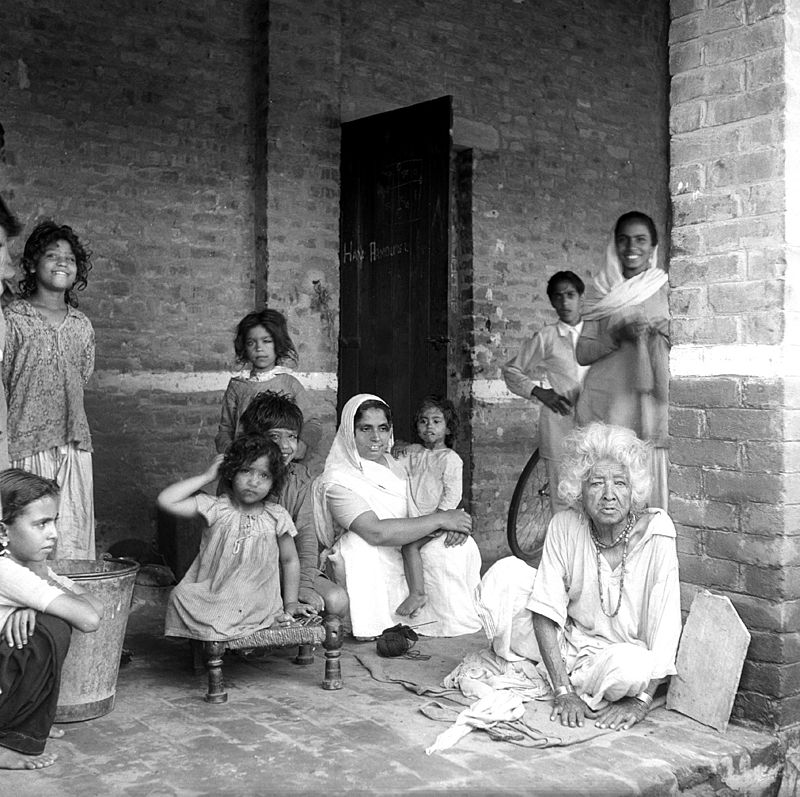
अयोध्या का यह 300 साल पुराना जन्मस्थान मंदिर था जिसके लिए ज़मीन एक मुसलमान ज़मींदार के दान की थी। नए राम मंदिर के विस्तार के लिए अगस्त 2020 में इसे ढहा दिया गया। (छवि साभार द वायर)
कहते हैं अयोध्या में राम जन्मे, वहीं खेले-कूदे, बड़े हुए, बनवास भेजे गये, लौटकर आये तो वहाँ राज भी किया। उनकी ज़िंदगी के हर पल को याद करने के लिए एक मंदिर बनाया गया। जहाँ खेले, वहाँ गुलेला मंदिर है। जहाँ पढ़ाई की, वहाँ वशिष्ठ मंदिर हैं। जहाँ बैठकर राज किया, वहाँ मंदिर है। जहाँ खाना खाया, वहाँ सीता रसोई है। जहाँ भरत रहे, वहाँ मंदिर है। हनुमान मंदिर है, कोप भवन है। सुमित्रा मंदिर है, दशरथ भवन है। ऐसे बीसियों मंदिर हैं, और इन सबकी उम्र 400-500 साल है। यानी ये मंदिर तब बने, जब हिंदुस्तान पर मुगल या मुसलमानों का राज रहा।
The following statement was issued by the CAMPAIGN AGAINST STATE REPRESSION (CASR) yesterday, 14 December 2023
It has come to light that the police have slapped the draconian UAPA on Neelam Verma, Sagar Sharma, Manoranjan D, Amol Shinde, and Vishal Sharma, the five persons held for releasing gas canisters in both the outside premises and inside the Lok Sabha mid-session on 13th December. The Indian state is treating this incident as a ‘terror attack’ and is charging these five individuals under the draconian anti-terror laws. It’s pertinent to point out that all four individuals committed the act as a form of political protest and exploding harmless coloured gas canisters is part of their protest, not an act “terror.” Sagar Sharma is an e-rickshaw driver and the son of a carpenter, Amol Shinde comes from a family of Dalit landless peasants unable to get a job in the Indian armed forces while Neelam Verma and Manoranjan D are MPhil and Engineering degree holders respectively who are both unemployed, with Neelam even cleared the Haryana Teacher Eligibility Test but still not landing a job. Vishal Sharma has also been roped into this case after he provided shelter to the four individuals and was not even involved in the act. Lalit Ojha, a sixth accused and also an unemployed youth is yet to be brought into police custody but has been charged. The political protest of these individuals against the Indian state and its brahmanical Hindutva fascist nature represents the angst of the working class, the peasantry, the academics and the middle class, all of whom are bearing the brunt of the BJP’s Hindutva-corporate nexus politics. The protest slogans raised by the four were slogans of both patriotism towards the people of India as well as dissent against the dictatorial politics of the ruling class.
At a media interaction on 26 October, the Malayali actor-turned-politician tried to turn his reel-life into real life. Once known mainly for his cine-avatar as the perpetually-angry, elite-justice hungry, thoroughly-misogynist ‘hero’ characters (yes, despite some better roles), Mr Gopi behaved with unbelievable condescension towards a woman journalist who asked him a question. Instead of answering her in a meaningful and civil manner, he turned into one of his obnoxious on-screen avatars. He put his hand on her shoulder and addressed her as ‘mole’ (daughter, literally, but also a condescending reference used by male lovers/husbands to refer to their loves/wives). She was clearly unhappy with the gesture, and backed away. Probably because the man has now become actually indistinguishable from the rotten, stinking masculinity he represents on-screen — knowingly or otherwise — he put his hand right back on her shoulder.
The first week of the coming month of November will witness a huge public festival in Kerala organized by the ruling power through the government called ‘Keraleeyam‘. It begins on 1 November, celebrated every year as the ‘Kerala Piravi Dinam’ or the day of Kerala’s birth, marking the amalgamation of the three Malayalam-speaking regions into a single unit, a cherished dream of many in early twentieth century Kerala. The organizers of this celebration claim that this massive show seeks to highlight Kerala’s achievements which they hint, have an unbroken continuity from the twentieth century to the present. They claim to have furthered it, and not frittered it.
[Democracy Dialogues Lecture by Professor Ashutosh Varshney scheduled for coming Sunday has to be rescheduled. New dates will be announced as soon as Professor Varshney is in a position to deliver the lecture. Apologies.]
Topic : India’s Democratic Longevity and its Hugely Troubled Trajectory
Speaker : Professor Ashutosh Varshney,
Theme :India’s Democratic Longevity and its Hugely Troubled Trajectory
Background : A close friend of decades prodding you to read / listen to something and ask for your views is such a great moral incentive which nobody would refuse. The following note is an end product of similar undertaking which this pen pusher rather reluctantly took initially when one received a YouTube link of a conversation / debate between Congress M. P Shashi Tharoor and Supreme Court lawyer and commentator J Sai Deepak, held sometime back, where the focus of the programme was on Congress M.P. Shashi Tharoor’s book ‘Why I am a Hindu ?’
The book deals with how Mr Tharoor understands Hinduism, looks at its Great Souls, unpacks political Hinduism and dwells also at the violence committed by its followers and differentiates his Hinduism from that Hinduism practised by who can be called as ‘Bhakts’.
J Sai Deepak, a very popular commentator who has written a few books and also shared his views, dealt with Tharoor’s arguments.
As an aside it needs to be added that J Sai Deepak is one among the new crop of commentators , writers whose interventions very much resonate with what can be termed as ‘rightwing’ . There are few other names like Vikram Sampath, Sanjeev Sanyal, Anand Ranganathan etc of the same stream, whose arrival on the scene has been a moment of celebration among a section of the media (https://www.firstpost.com/politics/why-is-left-academia-so-rattled-by-vikram-sampath-sai-deepak-or-sanjeev-sanyal-10433791.html) which is critical of the left and its towering intellectuals.
In response to the LCI ‘s invitation to “stakeholders, including public and recognised religious organisations” to share their views on the Uniform Civil Code, some feminist groups and individuals came together in Delhi on July 4-5 2023 to draft a considered response. The UCC has been debated in feminist circles for decades, and a broad consensus has gradually emerged since the 1990s that gender justice and not uniformity should be the focus of reforms of laws pertaining to family, whether governed by Personal Laws (religious communities) or customary laws (Scheduled Tribes). The following response emerged on the basis of these discussions, which in turn drew on the long history of serious engagement with the issue in feminist circles for decades.
To,
The Hon’ble Chairperson and members,
Law Commission of India
14 July 2023
Sub: Response of feminist, queer and women’s rights groups and individual feministsto Public Notice of the Law Commission of India dated 14/06/2023, soliciting views on the Uniform Civil Code (UCC).
Respected Chairperson and members of the Law Commission of India,
We, the undersigned, write to you as representatives of feminist, queer and women’s rights groups, as well as concerned citizens, who have been working on issues related to gender justice and equality for women from diverse communities across the country. We draw upon our collective experience over many decades, as we respond to the current discussion on the proposed Uniform Civil Code.
Our submission is in three parts:
Concerns related to the procedure adopted to initiate these discussions by the Law Commission of India (LCI).
Comments on substantive issues of uniformity, equality and non-discrimination vis à vis gender justice.
Governing principles for any efforts towards gender justice for all
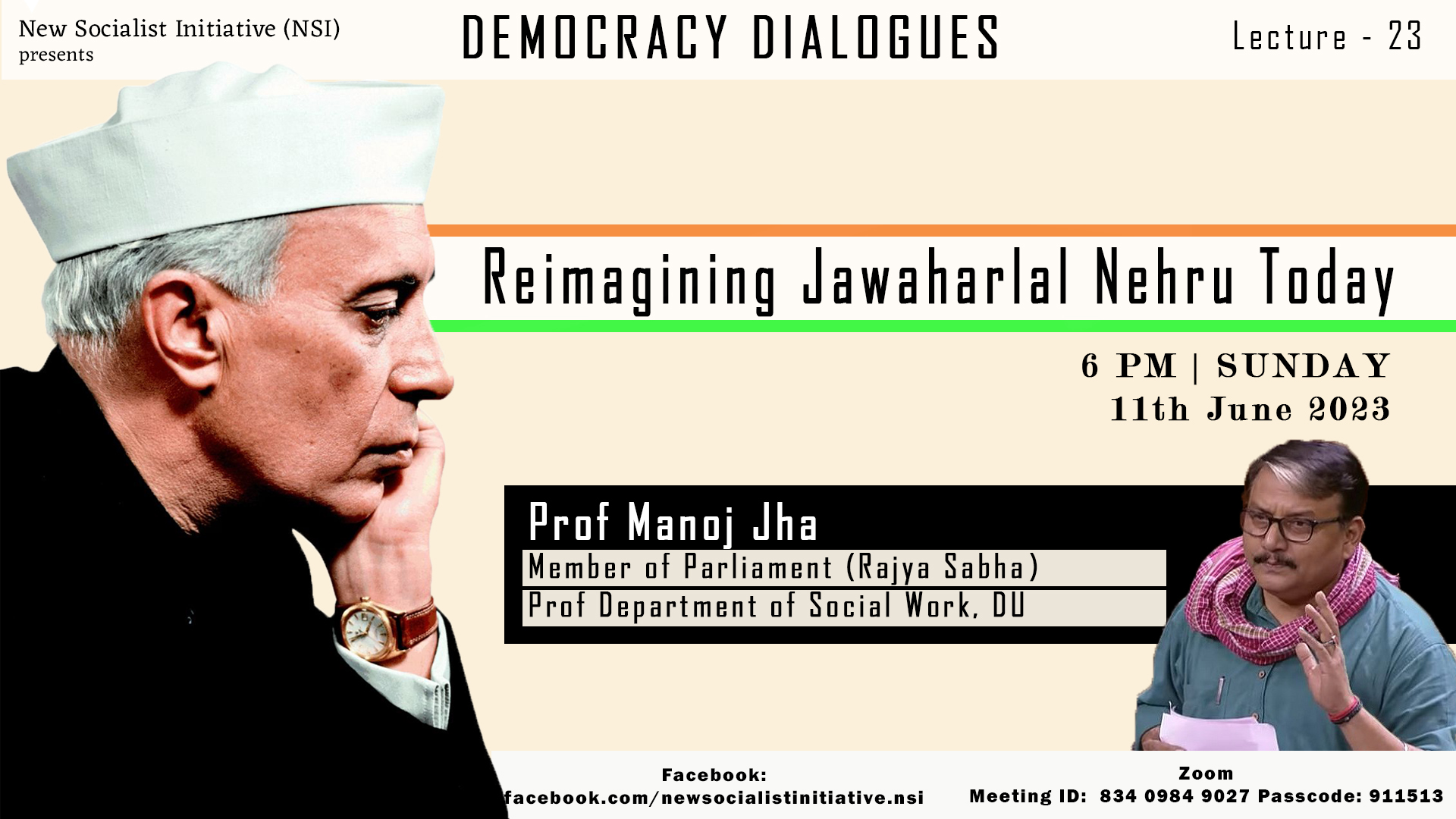
Prof Manoj Kumar Jha, who is a National Spokesperson of the Rashtriya Janata Dal, (RJD), and a Member of Parliament in Rajya Sabha ( upper house of the Parliament) who works as a Professor at the Department of Social Work, Delhi University, Delhi has kindly agreed to deliver the 23 nd lecture in the Democracy Dialogues Series , organised by New Socialist Initiative.
He will be speaking on ‘Reimagining Jawaharlal Nehru Today’ on Sunday, 11 th June, 2023 at 6 PM.
Reimagining Jawaharlal Nehru today would involve examining his legacy and contributions in the context of the present day. Nehru, the first Prime Minister of India, played a crucial role in shaping the country’s political, economic, and social landscape after its independence in 1947. While we reimagine today presuming he was here we shall have to look at our parliamentary democracy and the core policy issues which have undergone so much of change that he would disown. The idea is to speak about some of the critical concerns we face as a nation through the Nehruvian lens.
Speaker:
Prof Manoj K Jha, who is a National Spokesperson of the Rashtriya Janata Dal, (RJD), and a Member of Parliament in Rajya Sabha is a leading voice of the opposition.
A consistent votary of the idea of social justice and a strong opponent of the politics of majoritarian authoritarianism, his debates and interventions in the Upper House of the Parliament are appreciated across the political spectrum and are widely watched.
Prof Jha, is a very popular teacher in the Delhi University, was also head of the Department of Social Work, Delhi University , for a few years.
On the day that the Prime Minister was inaugurating a new Parliament house, democratic space was being crushed outside.
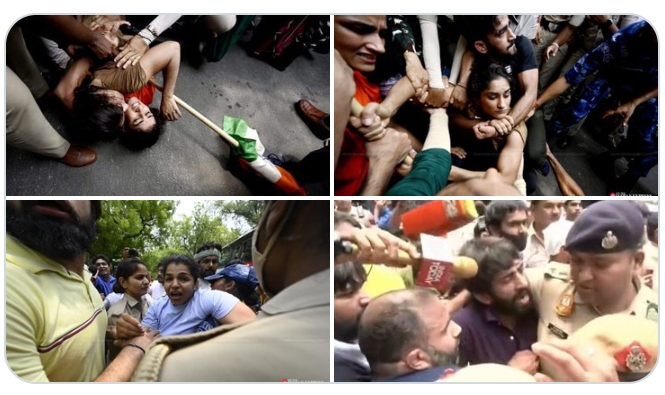
More than 1150 people including activists, lawyers, academics, former civil servants, artists and concerned citizens have released a statement condemning the brutal police action against the protesting wrestlers and those who had come out in support of their call from all over Delhi, Haryana and Uttar Pradesh for a Mahila Samman Mahapanchayat today.
We, concerned individuals, are absolutely horrified to see the violence unleashed by the government and police today, to suppress the powerful grassroots support for our brave wrestlers and their struggle against Wrestling Federation of India chief Brij Bhushan Sharan Singh, who stands accused of sexual harassment of women wrestlers stretching back over a decade. The wrestlers have been protesting since 18th of January, 2023. They had given a call to all women’s organisations, activists and all other civil society organisations to join a Mahila Samman Mahapanchayat outside the new parliament building today, i.e 28 May 2023.
Thousands of women from Delhi and nearby states responded to the call. Fearing the collective strength of Indian women – the police pre-emptively blocked all border roads, shut down proximal metro stations, and cordoned off roads. This is how scared a patriarchal State is of the sight of the women of India standing shoulder to shoulder with each other. Despite this crackdown, the government was unable to block the flow of solidarity; activists and concerned citizens found ways of trying to reach the protest site. Continue reading Dismantle the structures of sexual violence, NOT the protesters’ tent! Statement by concerned citizens→
यह लेख डेक्कन हेरल्ड में लिखे गए लघु लेख का हिन्दी रूपान्तरण है।
रात के अंधेरे में महिला पहलवानों से दिल्ली पुलिस की हालिया हाथापाई के बाद उनका आँसुओं से भरा चेहरा दिखा। अंतर्राष्ट्रीय ख्याति प्राप्त यह महिला पहलवान सत्तारूढ़ पार्टी के सांसद और भारतीय कुश्ती संघ के अध्यक्ष द्वारा महिला पहलवानों के कथित यौन उत्पीड़न के खिलाफ लगातार विरोध प्रदर्शन कर रही हैं। पिछले कुछ महीनों में आरोपी सांसद के खिलाफ इन विरोध प्रदर्शनों का यह दूसरा दौर है। विडम्बना है कि सुप्रीम कोर्ट में मामला पहुँचने के बाद ही आरोपी के खिलाफ प्राथमिकी दर्ज हो पाई। आरोपी के खिलाफ लैंगिक अपराधों से बालकों का संरक्षण (पोक्सो) अधिनियम के तहत मामला दर्ज होने के बावजूद उसकी अभी तक गिरफ्तारी नहीं हुई है, और यहाँ तक कि वो अभी भी कुश्ती संघ के अध्यक्ष पद पर आसीन है। पहलवानों के यूँ सुबकते चेहरे, उनके अपमान और हताशा हमारे ज़मीर को भी झकझोरते हैं कि आखिर हमारे देश की क्या हालत हो रही है।
Someone just asked me why I would ‘still be soft on’ the Dalit Human Rights Movement — why I would speak at their meetings. For those who have not heard of them, the DHRM is a mass movement against casteist oppression in Kerala that fought very hard to break out of the liberal and statist imagination of dalit liberation — and continue to do so, despite having to face the most horrifying state violence.
B 32 to 44 is the title of a movie — it refers to the bra sizes of the protagonists of director and scriptwriter Sruthi Sharanyam’s debut film, which has been generating highly positive reviews in the Malayalam facebook world. It has also been highly-awaited after it received funding from the Ministry of Culture and the Kerala State Film Development Corporation.
Today someone who is an absolute darling of the post-socialist oligarchy in Kerala and their army of hanger-ons told me, without a tinge of irony, with the most endearing innocence, that they were not celebrated at all in Kerala. That they were excluded from circles that praised and glorified the work of many other authors. It was most intriguing, to say the least. I think it reveals a lot about how the present dispensation manages intellectuals and minimises critical thinking.
You can be a rebel without any serious losses in present-day Kerala if you desist from any serious criticism of the establishment and its acolytes. You can spout feminism, dalit politics, espousals of the solidarity economy, liberal Muslim thought, queer thinking, soft Hindutva– literally anything except Islamism if you keep your mouth shut about the establishment and the post-socialist oligarchy, or at least limit yourself to weak, occasional noises. You can also present yourself in combinations of the above laced with hints of your slant towards the establishment and reap much success in classrooms and academic fora, and much applause on the social media. If you have connections with the Nair deep state and ‘deep intellectual elite’, you can pornify, sell, any kind of abuse of women.
Abstract: Indigenous and other local communities across India have had traditional systems of local governance as unwritten or sometimes written codes of conduct and decision making. Many such systems are still being followed in parallel with the panchayat systems, or getting re-invented by combining the modern forms of governance with the traditional ones, especially in the case of communities still practising traditional occupations and ways of life (forest-based, pastoral, fishing, and/or farming). There are, however, very few studies of these systems interacting with modern state institutions, their current or continuing relevance, and their role in achieving goals of justice, well-being, and ecological sustainability.
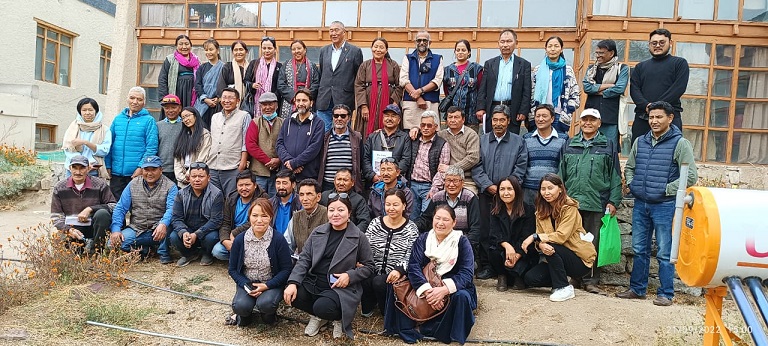
Goba meeting to discuss study results, Leh Aug 2022.
This study focuses on documenting the present status and relevance of the traditional governance system of Ladakhi villages, with a focus on the goba (or lambardar/nambardar). For this, the study also looked at the interface between the local/traditional and new/modern governance systems, viz. the goba with the panchayat, Ladakh Hill Council and UT Administration.
Keywords: traditional governance, goba, democracy, natural resources, indigenous knowledge, environment
Around two weeks back, just about a week after the ritual of Women’s Day celebrations in Thiruvananthapuram, a 49-year-old woman decided to go get herself some pain medication at 10 30 at night, after all home remedies failed against her persistent body ache. She lives in the beating heart of the city of Thiruvananthapuram in a rented house. This house is in a leading middle-class residential locality, full of houses, usually very quiet. She is , however, not a typical owner-resident. An employee at a local firm earning a very modest salary, she has lived alone for years in rented accommodation, raising her young daughter. The daughter is now a confident young woman who has worked for some years and now seeks to expand her career options. The rent takes up nearly half of her income, but mother and daughter have struggled together to protect each other.
The Delhi Durbar of 1911 has great significance in the history of India in terms of hosting King George V, along with the Queen and other guests. Undoubtedly, the entire occasion was recorded as a grand event and moreover, the decoration used on the way to Coronation Park to make it aesthetically beautiful, was magnificent. However, along with the preparations for the amplified royal visit, another incident that catches attention here is the hiding of an entire village, the ‘Dhakka village’.
People living near Dhakka village, 1911 (see source below)
The villagers of Dhakka were asked to evacuate the area as their dwellings were not up to the beauty expectations of British officials. The Dhakka village then, represented a strong site of resistance, as the villagers in Dhakka refused to vacate the region for the King’s visit. Thus in response to the recalcitrance of the villagers, the British officials decided to hide the entire village by using huge cloth sheets.. And that is how the village got its name ‘Dhakka’ from the hindi word dhaka which means hidden. The incident portrays to what extent the colonial state could go to welcome its guests. It mulled relocating an entire village and finally covered it out of sight.
If 2018 was a trial by water in Kerala, 2023 seems to be a trial by fire, judging by the horrendous waste-dump fires in the State’s commercial capital, Kochi which have been polluting the air this with the most dangerous mix of toxins (so say the scientific community which has been warning this bunch of callous, stupid, greedy, irresponsible bunch who we have elected to power).
[This is a response to many who ask me why I chose to be part of the KSSP’s ongoing Kerala Padayatra, which seeks to highlight crucial issues in development and governance in Kerala.]
The struggle against the ecologically-fatal Adani seaport being built at the seaside village of Vizhinjam in south Kerala is probably the first large-scale instance of ‘accumulation by dispossession’ in the history of this state. The state — the ruling government, the police, and judiciary — hold hands now in their effort to dispossess the large population of fisher people whose home this coast has been since centuries, for the convenience of predatory capital. As usual, the port-building commenced after massive ‘opinion-building’ exercises by all the major political parties among their supporters in the port-affected villages, promising them golden futures (now that the resources of the sea, which they had depended on for centuries, were robbed, in the course of some seventy years since the 20th century, through the commercialization of fisheries). Doing fieldwork in those areas around 2013, I remember how hard it was to even broach the topic without provoking massive, sometimes, violent, disagreements — it has divided the people completely and left the major social force there, the Latin Catholic Church, quite confused. Now, after 2018, the ecological destruction wrought by this foolish act of greed is nakedly evident for all with eyes to see; and most residents of the sea coast are convinced that in just a few years, the sea will take everything, including the houses built with sweat and tears, labouring for years abroad, even.
Prof Ishtiaq Ahmed, Professor Emeritus of Political Science, Stockholm University and a leading authority on the Politics of South Asia and an eminent author will deliver next lecture (21 st one) in the Democracy Dialogues Series, organised by New Socialist Initiative
He will be speaking on ‘The Two-Nation Theory, Partition and the Consequences’ on Sunday, 27 th November 6 PM (IST)
The Two-Nation Theory, Partition and the Consequences
1. The Two-Nation Theory as an Idea and an Argument: The talk will contextualize the origins of the Two-Nation Theory in the background of pre-colonial and British colonial rule and analyse it in relation to competing ideas of a One-Nation Theory as well as the vaguer ideas of multiple nationalities deriving from language, ethnicity and religion. This section will also deal with British policy regarding such competing ideas of group identity and nation and nationalism. This will cover the period 1857 – 1932. However, most attention will be given to the 1928 Motilal Nehru Report (which a section of Muslims including one faction of the Muslim League was willing to accept) and Jinnah’s 14 points.
2. The Two-Nation Theory and the demand for Partition: The Government of India Act 1935, the election speeches and manifestos, election results and the Muslim League’s deployment of communalism as political strategy to demand partition on behalf of Muslims. The stands of the Indian National Congress, the Muslim League, the Communist Party of India, the Hindu Mahasabha, the Jamiat Ulema e Hind and other Islamist, regional and working-class parties of Muslims and the Sikhs of Punjab.
3. British policy on the future of India: from unwillingness to grant India freedom to retaining influence and control through defence treaty to finally deciding in favour of partition. The Cabinet Mission Plan, Wavell’s schemes to transfer power as an award, The British military’s transformation from opposition to support for partition; 3 June Partition Plan, the partitions of Bengal and Punjab, the 18 July 1947 Indian Independence Act.
4. The Partition as a flawed exercise in the transfer of power which claimed at least one million Hindu, Muslim and Sikh lives, caused the biggest migration in history (14 – 15 million) and bequeathed bitter disputes over the sharing of colonial assets, territory and claims to princely states. In this regard, the
5. The Partition as a referent for nation-building: while agreeing finally to the partition of India on a religious basis India held steadfastly to nation-building on a secular, liberal-democratic, inclusive and pluralist basis. The Indian constitution came to represent such a view of nation and nation-building. On the other hand, since Pakistan had been won in the name of Islam its nation-building was based on distinguishing Muslims from non-Muslims and generating different formulae of differential rights. More importantly, it brought to light the deep divisions among Muslims based on sect, sub-sect and ethno-linguistic criteria.
6. The Partition and settling of disputes between India and Pakistan: The two-nation theory continued to define and determine relations between India and Pakistan resulting in wars, terrorism and zero-sum games in international forums.
7. The Partition as a historical, political, ideological and intellectual phenomenon: An Evaluation
About the Speaker :
Prof Ishtiaq Ahmed
Professor Emeritus of Political Science, Stockholm University; Honorary Senior Fellow, Institute of South Asian Studies, National University of Singapore. Published several books with special focus on the politics of South Asia discussed in context of regional and international relations
Latest publications, Jinnah: His Successes, Failures and Role in History, New Delhi: Penguin Viking, 2020 won the English Non-Fiction Book Award for 2021 at the Valley of Words Literary Festival, Dehradu, India; Jinnah: His Successes, Failures and Role in History, Vanguard Books, Lahore 2021;
Pakistan: The Garrison State, Origins, Evolution, Consequences (1947-2011), Karachi: Oxford University Press, 2013;
The Punjab Bloodied, Partitioned and Cleansed, Karachi: Oxford University Press, 2012- It won the Best Non-Fiction Book Prize at the 2013 Karachi Literature Festival and the 2013 UBL-Jang Groups Best Non-Fiction Book Prize at Lahore and the Best Book on Punjab Award from Punjabi Parchar at the Vaisakhi Mela in Lahore, 2016
He is working on a new book, The Partitions of India, Punjab and Bengal: Who What and Why
He is the Editor-in-Chief of the “Liberal Arts & Social Sciences International Journal (LASSIJ)” and also regularly writes columns in several Pakistani newspapers
The other day, the citizens of Kerala witnessed an extraordinary coming -together of CPM and BJP leaders in Thiruvananthapuram — in support of the Adani sea port, against the fisher community of the Thiruvananthapuram coast.