
B 32 to 44 is the title of a movie — it refers to the bra sizes of the protagonists of director and scriptwriter Sruthi Sharanyam’s debut film, which has been generating highly positive reviews in the Malayalam facebook world. It has also been highly-awaited after it received funding from the Ministry of Culture and the Kerala State Film Development Corporation.
Continue reading B 32 to 44: Body Politics or No Body/Politics?Category Archives: Government
Turning a Blind Eye: Power and the Intellectual in Kerala Today
Today someone who is an absolute darling of the post-socialist oligarchy in Kerala and their army of hanger-ons told me, without a tinge of irony, with the most endearing innocence, that they were not celebrated at all in Kerala. That they were excluded from circles that praised and glorified the work of many other authors. It was most intriguing, to say the least. I think it reveals a lot about how the present dispensation manages intellectuals and minimises critical thinking.
You can be a rebel without any serious losses in present-day Kerala if you desist from any serious criticism of the establishment and its acolytes. You can spout feminism, dalit politics, espousals of the solidarity economy, liberal Muslim thought, queer thinking, soft Hindutva– literally anything except Islamism if you keep your mouth shut about the establishment and the post-socialist oligarchy, or at least limit yourself to weak, occasional noises. You can also present yourself in combinations of the above laced with hints of your slant towards the establishment and reap much success in classrooms and academic fora, and much applause on the social media. If you have connections with the Nair deep state and ‘deep intellectual elite’, you can pornify, sell, any kind of abuse of women.
Continue reading Turning a Blind Eye: Power and the Intellectual in Kerala TodayThe Goba of Ladakh – Current Relevance of a Traditional Governance System: Shrishtee Bajpai and Ashish Kothari
Guest post by SHRISHTEE BAJPAI and ASHISH KOTHARI
Abstract: Indigenous and other local communities across India have had traditional systems of local governance as unwritten or sometimes written codes of conduct and decision making. Many such systems are still being followed in parallel with the panchayat systems, or getting re-invented by combining the modern forms of governance with the traditional ones, especially in the case of communities still practising traditional occupations and ways of life (forest-based, pastoral, fishing, and/or farming). There are, however, very few studies of these systems interacting with modern state institutions, their current or continuing relevance, and their role in achieving goals of justice, well-being, and ecological sustainability.
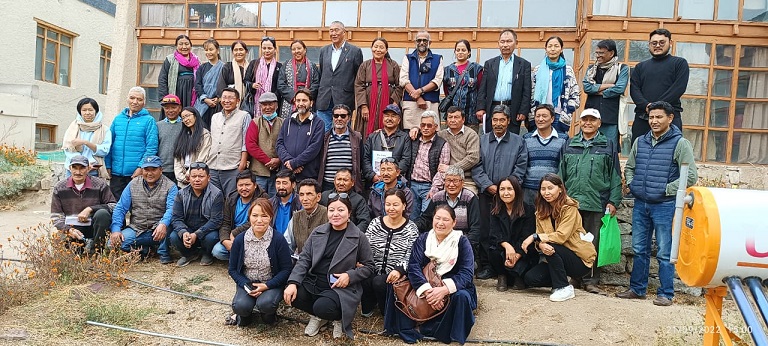
This study focuses on documenting the present status and relevance of the traditional governance system of Ladakhi villages, with a focus on the goba (or lambardar/nambardar). For this, the study also looked at the interface between the local/traditional and new/modern governance systems, viz. the goba with the panchayat, Ladakh Hill Council and UT Administration.
Keywords: traditional governance, goba, democracy, natural resources, indigenous knowledge, environment
Continue reading The Goba of Ladakh – Current Relevance of a Traditional Governance System: Shrishtee Bajpai and Ashish KothariCan we now practice some love? Thoughts on safety and feminism from Kerala
Around two weeks back, just about a week after the ritual of Women’s Day celebrations in Thiruvananthapuram, a 49-year-old woman decided to go get herself some pain medication at 10 30 at night, after all home remedies failed against her persistent body ache. She lives in the beating heart of the city of Thiruvananthapuram in a rented house. This house is in a leading middle-class residential locality, full of houses, usually very quiet. She is , however, not a typical owner-resident. An employee at a local firm earning a very modest salary, she has lived alone for years in rented accommodation, raising her young daughter. The daughter is now a confident young woman who has worked for some years and now seeks to expand her career options. The rent takes up nearly half of her income, but mother and daughter have struggled together to protect each other.
Continue reading Can we now practice some love? Thoughts on safety and feminism from KeralaG-20 – A Brutal Beautification of the City: Glory Rose Roy
GUEST POST by GLORY ROSE ROY
The Delhi Durbar of 1911 has great significance in the history of India in terms of hosting King George V, along with the Queen and other guests. Undoubtedly, the entire occasion was recorded as a grand event and moreover, the decoration used on the way to Coronation Park to make it aesthetically beautiful, was magnificent. However, along with the preparations for the amplified royal visit, another incident that catches attention here is the hiding of an entire village, the ‘Dhakka village’.
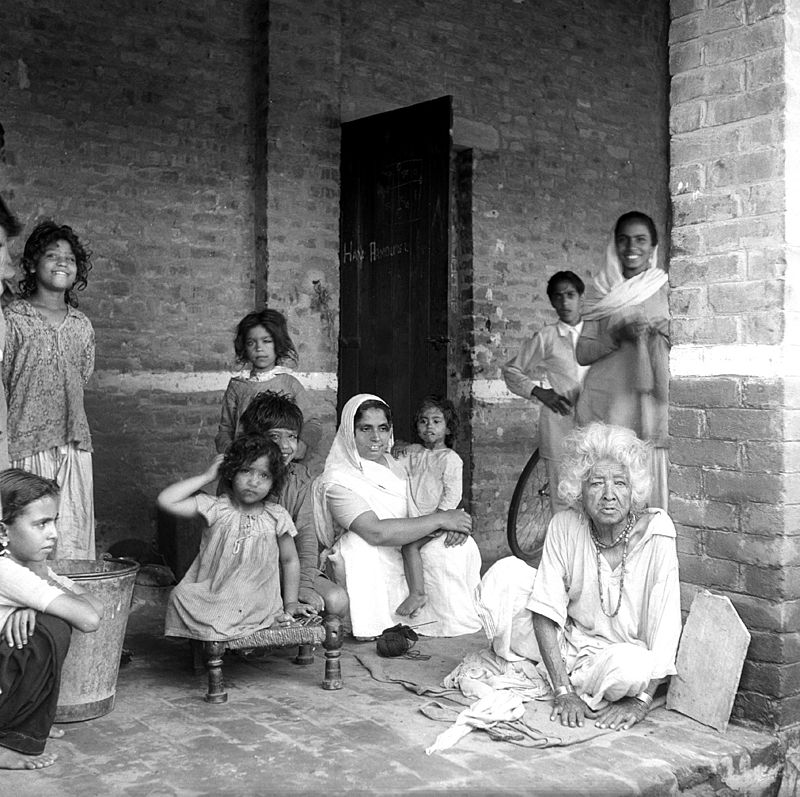
The villagers of Dhakka were asked to evacuate the area as their dwellings were not up to the beauty expectations of British officials. The Dhakka village then, represented a strong site of resistance, as the villagers in Dhakka refused to vacate the region for the King’s visit. Thus in response to the recalcitrance of the villagers, the British officials decided to hide the entire village by using huge cloth sheets.. And that is how the village got its name ‘Dhakka’ from the hindi word dhaka which means hidden. The incident portrays to what extent the colonial state could go to welcome its guests. It mulled relocating an entire village and finally covered it out of sight.
Continue reading G-20 – A Brutal Beautification of the City: Glory Rose RoyWater vs. Fire in Kerala
If 2018 was a trial by water in Kerala, 2023 seems to be a trial by fire, judging by the horrendous waste-dump fires in the State’s commercial capital, Kochi which have been polluting the air this with the most dangerous mix of toxins (so say the scientific community which has been warning this bunch of callous, stupid, greedy, irresponsible bunch who we have elected to power).
Continue reading Water vs. Fire in KeralaRewriting Biopolitics? The Kerala Sastra Sahitya Parishat and the Left
[This is a response to many who ask me why I chose to be part of the KSSP’s ongoing Kerala Padayatra, which seeks to highlight crucial issues in development and governance in Kerala.]
Continue reading Rewriting Biopolitics? The Kerala Sastra Sahitya Parishat and the LeftWho are these ‘Hindus’? The Tragedy of Vizhinjam and the Despicable Cruelty of the Majority
The struggle against the ecologically-fatal Adani seaport being built at the seaside village of Vizhinjam in south Kerala is probably the first large-scale instance of ‘accumulation by dispossession’ in the history of this state. The state — the ruling government, the police, and judiciary — hold hands now in their effort to dispossess the large population of fisher people whose home this coast has been since centuries, for the convenience of predatory capital. As usual, the port-building commenced after massive ‘opinion-building’ exercises by all the major political parties among their supporters in the port-affected villages, promising them golden futures (now that the resources of the sea, which they had depended on for centuries, were robbed, in the course of some seventy years since the 20th century, through the commercialization of fisheries). Doing fieldwork in those areas around 2013, I remember how hard it was to even broach the topic without provoking massive, sometimes, violent, disagreements — it has divided the people completely and left the major social force there, the Latin Catholic Church, quite confused. Now, after 2018, the ecological destruction wrought by this foolish act of greed is nakedly evident for all with eyes to see; and most residents of the sea coast are convinced that in just a few years, the sea will take everything, including the houses built with sweat and tears, labouring for years abroad, even.
Continue reading Who are these ‘Hindus’? The Tragedy of Vizhinjam and the Despicable Cruelty of the MajorityThe Two-Nation Theory, Partition and the Consequences – Prof Ishtiaq Ahmed
Prof Ishtiaq Ahmed, Professor Emeritus of Political Science, Stockholm University and a leading authority on the Politics of South Asia and an eminent author will deliver next lecture (21 st one) in the Democracy Dialogues Series, organised by New Socialist Initiative
He will be speaking on ‘The Two-Nation Theory, Partition and the Consequences’ on Sunday, 27 th November 6 PM (IST)
The lecture will also be live streamed at facebook.com/newsocialistinitiative.nsi
Topic :
The Two-Nation Theory, Partition and the Consequences
1. The Two-Nation Theory as an Idea and an Argument: The talk will contextualize the origins of the Two-Nation Theory in the background of pre-colonial and British colonial rule and analyse it in relation to competing ideas of a One-Nation Theory as well as the vaguer ideas of multiple nationalities deriving from language, ethnicity and religion. This section will also deal with British policy regarding such competing ideas of group identity and nation and nationalism. This will cover the period 1857 – 1932. However, most attention will be given to the 1928 Motilal Nehru Report (which a section of Muslims including one faction of the Muslim League was willing to accept) and Jinnah’s 14 points.
2. The Two-Nation Theory and the demand for Partition: The Government of India Act 1935, the election speeches and manifestos, election results and the Muslim League’s deployment of communalism as political strategy to demand partition on behalf of Muslims. The stands of the Indian National Congress, the Muslim League, the Communist Party of India, the Hindu Mahasabha, the Jamiat Ulema e Hind and other Islamist, regional and working-class parties of Muslims and the Sikhs of Punjab.
3. British policy on the future of India: from unwillingness to grant India freedom to retaining influence and control through defence treaty to finally deciding in favour of partition. The Cabinet Mission Plan, Wavell’s schemes to transfer power as an award, The British military’s transformation from opposition to support for partition; 3 June Partition Plan, the partitions of Bengal and Punjab, the 18 July 1947 Indian Independence Act.
4. The Partition as a flawed exercise in the transfer of power which claimed at least one million Hindu, Muslim and Sikh lives, caused the biggest migration in history (14 – 15 million) and bequeathed bitter disputes over the sharing of colonial assets, territory and claims to princely states. In this regard, the
5. The Partition as a referent for nation-building: while agreeing finally to the partition of India on a religious basis India held steadfastly to nation-building on a secular, liberal-democratic, inclusive and pluralist basis. The Indian constitution came to represent such a view of nation and nation-building. On the other hand, since Pakistan had been won in the name of Islam its nation-building was based on distinguishing Muslims from non-Muslims and generating different formulae of differential rights. More importantly, it brought to light the deep divisions among Muslims based on sect, sub-sect and ethno-linguistic criteria.
6. The Partition and settling of disputes between India and Pakistan: The two-nation theory continued to define and determine relations between India and Pakistan resulting in wars, terrorism and zero-sum games in international forums.
7. The Partition as a historical, political, ideological and intellectual phenomenon: An Evaluation
About the Speaker :
Prof Ishtiaq Ahmed
Professor Emeritus of Political Science, Stockholm University; Honorary Senior Fellow, Institute of South Asian Studies, National University of Singapore. Published several books with special focus on the politics of South Asia discussed in context of regional and international relations
Latest publications, Jinnah: His Successes, Failures and Role in History, New Delhi: Penguin Viking, 2020 won the English Non-Fiction Book Award for 2021 at the Valley of Words Literary Festival, Dehradu, India; Jinnah: His Successes, Failures and Role in History, Vanguard Books, Lahore 2021;
Pakistan: The Garrison State, Origins, Evolution, Consequences (1947-2011), Karachi: Oxford University Press, 2013;
The Punjab Bloodied, Partitioned and Cleansed, Karachi: Oxford University Press, 2012- It won the Best Non-Fiction Book Prize at the 2013 Karachi Literature Festival and the 2013 UBL-Jang Groups Best Non-Fiction Book Prize at Lahore and the Best Book on Punjab Award from Punjabi Parchar at the Vaisakhi Mela in Lahore, 2016
He is working on a new book, The Partitions of India, Punjab and Bengal: Who What and Why
He is the Editor-in-Chief of the “Liberal Arts & Social Sciences International Journal (LASSIJ)” and also regularly writes columns in several Pakistani newspapers
Stop the Slander: Solidarity Statement Against Attempts to Tarnish Activists in the Anti-Adani Seaport Struggle at Vizhinjam
The other day, the citizens of Kerala witnessed an extraordinary coming -together of CPM and BJP leaders in Thiruvananthapuram — in support of the Adani sea port, against the fisher community of the Thiruvananthapuram coast.
Continue reading Stop the Slander: Solidarity Statement Against Attempts to Tarnish Activists in the Anti-Adani Seaport Struggle at Vizhinjamമാറുന്ന ഭരണകൂടം, നവബ്രാഹ്മണിക പിതൃമേധാവിത്വം, ദണ്ഡനീതി ഫെമിനിസം കേരളത്തിൽ — 5
ഉപസംഹാരം
ഫെമിനിസ്റ്റ് ദണ്ഡനീതി നിയമ ഉപകരണങ്ങൾ നിരോധിക്കണമെന്നോ അവ തീർത്തും അപ്രസക്തമാണെന്നോ അല്ല ഈ ലേഖനത്തിൽ ഞാൻ വാദിച്ചിട്ടുള്ളത്. നേരെ മറിച്ച് അവ ഉപയോഗിക്കുമ്പോൾ ജനാധിപത്യവും മനുഷ്യാവകാശങ്ങളും ലിംഗാനീതിയ്ക്കെതിരെയുള്ള പോരോട്ടങ്ങളുടെ സാധ്യതകൾ തന്നെയും അധികാരത്തിൻറെ മേൽ-കീഴറ്റങ്ങൾ കാണാനാകാത്തവിധം പിളർന്ന വായിലകപ്പെട്ടു പോകും വിധം അവരെ പുണരുന്നത് അങ്ങേയറ്റം അപകടകരമായിരിക്കും എന്ന മുന്നറിപ്പ് വായനക്കാരുടെ മുന്നിൽ വയ്ക്കാനാണ് എൻറെ ശ്രമം.
Continue reading മാറുന്ന ഭരണകൂടം, നവബ്രാഹ്മണിക പിതൃമേധാവിത്വം, ദണ്ഡനീതി ഫെമിനിസം കേരളത്തിൽ — 5മാറുന്ന ഭരണകൂടം, നവബ്രാഹ്മണിക പിതൃമേധാവിത്വം, ദണ്ഡനീതി ഫെമിനിസം കേരളത്തിൽ –4
ദണ്ഡനീതി ഫെമിനിസവും നവബ്രാഹ്മണ പിതൃമേധാവിത്വവും
കേരളത്തിൽ ഇരുപതാം നൂറ്റാണ്ടിൽ രൂപമെടുത്ത ബ്രാഹ്മണിക പിതൃമേധാവിത്വത്തിന് സവിശേഷസ്വഭാവങ്ങളുണ്ടായിരുന്നു. ഇരുപതാം നൂറ്റാണ്ടിൽ ഉയർന്നുവന്ന നവവരേണ്യസമുദായങ്ങളെ — നവോത്ഥാന വ്യവഹാരത്തിൻറെ വാഹകങ്ങളെ — പണിതെടുത്ത അടിസ്ഥാന അധികാര-കൂടങ്ങളിൽ ഒന്നായിരുന്നു നവബ്രാഹ്മണിക പിതൃമേധാവിത്വം.
Continue reading മാറുന്ന ഭരണകൂടം, നവബ്രാഹ്മണിക പിതൃമേധാവിത്വം, ദണ്ഡനീതി ഫെമിനിസം കേരളത്തിൽ –4മാറുന്ന ഭരണകൂടം, നവബ്രാഹ്മണിക പിതൃമേധാവിത്വം, ദണ്ഡനീതി ഫെമിനിസം കേരളത്തിൽ –3
സംരക്ഷക-അന്നദാതാ ഭരണകൂടവും ദണ്ഡനീതി ഫെമിനിസവും
കേരളത്തിലിന്ന് രാഷ്ട്രീയരംഗത്തും ഭരണരംഗത്തും (ഉദ്യോഗസ്ഥകളല്ലാത്ത) സ്ത്രീകളുടെ പ്രാതിനിധ്യവും അധികാരവും ഇടതുഭരണത്തിനു കീഴിൽപോലും കുറവാണ്. ഇടതുരാഷ്ട്രീയക്കാരികൾക്കു പോലും സ്വന്തമായ രാഷ്ട്രീയസ്വാധീനവലയം ഉണ്ടാക്കാൻ അനുവാദം ഇല്ലെന്നതിന് തെളിവ് ഇപ്പോഴത്തെ സർക്കാർ തന്നെ തന്നിട്ടുമുണ്ട് — ശൈലജ ടീച്ചറെ മാറ്റി സർക്കാരിലെ ആൺ അധികാരികളെ തികച്ചും ആശ്രയിച്ചു മാത്രം നിലനില്പുള്ള മറ്റൊരു സ്ത്രീയെ അവരുടെ സ്ഥാനത്ത് പ്രതിഷ്ഠിച്ചതോടെ. പാർട്ടി അധികാരശ്രേണികളിൽ സ്ത്രീകൾ കുറയുകയും കീഴ്ത്തല-കാലാളുകളുടെ കൂട്ടത്തിൽ അവരുടെ സാന്നിദ്ധ്യം ഉയരുകയും ചെയ്യുന്നുണ്ട്. പൊതുവെ ഭരണനയതലത്തിൽ ഫെമിനിസ്റ്റ് സ്വാധീനം കുറഞ്ഞിട്ടുമുണ്ട് (മഹിളാ സമഖ്യയിലും കുടുംബശ്രീയിലും ഇതു പ്രകടമാണ്). എങ്കിലും സ്ത്രീശാക്തീകരണ സർക്കാരെന്ന പ്രതിച്ഛായ നിലനിർത്താൻ ഇപ്പോഴത്തെ സോഷ്യലിസ്റ്റ്- അനന്തര ദുഷ്പ്രഭുത്വത്തിൻറെ വാഹനമായ സിപിഎമ്മിനും അവർ നയിക്കുന്ന സർക്കാരിനും കഴിഞ്ഞിട്ടുണ്ട്.
Continue reading മാറുന്ന ഭരണകൂടം, നവബ്രാഹ്മണിക പിതൃമേധാവിത്വം, ദണ്ഡനീതി ഫെമിനിസം കേരളത്തിൽ –3മാറുന്ന ഭരണകൂടം, നവബ്രാഹ്മണിക പിതൃമേധാവിത്വം, ദണ്ഡനീതി ഫെമിനിസം കേരളത്തിൽ — 2
മലയാളി ഫെമിനിസത്തിലെ ‘ദണ്ഡനീതിനിമിഷം’?
ദണ്ഡനീതി ഫെമിനിസം (Carceral feminism) എന്ന സങ്കല്പനം ഇന്ന് ലോകഫെമിനിസ്റ്റ് ചർച്ചകളിൽ സുപരിചിതമാണ്. പോലീസ്, കോടതി, ശിക്ഷ, തടവ് മുതലാവയുൾപ്പെടുന്ന ഭരണകൂടശാഖയെ മുഖ്യമായും ആശ്രയിച്ചുകൊണ്ട് സ്ത്രീകൾക്കെതിരെയുള്ള എല്ലാത്തരം ഹിംസയും പരിഹരിക്കാമെന്ന വിശ്വാസത്തിൽ ഊന്നിനിൽക്കുന്ന ഫെമിനിസ്റ്റ് പ്രയോഗങ്ങളെയും ചിന്തയെയുമാണ് അത് സൂചിപ്പിക്കുന്നത്. പാശ്ചാത്യ ഫെമിനിസത്തിൽ ഏറെ പഴക്കമുണ്ടെങ്കിലും അത് 1980-90 ദശകങ്ങളിൽ അമേരിക്കൻ ഫെമിനിസത്തിലെ പ്രമുഖ ധാരയായി ഉയർന്നുവന്നു. ലൈംഗികത്തൊഴിലിനെപ്പറ്റിയുള്ള ചർച്ചകളിലാണ് സമീപകാലത്ത് അതിൻറെ പുനരുജ്ജീവിതരൂപം പ്രത്യക്ഷമായത്.
Continue reading മാറുന്ന ഭരണകൂടം, നവബ്രാഹ്മണിക പിതൃമേധാവിത്വം, ദണ്ഡനീതി ഫെമിനിസം കേരളത്തിൽ — 2മാറുന്ന ഭരണകൂടം, നവബ്രാഹ്മണിക പിതൃമേധാവിത്വം, ദണ്ഡനീതി ഫെമിനിസം കേരളത്തിൽ — 1
സംശയത്തിൽ നിന്ന് സ്വീകാര്യതയിലേക്ക്
കേരളത്തിൽ ഫെമിനിസത്തിൻറെ രാഷ്ട്രീയപരിണാമത്തെ മാറുന്ന ഭരണകൂടത്തിൻറെ പശ്ചാത്തലത്തിൽ മനസ്സിലാക്കാനൊരു ശ്രമമാണ് ഈ എഴുത്ത്. ഫെമിനിസം എന്ന പേര് സ്വയം അവകാശപ്പെടുന്ന രാഷ്ട്രീയം ഇവിടെ 1980കളിലാണ് പൂർണമായ അർത്ഥത്തിൽ പ്രത്യക്ഷമാകുന്നത്.
Continue reading മാറുന്ന ഭരണകൂടം, നവബ്രാഹ്മണിക പിതൃമേധാവിത്വം, ദണ്ഡനീതി ഫെമിനിസം കേരളത്തിൽ — 1The Partition of India: Three Outstanding Questions – Professor Pervez Hoodbhoy
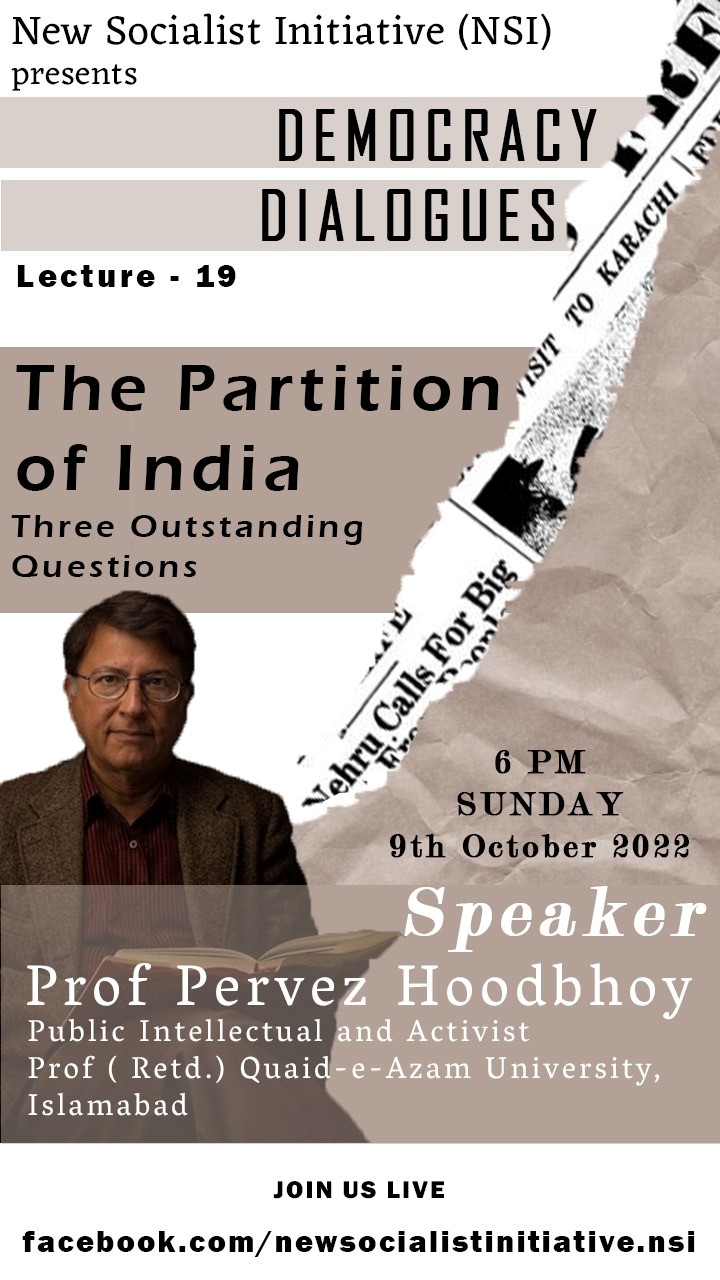
Professor Pervez Hoodbhoy, eminent physicist, author, public intellectual and a forceful voice for reason, science and democracy will be delivering the 19th Democracy Dialogues lecture on Sunday, October 9th, 2022 at 6 PM (IST)
The Partition of India: Three Outstanding Questions
Seventy five years after the communal storm of 1947 countless important questions still remain. From among them I will concentrate upon three which are particularly important in understanding the past but which, in addition, continue to influence current trajectories.
- How, when, and why did the two-nation theory emerge?
- Why is Pakistan a praetorian state but India is not?
- Was Partition preventable and had it not happened what might have been the consequences?
Speaker:
Pervez Hoodbhoy is a nuclear physicist, a frequent commentator on Pakistani television channels, founder-director of The Black Hole in Islamabad, and an author. He received his undergraduate and graduate degrees from MIT and taught physics at Quaid-e-Azam University for 47 years.
The lecture will be held on zoom and for security reasons the link will be shared individually only closer to the event. Please write to us at democracydialogues@gmail.com if you want to join the lecture online.
It will also be live streamed at facebook.com/newsocialistinitiative.nsi
SL Govt – Stop Labeling Student Protestors and Activists as Terrorists! South Asian Feminists
Statement released by feminists from Sri Lanka, Bangladesh, Pakistan, Fiji, Malaysia and India, August 27, 2022
We are a group of feminists writing to call urgent attention to the extra-constitutional attempts of the Government of Sri Lanka (GoSL) to suppress dissent. Lacking a popular mandate, hunting down student protestors and activists, including a LGBTIQ activist has become a central strategy of the political élite to retain power. The latest move by the GoSL is to brand three student leaders and the student union they represent, the Inter University Student Federation (IUSF), as ‘terrorists’.
Wasantha Mudalige, Convenor of IUSF, Galwewa Siridhamma thero, Convenor of the Inter-University Bhikkhu Federation, and Hashan Jeewantha, a student activist, were among the 20 arrested on August 18, 2022, for participating in a peaceful protest led by the student movement. All three of them are prominent student leaders who have been at the forefront of struggles for socio-economic justice in Sri Lanka, particularly against numerous ongoing attempts to dismantle free education. Continue reading SL Govt – Stop Labeling Student Protestors and Activists as Terrorists! South Asian Feminists
Where Are We – 75 Years after Independence : Prof Aditya Mukherjee

Eminent scholar of Modern Indian History Prof Aditya Mukherjee, ( Retd.) Centre for Historical Studies, JNU who is also editor of the ‘Sage Series in Modern Indian History’ will deliver the next (18 th) Lecture in the Democracy Dialogues series organised by New Socialist Initiative.
He will be speaking on ‘Where Are We : 75 Years After Independence.’ on Sunday, 28 th August 2022 at 6 PM (IST).
Join Zoom Meeting
https://us02web.zoom.us/j/81606280893?pwd=U3daWGVYSFV6MFIyMzROVDJ0Qm40Zz09
Meeting ID: 816 0628 0893
Passcode: 356973
The programme will also be live streamed at facebook.com/newsocialistinitiative.nsi .
Theme :
Where Are We : 75 Years after Independence
“As we celebrate 75 Years of India’s independence, it is time to reflect on the extent to which the Indian nation-state has lived up to the vision of the Indian national movement and the spirit of the new Constitution. The core ideas behind this vision envisaged that Independent India would be sovereign, democratic, secular republic that will have a pro-poor orientation and would be based on reason rather than blind faith and obscurantism.
With the recent changes in the governmental power at the Centre and in many states where forces following precepts of the Right – forces which had remained outside the spectrum of the national movement – have become dominant resulting in a grave threat to the core components of the Idea of India. There is a reason why the world is no longer accepting India as a full democracy and is, instead, being variously describing it as a “partially free democracy”, a “flawed democracy” and even as an “electoral autocracy”.
In this lecture we will trace the course of developments that has led India to this predicament and will outline future prospects for overcoming the challenges.”
About the Speaker :
Prof Aditya Mukherjee has been associated with Centre for Historical Studies, JNU for the last more than four decades.
He has been Editor of the Series, ‘Sage Series in Modern Indian History’ published by SAGE publications, and a member of Scientific Committee, International Review of Sociology, Rome, since 2011 and Regional Editor, International Journal of AsianStudies, Tokyo (Cambridge University Press)
He has been Visiting Professor at Duke University, USA ; was a Visiting Fellow at Institute of Advanced Study, Lancaster University, UK ; Fellow at Institute of Advanced Study, Nantes, France ; Visiting Fellow , Institute of Advanced Study, Sao Paulo, Brazil ; Visiting Professor, La Sapienza, University of Rome at various periods during his long career.
He is author / co-author of many books : India’s Struggle for Independence, which has gone into 80 reprints ; India After Independence, 1947 – 2000 ; Imperialism, Nationalism and the Making of the Indian Capitalist Class 1927-1947 ; India Since Independence, Penguin, More than 35 reprints till 2016.7 ; RSS, School Texts and The Murder of Mahatma Gandhi: The Hindu Communal Project , (co-author),
The Gujarat Politics of Remission: People’s Union for Democratic rights

Statement by People’s Union for Democratic Rights
The controversial garlanding of the recently released 11 individuals, by members allegedly belonging to the VHP on August 16, 2022, raises a pertinent question: why were these individuals released? Obviously, the fact that they had been in prison for well over the mandatory 14 years made them eligible for availing the remission policy of the state government.
It is a settled principle within remission policy that the pre-mature release of convicted prisoners must fulfil the goals of rehabilitative or reformative justice. For this reason, remission is not an automatic process available to all convicts who have served 14 years; instead, there are clear criteria for eligibility. While the report prepared by the state government’s committee formed after the Supreme Court’s judgment of May 2022 is not available, it is reasonable to ask how the 11 individuals fulfilled the criteria. Continue reading The Gujarat Politics of Remission: People’s Union for Democratic rights
गुजरात में हुए सामूहिक बलात्कार और हत्याओं के 11 दोषियों की समय से पहले रिहाई को तुरंत रद्द किया जाए!
For complete list of signatories and statement in English, see here.
न्याय के लिए बिलकिस बानो के 20 साल के संघर्ष में हम उसके समर्थन में एकजुट हैं
हम मांग करते हैं कि सामूहिक बलात्कार और हत्या के 11 दोषियों की समय से पहले रिहाई को तुरंत रद्द किया जाए!
न्याय के लिए संघर्ष कर रहे सभी बलात्कार पीड़ितों पर इसका अत्यघिक नकारात्मक और बुरा असर पड़ेगा !
हम भारत के सर्वोच्च न्यायलय से इस फैसले को जो कि न्याय पर एक गंभीर आघात है, को पलटने की मांग करते हैं
हम भारत के सभी नागरिकों को अपील करते हैं कि वे इस अन्याय के खिलाफ और बलात्कार पीड़ितों के समर्थन में खड़े हो
15 अगस्त 2022 की सुबह, 75वें स्वतंत्रता दिवस पर राष्ट्र को संबोधित करते हुए भारत के प्रधानमंत्री ने महिला अधिकार, गौरव और नारी-शक्ति के बारे में बात की। उसी दिन दोपहर में ‘बिलकिस बानो’, एक महिला जो उसी ‘नारी – शक्ति ’ की मिसाल के रुप में पिछले 17 साल से न्याय की लम्बी लड़ाई लड़ रही है, को पता चलता है कि वे लोग जिन्होंने उसके परिवार के लोगों को मार डाला, उसकी 3 साल की मासूम बच्ची का कत्ल किया, उसके साथ सामूहिक बलात्कार किया और फिर उसे मरने के लिए छोड़ दिया, वो सभी जेल से बाहर आ गए हैं और आज़ाद हो गए हैं। किसी ने उससे उसके विचार नहीं पूछे या उसकी सुरक्षा के बारे में जानने की कोशिश नहीं की। किसी ने उसे नोटिस भी नहीं भेजा, किसी ने नहीं पूछा कि एक सामूहिक बलात्कार की पीड़ा से निकली महिला को अपने बलात्कारियों की रिहाई के बारे में सुनकर कैसा मेहसूस हुआ। Continue reading गुजरात में हुए सामूहिक बलात्कार और हत्याओं के 11 दोषियों की समय से पहले रिहाई को तुरंत रद्द किया जाए!
Justice for Bilkis! Appeal to Supreme Court to restore faith in the justice system on 75th anniversary of Independence
FULL TEXT OF STATEMENT IN ENGLISH AND COMPLETE LIST OF SIGNATORIES AFTER THE SUMMARY BELOW.
FOR STATEMENT IN HINDI SEE HERE
20 years after horrific gang-rape and mass murders in Gujarat, about 6000 citizens speak out in support of Bilkis Bano’s continuing struggle for justice!
Demand the revocation of the premature release of 11 gang-rapists and mass murderers in Gujarat.
Appeal to the Supreme Court of India to undo this grave miscarriage of justice. Call upon citizens to stand with all victims of rape against such an injustice.
Coming together to express their shock and horror at the pre-mature release of 11 men convicted of gang-rape and mass murder, about 6000 ordinary citizens, grassroots workers, movements and organizations working for the rights of women, for human rights, peace, secularism, against caste oppression, for disability and queer rights and other peoples’ movements, activists, eminent writers, historians, scholars, filmmakers, journalists and former bureaucrats and many more, came together to say:
“On the morning of August 15, 2022, in his Independence Day address to the nation the Prime Minister of India spoke of women’s rights, dignity and Nari Shakti. That very afternoon Bilkis Bano, a woman who embodied that ‘Nari Shakti’ in her long and daunting struggle for justice, learnt that the perpetrators who killed her family, murdered her 3 year old daughter, gang-raped and left her to die, had walked free.”

