Category Archives: Images

Will we overcome? Pramada Menon

This is a guest post by PRAMADA MENON

Sundays are days for doing nothing much. Often I sit in front of the television and surf and watch many, many movies until all the story lines start merging into one. It’s fun because it does not require you to think. If one switches on a news channel, the chances are that you will start to splutter like mustard seeds in oil, since there is so much to splutter about – Nirmala Venkatesh, a member of the central government’s National Commission for Women, was put in charge of a three-member panel to investigate the attack on the women at a pub in Mangalore at 4pm in the evening. The way she sees it, Venkatesh is supposed to have said, women have the right to enjoy themselves but should also recognize societal limits. As part of her inquiry, she said, she plans to meet with the attackers, the bar owner and the families of the young women to see whether their parents
allowed them to go out to pubs every night at midnight. “My personal advice: Women should be very careful,” she said. “I can’t just roam after midnight.”

Continue reading Will we overcome? Pramada Menon

India’s Terror Dossier. Further Evidence of a Conspiracy: Raveena Hansa

This guest post has been sent to us by RAVEENA HANSA

On 5 January 2009, the Indian government handed a 69-page dossier of material stemming from the ongoing investigation into the Mumbai terrorist attacks of 26-29 November 2008 to the Pakistani government. This was subsequently made accessible to the public, so it is possible for us to examine it.

The most striking point about the dossier is its vague and unprofessional character. Enormous reliance is placed on the interrogation of the captured terrorist, Mohammed Amir Kasab, despite the fact that there is an abundance of other evidence – eyewitness accounts, CCTV and TV footage, forensic evidence, etc. – which could have been called upon to establish when, where, and what exactly happened during the attacks. This gives rise to the suspicion that the interrogation is being used as a substitute for real investigation because it can be influenced by intimidation or torture, whereas other sources of evidence cannot be influenced in the same way.

Continue reading India’s Terror Dossier. Further Evidence of a Conspiracy: Raveena Hansa
Reading Swarup, Watching Boyle

When I read Vikas Swarup’s Q & A a year or so ago, I was intrigued and disappointed equally. I felt the author had focused all his energies on the tight and intricate plot, moving rapidly through it with no slip-ups, but this resulted in a grand plot outline rather than a novel. The prose is functional, characters inked in strongly but with little nuance, and when it all comes together with a click at the end, it is sort of morbidly satisfying, but one feels cheated nevertheless. All the more so because the story lingers stubbornly in memory.

I was interested enough keep track of Swarup, and found an interview in which he said that after writing four chapters he had to wind it up in a month since he was getting posted back to India and knew he would not have time for it back home.

“It was August 2003, and I had one more month in London. The plot was in my mind, so I took up the challenge and wrote down the remaining chapters in one month. Over one weekend I wrote 20,000 words.”

Well, that certainly explained the strange slightness and lack of density – the author’s hurry to reach the finish line shows drastically.

After seeing Slumdog Millionaire though, Q & A in retrospect appears serpentine in its complexity, so completely has Danny Boyle  extracted the simplest and most predictable story line out of it. Continue reading Reading Swarup, Watching Boyle

Families and Dynasties, Lettered and Unlettered – Monobina Gupta

Minister in the Rajasthan government
Golma Devi, Minister in the Rajasthan government

Guest Post by MONOBINA GUPTA

It is jarring, to put it mildly, that Times of India, a leading daily, engaged in a high-profile ‘Teach India’ campaign should publish a front page story mocking the unlettered. This story exhibits a strange callousness in its reporting about the very constituency of people the campaign is hoping to address…or ‘uplift’…
The story published in the TOI on December 20, smacks of arrogance as it speaks disdainfully of an unlettered woman legislator recently elected in Rajasthan’s assembly elections. Golma Devi, elected from the Mahuwa constituency is the butt of ridicule and lament in this article authored by P J Joychen. The author, it seems, cannot get over the fact that an unlettered person like Golma Devi has been elevated to the rank of a minister in the Ashok Gehlot government.

No, she is not a history sheeter; nor does she have a scam hot on her heels. She is nevertheless an offender – in the sense of ‘offending’ your ‘sensibilities’ – in the supercilious eye of the media; an object of ridicule. Her offense: her of lack of reading and writing skills.

Continue reading Families and Dynasties, Lettered and Unlettered – Monobina Gupta

The Mumbai Terror Attacks: Need For a Thorough Investigation: RH

This guest post comes from a friend who wishes to be known as RH

In all the confusion and horror generated by the ghastly terrorist attacks in Bombay, a dimension which has not received the attention it deserves is the circumstances surrounding the death of Anti-Terrorist Squad (ATS) chief Hemant Karkare and two of his colleagues, encounter specialist Vijay Salaskar and Additional Commissioner of Police Ashok Kamte. The major pattern of operations involved well-organised attacks on a few high-profile sites in Colaba – the Taj, Oberoi and Trident Hotels, and the less-known Nariman House – while a parallel set of operations was centred on Victoria Terminus or VT (now known as Chhatrapati Shivaji Terminus or CST) station, Cama Hospital and the Metro cinema, in the middle of which is the police headquarters where Karkare worked. The latter is an area where foreigners are much less likely to be found.

Why is a Proper Investigation Crucial?

Continue reading The Mumbai Terror Attacks: Need For a Thorough Investigation: RH

Sandra Samuel, Faces and the ‘Nouveau’ Media – Monobina Gupta

Guest post by MONOBINA GUPTA

“The TV business is uglier than most things. It is normally perceived as some kind of a cruel and shallow money trench through the heart of the journalistic industry, along plastic hallway where thieves and pimps run free and good die like dogs, for no good reason.”

Hunter Thompson in Generation of Swine

We, in the business of media, are running a trade in ‘faces;’ swapping ordinary ones for the attractive, distorting news coverage and not really giving a damn about it. But the craft of journalism was not always so warped. We made it so.

Continue reading Sandra Samuel, Faces and the ‘Nouveau’ Media – Monobina Gupta

Hotel Taj: Icon of whose India? Gnani Sankaran

Gnani Sankaran is a noted Tamil writer who lives in Chennai.

Watching at least four English news channels surfing from one to another during the last 60 hours of terror strike made me feel a terror of another kind. The terror of assaulting one’s mind and sensitivity with cameras, sound bites and non-stop blabbers. All these channels have been trying to manufacture my consent for a big lie called – Hotel Taj the icon of India.

Read this scathing critique of the media here.

Witnessing Madness 24/7

What is happening? The Taj is burning, gunmen are shooting, the police is storming, the Oberoi is burning, the army is descending, people are running; bleeding; dying. Barkha Dutt is talking, Rajdeep Sardesai is talking, Srinivasan Jain is talking, Vilas Rao Deshmukh is talking, L.K Advani is talking, Manmohan Singh is talking, Vikram Chandra is talking, an eye-witness is talking, the army chief is talking, the naval chief is talking, an ex-hostage is talking, the terrorist is talking, Javed Jaffery is talking, Arnab Goswami is talking, is anyone even listening, is everyone listening—But what is happening?

Continue reading Witnessing Madness 24/7

Some images do not disturb

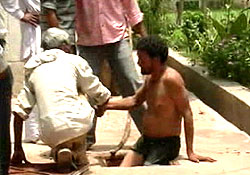
CBI-employed manhole workers in Noida

guest post by S. ANAND

There are times when our critical antennae do not perk up. We do not wish to decode certain signs because we are all implicated in them. Following the 14 September blasts in Delhi, suddenly the media found a new value in ragpickers, street vendors, auto drivers and others who live on the fringes of the city and are generally looked down upon by people who inhabit apartments, blogs, cars (and autos, I must add).

Suddenly, by 15 September, ragpicker Krishna was canonized as a ‘hero’ by the media, the police and the state (the Delhi government claims credit for saving some lives with its ‘eyes and ears’ policy). Yet, Times of India prefaced its report about Krishna thus: Continue reading Some images do not disturb

Mother Kerala

Mother Kerala
Mother Kerala

Continue reading Mother Kerala

OB vans in Mehrauli

I was in Mehrauli today for a few good hours. I don’t have the patience to write a long post. Just a few things. Continue reading OB vans in Mehrauli

A Little Less Melodrama and a Lot More Forensics

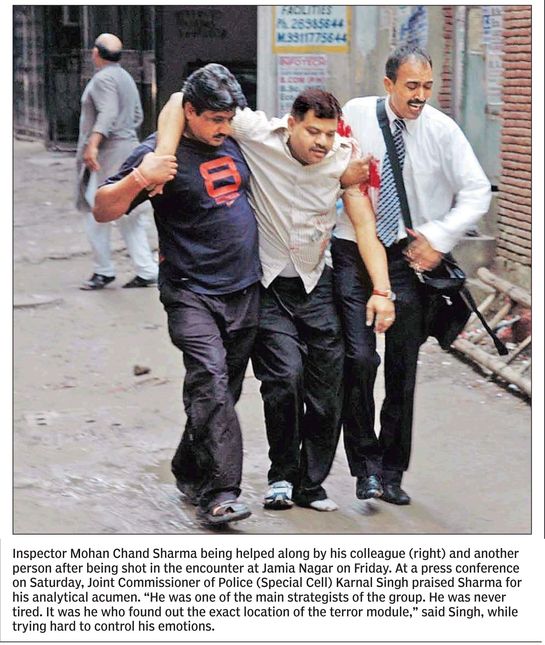
On Looking at a Photograph taken on the Margins of an ‘Encounter’

From page 3, Sunday Hindustan Times, 21 September, 2008

  Continue reading A Little Less Melodrama and a Lot More Forensics

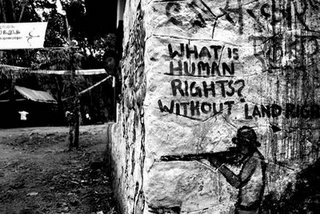
Images from Chengara


More.

[Via Anivar Aravaind]

सुपरहीरो की उदासी का सबब – अभय कुमार दुबे

[अभय कुमार दुबे का यह लेख नवभारत टाइम्‍स मे छपा था। यहाँ इसे दीवान लिस्‍ट के सौजन्‍य से पेश किया जा रहा है। उनका यह आलेख अमरीकी पॉपुलर कलचर के कई किरदारो की यकायक गायब होती ‘प्रासंगिकता’ पर नज़र डालता है। इस दिलचस्‍प लेख का एक पहलू वह है जो शीतयुद्धोत्तर अमरीका की बदली हुई राजनीतिक हैसियत के साथ पॉपुलर मानसिकता का एक गहरा रिश्‍ता देखता है। पढ़ते हुए अनायास स्‍लावोज ज़िज़ेक का एक लेख याद आ गया जिसमें वे उस अमरीकी फ़ंतासी (या दुस्‍वप्‍न?) की बात करते हैं जिसमें एक आम अमरीकी हमेशा किन्‍हीं एलियन्‍स या डायनोसॉरों द्वारा आक्रांत होने के रोमांचक ख़ौफ़ में जीता है, और जो 11 सितम्‍बर 2001 को अचानक चरितार्थ होती है। शायद किस्‍सा बैटमैन आदि पर ख़त्‍म नहीं होता।]

फैंटम, जादूगर मैंड्रेक  और फ्लैश गॉर्डन के कारनामों की खुराक पर बचपन गुजारने वाले भारतवासियों की पीढ़ी को मालूम होना चाहिए कि कॉमिक्स के पन्नों से हमारी-आपकी जिंदगी में झांकने वाले सुपर  हीरो किरदारों की दुनिया अचानक बदल गई है। अमानवीय ताकतों से लैस जो चरित्र दुनिया को भीषण किस्म के खलनायकों से बचाने का दम भरते थे, आज अपनी ही उपयोगिता के प्रति संदिग्ध हो गए हैं।

जो लोग फैंटेसी की दुनिया से बाहर नहीं निकलना चाहते उन्हें यह देख कर अफसोस हो सकता है कि  उनका ‘फ्रेंडली नेबर’ स्पाइडरमैन पिछले दिनों रिटायर होते-होते रह गया। अब गौथम सिटी का रक्षक बैटमैन भी बुराई से लड़ने का अपना फर्ज निभाने में खुद को नाकाफी महसूस करने लगा है। इस बात का एहसास पिछले दिनों हमारे देश में सुपरहिट हुई हॉलिवुड की कुछ फिल्मों को देख कर हुआ है।

Continue reading सुपरहीरो की उदासी का सबब – अभय कुमार दुबे

Yeh To Bada Toing Hai!

It seems the I & B ministry doesn’t like chocolate. Specifically it doesn’t like women nibbling the posterior of a chocolate covered man. The new ‘Dark Temptations’ Axe deodorant ad has been recently banned by the ministry for being  indecent, vulgar and suggestive and thus violating Rule 7 (8) of the Advertising Code prescribed under the Cable Television Act, which says, ” Indecent, vulgar, suggestive, repulsive or offensive themes or  treatment shall be avoided in all advertisements.”

Personally I can take chocolate or leave it….

“Indecent”, “vulgar”, “repulsive” and “offensive” I understand as ideas, at least notionally. It’s the “suggestive” I don’t get.

Continue reading Yeh To Bada Toing Hai!

Under Development: Singur

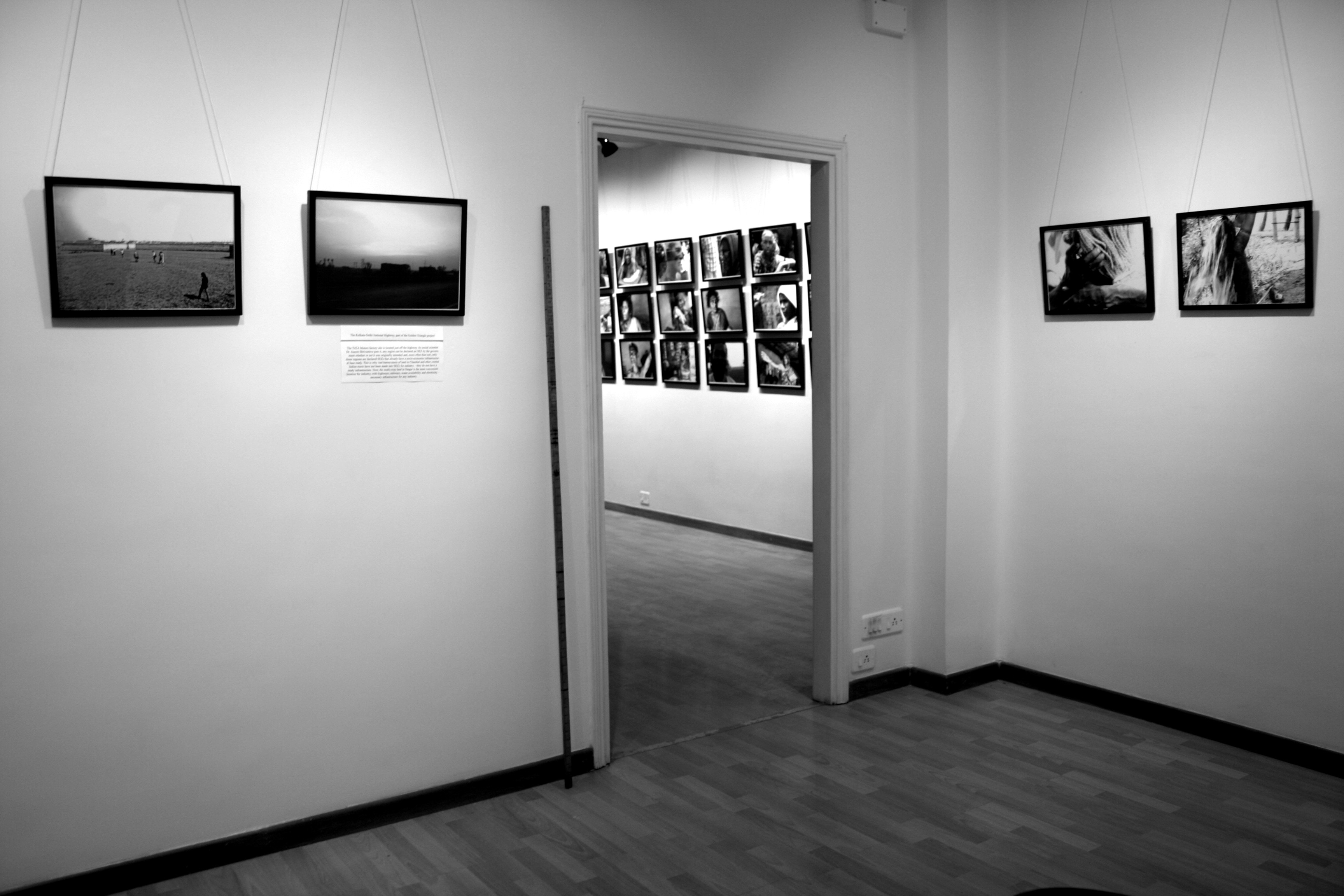
If you are in Kolkata between 27 June and 2 July, you may do well to visit the Seagull Arts and Media Resource Centre, Kolkata, for an exhibition of photographs of Singur. There will also be a panel discussion and a film festival. Continue reading Under Development: Singur

Broken news

Got these from a friend. Enjoy.


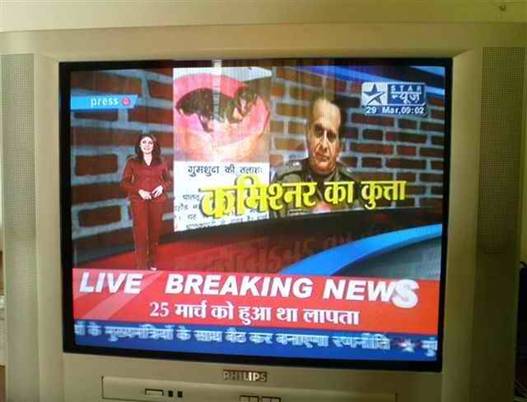
Lost on 25 March, the Delhi police commissioner’s dog was soon found, giving star news an opportunity to ‘break news’ and do a special show replacing a news bulletin. Below: they continued flashing the news and calling it ‘breaking’ even when other news forced itself on to the screen.

Continue reading Broken news

Taslima Nasreen and the Spirit of Islam

It is said that after he announced his Prophethood Hazrat Mohammed suffered severe persecution in Mecca. The vitriol and calumny extended from the verbal to the physical. There was one woman who would always throw filth on him whenever he passed by her house. He would unfailingly take the same route everyday and she would equally invariably throw filth on him. He never protested. One day as he passed her house, she was missing. He inquired after her and learning that she was sick he went up to her room, and finding her bed-ridden, tended to her. I grew up listening to a lot of stories from my grandmother about the Prophet Mohammed. Told in an anecdotal form, the stories largely avoided his image as a conqueror and concentrated instead on his personality, specially his grace under hardship. I narrate this story especially to remind my compatriots about what they might do when faced with hostility, or criticism.

I write this particularly in the context of Taslima Nasrin, whose vise expires this week and she still does not know whether it will be extended or not. Taslima Nasrin must be given an opportunity to stay on in India, and must be provided that opportunity not as a grace or favor but because she is, as a South Asian, as a fellow human, fully entitled to it. My appeal rests not merely on a liberal idea of freedom of expression, or on making this a litmus test for India’s pluralism. India’s pluralism, where it exists in practice, is not dependent on appeals or testimonials from intellectuals. Our pluralism does not, and has not, precluded violent confrontations between different social groups. However, we also have countervailing traditions of coming to a working adjustment with each other, which, as an aside, partly explains why the word ‘adjust’ is so popular in all Indian languages.

Continue reading Taslima Nasreen and the Spirit of Islam

A Circus, Some Laughter, A Film Festival

I would be very reluctant to call the recently – concluded Twelfth International Film Festival of Kerala (7-14 December) a ‘circus’, but well. When the CPM in Kerala wears Caesar-like accoutrements, one may have to call it just that! At the press conference organized a few days before the festival – actually the day on which Buddhadev admitted to his ‘mistake’ — M A Baby, CPM intellectual and Minister, Cultural Affairs, Government of Kerala spoke at length about how Lenin and other worthies of the Soviet Union had endorsed cinema as a medium to ‘educate and entertain’ the masses. However when he announced the name of the opening film after many such lofty words, ripples of laughter filled the hall.

hana makhmalbaf with baby

The opening film was Hana Makhmalbaf’s ‘Buddha Collapsed out of Shame’! Of course, the CPM intellectuals could not laugh; nor could they snap at back-benchers who asked whether it wasn’t ‘Buddhadev Collapsed out of Shame’. Thus it was clear, that despite the circuses, the spectre of the people continues to haunt the CPM, to borrow Partho Sarathi Ray’s words.

Continue reading A Circus, Some Laughter, A Film Festival

Jantar Mantar

JantarMantar

In the strange, caged, and bound space of “protest” that Jantar Mantar in Delhi has now become [been reduced to?], there are moments when some voices still rise wrechingly above the din.

Queer Images

Sunil Gupta is a renowned photographer whose work over the last three decades has spanned images of the body, migration, exile, HIV and sexuality. He also has a lot to say about the need for an art history centred on sexuality. See his work on www.sunilgupta.net. Also, see his jointly curated exhibit, autoportraits, as part of The Nigah QueerFest ’07. Details at www.thequeerfest.com.

Sunil’s work will come out in a book by Yoda Press in 2008. I had a chance to speak to Sunil recently for an interview that was published in Time Out Delhi. Excerpts:

G: Today, Sunil, you are known as a photographer who has a significant body of work on sexuality, and especially on gay and lesbian lives. How did sexuality first enter your work?

S: I moved to Canada from Delhi when I was 15. I arrived in September, 1969, literally a month after the Stonewall uprising in New York, so you could feel the effects of gay liberation everywhere. I went to a very liberal junior college. Everyone came out then. So being gay was very cool, unlike being Indian which was not cool at all. There were no Indians around me at the time. I started shooting gay news items for a fledgling campus newsletter. Those were my first photographs on sexuality. We were trying to find positive images in those early days. It was about taking happy picture of people happily being gay to counter all the negative imagery around us. Continue reading Queer Images