കേരളത്തിൽ ഫെമിനിസത്തിൻറെ രാഷ്ട്രീയപരിണാമത്തെ മാറുന്ന ഭരണകൂടത്തിൻറെ പശ്ചാത്തലത്തിൽ മനസ്സിലാക്കാനൊരു ശ്രമമാണ് ഈ എഴുത്ത്. ഫെമിനിസം എന്ന പേര് സ്വയം അവകാശപ്പെടുന്ന രാഷ്ട്രീയം ഇവിടെ 1980കളിലാണ് പൂർണമായ അർത്ഥത്തിൽ പ്രത്യക്ഷമാകുന്നത്.
The internet frenzy over the Civic Chandran case has reached a new zenith over the two highly problematic — deeply elitist, sexist, logically and empirically flawed — anticipatory bail orders issued to the accused by the Sessions Court. There was a strange silence about the first one which was stuffed with elitist statements, and an even stranger pause over the blatantly sexist and conservative order before the active condemnation of the latter began to be voiced over the internet. Even stranger, because there is far more tolerance of elitism among the internet woke-folk than of conservative sexist understandings of the appropriate clothing for women’s bodies in Kerala. The three-day break from expressions of outrage did not, and still does not make sense.
न्याय के लिए बिलकिस बानो के 20 साल के संघर्ष में हम उसके समर्थन में एकजुट हैं
हम मांग करते हैं कि सामूहिक बलात्कार और हत्या के 11 दोषियों की समय से पहले रिहाई को तुरंत रद्द किया जाए!
न्याय के लिए संघर्ष कर रहे सभी बलात्कार पीड़ितों पर इसका अत्यघिक नकारात्मक और बुरा असर पड़ेगा !
हम भारत के सर्वोच्च न्यायलय से इस फैसले को जो कि न्याय पर एक गंभीर आघात है, को पलटने की मांग करते हैं
हम भारत के सभी नागरिकों को अपील करते हैं कि वे इस अन्याय के खिलाफ और बलात्कार पीड़ितों के समर्थन में खड़े हो
15 अगस्त 2022 की सुबह, 75वें स्वतंत्रता दिवस पर राष्ट्र को संबोधित करते हुए भारत के प्रधानमंत्री ने महिला अधिकार, गौरव और नारी-शक्ति के बारे में बात की। उसी दिन दोपहर में ‘बिलकिस बानो’, एक महिला जो उसी ‘नारी – शक्ति ’ की मिसाल के रुप में पिछले 17 साल से न्याय की लम्बी लड़ाई लड़ रही है, को पता चलता है कि वे लोग जिन्होंने उसके परिवार के लोगों को मार डाला, उसकी 3 साल की मासूम बच्ची का कत्ल किया, उसके साथ सामूहिक बलात्कार किया और फिर उसे मरने के लिए छोड़ दिया, वो सभी जेल से बाहर आ गए हैं और आज़ाद हो गए हैं। किसी ने उससे उसके विचार नहीं पूछे या उसकी सुरक्षा के बारे में जानने की कोशिश नहीं की। किसी ने उसे नोटिस भी नहीं भेजा, किसी ने नहीं पूछा कि एक सामूहिक बलात्कार की पीड़ा से निकली महिला को अपने बलात्कारियों की रिहाई के बारे में सुनकर कैसा मेहसूस हुआ। Continue reading गुजरात में हुए सामूहिक बलात्कार और हत्याओं के 11 दोषियों की समय से पहले रिहाई को तुरंत रद्द किया जाए!→
20 years after horrific gang-rape and mass murders in Gujarat, about 6000 citizens speak out in support of Bilkis Bano’s continuing struggle for justice!
Demand the revocation of the premature release of 11 gang-rapists and mass murderers in Gujarat.
Appeal to the Supreme Court of India to undo this grave miscarriage of justice. Call upon citizens to stand with all victims of rape against such an injustice.
Coming together to express their shock and horror at the pre-mature release of 11 men convicted of gang-rape and mass murder, about 6000 ordinary citizens, grassroots workers, movements and organizations working for the rights of women, for human rights, peace, secularism, against caste oppression, for disability and queer rights and other peoples’ movements, activists, eminent writers, historians, scholars, filmmakers, journalists and former bureaucrats and many more, came together to say:
“On the morning of August 15, 2022, in his Independence Day address to the nation the Prime Minister of India spoke of women’s rights, dignity and Nari Shakti. That very afternoon Bilkis Bano, a woman who embodied that ‘Nari Shakti’ in her long and daunting struggle for justice, learnt that the perpetrators who killed her family, murdered her 3 year old daughter, gang-raped and left her to die, had walked free.”
In the light of the above history it seems no surprise at all that mainstream feminists in Kerala do not seem to need a critique of the punitive state at all. Nor are they really troubled by the withdrawal of the welfare state or its perversion, even in matters that crucially affect women and children. Being moored in it, even the withdrawal of the welfare state from even support services to child-victims of sexual violence (citing ‘convenience’ which turned to be ‘convenience’ for the government alone), and the stuffing of crucial committees dealing with the welfare of and justice to women and children with dubious candidates with nepotistic connections – has rarely excited significant united protest from Kerala’s mainstream feminists.
Indeed, in a recent case of baby-abduction in which the infant born to Anupama Chandran, the daughter of a local CPM leader, in her relationship with Ajith, a dalit man, was trafficked with the active connivance of child welfare officials, this feminist mainstream was mostly silent; many prominent voices in it were rallied against the aggrieved mother; some of them even participated in the unspeakable cyber-lynching of the couple, spreading rumours and making unfounded accusations. Though the large numbers of young sexual violence victims belong to the oppressed castes, and though the Anupama-Ajith case was plainly one of caste hostility and violence, these features did not trigger animated responses from the feminist mainstream. These tepid or hostile responses are in sharp contrast to the manner in which sexual harassment campaigns are conducted. Continue reading Carceral Feminism and the Punitive State: Why I am not with the Mob — 3→
In the 1980s, when the first feminist articulations began to be heard in Kerala, left-leaning feminists often sought to maintain a critical distance from the state, emphasizing its inherently patriarchal nature. This was not surprising as feminists of that generation had radical-Marxist roots or strong connections with it. Radical Marxism in that generation was clearly suspicious of the state – quite unlike the mainstream left.
I have never been a carceral feminist anytime in my life. Right now, there is a massive tide of abuse and misrepresentation of non-carceral feminism in Kerala, so much so that any suggestion of solutions to the problem of sexual harassment outside the framework of the state is immediately dubbed anti-woman and anti-feminist. Carceral feminists are so warped, they seem to be totally unseeing of the fact that the debate has always been about the significance of the state and its instruments in the generally agreed-upon goal of gender justice, and not really about who is the true, or truer feminist. Indeed, this is strongly reminiscent of the mass attack on the sex worker activist Nalini Jameela years back and the anti-carceral feminists who were prepared to hear her out and stand with her. I remain a non-carceral feminist, rejecting the binary between carceral and anti-carceral feminism. I refuse the insistence that proportional punishment is irrelevant in dealing with sexual misconduct. I refuse to see ‘Men’ — I will not buy the idea that all male bodies share the same privilege and power and hence must be dealt with in the same way. I write the following in this spirit. If I am banished from the feminist mainstream for this, so be it.
We are a group of former civil servants of the All India and Central Services who have worked with the Central and State Governments in the course of our careers. Our group has no affiliation with any political party, and we, as its members, believe in impartiality, neutrality and commitment to the Constitution of India.
On May 11, 2022, a chorus of appreciation greeted the Supreme Court’s interim orders on a batch of cases which had challenged the constitutionality of the sedition provision contained in Section 124A of the Indian Penal Code (IPC). The Supreme Court’s order was an interim one, viz. to keep in abeyance this section and all related pending trials, appeals and proceedings until further orders. While we would, like others, wish to applaud this decision of the Supreme Court, we feel that, at present, it deserves only a muted cheer. Continue reading CCG Open Statement on the Sedition Provision in the Indian Penal Code→
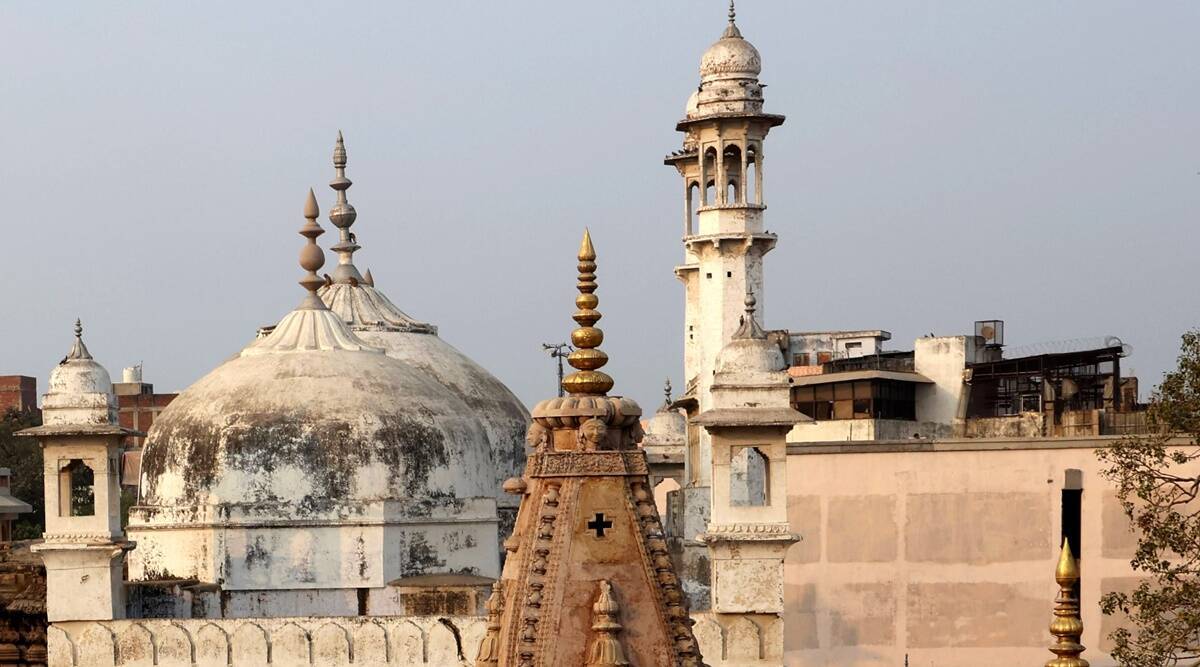
Gyan Vyapi Mosque and Kashi Vishwanath Temple (Image courtesy Indian Express)
The present controversy over several religious sites threatens to tread yet again the path that led to the communal mobilization, riots and destruction of the Babri Masjid. The popular press also repeats several legal arguments without always analysing their import. In the present cases, just like in Ayodhya, a key point that we hear time and again is that when it comes to the Hindu deity’s property, such property is perpetual and therefore even if a temple was destroyed centuries ago, the legality of the Hindu deity’s property remains unimpeded, thereby becoming the basis of a reclamation. It is therefore important to understand the legal concept of the Hindu deity’s juristic personality. Continue reading The Hindu deity as juristic person – A dangerous path, yet again: Rahul Govind→
When Government itself Does Not Have Any Qualms in rationalising Drona Mindset
( Photo Courtesy : Feminism in India)
[H]istory has come to a stage when the moral man, the complete man, is more and more giving way, almost without knowing it, to make room for the . . .commercial man, the man of limited purpose. This process, aided by the wonderful progress in science, is assuming gigantic proportion and power, causing the upset of man’s moral balance, obscuring his human side under the shadow of soul-less organization.
—Rabindranath Tagore, Nationalism, 1917
( Quoted in ‘Not for Profit – Why Democracy Needs Humanities, Martha Nussbaum, Princeton University Press, 2010)
A single story is sometimes enough to tell how an institution functions and how it needs to be overhauled.
Aruna’s long struggle to get overseas scholarship is one such story.
Son of landless agricultural labourers from Orissa, this bright student, belonging to a socially oppressed community, had applied to get a overseas scholarship via the National Overseas Scholarship – which awards scholarships to students from SC, ST, Denotified tribes etc – and even had lost two years in bureaucratic wrangling despite the fact that he had already got admission into Essex University.
Thanks to the timely intervention of a group of Ambedkarite thinkers from Nagpur, who filed a petition in the Delhi Highcourt on his behalf , which ultimately ruled in the student’s favour.
It would be cliche to say that Aruna’s struggle is an exception.
Story of Vishal Kharat is qualitatively no different who is still trying to get a scholarship for the last two years and has discovered to his dismay that the scholarship portal itself does not work properly.
Instances galore how this ambitious scheme which was launched in the wee hours of India’s independence when Nehru was the Prime Minister and a great scholar and freedom fighter Maulana Abul Kalam Azad was a Cabinet Minister for education, has been left to go slowly into oblivion.
The latest decision by the Union ministry of social justice and empowerment, to not to fund scholarships for marginalised students keen to study India’s history, culture abroad, is just another indication of how it is being implemented.
We can recall that it was the year 2012 when UPA government led by Congress was in the saddle this scheme was extended to Humanities as well and every year 100 students from the socially deprived, oppressed communities started receiving it but with the change of power at the centre things started changing drastically.
Like many of its earlier decisions, this decision to axe scholarship to study humanities abroad was taken without consulting the stakeholders involved in the process or without even giving a hint of how the government wants to proceed in this unique empowerment initiative. The fact that the final date to apply for this scheme is to expire on 31 st March and when there was hardly anytime left to young scholars who are keen to study abroad, to search for alternate path to fulfill their dreams.
The rationale being provided by the powers that be appears unconvincing.
It talks of utilising rich availability of repositories, records as well as books available in Indian institutions and various experts on this subject of India’s culture, civilisation etc and divert the resources thus saved to study other subjects like Science, technology.
It is rather difficult to believe this claim but even if for the sake of discussion we concede, can it be said with certainty that the existing faculty and these institutions would be sensitive to the issue or the concerns of emerging talents from the oppressed, exploited sections of our society, and would be accommodating as well! Fact is that even Higher Educational Institutions are not free from exclusions, discrimination on the basis of caste, gender, community and despite constitutional provisions for affirmative action existing since decades, the character of the academia in most of these institutions is very much exclusive mainly dominated by the so called upper castes.
Cases of discrimination faced by students from such Institutions keep piling up leading even to many unfortunate incidents – rightly called as ‘institutional murders’ of many such talents.
The stories of suicides of the likes of of RohithVemula, ( HCU, Hyderabad) ; Payal Tadvi ( Medical College, Mumbai,) or Fathima Latheef ( IIT Madras) and many of their ilk cannot be seen as exceptions.
A related point is the status of academic freedom in India.
With the ascendance of right-wing politics world over the very idea of academic freedom has come under attack globally – including India
Thanks to the majoritarian turn in the Indian politics where religious minorities are being further marginalised and invisibilised – the ambience which exists here within the academia itself is a pale shadow of its earlier situation. It is becoming increasingly difficult nay impossible to have a critical, open minded discussion on themes, topics which are found not palatable to the ruling dispensation which is a prerequisite for any healthy educational institution.
We have before us cancellation of international seminars on innocuous themes even like Scientific Temper or teachers being hauled to courts after taking up discussions about ‘Kashmir within the class ‘ or for engaging in open ended discussion about nationalism inside class or students-teachers being charged with sedition for protesting about highhandedness of the government.
Secondly, with the rightwing holding reins of power with a brutal majority, has also led to radical changes in the content of humanity studies playing mythology over facts e.g. there are allegations how the draft history syllabus pushed by the UGC presents a theory of the origin of caste system which relates to the advent of the ‘Muslim rule’ here.
Can we ever accept that these bright students opting for scholarships abroad who have themselves experienced caste, community or class based deprivation, discrimination in their younger days, would be ever ready to easily gulp down such trash as intellectual discourse.
Definitely not.
This decision to axe funds to socially oppressed sections to study humanity abroad very much gels with the overt concerns of the people in power which are evident in the New Education Policy 2020 which envisions restoring the the role of India as a ‘Vishwa Guru’ and interestingly remains silent on caste and other discriminations and even does not talk about reservations. It clubs SC / ST, OBC and minority communities as an acronym SEDGs – Socially and Economically Disadvantaged Groups.
What needs to be underlined that this step by the Ministry has raised concerns among the members of the international academic community, and scholars of India spread all over the world as well and in an open letter addressed to the Ministry of Social Justice and Empowerment they have demanded that the government withdraws this immediate changes in the policy.
It emphasises how ‘[t]he argument that one need not go abroad to study India is intellectually flawed and will only serve to isolate Indian scholarship from the rest of the world.’ and these amendments attest to a lack of understanding of how interdisciplinary research is conducted today, where natural sciences, law, history, sociology and the humanities work together beyond national boundaries.
Another important point which it make that how it will further negatively impact women recipients of this scholarship who are already ‘disproportionately under-represented in scientific and technological disciplines and tend to more easily find opportunities in the Social Sciences and Humanities’
Last but not the least it also displays the great hiatus between the outwardly, strong image of the ruling dispensation and how paranoid, insecure it is about deeper fault lines of the Indian society.
Perhaps it worries that with increasing interest of the academia of the west in what is happening to the largest democracy in the world, and the study of caste and its attendant asymmetries receiving special attention by them, and also dalit activists, scholars there pursuing it at various levels there, these exclusivist hierarchies have rapidly attracted attention. Not some time ago the California State University system added caste to its non-discrimination policy, prohibiting caste-based discrimination or bias across its 23 campuses.
The ruling dispensation knows very well that the more students from dalit, adivasi and other deprived sections of society go out to study abroad, it will have to be ready to face many such embarassing moments because whereas it itself is keen to invisibilise caste once for all, and even clubbed all these sections – the SC / ST, OBC and minority communities as an acronym SEDGs – Socially and Economically Disadvantaged Groups; the reality as it exists would continue to haunt it.
We are a group of former civil servants of the All India and Central Services who have worked with the Central and State Governments in the course of our careers. As a group, we have no affiliation with any political party but believe in impartiality, neutrality and commitment to the Constitution of India.
We are issuing this open statement to voice our grave apprehensions regarding the provision in the recently enacted Election Laws (Amendment) Act, 2021 to link the Electoral Photo Identity Card (EPIC-Voter ID) issued by the Election Commission of India (ECI) with the Aadhaar card issued by the Unique Identification Authority of India (UIDAI), an agency of the Government of India.
The victorious farmers at Delhi borders, image courtesy NDTV
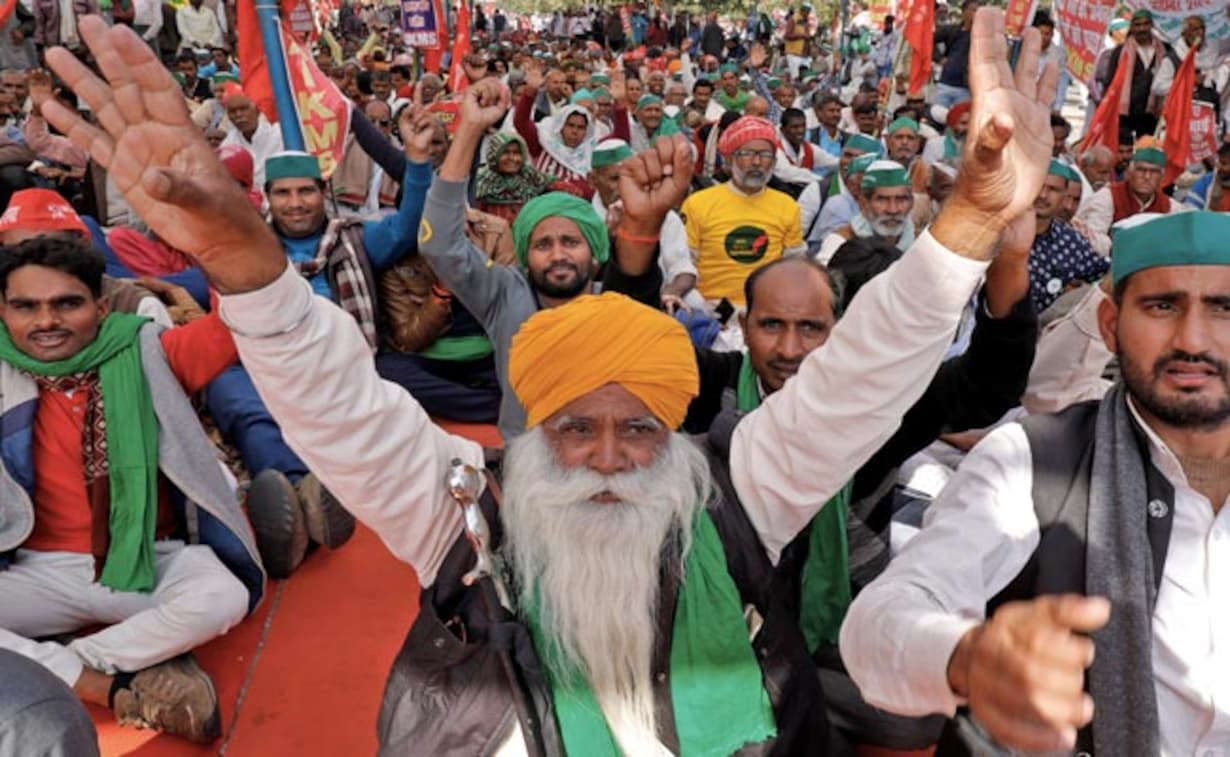
It is a time for rejoicing and celebration. It is a time for thanksgiving. For the victory of the farmers is not just theirs. Theirs was not just a struggle to protect their own livelihoods but also a valiant battle fought for all of us, so that we continue to get our food at affordable prices. It is a time for thanksgiving also because the movement has broken the hubris of an arrogant government that has absolutely no accountability whatsoever. It has given us some breathing space.
Even as this piece is being written, the victorious farmers camping at the Delhi borders for the last one year are preparing to leave for their homes. It has been a long haul for them in the course of which over 700 have died. It has been especially trying for the Punjab farmers who had started the stir months before they decided on their march to Delhi on 26 November 2020. Nobody had expected that the shifting of the venue to Delhi would end up being one long ordeal, continuing months on end, through the freezing winter, scorching Delhi heat and torrential rains. Not to mention an intransigent government that had already started the ground work for corporatization of agriculture and handing over parts of it to Adani and Ambani, even before the laws were formally promulgated.
The infamous infant-snatching case in Kerala has opened up too many harsh truths about this society. It is not easy to express the pain in acknowledging it. After all, for many of us who have stuck back here with the intention of participating in what was once a fairly vibrant political life, this monstrosity that looms over all aspects of life, private and public (as so terrifyingly evident in the experience of Anupama Chandran) is a daunting sight. Not that there weren’t glimmers of it earlier, but the full menace has become visible only now.
Today morning we woke up to the news that the Child Welfare Committee has ordered that Anupama’s child must be brought to Kerala in five days for a DNA test.
However, the process is still overseen by the officials who directly connived to give the baby away for adoption. The family’s criminal acts are still under a very lax, lagging investigation. Anupama’s educational certificates are still in their possession and the police refuses to intervene to restore them to her.
Indeed, the evil that Prof Kannabiran identifies so excellently in this letter must still be fought, until justice is done. Just the return of the child to Kerala cannot replace justice. Anupama suffered tremendous domestic violence, deliberate endangerment, cheating, and illegal custody at the hands of her family. That cannot be papered over,
… we are troubled that the state finds it hard to grant a woman the right to lead a life of her choice and to have custody over her child. These are hard won rights, and it has taken generations of struggle by women, many of whom are from your state, to secure both civil and legal acknowledgement for women’s rights to marriages of their choice, and for their right to motherhood, divorce, adoption and so on.
Anupama has committed no crime. She got pregnant. She did not murder anyone. She did not rob a bank. She did not betray the nation. She committed no terroristic threats or acts. She is not a smuggler, a thief, a rapist, or a crook. She got pregnant. Getting pregnant is not a crime. She got pregnant and decided to keep her baby. This is not a crime.
The strange case of ‘honour-baby-snatching”,: involving a local-level CPM leader in Thiruvananthapuram city, Peroorkkada Jayachandran is still haunting us despite every attempt by the CPM cyberwarriors to smother it. Mr Jayachandran still feels completely justified and hundreds of left supporters, including so-called progressive women, are ready to proclaim that this dastardly act is a ‘father’s right’. Mr Jayachandran’s nineteen year old daughter Anupama fell in love with a dalit man, a leader of the DYFI, got pregnant by him, and decided to keep the child. Anupama’s parents decided that there was loss of honour in this and proceeded to perpetrate unspeakable violence on the young woman, trying to force her to abort her baby, and finally by snatching away her baby days after it was born. They twisted the entire machinery of child protection and adoption and the police to give the child away without the consent of its parents.
Modern-day Eklavyas are depriving students of their dues across the country. No government can compensate for robbing students from underprivileged backgrounds of their future.
In the 19th century, Chatra district in Jharkhand hosted the legendary Raja Rammohan Roy for a while. A memorial to Subedar Nadir Ali Khan and Jay Mangal Panday, martyred during the 1857 war of independence, is also here. Now, this district is in the news again, but for the wrong reasons.
A Comptroller and Auditor General (CAG) report tabled in the state Assembly has detailed the embezzlement of around Rs. 85 crore, meant to fund the scholarship of students belonging to the backward classes. The siphoning went on from 2013-18, says the CAG report for 2018-19.
The modus operandi of the scammers was simple. The money was not transferred to the accounts of beneficiaries, as the state department for Scheduled Caste, Scheduled Tribes, Minority and Backward Class Welfare says. Instead, it went into the bank accounts of other individuals.
The explanation offered by the concerned people was straightforward. They told the CAG that documents related to the transfer of Rs. 70 crore got destroyed in a fire. A significant portion of the Rs. 85 crore is yet to get recovered. The department never bothered to reconcile its accounts even after the fire incident.
The BJP is imposing harmful dietary restrictions and refusing to accept that more Indians want to consume meat, fish and eggs for their nutritional benefits.
Representational use only
.
In 1902, the prolific British writer HG Wells delivered a philosophical speech titled “The Discovery of the Future” at the Royal Institution in London. Wells is often remembered for his “predictions”, for example, the approximate date when the second world war would begin. In this speech, he envisioned something else with equally significant ramifications—the collapse of the capitalist system. Wells also anticipated that a world of peace and plenty would follow in its wake.
What if someone, following Wells example, attempts a similar extrapolation for India? If anybody could foresee such things, what would they find lies ahead for the “biggest democracy” in the world?
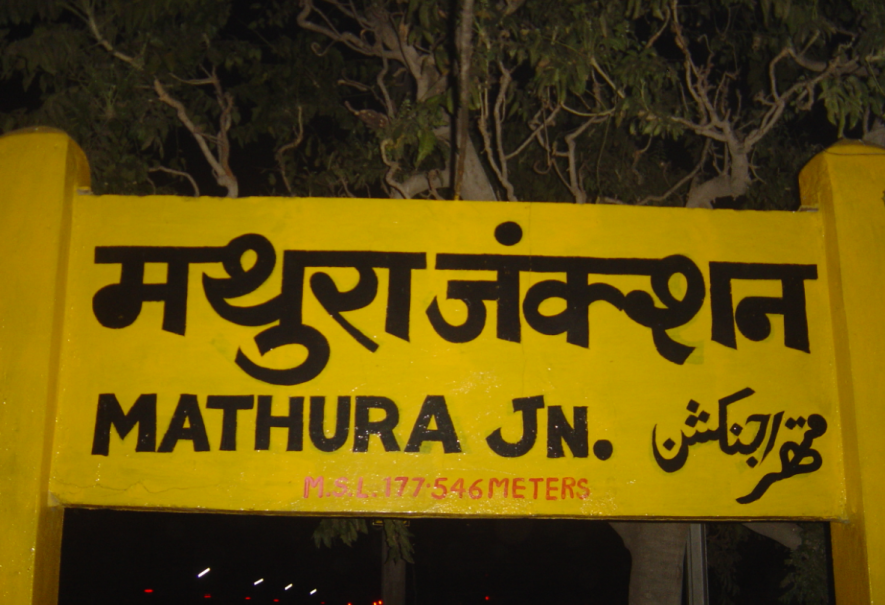
In the absence of Wells, perhaps present-day events can be a map or guide to the future. For example, during recent Janamashtmi celebrations, Uttar Pradesh, Chief Minister Yogi Adityanath announced that his government would ban meat and liquor in Mathura city. He said the meat-sellers and liquor dealers of the area could switch to selling milk. According to his government, a meat and liquor ban would help combine “modern technology” with the cultural and spiritual heritage of the region.
In the recent controversy over the arrest of the travel vloggers Ebin and Libin who rode high on popularity with lakhs of subscribers through their Youtube channel E Bull Jet, it is very hard not to side with the two young men. The flamboyant pair whose hugely popular travel — or ‘van life’ — videos have a massive following especially among male adolescents and youth — are school drop-outs and have a history of rising from severe social disadvantage — literally, of pulling themselves up by their own bootstraps. The two young men, despite their excesses, pull at your heartstrings. Their smile, their slang, their sense of excitement on the road, the innocent gawking — all of it looks disarmingly innocent. It is also true that the crime they committed was not major; nor is justice handed out evenly. That is, such crimes around vehicles and driving are not new and it is not at all clear if the powerful who commit such crimes are tackled in the same way. Therefore the video which showed the brothers being hauled into the police van was painful for many of us (including me) — Ebin wept aloud, “adikkalle saare! Njaan onnum cheithilla … kolapaathakiyeppole enne kondupokunnu….” (don’t beat me please, sir. I didn’t do anything wrong . … I am being taken away like a murderer). That despondent wail somehow refuses to get out of my head; that is why I need to write this.
Moderation and acceptance are parts of a continuous struggle to ensure that democracy does not get subsumed by majoritarianism.
‘The sublime and the ridiculous are often so nearly related that it is difficult to class them separately. One step above the sublime makes the ridiculous,
and one step above the ridiculous makes the sublime again.’ –Thomas Paine, The Age of Reason.
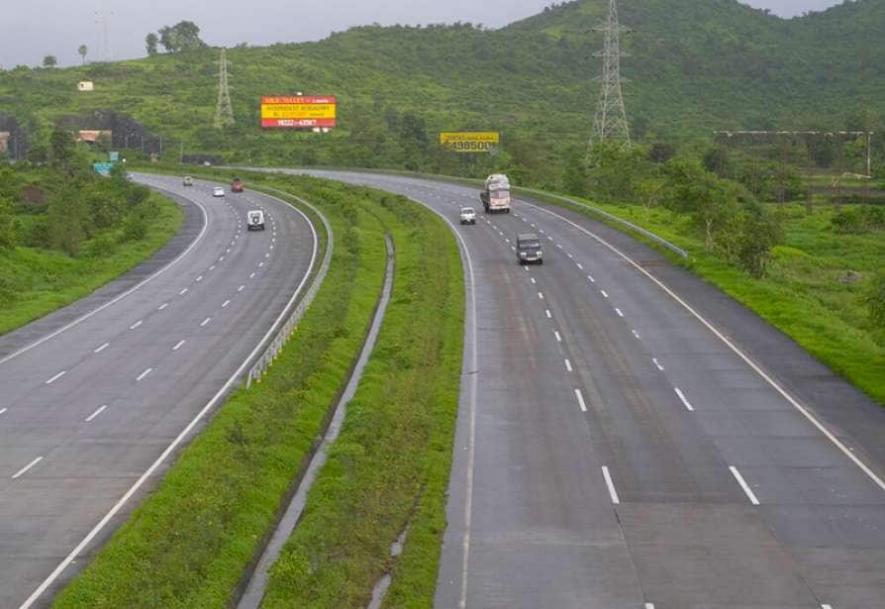
The idea of public good faced a faith hurdle in Kerala recently. The issue was the widening of National Highway 66 on a stretch in Umayanalloor village, Thazhuthala, and adjacent towns of the Kollam district. A batch of petitions challenged the highway because two temples and mosques were in its alignment. It was a tricky situation, and a hasty decision may well have had consequences.
Without wavering on constitutional principles, the Kerala High Court handled the case skilfully. A single-judge bench of Justice PV Kunhikrishnan rejected petitions that opposed the land acquisition and asked citizens to rise above difficulties for better highways for all citizens. It emphasised that courts could not intervene in acquisition proceedings unless there is patent illegality or malafide action.




 KAFILA - COLLECTIVE EXPLORATIONS SINCE 2006