Category Archives: Mirror Worlds

Diary of a JNU Student on Hunger Strike: Pankhuri Zaheer

Guest Post by Pankhuri Zaheer

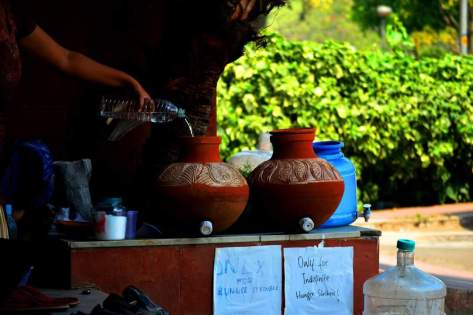
Water - A Gift for Hunger Strikers. Photo Courtesy, Azhar Amim
Water – A Gift for Hunger Strikers. Photo Courtesy, K. Fayaz Ahmed

“I wanted to bring you something but I didn’t know what to get you so I got you a bottle of water,” says a friend who would perhaps never identify herself as a student activist but since 9th February, like many like her, has been an integral part of the stand with JNU movement.

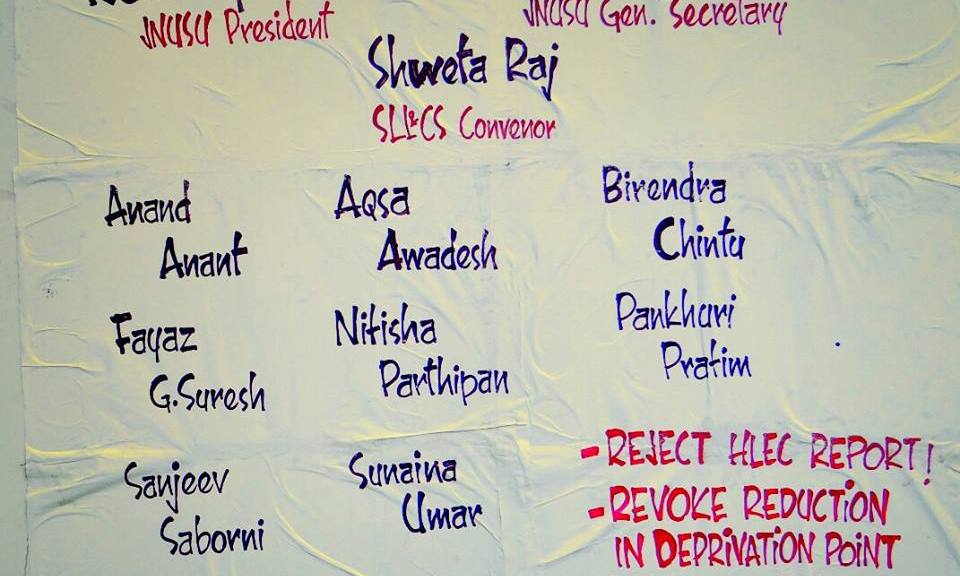
19 of us have decided to sit on an indefinite hunger strike till the time the farcical report of the High Level Enquiry is not rolled backed in its entirety. Today, April 30th, is the third day of our hunger strike.

Continue reading Diary of a JNU Student on Hunger Strike: Pankhuri Zaheer

Summer of Rage: JNU Students Begin Fast Unto Death against HLEC Report

13083178_1763261193905640_250606241251585686_n

Spring has given way to the beginning of a turbulent summer. April, is a cruel month. Temperatures have risen, and so has the level of rage in university campuses. The JNU University Authorities (and their masters – in the Ministry of Human Resources Development, the Prime Minister’s Office and the RSS Citadels in Mahal, Nagpur and Jhandewalan, Delhi) thought that they could break the resolve of the students by enacting a series of harsh measures against them just before exams begin and the university term ends in summer vacations.

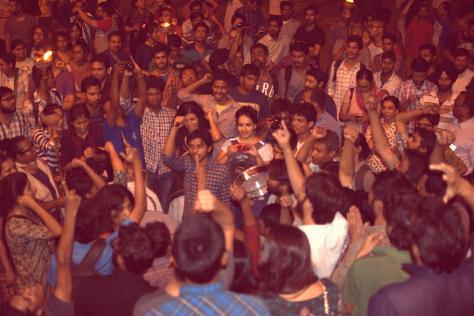
Chintu Kumari, Anirban Bhattacharya and other students give the call to protest against the HLEC and call for a Hunger Strike. Photo, Courtesy, Azhar Amim

13055719_10154616732485016_4978357478249045500_o

This is a time, they must have thought, when students will be busy with preparations, and the rising heat will discourage the kind of mass mobilizations that the campus has seen since February. Students in JNU resolved a few hours ago to prove them wrong, and decided to fight back . A massive gathering stood its ground at the Administrative Block, aptly re-christened, ‘Freedom Square’.

Rama Naga, Gen.Sec. JNUSU, (Centre) and JNU Students Calling for Indefinite Hunger Strike on April 27, 2016. Photo, Courtesy, Azhar Amim

They have decided that a batch of students will sit on indefinite hunger strike – a ‘fast unto death’ – until the JNU authorities roll back the draconian measures listed in the HLEC Report.

The 20 students who will be sitting in indefinite hunger strike at JNU.

There’s no looking back now. Whatever happens from now on wards, will be seen as a consequence of the cruel, evil mindset of the current regime, which truly treats the lives of the young as dispensable ballast. Its time to prove them wrong. This is a call that goes out to all students and teachers, and sensible individuals, not just in JNU, not just in Universities and Colleges all across India and all the territories administered by the Indian republic, but to everyone reading this post anywhere in the world, to stand by the courageous students of JNU. It is our responsibility to see that the JNU Authorities see reason and back down. If anything untoward happens to any student, the university authorities, and the regime backing them, will be clearly culpable.

Here is Umar Khalid, speaking just before commencing his Hunger Strike

Here is Chintu, former Gen. Sec. JNUSU, speaking at the Mashaal Juloos, (Torchlight Procession) just before beginning the Hunger Strike.

Listen to Kanhaiya Kumar, President of the JNUSU – restating the reasons for the continuation of the movement.

Thanks to the ‘We are JNU Media Group’ and the AISA Youtube Channel, for the videos.

Sanghis, Sex and University Students – What is it Really All About? Ayesha Kidwai

Guest Post by Ayesha Kidwai

[ The prurient fantasies contained in the ‘JNU Dossier’, produced by some right wing faculty members of JNU in or around October 2015, have been ‘outed’ by an excellent report by Ajoy Ashirwad Mahaprashasta in Wire.org. This comes exactly at the time when the JNU administration has shown its fangs by delivering a low blow by way of the measures outlined in the report of the ‘High Level Enquiry Committee’ appointed by the Vice Chancellor. An impartial examination of the HLEC document and the ‘Dossier’ in will reveal some startlingly resonant patterns. Clearly, the ‘Dossier’, which had been dismissed by the former Vice-Chanceller, Prof. Sopory, has been reincarnated at the express orders of the Nagpuri masters of the present dispensation. We are sharing below an excellent response to the ‘Dossier’ by Ayesha Kidwai, one of the professors – ‘named’ in the dossier. This is taken from Ayesha Kidwai’s status update on her Facebook Page.

For another take down of the ‘Dossier’ – see also – “Sex and sedition: What the JNU dossier tells us about the right-wing imagination” – in Scroll.in by Kavita Krishnan. Meanwhile, JNU Students have commenced on a ‘fast unto death’ in protest against the university administration’s senseless measures. Kafila]

Sanghi smut is in season again! For the authors of the Dirty Dossier, JNU nights are forever scented with musk, with couples draped on every bush, suitably fortified by free alcohol, thoughts of secession, and cash payments supplied by the Awesome Foursome. At its peak, the party can practically involve the whole university, because as per Shri Gyan Dev Ahuja’s estimates, the number of students frolicking this will be 7000 (3000 condom users X 2, plus 500 injectable walas X 2). (Assuming of course that the few hundred left over have gone to fieldwork, have exams, or are abstemious and/or abstinent in nature.)

Laugh as we may (and must) at these feverish imaginings, it’s also important to understand that the very notion of a free university challenges not only misogyny, but also the social apartheid produced by caste and exclusionary religion.

Continue reading Sanghis, Sex and University Students – What is it Really All About? Ayesha Kidwai

Rise Up against the Proxy War on Students by the Modi Regime: Shehla Rashid

Guest Post by Shehla Rashid, (Vice President, Jawaharlal Nehru University Students’ Union)

Rise up against the proxy war on students by the Modi regime.

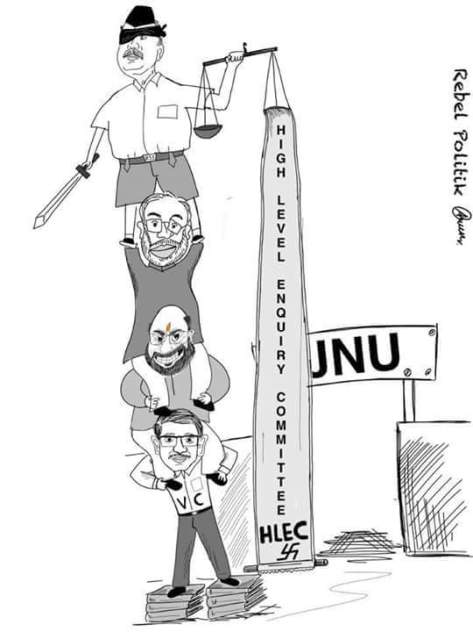
Cartoon by V. Arun Kumar

JNUSU rejects the report of the enquiry committee constituted by the Vice-Chancellor to look into the 9th of February incident. JNUSU also rejects its reports and any punishment handed out by it. The JNUSU and JNUTA had repeatedly asked the administration to democratise the enquiry committee, but this was not done.  Now, when the holidays are here, the VC has made public the punishments, after one and a half months of submission of the HLEC (High Level Enquiry Committee) report. Continue reading Rise Up against the Proxy War on Students by the Modi Regime: Shehla Rashid

To the Puppets and Puppeteers – We Students Will Fight Back: Anirban

Guest Post by Anirban Bhattacharya 

To the puppets and their puppeteers…

Free speech cannot come with a price tag -10,000/- or 20,000/- or even a rupee!
Dissent cannot be evicted!
Ideas cannot be made out of bounds!
Reason cannot be rusticated!

Continue reading To the Puppets and Puppeteers – We Students Will Fight Back: Anirban

Kashmir IG Police Refuses to Speak with Handwara Minor Girl: JKCCS

Guest Post by Jammu & Kashmir Coalition  of Civil Society

Since last 3 days, JKCCS has been approaching the Inspector General (IG) of JK Police, Javed Geelani for a meeting in connection with the illegal detention of the minor girl and her family. Yesterday evening the Handwara minor girl spoke to JKCCS team on phone. She and her family informed that against their will the police has shifted them to a stranger’s house 15 kms from Handwara town. After detailed discussion JKCCS proposed her to call the IGP Kashmir and Chairperson of the State Commission for Women, Nayeema Mehjoor directly to inform them about her ordeal in the illegal police detention, her demand for free movement and an immediate access to her lawyers. 
The minor girl called the IG several times but only once he picked up the phone. After she identified herself, the IG cancelled the call. JKCCS team called DIG Ghulam Hassan Bhat and requested him to inform the IG that the minor girl wants to talk to him urgently. We were assured that the IG will speak to the girl. 

Immediately after that the police personnel went inside the house where the girl is detained and threatened her to not call the IG Kashmir, Javed Geelani.

The minor girl was able to speak to Nayeema Mehjoor and gave her detailed statement and requested her to facilitate her conversation with IGP Javed Geelani. Ms. Mehjoor promised to help.

The minor girl and her family wanted to communicate to the highest police officials that the police should stop her illegal detention and allow her to meet her lawyers so that she can herself alongwith her family proactively contribute in the legal struggle. 

The Difference between What They Tell Us and What We Know: Shehla Rashid

Guest Post by Shehla Rashid. Based on a Status Update on her Facebook Page.

They tell us that the military is meant for fighting the “terrorists”; But most of the time, it is the civilians who are killed.

They tell us that “special powers” for the army are necessary for national unity; But the army only teaches us how to hate India.

They say the University is anti-national because it wants to break India; But it’s the University that teaches us to love Indians.

Then, who is anti-national? Those who teach us how to hate India, or those who teach us how to love Indians?

Yes, we see the difference between India and Indians; India is at war with Indians throughout India.

I wish the Indian state could also see the difference between Kashmir, which it claims as its own, and Kashmiris who belong to no one; They claim to love Kashmir but hate and kill Kashmiris.

Continue reading The Difference between What They Tell Us and What We Know: Shehla Rashid

JKCCS Statement on Extra Judicial Killings by Army (Rashtriya Rifles) and Police in Handwara, Kashmir: Jammu & Kashmir Coalition of Civil Society

Guest Post by Jammu & Kashmir Coalition of Civil Society

On 12 April 2016, armed forces personnel of Indian Army’s 21 RR and Jammu and Kashmir police killed three persons – two young boys and an old woman – in Handwara, Kupwara District, and injured around 24 civilians. Initial reports suggest that the armed forces fired at civilians protesting against sexual violence directed at a minor girl in Handwara town by army personnel.

24 hours after these killings the Chief Minister Mehbooba Mufti, and army spokesperson have only made statements that do not address the steps that must be immediately taken. The army spokesperson while regretting the killing has assured action and stated that it would need to be ascertained if the “standard operating procedures” have been followed. Chief Minister Mehbooba Mufti has sought assurance from the Indian Defence Minister that action would be taken in this case. Meanwhile, it appears that the Jammu and Kashmir Police have recorded and uploaded a video of the victim of sexual violence exonerating the army and both the police and army have circulated this video widely, including to news channels.

First, the army personnel of 21 RR involved in the killings, including those present on the scene of crime and in command of 21 RR, and involved police personnel, must be immediately arrested for purposes of investigations. Arms, ammunition and any other physical evidence connected to the killings must be immediately seized. Arrest of armed forces personnel in Jammu and Kashmir is not barred by any law. No “standard operating procedures” need to be consulted, particularly as it appears from RTI information sought that no such SOP’s even exist for situations such as the instant one of protests. Further, this preliminary step in investigation does not require the intervention of the army, Defence Minister or any other authority. But, the move by the Chief Minister to approach the Indian Defence Minister does explain where political power vis-à-vis even law and order in Kashmir lies. Thus far, media reports suggest that ASI Mohammad Rafiq has been suspended. His suspension is not enough as the amount of violence witnessed by people yesterday is not possible to have been carried out by one police official. Therefore, other officials responsible from army and police should be arrested immediately.

Second, the Jammu and Kashmir Police must immediately suspend the Superintendent of Police, Handwara, Ghulam Jeelani Wani, subject to investigations in this case as his role in the killings would need to be ascertained. Further, it appears that the video of the victim of sexual violence, a minor, has been circulated to distract from the investigation of 21 RR personnel responsible for the killings. Further, the actual circulation of the video, and disclosure of the identity of the victim, would invite prosecution under criminal law and/or other disciplinary action for the Superintendent of Police and other police officials involved. The army circulation of the video must also be examined as on one hand they have regretted the killings but at the same time are deeply invested in prejudicing investigations against their personnel. The circulation of this video has serious ramifications for the security of the victim.

Lastly, but most importantly, due to the role of the police, particularly the Handwara police, over the last 24 hours, the investigation of this case must be immediately, at the very least, handed over to a senior police officer of another district, with no criminal allegations against him.

Past crimes committed by the armed forces have been buried in a manner similar to what we witness today in the case of the Handwara killings. Following initial statements by the army and the State, no action is taken. The army claims to carry out an enquiry which is invariably not made public and is an essentially an attempt to take the case out of the public domain and protect the accused army personnel. It is pertinent to recall that in 2004 in Badra Payeen village, Handwara, when an army office was accused of rape of a mother and daughter, Mehbooba Mufti and then Chief Minister, Mufti Sayeed assured that the guilty officer would be punished. Mehbooba Mufti may have forgotten this case but people of Kashmir remember the case and also know that the accused officer was not tried by the civilian court but by army court-martial that did not convict him for rape and he was subsequently re-instated to the army. It appears the assurances by Mehbooba Mufti and the Indian Defence Minister in Handwara killings are no different from the standard role of the State in numerous cases, including the Badra Payeen case.

Shoot to Kill: Standard Operating Procedure in Kashmir

Nothing unusual has happened in Handwara. The Indian state has once again proved to be a killer  in Kashmir. Three people have lost their lives because the Indian armed forces and the J&K Police decided to defend themselves against people protesting against what they perceived to be a soldier’s harassment and molestation a Kashmiri woman.

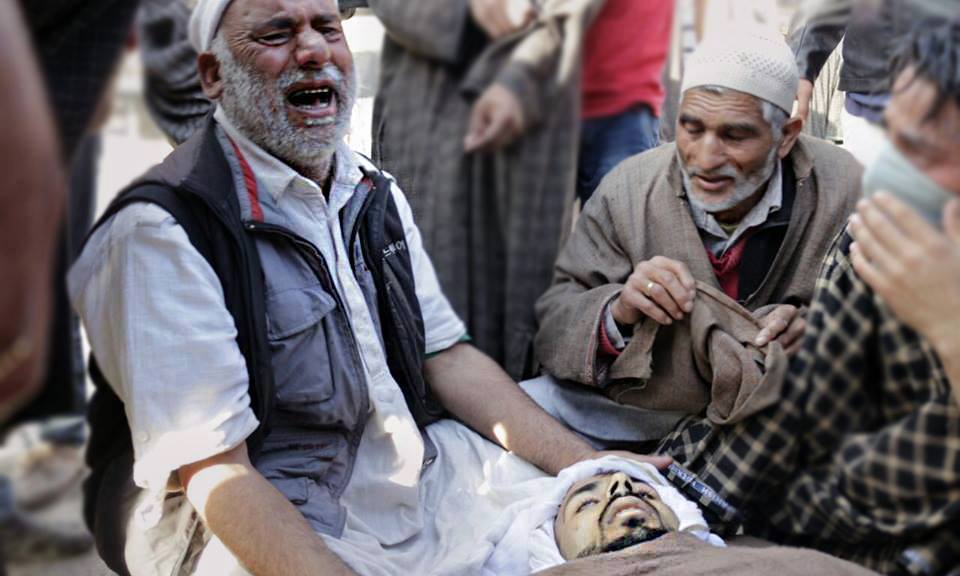
Blood on the streets of Handwara
Blood on the streets of Handwara, Kashmir

The troops that defend India’s honour, unity and integrity and other such stuff have been trained to shoot to kill rather than answer a town’s questions about the sense of impunity that the Armed Forces Special Powers Act and the entire apparatus of a de-facto military occupation gives to Indian soldiers in the Kashmir valley. Lets stop pretending this is an exceptional situation, an excess, an anomaly, or even an instance of troopers going rogue. Whatever be the facts of the case, if the name the village of Kunan Poshpora, or of two women called Nilofar and Asiya mean anything to you, you will know that a predatory sexual profile is part of the operational signature of the Indian armed forces and local police in Kashmir.

Continue reading Shoot to Kill: Standard Operating Procedure in Kashmir

Rise in Rage – Message of Solidarity for HCU Students: Anirban Bhattacharya and Umar Khalid

Guest Post by Anirban Bhattacharya & Umar Khalid

“We dissent, therefore we are”
The times we are living in are audacious. As the brahmanical Hindutva fascist forces in collaboration with big corporates are attempting to browbeat (or even just beat) us into silence, what better time than today to be audacious, to show our audacity. And that is precisely what Rohith Vemula did, both in his life as well as in his death. He dared to dissent against the brahmanical and communal structures of discrimination and oppression. He posed a graver “national security threat” because he was not just speaking up against the oppression against the Dalits, but also tried to build solidarities with other oppressed communities – the Muslims and other minorities. 
Of course, this invited the wrath of the powers that be – of Manu-Smriti Irani, of Bandaru Dattatreya, of the puppet VC Appa Rao and the puppeteer – the RSS. This earned him the epithet of “anti-national” as he was murdered institutionally by the communal-casteist apparatus of the state. The motive of the state was to “teach him a lesson” and “teach a lesson” to all those voices who dared to be audacious. But in vain. Rohith’s murder sparked a fire that spread across the country – across universities – demanding justice for Rohith. The need was felt by the RSS/BJP to “teach a lesson” yet again. In JNU the attack came in the form of the facile “national/anti-national” debate. When this was thwarted, in HCU it came in the form of the re-installation of the puppet VC Appa Rao.

This, of course, was an insult to the cause of justice for Rohith. It was an affront to the very idea of social justice. And it was a direct challenge to all democratic voices in the country. This outrage, this indignation could not have been taken lying low. The students in HCU yet again showed their audacity as they rose in rage against the re-installation of a killer VC. And this was met with a brutal lathi-charge by the Telangana Police, a fascist witch-hunt of student activists and teachers, their arrest on bogus charges, suspension of mess-water-electricity-internet and other facilities. The university has been turned into a war-zone.

Today universities and educational institutions across the country are being turned into war-zones and prison houses. It’s a shame today that heads of institutions and VCs – whether in FTII or HCU – are being escorted into their own campuses under police protection. On the one hand the institutionalized discrimination against Dalits and other oppressed castes is either forcing students to drop-out or hang themselves thereby necessitating the incessant demand for a Rohith Act. While on the other hand, through a concerted effort the state is imposing the brahmanical Hindutva fascist agenda of the RSS in course-curriculum. On the one hand, the state is pursuing a policy of massive fund cuts, fee-hikes or privatization so as to make higher education unaffordable for a large section – particularly the oppressed caste/class. On the other hand, to achieve the same, the ruling classes have been preparing to quell all possible resistance to the above through depoliticizing campus-spaces and curbing any and every voices of dissent. Such are the diktats, the exigencies of the insatiable thirst of global capital for profit in its bid to overcome the inherent crisis. While such anti-student pro-privatization policies were set in motion by the erstwhile Congress governments with all earnest, under the present regime, further velocity and teeth has been added to the same. The tightening tentacles of fascism in the country with RSS at its helm has only meant further witch-hunt, increasing militarization, casteist targeting, and shrinking of democratic space for debate and dissent in campuses.  

But, much to the irritation of those in Nagpur, the more vicious has been the assault, the more spectacular has been the resistance. From being against the bogey of Love Jihad to being for Kiss of Love, from being against Ghar Wapsi to calling the bluff on Swacch Bharat, from being against Dadri killing to exposing the farce of Make in India, from Hokkolorob to Pinjatod, from FTII to IIT-Madras, from Allahabad to Calicut, from Occupy UGC to Justice for Rohith, from Stand with JNU to Stand with HCU – there is a students’ spring today that swells across the country. We the students, today, are the opposition. And it is this strength that was exhibited in the streets of Delhi when Justice for Rohith and Stand with JNU merged into a sea of resistance.

If we look back in history, at times when the ruling classes has intensified its assault upon the people across the world, it is the students who have taken up a vital share of responsibility to speak up, to dissent. And more often than not we have seen various such youth and student movements talking to each other, drawing from each other, inspiring each other and thereby strengthening each other. The Black Panther movement influenced the Dalit Panthers. The struggle in Vietnam triggered massive anti-war demonstrations across the universities in America. The students of France 68 inspired millions of students across Europe and the world. The Cultural Revolution led by students in Maoist China inspired millions including the students during the Naxalbari movement which in turn inspired thousands across the subcontinent. Similarly it is important today that the movements whether of the Dalits, the women, the minorities, the LGBTIQ community, the workers, the peasants – should all speak to each other and gain strength from each other. At a time of ascendant fascism, it is imperative that we build solidarities forged in struggles. Because, even today if we remain divided into red, blue and green and so on, even if today we remain divided in HCU and JNU – fascism will ensure that tomorrow none survives. Maintaining our ideological differences – our colours, sharpening our tools of criticism and self-criticism, we must shun the path of sectarianism and build genuine unity of the oppressed against the combined assault of the brahmanical Hindutva fascist forces and the forces of big capital. 

The attack today is relentless. So has to be the resistance. The bail orders for a few individuals in a campus can be a small battle won, but the war is far from over and there can be no respite today. We are confronting fascism today; it is a difficult fight, and no one ever said it would be easy. Let us fight for the release of the students and teachers put behind bars in Hyderabad and in the process let us intensify the struggle to oust Appa Rao, to seek justice for Rohith, to challenge the brahmanical fascist forces and their tightening noose.

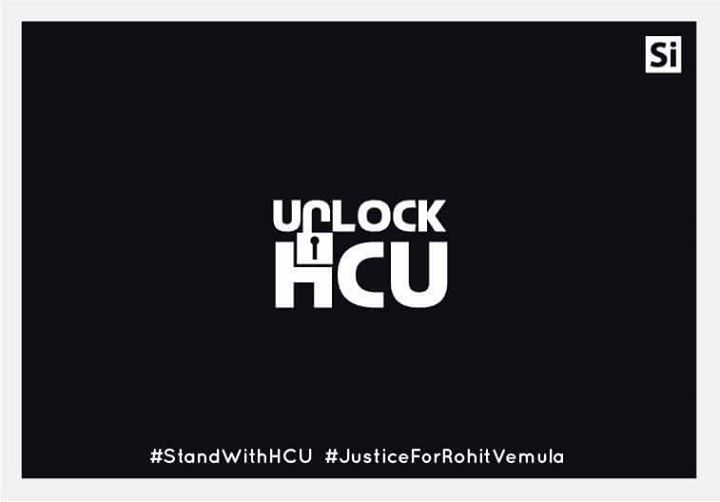
Rise in Rage against the reinstallation of Appa Rao, the killer of Rohith Vemula as VC in HCU.

Condemn the brutal crackdown and arrests of students and teachers by Telangana Police.
Anirban Bhattacharya & Umar Khalid are both students of Jawaharlal Nehru University (JNU) Delhi

JNU Students in Solidarity with Students in Hyderabad

Students across universities in India are standing together against the extraordinary assaults unleashed on them by the Modi regime. Students in Jawaharlal Nehru University in Delhi have been having regular meetings, ever since 22nd March on the situation in Hyderabad. There have also been marches in Kolkata and meetings in TISS, Mumbai. Reports are just coming in of a police lathi (cane) charge on left youth and student activists in Mumbai. Again, the mainstream media is NOT reporting the fact that young people are being attacked and that seventeen of them have detained by the police in Mumbai for coming out in support of the students in Hyderabad. Kafila welcomes accounts from the participants of these gatherings, so that the students in Hyderabad get to know that they are not alone.

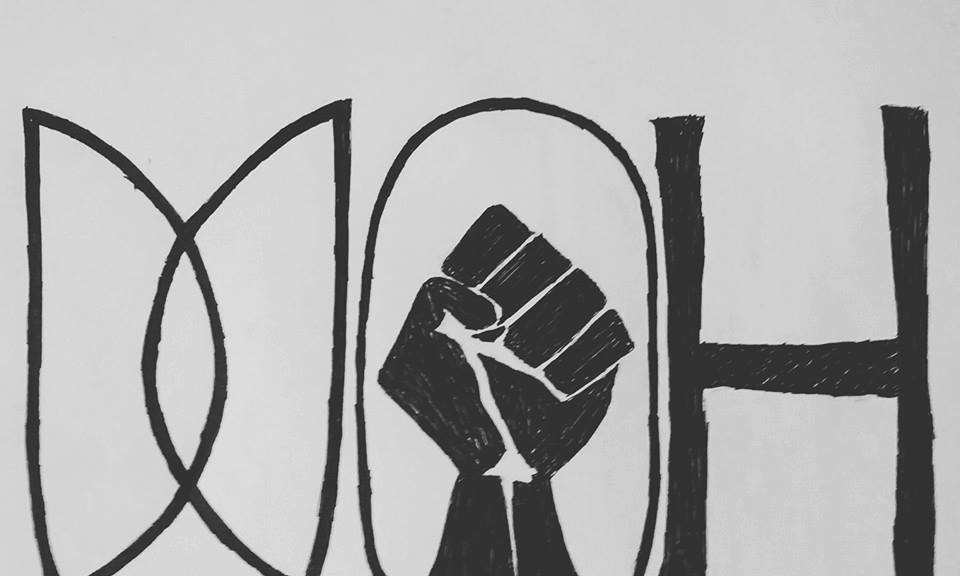
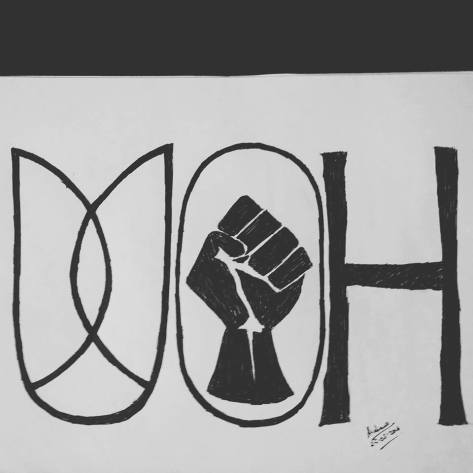
Profile Picture graphic of the 'Stand With JNU' Facebook Page that inserts the JNU Logo on to the UoH (University of Hyderabad) Acronym.
Profile Picture graphic of the ‘Stand With JNU’ Facebook Page that inserts the JNU Logo on to the UoH (University of Hyderabad) Acronym.

Some JNU students also took out a  protest march to the Ministry of Human Resources Development to register their strong protest against the police action in Hyderabad University on the 23rd of March. A big march is being planned in Delhi soon, which will have participation of many student organizations cutting across different universities in Delhi.

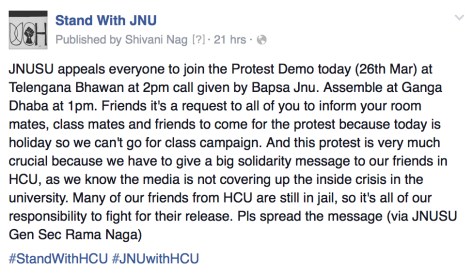
Call from BAPSA-JNU for solidarity march with Hyderabad Students on the 'Stand with JNU' Facebook Page
Call from BAPSA and JNUSU for solidarity march with Hyderabad Students on the ‘Stand with JNU’ Facebook Page

One effect of the media blackout on the Hyderabad situation is a silencing of the different voices of support and solidarity for the Hyderabad students from their comrades in Delhi, especially from JNU and other places. This is a tactic of the regime to make students in Hyderabad think that their struggle is not being supported and echoed in other places, such as in JNU, and in Delhi generally.

This is totally untrue. This is moment for even greater co-ordination and solidarity. Do not let yourself be distracted by those who want to divide the student movement at this critical juncture.

Watch the videos below, they have statements by Rama Naga, General Secretary of JNUSU, Anirban Bhattacharya (who was recently released from police custody together with Umar Khalid) and Shehla Rashid, vice president of JNUSU.

Thanks to the ‘We are JNU’ youtube channel and the ‘Stand with JNU’ Facebook page for the videos.

More Videos from the University of Hyderabad – The Prison is the University, The University is the Prison: Student Videographers from UoH/HCU

Guest Post Compiled from Uploads by Student Videographers from UoH/HCU and their friends

“The only thing to fear is fear itself”

[ Since the mainstream media, particularly television channels, are steadfastly refusing to report the ‘undeclared emergency’ in the University of Hyderabad (also known as Hyderabad Central University – HCU), we at Kafila, (along with many other online platforms, such as Raiot.in, India Resists, Scroll.in, The Wire, RoundtableIndia.in and several youtube channels) are going to continue providing our readers with testimonies by students and faculty from the University of Hyderabad.

Venkaiah Naidu, Bandaru Dattatreya, Smriti Irani and Rajnath Singh (all senior ministers in the BJP government at the centre) and some of their chamchas have probably been on the phone all of the past few days with senior editors and media management to try and ensure that the situation remains unreported, un-commented upon. Or, is it  just the ‘business as usual’ matter of Savarna (Hindu upper caste, usually, but not only, masculine) privilege (and insecurity) playing itself out in newsrooms and edit meetings when it comes to reporting an assertive, articulate, intelligent protest with a very large Dalit-Bahujan component in Hyderabad. Or is it a bit of both?

What other explanation can there be for the almost blanket ban on reportage, analysis and commentary on the extraordinary situation in Hyderabad in most national TV channels? Even the reporting in major newspapers, though better than what exists on TV channels, leaves a lot to be desired. Every major news organization has correspondents in Hyderabad, and even if they are not able to enter the university because of the VC’s orders, they can still definitely speak to the students if they want to, because the students regularly assemble outside the university gates. What prevents them from doing that? What exactly is going on?

After the rage that was sparked by Rohith Vemula’s institutional murder and the crackdown in JNU, the BJP government probably believes that the only way to continue repression is to do it under the cloak of silence. And so, the heavy breathing down the phone lines. And so, the reversion to the Savarna stiff upper lip code of silence – an ‘omertà’ which disables possibilities of translation, or even just transmission of what is going on in Hyderabad.

But this mistaken belief that the media’s silence can translate into public indifference and ignorance about the war that the Modi regime has unleashed on the young, will actually work to create a backlash. It is already destroying the little credibility that the regime has, and eroding a lot more confidence in its media backers.

Young people, in Hyderabad, in JNU, and in countless other campuses, factories and workplaces, are way smarter, way more media savvy than either the idiots who run the show in the BJP, or their mavens in the media can gauge. The young (and their friends amongst their teachers) will make sure that the airwaves resonate with their voices and accounts.

The first video in the series below, all taken from Youtube channels started by students and their friends, has a speaker saying something wonderfully generous – “The only thing to fear is fear itself”. Listen to her, listen to her friends and comrades. Share this post widely. Defeat the collaborative exercise of repression and censorship undertaken by the Modi regime and the mainstream media on this issue.

Jai Bhim, Lal Salaam, Inquilab Zindabad !  – Kafila ]

With thanks to the Justice for Rohith Youtube channel, from which these videos are taken.

Open Letter from Hyderabad University Alumni against Repression on HCU Campus and the Return of Appa Rao as VC

Guest Post by UoH/HCU Alumni

UoH Alumni Open Letter against the institutional murder of Rohith Vemula, the return of Dr. Appa Rao as UoH’s VC, and the brutal display of state violence in campus.

As alumni of the University of Hyderabad, we observed with dismay the return of Dr. Appa Rao Podile as the Vice-Chancellor of University of Hyderabad (UoH) on March 22. We strongly condemn this provocation that led to the police brutality on campus. The shutdown of the university which has followed is unacceptable and unlawful.

A couple of days ago, a report ranked three departments of the University of Hyderabad among the top 500 university facilities in the world. The education we received at UoH helped us to not only shape our careers, but also to question, critique and analyse concepts such as equality, fraternity and social justice.  Upon entering a central university of this size, we were exposed to the sheer diversity of this country. UoH, like other central universities in India, is an amalgam of many languages, cultures, religions and regions.

However, much like the rest of the country, the university campus is a space where systematically oppressive caste structures operate and are institutionally legitimised. Recent events at UoH have left us dismayed and angered at the treatment meted out to peacefully protesting students at the hands of the administration and the police.

Continue reading Open Letter from Hyderabad University Alumni against Repression on HCU Campus and the Return of Appa Rao as VC

Students Testify to Police Brutality on the HCU Campus in Hyderabad : Guest Post from HCU Students

Guest Post by HCU students (Taken from Youtube Uploads and Facebook Status Updates)

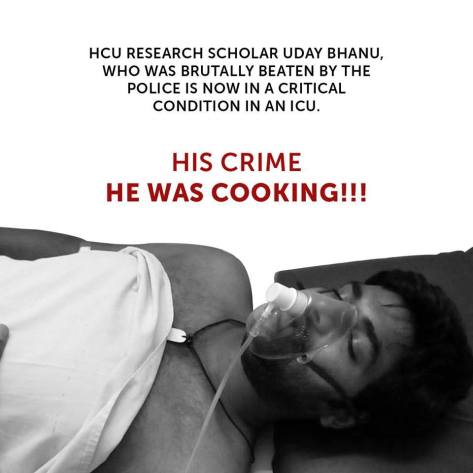
[Since there is a virtual media blackout of the situation in Hyderabad Central University we have decided to share video testimonies by students of the violence unleashed by CRPF (Central Reserve Police Force) and the RAF (Rapid Action Force) which were called in at the behest of the Vice Chancellor Appa Rao – who is already under a cloud for having created the circumstances that led to Rohith Vemula’s suicide, which many students consider to be an ‘institutional murder’. When Appa Rao returned to the University, students were enraged, and they started a ‘sit-in’ outside the Vice Chancellor’s lodge. It was then that the central forces were called in. Later, electricity, water and internet facilities were cut off. The debit card used by the students, linked to the State Bank of India branch on the campus, were blocked. The non teaching staff was persuaded not to give food in university hostel canteens to students. Some students who started a community kitchen were taken away by the police. One of them, a research scholar called Uday Bhanu was so badly beaten up that he has been admitted to intensive care at a local hospital. His condition remains critical.

Courtest, 'University Community' & '#DalitLivesMatter'
Courtest, ‘University Community’ & ‘#DalitLivesMatter’

Hyderabad Central University, is now a virtual prison camp.

12888580_1220780777939999_7333661344413745359_o

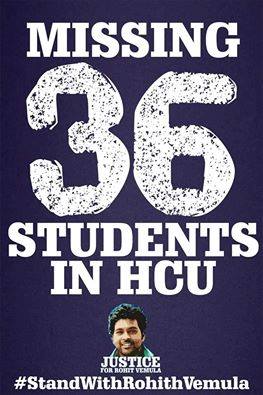
According to reports, 36 students are still missing. Several are hospitalized and are being treated for injuries. At least one of the students is in a critical condition.12671963_1656941941246803_5210071450630800436_o Continue reading Students Testify to Police Brutality on the HCU Campus in Hyderabad : Guest Post from HCU Students

Long Nights of Revolution, Dancing, Music and Poetry are Ahead: Veer Vikram

[ Here are five joyous excerpts of recordings from a recent night on the JNU campus – after Kanhaiya Kumar came back –  recorded by a young person called Veer Vikram. We do not know who Veer Vikram is, but came across his Youtube Channel, and were struck by the raw freshness of the voices and of the footage. So we are sharing them with you, saluting the generosity of Veer Vikram, who recorded these and uploaded them on to Youtube for everyone to enjoy. May there be many long nights of joy, music, dancing and poetry – in campuses, factories and neighborhoods – everywhere  Think so what a beautiful sight a ‘vishaal jan jagaran’ (as distinct from a ‘bhagawati’ jagaran) can make in different corners of Delhi, and in every city and town where young people can no longer take the rubbish offered by TV channels and the Modi regime. The revolution will be danced, sang, dreamt, recorded, uploaded, downloaded, shared and enjoyed. No more words necessary ]

A Conversation about the Meaning of the word ‘Azadi’ (‘Freedom’) in the Wake of Events at JNU

Signal to Noise Ratio

There has been a lot of talk about what exactly ‘Azadi’ (freedom) means, especially in the wake of Kanhaiya Kumar’s post release midnight speech at JNU on the 4th of March. So lets talk some more. No harm talking. If there is noise, there must also be a signal, somewhere.

Kanhaiya Kumar clarified in his electrifying, riveting speech that his evocation of Azadi was a call for freedom ‘in’ India, not a demand, or even an endorsement of a demand for freedom ‘from’ India.

This may come as a sigh of relief to some, – Kanhaiya , the man of the moment, proves his ‘good’ patriotic credentials, leading to an airing of the by now familiar ‘good nationalist vs. bad nationalist’ trope. And everyone on television loves a nationalist, some love a good nationalist even more.

Perhaps this was a way of dealing with a bail order that was at the same time a gag order.

[ P.S. : Since writing this last night, a more careful reading of the bail order has suggested to me that the actual terms of bail are not so bad after all. Bail is in fact granted, as far as I can see, fairly unconditionally. Kanhaiya is not asked, for instance, to step down from his position in the students’ union, nor are restrictions placed on his movement and activity. So in technically legal sense, the bail provisions need not be interpreted in a tightly restricted manner. The egregious political hortations, the references to infection, antibiotics, amputation and gangrene, which are over and above the legal instructions, are indeed terrible, but operationally, they have no executive authority backing them.]

But to say just that the text of the bail order is what shaped Kanhaiya’s midnight speech would be ungenerous, and miserly, especially in response to the palpably real passion that someone like Kanhaiya has for a better world, and for a better future for the country he lives and believes in. I have no doubt about the fact that coming as he does from the most moderate section of the Indian Left (the CPI – well known for their long term affection for the ‘national bourgeoisie’ despite the national bourgeouisie’s long term indifference/indulgence towards them), Kanhaiya is a genuine populist nationalist patriot [I have corrected ‘nationalist’ to ‘patriot’ here in response to the criticism and suggestion held out by Virat Mehta’s comment – see below in the comments section] and a democrat moulded as he says, equally by Bhagat Singh and Dr. Ambedkar. There is a lot to admire in that vision, even in partial disagreement. And while some may not necessarily share his nationalism, this does not mean that one has to treat it with contempt either. I certainly don’t.

Continue reading A Conversation about the Meaning of the word ‘Azadi’ (‘Freedom’) in the Wake of Events at JNU

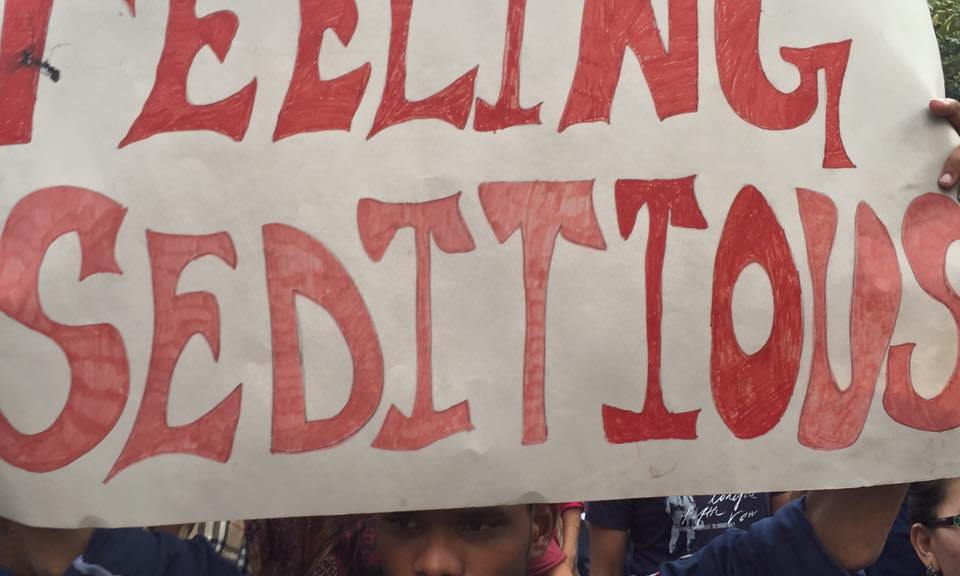
‘Feeling Seditious’: March on Parliament to #StandwithJNU

For the third time within a span of two weeks since the middle of February, thousands of people came out on the streets of Delhi to express their solidarity with the detained students of JNU (Kanhaiya Kumar, Umar Khalid and Anirban) and to voice their anger with the venal Modi regime.

Protest demonstrations (at least in northern India) tend to have something of the monotonous in them, the same cadence, the same rhythm and the same wailing, complaining tone. They tend to have an air of events staged by the defeated, for the defeated. But if we take the last three big protests in the city, and the many gatherings in JNU in the last two weeks or so,  as any indicator of what the pulse of our time is, we will have to agree that there has been a qualitative transformation in the language, vocabulary and  affect of protests. This afternoon, like the afternoon of the 18th (the first big JNU solidarity march), and of the 23rd of February (the Justice for Rohith Vemula March), was as much about the joy of togetherness and friendship as it was about rage and anger.

Continue reading ‘Feeling Seditious’: March on Parliament to #StandwithJNU

Consolidated Solidarity Statements in Support of JNU

JNU Solidarity Poster

Kafila posted a set of solidarity statements recently in support of the students, faculty and autonomy of JNU. We are posting another set, received from the following organisations:

  1. First-Decade JNU Graduates and Other Graduates – 548 signatories.
  2. Faculty, Staff and Students at the Indian Institute of Management, Bangalore.
  3. California Students and Faculty. California, U.S.
  4. Current Fellows of the Jawaharlal Nehru Institute of Advanced Study, JNU, Delhi.
  5. Colorado College, Colorado, U.S.
  6. Faculty at DePaul University, Chicago, U.S.
  7. Faculty, Students and Staff, Brown University, Rhode Island School of Design (RISD) and University of Rhode Island, Providence, U.S.
  8. McGill and Concordia Universities, Canada.
  9. Canadian Academics from Various Universities.

Please click on Read More below for the statements and signatories:

Continue reading Consolidated Solidarity Statements in Support of JNU

Petition to stop the global crackdown on academic freedom – Turkey, India, Egypt

The undersigned are university teachers and students concerned over recent events that point to a serious reversal of gains in democracy and academic freedom achieved over the last decades in many countries.

Three cases have been most prominent in that regard since the beginning of 2016: the crackdown by Turkish authorities on the more than 1200 signatories in Turkey of the petition by “Academics for Peace” criticizing the anti-Kurdish war drive launched by the Turkish government; the crackdown by Indian authorities on students involved in a non-violent campus protest against the death penalty at Jawaharlal Nehru University and Hyderabad University; and in Egypt an attempt to shoot and kill a professor by groups affiliated to the ruling party; and the savage torture and assassination in Cairo of Italian research student Giulio Regeni.

When they are not tacitly approving it, governments of countries where academic freedoms are better respected and which include most global powers have turned a blind eye and a deaf ear to calls on them to protest against this repression. The worst attitude has been displayed in Italy where the government kept stressing the importance of its economic ties with Egypt while a gutter press accused Giulio Regeni’s supervisors of letting him gather dangerous information, thus resorting to an old worn-out paranoid argument of all dictatorships and tacitly making the student himself responsible for his own atrocious death.

Academic freedoms are a key indicator of the overall status of political freedom and democracy. The acceleration of privatisation across the public higher education system is undermining these freedoms on a global scale. The events described above point to a much deeper and sweeping onslaught on democratic freedoms, which must be halted immediately lest it leads to increasingly tragic events and a most nefarious consolidation and extension of the authoritarian turn in global politics.

We call on the global community of teachers and students to join us in protesting against this most dangerous trend by signing, translating and circulating this statement, and organizing protest meetings in all universities.

To sign, please go to this link. 

Reflections on India, JNU and Pakistan: Anjum Altaf

In a chilling analysis, ANJUM ALTAF sees a terrifying pattern unfold in India, one that Pakistanis are all too familiar with.

Below are excerpts, the entire article can be read at TheSouthAsianIdea Weblog.

Despite its very different political trajectory, India is repeating the patterns observed in Pakistan albeit with a considerable lag in time. We have already seen the injection of religion in politics and now, apropos of JNU, we are seeing manifestations of hyper-nationalism and the use of student proxies of political parties to crush dissent and intimidate opposing voices in universities and courts.

The interesting question for an outsider is why this is happening in India today. The answer points to another one of the contingent events of history. It seems that with the election of Narendra Modi a number of factors have come together in India – the rule of a party with a foundational commitment to a conservative ideology that it believes needs to be universally imposed, a visceral dislike for dissent that it deems anti-national, and the undiluted power to attempt to enforce its preferences. These elements might have existed individually or in pairs before but have never come together as they have now with the outright mandate obtained by the BJP in 2014 that relieves it of the need to placate coalition partners. Continue reading Reflections on India, JNU and Pakistan: Anjum Altaf

The Limits of Efficient Suasion : Rina Ramdev

This is a guest post by RINA RAMDEV

The Prime Minister’s monogrammed suit and the HRD Minister’s fake degree in the early days of the BJP’s 2014 electoral win were embarrassments dotting the uneasy calm that prevailed over the new digital, development avatar of the nation; even as a sense of the slouching beast waiting to break through the controlled, contained quietism was always there in deferred menace. And thus, when majoritarian sentiment fuelled the ‘Ghar waapsi’ campaign and the ban on cow slaughter found a mainstreaming in minority witch hunting, there was an eerie expectedness to these turns. The Swachh Bharat Abhiyan’s minatory address, carrying the subtext of a communal cleansing in sinister remand, visibilized itself in the horrific lynching of Mohammed Akhlaq in Dadri. Mostly civil voices of protest raged against this as well as against the organised killings of questioning rationalists like Pansare and Kalburgi. Sections of the thinking polity mobilised signature campaigns, petitions and an entire event like the‘Award waapsi’ drew attention to this vitiated political climate. Continue reading The Limits of Efficient Suasion : Rina Ramdev