Category Archives: Movements

Queering Christianity: Janice Lazarus

Guest Post by JANICE LAZARUS

While there have been several writings, posts and comments on the web and in the print about the connection between homosexuality and Hinduism, there has been almost nothing said about the outlook of Christianity on homosexuality. One of the petitioners in Kaushal vs. Naz case is the Utkal Christian Council represented by its Secretary; and so I feel that it is crucial to write about Christianity and the way in which in many parts of the world a Queer Theology is embracing those previously deemed sinful by the Church. While I am in no way a theologian, I do feel that the Bible is open to be read by all and can be interpreted differently by many (as do the different sects within Christianity).

Continue reading Queering Christianity: Janice Lazarus

JTSA extends support to the LGBT community, calls for committed judicial activism: JTSA

Guest Post by JAMIA TEACHERS’ SOLIDARITY ASSOCIATION

On 11 December, 2013 a two judge bench of the Supreme Court of India (SC) ruled that section 377 of the Indian Penal Code (IPC), which considers homosexuality a criminal offence, does not ‘suffer from the vice of unconstitutionality’ and hence, legally valid.  By this highly regrettable ruling the apex court astounded and disappointed not only the LGBT community but the wider public at large.

Continue reading JTSA extends support to the LGBT community, calls for committed judicial activism: JTSA

The Anti-Rape Movement -The Political Vision of ‘Naari Mukti/Sabki Mukti’: Kavita Krishnan

Guest Post by KAVITA KRISHNAN

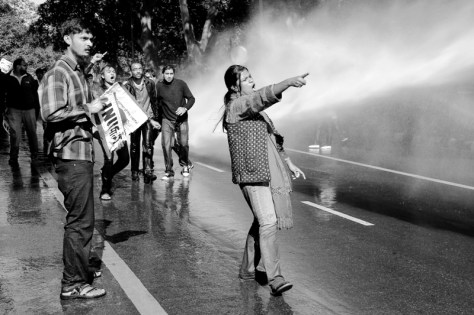
Anti Rape Protest at CM Shiela Dixit's House, Photo by Vijay Kumar
Anti Rape Protest at CM Shiela Dixit’s House, Photo by Vijay Kumar

A year ago, a massive movement erupted on the streets of Delhi and the country – against the brutal gangrape of a young woman on a bus, leading to her death. Looking back at that movement a year later, it is clear that the questions, concerns and above all the tensions and debates embedded in that movement are with us still – and are quite crucial to the political discourse around us.

Continue reading The Anti-Rape Movement -The Political Vision of ‘Naari Mukti/Sabki Mukti’: Kavita Krishnan

Jurrat – 10 to 16 December 2013, Delhi

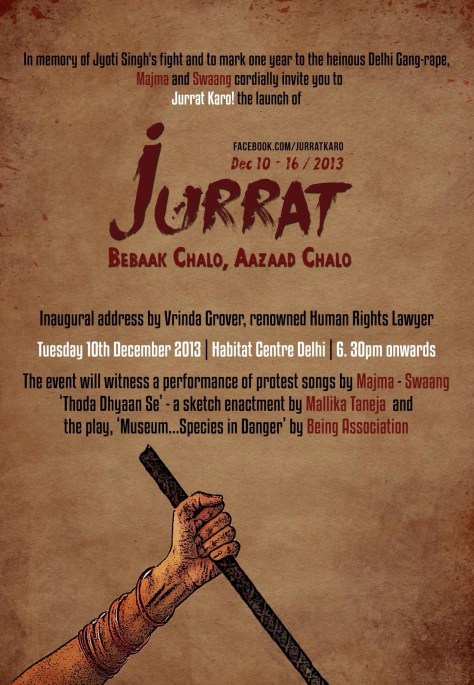
Majma and Swaang are organizing JURRAT – A week long campaign on violence against women, from Dec 10-16.

image

About Jurrat

On 16th December 2013 one year would have passed since the shameful, horrific and brutal gang rape of a 23-year-old girl in Delhi. And yet this whole year, city after city and village after village has screamed ‘Rape’ ‘Gang Rape’ in the months after the much publicized and condemned Delhi-gang rape. Continue reading Jurrat – 10 to 16 December 2013, Delhi

Indian Government needs to differentiate the real vs false solutions in agriculture this World Food Day : Neha Saigal

This is a guest post by NEHA SAIGAL


It is well-recognized globally that hunger and malnutrition are serious issues, but even after years of failed attempts by world leaders to try and solve this complex problem there has been little change. In 2009 for the first time in history the population considered to be malnourished exceeded one billion people signalling the serious issue of food insecurity we are faced with. In an effort to bring this serious issue to the forefront, the Food and Agriculture Organization (FAO) of the United Nations marks 16 October every year as ‘World Food Day’. Continue reading Indian Government needs to differentiate the real vs false solutions in agriculture this World Food Day : Neha Saigal

Storm in a Calm IIT Campus Over a Sexual Harassment Case: Pronoy Rai

Guest post by PRONOY RAI

The serene, picturesque campus of the Indian Institute of Technology Guwahati has been witnessing some very noteworthy events in the recent past. According to reports in the popular media, a professor at the institute’s biotechnology department was accused of sending obscene text messages to his PhD student over her phone. Though the professor pleaded innocence, claiming that messages were sent from his sim card that was stolen, the local police found this hard to believe. The professor has also been accused of harassing the student during other instances on campus. Upon receiving the advice of the ‘Working Women’s Committee’ of the institute, the professor was recently suspended. This narrative constructs for us a simple, fair story of a just state-society system. A person breaks the law, and he is disciplined, as one would expect in a fair democratic society. If only that was the case.

The suspension of the professor was not immediately followed by the submission of the report, let alone the filing of complaint at the institute and with the local police. On August 13, Amingaon police in Assam arrested the professor for sending obscene text messages to a student. The arrest happened because the student had to file a FIR in order to request a telecom company to reveal the identity of the owner of the phone, from where the obscene messages being sent to her, were emanating. The delay in the inaction of the institute administration is unjustified, but perhaps not very inexplicable. Continue reading Storm in a Calm IIT Campus Over a Sexual Harassment Case: Pronoy Rai

In Delhi’s defence

Reuters photo
Reuters photo

By SHIVAM VIJ: The census counts ’urban agglomerations’, and the Census of India says that Mumbai is India’s largest urban agglomeration. This includes Mumbai’s suburbs. In counting Delhi, the suburbs are not added because They are separated by state boundaries. If you were to add suburbs of the ’National Capital Region’, Delhi’s population would be not 16 million but over 22 million, making it the world’s largest urban agglomeration after Tokyo. This bustling urban centre is made of its people. Today’s Delhi cannot be stereotyped as just the seat of power. There is more to Delhi than the endless roundabouts of Lutyens’ capital.

Delhi’s core – the Partition refugee Punjabi – is not xenophobic like the Marathi ’manoos’ of Mumbai. In fact Delhi today is what Bombay once was, India’s foremost cosmopolitan metropolis. It is the city of choice for people from across India to migrate to with dreams of riches.

A lot has been written about “the Delhi gang-rape”. 16 December 2012 started a conversation that doesn’t seem to end. This conversation has largely been about rape, not about Delhi.
Continue reading In Delhi’s defence

When the lid will burst: Fahad Shah

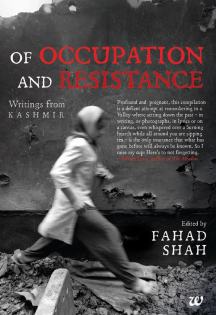
This is an excerpt from the introduction to the anthology Of Occupation and Resistance: Writings from Kashmir, edited by FAHAD SHAH
Once militancy took root in the Valley, it continued unabated, with a few exceptions in the years to come. The sentiment of the resistance movement prevailed across Jammu and Kashmir. At one point in time, blasts and encounters occurred almost every day. The first few years of the 1990s were the most brutal in the history of the conflicted Valley. After the 1996 assembly elections, when people were forced to vote at gunpoint, the National Conference Party and counter-insurgent groups ruled the state. People lived with trauma and threat – treating the injured, mourning for the dead and searching for those who had disappeared.

This was the story for more than a decade. A shift in the nature of resistance has been seen in the past few years; the generation that was born during the start of the war has been able to glean the nuances of the homeland’s political situation. Most of the youngsters from this generation, born between the late 80s and early 90s, choose stones over guns. Continue reading When the lid will burst: Fahad Shah

Nationalism in India: Rabindranath Tagore

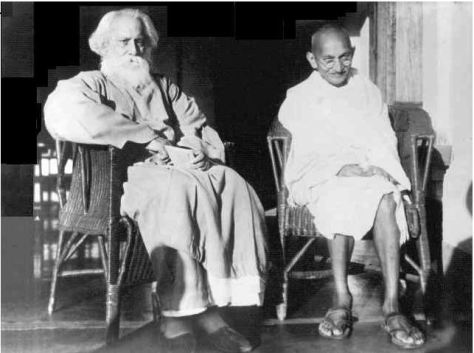
From RABINDRANATH TAGORE‘s lectures on Nationalism, 1917

tagore-gandhi

Our real problem in India is not political. It is social. This is a condition not only prevailing in India, but among all nations. I do not believe in an exclusive political interest. Politics in the West have dominated Western ideals, and we in India are trying to imitate you. We have to remember that in Europe, where peoples had their racial unity from the beginning, and where natural resources were insufficient for the inhabitants, the civilization has naturally taken the character of political and commercial aggressiveness. For on the one hand they had no internal complications, and on the other they had to deal with neighbours who were strong and rapacious. To have perfect combination among themselves and a watchful attitude of animosity against others was taken as the solution of their problems. In former days they organized and plundered, in the present age the same spirit continues—and they organize and exploit the whole world. Continue reading Nationalism in India: Rabindranath Tagore

The Sunset of the Century: Rabindranath Tagore

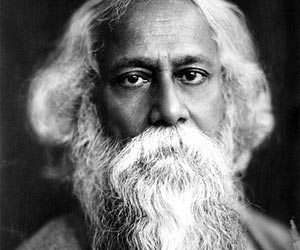
rabindranath-tagoreThe eve of India’s 66th Independence Day is a time as good as any to read this poem by RABINDRANATH TAGORE, even as India gets ready to sing to martial tune another Tagore poem, Jana Gana Mana. This English translation was published at the end of Tagore’s 1918 book, Nationalism.
THE SUNSET OF THE CENTURY

(Written in the Bengali on the last day of last century)

1

The last sun of the century sets amidst the blood-red clouds of the West and the whirlwind of hatred.
The naked passion of self-love of Nations, in its drunken delirium of greed, is dancing to the clash of steel and the howling verses of vengeance. Continue reading The Sunset of the Century: Rabindranath Tagore

A Fight till Death, A Fight for the Commons – The Story of Kathikudam, Kerala: Parvathy Binoy

This is a guest post by PARVATHY BINOY

“There is a lot of polluted rivers and lands in India…but this is not a big issue in Kerala”, Kerala Pollution Control Board Chairman (KPCB), 2011

We have no one with us now, neither the party in power nor its opposition, we only have the people with us” – Daisy Francis, Kadukutty Panchayat President, June 2013 Continue reading A Fight till Death, A Fight for the Commons – The Story of Kathikudam, Kerala: Parvathy Binoy

Deceit at the Hospital of Truth: Surendra Panchal

Guest Post by Surendra Panchal

Sanitation Hospital Workers Strike at a Delhi Hospital over Non-Payment of Minimum Wages

Sanitation workers of the Satyavadi Raja Harishchandra Hospital (The Truthful King Harishchandra Hospital), Narela in Outer Delhi have started an indefinite dharna today, to protest their unjust dismissal when they asked to be paid the statutory minimum wage for unskilled work declared by the Delhi Government, Rs 7254 per month.

Continue reading Deceit at the Hospital of Truth: Surendra Panchal

Can Happiness and Resistance Go Together? Gowhar Fazili

Guest Post by Gowhar Fazili

Does resistance necessarily have a direct relationship with suffering and inverse relationship with pleasure and happiness? This is a question that is particularly significant for long drawn resistance movements facing a formidable enemy insensitive to and largely unruffled by the exertions of resistance.  The engagement with occupation often involves violent and non-violent struggle.  Both demand sacrifices that warrant shunning of such mundane pleasures and opportunities taken for granted by the populations reconciled with power.  If the struggle extends over multiple decades, it is bound to generate fatigue and disillusionment especially among those who have not voluntarily committed themselves to the life of endless self abnegation even while they may desire freedom from occupation.   While all people want to be free from the indignity of living under occupation and dominance, human nature puts limits on how far individuals and populations may be willing to stretch themselves in their denial of bodily desires and material pleasures that life has to offer.

Continue reading Can Happiness and Resistance Go Together? Gowhar Fazili

People’s Victory Against Chutka (Madhya Pradesh) Nuclear Power Plant: Lokesh Malti Prakash

Guest Post by Lokesh Malti Prakash

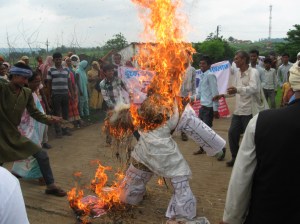
The People of Chutka and adjoining villages in Mandla district of Madhya Pradesh won another victory against the Chutka (Madhya Pradesh) Nuclear Power Plant (being imposed on them by Congress-led Central government in active collusion with BJP-led state government) as the government was forced for the second time to postpone its farcical public-hearing on the project that was scheduled on 31st July. After a sustained protest by people of the region that was actively supported by almost every section of left-democratic forces in the state and beyond, the district administration called off the public-hearing on 29th July.

Burning the Effigy of Nuclear Power at Chutka

Continue reading People’s Victory Against Chutka (Madhya Pradesh) Nuclear Power Plant: Lokesh Malti Prakash

The shameful role of the Indian Supreme Court in the Emergency of 1975: Rajinder Sachar

This guest post by RAJINDAR SACHAR comes to us via the PEOPLE’S UNION FOR CIVIL LIBERTIES.

Lewiston Morning Tribune - Google News Archive Search - Mozilla Firefox_2013-07-14_19-25-11

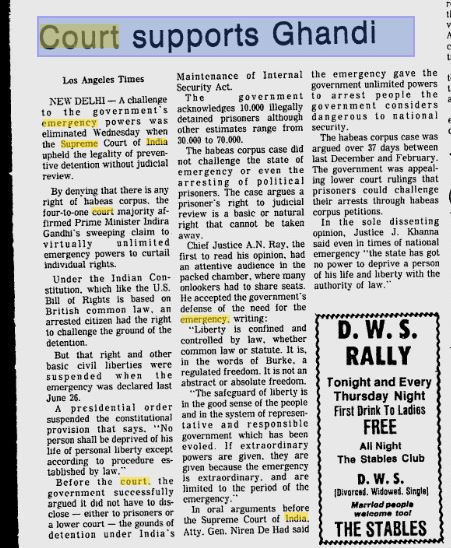
Nations which do not remember their immediate past are in danger of repeating their tragic mistakes. This thought came to me on June 26th, 2013 (the Emergency day of 1975) when on random questioning of age group of 35 in the country (who are said to make up about half the population) I found that most of them did not know of any particular significance of the day – and more tragic, fairly large number of people above the age of 35 fared no better. Continue reading The shameful role of the Indian Supreme Court in the Emergency of 1975: Rajinder Sachar

Palamau, Ardh Satya and the Activist Life: Vikrant Dadawala

This is a guest post by VIKRANT DADAWALA: “We have lost a lot”, says Manoj-ji, president of Vikas Sahyog Kendra. “Aadmi ko ek bar aag choo jaye toh woh ekdam se peeche ho jaata hai.” (If fire touches a man once, he flinches every time)

I am standing outside the Vikas Sahyog Kendra office in Daltonganj, Palamau. It is the end of my first day as an intern with the organization. Manoj-ji is trying to give us, three interns, a sense of why Vikas Sahyog Kendra does not have a signboard. “Niyamat Ansari and Lalit Mehta’s murders shook us badly”, Manoj-ji says. “We’re no longer as fearless as before.”

I am little disappointed, unreasonably so. It is evening but still mindlessly hot. My first impressions of Daltonganj take in its bareness – unfinished buildings, loudspeakers blaring bhajans, the ostentatious houses of minor bureaucrats and contractors standing like castles against the dry summer wind. Continue reading Palamau, Ardh Satya and the Activist Life: Vikrant Dadawala

São Paulo: The City and its Protests: Teresa Caldeira

Guest post by TERESA CALDEIRA

In June 2013, a series of large demonstrations throughout Brazil have shaken up its main cities and political landscape.  They have also perplexed politicians and analysts alike, many of whom found themselves without solid references to interpret the novelty and oscillated between silence and old discourses.  It is always risky to interpret emerging processes. Minimally, we risk following secondary paths or, even worst, framing new events with the vocabulary made available by old interpretative models, exactly the ones that the new events are trying to displace. However, in order to reveal what is emerging it is necessary to risk, search for new hints, and follow signs already available.  Several references that can guide us to interpret the June events have been around for quite a while; others are new, but we can trace their lineage and contextualize them.

SP Batata 17 june
17th June, 2013

Continue reading São Paulo: The City and its Protests: Teresa Caldeira

Huge Rally of Narmada Dam Oustees in Bhopal: Jeevan Adhikar Satyagraha and Upwaas begins with Demand for Rehabilitation and Resettlement

This is a press release by the NARMADA BACHAO ANDOLAN

28th June 2013

Rally 2

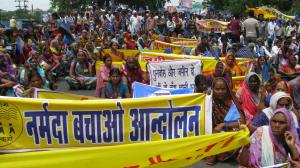
Thousands of oustees affected by the Indira Sagar, Omkareshwar, Maheshwar, Upper Beda and Man dam demonstrated in capital city Bhopal today and began their Satyagrah. Despite continuous rain in the entire Narmada valley, over 8000 men and women displaced persons have reached Bhopal to camp here for the next 5 days. The affected people demand that all the oustees of these dams should be rehabilitated and resettled with land and all other entitlements, and the injustice being wreaked on them for decades be stopped. Shri Alok Agarwal, senior activist of the Narmada Bacahao Andolan along with 4 men and women oustees have started their fast for 5 days in this “Narmada Jeevan Adhikar Satyagraha and Upwaas”.

Gyapan

Continue reading Huge Rally of Narmada Dam Oustees in Bhopal: Jeevan Adhikar Satyagraha and Upwaas begins with Demand for Rehabilitation and Resettlement

Hydro Power Projects and Northeast India: Ecology and Equity at Stake

This is a guest post by RICHARD KAMEI

Recently a two-day North East People’s Convention on water and dams was held at Bethesda Youth Welfare Centre, Dimapur (on 17th May-18th May 2013) which brought together a group of 26 organisations from North East India under the banner of the North East Dialogue Forum. This forum called for a focus into the objectives raised in this two day convention, by writing to leaders of India, China and Bangladesh over the imminent adverse impact of the issue of water, impacts of constructing big dams and mining in various regions of North-East India. The outcome of this two-day North East People’s Convention on water and dams, is the joint appeal known as ‘Dimapur Declaration’.  At the time of this declaration, prime address was made to the Prime Minister of Bangladesh, Sheikh Hasina; the Premier of China, Li Keqiang and Prime Minister of India, Dr Manmohan Singh. The main objectives of Dimapur Declaration are:  to protect the inherent rights of local people over their water, land, forest and other resources based on customary and international laws as guaranteed by the Universal Declaration of Human Rights and UN Declaration on the Rights of the Indigenous People 2007 etc., and their self-determined development of their water bodies in the region. The recommendations of the World Commission on Dams, 2000 have also been given a special mention in terms of its implementation in all decision making processes on dam constructions over Brahmaputra (Tsangpo) River. “The Thatte-Reddy Expert Committee said the present hydropower work on Subansiri contravenes the basic premise of the Brahmaputra Board Act with regard to flood control, irrigation and other benefits. The report agreed that the present planning of the project ignored the flood control aspect. Therefore, the committee agreed that the very purpose of the project and purpose of the Brahmaputra Board Act is defeated and the mandate of the board diluted by this action,” opined Akhil Gogoi, Krishak Mukti Sangram Samiti ( KMSS). Continue reading Hydro Power Projects and Northeast India: Ecology and Equity at Stake

For Erdoğan, you are with him or against him: Tamer Söyler

This guest post by TAMER SÖYLER is the second of a three-part series on Istanbul’s Taksim Square protests for Kafila.

“Kandils (Islamic holy nights) are the times for equality, unity and solidarity.” Anticapitalist Muslims   Note: “Kandil” refers to the celebration of one of the five Islamic holy nights. While Erdoğan was accusing the protestors to be drinking beer and having some kind of a youth festival, anticapitalist muslims who were against the Taksim project from the very early on, wanted to give their support to the protestors. It was an interesting thing to witness. Socialists and communists were creating space for the members of the Anticapitalist Muslims to perform a public prayer in the square. This is already evidence enough that this is not secularists vs. pious.
“Kandils are the times for equality, unity and solidarity – Anti-capitalist Muslims,” this banner reads.
Kandil refers to the celebration of one of the five Islamic holy nights. While Erdoğan was accusing the protestors to be drinking beer and having some kind of a youth festival, anti-capitalist Muslims who were against the Taksim project from the very early on, wanted to give their support to the protestors. It was an interesting thing to witness. Socialists and communists were creating space for the members of the Anti-capitalist Muslims to perform a public prayer in the square. Clearly,the Taksim protests were not about secular vs. religious.

The first part of this commentary argued that as a part of his political strategy early Erdoğan had embraced a kaleidoscopic approach in governance by including various perspectives coming from citizens situated in different milieus. Erdoğan had given the impression to the citizens that his government was willing to hear the views of the citizens situated in all kinds of milieus. A simple strategy of inclusion proved to be extremely efficient for Erdoğan. Citizens who were not ideologically close to Erdoğan were quick to feel flattered by the symbolic gesture and did not hesitate to support Erdoğan. Continue reading For Erdoğan, you are with him or against him: Tamer Söyler

Can late Erdoğan learn from early Erdoğan?: Tamer Söyler

This guest post by TAMER SÖYLER is the first of a three-part series on Istanbul’s Taksim Square protests for Kafila.

taksim8
Photographs by Tamer Söyler

The 42nd President of the United States, Bill Clinton, is said to have remarked: being President is like running a cemetery; you have got a lot of people under you and nobody is listening. As is the case with any good politician, Clinton is known for his bamboo-like character. During his presidency whenever he looked the weakest, he proved to come stronger out of the chaos. Clinton’s remarkable flexibility provided him the ability to bend as much as he needed to achieve his goals without breaking. The Prime Minister of Turkey, Recep Tayyip Erdoğan, proved again that he does not have Clinton’s sense of humour, his presidency or his flexibility.

Turkey is a parliamentary representative democracy. Erdoğan has been expressing his intention to transform the country into a presidential system and become the first president of the country. The government plans to put the question of a constitutional referendum to a vote in the year 2014. The people of Turkey are suffering from a great anxiety related to a fear of finding themselves in an authoritarian, charismatic presidential system. Protestors worry that without adequate mechanisms to enforce the separation of powers in the constitution, Erdoğan can easily transform Turkey into an authoritarian regime.
Continue reading Can late Erdoğan learn from early Erdoğan?: Tamer Söyler