Category Archives: Movements

चे का चेहरा: ओम थानवी

ओम थानवी का यह लेख जनसत्ता अखबार में 23 सितंबर 2007 को प्रकाशित हुआ था। ओम थानवी जनसत्ता के संपादक हैं।

che-gu-22

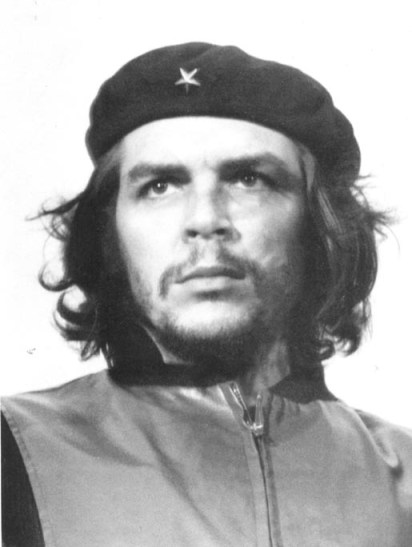
वह तस्वीर चे ने खुद कभी नहीं देखी। उस तस्वीर से उसके छविकार ने कभी एक पैसा नहीं कमाया। मगर दुनिया के हर कोने में आज वह छवि मौजूद है। विद्रोह और क्रांति के एक सशक्त प्रतीक के रूप में। ‘टाइम’ पत्रिका द्वारा चे गेवारा को पिछली सदी की सौ हस्तियों में शरीक करने से बहुत पहले वह छवि दुनिया में सबसे ज्यादा छपी तस्वीर घोषित हो गई थी। Continue reading चे का चेहरा: ओम थानवी

Dhinkia and Govindpur Mothers go Naked to Protest against Forcible Land Acquisition for POSCO: Minati Dash

Guest post by MINATI DASH

On 7th March 2013, at least two mothers of Dhinkia and Govindpur (Patna village in this panchayat) villages in Jagatsinghpur went naked before the paramilitary station in Mangalpada near Govindpur village. In a rally led by mothers, hundreds of women and children went to the temporary paramilitary station that has more than 5 platoons of forces at the moment. While taking off their clothes, they constantly shouted, ‘why have you come here?, what do you want to see?’.

What must be the extent of desperation and provocation that our mothers decide to become naked before outside men?  In such a site (Eastern Odisha), where women bodies are constructed dominantly as private objects to hide, what does it mean to dare to bare? It is important to read this shocking act as an act of mediation of their political voices. It is in a desperate bid to express their furore, frustration & anger over intrusive presence of police & paramilitary in the area that they bared their bodies to shame them.

But shockingly, instead of recoiling with shame in response to such an act, the paramilitary chose to strike physically. They did not spare even these protesting women and brutally lathicharged them. Continue reading Dhinkia and Govindpur Mothers go Naked to Protest against Forcible Land Acquisition for POSCO: Minati Dash

Crude Questions about Crude Bombs: Biju Mathew

This is a guest post by BIJU MATHEW

Tarun Mandal, Narahari Sahu and Manas Jena are dead, blown up by what the media has described as a “crude” bomb. All bombs are crude. They kill. They are meant to destroy flesh and bone. They are aimed at sucking out life. Lakshman Mandal battles for his life in a Cuttack hospital. He knows how crude a bomb is. Hopefully he will live to tell the tale of its crudeness.

This is a partisan piece. But it aims to produce balance. Almost all media reports so far have had a strong spin that the three – Narahari, Tarun and Manas – were killed while making a crude bomb. So says Mr. Satyabrata Bhoi, Jagatsinghpur SP. Nobody has bothered to ask him any further questions. It’s quite understandable. Asking any more questions might make the entire spin untenable. For instance, they could have asked: why is it that something illegal, such as crude bomb making, was being done out in the open and not within the confines of a house? Especially given that for the last month, the police have been constantly in and out of the village? Especially because there are at least a few dozen pro-POSCO folks in the village? Why would three leaders of an oppositional movement sit outside on the porch of a house that is fully identified with POSCO Pratirodh Sangran Samiti (PPSS) and make bombs – openly, for all to see – at 6.30 PM when there is enough light for anybody to see them? Isn’t crude bomb making normally confined to the indoors? How many incidents do we know of where crude bomb making was happening outside in broad daylight? Isn’t the RSS, the most famous outfit that makes crude bombs and occasionally manages to blow up its own, always known to make its bombs indoors? Continue reading Crude Questions about Crude Bombs: Biju Mathew

Why I need feminism

Here’s wishing all men and women across borders and boundaries, in New Delhi and New Haven, Ranchi and Russia, Dublin and Damascus, Srinagar and Sri Lanka, Bhutan and the Bermudas, a very happy International Women’s Day. These images are from the ‘I Need Feminism’ Campaign at the Lahore University of Management Sciences

This slideshow requires JavaScript.

Mayhem in March: Sameer Bhat

Guest post by SAMEER BHAT: The completeness of night’s silence is absolute in Kashmir. Earlier today another boy was put six feet under. Killed in cold blood in Baramulla by the Indian army. Apparently a small crowd was protesting against the hanging of Afzal Guru and driven by pure emotion, pelted a passing army truck with stones. Since Kashmiri blood costs next to nothing, the armymen quickly got down, cocked their machine guns and sprayed the protesting kids with bullets, instantly killing a kid – Tahir — in his 20s. Nothing much. His friends, too shocked to react, smeared his blood on their faces. Grown-ups wept. The army later issued a statement that they didn’t shoot the boy. Period. Continue reading Mayhem in March: Sameer Bhat

Shahbagh: The Forest of Symbols: Naeem Mohaiemen

This is a guest post by NAEEM MOHAIEMEN

Shahbagh_SyedLatifHossain
© Syed Latif Hossain

There is a particular way of lensing mass movements, when we are observing from within immediate tactics. In a fast moving situation, with opponents and allies squared off, the first thing to shrink is the space for internal critique. Professor Azfar Hussain uses the term “critical solidarity” for his approach to Shahbagh. A critique that seeks to help the movement, but also a critique some are not ready to hear yet.

For the last sixteen days, Bangladesh has been in an intense new political phase. The ground has shifted and been recast by the scale of the Shahbagh movement. The flash point was the sentencing of the “Butcher of Mirpur” (a war criminal who collaborated with the Pakistan army in 1971). But, by now, the demands have expanded to a call for a ban on the main Islamist party Jamaat-e-Islami, or even Islamist politics altogether. Older leftist thinkers like Badruddin Umar are daring to ask questions of the hallowed place of “state religion” in the constitution. Younger bloggers are urging all to make it clear that the movement is about war criminals, not religion. But of course, with war criminals conflated with the Jamaat-e-Islami, and that party eager to present themselves as standing for “Islam,” category errors will happen. Continue reading Shahbagh: The Forest of Symbols: Naeem Mohaiemen

People’s Watch Over Parliament: Bekhauf Azadi Campaign

20130220-235633.jpg

  • Protestors at the ‘Freedom Parade’ Rally of the Bekhauf Azadi Campaign, New Delhi, 26 January, 2013

Guest Post by Bekhauf Azadi (Freedom Without Fear) Campaign.

People’s Watch Over Parliament: February 21, 1st Day of the Budget Session, Jantar Mantar
Gather in large numbers – 12 PM onwards at Jantar Mantar, New Delhi.
Are Our Lawmakers Ready to Listen to the Voice of the Movement Against Sexual Violence?

Continue reading People’s Watch Over Parliament: Bekhauf Azadi Campaign

All India Protest Day in Support of Maruti Suzuki Workers: MSWU

Guest post by MARUTI SUZUKI WORKERS UNION (Provisonal Working Committee)

[This is a statement issued by the MSWU – Provisional Working Committee on the All India Protest Day held on the 5th of February in many cities and industrial areas in Solidarity with the workers of the Maruti Suzuki Factory in Manesar, Gurgaon, Haryana. Predictably this important statement and report was not carried by the mainstream media.]

MSWU, Registration No. 1923, IMT Manesar, Gurgaon, Date: 5 February 2013

Today, 5th February 2013, the great response to our appeal to all trade unions, workers, democratic organizations and progressive forces to hold an ALL-INDIA PROTEST DAY in solidarity with our struggle, against the continued exploitation, repression and injustice by the Maruti Suzuki company and Haryana Government, has further strengthened our resolve. 147 of our fellow workers are arrested and have not got bail for last 7 months, 66 more have non-bailable arrest warrants against them, 546 permanent and 1800 contract workers terminated from our jobs have not been reinstated, and we continue to face continued police repression, anti-worker administration and a state which has nakedly sided with the company-management. Even thus we are determined to carry forward our struggle to release all jailed workers, reinstate all terminated workers, impartial probe into the 18 July incident, implementation of labour laws and abolition of contract worker system.

Continue reading All India Protest Day in Support of Maruti Suzuki Workers: MSWU

Theories of Oppression and another Dialogue of Cultures: Ashis Nandy

This is the text of the Ambedkar Memorial lecture delivered by ASHIS NANDY at the India International Centre on 14 April 2012, under the auspices of Ambedkar University, Delhi.

It was published in Economic and Political Weekly, July 28, 2010

Every generation likes to believe that it is living in momentous times, witnessing the death of one world and the birth of another, negotiating what pre-war Bengali writers used to grandly call yugasandhikshana, the moment when two epochs meet. This generation of Indians too believes that it is seeing such changes and even participating in them. Perhaps they are. However, I shall argue here that, along with transitions in society and politics to which they like to stand witness, there are transitions in cultures of knowledge and states of awareness of which they may be gloriously innocent. And they perhaps try to protect that innocence. The categories we deploy to construe our world images are parts of our innermost self and to disown them is to disown parts of ourselves and jeopardise our self-esteem. Even when we struggle to shed these categories, they survive like phantom limbs do in some amputees. Or perhaps they survive the way one of Freud’s three universal fantasies, the one about immortality, does. When you imagine yourself dead, you are still there, fully alive, looking at yourself as dead. Continue reading Theories of Oppression and another Dialogue of Cultures: Ashis Nandy

The Official Emergency Continues – The Ordinance on Sexual Assault: Pratiksha Baxi

Guest post by PRATIKSHA BAXI

The reform of rape law, which was not a priority for more than two decades, seems more like a 20-20 match now. The spectacle of judicial reform has all the elements of cinematic imagination built into it—violence, voyeurism, repression, tears, scandal, redemption and betrayal. We are all consumers and participants of this judicial spectacle. We veer between manic hope and dark despair as we are left conjecturing how this theatre of judicial reform will enact equality and dignity for survivors of sexual assault. The latest twist in the tale is the introduction of an ordinance, following the Justice Verma Committee (JVC) report.

Continue reading The Official Emergency Continues – The Ordinance on Sexual Assault: Pratiksha Baxi

Why the Govt’s Ordnance is Fraud & Mockery of the Justice Verma Committe Recommendations: Bekhauf Azaadi Campaign

Guest post by BEKHAUF AZAADI CAMPAIGN

The UPA Govt, in a Cabinet meeting held on 1 February, has introduced an ordinance that it claims will address the most urgent concerns on sexual violence. In fact, the Government has been completely reluctant to acknowledge and implement the Justice Verma Committee recommendations: the PM refused to accept it from Justuce Verma, the Ministry of Home Affairs removed it from their website, the Govt never adopted any transparent process of discussion to decide the way forward on implementing the recommendations, rather they said Justice Verma ‘exceeded his brief’. Now, they claim that their ordinance has ‘implemented’ the Justice Verma recommendations. Is this true?

The fact is that the Government’s ordinance is a mockery of the letter and spirit of the Justice Verma recommendations. Why? Let us take a closer look.

Continue reading Why the Govt’s Ordnance is Fraud & Mockery of the Justice Verma Committe Recommendations: Bekhauf Azaadi Campaign

Our memories come in the way of our histories: Gowhar Fazili

Guest post by GOWHAR FAZILI

Our Moon Has Blood Clots by Rahul Pandita; Pages: 258; Vintage Books, Random House, India; Price: Rs 499

Rahul Pandita’s book Our Moon Has Blood Clots must be looked at both as a personal account of suffering as well as a political project that implicitly and explicitly makes use of that suffering towards a particular end. The undertaking is a legitimate one on both counts.  What the book manages to achieve on each, warrants a fair and dispassionate assessment.

His narration of events experienced by the Pandits is a welcome exposition of subjectivity around a range of traumatic events, humiliations, killings and betrayals undergone prior to and after the outbreak of mass political rebellion in Kashmir in 1989. The events thus narrated, especially the account of the personal experiences of trauma do make one strongly identify with the suffering of the families involved and agree with the wide swathes of subjective anger and hurt shared by the community.  The chilling accounts of individual and mass killings and the circumstances that made them possible, call for collective self-reflection, remorse and atonement. This account also calls for serious reflection on the fragility of human associations and trust in exceptional circumstances that we normally take for granted.

The book as well as the promotional interviews around the book push the claim that not only certain militants but also many ordinary people, including those personally known to the victims, were responsible for the exodus through their acts of omission and commission.  This claim is substantiated through a range of indictments based on personal encounters with individuals, shared nuggets of information, as well as the interpretation of the larger political symbolism and slogans which were seen as a deliberate attempt to intimidate Pandits, and Pandits alone.  While it is difficult to deny that a number of individuals took advantage of those anarchic times to gratify personal hate and lust for loot, it makes for an overstatement to underplay the equally frequent narrative of mutual support between individuals that one gets to hear during conversations between the members of the two communities privately. Such underplay does violence to those aspects of shared memory.  Continue reading Our memories come in the way of our histories: Gowhar Fazili

India and Pakistan – Peace Now, a global vigil today

Events are planned today in Lahore, Delhi, Mumbai, Karachi, Cambridge MA, Washington DC, New York and Toronto to observe a vigil for India-Pakistan peace. More details given at this Facebook page. Event created by SAMIR GUPTA and disseminated by Aman ki Asha. Given below is a statement.

India – Pakistan Peace Now – Global Vigil

January 27, 2013

Lahore – Lahore Press Club, Shimla Pihari at 6 pm
Mumbai – Gateway of India 7 pm
Delhi – Gandhi Peace Foundation 5:30 pm
Karachi – Karachi Press Club, 5:30pm
Cambridge, MA – Harvard Square Pit, 4-5 pm
Washington, DC – Chutney Restaurant, Springfield, Virginia, 6 p.m
New York – Near Gandhi statue at Union Square, 5 pm
Toronto – 365 Bloor St. East, outside Indian Consulate, 5 pm

The hate mongers have had their moment of fame. It’s time to tell the political leadership of India and Pakistan what we stand for. We, peace-mongers around the world, are gathering on January 27, 2013, in different cities as part of a series of peace events. All we have is some candles, some placards and many hearts full of love. We want the governments of India and Pakistan know that people in dozens of cities across six continents want them to continue the dialogue and take forward the peace process. Continue reading India and Pakistan – Peace Now, a global vigil today

Why the Parliament should reject the standing committee’s recommendations on the Food Security Bill: RTFC

This statement was put out by the RIGHT TO FOOD CAMPAIGN on 24 January

The much awaited recommendations of the Standing Committee on Food, Consumer Affairs and Public Distribution on the National Food Security Bill are a letdown to those who wrote to the Committee urging it to ensure justice to the people of India.  The Committee despite taking a year since December 2011 when the Bill was tabled in the Lok Sabha, has undermined the goal of food security for all the people of India through its recommendations given to the Parliament on 17 January, 2013. Instead of moving forward, the Committee’s recommendations are a leap backward by removing even existing entitlements. If the Committee’s recommendations are to be legislated, then it is the Campaign’s reasoned position that it rather not have a food security law rather than accept one which: Continue reading Why the Parliament should reject the standing committee’s recommendations on the Food Security Bill: RTFC

The Justice JS Verma committee report

For a summary with commentary, see this guest post by Arvind Narrain.

Reclaiming the Republic from the Alleged Perpetrators of Violence

As I sit writing this, on the 26th of January, 2013, in various parts of the territory of the Republic of India, soldiers either already have, or are about to begin marching in formation. In New Delhi, the capital of India, their parade is accompanied by tanks, heavy artillery and replicas of nuclear warheads. In the part of the province of Jammu & Kashmir administered by the Indian Union, in several provinces of the north-east, and other areas where the writ of the state runs entirely on the basis of its armed might, Republic Day, as this date is called, is an occasion for search and cordon operations, ‘crackdowns’ and the creation of a Potemkin village like ambience in the zones (usually heavily guarded stadia) where the republic insulates itself from the public. In New Delhi, the naked, obscene exhibitionism on the axial avenue of Rajpath of a nuclear weapons power that maintains the second largest armed forces in the world, even as millions of its subjects subsist at sub-Saharan levels, is an annual ritual. Apparently, this ritual is conducted to commemorate the founding of the Indian republic through the coming into force of its constitution in 1950.

Continue reading Reclaiming the Republic from the Alleged Perpetrators of Violence

Patriarchy, Women’s Freedom and Capitalism: Kavita Krishnan

Guest post by KAVITA KRISHNAN

(This article began as a rejoinder to Hindi columnist Raj Kishor [Vaam se dakshin tak ek hi tark, (‘The same argument from Left to Right’), Rashtriya Sahara, January 13 2013], but it has also provided an occasion to address some common misconceptions about women’s freedom and capitalism.)

When women demand ‘freedom,’ why does it immediately raise the spectre of ‘licentiousness’?
Why, in other words, is women’s freedom automatically taken by many as equivalent with ‘licence,’ whereas the similar freedom on the part of men is never branded as ‘licence’?

This question arose in my mind after reading a piece by Hindi columnist Raj Kishor. Raj Kishor’s argument is that those – from Left leaders like I, to those whom he sees as representatives of the market – who are calling for women’s freedom are ‘consigning women into the fire of capitalism.’ When he hears me use the word ‘azaadi’ (freedom) he calls such freedom ‘utshrnkhalta’ (literally ‘unbridled-ness’, or licentiousness). He says and I, and the capitalist market alike, are calling for women to be free to ‘break all bounds of licentiousness’ if they so choose. Of course, Raj Kishor anticipates my criticism of his use of the word ‘utshrnkhalta’, since he says that is a word that ‘has feminists up in arms, demanding with red (infuriated) eyes the definition of ‘utshrnkhalta’.

Continue reading Patriarchy, Women’s Freedom and Capitalism: Kavita Krishnan

Seven Propositions and One Challenge from Ejipura

The recent eviction of over 1500 Economically Weaker Section (EWS) households from Ejipura in Bangalore (see here, here and here) to make way for a high-end mixed-use development (with some EWS housing for “original residents”) is just one a series of millennial evictions that have scarred the landscape of Indian cities and yet another instigated by an order of a High Court. Below are seven quick propositions on how to understand these evictions, how to respond in the immediate and near-term.

Continue reading Seven Propositions and One Challenge from Ejipura

From Delhi to Djakarta, Protests Against Sexual Violence Across Borders: Bonojit Husain

Guest post by BONOJIT HUSAIN

20130115-211244.jpg

(Photographs courtesy: Pipit Apriani who is a Jakarta based activist and a blogger)

Protests against sexual violence are spreading across Asia. Last week demonstrations against rape and sexual violence were held in Nepal, Bangladesh, Pakistan and Sri Lanka.

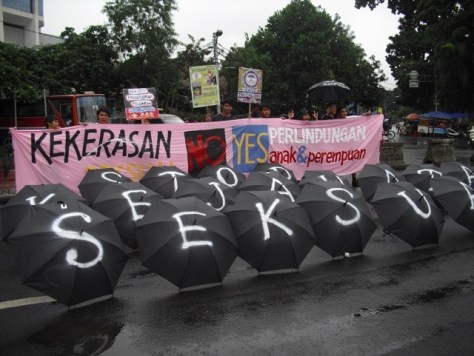
Inspired by the protests held in Delhi for last three weeks, hundreds of university students and activists march on the streets of Jakarta few hundred meters away from the Presidential Palace for a world free of sexual violence. The call for the protest march was given by a coalition of University Students’ Unions and civil society organizations in response to the death of RI, a 11-year-old girl, who died last week after suffering severe vaginal and rectal injuries due to repeated sexual assaults. Continue reading From Delhi to Djakarta, Protests Against Sexual Violence Across Borders: Bonojit Husain

Some thoughts on rape, sexual violence and protest – responding to responses: Devika Narayan

Guest Post by Devika Narayan

Rarely does a city experience the sort of upheaval that Delhi is witnessing.  Everyone is talking about it. Everyone has an opinion. It is impossible to walk down the street without overhearing snatches of conversation. Issues that usually find brief mention in some obscure corner of the newspaper are now being subject to analysis by every passer-by. A rickshaw driver refuses to take any money when he realises I am on my way to a protest. I remember the old man at a photocopy shop who had looked up and asked no one in particular: do you think she will die? The receptionist at the doctor’s clinic is distraught, providing waiting patients her explanation for the recent events. Men huddled around tiny fires littered across the foggy city carp on about the state of politics, the police and the government. Everyone is invested in this moment of reckoning.

An opportunity, in the most brutal manner, has been thrust upon us to challenge, critique and reconstruct unjust social relations. This is an opportunity to pledge our commitment to a vision of a gender just society. Unless we assert in powerful ways that women are autonomous beings and equal citizens it will not end. Continue reading Some thoughts on rape, sexual violence and protest – responding to responses: Devika Narayan

The epiphanic moment of the lathi charge

At the Khan Market Metro station

The girl wasn’t aware that the Udyog Bhavan Metro station in central Delhi had been shut down. In the Metro going to Gurgaon, she needed to get down at Udyog Bhavan. Her friend was waiting in a car outside the station. She waited at the door. The train stopped too, but the gates didn’t open. The PA system — the annoying PA system of the Delhi Metro that never stops saying something or the other — – fell silent. The station was deserted. Not a soul in sight.

The girl asked fellow passengers — all of us men around her — which would be the nearest station that would be open. All the options were far off. Ramakrishna Ashram station on one end, for instance, was four kms. away. “Now what?” the girl asked her friend on the phone in a tone that blamed him, in a way only lovers can. “Now what?” she kept repeating. Continue reading The epiphanic moment of the lathi charge